Fiction or Fact: That Is the Question by Karen Shughart

If you’ve read any of the books in my Edmund DeCleryk Cozy mystery series, by now you will have noticed that with each murder there’s a historical back story that gives clues as to why the crime occurred.

When I conceived the series I decided to write about what I knew, which meant describing the beauty where we live up here on the southern shore of Lake Ontario: the beaches; fruit orchards; quaint homes and cottages, and the stunning weather that changes with each season. There’s also our close knit and friendly community and a rich tradition of history.

Across the lake lies Canada and in the middle of it, where the depths can reach 800 feet, shipwrecks occurred starting long before the Revolutionary War. The British invaded our village and burned most of it down during the War of 1812, and an active and committed abolitionist movement and the Underground Railroad helped to change the course of history. In the 1920s, rumrunners from Main Duck Island in Prince Edward, Ontario piloted across the lake to Chimney Bluffs-drumlins created by icebergs with a broad beach below-to supply the speakeasies here with booze. During World War II, several prisoner-of-war camps housed German soldiers, one of which has been converted to a state park near our home.

Photo by ArtHouse Studio on Pexels.com

I’ve been asked numerous times, at books talks and signings, about the inclusion of history into my books and the incidents are real. While the historical events are based on actual occurrences, I remind my readers that I write fiction, so history is merely a way to enhance the plot. Mostly, the characters are fictional and the details surrounding the events are figments of my imagination, although I do occasionally slip a real character into the mix.

In book one, King George, III had a minor role; in book two, I name-drop Morgan Lewis, the fourth governor of New York and quartermaster general during the War of 1812, whose father was a signer of the Declaration of Independence. In Murder at Freedom Hill, I mention Abe Lincoln  once or twice along with Frederick Douglass and Susan B. Anthony, but only to provide context to the back story.

I just started writing book four in the series, Murder at Chimney Bluffs. It’s early days, so at this point I have no idea who my historical celebrity will be, but whoever it is will have either supported Prohibition or opposed it, or be one of those mysterious crime bosses who organized the trips back and forth across the lake. I’ll figure it out as I move forward.

What I tell my readers is that what I love about writing fiction is that I can pretty much do anything I want with the plot, name dropping and historical events notwithstanding.  I wouldn’t have it any other way.

The Art of the Literary Device by Heather Haven

Google states a “Literary Device is a writing technique that writers use to express ideas, convey meaning, and highlight important themes in a piece of text. A metaphor, for instance, is a famous example of a literary device. These devices serve a wide range of purposes in literature.”

And that’s probably as good of an explanation of a literary device as any other. It changes hues from one genre to another. Probably not that much, but enough to separate the people who know what they’re doing from the attempters. I was an attempter in the field of romance. Once. At about chapter 8, I was bored out of my mind. Where’d the dead body go, I asked? So, I added one. Instantly, there was a lot more zip to everything, including my step. But it was no longer a romance story. Let’s face it, if there’s no dead body in my novel, I’m not interested in writing it.

According to song and legend, Edgar Allen Poe was one of the first to qualify as a mystery writer. One of his short stories, “The Murders in the Rue Morgue” from 1841, paved the way for a lot of us. Arguably, there are 10 device steps that are needed in order to write a good mystery: a hook, atmosphere, a crime, a sleuth, a villain, narrative momentum, a trail of clues, foreshadowing, red herrings, and, of course, a satisfying ending. It sounds a lot easier to do than it is.

But other genres have latched on to their own devices. I don’t always know what they are or recognize them when they’re hurled out at me. But when I do catch on, I try to learn from them, even if they aren’t applicable to what I do.

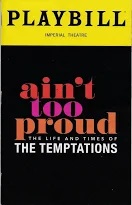
Recently we went to see the national tour of Ain’t Too Proud the Life and Times of the Temptations, the Broadway musical. The musical is based on the book “Temptations” by the group’s founder, Otis Williams. For those of you arriving from another planet or born after the year 2010, they were the biggest singing group to come out of Motown, rivals to Diana Ross and the Supremes. And if you’re going to ask who Diana Ross and the Supremes are, please don’t do it in my presence. Or allow me to get a strong scotch first.

Ain’t Too Proud was one of the best productions of any show I’ve seen in a long, long time. Each performer was of star quality, from the leads to people playing multiple roles. The acting, singing, dancing, costumes, lighting, and sets went to a level of perfection seldom achieved in live theater. I have a background in theater and worked backstage on Broadway for 10 years, so naturally, I think I know what I’m talking about. It doesn’t mean I do, but try telling me that.

Anyway, the writer of the musical’s book, Dominique Morrisseau, is first-class. The storyline was clear, well-paced, entertaining, emotionally moving, and all the stuff a really fine book to a musical ought to be but seldom is. And the writer applied a device using verb tenses that astonished me. I will try to explain it. There would be a scene where one character would initially say they were going to do a specific thing. Then after a small amount of dialog, that same character would repeat the same line, but state they were doing that specific thing.  Further on in the scene, the same character would use the same sentence, but this time announcing the long-term result or outcome of what they’d done. So we would go future, present, past, in one fell swoop. Whether it was a few months or years, the plot advanced solely due to these tense changes. I did note that the same words had to be used each time in the sentence and said by the same character for clarity, but this device worked.

It would be great to know if any of you have either seen this device used before or have used it yourself. It was a first for me. And I loved learning about it! But whatever you do, try going to see Ain’t Too Proud. It will make you and your heart sing.

What To Write

While I always have a lot of ideas bouncing around in my head, when I finished the latest Spotted Pony Casino book, I wasn’t sure which idea I should write next.

Should I just pick one of the titles? I have a list of gambling terms that I use for the titles in the Spotted Pony Casino series. Or should I use one of my ideas and figure out which term/title would work for it? I pondered this as I began the next Hawke book. I like to be thinking about several books ahead while I write the current one. It’s how I can finish up one and dive right into the next one, because I’ve been thinking about it in the back of my mind.

I had a little help from my subconcious.

One night as I was taking a shower a scene popped into my head and I knew which idea I’d be using. I got out of the shower and wrote the scene down. Now that I know the direction the next story is heading, I can pick one of the ten titles I have to go with it, and I can begin plotting the suspects and motives.

When I finish writing the current Hawke book, Bear Stalker.

Because I write two series, hopping from one to the next I have also been wondering which of my Hawke ideas would be the next book. There are times I can have two to three books in a series lined out in my head and on paper, but I’m working on book 10 in the Gabriel Hawke series and while I have three more ideas written down, I wasn’t sure which direction I wanted to go.

The other night, just as I was about to drift off the opening scene for the next Hawke book trickled through my mind. I immediately grabbed the notebook by the bed, went into the bathroom and closed the door to not wake hubby and the puppy, and started writing it down.

As I wrote the opening scene, I realized the story would play out differently than I had originally planned for this scenario. I love when my brain figures out a better story line than what I’d first thought.

This new idea should make the readers who like when Hawke tracks in the mountains happy and will keep them wondering how many bodies Hawke will come across. 😉

When ideas come to me like this- out of the blue when I’m not trying to figure something out-I call them gifts. Because they are always better than what I had come up with while forcing myself to figure out a story line.

The mind is a wonderful thing. I hope we don’t lose our originality and creativity to machines.

To Prologue or Not to Prologue (#2) by Karen Shughart

I promise this isn’t a duplication of Paty Jager’s blog from last Monday. Paty and I frequently seem to be on the same page when choosing topics for our monthly blogs, and when I read her title, I was terrified that my extremely rough draft had somehow made it’s way into scheduling instead of her very well-written and polished one. Fortunately, my fears were allayed when I saw her name as the author. Whew! And while our titles are the same, we’ve written from our own points of view.

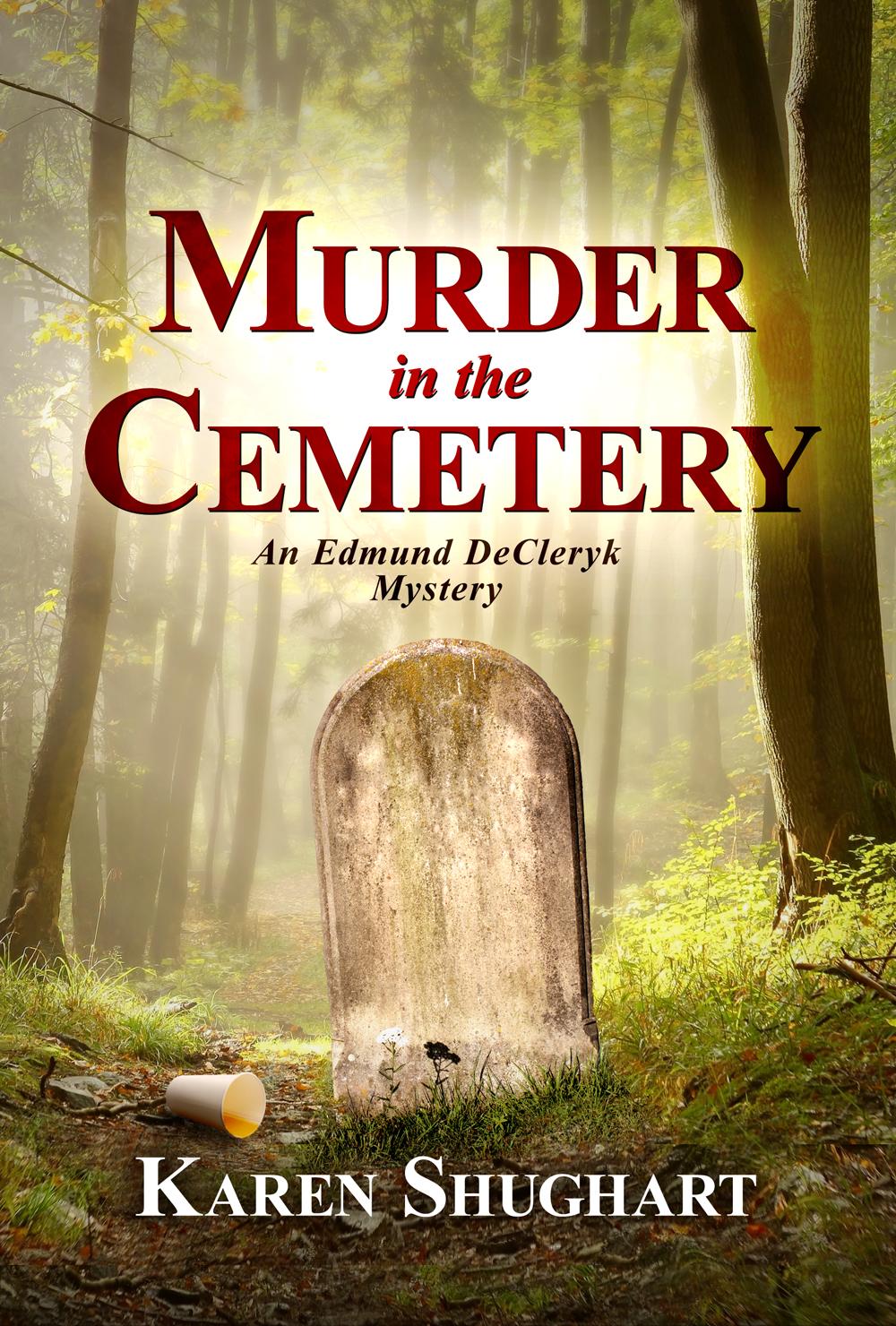
Each of the books in my Edmund DeCleryk Cozy mysteries has an historical backstory that’s related to the crime and provides clues to why the murder was committed. In book one, Murder in the Museum, the prologue introduced a character whose journal, written in 1845, was discovered at an archeological dig in Toronto, Canada. The prologue in book two, Murder in the Cemetery, ties the crime to a battle that occurred in Lighthouse Cove, NY during the War of 1812.

My creative juices really started flowing in book two, and I played around with writing two prologues: the first as described above; the other to introduce the setting, the month of May. You’ll have to read the book to learn why that’s important. My dilemma was which to keep and which to discard. I realized I was emotionally attached to both, so decided to get my publisher’s advice-few books are written with two prologues. Her quick response: “go for it,” and I did.

I’m heading down the home stretch with book three, Murder at Freedom Hill. Yet again, I’ve written two prologues: the first, the historical backstory – it takes place in 1859 in Lighthouse Cove during the abolition movement, when fleeing slaves boarded a schooner to transport them across Lake Ontario to Canada. The second is set in November, the month when the harvest is over, and the chill and frost of winter lurk just around the corner.  

What I love about writing this series is that I don’t have to follow all the rules. It doesn’t mean I am undisciplined; I certainly know how to craft a story from beginning to end, but I enjoy taking liberties with commonly accepted writing practices when it makes sense.

It’s up to us mystery writers to decide how our stories will be written. Some begin with the murder; others lead up to it, it can go either way. It’s the same for prologues. Sometimes a book needs no prologue, but at other times a prologue can set the scene and enhance the plot. And at times, two prologues are even better.

COMING UP DRY

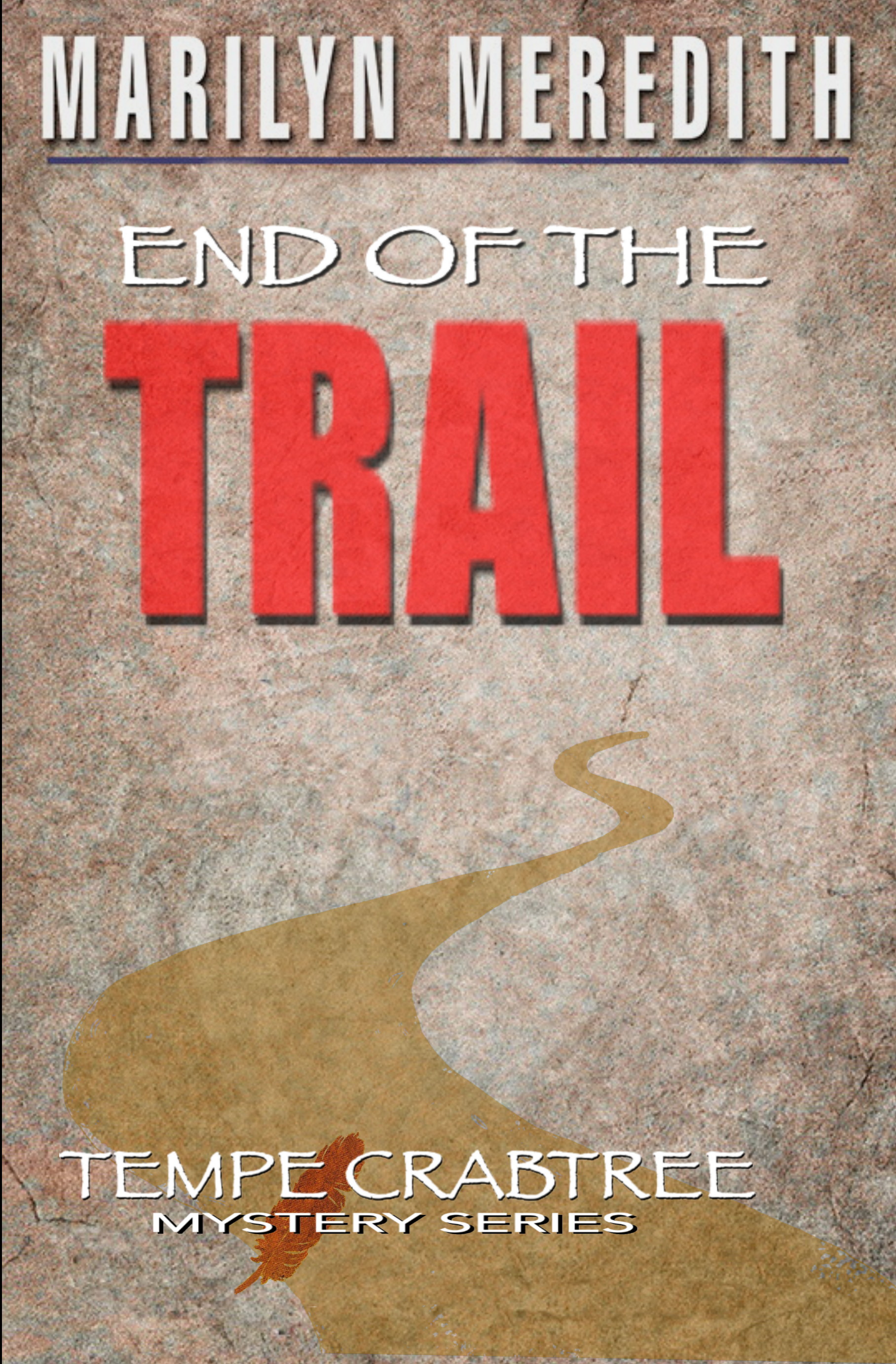
It’s time for me to write a new Deputy Tempe Crabtree mystery, or at least I think it is. I thought I’d finished the series when I wrote End of the Trail, but then I got the bright idea for The Trash Harem. I was pleased to see a photo of a Facebook friend reading it while on the beach in Hawaii. The caption said she always took my latest Tempe book with her on vacation.  Well, if I don’t write one, she won’t have one next year.

I enjoy being with Tempe, but I haven’t any ideas for a great story for her. I was desperate enough to explain this dilemma on my Facebook page. Many of my friends gave me ideas—some pretty good—but nothing that really made me want to get busy jotting down notes.

In mid-July I’m headed to the Public Safety Writers Association’s annual conference. I’m hoping listening to the speakers and the panelists will give me some ideas. Most of the participants are great story tellers.

Truly, I’ve never had this problem before. And no, it’s not writers’ block because I’ve been doing plenty of writing, just not the fiction kind. Maybe all that extra brain and computer time has taken away my incentive for spinning a tale around my now retired deputy, Tempe Crabtree. I hope that’s all it is, and when my life calms down a bit, my imagination will be ready to give Tempe a grand adventure.

Anyone else have their imagination go dry? If so, what did you do to pump the well?

Marilyn