What To Write

While I always have a lot of ideas bouncing around in my head, when I finished the latest Spotted Pony Casino book, I wasn’t sure which idea I should write next.

Should I just pick one of the titles? I have a list of gambling terms that I use for the titles in the Spotted Pony Casino series. Or should I use one of my ideas and figure out which term/title would work for it? I pondered this as I began the next Hawke book. I like to be thinking about several books ahead while I write the current one. It’s how I can finish up one and dive right into the next one, because I’ve been thinking about it in the back of my mind.

I had a little help from my subconcious.

One night as I was taking a shower a scene popped into my head and I knew which idea I’d be using. I got out of the shower and wrote the scene down. Now that I know the direction the next story is heading, I can pick one of the ten titles I have to go with it, and I can begin plotting the suspects and motives.

When I finish writing the current Hawke book, Bear Stalker.

Because I write two series, hopping from one to the next I have also been wondering which of my Hawke ideas would be the next book. There are times I can have two to three books in a series lined out in my head and on paper, but I’m working on book 10 in the Gabriel Hawke series and while I have three more ideas written down, I wasn’t sure which direction I wanted to go.

The other night, just as I was about to drift off the opening scene for the next Hawke book trickled through my mind. I immediately grabbed the notebook by the bed, went into the bathroom and closed the door to not wake hubby and the puppy, and started writing it down.

As I wrote the opening scene, I realized the story would play out differently than I had originally planned for this scenario. I love when my brain figures out a better story line than what I’d first thought.

This new idea should make the readers who like when Hawke tracks in the mountains happy and will keep them wondering how many bodies Hawke will come across. 😉

When ideas come to me like this- out of the blue when I’m not trying to figure something out-I call them gifts. Because they are always better than what I had come up with while forcing myself to figure out a story line.

The mind is a wonderful thing. I hope we don’t lose our originality and creativity to machines.

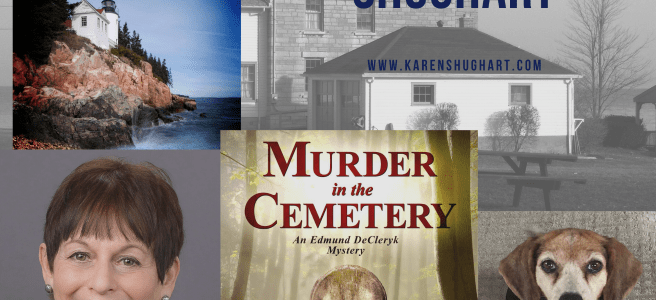
To Prologue or Not to Prologue (#2) by Karen Shughart

I promise this isn’t a duplication of Paty Jager’s blog from last Monday. Paty and I frequently seem to be on the same page when choosing topics for our monthly blogs, and when I read her title, I was terrified that my extremely rough draft had somehow made it’s way into scheduling instead of her very well-written and polished one. Fortunately, my fears were allayed when I saw her name as the author. Whew! And while our titles are the same, we’ve written from our own points of view.

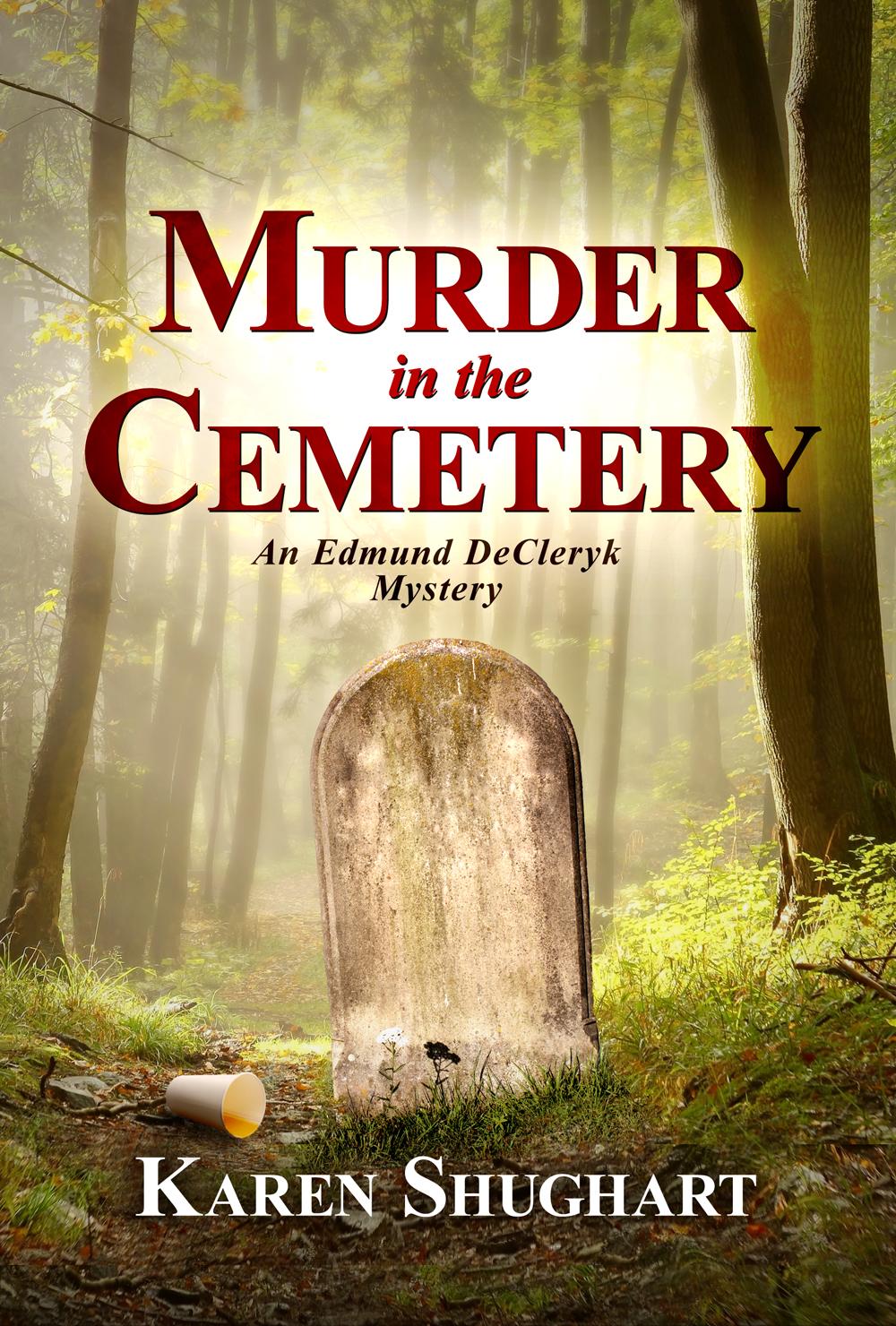
Each of the books in my Edmund DeCleryk Cozy mysteries has an historical backstory that’s related to the crime and provides clues to why the murder was committed. In book one, Murder in the Museum, the prologue introduced a character whose journal, written in 1845, was discovered at an archeological dig in Toronto, Canada. The prologue in book two, Murder in the Cemetery, ties the crime to a battle that occurred in Lighthouse Cove, NY during the War of 1812.

My creative juices really started flowing in book two, and I played around with writing two prologues: the first as described above; the other to introduce the setting, the month of May. You’ll have to read the book to learn why that’s important. My dilemma was which to keep and which to discard. I realized I was emotionally attached to both, so decided to get my publisher’s advice-few books are written with two prologues. Her quick response: “go for it,” and I did.

I’m heading down the home stretch with book three, Murder at Freedom Hill. Yet again, I’ve written two prologues: the first, the historical backstory – it takes place in 1859 in Lighthouse Cove during the abolition movement, when fleeing slaves boarded a schooner to transport them across Lake Ontario to Canada. The second is set in November, the month when the harvest is over, and the chill and frost of winter lurk just around the corner.  

What I love about writing this series is that I don’t have to follow all the rules. It doesn’t mean I am undisciplined; I certainly know how to craft a story from beginning to end, but I enjoy taking liberties with commonly accepted writing practices when it makes sense.

It’s up to us mystery writers to decide how our stories will be written. Some begin with the murder; others lead up to it, it can go either way. It’s the same for prologues. Sometimes a book needs no prologue, but at other times a prologue can set the scene and enhance the plot. And at times, two prologues are even better.

COMING UP DRY

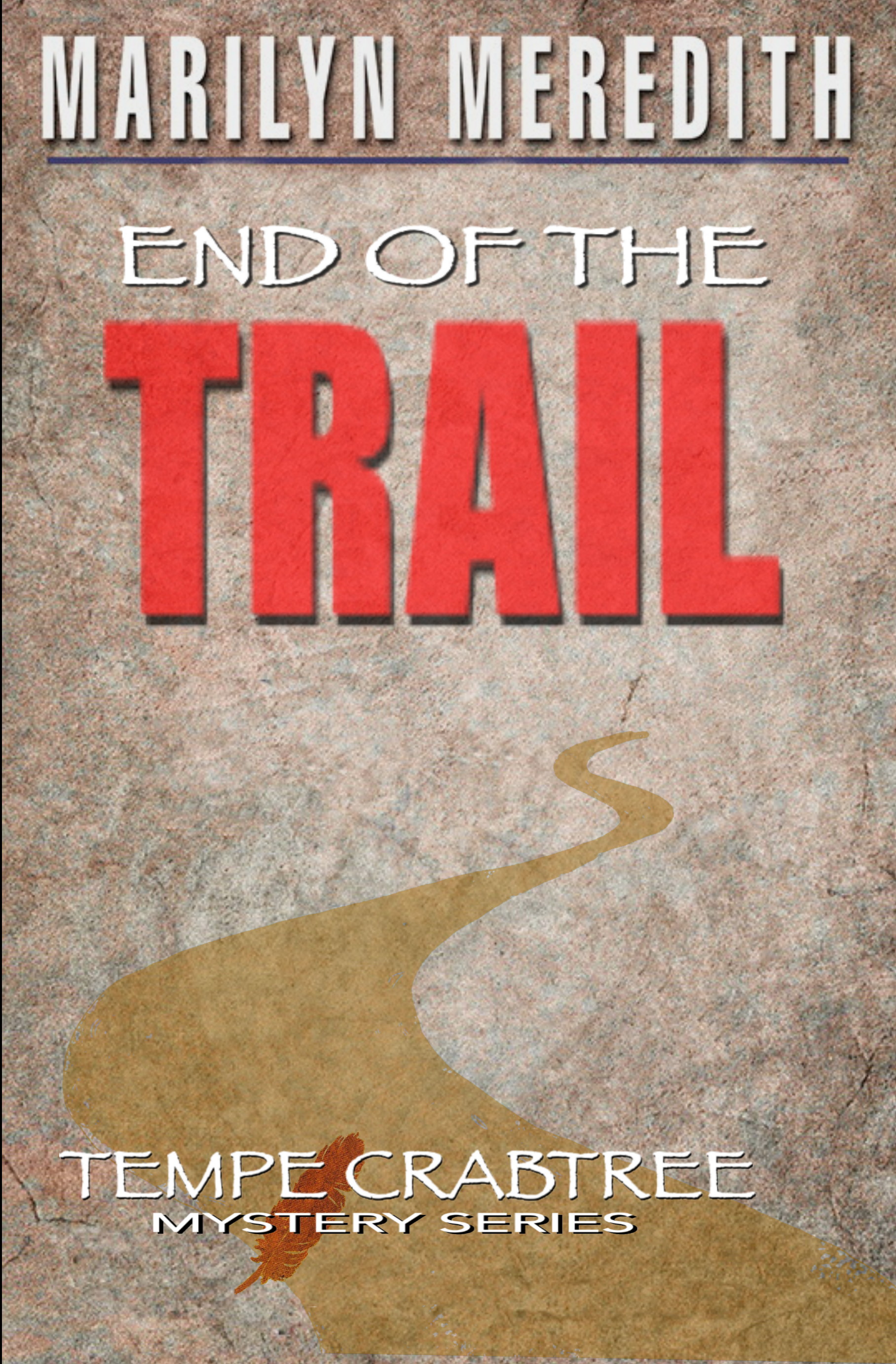
It’s time for me to write a new Deputy Tempe Crabtree mystery, or at least I think it is. I thought I’d finished the series when I wrote End of the Trail, but then I got the bright idea for The Trash Harem. I was pleased to see a photo of a Facebook friend reading it while on the beach in Hawaii. The caption said she always took my latest Tempe book with her on vacation.  Well, if I don’t write one, she won’t have one next year.

I enjoy being with Tempe, but I haven’t any ideas for a great story for her. I was desperate enough to explain this dilemma on my Facebook page. Many of my friends gave me ideas—some pretty good—but nothing that really made me want to get busy jotting down notes.

In mid-July I’m headed to the Public Safety Writers Association’s annual conference. I’m hoping listening to the speakers and the panelists will give me some ideas. Most of the participants are great story tellers.

Truly, I’ve never had this problem before. And no, it’s not writers’ block because I’ve been doing plenty of writing, just not the fiction kind. Maybe all that extra brain and computer time has taken away my incentive for spinning a tale around my now retired deputy, Tempe Crabtree. I hope that’s all it is, and when my life calms down a bit, my imagination will be ready to give Tempe a grand adventure.

Anyone else have their imagination go dry? If so, what did you do to pump the well?

Marilyn

My Desk is a Mess by Karen Shughart

This is the stage when I’m writing a mystery that if you visited my office, you’d gasp in horror. I’m usually very organized, but at this stage, my desk is a mess.

On the right are the first two books in my Edmund DeCleryk Cozy series, Murder in the Museum and Murder in the Cemetery. I use them as a reference for book three, Murder at Freedom Hill, because there are recurring characters: a newborn baby in the last book can’t be in elementary school two years later.

A thesaurus, usually on a shelf, claims space on my left. I’m forever scrambling to find synonyms for words I tend to overuse. It’s a weighty tome but a necessary tool, although the good news is that I recently had an aha! moment when I realized that with a couple of keystrokes and the click of the mouse, hello Google, goodbye Roget’s.  How easy is that?

That thesaurus, by the way, was published in 1962. My Webster’s dictionary in 1982. If you think that dates me, it does, think about how many words there are now that none of us who were alive 50 years ago could have imagined: truthiness; snowflake (not the one that falls from the sky); bestie; twerk. Not that I’d ever include those words in my books, none of my main characters is young enough to use them. Wait a minute, did I say 50 years? Has it really taken me that long to follow my bliss?

Photo by Pixabay on Pexels.com

But I digress.  Piles of paper surround me: bills I’ve received from vendors who still, after all these years, won’t send them electronically but that I, a modern woman, have  paid online; recipes I printed from The New York Times when I could have simply opened my phone or computer when preparing them; print-outs of outdated passwords; a receipt for our dog’s latest checkup; a flyer from the local carwash announcing its wash and wax specials.

I don’t like wasting paper. “Waste not, want not” –phrase origin 1576 or 1772 — depending on your source, is my motto. I write notes to myself on the blank sides to advance the story line, a timeline I never follow, names of new characters to remember, thoughts and ideas that come to me at 3 a.m., questions I have about historical details that are always part of the backstory and the reason for the murder.

There’s a system here, a method to my madness, and it works for me. Once I make sure my historical facts are mostly correct, change the timeline yet again, check for inconsistencies, discard ideas I had at 3 a.m. — what was I thinking — I cross the items off the list, rip the paper into shreds, and toss it into the recycling bin. Then the cycle begins again. Until I reach the point when the manuscript is sent off to my publisher, my desk will remain a mess.

Ideas Knocking at My Creative Self

There are times, like now, when I wish my creative self would take a vacation. However, I also don’t really want all of my creative self to go away. After all, I need that part of my brain to help me write books.

It’s the part of my brain that comes up with story ideas that could take a rest. While going through the final edits on my newly released Gabriel Hawke book, Churlish Badger, I came up with the premise for the next two books in that series. Which is awesome because that means I will have two more books in that series. 😉 The bad part is I’m so excited about them, it’s hard to concentrate on the Spotted Pony Casino book, House Edge, I’m writing now. Sigh.

I can never seem to write as fast as my ideas hit. An idea can come out of nowhere in seconds, but a book takes a good month to prepare and research, then another three (without interruptions) to write. That means, I have about two more months of finishing House Edge, to do the research for the next Hawke book and start writing it in February, if all goes as planned.

When it is written, then I’ll start on book 3 in the Spotted Pony Casino Mysteries, Double Down, which I started the premise for it in House Edge, which made me want to start on that book…. Yes, it is a never ending cycle for me. I get excited about the next book in a series, then have to wait to write it because, (oh, now why did I decided to write two series at once?) I have to write the next book in the other series.

I’m sure there are other writers out there nodding their heads. Yes, we understand, there are those of us who can’t work on one series at a time. Heaven forbid, we should get bored of that series and not want to write the next book. So we juggle, two, or three, or more series at once to keep the monotony of writing about the same characters all the time from becoming tedious.

As Churlish Badger publishes and House Edge is being written, I have three more books churning in the back of my mind. This is how I have spent most of my writing career. Always writing with two to three books on the back screen of my brain, fading in and out, as I dissect the new characters, plot, and setting. And I do the research for the next book while I’m writing another. If only I could plug into my brain and have it all pour out onto a computer screen.

Churlish Badger

Book 8 in the Gabriel Hawke Novels

An abandoned vehicle…

A missing man…

Oregon State Trooper Gabriel Hawke discovers an abandoned vehicle at a trailhead while checking hunters.

The owner of the vehicle never arrived at his destination. As Hawke follows leads, he learns the man was in the process of selling his farm over the objections of his wife who said he would only sell over her dead body.

Continuing to dig for clues, Hawke turns up two bodies buried on the farm. Who killed the two and why keeps Hawke circling for answers, backing the killer into a corner.

Buy link:  https://books2read.com/u/mZZx2l