Motivation

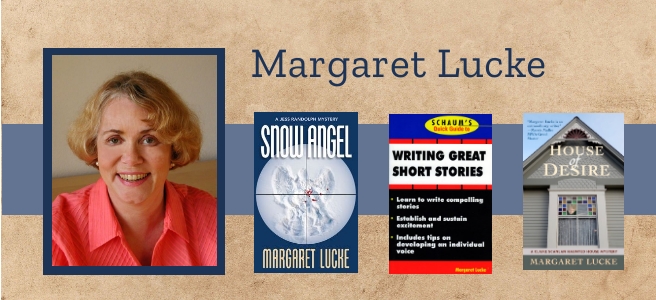
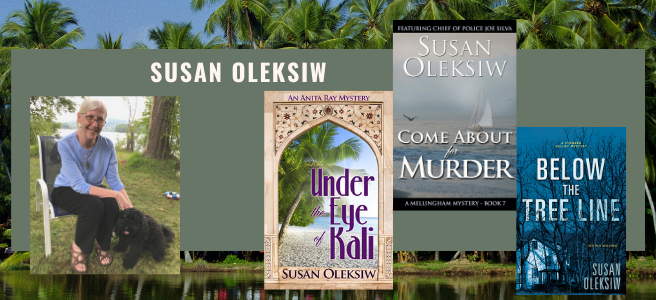
I’ve been working on the sixth Anita Ray mystery since July, and now have 44,000 words. That by itself should tell you that I haven’t been well focused on this one, but I’ve had two epiphanies this month. First, I know what the big crisis will be, and it’s coming up in the next 10,000 words. Second, and much more important, I don’t have to know a character’s motive until I get near the end.

This, the second discovery, surprised me. I’ve struggled with finding motivations for my characters’ behaviors beyond their conduct simply being the result of who they are, their past experiences and hopes for the future. That’s always been true of any character, but when it comes to murder or some other form of violence, I need to see something more in this person I’ve created, something that the reader hasn’t already divined by reading about him or her. 

We stitch together our fictional creations from snippets of real life. Riding on the subway or bus or train brings us into contact briefly with the oddities of our world, the woman who wears orange sandals under a plaid lumber jacket on a sunny day, her jacket covering up fabric of such color we’re dying to get a look at it but she’s buckled up tight. Perhaps the only thing about her buckled up. We overhear snatches of conversation. I still wonder about the meaning behind the casual words of two men in a cafe. She’s always been like this; it was no secret. But he married her anyway? He did. And it isn’t medical? Nope. I really want to know what “it” is. And then there was the package that arrived at a neighbor’s, which she sniffed and shook, and apparently rejected because she left it on the front step. I don’t know what happened to it after that, only that it disappeared.

I’m curious about these people’s lives but if I put them in a story as a killer, I need to know what would make them kill. Being odd or different or cryptic isn’t enough, as every writer knows. We look to the great ones in our genre—Agatha Christie in the traditional mystery, Ray Bradbury in science fiction, or James M. Cain for noir—and think about how they developed their characters’ moves and failures. The motives for crime can be limitless, but perhaps the shortest list comes from Christie: greed, lust, envy. Those cover just about every failing in life.

I’ve been thinking about these for weeks now because even though I have a murder, another crime coming up, a diverse cast of miscreants, and a great deal of stupidity, I still don’t have a motive for the inciting incident. At least, I didn’t. That was part of the second epiphany this month. The characters can have all sorts of immediate short-term motives, but the one that’s driving everything has to be larger, tied deeply and inexorably to the character’s identity. I found it this month, and it has delighted me. It was almost obvious, but not quite. 

The surprising thing to me is that I’ve written half the book without knowing why this is all happening and happening in the way it is. We watch people in life, just as in books, wondering what they’re up to. We’re waiting to cross the street when he see a man on the opposite sidewalk stop and stare in a store window; he peers, he moves closer, he looks around to see who else is nearby, and he stares even harder in the window. When he walks on, looking back once or twice, we cross the street and try to guess what he was looking at. It’s an old-fashioned tailor’s shop with the expected clutter in the undusted window—scraps of fabric, a bolt of cloth, a tape measure, a small cardboard box of pins and other notions. In the unlit interior beyond, we see nothing to catch our interest. So what was he looking at? He wasn’t wearing a fine suit, just a short jacket and slacks; and he wasn’t old enough to have known about regular tailors in this little city. But there is something in that window . . .

I stopped worrying about my characters’ motivations in this particular novel while I wrote, figuring each one would either come to me or it wouldn’t. And I have faith in my unconscious to supply the needful. But I’m also flexible, and if a better one pops into my head, I’ll go with that. This is all part of the path I decided to try with this book. I would write it without guideposts, outlines, clear (or vague) ideas of where I was going. If a character or incident popped into my head, I’d add it. I’d just keep going. It’s very liberating but also a little scary. I’m not sure what I have, if anything, but I do have a sense of things coming together. I’ll let you know in another 20,000 words or so where I am.

Setting the Scene by Karen Shughart

All the books in my Edmund DeCleryk cozy mystery series are set in Lighthouse Cove, NY, a fictional village on the south shore of Lake Ontario, with the crimes occurring in the present but are related to something that happened in the past. In book one, Murder in the Museum, a map dated 1785 discovered in the historical society museum – led by sleuth Ed’s wife, Annie – and a journal dated 1845 found at an archaeological dig in Toronto, Canada, provide clues to why the victim was killed.

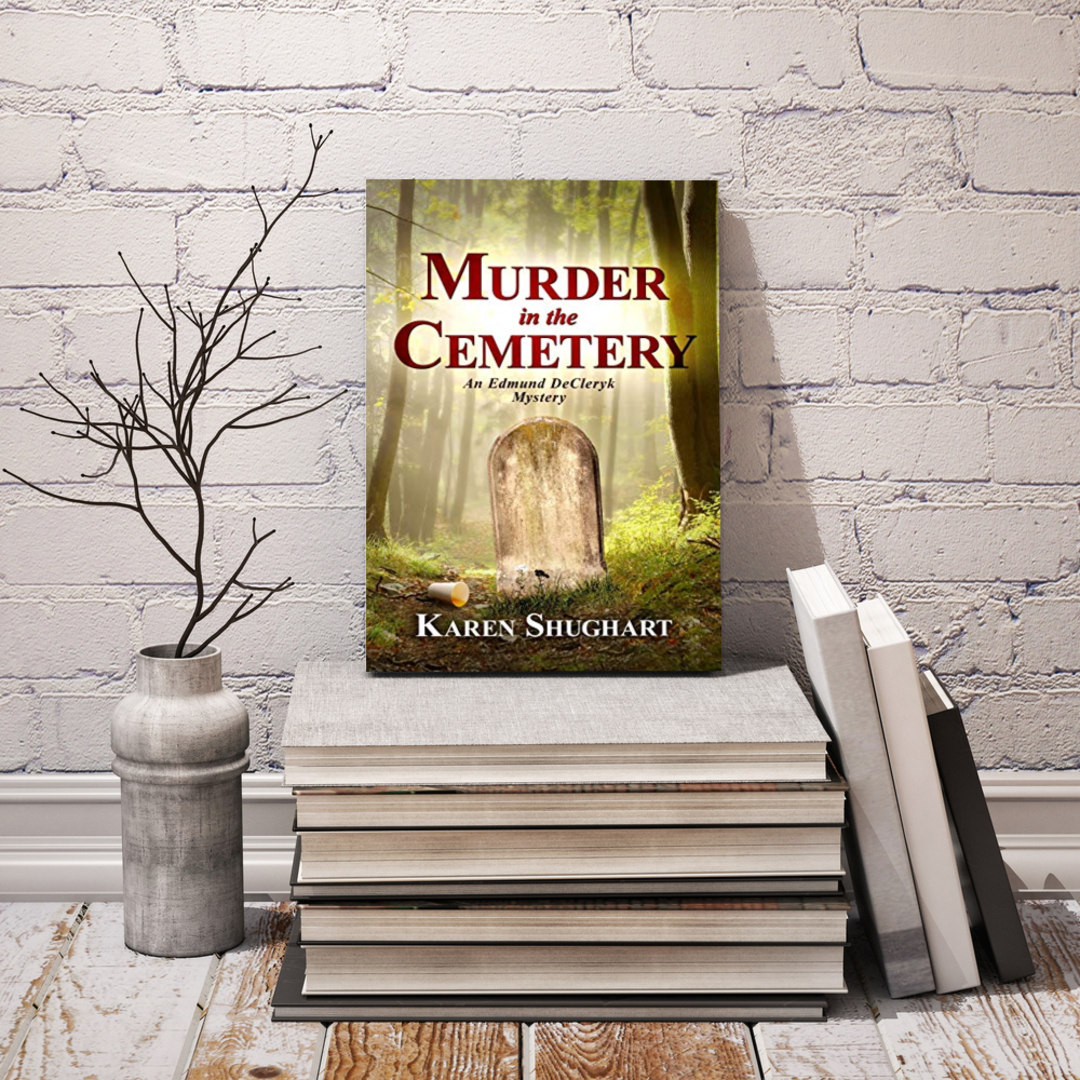
In book two, Murder in the Cemetery, a relic at the cemetery where casualties of the War of 1812 are buried; long-lost letters written by the wife of a patriot transported to England as a prisoner of war during that time;  a missing artifact at an exhibit at the Victoria and Albert Museum in London, England; and a diary discovered at an abandoned farmhouse help Ed and Annie solve the case.

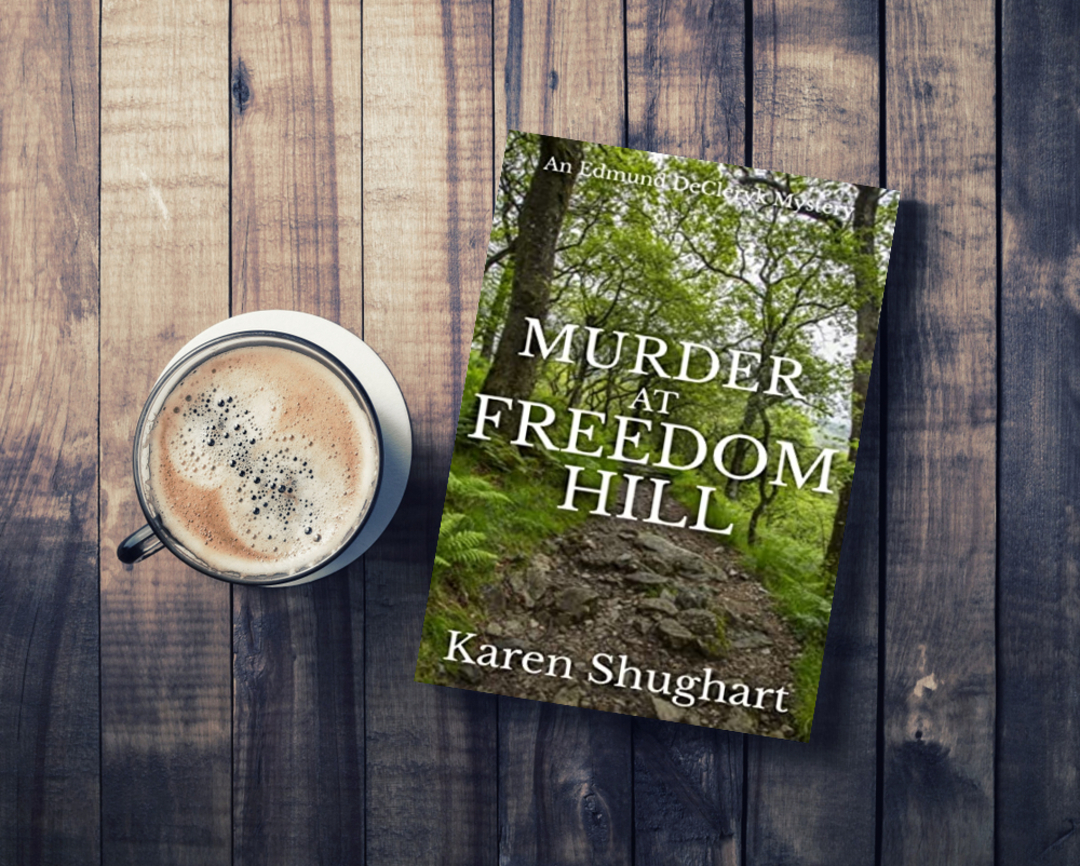
In book three, Murder at Freedom Hill, the crime is thought to be related to the victim’s ancestry, his forebears lived in a settlement where free people of color lived harmoniously with abolitionists who helped transport escaping slaves to Canada across the lake before the Civil War. Another heinous deed, related to that settlement, is revealed during the investigation of the murder.

But what the books also have in common is that I weave into the plot the seasonal setting.  After book one, instead of just one prologue I decided to write two, the first with the historical backstory and the second describing the season.

I continue descriptions of the weather throughout each book, it helps to construct the mood. For example, Murder at Freedom Hill begins in November, before Thanksgiving. In one of the early chapters, Ed discovers that the village mayor has been murdered. A beloved member of the community, the mayor also served on Annie’s board of directors and the two had become close friends. After conferring with Detective Brad Washington at the crime scene, Ed gets into his SUV and drives to the museum to tell Annie about his death. Lots of sunshine and a clear sky start the day, but then the weather changes:

“The brilliant sky at sunrise had made way for clouds the color of brushed pewter that hovered over the roiling silver lake. The day looked like an antique photograph: sepia; gunmetal grey; milky white and black; faded like withered grass. The direction of the wind had changed, picking up speed from the northwest, with fallen leaves swirling around the museum parking lot as Ed pulled into a spot. The temperature had plummeted- winter silently creeping in like a cat about to pounce upon its prey.”

What I enjoy about writing cozy mysteries is the ability to expand description if it fits into the plot, and the weather can either give readers a sense of doom and gloom or provide an interesting juxtaposition to an odious deed.

Karen Shughart’s cozy mysteries are published by Cozy Cat Press. She’s currently working on book four of the series, Murder at Chimney Bluffs.

My Muse and My Editor Talk About Challenges

“Yesterday my critique group was chatting about challenges we’re facing with our works in progress,” I announce as I walk into my office. “What would you two say are the biggest challenges when it comes to writing fiction?”

You two means my collaborators, my partners in crime—the Muse and the Editor who inhabit my head when I write.

“That’s easy,” says my Muse. She is lounging in the easy chair in the corner of the room, sipping from a cup of Earl Grey. “The biggest challenge is keeping her out of the way so I can let the ideas flow freely.”

“Ha!” snorts my Editor, who is sitting cross-legged on the desktop, a grammar book on her lap. “The biggest challenge is to keep her under control.”

“Control!” My Muse jumps up, and tea sloshes out of her mug. “Writing a story is a creative process. It’s all about inspiration. It’s not something you can control.”

I run to get paper towels so I can control the rivulet of tea that’s flowing across the floor.

“Writing is only ten percent inspiration,” the Editor is saying when I return. “It’s ninety percent perspiration. You do the easy part.”

Getting down on my hands and knees, I mop up the spill.

“Easy! You think coming up with ideas is easy? It’s grueling work.” The Muse clasps a hand to her brow and nearly kicks me as she flops back into the chair cushions.

The Editor blows a Bronx cheer. “Without me, your ideas would run around wildly all over the place. There’d be no coherence, no order, no story at all.”

“Nonsense,” the Muse retorts. “All you do is pester me about little stuff. ‘That word is spelled wrong. Put a comma here.’ Commas, shmommas. Who cares?”

“Who cares!” The Editor yells as she throws the grammar book to the floor. “Everyone should care. A misplaced comma can change the whole meaning of the sentence. Remember that time when—”

The Muse sticks her fingers in her ears. “La, la, la, la, la … ”

I toss the soggy paper towel into the trash. “Come on, you two, you know we’re all a team. You each have an important job to do.”

They’re too busy arguing to pay attention to me.

“You’re lazy,” shouts the Editor.

“You’re rigid,” yells the Muse.

“Airhead!”

“Stick in the mud!”

I raise my hands in surrender. “Enough! I’m getting out of here. I’ll see you two later, when you’ve settled down.”

“Wait a minute,” the Muse says. “You can’t leave.”

The Editor chimes in, “Yeah, what about our schedule? We’re supposed to be getting some writing done.”

As I walk out of the office, the Muse says, “There she goes again. Know what the biggest writing challenge really is?”

“Yeah,” says the Editor gloomily. “It’s getting the author to sit down and do it.”

Guest Blogger ~ Marla A. White

Unveiling the Fun Side of Crime: My Murder Research Adventure

Maybe this should worry me, but there’s no shortage of people I want to kill on a daily basis, so coming up with victims for my plots is relatively easy. Cut me off on the freeway? Your car is now being driven by a soon to be dead character. Be mean to a friend? Murder will follow. 

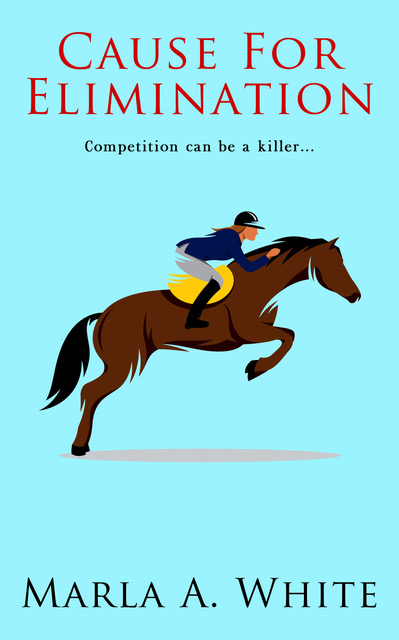
The real fun for me comes when it’s time to research the details. For “Cause for Elimination” I had firsthand knowledge of the horse and eventing world because I lived it. But finding out how to blow up a boat (hint: it’s not as easy as it sounds), or what it would sound like if someone were stabbed and their lung collapsed, required a little more digging. Fortunately, I have a few real live resources I can turn to for answers.

There’s a fellow eventer and nurse who’s very patient with my myriad of weird questions about broken necks and blood loss. Another good friend is an expert in wiring and security systems. He was invaluable when I was trying to figure out how the spy camera I needed for a particular scene would work. My nephew builds boats and helped me with the boat question.

Obviously, the Internet is a beautiful thing. There’s a wonderful website, “How To Kill Your Imaginary Friends” with articles such as, “If you shock a flatline, I swear I will come to your home and beat you with a wet chicken”. One of my characters is Scottish so I have a ton of websites bookmarked to make him sound authentic, including “The Septic’s Companion” for British slang words and insults. Plus lots and lots of research on weapons; guns, swords, knives, and even what a cat-o’-nine-tails looks like. I dread the thought that one day someone will look through search history and promptly arrest or medicate me.

But many of the specific, colorful details in my books, however, come from personal experiences. Like I said, I boarded my horses and rode at most of the locations that appear in “Cause for Elimination”. One scene, where a boarder is bemoaning how their life has been ruined, was from an actual and hilarious encounter that I had. Beautiful Idyllwild, a place a go as often as I can, was the inspiration for the quirky town of Pine Cove in my cozy mystery, “The Starlight Mint Surprise Murder” and the upcoming sequel. My non-mystery books were born out of a visit to a historic inn.

Probably the single most useful research tool for me as a writer, however, is wordhippo.com. It’s like a thesaurus on steroids and helps me keep my writing fresh. Used with ProWritingAid, because I’m useless at putting commas in the right place, I’ve gotten much better at turning in manuscripts that are clean and avoid mistakes. Because while killing off people is fun, murdering the language is downright embarrassing! 

Fun facts

Something readers might find interesting about this book:

Much of what happens in this novel is inspired by real events, people and places from my years of riding horses. Emily’s distinctive pickup truck was inspired by a real truck I coveted. Justin’s uncontrollable ride with “whoa?” – happened to me on that very field. The horse she rides, Reese, is based on the last horse I owned right down to his big suitcase head that he likes to waggle.  Don’t even ask me about the upholstery story!  And though I’ve never forgotten to unhook my air-vest, I’ve certainly had my share of close calls.  

A fact about me readers might find interesting:

The first time I got on a horse was to ride a neighbor’s fat pony bareback. It took off, I clung to its side for maybe 100 yards before hitting the ground, and have been in love with horses ever since.  It’s entirely possible I hit my head.  

Cause for Elimination

After suffering a devastating riding accident, eventer Emily Conners is on the road back to reclaiming her life. Then she discovers the body of her friend and boss, Pam Yates, brutally murdered at the barn and it seems like nothing will ever be normal again. She’s out of a job, and annoyed by the handsome cop whose been sent to investigate the case.  Because while she wants to see the killer brought to justice, she has some dark secrets of her own she’d rather he didn’t unearth.

Detective Justin Butler usually gets his killer, but this time the investigation proves particularly difficult as Pam Yates had no shortage of enemies.  He looks to Emily for insights into a world that’s completely foreign to him and can’t understand why she’s resistant to help. Is she as busy as she claims, or is she scared off by the growing attraction they both share?

As the investigation heats up, dangers come from unexpected corners and buried secrets are exposed. Emily and Justin will have to work together to catch the killer, putting both their hearts and their lives on the line, before they strike again. 

Buy links:

Amazon  https://amzn.to/3qk7XCP

Books2Read  https://books2read.com/u/b6zjM6

BookBub  https://www.bookbub.com/books/cause-for-elimination-by-marla-a-white

GoodReads https://www.goodreads.com/book/show/62233827-cause-for-elimination

All Author https://allauthor.com/book/70256/cause-for-elimination/

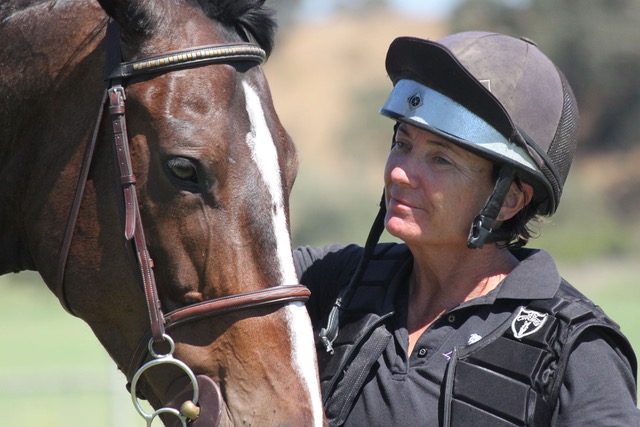
Marla White is an award-winning novelist, story analysis instructor at UCLA and writing coach who lives in Los Angeles. She graduated from the University of Kentucky where she took her first horseback riding lesson. After dabbling in hunters, barrel racing, and weekly trail rides, she fell hopelessly in love with the sport of eventing.  She “conquered” Novice level before taking a break to pursue novel writing but hopes to return to the saddle some day soon.  Her first novel, “The Starlight Mint Surprise Murder,” was published in 2021 followed by the first two books in her Keeper Chronicles series. When she’s not writing, she’s out in the garden, hiking, or working on a jigsaw puzzle.  

Twitter:  https://twitter.com/TheScriptFixer

Instagram: https://www.instagram.com/marlawriteswords/

Facebook: https://www.facebook.com/MarlaAWhiteAuthor

TikTok: https://www.tiktok.com/@marlaw825

Goodreads: https://www.goodreads.com/author/show/21467766.Marla_A_White

Bookbub: https://www.bookbub.com/profile/marla-a-white

Amazon: https://www.amazon.com/stores/Marla-A.-White/author/B094DVMCR4

The Importance of Research by Karen Shughart

 I recently attended a conference in Pennsylvania called Murder As You Like It that was for writers and readers of mysteries. I was fortunate to have been asked to participate with a group of other authors on a panel where we discussed the importance of research in our books.

My books are cozies that take place in the present in the fictional village of Lighthouse Cove, NY, modeled after the village where I live. Each has a historical backstory that provides clues as to why the murder occurred, all of them based on an actual period of history in our community.  Although for the most part my characters are fictional, King George, III; Abraham Lincoln; Frederick Douglass, and Susan B. Anthony are among real characters I name as part of each back story, and real universities, museums, and tourist attractions as they fit into each plot.

My sleuths follow clues that lead them to Rochester, NY; Niagara-on-the-Lake, Gananoque, and Toronto, Canada; London, England and Charleston, SC. I’ve visited these places and creative license aside; my descriptions are fairly accurate. While I don’t use the names of real newspapers, concerned that my reporters wouldn’t reflect their editorial policies and methods, I have used the name of one of our regional magazines, with permission.

When I started writing the series, I decided that it was also important to make the investigative procedures as accurate as possible, so the books had believability. I was fortunate to have been accepted into a citizen’s police academy sponsored by our local sheriff’s office – once a week for nine weeks, six hours each time- where I learned about the criminal justice system in our county. We ate lunch in the jail, watched K 9 demonstrations, and heard speakers who were experts in their fields.

My favorite research tool is talking with professionals who know how investigative procedures work. I’ve been able to interview our DA, a professor of criminal justice, a retired police officer, a commander for regional police force; medical professionals.  In book two of the series, Murder in the Cemetery, the sleuth has a friend who is with the CIA whom he calls upon for advice. It took a bit of chutzpah, but I decided to contact the real CIA to see if I could interview someone there with questions, and low-and-behold, it worked. They reviewed my credentials, and I got a call from their public affairs officer shortly after. It never hurts to try.

Yachts in present time and rumrunning boats during prohibition figure into the book I’m writing now. A friend of mine, after retiring, got his captain’s license and now appraises boats for insurance companies. He’s been a treasure-trove of information.

 Realistic research adds authenticity to the stories, and I think it’s the interplay between fact and fiction that’s so much fun for me to write and I hope, makes the stories interesting to my readers.