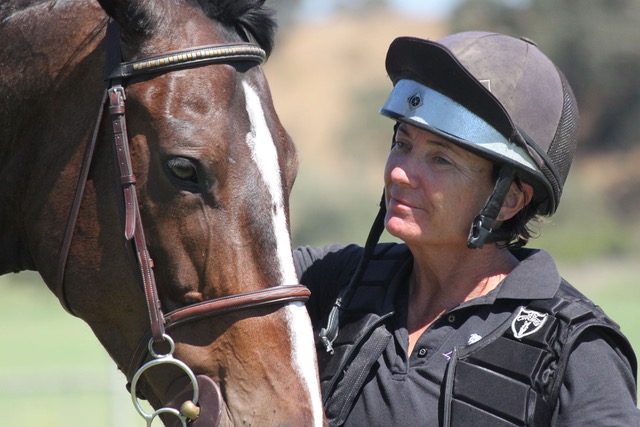
Guest Blogger ~ Marla A. White

Unveiling the Fun Side of Crime: My Murder Research Adventure

Maybe this should worry me, but there’s no shortage of people I want to kill on a daily basis, so coming up with victims for my plots is relatively easy. Cut me off on the freeway? Your car is now being driven by a soon to be dead character. Be mean to a friend? Murder will follow. 

The real fun for me comes when it’s time to research the details. For “Cause for Elimination” I had firsthand knowledge of the horse and eventing world because I lived it. But finding out how to blow up a boat (hint: it’s not as easy as it sounds), or what it would sound like if someone were stabbed and their lung collapsed, required a little more digging. Fortunately, I have a few real live resources I can turn to for answers.

There’s a fellow eventer and nurse who’s very patient with my myriad of weird questions about broken necks and blood loss. Another good friend is an expert in wiring and security systems. He was invaluable when I was trying to figure out how the spy camera I needed for a particular scene would work. My nephew builds boats and helped me with the boat question.

Obviously, the Internet is a beautiful thing. There’s a wonderful website, “How To Kill Your Imaginary Friends” with articles such as, “If you shock a flatline, I swear I will come to your home and beat you with a wet chicken”. One of my characters is Scottish so I have a ton of websites bookmarked to make him sound authentic, including “The Septic’s Companion” for British slang words and insults. Plus lots and lots of research on weapons; guns, swords, knives, and even what a cat-o’-nine-tails looks like. I dread the thought that one day someone will look through search history and promptly arrest or medicate me.

But many of the specific, colorful details in my books, however, come from personal experiences. Like I said, I boarded my horses and rode at most of the locations that appear in “Cause for Elimination”. One scene, where a boarder is bemoaning how their life has been ruined, was from an actual and hilarious encounter that I had. Beautiful Idyllwild, a place a go as often as I can, was the inspiration for the quirky town of Pine Cove in my cozy mystery, “The Starlight Mint Surprise Murder” and the upcoming sequel. My non-mystery books were born out of a visit to a historic inn.

Probably the single most useful research tool for me as a writer, however, is wordhippo.com. It’s like a thesaurus on steroids and helps me keep my writing fresh. Used with ProWritingAid, because I’m useless at putting commas in the right place, I’ve gotten much better at turning in manuscripts that are clean and avoid mistakes. Because while killing off people is fun, murdering the language is downright embarrassing! 

Fun facts

Something readers might find interesting about this book:

Much of what happens in this novel is inspired by real events, people and places from my years of riding horses. Emily’s distinctive pickup truck was inspired by a real truck I coveted. Justin’s uncontrollable ride with “whoa?” – happened to me on that very field. The horse she rides, Reese, is based on the last horse I owned right down to his big suitcase head that he likes to waggle.  Don’t even ask me about the upholstery story!  And though I’ve never forgotten to unhook my air-vest, I’ve certainly had my share of close calls.  

A fact about me readers might find interesting:

The first time I got on a horse was to ride a neighbor’s fat pony bareback. It took off, I clung to its side for maybe 100 yards before hitting the ground, and have been in love with horses ever since.  It’s entirely possible I hit my head.  

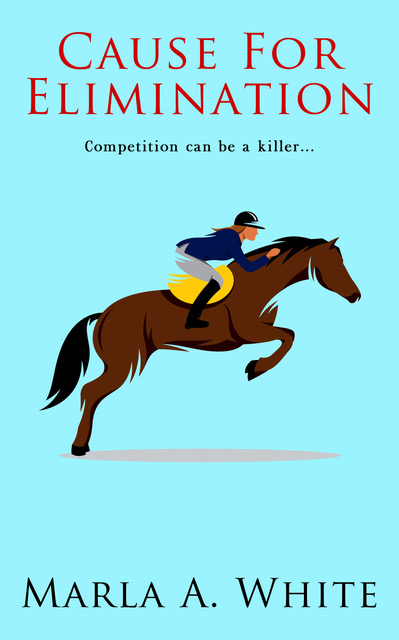
Cause for Elimination

After suffering a devastating riding accident, eventer Emily Conners is on the road back to reclaiming her life. Then she discovers the body of her friend and boss, Pam Yates, brutally murdered at the barn and it seems like nothing will ever be normal again. She’s out of a job, and annoyed by the handsome cop whose been sent to investigate the case.  Because while she wants to see the killer brought to justice, she has some dark secrets of her own she’d rather he didn’t unearth.

Detective Justin Butler usually gets his killer, but this time the investigation proves particularly difficult as Pam Yates had no shortage of enemies.  He looks to Emily for insights into a world that’s completely foreign to him and can’t understand why she’s resistant to help. Is she as busy as she claims, or is she scared off by the growing attraction they both share?

As the investigation heats up, dangers come from unexpected corners and buried secrets are exposed. Emily and Justin will have to work together to catch the killer, putting both their hearts and their lives on the line, before they strike again. 

Buy links:

Amazon  https://amzn.to/3qk7XCP

Books2Read  https://books2read.com/u/b6zjM6

BookBub  https://www.bookbub.com/books/cause-for-elimination-by-marla-a-white

GoodReads https://www.goodreads.com/book/show/62233827-cause-for-elimination

All Author https://allauthor.com/book/70256/cause-for-elimination/

Marla White is an award-winning novelist, story analysis instructor at UCLA and writing coach who lives in Los Angeles. She graduated from the University of Kentucky where she took her first horseback riding lesson. After dabbling in hunters, barrel racing, and weekly trail rides, she fell hopelessly in love with the sport of eventing.  She “conquered” Novice level before taking a break to pursue novel writing but hopes to return to the saddle some day soon.  Her first novel, “The Starlight Mint Surprise Murder,” was published in 2021 followed by the first two books in her Keeper Chronicles series. When she’s not writing, she’s out in the garden, hiking, or working on a jigsaw puzzle.  

Twitter:  https://twitter.com/TheScriptFixer

Instagram: https://www.instagram.com/marlawriteswords/

Facebook: https://www.facebook.com/MarlaAWhiteAuthor

TikTok: https://www.tiktok.com/@marlaw825

Goodreads: https://www.goodreads.com/author/show/21467766.Marla_A_White

Bookbub: https://www.bookbub.com/profile/marla-a-white

Amazon: https://www.amazon.com/stores/Marla-A.-White/author/B094DVMCR4

The Importance of Research by Karen Shughart

 I recently attended a conference in Pennsylvania called Murder As You Like It that was for writers and readers of mysteries. I was fortunate to have been asked to participate with a group of other authors on a panel where we discussed the importance of research in our books.

My books are cozies that take place in the present in the fictional village of Lighthouse Cove, NY, modeled after the village where I live. Each has a historical backstory that provides clues as to why the murder occurred, all of them based on an actual period of history in our community.  Although for the most part my characters are fictional, King George, III; Abraham Lincoln; Frederick Douglass, and Susan B. Anthony are among real characters I name as part of each back story, and real universities, museums, and tourist attractions as they fit into each plot.

My sleuths follow clues that lead them to Rochester, NY; Niagara-on-the-Lake, Gananoque, and Toronto, Canada; London, England and Charleston, SC. I’ve visited these places and creative license aside; my descriptions are fairly accurate. While I don’t use the names of real newspapers, concerned that my reporters wouldn’t reflect their editorial policies and methods, I have used the name of one of our regional magazines, with permission.

When I started writing the series, I decided that it was also important to make the investigative procedures as accurate as possible, so the books had believability. I was fortunate to have been accepted into a citizen’s police academy sponsored by our local sheriff’s office – once a week for nine weeks, six hours each time- where I learned about the criminal justice system in our county. We ate lunch in the jail, watched K 9 demonstrations, and heard speakers who were experts in their fields.

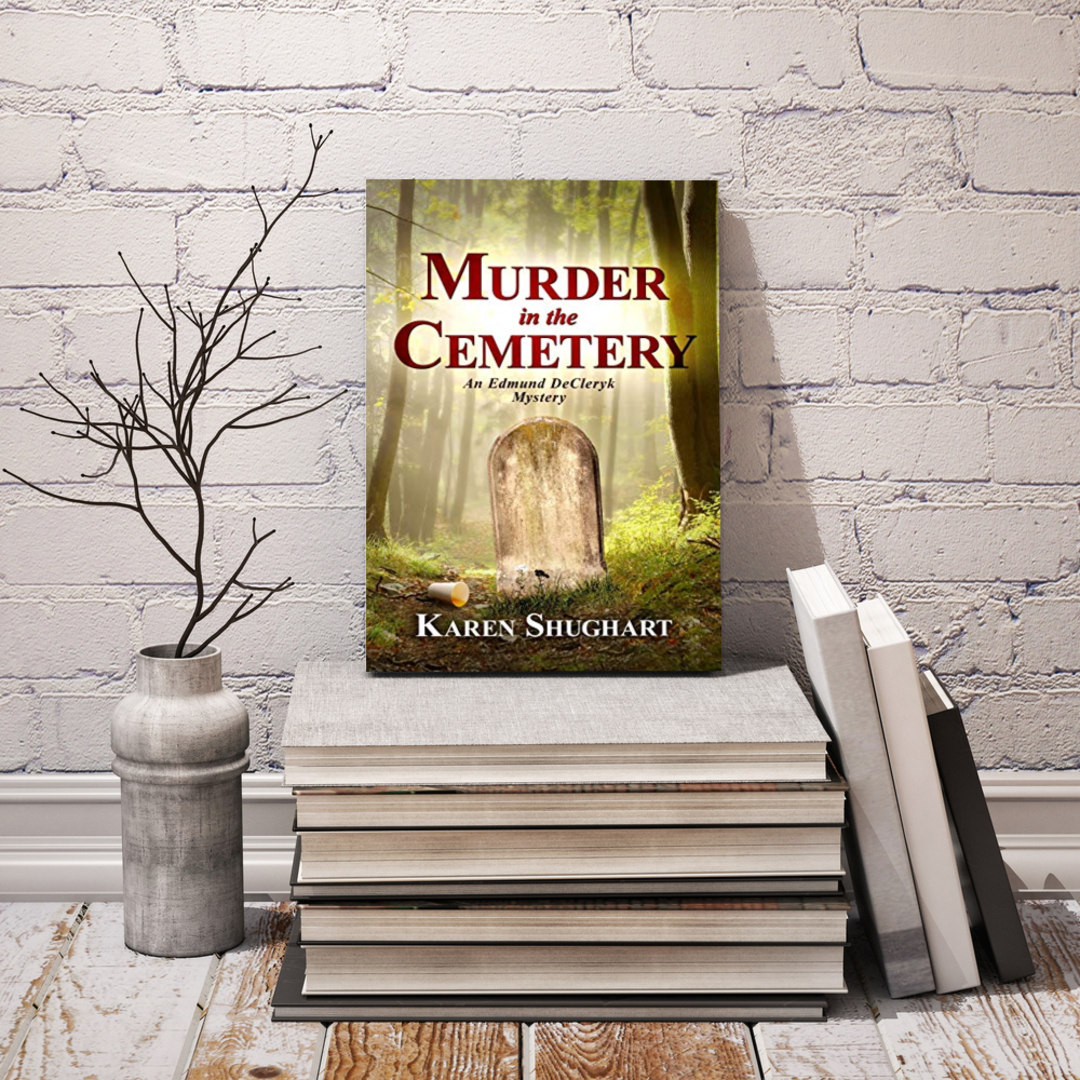
My favorite research tool is talking with professionals who know how investigative procedures work. I’ve been able to interview our DA, a professor of criminal justice, a retired police officer, a commander for regional police force; medical professionals.  In book two of the series, Murder in the Cemetery, the sleuth has a friend who is with the CIA whom he calls upon for advice. It took a bit of chutzpah, but I decided to contact the real CIA to see if I could interview someone there with questions, and low-and-behold, it worked. They reviewed my credentials, and I got a call from their public affairs officer shortly after. It never hurts to try.

Yachts in present time and rumrunning boats during prohibition figure into the book I’m writing now. A friend of mine, after retiring, got his captain’s license and now appraises boats for insurance companies. He’s been a treasure-trove of information.

 Realistic research adds authenticity to the stories, and I think it’s the interplay between fact and fiction that’s so much fun for me to write and I hope, makes the stories interesting to my readers.

ChatGPT and This Writer

For the last several weeks much of my reading has been about AI and ChatGPT, learning as much as I can about this new technology. Thanks to a good friend from graduate school (back in the Dark Ages of landlines and library card files), I’ve learned a lot about AI and what it could mean in areas beyond writing, such as automotive, medicine, and hard science. But the only area I’m concerned with here is the AI directed toward producing word texts—articles, essays, stories, memos, ad copy, and the like. 

When ChatGPT appeared on the scene for the general audience, in 2022, most people were caught off guard and stunned at what it could do. Writers, understandably, and myself among them, were horrified that a machine would soon be producing texts. What would that mean for our futures? (The writers in California are striking over the same issue.) This anxiety has not declined; some even speculate that this new technology could soon make human efforts obsolete and even lead to our end. Like the dinosaurs. 

During a webinar held by the Authors Guild on Thursday, July 20, 2023, one of the participants made some important points about language, so that if nothing else, we understood what we were talking about. ChatGPT is one application of AI. It is called a large language model, borrowing some terminology from linguistics and the work of Noam Chomsky. But this is where it becomes misleading. ChatGPT requires large amounts of data—copies of the written word—in order to produce texts on demand. The designers of the application have scoured the Internet for documents to feed into their computer. Books are found on pirate sites that are often fending off take-down notices from writers (I’ve sent some of those notices). With these texts, the machine is trained to recognize acceptable sequences of words and when their use is most relevant to the question presented. Think “keywords” lined up.

The user of ChatGPT can type in a request, and the software will type out an answer. If you want an outline for a novel, type that request with some details to guide the machine such as setting, characters, and time period, and the machine will send back an outline in conformity with your guidance. The designers of ChatGPT describe the answer as being generated, as a generative text. But this isn’t accurate, as one of the webinar participants pointed out. The machine cannot generate. The machine cobbles together bits and pieces according to patterns, and spews out the result. The text is derivative; it is derived, taken from documents fed into the machine. As the participant went on to say, the result is plagiarism of someone’s work, and in fact of many works by many someones. 

Why does this matter?

We are writers. Accuracy matters. As George Orwell demonstrated only too clearly in 1984, words lead us and determine how we think (or don’t think), and so we as writers should always be accurate in how we present our ideas. 

The work that AI designers insist on describing as training is in fact copying, copying of a copyrighted text without permission, which is an infringement of that law and also known as plagiarism. The text derived and reproduced by the machine does not carry any acknowledgment of this fact.

The purpose of the Authors Guild webinar was to bring members up to date on their efforts to protect and maintain the rights of writers. They are lobbying for several goals: First, payments and damages for training/copying already done. Second, AI content clearly labeled as such (The White House meeting on AI this week includes a request for a watermark or something like it, to indicate an AI produced text). Third, disclosure by AI companies of what work has been used already. (A list of ISBNs used has been made available, but when I tried it there was no way to search it, though a tool is sometimes available.) Fourth, expanding the right of publicity law from name, image, etc., to include style (a writer’s or artist’s style). 

The Authors Guild is also talking with publishers about contract clauses that allow the writer to deny AI companies the right to copy the text or other contents of a publication for training or any other purpose without permission.

Some writers are already adding a clause to the standard copyright statement. “All rights reserved. No part of this book . . . ” To this, authors are adding “This work may not be used in AI training without written permission by the author,” or similar statements.

AI ChatGPT has many supporters as well as detractors, and I continue to learn about it. And no, I haven’t tried to use it for my work but a friend asked it for a summary of my first novel, Murder in Mellingham. The summary was atrocious, and included a character name I’ve never used. 

My firend also used ChatGPT to produce a letter requesting that OpenAI stop using my material in its training. I’ve sent the letter and am now waiting for a reply. I’ll post about it when I get one.

So Many Blogs…. by Karen Shughart

This is my 45th blog for Ladies of Mystery. I started writing at this site in September, 2019, and I’m proud to say I haven’t duplicated a topic, not once. That’s a lot of blogs, and when I realized how many I’d written, I was surprised and took some time to reflect on this. Is it really possible to blog every month and avoid duplication? Why yes, it is.

Think about it. There’s a huge world out there, with infinite possibilities for observation and discourse. You can write about the seasons, or the place in which you live. You can write about writing, the writing process, your latest releases, the struggles, and challenges, of creating a book or a chapter or the characters in your books. About marketing and promoting. You can write about family and friends and animals. Music. A special outing. It’s an endless list if you just look around and observe.

You can write about gardening, beaches, swimming or snowshoeing. Trips taken, meals eaten, beverages sampled, and cultural events you’ve attended. Wine tastings. Memorials to loved ones and pets who have passed. You can write about rain and snow and sun and wind. You can write about suffering, loss, and experiencing joy. During Covid, one of my blogs was about kindness and the many ways it manifested itself in our community; another about what it’s like to live across the street from a large lake in the middle of apple growing country.

Sometimes I whiz through whatever blog I’m writing for the month. My rough draft gets tweaked a little, and then voila, it’s ready to publish. Other times it takes a bit longer, sometimes more than a bit longer, as I search for the right word or tone or to put a semblance of order into my thoughts. It depends on the topic, and my mood, but eventually it gets done.

When I first started writing blogs here, I carefully constructed a list of the topics I wanted to write about for each month during that particular year, and I stuck to it. It helped me focus and because I was new at it, it also helped alleviate some anxiety when faced with a deadline. Then, occasionally, I would scratch the blog I planned to write for something that seemed more appropriate at that time. As I’ve become more comfortable, I typically pick my topic on a monthly basis, depending on my mood and life experiences at the time.

The books in my Edmund DeCleryk cozy mystery series typically run (give-or-take) about 70,000 words. I try to limit blogs to no more than 500, they’re easy to compose; really, no more than a page in a book. Plus, readers don’t want to spend a whole day reading a blog. And that’s why I’m stopping here. There’s more to write about, but I just checked and I’m coming up on those 500 words.

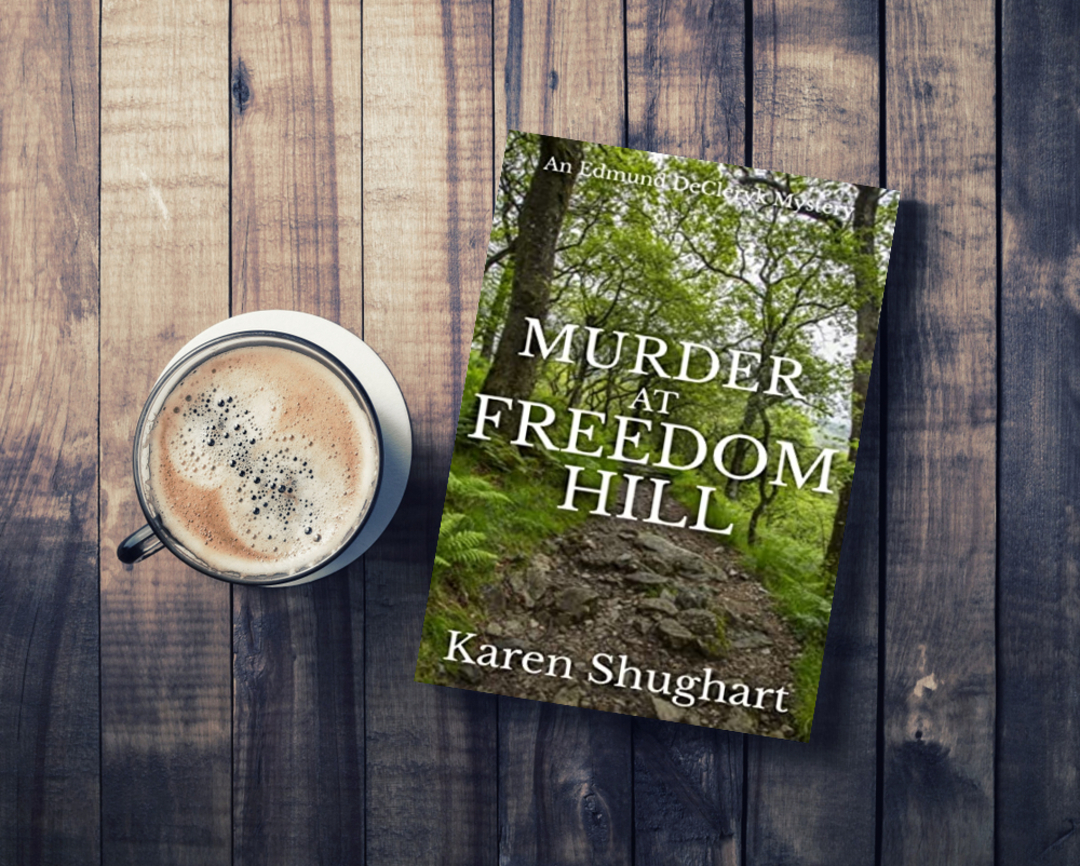
Karen Shughart is the author of the maritime-themed Edmund DeCleryk cozy mystery series that includes historical backstories with a twist, and recipes provided by the sleuth’s wife, Annie, the head of the local historical society. Book three, Murder at Freedom Hill, is an International Firebird Book Award winner in the mystery and fiction categories.

The Characters Keep Expanding by Karen Shughart

It’s fascinating to me how, with each successive book in my Edmund DeCleryk mystery series, the number of characters keeps expanding. With the first book there were a handful as I introduced the investigators and their families and friends, but the number grew as I included  the murder victim, witnesses and those involved as suspects or  who helped with the investigation.  While each book can be read as a standalone, because this is a series there are not only recurring characters- the support cast, so to speak- but new ones added as part of each new plot.  

For the first three books I was able to keep track of those characters without having to write their names on a chart, although occasionally I browsed through previous manuscripts when I couldn’t remember a minor character’s name. Now I’m in the process of writing book four, Murder at Chimney Bluffs, and keeping track of all the names has become much more challenging. So, to make things easier, I’ve created a list that includes old and new that I keep by the side of my computer to refer to when necessary. The list is so long that I now have two columns, divided into main and supportive characters, their friends and family, those involved in the historical backstory, or who are suspects or otherwise related to the crime or the killer.

Photo by Helena Lopes on Pexels.com

I’m asked if I construct an outline for my books and stick to a plot I create at the outset, but I don’t.  Instead I typically go where the story takes me. Like a train picking up cargo along the way, I add characters, or discard those who appeared in previous books if they’re not relevant to the current one. If appropriate, I’ll bring them back as the series continues.

 A former board member of the historical society and museum who retired and moved to Canada; his son; Annie’s predecessor who moved to England with her husband; a CIA agent who worked with Ed when both were Navy SEALS;  Ed’s close group of male friends from childhood ; Annie’s chums who comprise her support group; most have had at least cameo roles in all the books.

A new and influential member of Annie’s board of directors will appear for the first time in book four, and I expect he will also be a recurring character. Astonishing how the number has grown from book one to book four. At last count, I’m close to 50, some major and many minor.  As I think about it, what’s happened is that I’ve been building a community, and in the end, that’s what cozies do.

Karen Shughart is the author of the Edmund DeCleryk cozy mystery series, published by Cozy Cat Press. Her books are available in multiple formats at retail outlets and online. Read a recent interview about her writing with AllAuthor: https://allauthor.com/interview/karenshughart/