Of Carrots and Sticks — and Cake

Margaret Lucke and her books

By Margaret Lucke

I’ve been staring at the blank page on my computer screen for what seems like hours when my Muse finally slouches into my office. She plops herself onto the soft chair in the corner. “Here I am,” she says. “Where’s my reward?”

“Reward!” I turn from the computer to face her. “What are you talking about? You just arrived. You haven’t given me anything yet. Not the first word of a sentence. Not even the glimmer of an idea. You don’t get a reward just for showing up.”

“I don’t see why not.”

“Pay for work that hasn’t happened? What kind of business model is that?”

“Ooh, I didn’t know what we do is a business.” She gets up, walks across the room, and peers at the screen. “Where’s the profit-and-loss statement? Are we making money? What’s my cut?”

“Never mind. We need to get busy on chapter 18.” I position my fingers on the keyboard, ready to type something brilliant. “When we left off, Jocelyn was waiting for Luke to show up in the empty house. She doesn’t know he’s the one who killed Gretchen. How shall we open the scene?”

My Muse crosses her arms over her chest. “I’m still waiting for my reward.”

“Later,” I say firmly. “We don’t get rewards until we’ve accomplished something.”

“What’s that then?” She points to my tea mug.

“Fuel.” I pick up the mug and take a big swig.

“Uh-huh. And this? Looks like a reward to me.”

Next to the mug is a plate with a tiny morsel (it’s a very small piece, honest) of dessert left over from last night.

“My breakfast,” I explain as I take a delicious bite. “Carrot cake.”

“Ah … carrot.” She nods knowingly. “The proverbial donkey’s reward. The farmer gives the donkey a carrot, and the donkey takes the farmer to the market. A fair arrangement, but you can see that the reward comes first.”
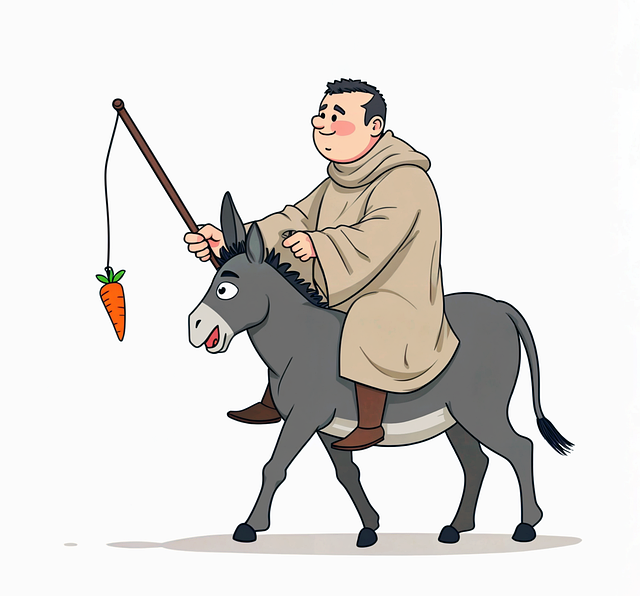
“No, no. The farmer dangles the carrot in front of the donkey. The donkey moves toward it, but the carrot stays just out of reach until they reach their destination. Only then does the donkey get its reward.”

“Can I have some of your cake?” she asks, just as I pop the last tidbit into my mouth.

I lift my hands in a gesture of apology. “Sorry.”

She rolls her eyes. “Poor donkey. It must feel as frustrated as I do.”

“Remember, the farmer also carries a stick, so he can swat the donkey’s behind if it doesn’t cooperate. The carrot is a positive motivator and the stick is a negative motivator. The idea is—”

“Motivate, schmotivate. If I were the donkey, I’d tell that farmer where to stick his carrot.”

She goes back to the soft chair to pout.

“Come on now,” I say. She doesn’t move.

I wheedle. I cajole. No response. I look around for something to use as a stick.

But I know that won’t work. Instead, I take the plate to the kitchen and refill it, this time with two slices of cake. I return to my office and set the plate beside the computer.

“Pull up your chair,” I say to my Muse. “The big piece is yours.”

She smiles as she scooches her chair forward and picks up the extra fork I brought. “Speaking of sticks, did you know Luke is bringing his hockey stick to the house with him? To use as a weapon against Jocelyn. No, wait, not a stick, a knife. That way he can hide it under his coat. Mmm, yummy cake!”

“Hey, he can’t kill Jocelyn. We need her for the rest of the story.”

“Don’t worry, she’ll save herself. A little more of this reward and I’ll figure out how. Make sure the next piece has plenty of frosting!”

Guest Blogger ~ A. M. Ialacci

It’s the end of November as I write this, and I had hoped to have my fifth and final book in the Crystal Coast Case Series complete and ready to publish next month, but my muse had different ideas. The fifth book is outlined and even started, but I had another, different project, begun a few years ago clamoring for my attention. Rather than force myself to write the book I needed to write, I chose to let the stories inside to make that decision for me.

This other, more insistent book, a historical mystery, started as eleven pages that were written over a period of maybe three days — without an outline, without character studies, without research — and then stuck in a drawer for a while. How very unlike me!

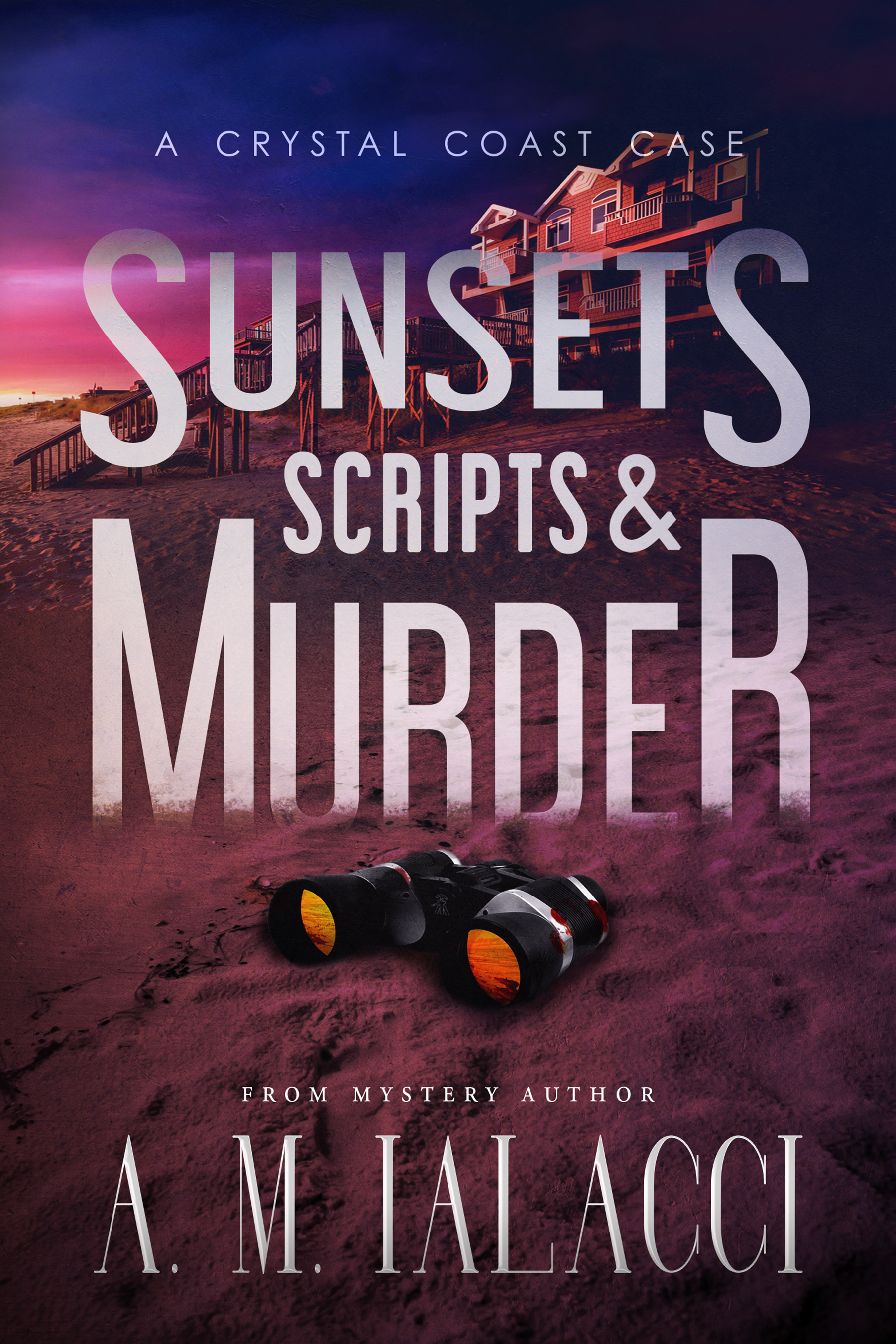
I went on to complete book four of the Crystal Coast Case Series, “Sunsets, Scripts, and Murder,” and released it in September of last year. Outlined, researched, edited, formatted, published. Done and dusted.

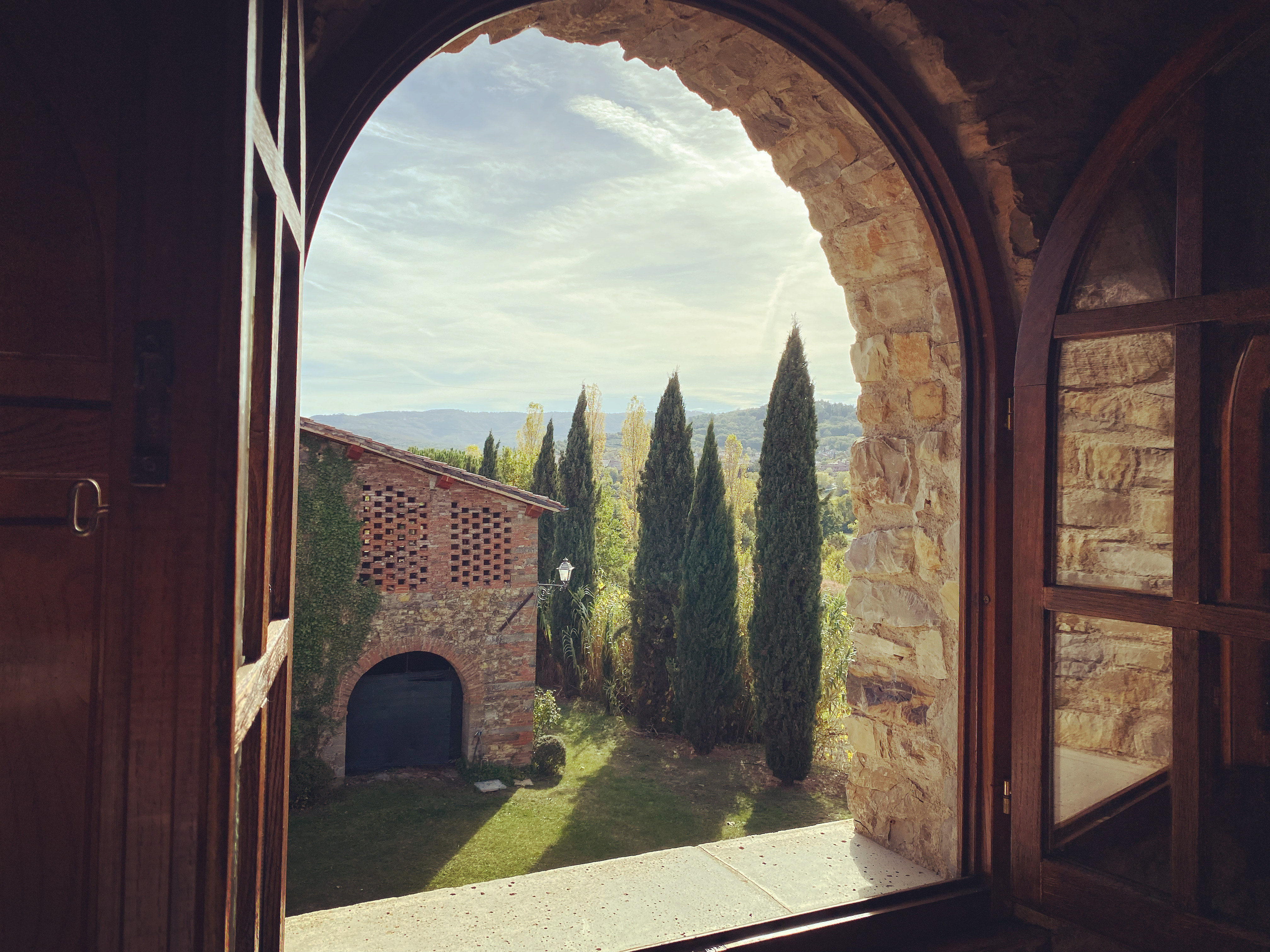
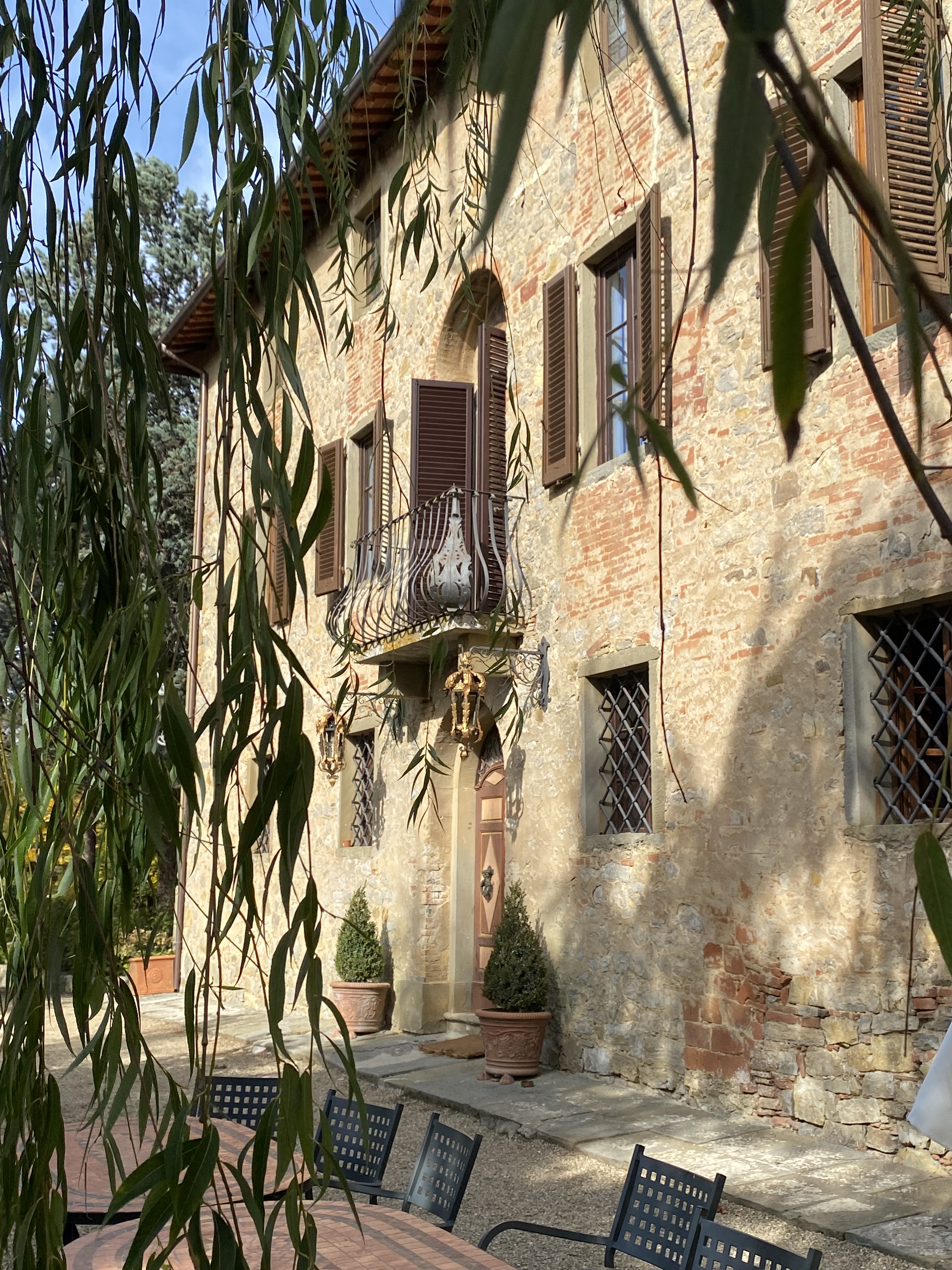
Then in October, I went to Italy for a much-anticipated writing retreat. A week in the rolling hills of Tuscany at a villa with four-course, chef-cooked meals. I couldn’t be further from the beaches of the Crystal Coast of North Carolina, so I chose to pick up that eleven-page historical mystery and see where it led. By the end of the week, my fellow writers were hooked on my story, and I was bewildered. How was I doing this?

When I returned home to the realities of everyday life, that bewilderment combined with my very real responsibilities and turned into a period of burnout. I couldn’t write anything. This had happened to me once before, and I recognized that I just needed time. It was uncomfortable, I was unhappy, but I wasn’t going to add more stress to the situation by creating arbitrary goals to get back to my work.

With some outside help and coaching, I gradually returned to my story, and continued to write intuitively. No one was more surprised than me. My entire process was different, but the story was appearing before me on the blank page. I only had to follow its lead and put it into words.

Now my draft is done, and my critique partners, my beloved writing circle, tell me it’s the best book I’ve written. And it isn’t even near its final form yet.

In April, I go to Germany, in part to do some on-the-ground research for this historical mystery, and I know it may be some months before this book is complete. But I’m truly excited about it, and I can’t wait to share it with the world.

In the meantime, I’ll get back to the series finale my readers have been eagerly anticipating. If you’d like to get caught up on this series, so that you’ll be ready for book five when it comes out, please click on the accompanying links.

A dead actress. A big secret. And Allie Fox is on the case.

Tired of couch-surfing with friends, PI Allie Fox heads to the beach on an overcast, off-season day to do some house hunting.

But when she stumbles onto a dead body in an empty rental, she’s plunged straight into another case of foul play.

Up and coming actor Aisha Carter’s stay in Emerald Isle had been a secret, and only a select few knew she was here. When her agent hires Allie to investigate, she finds the actor was keeping everyone in the dark, and hiding much more than her whereabouts.

As she digs deeper into Aisha’s past, nothing seems to add up. Then Allie uncovers a shocking clue that puts everyone she loves on the killer’s list.

Sunsets, Scripts, and Murder continues the story of the Crystal Coast Case series. If you like Melinda Leigh, Lisa Gray, or Claire McGowan, you’ll love A. M. Ialacci’s gripping story of bright lights, big secrets, and murder.

Buy link: https://www.amazon.com/dp/B09H5JMS84

Growing up on a steady diet of Murder She Wrote and Nancy Drew, it wasn’t until Anna left her twenty-year teaching career that she realized she might be able to write her own mystery. Single mom to a young man on the autism spectrum, and living in a multigenerational household, she loves the beach, reading Scandinavian crime fiction, and binging on Netflix. Anna is the winner of the Occasions, Just Write Writing Contest 2018, and a runner up in the Writer’s Domain One Sentence Story Contest 2018.

Website: https://www.amialacci.com

Facebook: https://www.facebook.com/AMIalacci

Instagram: https://www.instagram.com/amialacciauthor

Twitter: https://www.twitter.com/AMIalacci

Goodreads: https://www.goodreads.com/author/show/18931413.A_M_Ialacci

Amazon: https://www.amazon.com/A-M-Ialacci/e/B07P7J1RWV

Bookbub: https://www.bookbub.com/profile/a-m-ialacci

It’s All in the Details by Karen Shughart

Even in fiction, it’s important that some details are correct, especially in a murder mystery when describing an investigation and its resolution when the killer is captured. While the plot, setting, and characters can be a complete figment of the imagination, there’s got to be some accuracy when describing the measures taken to solve the crime.

Our communities offer many resources to those of us who write mysteries, among them sheriffs and police personnel, district attorneys, public defenders, prosecutors, and judges. Having access to these experts and being willing to learn from them adds a level of authenticity to our stories, and hopefully results in more reader satisfaction.  I’m fortunate that these professionals have been available to me when I’ve had questions.

Photo by Sora Shimazaki on Pexels.com

There’s wiggle room, of course, but when investigators on TV are trying to solve a crime and get DNA results in an hour, that’s not how it really works. Although technology has evolved, and today it’s possible for a speedier turnaround time- sometimes in as little as six hours-I try and stick as much to the facts as possible.

I’m working on Murder at Freedom Hill right now, the third is the series of Edmund DeCleryk Cozy mysteries.  In the last two books, the crimes were solved without my needing to provide precise details of what followed after the murderer was apprehended. This time around it’s a bit more complicated.

I’ve realized as I’ve been writing this book that my knowledge of some those procedures is a bit rusty, and I wanted to clarify the steps that must occur from arrest to sentencing, the difference between probation and parole, and the circumstances that permit the defense attorney to make a deal. A few weeks ago, I met with our county’s district attorney.  We spent about an hour together, and after, I went home and revised some sections of the book for clarity, although I must admit that I fudged a few of the details to mesh better with the story.

 The women and men who work at various levels of law enforcement and in criminal justice professions are a valuable resource to those of us who write mysteries. They help provide a framework that allows us to create a book that weaves fantasy and reality into a believable plot.