Guest Blogger ~Michelle (M.M.) Chouinard

It all started in my car, outside a veterinary office during the pandemic.

You remember how it was back then, how you had to wait outside while your beloved pet disappeared into the bowels of the building, not sure which of the two of you was more freaked out about the separation. I knew it was going to be a long visit (it ended up being over four hours, but I digress) so I had a bunch of true-crime podcasts lined up and ready to go. I started with one about The Doodler, a San Francisco serial killer who’s never been caught. As I sank into the story, the references to places in San Francisco rankled my exposed emotional nerve endings—at that point it had been close to a year since I’d been able to go pretty much anywhere, and the mental images set off a strange form of homesickness. “I’m so tired of this,” I blurted out aloud. “When this pandemic is over, I’m going to go to every single place they mention in this podcast. I’m going to do my own little tour, like a serial-killer tour of San Francisco—”

 My brain stutter-stepped over the phrase. Not so much as a concept for an actual walking tour of San Francisco—although that would definitely be awesome and I’d go on that tour in a hot second—but as a concept for a book. How cool would it be to write about someone who gave true-crime tours? Someone who knew of all the most notorious crimes that had taken place in the City, and who used their extensive knowledge of true-crime cases to help solve murders that came their way?

As I waited for my sweet kitty to return to me, my mind raced on down those mental tracks. What sort of person would find themselves making a living giving serial-killer tours? What sort of ‘wound’—life trauma they were still working through—would draw them to such a profession and keep them stuck in that world? The answer came to me in a rush: someone related to a serial killer.

I’d seen more than one interview with parents, siblings, and children of serial killers, and had always wondered what it would be like to live with that legacy. How did people treat you when you were related to a serial killer? Did they assume you must have known what the killer was doing? Did they assume there must be something in you that could do the same thing since you share some portion their genes? And what would that do to your own psyche, to wonder about those shared genes? Was it easy to dismiss any possible similarities you shared with the killer, or did little doubts always linger at the back of your brain about what might be buried deep inside you?

And so Capri Sanzio, granddaughter of the fictional serial killer Overkill Bill, was born. Or rather, she was the granddaughter of the man who’d been convicted of the Overkill Bill murders, but who’d always protested his innocence. Separating her by a generation would allow me to explore how different people in the family had been impacted by Overkill Bill, and how they dealt with that relationship differently. In Capri’s case, since she never really knew her grandfather, she’d spend her life wondering whether he’d been telling the truth or really was a serial killer, and she’d be desperate to get those answers. Except that Capri’s father, the son of Overkill Bill, would forbid anyone from ever mentioning the name Overkill Bill in the house, because of the judgment and bullying he’d had to endure his whole life because of what his father had purportedly done. He just wanted peace, to be able to move on with his own life, and despite Capri’s obsession with knowing the truth, she loved her father dearly and didn’t want to hurt him. So, they’d be caught up in an uncomfortable detente where neither of them really got what they wanted and the generational trauma simmered under both of their surfaces.

Until something came along to boil that trauma right over the top—a series of new murders that copycatted Overkill Bill’s distinctive methods. To paraphrase Michael Connelly, the most interesting mysteries are the ones where the murders involved tap into whatever trauma the protagonist is trying to avoid dealing with; so of course Capri would become a suspect in the investigation of those new murders—I’d make sure of that by making one of the victims her ex mother-in-law—and she’d have to solve both the contemporary murders and the vintage Overkill Bill slaying in order to keep herself out of jail. But, by raking up the past, she’d have to risk fatally damaging her relationship with her father.
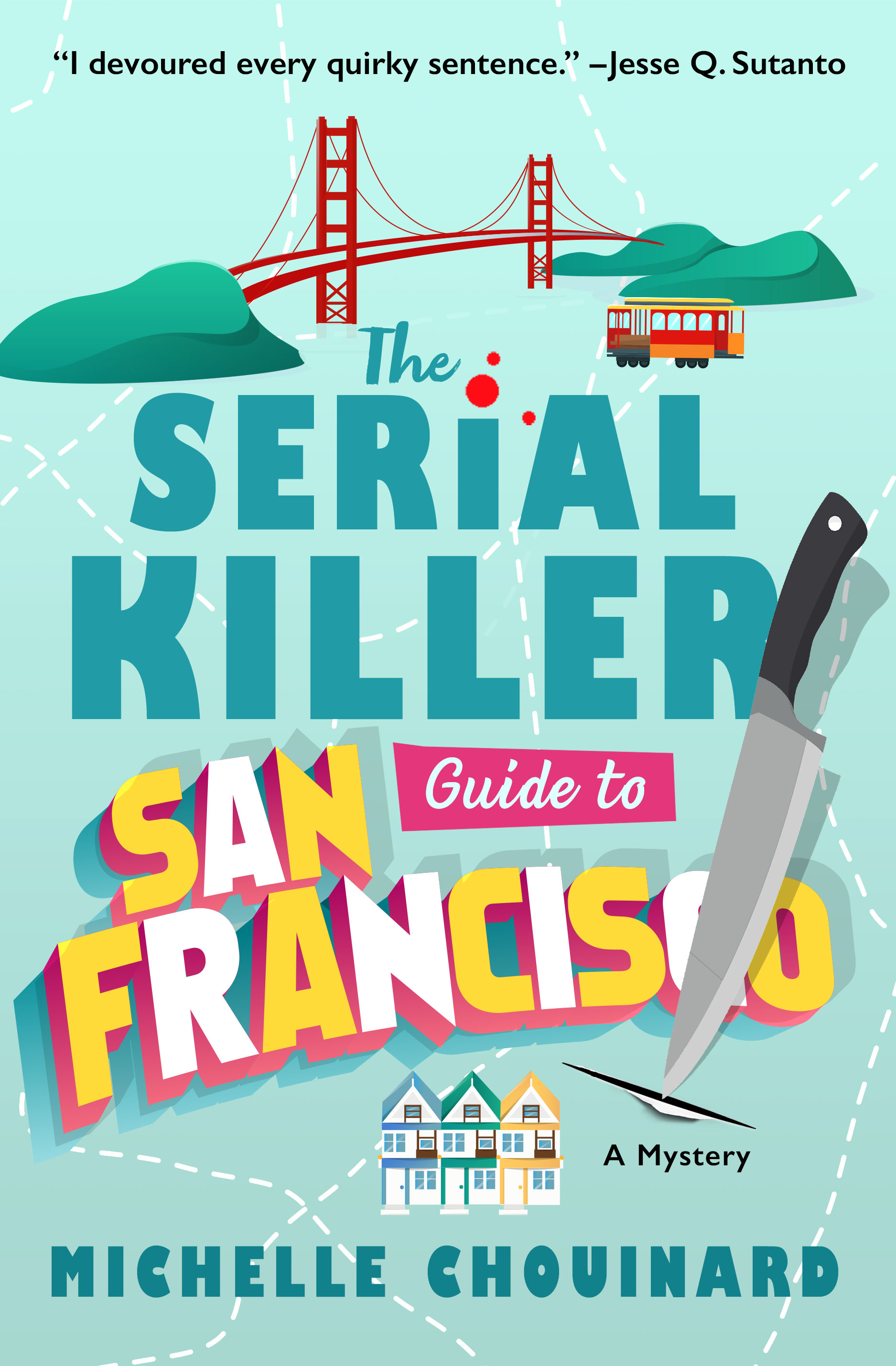
And with that, I was off to the races, and I’ve never looked back. Writing Capri has been one of the deepest, most interesting journeys I’ve taken with any of my characters, and I quickly fell in love with her. She’s flawed, she has self-doubts, and nobody would call her choices safe—but she’s passionate about the people she loves and about getting justice for victims who can’t get justice for themselves.

And, in the process, I get the perfect excuse to write up real stops on that awesome serial-killer tour of San Francisco that I promised myself in the vet parking lot that day. 

A Tour to Die For: 
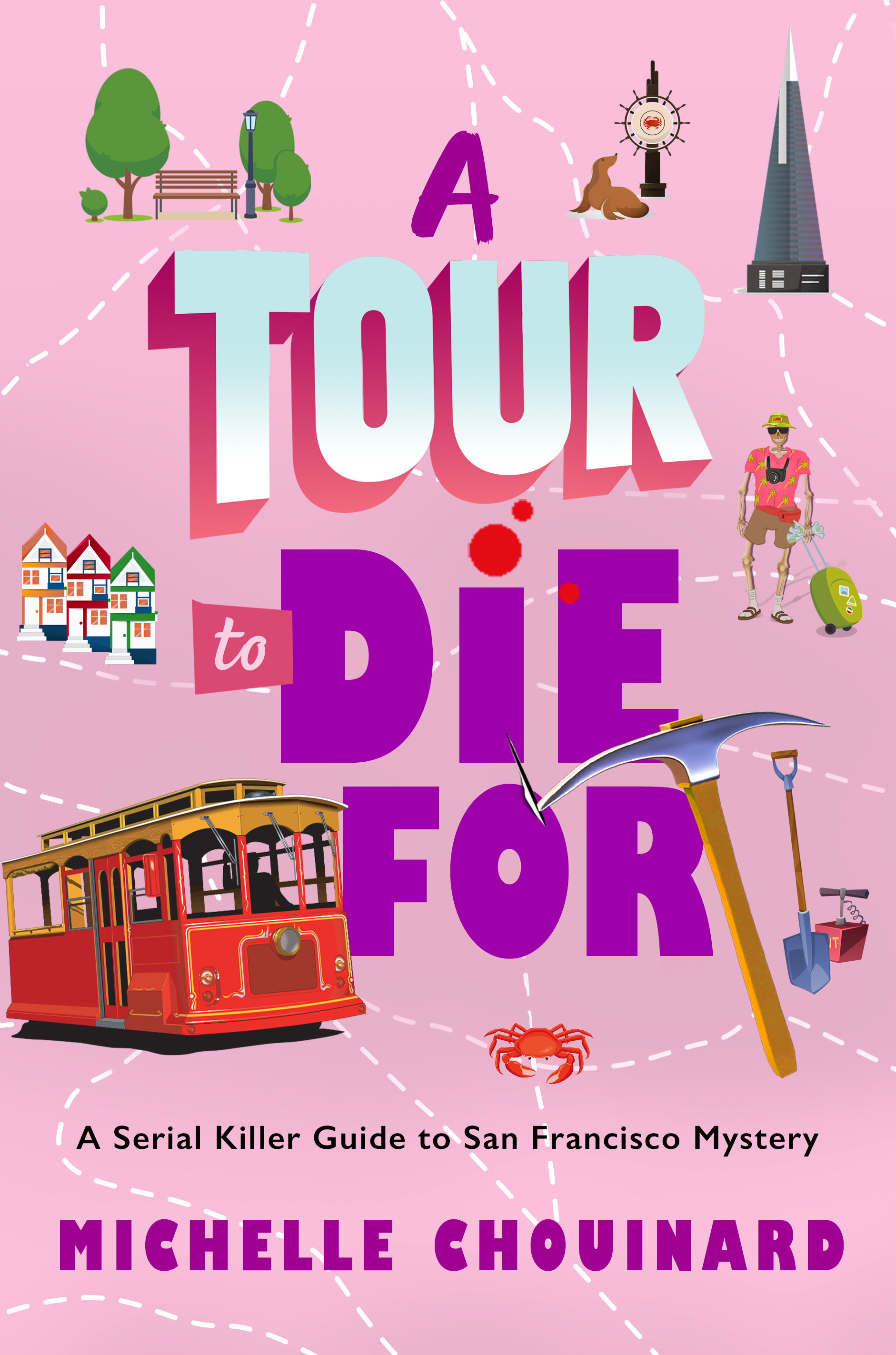
In Michelle Chouinard’s A Tour to Die For, Capri Sanzio is back, giving a true crime tour her guests won’t soon forget. After all, a tour guide who specializes in serial killers knows better than most that San Francisco is a city with killer charm.

Capri Sanzio knows that when you give serial killer walking tours for a living, unexpected situations are more common than San Francisco’s famous fog. So, when one of her guests claims to see a woman being attacked during a tour, Capri remains unphased. The police search the apartment in question and find no evidence of anything amiss, so they chalk it up to a false report from a true crime fanatic looking to be a part of a case. And Capri thinks they might be right, since lately her tours have been attracting even more obsessives than usual—as it turns out, finding the actual serial killer who committed the “Overkill Bill” murders didn’t stop the constant questions about her grandfather’s supposed crimes, it only intensified them.

But Capri would never forgive herself if someone is in trouble and she walks away. Plus, something about the whole situation has every one of Capri’s investigative journalist instincts going haywire—why would someone lie about seeing an attack? So Capri starts to dig, and when her questions lead to a body, she finds herself at the center of another murder investigation.

Buy link: https://read.macmillan.com/lp/a-tour-to-die-for-9781250910011/
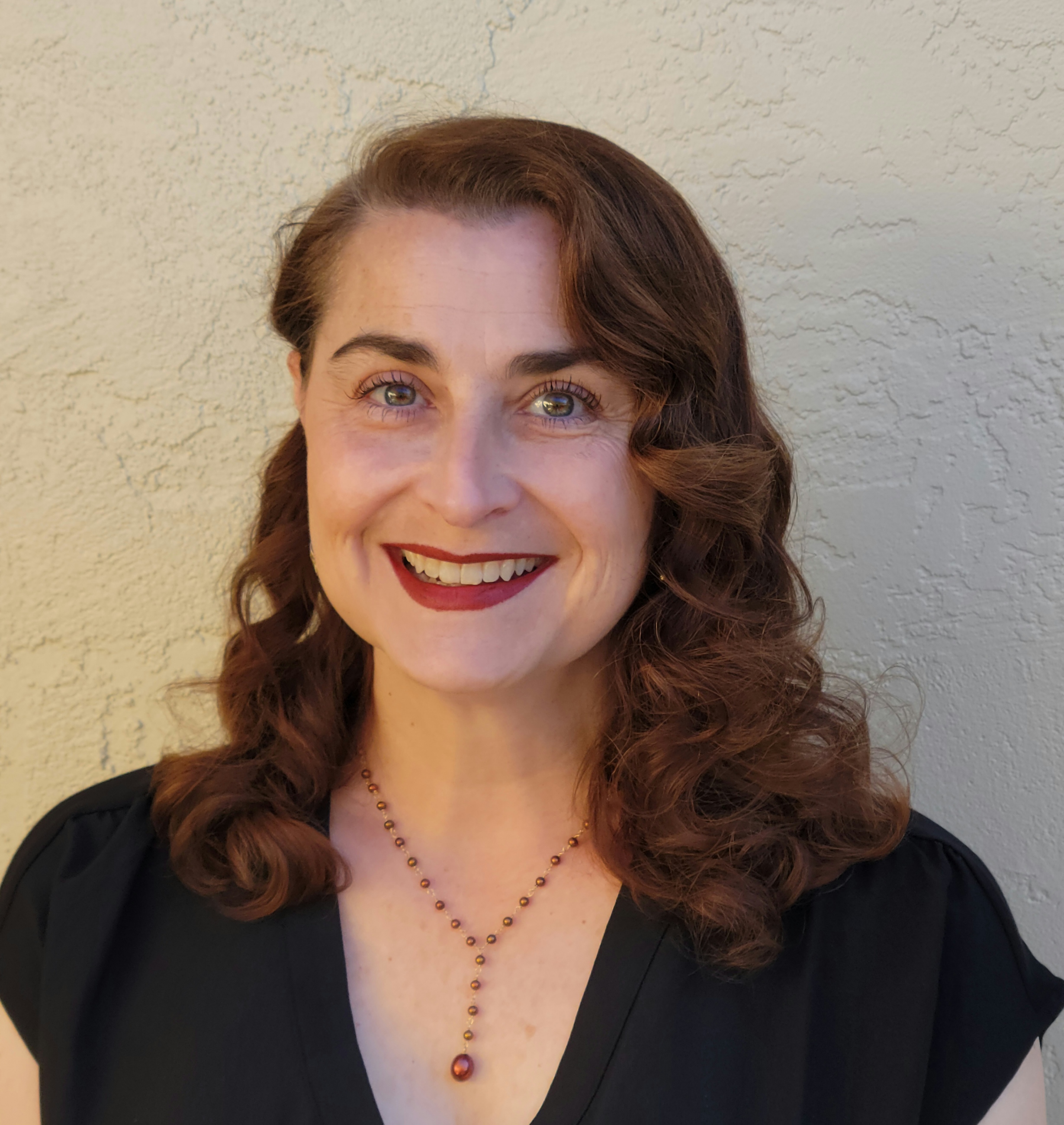
Michelle (M.M.) Chouinard is the Mary Higgins Clark Award nominated, USA Today, Publishers Weekly, and San Francisco Chronicle bestselling author of The Serial-Killer Guide to San Francisco series, the Detective Jo Fournier thriller series, and the standalone psychological thriller The Vacation. She has a Ph.D in developmental psychology from Stanford University and was one of the founding faculty members of U.C. Merced. She enjoys caffeine in all forms, amateur genealogy, crafting, baking, and Halloween. She’s owned by three cats and a dog, and is held together by caffeine and dry shampoo. 

Website: http://www.mmchouinard.com

Facebook: https://www.facebook.com/mmchouinardauthor/

Twitter: https://twitter.com/m_m_chouinard

Instagram: https://www.instagram.com/mmchouinard/

TikTok: https://www.tiktok.com/@m.m.chouinard?lang=en

Guest Blogger~ Michael Geczi

Why and How I Write Psychological Thrillers

Seven of my eight novels are psychological thrillers. The eighth? Inspirational/book club/family crisis fiction with a lightly speculative thread. But that’s a story for another time

For me, psychological thrillers offer endless opportunities to tell the complex stories I want to tell and enjoy myself in the process. I can break rules, twist tropes, create wonderful and hateful characters who interest me (and I feel I know), and generally skirt around violence without ever describing it in detail.

The Serial Killer Anthology,” my first series, is a collection of five novels related to serial killers. In theory, they are standalones, but – as I mentioned earlier – I break the rules. Although two of the stories feature the same characters (the homicide team of the Santa Monica Police Department), some of them also appear in a third book. I didn’t want to write a series about one detective or team … I wanted different people, places, and circumstances — but they keep sneaking into some of the stories.

And I couldn’t stop them. They can be pretty insistent.

I rarely, if ever, describe actual violence. I don’t need to; readers have imaginations. It’s easy enough to leave that responsibility to them. Instead, I focus on what’s going on in the characters’ heads: from victims to suspects to law enforcement to other citizens.

The serial killings and the geographies provide a vital playing field for me to maneuver the characters, kind of like a chess match. When I write, I’m interested in motivation, thoughts, clues, and internal struggles – and, when possible, stretching to extremes. Readers can expect twists and turns, as well as surprising and thought-provoking endings.

For instance, in the series’ fifth book, “Then She Died,” my motivation was to experiment a bit with structure; specifically, the expected roles of the protagonist and the antagonist, and how readers might feel if I played around with them. What if the protagonist is not likable and the antagonist is likable? At least for a chunk of the story? I was immediately intrigued with the idea. I was also interested in creating a character who experiences a period of relative normalcy in Act Two, but nothing close to that in the first and third acts.

I love being surprised by my own endings. It’s enjoyable to begin a book with a rough idea of the ending, only to be blown away by the words that get typed when I actually get there.

My books are the result of a writing process that is both structured and unstructured.

I’m a pantser who grasps onto one or two of the thousands of characters who flow through my brain every day. Something about them needs to be unique, often flawed, but they always have real emotions (even if they don’t surface until later). Then I need a geography that works for the plot and the characters: as it turns out, it’s usually somewhere where I’ve lived – I want the environment to play a role in the story. So … Southern California, Arizona, New Jersey, Massachusetts. Each offers excellent color and atmosphere.

With a couple of potential twists and turns in my pocket, I start painting the outside of a house. I try to get the primer down first, making sure it’s even and smooth – and then I start layering in plot points and crises. I break some rules because I like to get the first 25% of the manuscript close to complete before proceeding. And close to complete means I have the characters right, the inciting incident right, but have left room to plug in new and necessary information as I write the rest of the book. I then switch my brain to the structure of the other 75% and write 500-word mini-chapters/scenes for the rest of the book, so I know the flow will work.

At that point, I go back to the beginning and apply additional coats of paint over the primer until I know it is done. How long does that take? It varies, but at some point, I know. I feel it.

And I have great fun with an ending that draws on my original thinking but regularly surprises me as well.

I’ve been a writer my entire life – journalist, speech writer, crisis manager, ghost writer, etc. Being an independent author enables me to focus on the stories and readers, rather than the bureaucracy associated with traditional publishing. That works for me at this point in my life.

I’m currently working on the third book in my second series, “The Revenge, Unhinged Series,” the first two books of which were “Pointless” and “Soulless.”

I’m fortunate to be engaged with many of my readers. I email with quite a few and am always intrigued by the comments and encouraged by their remarks. My favorite comment was in one review where the writer said, “The suspense mounts as we approach the final pages, and, no sooner do I breathe a sigh of relief … the ending is worth a star of its own, because as much as I hate it, I love it.”

For me, it doesn’t get any better than that.

The Serial Killer Anthology” is a five-book series perfect for fans of dark, intelligent thrillers that delve into the killer’s psyche and the investigators obsessed with stopping them. It delivers compelling and page-turning storytelling, with each story digging deeply into a variety of psychological and emotional perspectives and points of view.

The killer? Of course, but not always. The victims. Yes, but in some new ways. Law enforcement? Sure, but sometimes including exploration into their personal lives too. Local communities, institutions, friends, and extended family – most of whom are not even known to the victim – are explored and make for compelling story arcs. Collateral damage is an insensitive term, of course, but does describe some of the POVs the stories will emphasize.

The anthology comprises standalone books and a two-book mini-series. The first book – “The Deadly Samaritan” – is a standalone story set in 1992. Two – “Killer Dead, Victim Alive” and “Hunting a Cat in Dogtown” – comprise a modern-day, two-book series with many of the same characters and an extended story. The fourth book – “The Compass Killer” – introduces a character tied back to the first book, and the fifth book – “Then She Died” – is another standalone.

In these books, we explore parental behavior, small-town politics, doomed friendships, copycats, terrible misunderstandings, and the effect of traumatic loss.

With the exception of “Hunting a Cat in Dogtown,” each book can be read as a standalone.

Looking for a captivating read? Consider “The Serial Killer Anthology”!

Book Links

https://books2read.com/theserialkilleranthology

Michael Geczi is an author based in Scottsdale, Arizona. A former journalist, corporate executive, consultant, and university instructor, he is the author of nine books. “The Serial Killer Anthology” includes five psychological thrillers: “Then She Died,” “The Compass Killer,” “Hunting a Cat in Dogtown,” “Killer Dead, Victim Alive,” and “The Deadly Samaritan.” “The Revenge, Unhinged Series” includes “Pointless” and “Soulless.” He also wrote the inspirational, lightly speculative novel “Equinox.” Early in his career, he published an investment advice book.

Website

http://www.michaelgecziauthor.com

Social Media Links

https://www.linkedin.com/in/michael-geczi-0450841/?trk=nav_responsive_tab_profile

https://www.facebook.com/profile.php?id=100092170581996

https://www.threads.com/@michaelgecziauthor

https://bsky.app/profile/michaelgecziauthor.bsky.social

https://www.tumblr.com/blog/michaelgecziauthor

https://www.instagram.com/michaelgecziauthor/

Law or Justice? What Do They Mean to Mystery Writers?

by Janis Patterson

One of the reason mysteries are so popular, according to some, is that they give the reader satisfaction by putting the world in order, rectifying chaos and ensuring law and justice prevail. That may be partially true. Why partially?

Because law and justice do not mean the same thing. In theory they should, but because laws are controlled by humans and justice is a cosmic concept, their applications and results often vary widely. For example, take the case of a sadistic mass murderer who tortured several people to a prolonged and agonizing death. He is caught, tried, found guilty and sentenced, either to death or to life in prison. The law has been satisfied, but it hardly seems justice that a man who gleefully and deliberately caused such unspeakable fear, pain and death to many should either die on a clean operating table with an injection that puts him peacefully to sleep or lives an admittedly restricted life in prison, but one with food, shelter, TV, books, schooling, visits from friends and loved ones… Justice? Would it not be truer to the principle of justice for him to undergo what he made others suffer?

Now I am not debating the pros/cons/desirability/arguments for or against capital punishment. That is just an extreme example of the difference between what some people see as the rule of law and what others perceive as justice. The same principles could be applied to the theft of an apple pie.

So how what can mystery writers take from this? In the classic A. Conan Doyle series about Sherlock Holmes I seem to remember several instances where Sherlock bent or even ignored the letter of the law in the interests of justice. So, if memory serves, did Ellery Queen. Such an attitude can also be found in writers of every era, though I will admit they are rare.

There are those who say that justice is an unattainable goal, and that what the law metes out is right and proper and makes us human instead of beasts. There are some who say making the punishment fit the crime is justice. Personally, I lean a little bit both ways – and that’s not easy! – but my personal feelings aren’t the subject of this blog.

There was a time when a hungry person stole a loaf of bread they were hung or transported to the Antipodes. Now a vicious mass murderer can be incarcerated and well taken care of for life. Two extremes, admittedly, but on often our civilization and our perception of right and wrong are defined by extremes.

It is said that it is neither politicians nor historians who create history – it is the balladeers, the poets, the tellers of stories. As writers we are in control of every story we write. Each story is a world we create and good, bad or indifferent we decide what happens. That is an awesome responsibility, and one that should not be taken lightly.

I can’t tell you what is right or dictate what you write, but when your sleuth/policeman/protagonist decides to follow the letter of the law with no regard for heinousness of the crime, or said sleuth decides to ignore the law and proceed with his understanding of justice, be careful. What you write may someday influence our guideline for society.