
Why and How I Write Psychological Thrillers
Seven of my eight novels are psychological thrillers. The eighth? Inspirational/book club/family crisis fiction with a lightly speculative thread. But that’s a story for another time
For me, psychological thrillers offer endless opportunities to tell the complex stories I want to tell and enjoy myself in the process. I can break rules, twist tropes, create wonderful and hateful characters who interest me (and I feel I know), and generally skirt around violence without ever describing it in detail.
“The Serial Killer Anthology,” my first series, is a collection of five novels related to serial killers. In theory, they are standalones, but – as I mentioned earlier – I break the rules. Although two of the stories feature the same characters (the homicide team of the Santa Monica Police Department), some of them also appear in a third book. I didn’t want to write a series about one detective or team … I wanted different people, places, and circumstances — but they keep sneaking into some of the stories.
And I couldn’t stop them. They can be pretty insistent.
I rarely, if ever, describe actual violence. I don’t need to; readers have imaginations. It’s easy enough to leave that responsibility to them. Instead, I focus on what’s going on in the characters’ heads: from victims to suspects to law enforcement to other citizens.
The serial killings and the geographies provide a vital playing field for me to maneuver the characters, kind of like a chess match. When I write, I’m interested in motivation, thoughts, clues, and internal struggles – and, when possible, stretching to extremes. Readers can expect twists and turns, as well as surprising and thought-provoking endings.
For instance, in the series’ fifth book, “Then She Died,” my motivation was to experiment a bit with structure; specifically, the expected roles of the protagonist and the antagonist, and how readers might feel if I played around with them. What if the protagonist is not likable and the antagonist is likable? At least for a chunk of the story? I was immediately intrigued with the idea. I was also interested in creating a character who experiences a period of relative normalcy in Act Two, but nothing close to that in the first and third acts.
I love being surprised by my own endings. It’s enjoyable to begin a book with a rough idea of the ending, only to be blown away by the words that get typed when I actually get there.
My books are the result of a writing process that is both structured and unstructured.
I’m a pantser who grasps onto one or two of the thousands of characters who flow through my brain every day. Something about them needs to be unique, often flawed, but they always have real emotions (even if they don’t surface until later). Then I need a geography that works for the plot and the characters: as it turns out, it’s usually somewhere where I’ve lived – I want the environment to play a role in the story. So … Southern California, Arizona, New Jersey, Massachusetts. Each offers excellent color and atmosphere.
With a couple of potential twists and turns in my pocket, I start painting the outside of a house. I try to get the primer down first, making sure it’s even and smooth – and then I start layering in plot points and crises. I break some rules because I like to get the first 25% of the manuscript close to complete before proceeding. And close to complete means I have the characters right, the inciting incident right, but have left room to plug in new and necessary information as I write the rest of the book. I then switch my brain to the structure of the other 75% and write 500-word mini-chapters/scenes for the rest of the book, so I know the flow will work.
At that point, I go back to the beginning and apply additional coats of paint over the primer until I know it is done. How long does that take? It varies, but at some point, I know. I feel it.
And I have great fun with an ending that draws on my original thinking but regularly surprises me as well.
I’ve been a writer my entire life – journalist, speech writer, crisis manager, ghost writer, etc. Being an independent author enables me to focus on the stories and readers, rather than the bureaucracy associated with traditional publishing. That works for me at this point in my life.
I’m currently working on the third book in my second series, “The Revenge, Unhinged Series,” the first two books of which were “Pointless” and “Soulless.”
I’m fortunate to be engaged with many of my readers. I email with quite a few and am always intrigued by the comments and encouraged by their remarks. My favorite comment was in one review where the writer said, “The suspense mounts as we approach the final pages, and, no sooner do I breathe a sigh of relief … the ending is worth a star of its own, because as much as I hate it, I love it.”
For me, it doesn’t get any better than that.

“The Serial Killer Anthology” is a five-book series perfect for fans of dark, intelligent thrillers that delve into the killer’s psyche and the investigators obsessed with stopping them. It delivers compelling and page-turning storytelling, with each story digging deeply into a variety of psychological and emotional perspectives and points of view.
The killer? Of course, but not always. The victims. Yes, but in some new ways. Law enforcement? Sure, but sometimes including exploration into their personal lives too. Local communities, institutions, friends, and extended family – most of whom are not even known to the victim – are explored and make for compelling story arcs. Collateral damage is an insensitive term, of course, but does describe some of the POVs the stories will emphasize.
The anthology comprises standalone books and a two-book mini-series. The first book – “The Deadly Samaritan” – is a standalone story set in 1992. Two – “Killer Dead, Victim Alive” and “Hunting a Cat in Dogtown” – comprise a modern-day, two-book series with many of the same characters and an extended story. The fourth book – “The Compass Killer” – introduces a character tied back to the first book, and the fifth book – “Then She Died” – is another standalone.
In these books, we explore parental behavior, small-town politics, doomed friendships, copycats, terrible misunderstandings, and the effect of traumatic loss.
With the exception of “Hunting a Cat in Dogtown,” each book can be read as a standalone.
Looking for a captivating read? Consider “The Serial Killer Anthology”!
Book Links
https://books2read.com/theserialkilleranthology
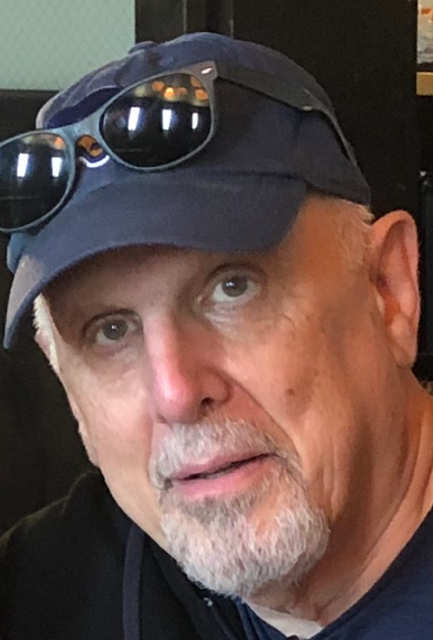
Michael Geczi is an author based in Scottsdale, Arizona. A former journalist, corporate executive, consultant, and university instructor, he is the author of nine books. “The Serial Killer Anthology” includes five psychological thrillers: “Then She Died,” “The Compass Killer,” “Hunting a Cat in Dogtown,” “Killer Dead, Victim Alive,” and “The Deadly Samaritan.” “The Revenge, Unhinged Series” includes “Pointless” and “Soulless.” He also wrote the inspirational, lightly speculative novel “Equinox.” Early in his career, he published an investment advice book.
Website
http://www.michaelgecziauthor.com
Social Media Links
https://www.linkedin.com/in/michael-geczi-0450841/?trk=nav_responsive_tab_profile
https://www.facebook.com/profile.php?id=100092170581996
https://www.threads.com/@michaelgecziauthor
https://bsky.app/profile/michaelgecziauthor.bsky.social
 Ladies of Mystery
You must be logged in to post a comment.