Guest Blogger- Christoph Burmeister

Guest blogger banner

The Poetic Murderer, and me — How the Book Came to Be

Fear will learn to fear you.

Last winter I got the news: Lionel Ross wanted to publish my first novel. I was overjoyed and humbled beyond my ability to express myself. Then gradually I gained an understanding of what was happening. Engaging style. Humorous. Smiles. An unreliable narrator reveals himself as a lyrical mastermind known as … Of course! The book was scheduled to appear in January 2018. January came like a dream, and marvellous as it may seem, soon I held a copy of The Poetic Murderer in my hands.

I was a shy child with a “vivid imagination,” as my grandmother Liesel used to say. Then I was an anxious teenager who didn’t write at all because of a lack of confidence. In my late twenties, I moved to Copenhagen, where I was awarded a master’s degree in Environmental Economics and Natural Resource Management (A title that is killer like a whale to the attention.) Unsatisfied with the job prospects I attended the Creative Writing School at Cambridge University, where my passion for drawing stories from my imagination re-emerged. I was hooked. I decided that I wanted to write a book. Back then, my professor complimented the energy in my writing, but also suggested that I should write in my mother tongue German as it would be too far a stretch for me to write a novel in English. Challenge accepted!

I started with an image — a young, enigmatic, and successful detective, having to solve a mystical murder case on a quest of a dream and fulfilment of his own destiny, and that idea wouldn’t leave me alone. I wrote the first manuscript in a flash. After six weeks I was ready, and contacted my friend from Cambridge, who wanted to become an editor. I was very positive and awaited her response. Everything changed when she replied. The manuscript was full of inconsistencies, mistakes, and bizarre phrases. But nothing that couldn’t be fixed. I’m human. Humans make mistakes.

I worked on the story obsessively. I’d been a person who enjoyed to achieve his goals with ease, offhandedly. When the novel took over for the first time in my life I had the feeling that I was properly challenged really. I purchased a small notebook and scribbled notes like a maniac, no matter where I was. If I thought of something while cycling, I’d jump off as soon as the traffic permitted it, and put it to paper. It became second nature to me. It felt so real.

From the crazy rush at the beginning, soon my literary journey turned into a devoted drafting of each chapter, and then I’d send each revised version of the manuscript to my friend in England, whose opinion I feared and wait for her response. While all this editing was going on, I continued filling notebooks and drawing the story before the inner eye. I wrote far more than I ever did before. I also discovered that style is a continuous distillation. How can I be me? Honestly expressing myself. No lies. That became the bottom line of all my endeavours. The book slowly took shape, however, due to my inexperience, a fear of failure attended me and intensified.

The detective character was what kept me hooked. He’s my hero, mysterious, funny, impulsive, vulnerable, dreamy, and in love with his laissez-faire lifestyle. When Detective 00 Hansen has to deal with his disturbingly poetic case, much hate from the police force, and that his wife left him, he questions everything. A period of doubt studied me too, especially when friends and family had hard times understanding my yet fictitious ambitions. But I wouldn’t give up.

I worked on the novel through the year, and when I was sure I’d gotten the manuscript into shape, I contacted agents and publishers, and eventually was chosen as one among many talented writers. High times!

Well, that is what I would call a miracle, one that a shy child with a “vivid imagination,” wouldn’t have dreamt of or an honoured professor at Cambridge University wouldn’t have predicted.

Now will anyone buy the book, unravel the deeper meaning of it, smile when I’m acquainting them with a funny line, and feel inspired to follow their own dreams?

That remains to be seen. At least The Poetic Murderer made my own dream become true.

And as you shall see, fear will learn to fear you too.

FINAL COVER (1)The Poetic Murderer

“Fear will learn to fear you.”

If you liked Paul Coelho’s The Alchemist, you will love The Poetic Murderer.

Detective 00 Hansen is an enigmatic dreamer in the streets of Copenhagen, riding a fast antelope, and living a slow life (not always to the delight of his wife)…

In The Poetic Murderer, Hansen and Don Cindy’s first mystery, the duo are informed by Denmark’s Queen Marmalade II and Prince Sandwich about an unimaginable murder at the supermarket. The body is marked by violence and the murder weapon an unhygienic rainbow trout.

The police are baffled by the mysterious poem at the crime scene. But when Detective 00 Hansen applies his vivid imagination to the problem he uncovers a tragic tale of unrequited love and ruthless ambition… Will he stop the poetic murderer on the quest of a dream and fulfilment of his own destiny?

An unaesthetic fear of the unknown haunts us, namely the unforeseen. A fear that shapes our lives. No human can unlearn to fear; we all have to learn how to deal with it. By picking up this novel, the reader travels a new route and learns to lead a fearless life by trusting in the own reality.

Buy links:

Christoph colChristoph Burmeister was born on the 16 April 1987 in Bad Oldesloe on the river Trave. That’s why he originally wanted to become a clown.
On school days he dreamed wholeheartedly. University was no hindrance to him; it was his hobby. He would carefully fashion his appearance as an eager student.
After graduation, the money bell rang, and he started working for a shipping company as a treasury manager. One day he took a glimpse into the mirror and did not recognise himself, so he left home and moved to Copenhagen.
All of a sudden: Hygge!
2015—Creative Writing at the University of Cambridge, then Improv theatre. Now his first novel: The Poetic Murderer.
Christoph likes Jazz and his simplistic life-style resonates with mystery and beauty. His right hand is the instrument of his daily writing practise.


Social Media:

Understanding Your Characters

Part of what makes a great story is great characters. Any reader can tell you that. Writers talk about developing characters, fleshing them out, giving them back story, making them flawed and relatable. These are all vital steps in creating great a character.

But once the character is created, I find I have yet one more hurdle that I have to jump: I have to understand my characters.

A young couple in Galway contemplate the evening

But you created them, you might say with surprise. You wrote their background, you devised their likes and dislikes, fears and dreams. What’s left to understand?

Lots.

Characters run the show. They get away from you, the writer, taking their own story in directions you hadn’t anticipated. Yes, I know that sounds ridiculous. Yet it happens to all writers.

In my current work in progress, I realized after finishing the second draft that I had the wrong killer. A different character was standing in the wings looking guiltily around, trying not to make eye contact with me. Ah-hah, I thought. That’s the real killer!

Trying to pull a fast one on me, I might add.

In several of my books I have another problem of understanding with some of my characters: I write characters who are not native English speakers.

My mother and grandmother in Warsaw

As we all know, language affects not just the way we talk but even the way we think. Writing a foreign character (foreign to me, that is) means not only understanding their native tongue enough to be able to replicate their thoughts, but also understanding the way they frame their thoughts in the first place.

A Pole, an American and an Irishman walk into a bar…. They’re all thinking a little differently and it’s my job to understand those differences.

A woman examines a grave in Warsaw. What might she be thinking?

I’m not complaining. I love that job! I spend time improving my language skills. (By the way, for anyone interested in learning French, I recommend the lessons by Paul Noble. They’re very good!). Extra bonus, it helps when I travel the world and meet new people. So it’s a good problem to have. And one that I hope I have succeeded in overcoming.

But you tell me. If you’ve read any of my books, I’d love to hear your thoughts on my foreign characters and how well I’ve captured their differences.

Learn more about Jane Gorman and the Adam Kaminski mystery series at janegorman.com.

Mind Games and Murder

by Janis Patterson

I wonder if all mystery writers are irretrievably warped?

I spent last week at the Novelists’ Inc. (NINC) conference in St. Pete Beach, Florida. It was held at the luxurious TradeWinds resort, a place of which dreams are made. The weather was good – a little rain, a lot of wind, but mostly warm and sunny. The resort amenities are incredible – this is our fourth time here and I still haven’t been able to do all the ‘resorty’ things I want to, such as going down the big slide and doing the paddle boats on the carefully maintained artificial creek or sing at karaoke night. (I’m not lazy – it’s just the conference is so intense and it’s so wonderful to be able just to sit and talk with other writers.)

The resort is perfection, and the staff works hard to keep it that way. (And I’m positive none of my dire imaginings have ever happened there in reality – it is a lovely place in every sense of the word.) I mean, even the brick walks are swept several times a day to keep the beach sand off. Everywhere you look there are staff members in their trademark blue and yellow Hawaiian style shirts going around making things perfect, just like little elves. The restaurants and bars are great and to get up early in the morning and watch from our balcony as the day is born to the music of the surf is heavenly.

So why are my thoughts swamped with murder and mayhem? You’d think I would just be enjoying the conference and my friends and the beauty, but no – so  far I’ve hatched a bunch of plots that involve poisoning, stabbing, international intrigue and smuggling, all located in this consciously perfect setting.

Violence and crime are terrible no matter where they occur, but it seems they are worse in places of such beauty and perfection, and therefore more alluring to the mystery writer. The vast number of employees, each in their yellow and blue Hawaiian shirts, are an invitation to a villainous outsider outsider to use the uniform as camouflage. After all, with the exception of our chambermaid, I don’t think I’ve seen the same employee twice.

Am I the only one who looks at the minutiae of life through such a murderous lens? In an arboretum full of beautiful plants I am drawn to the poisonous ones. In an art museum I find myself thinking not of the beautiful paintings, but of what a wonderful place it would be to hide a body. A shopping mall? Just too full of murderous opportunities to list.

People often ask me where I get my ideas – or, worse, offer to sell me theirs. Getting the ideas is not the problem; most of the creative people I know have many more than they can ever use. The problem is deciding which idea to use – and it takes a bunch that fit together seamlessly to make a good book. The bad part is that you can only fit so many widely different murders into one book!

Worst of all, when you are surrounded by such beauty and comfort and perfection the urge to indulge in a little villainous mayhem is far too much to resist. I think I’ve decided on smuggling… or maybe jealousy… or perhaps a disputed inheritance… as the inciting incident. Check with me next  year and we’ll see how the story turned out!

Retro-dressing my characters

By Sally Carpenter

One of the challenges of writers of historical mysteries is clothing their characters. As fashions change continually, authors must carefully research their time period for accuracy.

My new cozy is set in 1967, a period that should be easy to clothe, right? When I was growing up in the ‘60s I wasn’t interested in fashion. My mother sewed all my clothes and I didn’t buy my own clothing until college. My memory of what people wore at the time is vague and limited.

So I consulted books and learned about Mary Quant and the groovy, hip styles. However, my book is set in the rural Midwest—similar to where I grew up—and the hot fashions of the New York runway never made it west. Growing up, I didn’t see anyone on the streets wearing love beads or Nehru jackets or batik prints or even miniskirts. The ordinary Jane Doe didn’t dress like Emma Peel.

What to do? I found a terrific book titled “Fashionable Clothing from the Sears Catalogs mid 1960s.” That’s right, the book contains full-color illustrations of the merchandise sold in the mail-order catalogs. It’s a wealth of information of what the common person wore as they shopped at Sears, not high-end boutiques.

Women’s clothes of the ‘60s were less restrictive than the ‘50s. Gone were the girdles and mounds of petticoats holding up poodle skirts. Pantyhose replaced nylon stockings for a practical reason. Individual stockings required garter belts to hold them up, but the stocking clips could be seen under miniskirts. Pantyhose provided a seamless visual line as well as some modesty if the skirt flipped up.

But some ‘50s holdovers remained into the ‘60s. The catalogue book has several pages of women’s hats, and when ladies put on a hat, they wore gloves as well. Jackie Kennedy made the pillbox hat a must-have at the time. So I will occasionally put my 26-year-old heroine in a hat because it looks far out and while she’s tough, she isn’t a total tomboy.

The Sears book has no miniskirts! The dresses and skirts hit the knee or just below. A black “dance” dress is shorter, with the hem only about two inches above the knee “to allow movement.” Miniskirts were not practical for everyday women working in offices, stores or schoolrooms.

The book also has far more dresses than pants for women. Women in white- and pink-collar jobs generally wore dresses and seldom  pantsuits on a night out. I had to rethink my character’s wardrobe. I’m putting her in more dresses than I anticipated, but that’s OK. She looks groovy in skirts. And she’s in pants for the “action” scenes that require running and climbing.

I found no women’s jeans in the catalog book, although I did spot a denim jacket and skirt outfit. Women’s dungarees (jeans) had been around in the ‘50s, but only for casual wear or factory/farm work. In the ‘50s and early ‘60s jeans were associated with biker gangs, hoods and rowdy rock bands. Only by mid ‘60s did jeans gain popularity. In fact, faded and patched jeans were stylish.

The few shoes in the book are mostly flats, a surprise as I thought most women in dresses wore heels. Flat heels permit more movement and are less painful for the feet. However, the pencil skirts of the time prevented women from taking long strides and forced them to move their hips more when walking.

Watching TV shows and movies of the era is a another great way to do research. One can see not only what women wore but also how they moved in the slim skirts and short hems. One of my heroine’s dresses is based on an outfit Barbara Feldon wore in “Get Smart.”

In the ‘60s, not everyone jumped on the fashion bandwagon. The older generation, i.e., my parents, continued to wear older styles. Few women in my hometown wore pants in public. My mother only put on pants once in her adult life and I thought they looked weird on her.

I’m writing from my experience. No doubt many older women of the ‘60s embraced pants and other hip styles—just not in my neighborhood.

Of course my cozy has hippies. They dressed differently from the “square” townsfolk to express their individually and distain for the “establishment.” The Sears book didn’t have hippie clothes–no surprise there–but I found examples in other books. Surprisingly, hippies shopped at war surplus stores. This seems odd considering their opposition to the war, but perhaps the reason was that the merchandise sold cheap.

Men’s fashions haven’t changed much over the years. The suit-and-tie has remained standard wear forever, although the ‘70s put a spin on that with the huge lapels, wild pastel colors and paisley shirts. The men in my book mostly wear regular shirts and pants except for the occasional denim overalls (this is farm country after all) and suspenders. And maybe a couple of bellbottoms.

In looking through the Sears book, I was struck at the beauty of the clothes. The models look feminine but not girlish, pretty yet confident, stylish but not too dated. Modern women’s clothing has a drab “unisex” look that I dislike. I’d love to wear some of the fashions in the Sears book. Let’s go retro!


The Body (Not the Dead Body) in Mystery Fiction


 Though body is the central element of all experience, it’s easy to take it for granted until it fails in some way. The flesh and bone and nerve that makes up a human are resilient and yet also shockingly vulnerable. Having spent my academic career in the field of Health and Exercise Science, of course I’ve paid considerable attention this subject, but I also think about it as a reader and as a writer. What place do illness, aging, and injury have in the books we read for entertainment?

It depends on how lightly we want to be entertained. In Henning Mankell’s Kurt Wallander series, Wallander’s poor diet, lack of sleep, and high levels of stress have cumulative effects throughout the series. His struggles to regulate his habits and to cope with his declining health are portrayed with affecting intimacy and realism. Meanwhile, the protagonists in humorous cozies often have junk-food habits and hate to exercise,  yet they remain healthy and attractive and able to escape from danger with adequate agility, experiencing no worse negative consequences than five or ten pounds they would like to lose. The same common health behaviors can be written as tragic flaws or comic flaws, depending where the book fits in the genre spectrum.

Injuries are common in mysteries, from bullet wounds to twisted ankles to head injuries. In recent years, the latter have been handled with more accuracy as we better understand concussions. The person investigating the mystery is now less likely to get knocked on the head and push through with nothing but a lump and a headache. Recovery is slower than it was once thought to be, and new awareness of the cumulative effects of repeated concussions, from depression to dementia and other problems, may keep writers from giving their lead characters too many blows on the head.

The sleep deprivation that protagonists sometimes endure in mysteries ought to make their reaction time slower, their short-term memories less reliable, their emotions harder to control, and their attention span fragmented. Adrenaline will help in an emergency, but not for an entire day. I’ve seen this portrayed realistically in some books and inaccurately in others. Science has shown that no one can actually train herself to function without adequate sleep, though this may be one of the hardest health misconceptions to correct, perhaps because tired people (like drunks) overestimate how well they are doing.  To some extent, we  can learn to handle the stress of fatigue and recognize how it affects us, but we can’t sustain normal cognitive and physical functioning.

Some health conditions and injuries are random—the roll of the genetic dice, the roll of a car off the road—but in fiction, out-of-the-blue disasters can seem contrived. A character’s health challenges can play a role, though, and a great variety of physical conditions have a place in a realistic representation of the world.

In M.L. Eaton’s When the Clocks Stopped, the first book in her Mysterious Marsh series, the lead character Hazel, an attorney, is pregnant and gives birth, and in the next book she’s nursing her baby. These natural aspects of her life add depth to the stories and complexity to her crime-solving efforts. In Anne Hillerman’s latest mystery, Song of the Lion, retired Navajo Police lieutenant Joe Leaphorn lives with the effects of both aging and serious injury and finds meaning, purpose, and dignity within his limitations, helping a former colleague to solve a case. Still the deep, complex character he was when Tony Hillerman introduced him twenty-one books ago, Leaphorn has gone through life changes, and so have readers who have been with the series since the beginning.

I intentionally started the Mae Martin series with my protagonist in her late twenties, so I would have decades of her life to explore, with all the changes those years will bring— emotional, professional and physical—for her and the people close to her.

As a reader, do you notice or think about characters’ health? As a writer, how to do you handle it?

*****

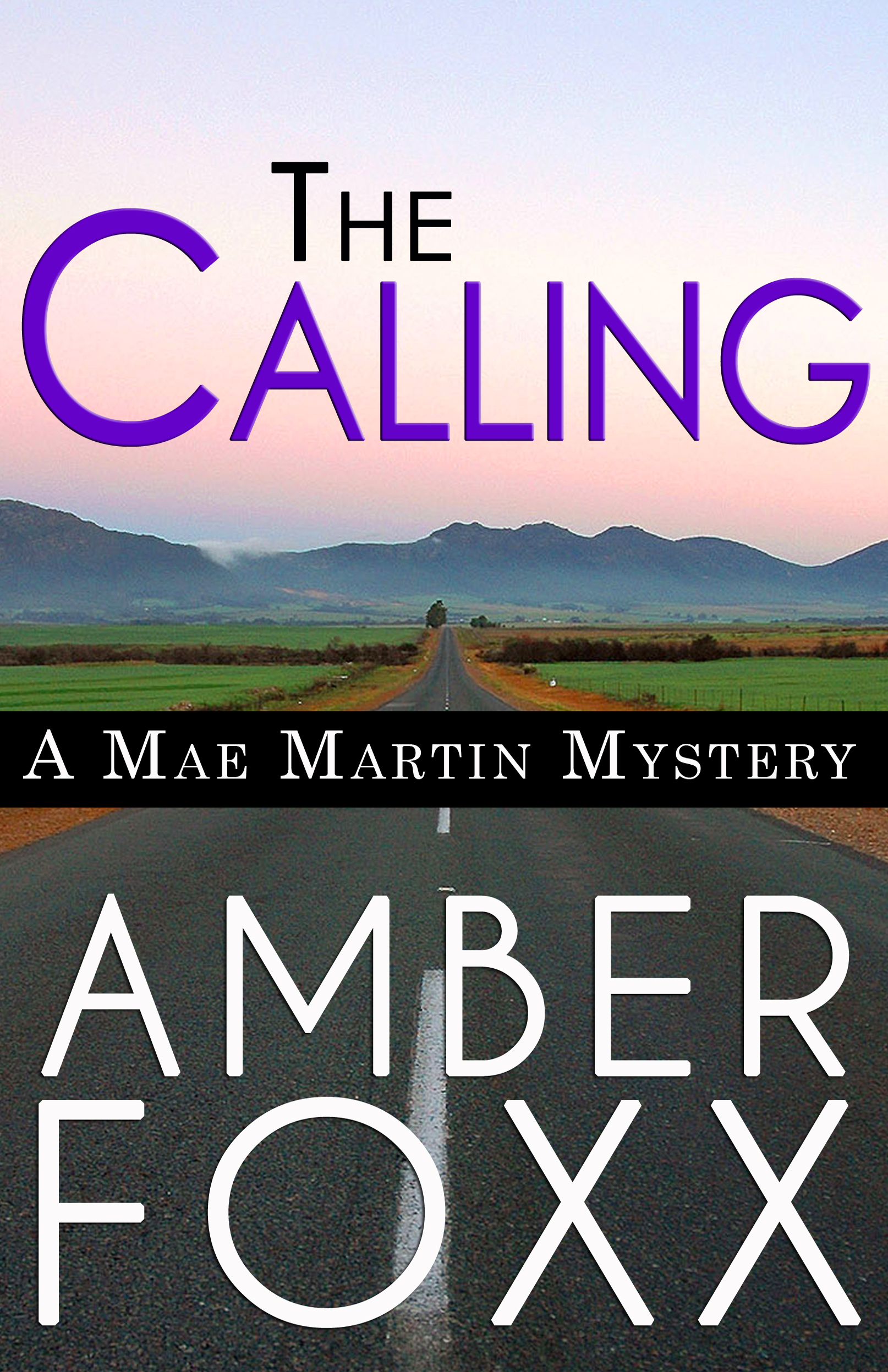
Book one in my series, The Calling, is on sale for 99 cents through this weekend on all e-book retail sites.

The Calling

The first Mae Martin Psychic Mystery

Obeying her mother’s warning, Mae Martin-Ridley has spent years hiding her gift of “the sight.” When concern for a missing hunter compels her to use it again, her peaceful life in a small Southern town begins to fall apart. New friends push her to explore her unusual talents, but as she does, she discovers the shadow side of her visions—access to secrets she could regret uncovering.

Gift or curse? When an extraordinary ability intrudes on an ordinary life, nothing can be the same again.

The Mae Martin Series

No murder, just mystery. Every life hides a secret, and love is the deepest mystery of all.