What’s in a Title? by Heather Haven

A lot of times the story itself comes fairly easily to me, but the title often doesn’t. What to call my novel? How do I catch the reader’s eye and have them want to buy my book, just by reading that stellar title? How, how, how? Hmmmm.

And to make things worse, book titles seem to go through fads or phases. For instance, the word “girl” has been used in just about every best-selling book’s title in the last few years. While using that word may not have catapulted them to becoming a best-seller, the following books were best sellers: Girl Gone; The Girl on a Train; Girl, Interrupted; Girl with the Pearl Earring; The Other Boleyn Girl; and of course, Stieg Larsson’s trilogy, The Girl with the Dragon Tattoo; The Girl Who Played with Fire; and The Girl Who Kicked the Hornet’s Nest.  
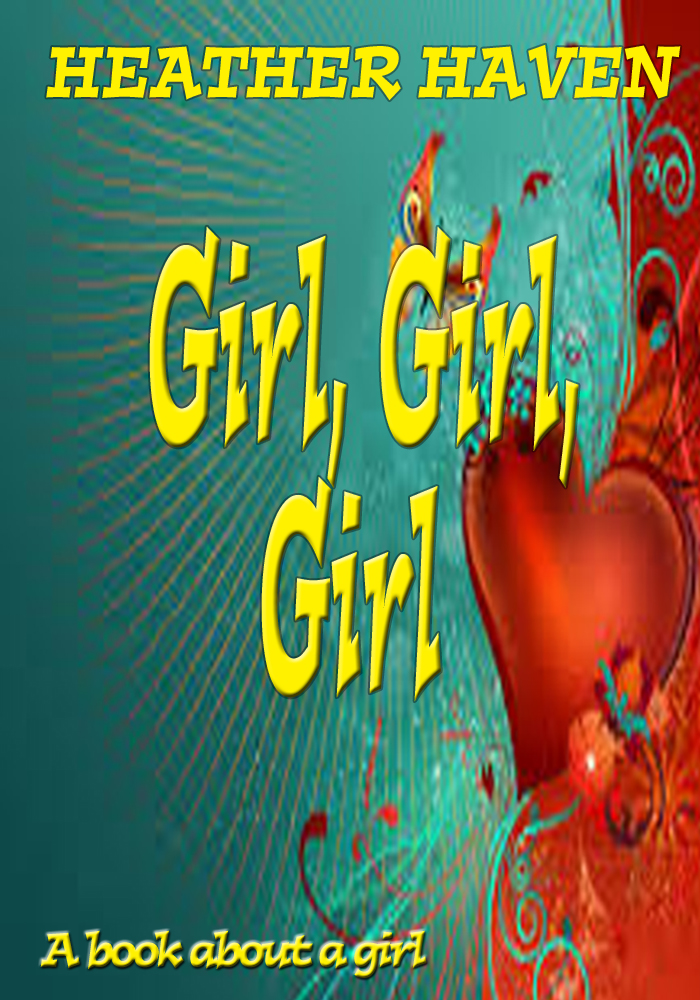
Hence, I decided to use the word “girl” in the title of a book and see what happens. I came up with Girl, Girl, Girl (see book cover). Amazingly, it didn’t sell. Maybe my heart wasn’t in it? Besides, I don’t think of human females as girls unless they’re under the age of 17. I’m not sure why that’s my cut-off age, but it is. I think once you’ve graduated from high school, you’re a young woman. Girl-kid, Woman-adult.
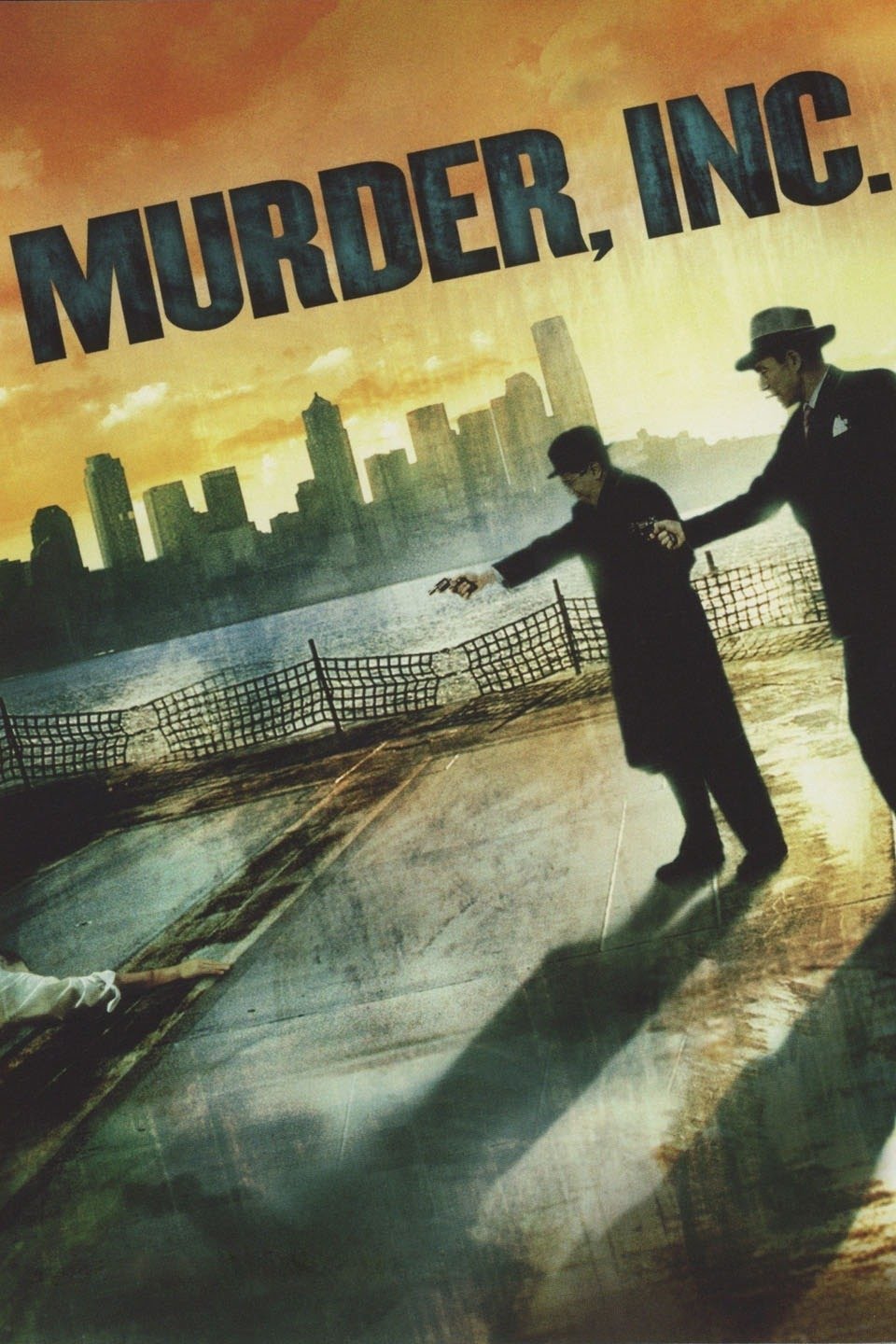
Often the title lets the reader know what kind of book they will be reading. I hope I’ve done that with my books. Whoops. The exception to this was the title of the very first book of the Alvarez Family Murder Mysteries, Murder is a Family Business. Looking back on it, I believe the title conveys a weightier book than mine. I had forgotten a famous crime syndicate called, Murder, Inc. was still in a lot of people’s minds. Guilt by association was my problem. Some readers, especially men, bought my book thinking it was going to be yet another exposé of the mob. Or possibly a written spin-off of the movie Murder, Inc, the film that launched Peter Falk’s career in his first major role as a contract killer.
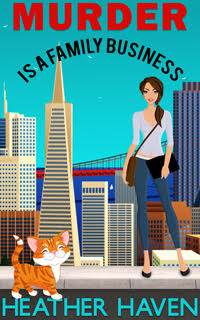
Yikes. None of the above is anything like my book, a light-hearted romp through California’s Bay Area where not only is the murderer brought to justice but the shoes and handbags match. If I could, I would change the title, but the book has been hanging around for a certain amount of time, has had some small measure of success, and, besides, I can’t think of anything better. So, Murder is a Family Business it remains.

But since that goof with the first title, I tried to be careful in naming the rest. My latest book, a work in progress, has the working title, Bewitched, Bothered, and Beheaded. Hopefully, it conveys magic and murder. And if someone thinks of a guillotine, so much the better.
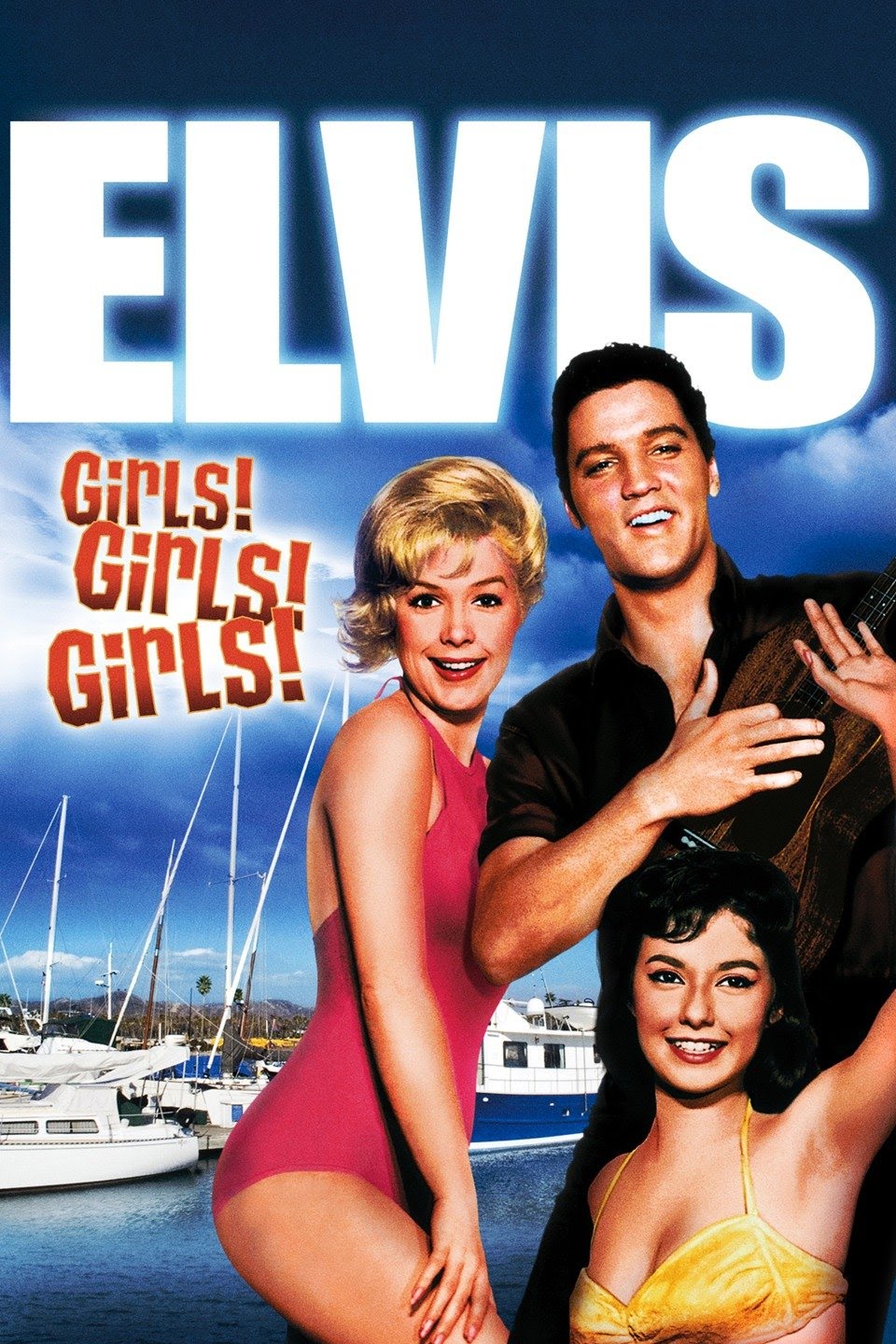
In closing, I should probably mention the title of an Elvis Presley movie, Girls, Girls, Girls. It has nothing to do with any of this, but I am a huge Elvis fan.


What is it about the Great Lakes? by Karen Shughart

A book I read as a child, set in the 1950s on Lake Superior, resulted in a lifelong fascination with the Great Lakes.  I can’t remember the title, I wish I could, but I do remember snippets of it: family gatherings that included winter sports and summer outings; homemade ice cream made with snow and maple syrup; berry cobblers when the sun was warm and the days long and bright.

I grew up in a city about two hours from Lake Erie, and I have happy memories of family trips there: beaches, amusement parks, and many attractions you’d find at the ocean, but without the salt or sharks. We went to the Jersey shore on the Atlantic, too, and I loved it, but for some reason I always felt drawn to that lake. Many years later, I attended college in Buffalo, NY, and when the weather cooperated spent weekends at a beach cottage owned by family friends in nearby Fort Erie, Canada.

As fate would have it, about 20 years ago my husband and I decided one weekend to explore Lake Ontario, north of where we lived in Pennsylvania.  We discovered a tiny village through the internet; found a charming B&B with water views that was a short walk to the lake, the bay, a small but bustling business district, museums and restaurants, and a quick drive to Finger Lakes’ wineries. Two weeks later we bought our house.

We never expected to live here year ‘round, we planned to use the house as a getaway, but as time went by we were drawn to the region’s many charms.  We worked diligently to restore our house, it had been built by a lighthouse keeper more than a century ago and needed loving care. There’s mystique here: shipwrecks; sightings of massive lake creatures; British ships invading our village during the War of 1812; the transporting of runaway slaves to Canada; a rumor that a tunnel under our backyard hid some of those slaves before they fled. And the brisk business of rumrunning during Prohibition.

Each season has its own appeal. Summer months we revel in the resort vibe enjoying concerts, fireworks, outdoor movies, days spent beachcombing, shopping at farm stands, and lots of gatherings on our deck. During fierce winter storms we snuggle safely in our sturdy home, fireplace burning and soup on the stove, drinking wine with friends. Spring and fall are glorious, too, with acres of fruit trees in fragrant bloom or ripened apples hanging heavily at harvest, and a clean, sweet smell in the air.

In truth, our journey here was serendipitous, and we’ve never regretted it. Like the village on Lake Superior in the book I read so long ago, it’s an enchanting place filled with warm, kind people, and a peaceful quality of life.

From the time I was a child, immersed in Nancy Drew books, I wanted to write mysteries. One night several years ago, I dreamed the plot of my first Edmund DeCleryk cozy mystery, Murder in the Museum. Since then I’ve written three, published by Cozy Cat Press, all set on our lake with backstories that depict the history of this place we now call home. Writing has been a passion for me since I was young, but I never expected that someday my dream, coupled with a fascination with the Great Lakes, would become reality.

Discovering the Story

This post is both an apology and a discovery. I went off this morning thinking I had attended to everything that needed attending to, and then came home to realize I was wrong. So, late but here is my post along with my apologies.

When I began working on the Anita Ray mystery series I knew there would be a wedding in the story arc, and I assumed I knew who the bride would be. After two entries in the series I zeroed in on the prospective bridegroom. But after another two novels I found I was wrong. The character who was the obvious candidate wasn’t all that obvious anymore for reasons not known at first. I don’t want to give away what happened to him, but he lived to appear in a later story.

I continued with the fifth book in the series, In Sita’s Shadow. Each mystery is named for an Indian deity whose temperament matches one aspect of the story. Sita is the wife of Lord Rama, and is considered the quintessential wife, the spouse deified, her perfection unmatched in this world or any other. 

The choice of this figure for the title was meant to underscore the character of one of the main figures in the plot, but then the story got out of hand, and all of a sudden I had a love story in my lap.

Many Indian weddings, if not most, are still traditional, which means they can take hours. Every step in the ritual must be exact—the roles of the relatives are strictly prescribed, the recitations must be exact (no stumbling over the lines), and the families must meet all the requirements.

I thought it would be fun to write about a traditional Malayali wedding adapted to modern requirements, and it was. The first ritual is the presentation of the dowry. Among the Nayars in Kerala, the groom is required to provide the dowry; his “gifts” must be exactly what was agreed to. The gifts are inspected by the father of the bride and his agent before the ritual can begin. There’s something about watching two men with their agents calculating the pile of gold sovereigns, jewelry, saris with gold borders, and keys to cars or motorcycles, and more.

The guests watch it all. Women sit on one side of the room, men on the other, and we check out what the groom provided. I once made the mistake of saying, “So is that what the groom offered to give?” And the father of the bridge pounced and said, “Must give!” He was adamant, even fierce. Marriage is serious business in India.

The wedding in In Sita’s Shadow is adapted to the needs of a Westerner and an Indian woman, and figuring out how this would work required creativity as well as consulting with an anthropologist, but we figured it out, and it’s now one of my favorite scenes of all I’ve written about India. Auntie Meena, originally a skeptic of this relationship and the marriage rites between them, is won over. I hope the readers will be too.

Coming in August, In Sita’s Shadow: An Anita Ray Mystery.

Who? When?

by Janis Patterson

If there’s one thing in the writing world you learn very quickly it’s that no matter what you do you cannot please everyone. Sometimes it seems almost impossible to please anyone! Another thing you learn is that the ‘rules’ change almost as quickly as the weather.

Well, I don’t believe in ‘rules’ – other than the hard and fast ones like good grammar and spelling and a cohesive, interesting book, of course. What I dislike are the God-like pronouncements of how a story should be structured. Such as in romance, for example, say you have to have a ‘cute meet’ between the hero and heroine in the first three pages or (in certain kinds of romance) a hot sexual encounter no later than the second chapter. A corollary in mystery is that the body has to appear early in the book – ideally in the first three pages.

Well, being by nature a dedicated contrarian, I find such ‘rules’ to be inimical to the integrity of a story. They smack of ‘writing by pattern’ and while each genre has certain expectations like as a happy ending and justice done such arbitrary ‘rules’ are the antithesis of creativity… and all too often good storytelling.

That said, I have written – sometimes at the ‘behest’ (i.e., orders) of a publisher or out of pure mischief –  some stories that follow these ‘rules’ and some which most delightfully turned them on their heads. One example is a Regency Romance (written as Janis Susan May) where the hero and heroine, though lovers a decade or so before, do not meet in the here-and-now present of the novel until the last chapter. This particular book has won a couple of awards… and been used as an example of how not to write a romance.

On a different note, I once wrote a mystery where the body appeared as demanded in the second or third paragraph, and that was a very hard book to write. Murder is by definition a violent crime, no matter how delicately it is committed, and one should feel outraged that someone – anyone – should have their life taken from them. However, there is almost a prerequisite that to feel sympathy for a character you have to know them, and that’s almost impossible when said character first appears as a lifeless lump on someone’s rug.

How do you create empathy for a character about whom no one knows anything and feels less? This victim, this human, this person, is perforce little more than a stage prop who elicits very little feeling or sympathy. I gave him a name, simply because it was more convenient than calling him ‘the body’ or ‘the decedent’ or ‘the dead guy,’ but although he had the requisite number of arms and legs he never really became a real person – merely a humanoid construct.

I have been dinged and called down because in my mysteries (save that one) the murder doesn’t happen until one-third or one-half through the book. I feel by giving the reader such a delay it creates two mysteries instead of one. The first is, who is going to be murdered? while the second is, who is going to be the murder?

When I write a murder I want the reader to be outraged at the deliberate taking of a human life, no matter how much that person deserved to be offed – and believe me, in my mysteries there are several characters who deserve it. Don’t know why bad people are so interesting, but they are, so I always have several of them… just like in real life.

A murder victim – whether in a book or in real life – deserves to be more than a stage prop.

What Makes A Mystery?

by Janis Patterson

We talk a lot about writing mysteries, reading mysteries, enjoying mysteries, but it’s seldom discussed what a mystery is. Leaving out the religious definitions, Dictionary.com says

  1. any affair, thing or person that presents features or qualities so obscure as to arouse curiosity or speculation
  2. a novel, short story, play, or film whose plot involves a crime or other event that remains puzzlingly unsettled until the very end
  3. obscure, puzzling, or mysterious quality or character

So at heart a mystery seems to be an obfuscation, either deliberate or accidental. I can deal with that. It isn’t easy, but I can deal with it. It comes down to making the unknown known, and the writer has the unenviable task of revealing it piece (clue) by piece. That is after he created the story and then covered it up! It is a delicate balance.

Taking a ‘mystery’ and making it into an enjoyable and reasonably coherent novel is a daunting process, whether it’s the question of who took Aunt Ida’s coconut cake to finding a vicious and seemingly omnipotent serial killer. The process is – or should be – the same. Even if it isn’t the first scene in the book, when you’re plotting you need to start with an action by an unknown – i.e., the crime, be it coconut cake or murder. Then you must follow the carefully laid clues but seemingly random clues found by the sleuth, be he amateur or professional detective, and by examining these clues eventually uncover the truth. Don’t forget to complicate the process with a fair amount of believable red herrings and some conflicts/problems caused by the people involved.

The trick to doing this is not to be too obscure or too obvious. And I’m a firm believer that your sleuth has to work at finding these clues and therefore find the solution to the mystery in a logical and sort of organized form. You should also put in enough clues that the reader, if so inclined, has a decent chance of solving the mystery. Now I’m perfectly aware there are mysteries which are widely read and even some celebrated writers who break these rules. The most famous example is Raymond Chandler, who admitted that sometimes even he didn’t know how his sleuth solved the mystery – it just happened. Raymond Chandlers are few and far in between, though; the quality of his writing was so good that neither readers nor critics seem to care. Don’t try to duplicate this. Odds are you can’t.

Another rule-breaker is often the currently popular ‘fluffy’ cozy mystery. The sleuth is usually a woman and she usually has a ‘cute’ job – owning a bakery or specialty coffee cafe or floral shop or something similar. She has or wants a boyfriend, who often turns out to be a policeman of some sort, and a bunch of ‘zany’ or ‘quirky’ friends. All too often in this kind of story the mystery is of secondary importance to personal relationships and the personal life of the sleuth. It’s an overdone trope, but some sleuths still express a passion for shoes which takes up a lot of the story space. Which is fine, as long as that is the sort of story is what the reader wants.

What is not acceptable, however, is when in whatever kind of mystery the sleuth does little to no sleuthing. Clues seem to appear with no effort on the sleuth’s part. The solution is highly reminiscent of the deus ex machina so beloved of Greek and Roman playwrights. I call that a cheat. A mystery shouldn’t need a god to step down from Olympus to unravel a story so complex it is beyond the ken of mere humans.

It is good that there are so many variations of mysteries – puzzles, non-lethal crimes, capers, murders, serial killers, fluffy cozies, traditional cozies, hard-boileds… there is a style of mystery for every reader. I only hope they follow the rules that make a mystery a good story.