Reading Old Work

For the last few weeks I’ve been thinking about the old mss left unfinished. Some are in my computer. Some of them are on paper, stacked in a closet, shoved into the back where I can’t see them. That’s probably a good thing because if they were visible I’d pull them out and litter my desk with them.

There’s nothing wrong with any one of them, and several came very close to a sale. But there is something not quite right. Every writer knows what I’m talking about—the story we loved and worked on and with a gasp of hope sent off to an editor or an agent. And then it sat there, on someone’s computer or desk, gathering dust of being pushed lower and lower on the list of titles in the TBR file. The question becomes, what do we do with them? Do we reread and rework them? That’s a definite possibility. The more I learn, the more I rethink what I’ve done and recognize where I could have improved the story by changing the setting, developing the villain more, heightening the tension, or removing the extra secondary characters. But I don’t do these things in a novel. I might do some in a short story, but not in a longer work. And I think I know why.

Some years ago I was an avid fan of Margery Allingham’s Albert Campion mysteries. The first one appeared in 1929, The Crime at Black Dudley, and others followed fairly regularly into the 1960s. I don’t know if many people read her work anymore, but she was considered one of the great British mystery writers of her time. After reading through her entire list including a couple of novellas, I came across her first mystery, The White Cottage Mystery, published in 1928. This is only a year before her first Albert Campion story. And I was startled at the difference between the two., and the extent of her growth and development as a writer between her first and her second book. It’s an experience I have always remembered. 

We grow and change as writers. If our work sounds the same year after year, we’re not growing and it’s time to stop and ask why. I don’t want to write the same book year after year. There has to be something different, some sign of a new perspective, a new challenge. I can see this same ambition in some of the writers I read, but not in others. 

When I pulled out some of my old mss and had the passing thought of rewriting and updating them, I was frozen, and here I think I was so for a good reason. Whoever I was back then I am not her now. To bring one of those old mss up to the level I would want to write today would be to dismantle and basically erase it. Each line, each feeling and action would have to be different because I’m different. The story was good for its time and in some instances that’s twenty or more years ago. I was different and the world was different.

I’m in a long phase of decluttering the house I’ve lived in for over forty years, but I doubt I’ll toss out those mss, not just yet. Each one tells me something about writing, finding a voice, developing a voice through time, challenging ideas and creating new ones. I liked some of those stories more than others, and the failure of some weighed on me more than others, but like any other experience that comes to an end, I let those novels go and moved on.

The one important thing I remember is that even though they didn’t sell, they made me the writer I am today, with their lessons and discoveries, their pitfalls and graces. For that alone I will probably keep them for a while longer.
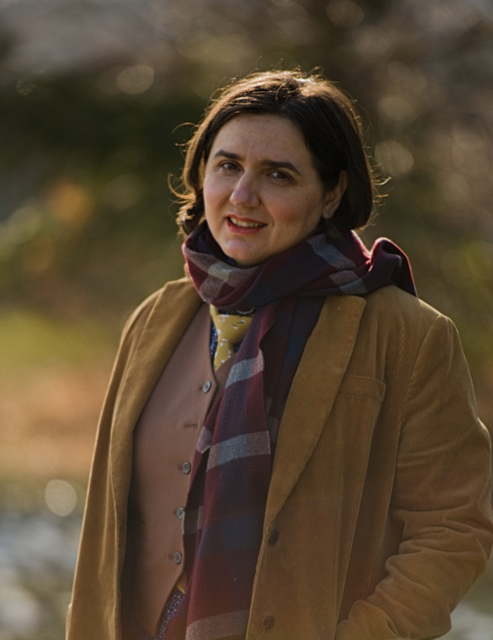
Guest Blogger -Jennifer Giacalone

Working Backwards

When people find out that I write the occasional mystery novel, the most common question I get is “so do you write the ending first and then work backwards?”

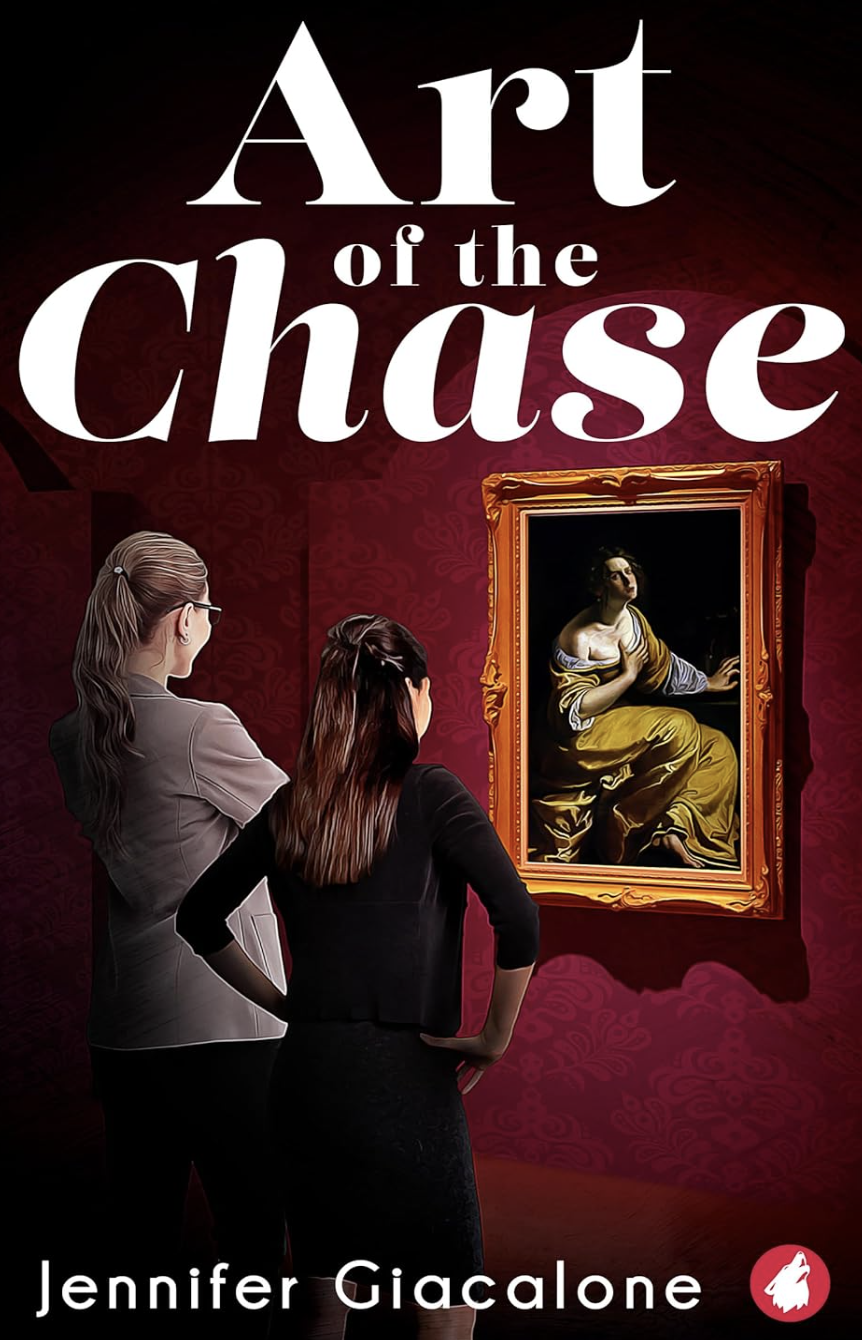
So, for anyone who might be wondering if I did that with “Art of the Chase,” the answer is no. However, I didn’t quite write it from beginning to end either. You could say I did it sideways, from the middle out.

Where Is the Middle Anyway?

For me, a mystery turns less on the beginning or the ending and more on the little bit of information that’s so interesting and surprising that it allows you to see certain things about what comes before it and after it.

For example: I was watching a documentary on the works of Vermeer. They talked a bit about how it was unusual for the time period that he used so much blue in his paintings, because it made them very expensive. Blue paint could only be produced with lapis lazuli stone, which had to be hand-ground and then processed in a very unpleasant, potentially dangerous procedure. You didn’t find many painters of that period using it as wantonly as he did.

The advent of French ultramarine produced chemically, in the 1880s, made it much easier and cheaper to work in blue. And it was this seemingly random fact that ended up being what the story turned on.

Because I started to think: what if you had a detective who specialized in art thefts? Would they know about the rarity of blue in Renaissance and Baroque painting? How would that knowledge come into play if a particular piece was stolen? I was starting in the middle. The middle of a story, the middle of a question, the middle of a period of history in which blue paint was a precious commodity.

Research Is The Fun Part

The process of writing is, for me at least, an opportunity to learn. I learn about myself, always; my biases, my areas of weakness as a writer, my own fascinations. But I also just learn about… well, stuff.

Almost everything I choose to write about requires some amount of research. And it’s always about something of interest to me. There’s nothing I love more than learning a lot about a topic of interest, in this case, art. And in particular, the life and work of Artemisia Gentileschi, the various methods of producing paint colors used by the old masters, and the architectural landscape of Florence. What a delight!

I fell down a rabbit hole, and popped up somewhere late in the third act with bits of fascinating information in my little paws like some sort of literary groundhog. The threads that connect my little prizes are ultimately what hold the story together. Why does this painter matter to this detective? What sort of thief would want to steal a piece of hers? And what does the history of blue paint have to do with any of it?

There is a Connection Here, I Swear

I spread my treasures out and draw lines from one to the next. I figure out why these things matter to each other, and so the story reveals itself. My plotting efforts tend to look less like a traditional bulleted outline, and more like a murder board with photos tacked up alongside post-it notes, connected by a brightly colored thread that runs from the middle out.

And I’m the lunatic cop who can stand back and see how it might all connect; who do I need my thief to be, my heroine, my informant? How do I build them to make these treasures shine and tickle my readers as much as they tickled me?

Ah, there it is. I see it. There’s my story. There’s my heroine. This is how she gets from here, to here, to there. There’s my thief. That’s what he wants, and why.  It’s not a matter of working backwards or forwards. It’s a matter of allowing the story to emerge from the bits and pieces that delight me the most, and letting them surprise the reader as much as they surprised me.

When a notorious art thief surfaces, warring detective exes reunite for the hunt. 

Six years ago, the “Fabulous Gustave” slipped the grasp of Agent Fleur van Beekhof, making off with a priceless artwork…and Fleur’s beautifully ordered life. Suddenly the cool, pragmatic Europol detective lost her detective partner and wife, her rising career, and her control, thanks to the addictive lure of cards.

When a new Italian art theft bears all the markings of Gustave’s flamboyant, taunting style, Fleur is put back in the field, because no one knows him better. She jumps at the chance to correct the mistake that ruined her life. The hitch? She has to work with her fiery ex-wife. 

Where Fleur is a detective who loves art, Renata is an art expert who loves being a detective. Where Fleur is by the book, Renata is reckless and leaps into danger. But they’ll need both of their skills to catch the slipperiest thief Europe has ever seen … even if it shatters what’s left of Fleur’s heart. 

Buy link: https://www.amazon.com/dp/3963248351

Jen Giacalone is a neurodivergent queer nerd who has lived many lives and brings with her a wealth of experience to tell high-octane drama, thriller, and mystery stories across books, film, and TV.

After spending her twenties as a rock and roll frontwoman, and her thirties as a graphic designer in boardrooms of Fortune 500 companies, she’s currently in what she likes to call her “final form” as a writer.

You can usually find her disappearing down rabbit holes of fascinating research on random subjects that will turn up in one of her books. And, of course, she sprinkles a little glitter on everything she touches.

https://www.instagram.com/jengiacalone/

Merging Fact With Fiction by Karen Shughart

I’ve been a contributing blogger for Ladies of Mystery for roughly five years, and initially, at the beginning of each year, I made a list of the topics I wanted to write about for each month. But a year or two ago I decided to be a bit more flexible and instead of sticking to the script, so to speak, to write about what motivated me at the time.

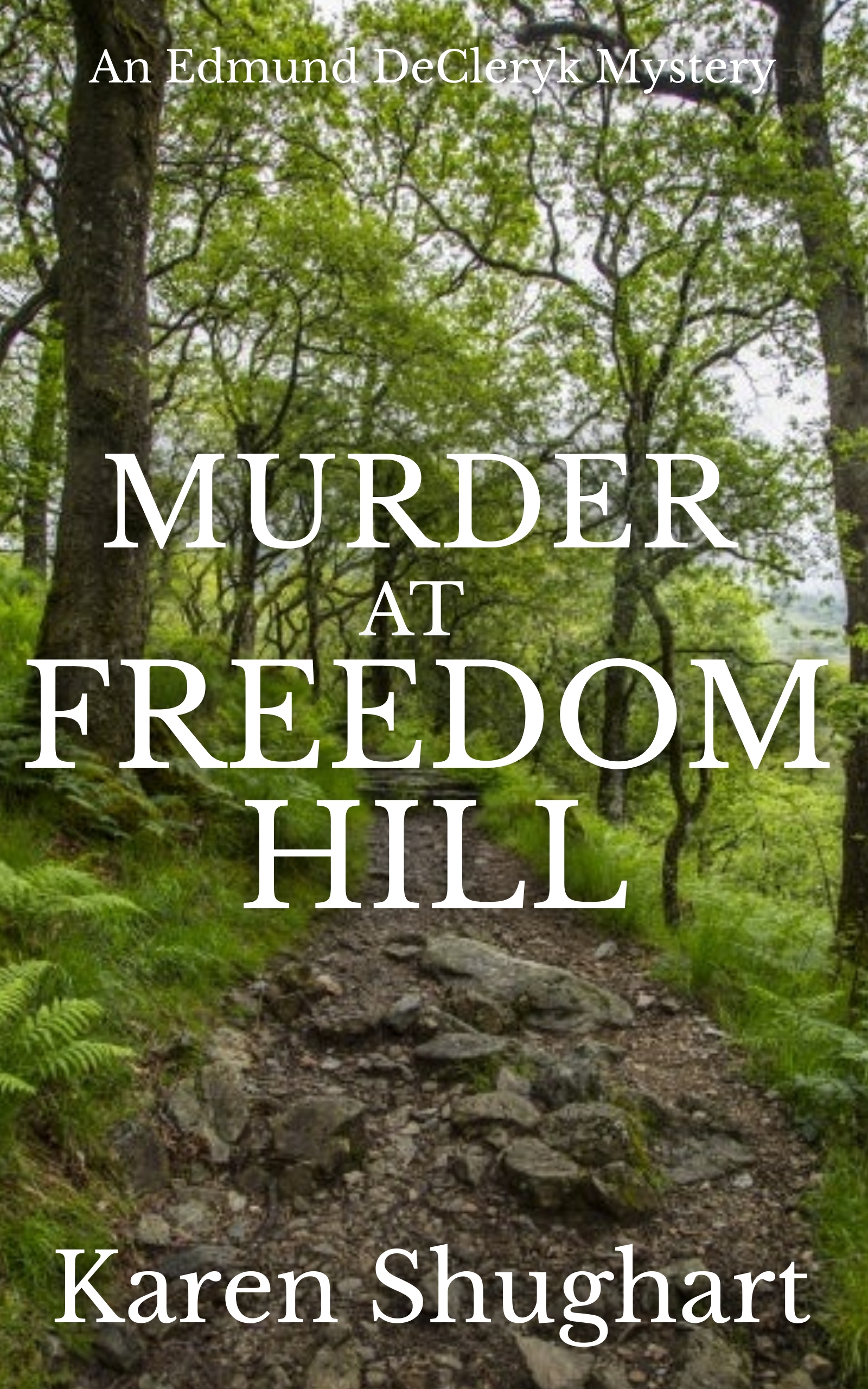
When I began to think about what to write for this month’s blog, at first I came up with a blank–some months are easier than others–and after that I considered writing something about Valentine’s Day or Presidents’ Day. Somehow neither felt right, and I couldn’t think of anything original to say about the topics. Then I decided that because February is also Black History Month I’d write about the third book in my Edmund DeCleryk cozy mystery series, Murder at Freedom Hill, which is about the murder of the beloved, biracial mayor of the fictional village of Lighthouse Cove, NY, whose body is found on the path leading to the beach at a historical site called Freedom Hill on the south shore of Lake Ontario

Freedom Hill is a real historic site a short drive from our house where before and during the Civil War, through an intricate, dynamic and well-developed Underground Railroad system, escaping slaves fled down a path to boats that would transport them across the lake to freedom in Canada. At that same time Maxwell Settlement, upon which the fictional Macyville in the book is loosely based, was a thriving community of freed people of color who worked along side abolitionists to help those slaves escape.

In the book, when criminal consultant, Ed, is hired to investigate the mayor’s murder he wonders if the crime might be racially motivated and related to an exhibit the mayor had been working on with Ed’s wife, Annie, head of the local historical society and museum. The exhibit’s focus is on Macyville and the mayor’s ancestors, both Black and White, who lived there, but a critical piece of information the mayor had promised to provide is missing.

The historical society, with help from the mayor, has also obtained a grant from the National Trust for Historic Preservation to restore Macyville, which had fallen into disrepair after its residents left for better opportunities after the Civil War, and a fire destroyed it in the 1920s (the real settlement remains in ruins, but there’s a historic marker designating the site). Annie is working with contractors to assure the project will be completed in time for July 4th weekend festivities, but she suspects that someone is trying to stop it from moving forward. Is the mayor’s death related, or is something else afoot?

I enjoyed doing the research for this book and merging fact with fiction- as I do with all the books in my series- but for some reason this particular period of history has always fascinated me. It was gratifying to learn how so many of our residents played a critical role in helping to shelter fleeing slaves from capture before transporting them to freedom.

Karen Shughart is the author of the Edmund DeCleryk cozy mystery series, published by Cozy Cat Press, including the award-winning book three, Murder at Freedom Hill.  All books are available in Kindle, Kindle Unlimited, paperback, and Audible. She is a member of CWA ( Crime Writers Association of the UK-North America Chapter) and F.L.A.R.E ( Finger Lakes Authors and Readers Experience).

Motivation

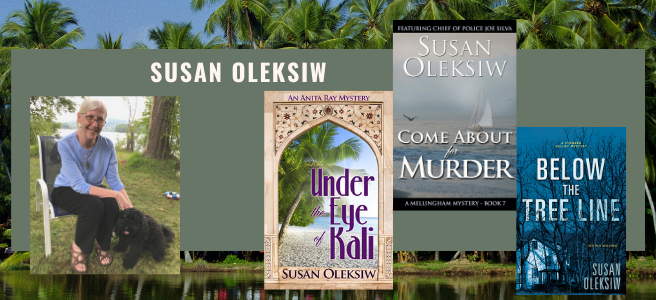
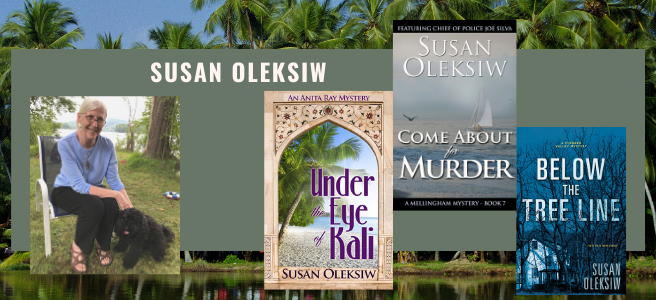
I’ve been working on the sixth Anita Ray mystery since July, and now have 44,000 words. That by itself should tell you that I haven’t been well focused on this one, but I’ve had two epiphanies this month. First, I know what the big crisis will be, and it’s coming up in the next 10,000 words. Second, and much more important, I don’t have to know a character’s motive until I get near the end.

This, the second discovery, surprised me. I’ve struggled with finding motivations for my characters’ behaviors beyond their conduct simply being the result of who they are, their past experiences and hopes for the future. That’s always been true of any character, but when it comes to murder or some other form of violence, I need to see something more in this person I’ve created, something that the reader hasn’t already divined by reading about him or her. 

We stitch together our fictional creations from snippets of real life. Riding on the subway or bus or train brings us into contact briefly with the oddities of our world, the woman who wears orange sandals under a plaid lumber jacket on a sunny day, her jacket covering up fabric of such color we’re dying to get a look at it but she’s buckled up tight. Perhaps the only thing about her buckled up. We overhear snatches of conversation. I still wonder about the meaning behind the casual words of two men in a cafe. She’s always been like this; it was no secret. But he married her anyway? He did. And it isn’t medical? Nope. I really want to know what “it” is. And then there was the package that arrived at a neighbor’s, which she sniffed and shook, and apparently rejected because she left it on the front step. I don’t know what happened to it after that, only that it disappeared.

I’m curious about these people’s lives but if I put them in a story as a killer, I need to know what would make them kill. Being odd or different or cryptic isn’t enough, as every writer knows. We look to the great ones in our genre—Agatha Christie in the traditional mystery, Ray Bradbury in science fiction, or James M. Cain for noir—and think about how they developed their characters’ moves and failures. The motives for crime can be limitless, but perhaps the shortest list comes from Christie: greed, lust, envy. Those cover just about every failing in life.

I’ve been thinking about these for weeks now because even though I have a murder, another crime coming up, a diverse cast of miscreants, and a great deal of stupidity, I still don’t have a motive for the inciting incident. At least, I didn’t. That was part of the second epiphany this month. The characters can have all sorts of immediate short-term motives, but the one that’s driving everything has to be larger, tied deeply and inexorably to the character’s identity. I found it this month, and it has delighted me. It was almost obvious, but not quite. 

The surprising thing to me is that I’ve written half the book without knowing why this is all happening and happening in the way it is. We watch people in life, just as in books, wondering what they’re up to. We’re waiting to cross the street when he see a man on the opposite sidewalk stop and stare in a store window; he peers, he moves closer, he looks around to see who else is nearby, and he stares even harder in the window. When he walks on, looking back once or twice, we cross the street and try to guess what he was looking at. It’s an old-fashioned tailor’s shop with the expected clutter in the undusted window—scraps of fabric, a bolt of cloth, a tape measure, a small cardboard box of pins and other notions. In the unlit interior beyond, we see nothing to catch our interest. So what was he looking at? He wasn’t wearing a fine suit, just a short jacket and slacks; and he wasn’t old enough to have known about regular tailors in this little city. But there is something in that window . . .

I stopped worrying about my characters’ motivations in this particular novel while I wrote, figuring each one would either come to me or it wouldn’t. And I have faith in my unconscious to supply the needful. But I’m also flexible, and if a better one pops into my head, I’ll go with that. This is all part of the path I decided to try with this book. I would write it without guideposts, outlines, clear (or vague) ideas of where I was going. If a character or incident popped into my head, I’d add it. I’d just keep going. It’s very liberating but also a little scary. I’m not sure what I have, if anything, but I do have a sense of things coming together. I’ll let you know in another 20,000 words or so where I am.

Let It Go by Karen Shughart

There’s a certain amount of pressure for all authors, regardless of how they’re published, that’s self-imposed. We set out to write a book and determine the time frame for finishing it, and therefore must adhere to some sort of schedule. And for those of us who are with traditional publishers, there’s the added pressure of submitting our book at an agreed upon deadline,

When I started writing my Edmund DeCleryk cozy mystery series, I wrote every day. I didn’t set a specific number of hours but instead spent time at the computer until I was either so exhausted that I literally couldn’t see straight or was happy with the advancement of the plot. In the past this has worked well for me, but this summer it didn’t.

Let me explain.  We live in a resort village that is a bustling hive of activity during summer months. Our beautiful scenery, gorgeous waterways, pristine beaches, and a multitude of activities centered around what we call Summerfest results in visits from family and friends, picnics, cookouts, concerts, festivals, outdoor movies, yoga classes, boating excursions and, on cool nights, time spent with friends drinking wine around a blazing fire pit watching the stars.

This year in particular, I was also happily bombarded with invitations to do book talks and signings, sometimes more than one a week. In addition, we took three short trips: to visit family; for a couple’s getaway; and when I participated as a panelist at a  mystery lovers’ conference in another state.

I must admit, at first I felt anxious about my inability to carve out time to continue writing my fourth novel, Murder at Chimney Bluffs, after making good headway last winter and spring.  Then I took a deep breath and thought. ‘It will be done, and isn’t a big part of life enjoying experiences that could help make my writing be even better? Let it go.’

And I did. When my publisher emailed me to get a sense of when she could expect my next book, I responded that I thought I could submit it to her a year from this coming November or maybe even December, but not before. She thanked me and said no problem. When I gave talks and attended signings, which I really do enjoy, I wasn’t the least bit anxious about not writing.

At the entrance to a town a little west of us there’s a huge sign that announces “Where Life is Worth Living”.   And that’s certainly true about this place we call home.  I finally conceded to the pressure to write and allowed myself to enjoy every minute of every day and relax about not keeping to a schedule. I’ll get it done, I know. There’s something to be said for letting go.

Karen Shughart is the author of the Edmund DeCleryk cozy mystery series published by Cozy Cat Press. She lives on the south shore of Lake Ontario in a village in New York state that’s the prototype for Lighthouse Cove, the s fictional setting for her books.