Thankful Thursday

I loved the last mystery I read, but I don’t remember who the killer was. I do remember being deep in the story because the author took me on a wonderful journey. The book was set in the 1940’s, and she did such an amazing job of immersing me in the story world. The setting, characters, and storyline were so exquisite that the solving of the crime seemed less important.

Now, I know that those of you who read mysteries for the puzzle might have a different take on this, and sometimes I do too, especially when I’m totally surprised by the killer. But at times, the story journey is so special that the ending is inconsequential.

Today, I’m thankful for all the writers who’ve gone before me. I was a huge fan of Mary Higgins Clark’s books. When I sat down to read one, it was like sitting down with a good friend while they told me something that happened to them. I would get so engrossed in the story I didn’t want it to end. I read her books straight through and was sorry I did because I had to wait a year for the next one.

A few years ago, I took a class on writing from Robert Dugoni. It was such an amazing class by a wonderful writer and teacher. The class was small, maybe twenty people, and I still think about what he taught and how fortunate I was to be there. Robert talked a lot about finding the heart of the story. At the time, I was new at writing novels and even though I loved what he said, I didn’t know how to apply it to my work.

Now, after publishing three mystery novels, I feel like I have a better understanding of what he meant. The main character in my Hood River Valley Mystery Series is a woman detective, Liz Ellisen. Liz is the driving force of the story, but as I thought about this, I asked myself, what about her draws the reader in? What makes them ask for more books about her?

Liz puts her heart into solving crimes, and she wants to find justice for the victims. She can be strong and tough, but she can also be tender and loving. And even though her own life hasn’t always been easy, she wants to make the world a better place for others.

I recently had my books for sale at a holiday bazaar. A lady came in and bought three copies of my latest book, one for each of her sister’s for Christmas. She said, “I loved all of your books, but this one is my favorite.”

As with most writers, I hope that my books get better with each one. But I’ve found that some people like my stand alone novel, which was my first published novel, better than the series. And other people like the series best. It’s such a thrill when someone buys my books for their friends or family because they enjoyed them so much.

I feel that finding the driving force of the story is also about finding the heart of the story. Thank you to Robert Dugoni for sharing that. I would love a sign to put up in my office that says, “What is the heart of this story?” I’m hoping I’ll remember to dig deeper to really find what drives my characters and in so doing, find a way to connect to my reader’s hearts.

So this Thanksgiving I’m thankful for all of the writers, teachers and readers who have brought me such joy over the years. I’m also thankful to each of you for reading this blogpost and to Ladies of Mystery for inviting me to write a post on the blog.

Happy Thanksgiving. May your heart be full of love and may we all find the heart in our stories.
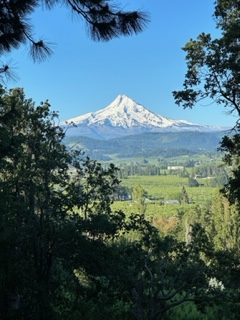
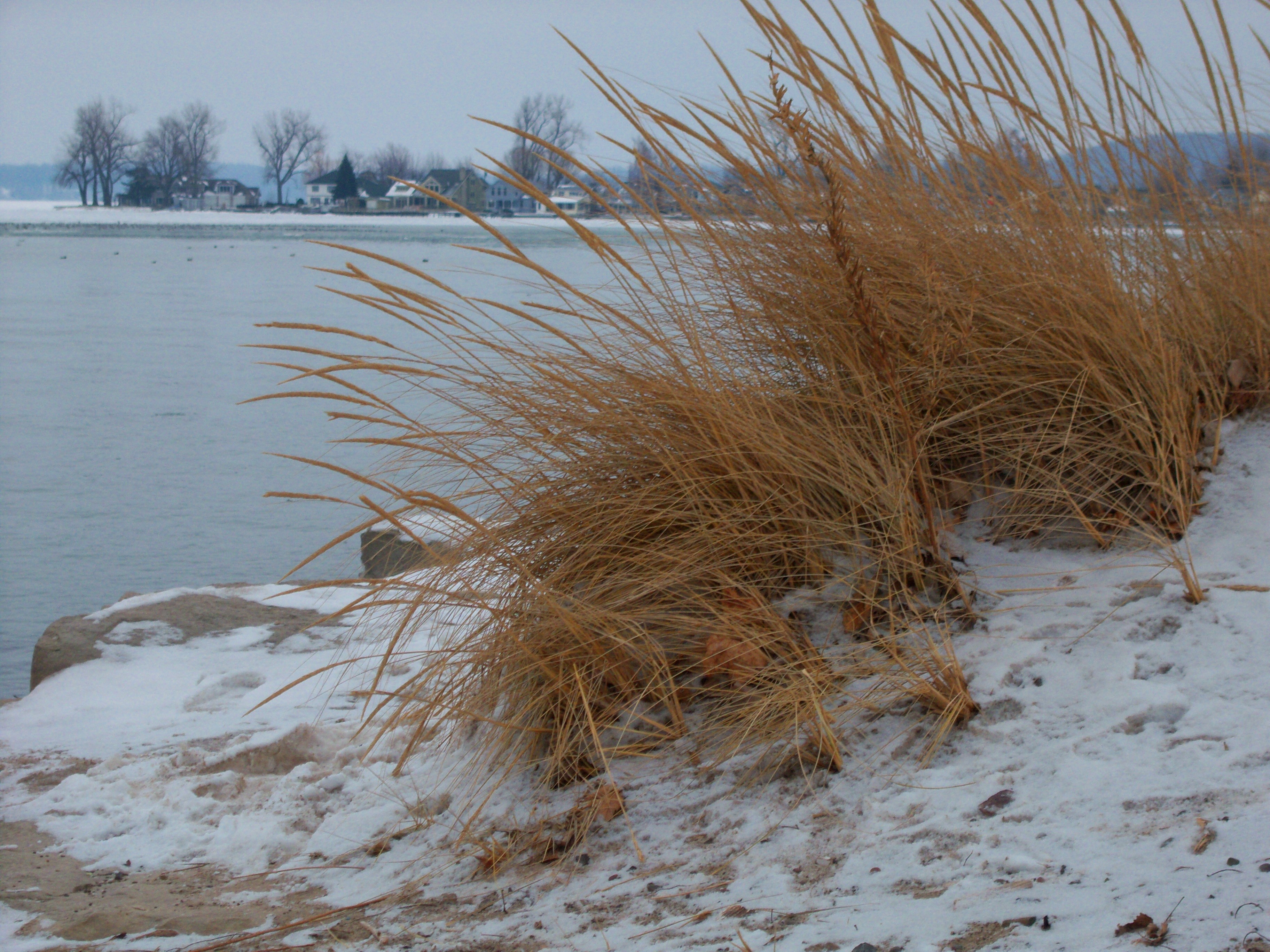
My view as I write. Yes, sometimes it’s difficult to concentrate, but not today. Today it was pouring rain and the mountain was hiding. Blessings, Lana
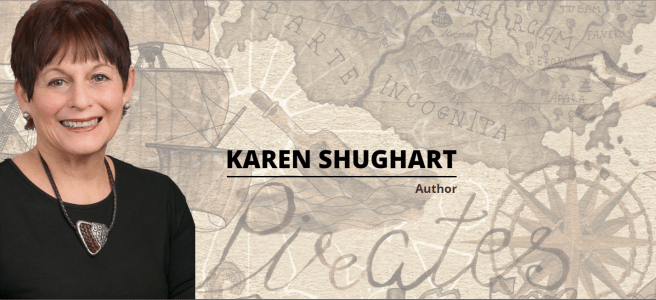
The Peace That Follows Chaos by Karen Shughart

December is chaotic here on the south shore of Lake Ontario in New York state, but in a good way. It’s busy and a lot of fun, but by New Year’s Day we’re exhausted and ready for some quiet time. The season starts the weekend after Thanksgiving, but then the entire month is filled with parties, shopping flings, festivals, gift exchanges, impromptu gatherings, and food – lots, and lots of food – both the cooking and eating of it.

Decorating is big up here, and although we don’t do much of that, just a little festive touch or two both in-and-outside our house, many friends and neighbors go full bore, hoping to win or place in a contest sponsored by our Neighborhood Association for the best outdoor decorating. And many of them do.  Frankly, it’s quite impressive, and more than a little magical.

Now it’s January. The decorations have been stored away for another year, the snowbirds who flew north for the holiday have migrated south again to spend the rest of the winter in warmer, sunnier climes. The days are a bit longer, and while that’s certainly good news, they’re a bit grayer, too, and there’s more chance of snow. While we loved the hustle and bustle of the previous month, we breathe a sigh of relief.

We greet our like-minded neighbors when we walk each morning, but other than the roar of the waves crashing on the beach or the sound of the wind, it’s quiet. A couple restaurants and almost all the shops have closed until spring, and there’s not much traffic, hardly a vehicle to be seen traversing through our streets.

Now our gatherings are small ones: intimate dinners with friends at the restaurants that remain open; a pot of soup or chili with a small group at our house on a Sunday evening; a ladies’ night out; or for my husband, the regathering of his summer golf group for lunch and playtime at a virtual, indoor facility.  I happily resume my yoga classes. We venture to the city to take advantage of the cultural offerings there: a symphony; a Broadway show presented by a traveling touring company; or special exhibits at museums and galleries.

I’d been making good progress with the fourth book of my cozy series, but during December that project was mostly put on hold. This is the month when I commit to moving forward with my writing, and have been spending at least part of each day expanding the story as I continue with the first draft. Then, later in the afternoon, I read, fire burning in the fireplace, a cup of tea in hand.

Some friends and family who don’t live where we do wonder how we manage during this time of quiet and isolation, with weather that’s fickle and can change in a minute or two. For us it’s a time of centering and peacefulness, and it’s very beautiful with white caps on the water, grey skies intermittently clearing for brilliant blue and bright sun, starry nights, and a landscape dotted with wheat, rust, faded green and brown. Because many of the trees are barren of leaves, I can see the lake and bay and the tops of the two lighthouses that flank each end of our village beach from several rooms in our house.

By March, we’ll be ready for a change and begin to search for signs of spring: daffodils peaking above the thawing ground; buds starting to swell on trees and bushes; a greening of the grass. But for now, we’re enjoying the peace that follows chaos.

A member of Crime Writers’ Association of the UK ( CWA), North America chapter, Karen Shughart is the author of the Edmund DeCleryk cozy mystery series, published by Cozy Cat Press, including the award-winning Murder at Freedom Hill.  All books have historical backstories that provide clues to why the crime was committed, and recipes at the end. They are available in Kindle, Kindle Unlimited, paperback, and Audible.

Before I Begin Writing

During a recent panel discussion at a nearby bookstore, a member of the audience asked the usual question about how we began our books. The three of us answered in various ways, but all of them were what you might call writerly replies. We began with a character or a scene. I said I began with a situation, a scene that came to me that made me curious about the people in it. My beginning is a little more complicated than that in the case of the Anita Ray mysteries.

I first went to India in 1976, for a year, with thirteen return visits since then, but the last one was in 2014. That seems like a very long time, and it is, even though I stay in touch with friends. Family issues have kept me from returning since then, but I’ve kept writing the Anita Ray series. The fifth in the book has come out in trade paperback and Harlequin will publish the mass market paperback soon. Right now I’m working on the sixth book in the series. So, how do I begin a new mystery set in India after not having visited for so many years? Before I begin with a situation, I look at photographs, to get a feel of the country I love and the area I think I know well. The city of Trivandrum has changed enormously over the years, and I notice large and small changes during every visit. Sitting with images of places I know well—certain shady lanes, small corner temples, old traditional doorways—evoke the ways of living that are so different from how I live here in the States and that may play a role in the story I’m working on.

Many of the photographs suggest story ideas, such as the shop selling as well as exporting homeopathic medicines located on a busy street just at the end of the lane where I lived for a year in the 1980s. Every time I return I walk down Statue Road, and there it is, the homeo shop, near the end, and the elementary school diagonally across the street from it.

One of my favorite photographs is of the laundry hanging among the coconut palms. There is a saying in India. If you’ve only been to a city in North India, you haven’t seen India. If you haven’t been to South India, you haven’t seen India. And if you haven’t been to a village, you haven’t seen India. There is truth in this. The village is the heartbeat of the country, a place encompassing great beauty and unconcealable poverty. Cities of India have on display vast wealth, just like other countries, and unimaginable poverty just around the corner. But in the part of the country I write about, old traditions still live. I learn more about a house and its inhabitants by how the gateway is decorated than I can from any of the nameplates we put on our mailboxes in the States. 

These are some of the details I pull together from some of my photographs to get myself back into the setting of my story. When I write, I want to feel I’m there, and I want the writer to feel she is there with me, so I review my pictures, think about the layout of the city, and imagine my characters walking through a village or resort or the capital of the state. A story I’m working on now is based on a festival held in India in late winter. Pongala has been called the largest gathering of women in the world. Over three million women descend on Trivandrum to make an offering to their deity, to bring good health to the family for the coming year. My photographs of this festival will be on display in the Beverly Public Library in February 2024, while I’m working on the story.

In the fifth book in the series, In Sita’s Shadow, Hotel Delite welcomes a tour from the United States, five guests instead of the six expected. Auntie Meena is soon fussing over them, determined to see them happy while in her hotel though she’s a bit confused by their non-touristy conduct. When the tour leader is found dead in his room, poor Auntie Meena is terrified that his spirit will haunt the hotel, and calls her astrologer at once. Anita calls the police, as is expected, and then begins to worry the death is unnatural. Trying to break the news to the members of the tour proves harder than expected. But one tour member seems uninterested in the death, and rarely uses his room in the hotel. This is not what Auntie Mean expects from a proper guest.

Auntie Meena throws herself into the investigation into the tour leader’s death, to Anita’s dismay, in a determined effort to protect one of her guests from the danger Meena is certain is lurking just around the next corner. Nothing good can come from a young male student sparking a friendship with an older foreign woman. Anita, however, is more concerned about the odd behavior of one of the hotel’s suppliers, a woman who makes airy delicious pastries.

https://www.susanoleksiw.com

So Happy to Be Here

by Margaret Lucke

Hello, everyone! I’m thrilled and honored to be joining the ranks of the Ladies of Mystery. So let’s get acquainted. Allow me to introduce myself.

I fling words around as an author, editor, and teacher of writing classes in the San Francisco Bay Area. I’ve always been fascinated by the power of stories and the magic of creativity.

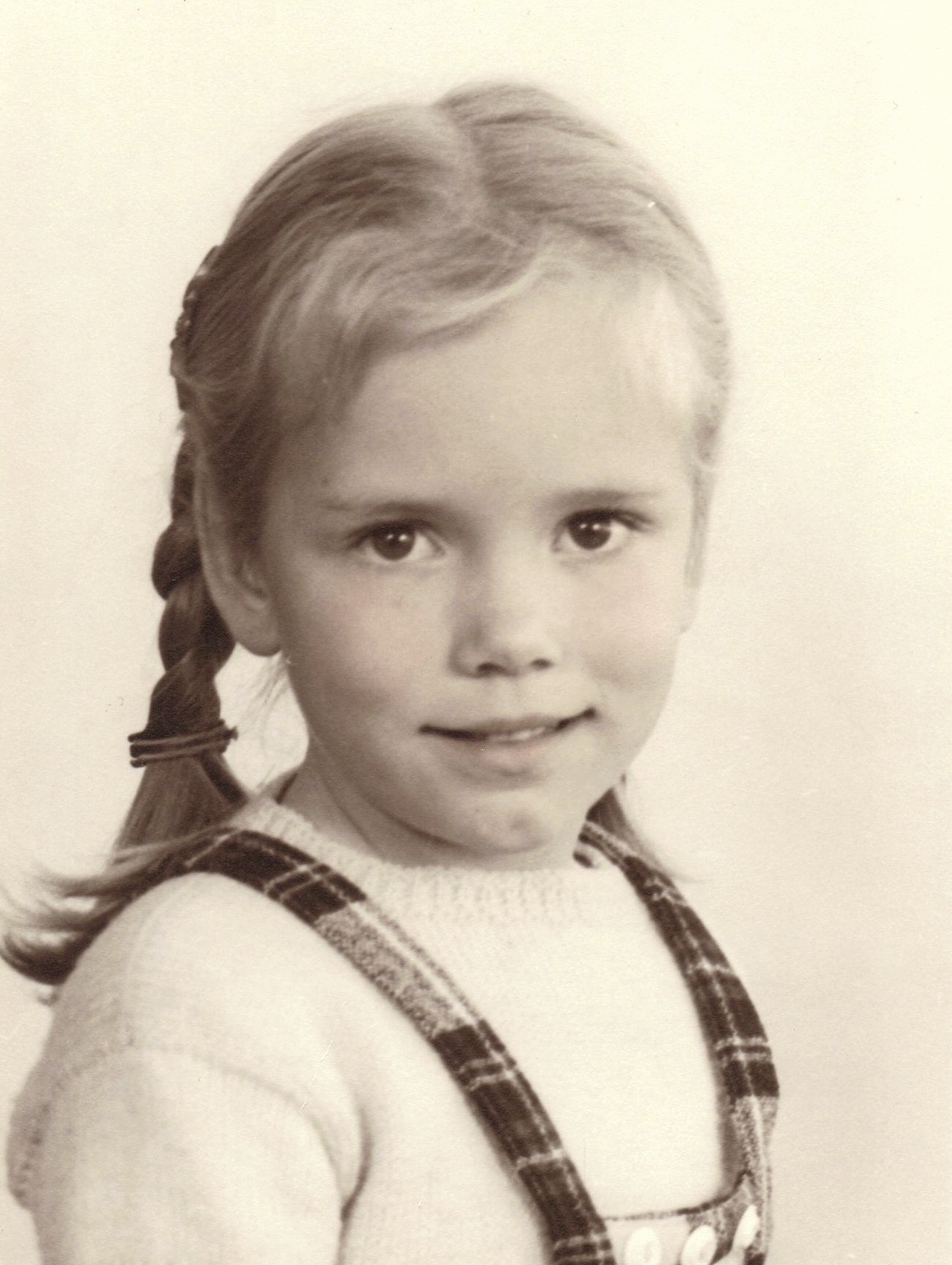
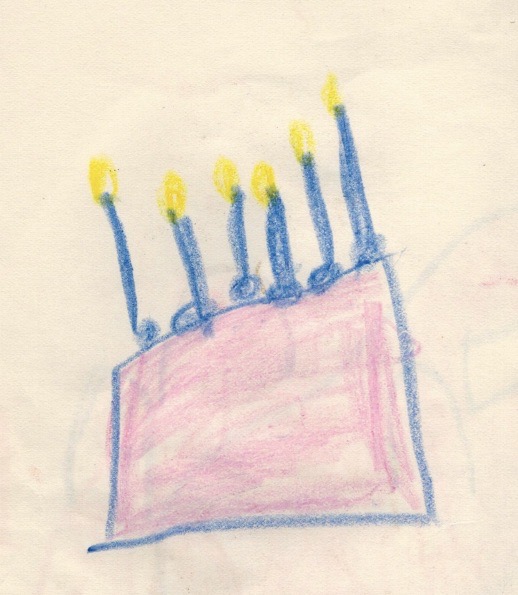
My beginning as a writer came when I was four years old. For my dad’s birthday I decided to give him a book of my own creation, entitled We Are Going to a Birthday Party. I wrote the story—well, dictated it to my mom—and drew the illustrations. I cut a cover out of oilcloth and Mom helped me bind my book with yarn. I could not have been more excited. My first book! Nothing beats the thrill of holding your first book in your hands.

Okay, it was a bit short on plot and the character development left something to be desired. But a story had emerged from my imagination and been captured in this set of pages. And the most important literary critic in the world, my dad, said it was wonderful. I was hooked. I decided I was going to spend my life writing stories.

As a child I imagined myself sitting at a desk by a window that looked out on flowers and trees. I would sip tea as wonderful tales flowed effortlessly onto the paper. I would send them off to a publisher who’d send me fat checks, and eager fans would grab my novels off the bookstore shelves. I‘d do research in glamorous places. Dad, a stockbroker, had a client who spent three months of the year in some exotic locale—the Caribbean, southern France, a castle in Scotland—and the other nine months writing a novel that used that place as a setting and figuring out where to go next. That sounded like exactly the life I wanted to have.

The reality hasn’t quite turned out that way. But I do have a desk in front of a window, and I drink gallons of tea. And while the stories don’t flow effortlessly and the fat checks remain elusive, I can’t imagine anything I could do that would reward me more.

Beginning a new story is an adventure, an exciting and slightly scary journey into unknown territory. Fortunately I’m accompanied by my sidekick, the Muse. That is, sometimes the Muse comes with me. All too often, she’s reluctant or rebellious, and despite my urging, she refuses to pack up her duffel bag and set forth on the path. Instead she gives me a raspberry (not the edible kind), rolls over, and goes back to sleep. And I’m left by myself, staring at the blank page. Some sidekick. More like a kick in the pants. But eventually, between us we get the work done.

I write tales of love, ghosts, and murder, sometimes all three in one book. I’ve published four novels and more than 60 short stories, feature articles, book reviews, and scripts for mystery weekends. I’m the editor of Fault Lines, an anthology of short crime fiction published by the Northern California chapter of Sisters in Crime. I teach fiction writing classes and write nonfiction books on the craft of writing. As a writing coach and developmental editor, I enjoy helping writers move forward toward their writing goals.

All in all, I think the four-year-old aspiring author is pleased with how things have turned out.

A summer of surprises

In the summer I’m usually deep into editing an anthology, and this year is no different. I’ve been doing this for most summers since 1989, when a friend and I started The Larcom Review. This summer I’m working on the third anthology from Crime Spell Books, which I co-founded with Leslie Wheeler and Ang Pompano, and have continued with Leslie and Christine Bagley. Our third anthology is Wolfsbane, which comes after Bloodroot and Deadly Nightshade,. in the annual series of Best New England Crime Stories.

This wasn’t going to be my topic for today but I find myself thinking about the sixth Anita Ray mystery I’m working on somewhat desultorily. And this is a surprise because when I sit down to write my thousand words for the day, sometimes after having skipped a few days, the characters keep surprising me. The setting in a resort in South India is the same but nothing else is quite so.

One of my walk-ons got himself killed, though I don’t know why or exactly how; I just know he’s very dead, at the bottom of a cliff in the Kovalam resort. I’ll have to figure that one out. And the expected main character has morphed so many times that he may morph himself right out of the plot, even though that’s not my intent. Meanwhile the counter to Anita Ray has turned out to be more fatuous than anticipated but has thrown one of the best spanners into the plot. And I finally figured out why an elderly woman was able to leave India, without a husband to support her, and move to the States with her young son. None of this is in the synopsis I roughed out several weeks ago, and none of it tickled my brain while I was writing it. It seems to have been hidden in my fingers or the keyboard.

But the most amazing discovery is Anita Ray’s perspective on her own work as a photographer. She has been adopted as a mentor by a young man who is clearly gifted and comes to her for advice. She’s willing to help and enthusiastic about his work, recognizing his distinctive use of color, texture, pattern. He has some gaps in his technical knowledge, and limitations financially; he can’t afford to have every image printed out for examination and critiquing. But he obviously has a bright, perhaps significant future if he can hold on under difficult circumstances. His work and trust in her judgment set Anita thinking, and she enters a phase of an artist’s career that can be deadly or transformative. 

I have no idea what will happen to him. He could be a figure in the mystery itself, dropping clues or finding them, or another victim, or just someone who brings Anita to the fore in a different way, which would make him useful but little more than a background figure. I don’t know now and won’t know until I write again and pose the question.

All this began when I came across a post by Michele Dorsey challenging writers to write one thousand words a day without any plot outline or specific goals. A thousand words is far less than my usual daily goal when I’m working on a novel, so I thought I could fit that in easily while I was working on the anthology. And I did, for a while. Now I write three days in a row, for example, and two days doing something else. And there’s no reason for this except myself-discipling seems to be flagging.

Peter Dickinson, one of my favorite writers, was once asked if his characters took on a life of their own, a fairly standard question for a writer. He replied that there’s little room for surprises in his work once he starts writing because he develops an extremely detailed outline before he begins. I tried that once, and it didn’t work for me, so I admire anyone who can do that. Until that talent comes to me, I’ll continue discovering the world of my characters, and hope it all makes sense. It will be weeks before I know, so I’m learning patience—again.