Killer Ideas by Paty Jager

I was visiting with my brother this weekend and he told me I had to come visit him. He had discovered some great ways to murder someone at the new fish hatchery where he works.

Not that we think a lot a like or anything… 🙂 This is the same brother who cave me the inspiration that started my Shandra Higheagle Series. As a bronze sculptor, he had details about how some statues were put together that gave him an idea on how to conceal a murder weapon which he passed on to his lovely big sister who likes to write stories about killing  people. LOL

How he works at an Indian fish hatchery which I can make fit into my new Gabriel Hawke series. You can bed as soon as things slow down around here with harvesting and company, we’ll take a trip to see all the great ways he’s found to hide a body or shorten a life. I know that sounds gruesome, but when you are constantly trying to find new and plausible ways to commit a murder that will stump your main character and your readers, you have to dig into every possibility.

For me a good murder mystery read is one where I’m interested in the method of murder as well as why it happened and by whom.

My first Gabriel Hawke book releasing in January has a unique twist to how the murdered victim is found.

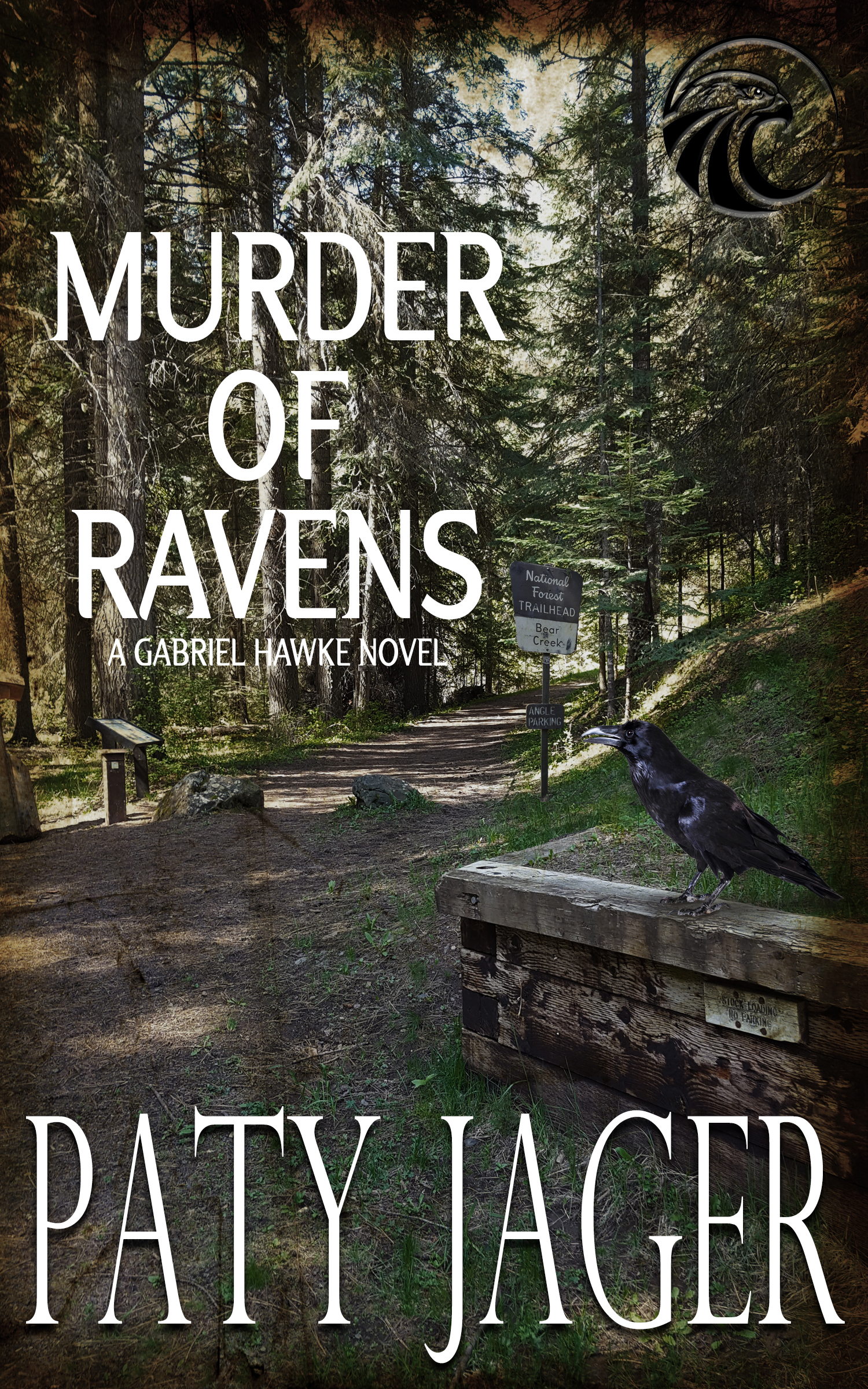
Here is the blurb to Murder of Ravens to pique your interest.

The ancient Indian art of tracking is his greatest strength…

And also his biggest weakness.

Oregon Dept. of Fish and Wildlife  State Trooper Gabriel Hawke believes he’s chasing poachers. However, he comes upon a wildlife biologist standing over a body that is wearing a wolf tracking collar.

He uses master tracker skills taught to him by his Nez Perce grandfather to follow clues on the mountain. Paper trails and the whisper of rumors in the rural community where he works, draws Hawke to a conclusion that he finds bitter.

Arresting his brother-in-law ended his marriage, could solving this murder ruin a friendship?

An ‘ideal’ article

By Sally Carpenter

 Some years ago I had the pleasure of meeting Jeffrey Scott, the most prolific writer of TV animation, with over 600 produced scripts to his credit, and all-around nice person.

 In his book, “How to Write for Animation,” which has good advice for any writer, he talks about ideas.

 “There are an infinitive of ideas,” he writes. “All of us are inherently creative.”

 Scott makes a good point that we tend to over think creativity, which is often presented as some mystical, awesome force that only affects a few highly gifted individuals.

Or else we try to analyze creativity as science by probing the workings of the brain or studying the effects of environment or family life to determine the elements that lead to artistry, as if recreating Michelangelo’s studio will produce another Sistine Chapel painting.

Julia Cameron, author of “The Artist’s Way” books, agrees that everyone is born with creativity, only we get “blocked” by criticism, discouragement and rejection. Cameron’s books present exercises that help the reader to “unblock” and let the creativity flow.

While I’m not as prolific of a writer as Scott, from my experience I agree with his observation that the best way to break though a “block” is to write: “Good, bad or indifferent,” he says.

Some writers try to “summon the muse” through complicated rituals before they start working: brew a certain type of coffee, do yoga, take a walk, do writing prompts, meditate, wait until inspiration hits (which could be a very long holding pattern). But sometimes these rituals instead lead to writer’s procrastination, simply postponing time spent writing.

In my day job at a community newspaper, some of my tasks are writing headlines and photo captions. I can’t sit and wait for inspiration to hit. The paper is on deadline and the boss won’t pay for overtime. So I learned how to work quick and dirty, coming up with ideas on the fly.

 I’m not sure where I heard this, but the best way to reach the muse is to “show up at the page” (or the keyboard). In other words, start writing. An author can’t edit or polish a story until words are on the page.

When I was a kid, I had tons of story ideas. Unfortunately, at that age I lacked the discipline to write it all down; I just daydreamed. Even though the stories were childish, a writer must start somewhere. A runner can’t finish a marathon unless she first masters those first wobbly steps as an infant.

 Cameron suggests that artists begin each day with “morning pages,” three pages of free-form longhand (not typing or texting), just writing whatever comes to mind. The concept is to keep the pen moving even if the words are gibberish, to clear out the mental “junk” that blocks an artist, and to activate the richness of the subconscious. Soon gems will appear among the scribbling.

 I recently started writing a short story that I planned to include in the reprint edition of my first book. I wrote some pages, and then had to leave it for other projects. In the meantime, another story idea occurred and I decided to move ahead the second idea.

Did I waste my time with the first story? Of course not. I may use the first idea in a later book. Even if I never finish the story, it’s possible I might not have been open to receiving the second idea had my mind not been “primed” with the first.

For me, a good way to prime the pump is research, no doubt a holdover from grad school. I love to read and learn new things. For my new short story, I got some great ideas by reading a book on the subject.

Writers get ideas from the news, movies, TV, trips, family and friends, and their own experiences. My book “The Sinister Sitcom Caper” was inspired by my work at Paramount Studios.

Scott suggests that one way to general ideas is to pick an object in the room—such as a table, phone, bookcase—and generate stories from it. I see my record albums. I can use a record disc as a Frisbee, float it down a river, use it as a serving tray, hear secret messages if I play it backward, roll it like a hoop, wear it on my head, use it as a shield, hide behind it and peer though the hole—the possibilities are endless.

 If you write it, the ideas will come.



The World Through My Eyes

thumb_IMG_1225_1024

The fifth book in the Adam Kaminski mystery series will come out this summer. I am so excited to share it with you! I’ve spent the past two years working on this book that looks at the world through the eyes of a photographer, while also telling the story of a cruise in which everyone is pretending to be someone they’re not.

One of the things I enjoy most about writing is the opportunity to look at the world through other peoples eyes. Because my series has one main character– Adam Kaminski – who always finds someone to help him out, I have the pleasure of creating a new point-of-view character for each book (that is, a character whose thoughts you, the reader, get to hear.)

In this book my second leading character is Julia Kaminski, sister to Adam. Julia has appeared in most of the other books in the series, so I’m not creating her from scratch. But this is the first time I’m writing from her perspective, describing the world through her eyes. In this case, the eyes of a photographer. There can be no doubt, we all see the world a little bit differently.


A-Pale-Reflection-Web-Small
A very blurry suggestion of the cover for A Pale Reflection  – the world as I might see it!

Personally, I’ve been wearing glasses since I was five (and probably needed them before that). The world through my eyes looks very different. Terribly near-sighted, without my glasses I see blurs of color without distinct shapes. Every pin prick of light becomes a giant, glowing snowflake. It’s actually quite beautiful! As long as I don’t need to see clearly. These days, I wear bifocals, so I get two different views of the world depending how I hold my head! (And does anyone hate progressive bifocals as much as I do? I couldn’t stand them.)

As an aside, I recently saw a video about very young children – one year or younger – getting glasses and being able to see their mothers’ faces clearly for the first time. The expression of joy on their faces was indescribable. How the doctors were able to figure out a) that they needed glasses and b) what their prescription was I have no idea. But it is remarkable.


IMG_3813
Bifocal and near vision only – just two of the many pairs of glasses in my life!

My husband, on the other hand, is farsighted. How strange! After a lifetime of holding things next to my face to read them, I can’t imagine only being able to see clearly when things are far away. The world he sees is very different from the world I see.

I’m pretty sure the same holds true for reading. I write a book and let it out into the world. Now it’s up to the reader to see whatever he or she sees in it. I love hearing other peoples perspectives of my books — don’t get me wrong — but I admit there are times when I hear someone describing one of my characters and I think: can’t I just give you a prescription that lets you see it the way I see it?

A Pale Reflection, my book about seeing the world – and other people – clearly, comes out this summer. Check out my Facebook page or sign up for my newsletter at my website to see the full cover soon. And follow me on Instagram to see photos of my world. I hope my perspective of other people’s perspective will keep you entranced – and wondering who the killer is!

Adam-Kaminski-Mystery-Series

The Devil in the Details

thumb_IMG_1225_1024

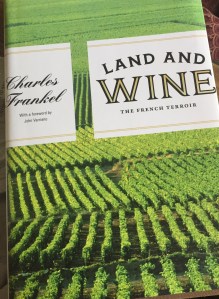
What are the differences in symptoms between cyanide poisoning by inhalation or by ingestion? What is the best way to store evidence? What work happens on a lavender farm in early October? How are French wine labels governed by the state?

lavender
I like research that requires learning about wine and visiting lavender farms

The topics a mystery writer may find herself researching are never boring! We rely on resources including — but by no means limited to—manuals, interviews with experts, visits to unusual places, even Google searches. 

When a murder is committed in our books, even if it takes place off the page, we need to know exactly how it was done and what clues might be left behind. When a victim is found in a particular location, we need to know why he or she was there to begin with. When a suspect produces an alibi that doesn’t hold water, we need to know the detailed explanation of why not — even when we don’t share all those details with the reader.

The question of how many details to share is a big one. For a book to pass muster as a realistic story, a certain level of explanation and accuracy is necessary. But include too many details, and suddenly your reader finds herself reading a how-to manual instead of an engrossing story. 

IMG_3781
My kind of how-to manual!

Of course, different readers look for different types of details. How we as writers present our stories is a big part of what makes up a writer’s “voice.” Some writers are known for their intricate explanations, whether of crimes or locations or corpses. Readers who loves those writers thrive on those details — to them, it brings the story to life. Other readers look for a book that skims over the detail. They’re less worried about how accurate the description of police activity is and more interested in the emotional arc of the characters involved. And some readers want it all!

Some of these differences are determined by the subgenres within the mystery genre — some books are thrillers, others suspense or cozies. Each type has its own expectations. No one who picks up a cozy is looking for a graphic description of the corpse, but leave out the details of the chocolate cake recipe and you’re asking for trouble!

The writer must know her readers’ expectations and not disappoint. My books are traditional mysteries, which means they follow the line of providing succinct and accurate descriptions of crimes and how they are committed, but keep the focus on the plot and characters. When I’m looking for a fun read at bedtime, however, I usually grab a cozy mystery, something I can cuddle up with along with a cup of hot chocolate and enjoy. Hey, who said we could only read one subgenre?

So how much detail should a writer include? Not too much, but just enough. 

How much detail do you look for in the books you read?

And if you’re wondering, the first two questions above I had to answer for my book A Pale Reflection, coming out later this year. The second two are for the book in the series after that (yes, while one book is with the editor, I get to work on the next one).

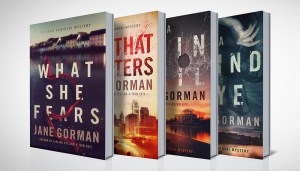
Learn more about Jane Gorman and the Adam Kaminski Mystery Series at janegorman.com or follow her on Facebook or Instagram.

Adam-Kaminski-Mystery-Series

Disorienting Dilemma

I came across this concept in a textbook on wellness coaching: people are most likely to change when they’re faced with a disorienting dilemma. Immediately, I shifted gears from my fitness professional role to thinking as a writer. Disorienting. I pictured someone unable to get their bearings, losing their sense of direction, and being forced to look at things differently. Dilemma. A difficult choice.  Usually the hardest choices are between two highly desirable but incompatible actions, or between two equally unpleasant actions.

Death Omen, book six in my series, ends with the protagonist, Mae Martin, in a disorienting dilemma in her personal life, a side effect of resolving the mystery. I intended to pick up her story over a year later and get on with the next mystery, after this romantic dilemma had been partially resolved, and after one of the men involved in her difficult decision has been through a serious illness and treatment. I didn’t plan on taking readers through that rough ride with him, or through intertwined the ups and downs of the love story. But a friend who follows the series said over dinner last week that I had enough material for a whole book in exactly the stuff I’d planned to skip over.

She’s right. I’m excited about the setting and the characters in the year-and-a half-later book, and I’ve already completed the first draft, but I had a problem skipping so much, and it nagged at me during that draft. How much backstory did I need to explain the way Mae resolved her dilemma? Should I let readers simply guess some of what happened while she had two men in her life? And was I absolutely sure how it would turn out, if I didn’t tell the story?

Years ago, a critique partner warned me not to coddle my characters. If there’s something painful and hard coming up, put them through it. And I’ve followed that advice—until I almost didn’t. The completed draft has to wait and become book eight. I have to write the “gap story,” putting Mae and the men in her life in the middle of a mystery that challenges all of them, while one the men is sick and while she’s sorting out her choices in love and commitment. It will only make everything they have to do that much harder. I found an instigating event in my “scenes to recycle for unknown stories” file that perfectly sets up the mystery I need to involve all three of them in yet another disorienting dilemma.