A Comma-dy of Errors

by Margaret Lucke

I don’t recall what the sentence said. I no longer know the subject of the report that contained it, although you’d think these details would have impressed themselves on my mind.

All I remember is the yelling.

I was working in my first editorial job, for a firm of international economics consultants. My role was to tidy up the grammar and punctuation in the proposals and reports that the economists produced.

The sentence in question was critical to the central point that the document was making. But it needed one small change. I inserted a comma. After making a few other tweaks, I sent the report back to the economist who’d written it.

When it came back to me for the next round of editing, my little fixes were intact. Except for that comma—the author had taken it out. So I put it back.

A few days later the report landed on my desk again. Time for the final proofreading.

Once more, the comma was missing.

Now, some commas are optional. Some are a matter of style. But the presence or absence of a comma can be crucial to the meaning of the sentence.

Take the title of author and editor Lynne Truss’s handbook on punctuation, Eats, Shoots & Leaves. It comes from an old joke about a panda that comes into a café, consumes a sandwich, and then fires a gun at the waiter. As the panda walks out, the manager yells, “Hey, what did you do that for?” The panda calls back, “I’m a panda! Look it up.” The manager finds a dictionary and checks the definition: “Panda: a black-and-white, bearlike mammal found in Asia. Eats shoots and leaves.” Simple and straightforward. But add that comma after eats . . .

Or consider this sentence from an Associated Press article I saw a while back: “Netanyahu has been an outspoken critic of the international efforts to negotiate a deal with Iran, which does not recognize the Jewish state, and supports anti-Israeli militants like Lebanon’s Hezbollah and Palestinian Hamas.” Having two commas makes a nonrestrictive clause of the words in between them (the ones I’ve italicized). This means that if you take out those words, the sentence should retain its meaning. But when you do that in this case, you’re left with “Netanyahu has been an outspoken critic and supports anti-Israeli militants …” Not what the author intended. You have to remove that second comma from the original sentence to make its meaning clear.

Of course other small changes in punctuation and, for that matter, spacing can alter meaning too. Consider the difference in response you’d get to these two ads:

Wanted: one nightstand.
Wanted: one-night stand.

And notice how changing periods to commas and changing their placement around gives you a different impression of an evening’s events (from KidsCanReadandWrite.com):

I ate. My mother washed the dishes. Then I went to bed.
I ate my mother, washed the dishes, then I went to bed.

A row of colorful commas

The comma in the economist’s report was like these examples—its presence or absence altered the meaning of the sentence. It needed to be there, yet the author kept taking it out. So I trekked down the hall to his office to explain why I’d added it and why keeping it was important.

He didn’t believe me. I was younger than he was, I was female, and I held only a lowly B.A. while he had Ph.D. He assumed that all of these factors were reasons to dismiss my arguments. In his opinion the comma was clutter, the sentence looked cleaner without it, and so it had to go.

I’m a calm and reasonable person by nature, not given to raising my voice. So I’m not quite sure how our discussion turned into a shouting match. But there we were, screaming at each other over a comma, while everyone else in the workplace gathered in the corridor outside his office to enjoy the entertainment

Finally the economist yelled, “Prove it! Show me the rule.”

“Okay, I will,” I snapped back, and I stomped away.

I spent the rest of the day scouring grammar guides and style manuals. Finally I found a statement about comma usage that was so clear and so close to the case of our particular little comma that I figured even he would get it. I ran back to his office and thrust the open book at him, jabbing my finger at the proof. “Here it is. See? See?”

I won. The comma stayed.
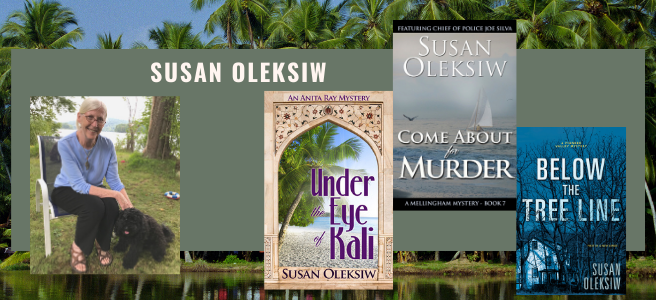
Endings

Beginnings and endings are the hardest part of writing for me. (That’s today. On other days it’s the muddled middle.) Some writers have arresting, captivating openings that grab the reader and carry her along into a ninety-thousand-word novel. I’m not one of those, but I can eventually get a few words on the page to get the story moving. For me the greater challenge is endings.

Some years ago I listened to Andre Dubus III talk about his new book, House of Sand and Fog, which led him to talk about how he’d grown as a writer. He didn’t like his first book, Bluesman, because he considered it sentimental. His disdain for this failure in craft was obvious, and when I met him at a writers’ event years later, the subject came up again. As I listened to him touch on the challenges in his work, I understood that for him an ending that is sentimental is also in some ways dishonest, an inability to reach deeper for something that was true. I had just purchased TheGarden of Last Days, and read it with that in mind. There is nothing sentimental in that book, least of all in the ending.

Several critics have explored the link between the traditional and cozy mystery and comedy; noir crime fiction has been linked to tragedy. At the end of the cozy mystery, the world is set right again; the villain has been identified and brought to justice of some sort; the lesser crimes of other characters are brought to light and justice is visited on them in various ways, perhaps public censure or shame or remorse; and the minor romance barely acknowledged sometimes comes to light and there is a new beginning for a young couple. All is right with the world. From Restoration Comedy to Agatha Christie and writers today, it is hard for a reader of cozies or traditional mysteries to be satisfied with less. An unrequited love or an unchallenged con artist will annoy some readers as much as a dangling participle will menace the peace of mind of a copy editor. And I understand this. There is something deeply satisfying about the comedic ending, a moment that reassures us that the world aslant can be righted, that our inchoate ideals can be realized.

So how does a writer of traditional crime fiction compose an ending that is both true to the story being told and unsentimental? Sometimes I think this question is just one more obstacle to writing a satisfactory ending, and all I’m doing is complicating matters, making life harder for myself. I’m not unsatisfied with the ending of Family Album, the third in the Mellingham series, but I acknowledge that it is a tad sentimental (maybe more than a tad). But readers loved it because it fulfilled one of the hints at the beginning of the story, and a promise fulfilled, particularly about a possible romance, always brings a frisson of delight. But it was sentimental. At least it wasn’t mawkish.

I don’t remember most of the endings in my books and stories but some stand out, for me at least. The ending of When Krishna Calls in the Anita Ray series required research, rethinking, and stepping back. A woman sentenced to prison looks out on her new world, listening to another prisoner, and is satisfied with the choices she has made. She won’t forget why she is where she is, and she won’t regret it. The ending of Friends and Enemies in the Mellingham series required several versions before I finally landed on the one that worked and fit with the rest of the story. An editor who read the ms and considered acquiring it mentioned how much she liked it (but not enough to take the book). Another ending that satisfied me is that in “Coda for a Love Affair,” in Devil’s Snare: Best New England Crime Stories 2024. The ending is simple, clear as cut glass and sharp.

Endings are hard because the easy ones come fast, are easy to write, and sit well on the page. And that’s the problem. They tempt us to take them, give a sigh of relief, and pat ourselves on the back for coming up with (rather than running carelessly into what looks like) the perfect line or paragraph to close out three hundred pages. Depending on how tired we are of the story and working on it, that ending will appear reasonable, acceptable, or a gift from the writing gods. So this is where I step back and wonder what Andre might think. I don’t have to get far into that mental exercise to admit that the first or even the thirtieth ending is not what I want. 

If nothing else, writing keeps us humble. In our heads we hear perfect dialogue, snatches of prose so brilliant we’ll never need the sun again, but on the page, our pen does not cooperate (or the computer keyboard), and we end up with the mundane, the ordinary, the usual. I keep working on endings but I know I fall short most of the time. As do we all. It’s encouraging to know that greater writers have the same struggles, the same challenges, the same doubts. With one eye on writers whom I admire, I keep at my own work, striving to meet my standards even if that means sometimes disappointing some readers. If I want better endings, I just have to keep at it until I get there.

The Secret

Many of us in the writing community have a secret, and it’s not exactly the same secret. We write our books, talk about our characters, whom we love, and gnash our teeth over the plot holes, the ever-jiggling middle that refuses to settle down and dash forward, and the ending that leaves us dissatisfied, rewritten three or thirty-three times. You know this because you read us here. None of this is kept secret from anyone who reads a writer’s blog. And then we have to edit the soggy mess, find beta readers, edit it again, and then pop over to our editor, if we have one, or switch hats and become our own publisher.

Somewhere in this scenario is one step that every writer loves. We each have our own. Which one is mine? Those who know me can probably guess.

When I was in college I was the editor of the student humor magazine, which meant handling proofs and working with the printer. I loved working with the printer, seeing those strips of paper with types-set pages on them with little red pencil marks and handing them over to the printer. For some reason I prefer to forget, I always seemed to get him at dinner time. Yes, I love the publishing/printing process. And that brings me to the topic of today—Crime Spell Books.

CSB is the third publishing venture I’ve undertaken with friends or colleagues. What may seem daunting to others has an irresistible pull for me. Two other writers and I began Crime Spell Books after the new editors/owners of Level Best Books, another venture I began with another two friends, dropped the anthology for New England mysteries. They lived in the DC area, so it was understandable. But New England needed its own anthology, so Ang Pompano and Leslie Wheeler and I grabbed the opportunity, and published our first in 2021.

Devil’s Snare: Best New England Crime Stories 2024, now availables is our latest offering, with twenty-four stories, in every sub-genre. We post a call for stories in January, and we read every one that comes in over the next several months (to end of April). We rank the stories 1, 2, or 3 on our own lists, and then we share them to see what we have. It’s always gratifying to see how close we are on most of them. When we decide how many stories we want, we begin discussing the remaining stories that came close, and work for agreement.

Anthologies are among the best works we in the writing community can produce. They show a variety of writers and interests. They require strong collaboration. Each editor loves certain stories and not others, and here we rely on a deep respect for each other’s experience and taste so we can come to agreement. Not every story I love gets into the anthology, and the other two editors probably feel the same. But the result—a list of excellent mysteries and crime stories by known and unknown writers—is something we’re all proud of. And then we come to my special love/hate experience—formatting. I do this because I think there is something wonderful about holding in our hands a finished book that we made, with the chapters and lines of text laid out properly—no unruly paragraphs or rebellious headers or recalcitrant page numbers. Everything is in order and proper and beautiful.

So that’s my favorite part, as much as anyone might question that statement while I’m working on it. The end is worth the frustration, gnashing of teeth, moments of panic, and sheer terror that one wrong punch of a button will send the whole thing to oblivion. And then it’s done. The proof comes in the mail, and then the final copy. And I look up from my desk and there it is. Beautiful. Finished. I can rest of my masses of edited copy and have another cup of tea.

Punctuation

I’m a fan of punctuation. It’s not something I thought much about in my earlier years, except when a teacher told me I was using commas incorrectly. For my next paper I made sure to use commas as correctly as I could manage. Her response was, “It looks like you sprinkled them like salt.” This did not mar my love of all those black marks on the page also known as letters and punctuation marks, but I did grow skeptical of her instructional skills. 
 
When I arrived in graduate school and stared down at a passage composed in Sanskrit and printed in Devanagari (the script usually associated with that language) at the end of the first semester, I came to appreciate those little marks even more. Not all languages use them, and not even Western languages used them until the medieval period. Until then most paragraphs looked like this.
 
Wordswerewrittenallbunchedtogetherwithnoindicationofwheretoputastoporcommaorquestionmarkthatwouldmakesenseifweallreadwordsthesamewayitwouldntmatterwhatwasmissingbecausetherewouldbenodisagreementwheresomethingendsorbeginswouldbedeterminedtobethesamebyallreadersbutwouldthatbethecaseiftherewerenomarkertoshowwouldweknowhowotherreaderswereinterpretingaparticularpassagecouldbereadinanynumberofways
 
Now consider reading passages like this in a foreign language and a different script. Why am I thinking about all of this?
 
My partners and I have just finished editing and setting the new anthology from Crime Spell Books this year titled Devil’s Snare. One of them remarked that there were a lot of dashes and ellipses in this year’s crop of stories. We agreed that was so. But why?
 
In general most writers understand the correct use of the comma, colon, semicolon, period, quotation marks, question mark, and exclamation point. We know the basic purpose of the dash and the ellipses. I for one blame Emily Dickinson for the overuse of the dash. If she hadn’t been such an inspired poet, that particular mark might have faded into disuse. As it is, it’s at least as popular as the ellipsis. Why do I care?
 
I’m not sure that I do care about these marks. I use them but not nearly as often as many other writers I read. What I do care about is the reading experience. These two marks are so ubiquitous that I finally had to wonder why, and I think I have an answer. 
 
When I read I form a picture of the characters going about their actions in the setting given. I hear them speaking, usually in a manner that conforms to my image of them. If the writer is a good one, my imagination is stimulated and those characters are robust, filling my head. I hear the intonation that tells me Stella is annoyed, hinted by the way the author has described her posture and glance. When the little boy is frightened by the store owner on his first attempt at shoplifting, showing off to his friends, I can hear him stutter, pause, unsure whether he should go on or go quiet or get out as fast as he can. But sometimes my imaginings of the characters’ doings are interrupted by the text. The author wants me to hear an interruption, and ends a sentence with a dash, just so I’ll be sure to notice that the character is interrupted. And if the character should pause to reflect, the author uses an ellipsis to make sure I know the character is pausing, unsure what to say next. But why do this? Doesn’t the writer trust the reader’s imagination?
 
At this point I don’t think the writer is thinking about the reader. I think he or she is thinking about how this scene looks on a stage, in front of a camera. I think he or she has slipped into writing stage directions in the prose text for the actors. The writer is telling the actors how to interpret the scene, and the reader who has imagined something that seems rich and satisfying comes to a series of these doctored lines and the imagination is blunted. It comes to a halt. Clunk.
 
There is a valid use for both marks, but I see it less and less often. When I’m tempted to use one or the other, I take that as a hint from the writing unconscious that I may be getting lazy and it’s time to rework the sentence or the scene. I don’t want to do anything to hinder a reader’s imagination.
 
Perhaps I’m being irked by overuse, so in the interests of fairness I pulled out a copy of The Maltese Falcon by Dashiell Hammett. The Great Man uses dashes and ellipses, not with abandon, but with care and precision. Hammett was too good a writer to get lazy in the middle of a scene; he could rely on his characters getting across how they felt, what they were doing, and why. I doubt he was thinking about his books being turned into movies, or how a particular actor would interpret a particular scene. (Yes, I know, I could be wrong.)
 
I have finally reached the point where I want to eliminate every ellipsis I encounter, and slip back into my own imagining of the story and its characters. And this may well become my policy as an editor.

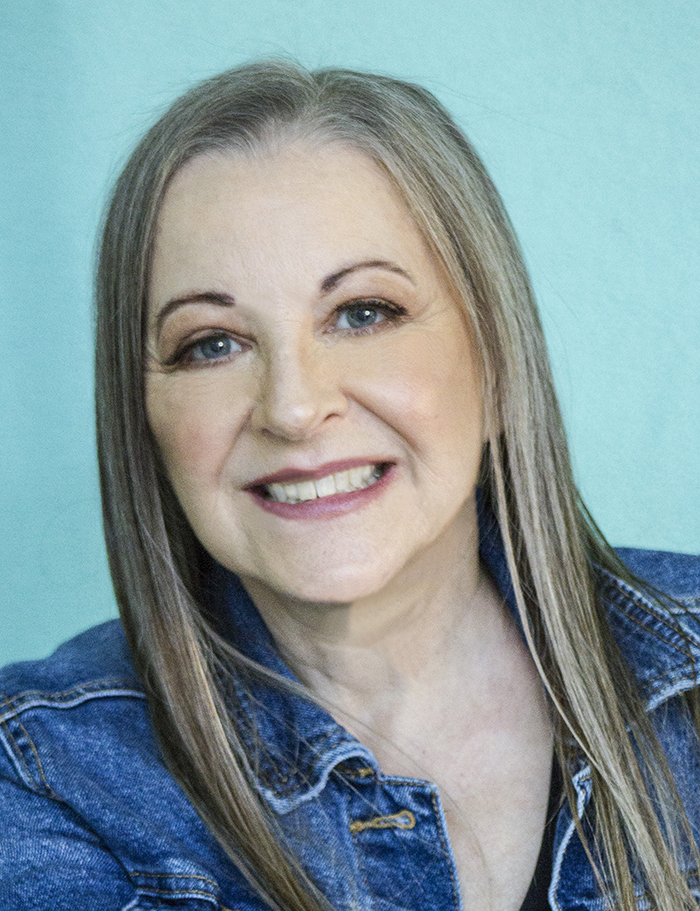
Guest Blogger ~ Elizabeth Crowens

A few years ago, I interviewed the most prolific writer I know, Heather Graham Pozzessere, for Black Gate magazine. https://www.blackgate.com/2018/10/10/the-poison-apple-talking-about-ghosts-an-interview-with-the-queen-of-many-genres-heather-graham/ Writing since 1982, she’s produced over 300 bestselling novels, often mixing romance with suspense and the paranormal, especially in her Krewe of Hunters series. Many people in the mystery/thriller community knew her, but apparently few in the speculative fiction arena were familiar with her work, which was why I wanted to introduce the Black Gate community to her fantastic writing.

Since it’s one thing to knock off a quickie and let your editor polish it and another to have to make it almost perfect before turning it in, I asked her if editing got any easier as more books went down the pipeline. Obviously, she’s built a long-term relationship with her editors, but I also suspected after that many books one got much better at the craft, which also sped the process along.

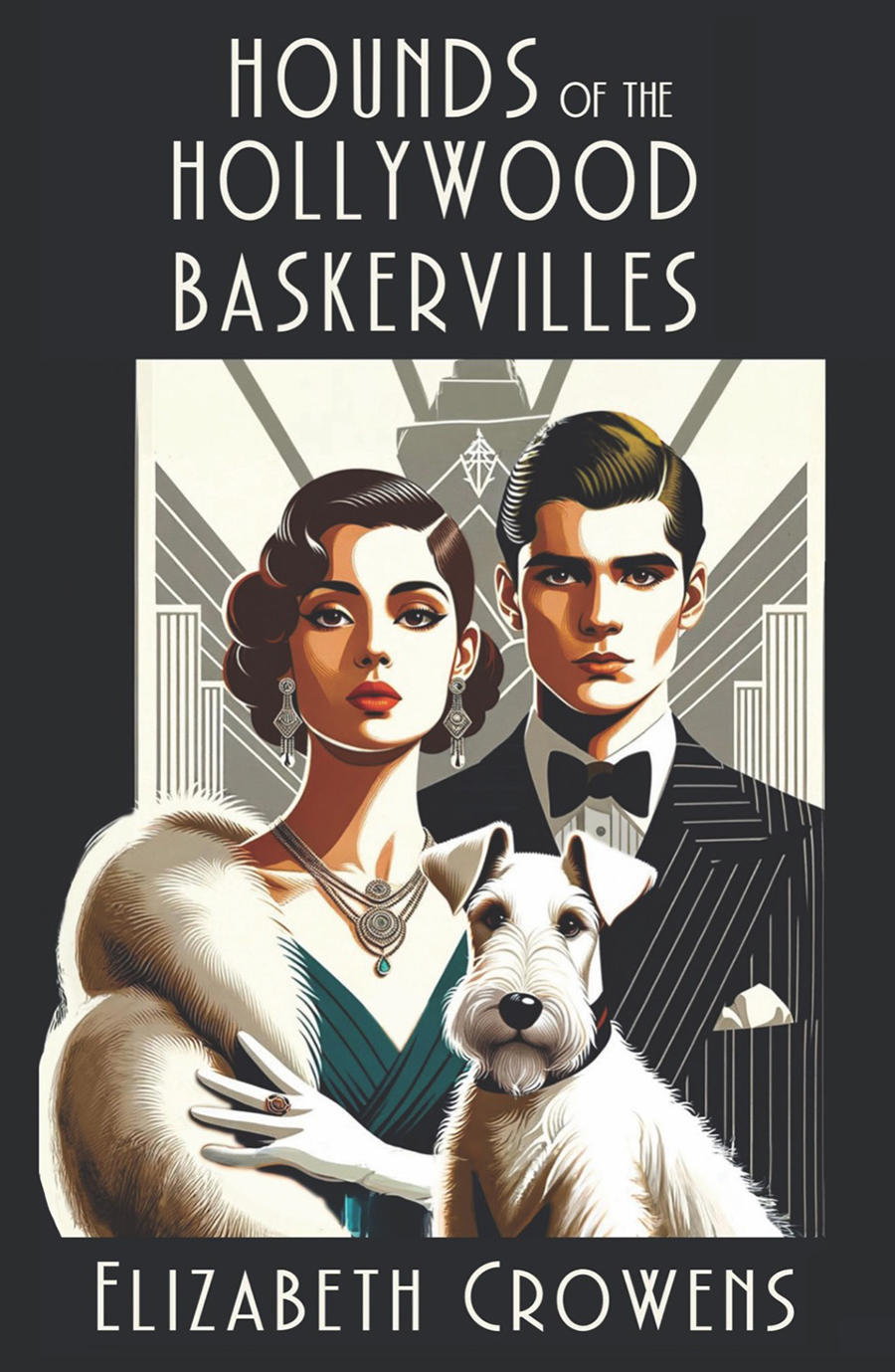
Although Hounds of the Hollywood Baskervilles is technically my first bona fide mystery novel in print, altogether I have written ten novels which include unfinished works-in-progress, unpublished manuscripts, and published books in other genres. For each of them, I hired freelance editors. For my first novel I hired three, an expensive ordeal, but I was learning the craft of writing as I went along. In a certain way, it was like having a private writing tutor.

By now, I’ve learned a lot from my mistakes. The editing process is a lot faster. For certain elements, I have it down to a science which I’ve nicknamed Search and Destroy. I should probably propose to teach this in a session at a writers’ convention, but this technique helps slash and burn word count and helps eliminate redundancies. The great thing about it is that anyone can do it using Microsoft Word and the Find and Replace function under the Edit dropdown menu.

In a nutshell when we are writing, all of us use certain words far too often. Try doing a word search for common conjunctions such as but and although, adverbs such as maybe (and not only the ones with ly endings) and prepositions such as up and down. See if you can make your sentences more concise. Many times you can also spice up your prose or dialogue with better synonyms. Once you go through your manuscript, it’s amazing how other errors will scream out at you. However, using my Search and Destroy technique still doesn’t eliminate the value of having a second or third set of eyes review your manuscript. – Elizabeth Crowens

Hounds of the Hollywood Baskervilles

Asta, the dog from the popular Thin Man series, has vanished, and production for his next film is pending. MGM Studios offers a huge reward, and that’s exactly what young private detectives Babs Norman and Guy Brandt need for their struggling business to survive. Celebrity dognapping now a growing trend, when the police and city pound ridicule Basil Rathbone and ask, “Sherlock Holmes has lost his dog?” Basil also hires the B. Norman Agency to find his missing Cocker Spaniel.

The three concoct a plan for Basil to assume his on-screen persona and round up possible suspects, including Myrna Loy and William Powell; Dashiell Hammett, creator of The Thin Man; Nigel Bruce, Basil’s on-screen Doctor Watson; Hollywood-newcomer, German philanthropist and film financier Countess Velma von Rache, and the top animal trainers in Tinseltown. Yet everyone will be in for a shock when the real reason behind the canine disappearances is even more sinister than imagined.

Buy links: Bookshop.org https://bookshop.org/p/books/hounds-of-the-hollywood-baskervilles-a-babs-norman-hollywood-mystery-elizabeth-crowens/21021163

Amazon: https://www.amazon.com/Hounds-Hollywood-Baskervilles-Norman-Mystery/dp/1685125425/ref=sr_1_1

ISBNS:                                    978-1-68512-542-4 (paperback) $16.95

                                                978-1-68512-543-1 (ebook)  $5.99

Elizabeth Crowens has worn many hats in the entertainment industry, contributed stories to Black Belt, Black Gate, Sherlock Holmes Mystery Magazines, Hell’s Heart, and the Bram Stoker-nominated A New York State of Fright, and has a popular Caption Contest on Facebook.

Awards include: Leo B. Burstein Scholarship from the MWA-NY Chapter, NYFA grant to publish New York: Give Me Your Best or Your Worst, Eric Hoffer Award, Glimmer Train Awards Honorable Mention, two Grand prize, and six First prize Chanticleer Awards. Crowens writes multi-genre alternate history and historical Hollywood mystery. Hounds of the Hollywood Baskervilles, which won First Prize in both Chanticleer’s Mark Twain and Murder & Mayhem Awards and placed as a Finalist in Killer Nashville’s Claymore Awards for Best Humorous Mystery, was released in March 2024.

SOCIAL MEDIA HANDLES:

Facebook.com/thereel.elizabeth.crowens

X.com/ECrowens

Instagram.com/ElizabethCrowens

LinkedIn  https://www.linkedin.com/in/elizabeth-crowens-5227804/

Goodreads  https://www.goodreads.com/author/show/15173793.Elizabeth_Crowens

AUTHOR WEBSITE: www.elizbethcrowens.com