Falling In Love With Your Characters

by Janis Patterson

Don’t worry – this isn’t a post about romantic love, though show me a woman who writes romance (as I do sometimes) who doesn’t get all hot and bothered over writing the perfect hero. Just imagine… you can create the perfect man with muscles, a twinkle in his eye, a rugged but handsome face, sensitivity, strength… the perfect Build-A-Hunk kit.
That said, however, we all know there are many kinds of love, so for this post, at least, let’s forget the idea of hearts-and-flowers romantic love.


Do you believe writers should love their characters? I do. Now I will admit that any competent professional writer can create a believable character on technique alone, without anything empathetic or sympathetic or even liking between writer and character. I’m not talking about whether this character is a villain or a hero – we’ve all either written or read a story where the villain is the most likable character. I’m talking about a deeper connection – an instinctual, inner knowing how the character feels/reacts opposed to declaring through technique how the character will feel/react.


Personally, I am all for the empathetic (it’s more than that, but we need to give it a codeword for this essay) approach than the purely technique-driven format. You and the character – perhaps all the major characters, and yes, it’s possible to jump from head to head – almost meld into one. You know what he is going to say. You know what he is going to do. It is almost as if you were doing it yourself.


By contrast, the technique way is very one sided. You have created a character, maybe even using the old trick of the character interview – a questionnaire which you answer as your character. This is supposed to give you an insight into the character’s mind and being. There are the standard questions of name and age and eye color, but some are so detailed they go in to truly deep (and in my opinion useless unless there is a direct tie-in to the plot) question such as the maiden name of the character’s grandmother and his favorite flavor of Jell-O. My personal reaction is this creates a Frankenstein-like character – everything is there, everything works, but it isn’t really alive.


Most of my writer friends look at me askance when we talk about character development. Many of them use some version of the character interview model, whether or not they use a written sheet of questions or just keep the information in their head. Some brainstorm with other writers. I’ve never heard of anyone using my method, which really isn’t a ‘method’ at all.


I get a wisp of an idea – a situation, a relationship, sometimes a thing – and start to build from there. Then the characters come. They just walk in, tell me their names and a little something about them (but not everything, as they like to keep surprises for me for later in the book, mischievous little creatures that they are) and the story starts to grow.


And they are not always little darlings, either. One hero in particular had a name that I just hated, so in a moment of hubris I decided that I was the writer, I was in control, and I could change his name to something I liked. Except I couldn’t. He shut up and for at least a week refused to talk to me. The story died. Oh, I wrote every day, and then spent the next morning tearing up what I had written the day before.


Finally I caved and gave him back the name he liked – the name I hated – and from that moment on the book was one of the easiest I’ve ever written. I liked the book, but I didn’t like that character, which was a shame, as he was a great protagonist – strong, smart, courageous, with just enough flaws to make him totally human. My readers loved him and I’ve gotten requests to put him in another book.


Perhaps the reader won’t realize the difference between an empathetic and a created character, and with a skilled writer they shouldn’t be able to, so some people will ask if it makes a difference. To the writer it makes a lot of difference, the difference between being a collaborator and a puppet master. Each technique has its adherents, and a writer can use either or both according to his need. Thank goodness there are no hard and fast rules in how to write – other than the obvious dictate to produce the best book you can.


Now you know I can’t go without a commercial, and this is a good one – Christmas is coming, and I’ve got news of a great sale for you! I have blogged for years with a wonderful group of women mystery writers called Ladies of Mystery and this year to celebrate the season we’ve put together a bunch of 29 books about Christmas. Some are mysteries, some are romance, some are on special sale, some are not, but they’re all good stories by proven and popular writers. The sale begins 15 November, so you’ll have a good long time to read and enjoy a bunch of Christmas stories! Go take a look – here’s the link:

Ladies of Mystery Catalog

Hope everyone has a wonderful Thanksgiving!
Committed to a Character

A fellow writer in an online discussion group asked how other authors feel about their main characters. Why do we stick with them and want to write about them?

When I started writing my series, I needed a lead character who could solve the type of mysteries I wanted to write. The “villains” aren’t killers. Some commit other types of crimes such as theft or stalking; some are fraudulent shamans or healers; some are corrupt or dangerous in a personal and spiritual way without breaking the law. My protagonist, Mae Martin, is psychic, though that’s not the only skill she brings to solving mysteries. Like any amateur sleuth, she’s observant, analytical, persistent, curious, and she’s the kind of person people turn to for help.

Except for being psychic, Mae is based on a good friend (the friend knows I did this). If I feel I’m losing touch with her, I just have to ask myself what my friend would do or say. She’s generous and nurturing, but she’ll only put up with so much, and when she speaks her mind, she can be a handful. Her willingness to help others is both her greatest strength and her greatest weakness, because she can go overboard. Mae sometimes catches herself in the act of getting too wrapped up another person’s troubles, but she ends up doing it anyway.

My friend, who is a good bit younger than me, is on her third marriage. So far, Mae is dodging number three, but she has what she calls a “man habit,” and hasn’t managed to go as long without a relationship as she meant to at the end of marriage number two. One of the things I enjoy about her is that she was raised to be a nice Southern lady, but she’s feisty and she likes to win. When she seems too good, I remember her competitive streak, and her bad choices as well as her good ones. I like her for her faults as much as for her strengths.

I once read a blog post in which an author said to give your characters just three traits—don’t make them more complex or contradictory. Interesting idea, and it may work for certain subgenres of mystery, but it’s not my approach to building characters. Though I don’t have to reveal and explain every aspect of their psyches, complex people feel more real to me, and they apparently seem real to my readers.

Some readers are deeply attached to Mae’s boyfriend, and they tend to take his side when the couple has fights; others take her side. I was strangely flattered when a friend asked me to create a character based on her so she and Mae could go through a conflict and work out some problems. This friend feels that she and Mae don’t get along as well as they did in the first few books. “I want to start out as her nemesis and become her friend,” she said. I’m inclined to do it. There’s already a character in one of the two books in progress who resembles this woman in age, appearance, and occupation. She and the real person who inspired Mae strike me as incompatible, though they’re two of my closest friends. They live in different states and have never met, but I’ll have fun throwing them together in fiction and seeing how they both grow and change through the encounter.

On Ramona DeFelice Long’s blog, she once suggested a character “I’m not” exercise: having the character list their perceptions of what they are not, and then checking to see if these things helped or hindered the character, and if these perceptions were static or changing. I found it helpful to look at how Mae sees herself, not just how I see her. After all, we can have inaccurate perceptions of ourselves. She doesn’t necessarily know herself as well as  she could, and that’s where the potential for growth comes in—the shortcomings that get her into trouble and challenge her to learn.

What keeps you committed to your series protagonist?


A Sympathetic Protagonist

Amber in tree final                                              Mother_and_baby_ducks

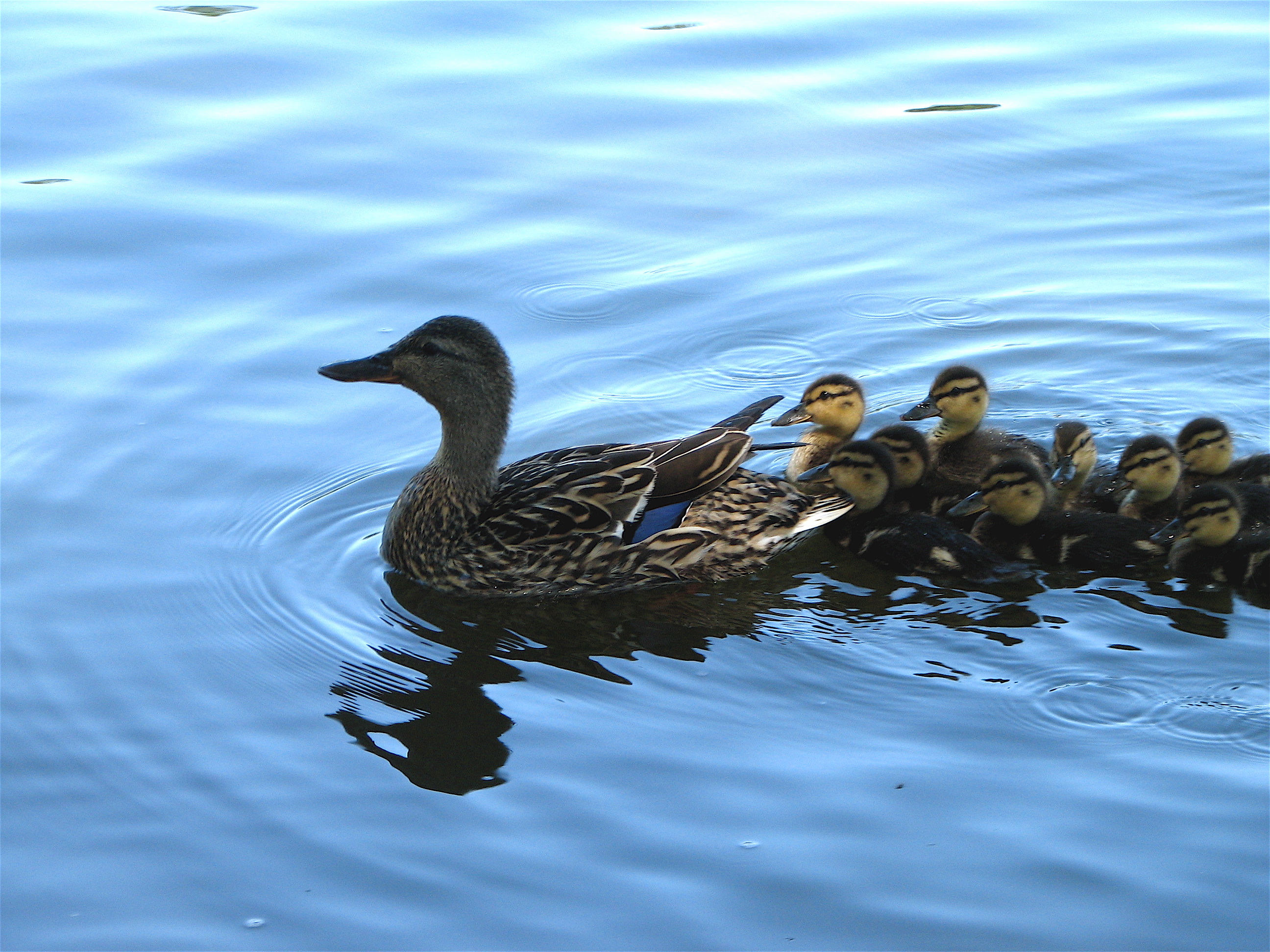
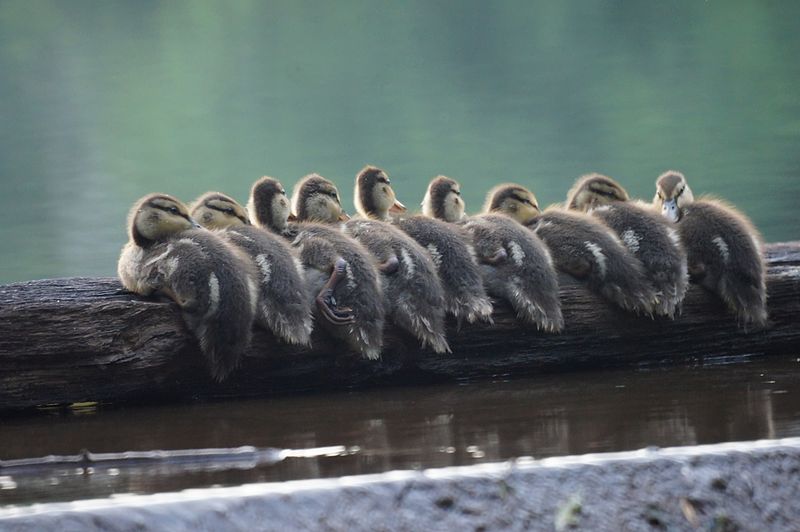
The park was deserted—all mine. Perfect. My plan: run laps of the trail for four miles, and come home with plot developments for my work in progress. I took in the beauty of the setting and slipped into creative mode as my legs fell into the rhythm of running, ready for free-wheeling improvisation. Then, up the stream bank came a mother duck followed by a swarm of fluffy brown-and-yellow ducklings. It was a tough climb for their little legs, and I wondered if they would all make it up the steep slope. On my next lap, I checked. None seemed to have been left behind. At first, I couldn’t count the babies, they were so numerous, active and close together. When I finally could see them clearly, I counted eleven.

She herded them to hide behind her as well as possible when I neared and quacked them into order when they strayed too far. I wondered if she felt overwhelmed by the responsibility. Could she count to eleven? Could she tell them apart? After I’d passed a few times, she began to warn me off, making a soft hissing sound. The next time, she hissed and waddled toward me. The next time, she lowered her head and charged, eyes narrowed, hissing for all she was worth. I honored her efforts with a burst of speed, letting her think she had scared me. I don’t know if there is such a thing as courage in ducks, but she struck me as brave, a small animal going after an adult human.

A couple with an off-leash dog arrived on the far side of the park. I jogged across and let them know about the ducks, in case their dog might be tempted to chase. They said he took no interest in things like that. I went back to the trail. No ducks in sight, not even in the stream. How she had swept all eleven into hiding so quickly, I don’t know. It was an impressive exit. Unlike the dog, I took an interest. Distracted from brainstorming my work in progress, I got wrapped up in the drama of the ducks, feeling as if I somehow knew what it was like to have too many ducklings and to strive to defend them.

Pardon me while I anthropomorphize. The mother duck has some excellent characteristics for a sympathetic protagonist. In spite of being better equipped for flight than fight, she chooses not to fly from danger, though that would be her own best defense. Instead, she tries to fight. Protectiveness in relation to weaker beings is a trait that makes readers care about a character. Flaws, in the right dose, also help readers identify with a protagonist and feel compassion for her. The brave mother duck is imperfect. Waddling at me while throwing a hissy fit, she’s a comical yet touching inconvenience. Her success in driving me off the path gives her moments of illusory triumph, but in reality she’s the underdog—underduck sounds funny—and she’s chasing a red herring, unable to realize I’m no threat to her fuzzy eleven. Against hawks and cats, the real enemies, she’s far less likely to succeed. The odds are stacked against her and her ducklings, hypervigilant though she is, but she because she’s a gifted escape artist, she stands a chance. Readers root for the character who might—but might not—make it.

On my next run in the same park, I found that nature had taken its toll. She’s down to nine ducklings now. The loss of two makes her story stronger. She charged me with even more ferocity, straight away without allowing me a few laps before she attacked. The struggles in pursuit of a meaningful goal, the setbacks, and the sense that the protagonist is reaching her limits and still not quitting: all of this keeps the reader emotionally involved and turning the pages. I have to close this “book” since I leave Virginia for New Mexico tomorrow, and I won’t see the next chapter, but I’m rooting for the nine remaining baby ducks to survive, and for their hard-working mother to eventually see them fly. And I’ll keep her in mind as write this summer, checking that I have all my ducks in a row for establishing an engaging protagonist.

babyducks