Adapting Agatha and Other Greats by Heather Haven

Several days after returning from the Left Coast Crime Conference, I came down with one of those upper respiratory bugs that are sent to try us. After making sure it wasn’t Covid or RSV, I accepted and dealt with it. Medicated up the wazoo, bored out of my mind, and feeling sorry for myself, I turned to what I always have in times of trouble – murder and mayhem.

One to never let me down in that department is Agatha Christie. I think I’ve read everything she’s written and loved them all. I even liked The Big Four, considered one of her worst. Frankly, I’m convinced that even her worst novel is better than a lot of other writers’ best, but maybe I am prejudiced.  Whatever, it was Agatha Christie Chicken Soup time.

Assessing the situation, I realized the Kindle was being charged and any reading materials in the bedroom were aaaall the way across the room on bookshelves. Doped up and lazy, I reached for the remote. I managed to stream in a collection of several versions of Agatha Christie’s Miss Marple done throughout the years. I glommed onto Joan Hickson, who I feel is the quintessential Miss Marple, sharp but seemingly befuddled, all-knowing but not pushy about it. And here she was, in one of my favorite Christie stories, Nemesis. I blew my nose, settled in, and went back to jolly old England during the fifties aboard a week-long motorcoach of historic homes and gardens.

Before long, everyone aboard the bus winds up to be a suspect, of course, having either won the tour or offered hard cash to join. Most damning of all, each was a player in a past … secret. But nothing throws Miss Marple for long. She’s there, complete with godson companion, in accordance to the wishes of a recently deceased friend and millionaire, to right some horrible wrong from the past, no matter what the consequences. Thus, the name Nemesis. Guided by a biblical saying “Let Judgement run down as waters and righteousness as a mighty stream,” the story moves forward and pretty much follows the original, Christie plotline which is chilling, fiendish, unique, and satisfying.

I got greedy. Right next to this episode was yet another Jane Marple thespian, Geraldine McEwen, appearing in the very same mystery. I thought, well, why not? The comparison of both might be fun, and Lord knows I’m not very busy. So, hubby brought me a cup of herbal tea, a scone, and I settled in again. Okay, not a scone. It was actually a chocolate croissant but munching on a chocolate croissant doesn’t sound quite right for the occasion.

Ms. McEwen presents an intelligent, twinkling Marple, as if she knows whatever she is saying is clever and important and you’ll catch on in your own good time. I found her Marple charming. I liked her. The storyline, not so much. In fact, I was completely at a loss as to what was going on. It still took place on a bus tour of historic homes and gardens, a few years after WWII, and there were a host of odd characters showing up with familiar character names, but they were nothing like the original ones. In short, there was no similarity on any level to the book or even the 1989 Joan Hickson version.

This version involved missing airmen, whackadoodle nuns, scarecrows, and a bust of Shakespeare used for nobody’s good at all. Even the villain was different and once revealed, was an unsatisfying one, at best. I couldn’t blame the budget. It looked to me as if the same amount of money and attention to detail went into making the 2007 version as it had the one done twenty-years earlier. But this 2007 Nemesis made no sense. I became cynical. Some hotshot somebody or other, under the guise of transporting the work from one medium to another, thought they could do a better job of Agatha Christie’s story than Agatha Christie. As Puck says, “What fools these mortals be.”

Not-so-cleverly segueing over to Shakespeare, here is someone else whose stories are often played with as fast and as loosely as Agatha’s. They have cut, added, rewritten, edited, obliterated, updated, melted down, puffed up, refined, and poured over brine everything he has written. It is rare to see his work performed in any of its original form, especially the same historical period. Too old hat. Others need to put their stamp on it. So if you’re off to see the latest version of Macbeth, it might have a Polish circus or a Macon, Georgia, WWII prisoner of war camp as a backdrop.

Back to Agatha. I remember one horrible adaptation of And Then There Were None in 1989. They called the movie Ten Little Indians. This particular novel has had many titles throughout the years. Namely, different forms of Ten Little Somethings Or Other. Not much worked until they came up with And Then There Were None, which might seem to give the plot away but apparently doesn’t. And it’s PC.

Regarding the plot, the scriptwriters changed the location from an island along the Devon Coast and plopped it amid an African safari at the bottom of a ravine, their idea of remoteness. Here, the roar of a surrounding pride of lions can often be heard but are never seen. I suspect the big cats were too embarrassed to be caught on-camera. Even Donald Pleasance and Brenda Vaccaro could not save one single moment of this dreadful interpretation. And yet I watched every frame, hoping against hope it might save itself. After all, it was Agatha’s work. Maybe somebody in charge got a clue and reverted back to what worked in the first place. Maybe somebody saw the rushes. Maybe the Serengeti rose en masse and took back its own.

Nope.

One reason for the wild takeover of someone else’s work could stem from filmland’s past history. From 1930 until 1968 every single movie, including adaptions, had to follow the guidelines of the Motion Picture Production Code of 1930, also called the Hays Code. The Code was a strict master and you’d better believe it. It didn’t mess around, it didn’t compromise. If the code found one scene didn’t meet those standards, the entire movie could be scrapped. Goodbye production, cast, and crew. Hello breadline. Below is a link to what a studio had to deal with: https://cinecouple.hypotheses.org/files/2017/07/Code_Hays.pdf. That’s still no excuse for some of the stunts adapters pulled throughout the years, even though sometimes rewriting had to be done. Unfortunately, it did give those with power, money, and ego a chance to play around with a genius story until it resembled the original work in title only.

Here’s an interesting fact, though, in the it-pays-to-be-good category. No matter what a screenwriter, actor, producer, or director does – and they can make all the idiotic versions they want – the reality is nothing can diminish the author’s original WRITTEN words. Anyone who wants to know the talent and timelessness of the Bard or the Queen of Mystery and others like them, have but to sit down and read their books. The power of the word. It never goes away.

Guest Blogger ~ Terri Maue

Knife Edge is a traditional murder mystery. The entire story is told from the point of view of the amateur sleuth protagonist, Zee Morani. I knew very little about Zee when I wrote the first draft of Knife Edge about ten years ago. Basically, I knew I wanted her to be a writer, but she needed to have more freedom than a reporter with regular hours or an assigned beat. And because I also wanted her to comment current events, I ruled out making her a book author. So, Zee became a successful columnist.

As I worked my way through early drafts, I learned a lot about Zee. In her job, she was free to pursue whatever interested her, as long as she could turn it into a column on deadline. I decided Zee should use satire in her column, which allowed me to indulge my own penchant for pointing out social, cultural, and bureaucratic idiocy, incompetency, and callousness.

It was fun to sprinkle column topics throughout the story. They provided a bit of comic relief from the escalating tension of the mystery, and I enjoyed researching topics that piqued my interest or aroused my ire. Showing Zee at work also helped me clarify how she could use her particular skills to solve the murder: her skepticism, her attention to detail, and her ability to put information together in different ways—what she called seeing the world sideways.

Also, giving Zee a human-interest focus for her column meant she would not be at home in the world of crime and criminals. I certainly was not. Drawing on my own naivete (as in what might I do next?), I put her into dangerous, and sometimes humorous, situations.

I entered a new stage of relationship with Zee after Knife Edge was accepted by Camel Press. One of the early tasks my editor gave me was to write a history of Zee’s parents. Using Zee’s age at the time of the story, I backtracked to discover that her parents came of age in the 1960s.

That decade exerted a great influence on my own maturation. Coupled with research into that tumultuous time, my experience helped shape Zee’s moral compass. She is driven by a deep need to see justice done. This drive impels her to use her column to defend the ordinary human being who struggles against the mindless workings of a machine-like organization. It also gets her involved in the murder.

Perhaps the biggest surprise in Zee’s character tuned out to be the extent to which her persona was influenced by my two previous careers. I didn’t realize this until after the book was completed.

I spent twelve years in public relations before I quit, unable to continue to spin facts to create a misleading picture. I actually looked in the mirror one day and realized that if I didn’t leave, I would get to the point where I no longer recognized the truth. Though I did not see it at the time, I made Zee a satirist specifically so she could point out the ways in which people use language to distort and misdirect, to adhere to the letter of the law while violating the spirit.

My PR experience also provided the seed for Zee’s dream to write what she considers serious journalism, which she viewed as using her talent for greater good. After my PR disillusionment, I switched careers and became a university professor. I spent 18 years teaching students how to use language ethically and responsibly and showing them how unscrupulous writers and speakers deceive their audiences.

Writers are always encouraged to write what they know. My experience with Zee would seem to indicate that I’m not always aware of what I know, at least not consciously. But then, discovering what lies beneath the surface is a big part of the fun of writing—and life—for me.

KNIFE EDGE

An unwitting columnist. A shocking murder. A devious killer.

Is Zee Morani tracking clues or playing a role orchestrated by a murderer?

When Zee Morani discovers the bloodied corpse of a disgraced medical researcher, the accused killer begs her for help. But Zee is not a cop. She’s not even a PI. She’s a regionally syndicated satirical columnist who dreams of breaking into serious journalism.

Zee believes the suspect is guilty. After all, he staggered into her as he fled the scene of the crime. But she’s made a career of challenging bureaucracy. The drive to defend the underdog, or at least give him a fair chance, pulses in her veins. Unfortunately, everything she learns only strengthens the police case.

Even as the facts pile up against him, Zee’s instincts argue for his innocence. Her friend Fontina’s finely tuned intuition concurs. But while Fontina supports Zee’s investigation, Rico, a seasoned crime reporter, balks at her interference in the case. Despite their recent breakup, he wants to protect Zee from the world of violence he knows all too well. He also wants to win back her heart. Tempting as that is, Zee resists him, her heart shackled by the pain of past betrayals. They agree to work together as professional colleagues and friends, but it’s an uneasy alliance. 

As Zee digs deeper into the researcher’s murder, her involvement makes her a target. Her inexperience tempts her to back away from investigating, but her commitment to truth won’t let her quit. When Rico suffers a vicious attack, her fury burns the last vestiges of hesitation. Gritting her teeth, she tackles a nasty thug, a suspicious police lieutenant, and in the end, the barrel of a gun—all to unmask a stone-hearted killer. 

Amazon: https://www.amazon.com/Knife-Edge-Terri-Maue/dp/1684922003

Barnes & Noble: https://www.barnesandnoble.com/w/knife-edge-terri-maue/1143420718?ean=9781684922000

Bookshop: https://bookshop.org/search?keywords=Terri+Maue

Target: https://www.target.com/p/knife-edge-by-terri-maue-paperback/-/A-89152528#lnk=sametab

Walmart: https://www.walmart.com/ip/Knife-Edge-Paperback-9781684922000/2756992774?from=/search

Terri Maue is a retired professor emeritus from Embry-Riddle Aeronautical University. After she retired, she decided to pursue a life-long dream to write a mystery novel. The result is Knife Edge: A Zee & Rico Mystery. In addition to offering a challenging puzzle, it reflects several of Terri’s interests:

  • martial arts—she holds a first-degree black belt in TaeKwon Do;
  • spirituality—she has studied many forms of religion, including Christianity, Wicca, Buddhism, and Native American and African practices;
  • the intuitive arts—she reads Tarot cards and has taught dream interpretation.

Terri is a member of Henderson Writers Group, Sin City Writers, Sisters in Crime, and Mystery Writers of America. She is working on the second book in the Zee & Rico series. She lives in Las Vegas, Nevada, with Eddie, her personal photographer and husband of 55 years.

You can visit Terri’s website at https://www.terrimaue.com, find her on Facebook at Terri Maue Author, find her on Instagram @terrimaueauthor, and write to her at terri@terrimaue.com

The Blank Page

Like many writers before me, I get a deadline for an assignment and spend the days, weeks, or even months leading up to it thinking about what I’ll write. If I pick something lighthearted, I have to consider just how far to go in the humor direction. If the topic is serious, I worry I’ll sound earnest (Oh, the shame!). Either way, I let my mind wander, make a few notes as I go along (and try to keep them on the same pad of paper), and sit down to write with ample time to revise and edit. And then on the day when I’m supposed to post, I plan to finish the essay with a light and quick rewrite, just to keep it fresh. I open a new page, and there it is. The blank page. I’m catatonic.

What is it about the blank page that makes my brain go blank as well? I look at that white sheet which now has the vastness and strangeness of the Sahara covered with a blanket of snow, and I haven’t a thought in my head. Not even an idea that I’m looking at a blank sheet of paper on a computer screen. Nothing. 

I had so much to write about this morning at 5:30 a.m. I woke up to the morning sun lightening the New England sky, reminding me that today was supposed to be a nice day, upper 50s along the coast, possibly even hitting 60 degrees. A good day to be outside tackling the weeds and cleaning things up for spring planting. I had the luxury of just lying there thinking about all that I could do today after I posted my blog for the fourth Saturday, my regular day for Ladies of Mystery.  But by the time I got to my desk and laptop, something unbeknownst to me was draining my brain of every idea I’ve ever had.

I’ve thought about ways to cheat the blank page of its power to cripple me. It’s possible that pulling up a page from an earlier post will stimulate my tired synapses to get popping, but then I have to make a decision and choose a page. Nope. Still crippled. I could pull up a page from the novel I’m working on (and have been since last summer—what’s with that?) but then I’m liable to fall right into my usual funk of trying to figure out what’s wrong that scene or the other one in the same chapter. Not good for morale, which I need right now.

If you, reading this, are also a writer, you’ve probably already shut your eyes hard against a painful memory of a blank page, the one that just wouldn’t let you get started on what you hoped would be your greatest ever WIP. This experience drives me to question, what is the purpose of the blank page? And I’ve decided it’s the Universe’s way to test us, to make sure we know what we’re doing. If I pulled up a new page and started tapping out advice for ingrown toenails, the Universe would be telling me I’m in the wrong business—I’m not a writer; I’m a frustrated podiatrist. Perhaps I decide to explore the drawing or designing function on my computer. Okay. Problem. No words. 

The blank page is the test for me every time. I don’t know what I’m going to write. Even if I think I do, I don’t know what’s going to come out. No matter how much I plan, no matter how much energy I waste on sample paragraphs or opening lines, the minute I look at that blank page, I go blank, white, empty, nothing. And then something comes up, something not planned, not expected, not even understood sometimes. There it is, and a wonder among wonders, For me writing is like breathing. I don’t really know how it works, but I know that it does and that’s enough for me. I thank the Gods of Desperation and go on typing.

Facing the blank page forces me back on myself every time—challenging me to trust that whatever shows up, making my fingers wiggle and stretch, spreading those black squiggly things across the white space, has to be what matters to me at that moment. On this I have no questions, which is good because I also have no answers. I take it all on faith.

I write because I have to, and I accept what comes also because I have to. It’s me.

We All Have One

You know what I mean, the one review that just sits in your brain and ferments. It doesn’t even have to be a negative review. In fact, there is almost always a grain of growth in the bad ones, that comment that helps one become a better writer or calls attention to a technique you use that can be annoying. That sort of thing.

Mine is a recommendation, no less. But talk about damning with faint praise. OMG. Yet, that’s not what bothers me about it — well, yes, it is, in part. It seems to me that if you are recommending a read, you might emphasize the good parts, you know, the stuff you liked.

I get that some people think all critiques (reviews) are critical; after all, the word alone conjures criticism. Right! But according to the dictionary people, review means a critical appraisal of a book, play, movie, exhibition, etc., published in a newspaper or magazine or on any number of websites. There is that word critical, again. Interestingly enough, the example is: “She released her debut solo album to rave reviews.”

So, Back To My One

It makes me crazy. Remember, it is a recommendation. Though the reader finds my protagonist silly, it is the rest of the sentence that makes me gnash my teeth, stutter, and obsess. Why? Because of the presumption of it. I tell myself it is okay, because the reviewer didn’t know to make the week in week’s laundry possessive. But it is not. It is because the individual presumed I know nothing about the time and energy required to do a week’s worth of laundry, baking or housecleaning!

I guess I am so very rich from my writing that I have a domestic doing my housework. Not! Here’s the issue: I have used a washing machine with a mangle on it and, yes, gotten wrung. I’ve risen as the sun tinged the horizon to do chores including; feeding chickens, gathering eggs, feeding pigs and hogs, and bringing milk cows in from the pasture. I have hung laundry on a line, ironed sheets, helped bake bread for a week, and cleaned a house from top to bottom. I do know the time and labor it takes.

Why Can’t I Let It Go?

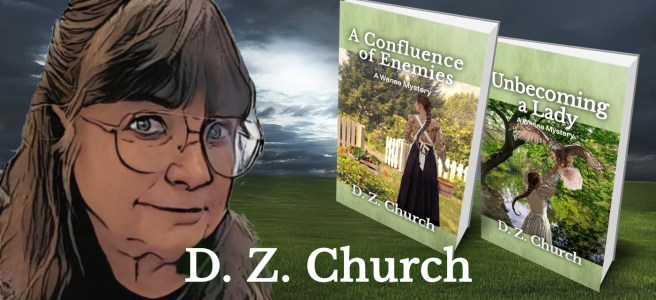
Because it is so unfair. And unmerited. And because of this (from Unbecoming a Lady):

Drawing heated water from the boiler on the stove, she scrubbed using the washboard and her mother’s technique: swipe the bar soap over the item, dip, soap again, scrub, dip, soap, scrub, rinse. Red blotches rose on her hands from the harsh soap and hot water.

When the wicker basket was full of wet, washed clothes, Cora ran the sopping items through a hand-cranked mangle, a nasty piece of business with two rollers to wring the clothes. A barrel positioned under the mangle captured the rinse water from the flattened, wrung-out clothes. Cora would dilute it with some fresh and use it to water the garden.

Her back and arms ached by the time she had the week’s laundry hung out to dry on lines strung from a crossbar nailed to the base of the windmill to a pole with a crossbar fifteen feet away. Cora rested her red, scaly hands on her hips, watching as a soft, warm breeze ruffled the items on the line, swaying them into a kaleidoscope of color, and dreamed of a washing machine like the one advertised in a Chicago Tribune she had thumbed through while waiting for the cashier to total her purchases and debt at Blewett’s Green Grocers on Chestnut Street.

You Decide

Did the reviewer read the book? Don’t you just wonder sometimes? But we learn something from all our reviews; from this one, I learned when writing a review, don’t presume you know anything at all about the background of the author of a book. Just don’t.

visit my website dzchurch.com for more information about all of my books.

EVERY SPARE MINUTE

Some of you know I lost my son, Derrick, to a sudden heart attack. The seventh anniversary of his death is coming up on May 11th, a day I now dread. Luckily, I have family and friends who invite me to various activities in an attempt to distract me from the heartache of that day.

My favorite distraction since Derrick’s death has been writing and crafting my books. I currently have seven published books between my two series, including the recently published, “Whispering Willows.” By the end of May, I will have published my eighth novel, “Willow’s Woods.” Yes, working with two double W-titles was a tad bit confusing.

While I love my México Mayhem Series, my heart longs to live in Stoneybrook where Derrick is a fictional deputy sheriff. But regardless of whether I’m writing about an exotic adventure in México or creating a mysterious quest from Stoneybrook to the Oregon coast, I can’t wait to see the story flow from my fingertips.

Recently someone asked me, “If it takes John Grisham two to three years to write a book, how can you write two in one year?”

My first thought was, “Wow! She’s comparing me to John Grisham.” Of course, I came to my senses, realizing this person hasn’t read my books so a Grisham comparison would be silly. My next thought was concerning. “Is she’s implying there’s no way I can write one, let alone two, good books in a year.”

Hmmmm???? My reply was …

“Well,” I smiled, “Grisham’s books are usually very intricate legal thrillers, which isn’t what I write.” I sipped some red wine. “I think, despite writing two books in one year, my books are good. Maybe not John Grisham good, but enjoyable according to the positive reviews I’m receiving.”

Her next question was, “How do you find the time?”

I contemplated our exchange so far, then told her the truth. “I don’t know how much time I have left.” Tears pricked my eyes. “If my time on earth ends sooner than I’d like, I’ll have all these untold stories wishing they’d been written. So, I spend every spare minute writing, or editing, or listening, to the book I’m creating.” This time a much larger sip of wine. “After Derrick died I had two choices,” I continued, “I could slide slowly down the rabbit hole of grief, or I could immerse myself in a passion that brings me joy.”

In the seven years since Derrick died, I’ve lost other family and friends. Counseled parents who’ve lost children. Sat with wives whose husbands have passed away. Being a wordsmith, I feel blessed to offer comfort, always finding the right sentiment to share.

As I approach an anniversary I wish had never been created, I also draw closer to my sixty-seventh birthday. Celebrating Derrick on the eleventh will be both difficult and joyful. I love weaving in his autistic idiosyncrasies into his fictional alter ego and often find myself laughing at one of his favorite sayings or smiling at the memory of his famous belly laugh.

While I’d rather be turning “29” again … I’m thankful to be turning sixty-seven. Thankful I get to take another trip around the sun and spend every spare minute writing stories just waiting to be told.

Happy Writing, Ladies!