Guest Blogger ~ Lois Winston

The Importance of Character Arcs

Every book needs two elements—a plot and characters. Most writers understand that their story is comprised of a beginning, middle, and end. The beginning is about the Call to Action or what makes the protagonist get involved in the story’s events. In the case of mysteries, this is a murder or another crime. The middle details the steps the protagonist takes on her way to figuring out whodunit. The end is all about how the protagonist solved the crime—the finale, where the perpetrator is caught, and the denouement, where all the various strands of the story are satisfactorily explained.

What many newer authors don’t understand, though, is that the characters in a book must also have their own arcs. This is especially true in series where reader follows various characters through the course of many books. Character growth is essential. No character should be in the same emotional and mental place at the start of either a single title book or a series. When that happens in a series, the author is merely writing the same book over and over with only the names, places, and crimes changing in each subsequent story.

All recurring characters in a series need arcs, not just the protagonist. However, the arc doesn’t have to be in the reader’s face. An arc can be subtle and develop over time as the series progresses.

In Sorry, Knot Sorry, the recently released thirteenth book in my Anastasia Pollack Crafting Mystery Series, Anastasia’s relationship with Detective Sam Spader takes a major turn. Detective Spader was first introduced in Revenge of the Crafty Corpse, the third book in the series, when he suspected Anastasia’s communist mother-in-law Lucille of murdering her roommate at a rehabilitation center.

Readers of the series know there’s no love lost between Anastasia and Lucille. However, although Lucille has many flaws, Anastasia knows she’s all bark and no bite. So she sets out to find the real killer. Spader has continued to pop up in subsequent books in the series, and his relationship with Anastasia has grown from adversarial to one of grudging respect.

In this latest book, a man is gunned down in front of Anastasia’s home. There is little in the way of clues and no witnesses. The sheriff’s office is short-staffed due to vacations and a summer flu bug that has hit many county employees. Plus, there’s no money left in the annual budget to hire more officers. The detective admits he needs Anastasia’s help. He knows she has a way of seeing things that others often miss.

Over the course of eleven books, Spader has grown. He’s not the only one. The story arcs of many of the characters in the series have continued to develop. Some character growth has been for the better, some for the worse. But everyone changes in some way, making for a series that continues to grow beyond just the number of books.

Sorry, Knot Sorry

An Anastasia Pollack Crafting Mystery, Book 13

Magazine crafts editor Anastasia Pollack may finally be able to pay off the remaining debt she found herself saddled with when her duplicitous first husband dropped dead in a Las Vegas casino. But as Anastasia has discovered, nothing in her life is ever straightforward. Strings are always attached. Thanks to the success of an unauthorized true crime podcast, a television production company wants to option her life—warts and all—as a reluctant amateur sleuth.

Is such exposure worth a clean financial slate? Anastasia isn’t sure, but at the same time, rumors are flying about layoffs at the office. Whether she wants national exposure or not, Anastasia may be forced to sign on the dotted line to keep from standing in the unemployment line. But the dead bodies keep coming, and they’re not in the script.

Craft tips included.

Preorder Buy Links (releasing 6/4/24)

Amazon https://amzn.to/4a8JyVJ

Kobo https://www.kobo.com/us/en/ebook/sorry-knot-sorry

Nook https://www.barnesandnoble.com/w/sorry-knot-sorry-lois-winston/1145047275?ean=2940186076698

Apple Books https://books.apple.com/us/book/sorry-knot-sorry/id6479363569

USA Today and Amazon bestselling and award-winning author Lois Winston writes mystery, romance, romantic suspense, chick lit, women’s fiction, children’s chapter books, and nonfiction under her own name and her Emma Carlyle pen name. Kirkus Reviews dubbed her critically acclaimed Anastasia Pollack Crafting Mystery series, “North Jersey’s more mature answer to Stephanie Plum.” In addition, Lois is a former literary agent and an award-winning craft and needlework designer who often draws much of her source material for both her characters and plots from her experiences in the crafts industry. Learn more about Lois and her books at her website www.loiswinston.com where you can also sign up for her newsletter and follow her on various social media sites.

You Just Feel It

I finished book 12 in my Gabriel Hawke series two weeks ago. This is the first book that when I finished, I didn’t have any doubts that I had forgotten something or that it dragged in places or that it wouldn’t sit with some of my readers. I finished this book with a smile on my face feeling as if it was a good book. Not all books feel that way when I finish.

Many writers understand this. There are very few books that when I have it ready to go to my CP and beta readers that I feel I captured everything I wanted and gave all the right clues and nailed the characters. Even the killer. I figure the places that I’m worried about they will see, and I can fix them.

As usual this was what I call my first draft. Over the decades of writing and having published 58 books, not counting the 7 that never made the cut to being published, this was the first time I finished without any doubts about the story. Having been writing this long, I have a system where I what I write the day before is where I start the following day. I begin where I started writing and read through, making changes to scenes, sentences, and words. So by the time I do type the last word in a book, it is the draft I send to my CP and Betas. After they read and send me their thoughts and suggestions, I do what I call the second draft. This one goes to my line editor. Who will also catch any wrong names, duplication of information, and my legal mistakes. From her, I go through it one more time, the 3rd draft, and send that to a proofreader. After I change what she finds, that is the final draft, and it is published.

Now I could be all wet and full of myself on this one, but so far, the beta readers have liked it and found little to comment on. Well, except for my retired police officer. And what he commented on wasn’t anything to do with police procedure. He didn’t like that Hawke kills a rattlesnake. He thought Hawke should have backed out of the cougar’s cave he was crawling into and waited for the snake to leave. I’ve thought about this since his text to me about enjoying the book other than that scene. I’ve bounced around different ways I could change the scene, but they don’t harken to the urgency that Hawke feels about finding more evidence.

My other beta reader liked the whole book. Didn’t see any problems with any of the story. She did catch some typos.

I’m waiting for my CP to get it back to me and see if she mentions the snake scene. I felt Hawke was doing what he needed to do to keep him and Dog safe while they finished their search of the cave. A small area that they couldn’t have avoided being bitten by the snake if they moved around inside upsetting it.

The scene will stay as is. And the book that when I finished felt right and made me smile, is available for pre-order.

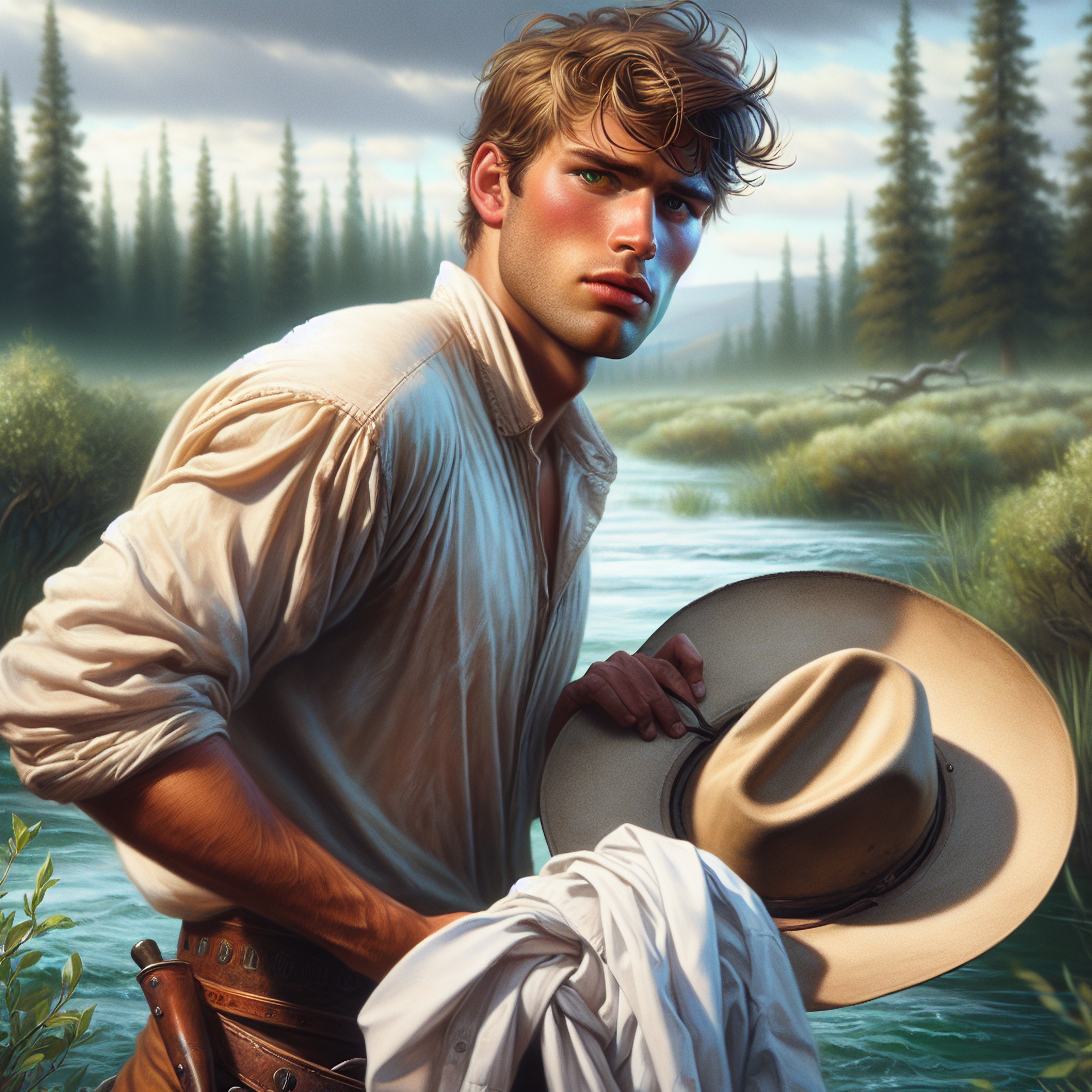
This double cold case and current homicide have Oregon State Police Fish and Wildlife Trooper Gabriel Hawke calling in favors… and exploring a childhood he shoved into the deep recesses of his mind. 

While patrolling on the Snake River in Hells Canyon, Gabriel Hawke’s dog digs up a human bone. Hawke is confronted by an aunt he doesn’t remember, and he finds a canister of film when the rest of the remains are excavated. The film shows someone being killed and a rifle pointed at the photographer.

Going through missing person files, Hawke discovers the victims of the
decades-old double homicide. A person connected to the original crime is
murdered, giving Hawke more leads and multiple suspects.

Attending a local Powwow with his family, Hawke discovers more about his childhood and realizes his suspects have been misleading him.

Pre-order: https://books2read.com/u/bQGkXw

Following in the Path of Their (Gum)shoes

by Margaret Lucke

Jess Randolph, the star of my novels Snow Angel and A Relative Stranger as well as several short stories, is a private investigator and an artist, and she thinks of both of her twin professions as ways to search for the truth. Jess is following in the footsteps of a number of strong women who came before her, and I, as her creator, am doing that too. Some of our predecessors are well known, but these days others are too easily overlooked. So I thought I’d use this post to bring some of them to your attention.

Marcia Muller has been credited with launching the female private investigator in American mystery fiction in 1977 when she published the first Sharon McCone novel, Edwin of the Iron Shoes. Sara Paretsky (Indemnity Only, featuring V.I Warshawski) and Sue Grafton (A Is for Alibi, starring Kinsey Millhone) followed in her footsteps five years later. The three of them paved the way for many other mystery writers, including me.

No one can say these authors have been overlooked. They have many fans (including me), they’ve received high honors, and their series are landmarks in the mystery genre. All of them have been named Grand Masters by the Mystery Writers of America.

But what about their predecessors? It’s true that most fictional female sleuths prior to the 1980s were amateurs. Yet well before Muller, Paretsky, and Grafton published their first books, quite a few authors had written mysteries whose heroines worked as professional detectives — which was considered to be, as P.D. James pointed out in the title of her 1972 novel, An Unsuitable Job for a Woman. The woman in question was James’s character Cordelia Gray, who appeared again in The Skull Beneath the Skin.

Okay, P.D. James doesn’t qualify as an overlooked author either. However, consider these. How many have you read—or even heard about?

Catherine Louisa Pirkis, creator of Loveday Brooke (The Experiences of Loveday Brooke, Lady Detective, 1894). An unmarried woman from high society, Loveday has been forced by circumstances to earn her living. “Marketable accomplishments she had found she had none, so she had forthwith defied convention,” and signed on as an operative with a London detective agency. See her at left as she consults with a client.

Anna Katharine Green, creator of Violet Strange (The Golden Slipper and Other Problems for Violet Strange, 1914). A wealthy young debutante, Violet secretly works on occasion as a detective to earn money that her father doesn’t have to know about. She prefers cases “of subtlety without “of subtlety without crime, one to engage my powers without depressing my spirits.”

Jennette Lee, creator of Millicent Newberry (The Green Jacket, 1917, and two more). Middle-aged and middle class, Millicent starts her detective agency after working for another investigator. Interested in psychology, she is more interested in rehabilitating the wrongdoers she catches than in turning them over to the police.

Patricia Wentworth, creator of Maud Silver (Grey Mask, 1928, and 32 more books). A retired schoolteacher, Maud is a “private enquiry agent” who works with Scotland Yard. She uses her mild manner and appearance to her advantage, so that the villains in these cozy stories believe her to be harmless and unthreatening until it’s too late. Maud began as a secondary character and came into her own in The Case Is Closed, 1937.

Roswell Brown, creator of Grace “Redsie” Culver (20 stories in The Shadow Magazine, 1934-1937). Despite being create by a man (Roswell Brown is a pen name of pulp writer Jean Francis Webb), Redsie is a gutsy, independent, no-nonsense woman. She works for Big Tim Noonan’s detective agency and has a penchant for fast action and chocolate sodas. She’s “nobody’s bimbo,” notes Thrilling Detective Web Site, “and an important figure in the development of female private eyes.”

Maxine O’Callaghan, creator of Delilah West (“A Change of Clients,” Alfred Hitchcock’s Mystery Magazine, 1974; Death Is Forever, 1980 and five more books). Delilah’s appearance in print predated the debuts of Muller, Paretsky and Grafton. In the first novel in the series, ex-cop Delilah goes after the man who murdered her husband, only to have the killer be murdered in turn and herself to be framed for the crime. You wouldn’t go wrong inviting Delilah to the same party as Sharon, V.I., and Kinsey. The Private Eye Writers of America honored Maxine with The Eye, their lifetime achievement award.

This isn’t an exhaustive list. Can you think of other forerunners to today’s female private eyes who have been overlooked and deserve recognition?

Spring Has Sprung

by Janis Patterson


I have never had any trouble being lazy, which is a difficult thing for a writer to overcome. Our careers – to say nothing of our incomes! – depend on us being self starters who have to be responsible for getting everything done when it is due.


And that’s hard to do at any time, let alone when warm weather has finally returned, and the song of the hot tub, or the pool, or the garden is heard in the land. Frankly, I much prefer being on the porch, a glass of iced tea beside me, watching the antics of doves, blue jays, cardinals and lots of little brown birds jockeying for supremacy at the bird feeder, and the squirrels hanging around at the bottom of the pole, hoping for some spillage. Sometimes a hawk will fly overhead and suddenly everyone disappears, either under the deck or into the leafy trees. Then, once the dark shadow is past, they’re back chowing down. There must be some sort of wildlife telegraph about sucker humans who put out free food, because every day there are more. I fully expect the next time I oversleep there will be a delegation knocking peremptorily at the patio door.


See? See how easy it is to wander off into current pleasure – especially when ‘current’ is so beautiful and enticing – when you should be concentrating on immediate deadlines. I have to finish one book, am halfway done on another, really need to do some research on a long-neglected non-fic history, format a special edition paperback for the goody bags at our SCV reunion in July and… I’m sure there are several other somethings, but can’t remember them at the moment. You see, the blue jays and the doves are having a ‘discussion’ about who is next at the feeder.


At least last week I presented my seminar on ‘The Secrets of Republishing Your Backlist’; it was tiring, but received quite well. I am still working on ‘Your Story – How to Write A Memoir’ that I’m giving at the end of the month in Arkansas. I think that’s all of them…


It’s so much more pleasant to sit and watch the Bird Wars, but that does not make a career. I really do have to be more disciplined. When I worked in a 9-5 job I would have fired an employee as easily distracted as I. Successful work depends on projects finished. Well, I do get my projects finished, but not in as timely a fashion as I might wish.
How do you get things done? Do you adhere to a strict by-the-hour schedule, or simply pants it, getting things done even if it means staying up all night, or something else? Let’s face it – no matter what system/systems we use, every once in a while an unkind Fate will dictate that for one reason or another we have to pull an all-nighter. Or two.


But we get it done. We’re writers, and we know what we have to do. Even when there are Bird Wars at the feeder, the temperature is perfect and the hot tub is calling seductively. We are writers.

Get On With It

My work-in-progress is a historical novel. It’s a first draft and I’m working on it in fits and starts, given the interruptions that life throws at me.

Lately I’ve been thinking about transitions. Now, the dictionary describes a transition as the process or period of changing from one state or condition to another. That could mean transitioning from one place to another. Or in the case of a character, looking at how that person is changing internally or emotionally.

Both these definitions are appropriate in terms of the novel. My protagonist does have some internal and emotional changes in store. But right now, she’s changing from one location to another. So, I need to move her, and two other characters across the landscape from point A to point B—and not take forever doing it.

The book takes place in the late 1870s. My protagonist, Catriona, is the daughter of an officer in the frontier army. In the early chapters of the book, she leaves Fort Garland, Colorado, heading to New Mexico to join her father at Fort Stanton, his new post. With her are two companions, a young woman named Martha and a man named Eusebio. I’ve been writing scenes describing these three people on the road to Santa Fe, where they will make a stop before heading farther south again and arriving at their destination.

Agonizing over minutiae is part of my writing process. On the other hand, describing the journey is useful information to help me visualize what I’m writing about and want to convey to readers.

So lately, I’ve spent lots of time thinking about the route, which doesn’t always follow the asphalt roads of the present day. These people are traveling on dirt roads and trails, which sometimes cross streams by going through the water rather than clip-clopping over a convenient bridge. I’m visualizing the terrain, which involves mountains, rivers and high plains. And pondering how many miles a horse-drawn wagon can cover in a day, given the terrain and the condition of those roads.

After mulling it over, chewing on it, and examining it every which way, I finally decided to get on with it. Readers don’t need to follow along on every dusty mile of that journey, taking in the sights during the day, cooking over a campfire, and sleeping under the stars at night. One day and one night, that’s really all that’s needed to give the appropriate information.

Besides, I want my characters to get to their destination so I can move along with the plot.

Jump ahead, already.

I’ve done this with other books, of course. When I was writing Witness to Evil, a Jeri Howard novel, I had Jeri down in Bakersfield. She was stumped and so was I. What happens next? I jumped ahead and put Jeri on the freeway, heading to Los Angeles. Next think I knew, after finding clues and interviewing people in LA, she was on the road again, this time to San Luis Obispo and then Fresno, before returning to Bakersfield with lots of fresh clues. And me, lots of new chapters.

I also write the Jill McLeod series, featuring my sleuthing Zephyrette back in the early 1950s. Much of the action in those books takes place aboard the train known as the California Zephyr. And I must work within the framework of the train schedule. When writing the first book, Death Rides the Zephyr, I had timetables all around me. Not just the timetable for the train passengers, but the timetable that showed the work rotation of the crew, which was different. Again, it wasn’t necessary to write about every mile of that train journey. It was enough to give readers a glimpse of the changing scenery and the feel of the train rocking along the rails. After a long day seeing to the passengers’ needs, Jill is entitled to go to bed in her Zephyrette’s compartment and wake up the next morning, miles down the track and ready for a plate of railroad French toast in the dining car.