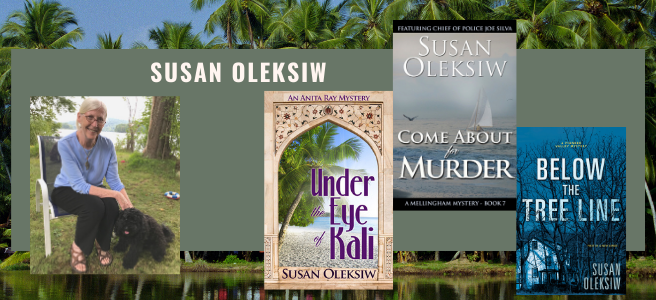
The Slogging Beginning

I am doing something I haven’t done in some time. I am trying to write a 70k+ book in a month. I want this book off to my critique partners and beta readers by the first of August so I can have it polished and uploaded for release before I leave on a month long vacation the middle of September. Have I put a lot of pressure on myself? Yes! But it will be worth it to be between books while I’m enjoying my vacation.

Most writers know about the saggy middle. It’s where in the middle of the book, sometimes it feels like the pacing has slowed or the story doesn’t feel as fresh and vigorous as it started out. Many have had this happen in a book more than once. But with editing and rewriting it can be given a nice crisp revision.

I’m finding the beginning of this book, not the story, the story is moving along fine. It’s the having to stop and research something that takes time and then takes me off on, ‘What if I did this?’ that turns the story in a different direction. I have had that happen on this particular book four times since beginning the book. I’m a third of the way into the book and I’m finally getting into the rhythm of the story and not having to stop so much and look things up.

So my slogging beginning is the fact, 1) I was at an event and met a person that was so ingrained on my brain after our interaction that I had to put her into this book. Which then changed the direction I had started out on. 2) I decided to make a business I know nothing about as a primary setting to the story. 3) Due to the character I added, I needed to look up mental illnesses. 4) Trying to add information from a short story I put in an anthology required me to reread the short story and figure out how to make it all play into the main plot.

Slogging in this instance is not the writing or the story line, it is the fact I have to keep stopping to research information I hadn’t known would come up with I started the story. Slogging is the hours I’ve spent reading and researching when I wanted to be writing.

However, no matter what you write there is always a need for some research. When I wrote historical western romance I had to research history and how they dressed and lived. In mysteries it’s all about type of wounds, types of crimes, occupations, and yes mental illnesses. Not to mention locations and oh so many things that you would think I wouldn’t need to look up since these are contemporary mysteries. But because of the internet and everyone having access to information, you have to make sure you do even more research so no one can say you don’t know what you’re talking about.

I rarely have a saggy middle and this is the first time I’ve had a slogging beginning. But I can tell you, from here on out this book won’t be sloggy or saggy! I love when I hit the middle of the book and it is like wild downhill ride as I pull all the clues and red herrings together and carry the main character to the revelation of the killer.

Endings are always like a runaway truck!

If you are looking for a good deal on an audiobook bundle, the first three books of my Shandra Higheagle mystery series is available for $0.99 at many audiobook vendors until the 10th as part of the Indie Audiobook Deals. https://indieaudiobookdeals.com/

Guest Blogger -Jennifer Giacalone

Working Backwards

When people find out that I write the occasional mystery novel, the most common question I get is “so do you write the ending first and then work backwards?”

So, for anyone who might be wondering if I did that with “Art of the Chase,” the answer is no. However, I didn’t quite write it from beginning to end either. You could say I did it sideways, from the middle out.

Where Is the Middle Anyway?

For me, a mystery turns less on the beginning or the ending and more on the little bit of information that’s so interesting and surprising that it allows you to see certain things about what comes before it and after it.

For example: I was watching a documentary on the works of Vermeer. They talked a bit about how it was unusual for the time period that he used so much blue in his paintings, because it made them very expensive. Blue paint could only be produced with lapis lazuli stone, which had to be hand-ground and then processed in a very unpleasant, potentially dangerous procedure. You didn’t find many painters of that period using it as wantonly as he did.

The advent of French ultramarine produced chemically, in the 1880s, made it much easier and cheaper to work in blue. And it was this seemingly random fact that ended up being what the story turned on.

Because I started to think: what if you had a detective who specialized in art thefts? Would they know about the rarity of blue in Renaissance and Baroque painting? How would that knowledge come into play if a particular piece was stolen? I was starting in the middle. The middle of a story, the middle of a question, the middle of a period of history in which blue paint was a precious commodity.

Research Is The Fun Part

The process of writing is, for me at least, an opportunity to learn. I learn about myself, always; my biases, my areas of weakness as a writer, my own fascinations. But I also just learn about… well, stuff.

Almost everything I choose to write about requires some amount of research. And it’s always about something of interest to me. There’s nothing I love more than learning a lot about a topic of interest, in this case, art. And in particular, the life and work of Artemisia Gentileschi, the various methods of producing paint colors used by the old masters, and the architectural landscape of Florence. What a delight!

I fell down a rabbit hole, and popped up somewhere late in the third act with bits of fascinating information in my little paws like some sort of literary groundhog. The threads that connect my little prizes are ultimately what hold the story together. Why does this painter matter to this detective? What sort of thief would want to steal a piece of hers? And what does the history of blue paint have to do with any of it?

There is a Connection Here, I Swear

I spread my treasures out and draw lines from one to the next. I figure out why these things matter to each other, and so the story reveals itself. My plotting efforts tend to look less like a traditional bulleted outline, and more like a murder board with photos tacked up alongside post-it notes, connected by a brightly colored thread that runs from the middle out.

And I’m the lunatic cop who can stand back and see how it might all connect; who do I need my thief to be, my heroine, my informant? How do I build them to make these treasures shine and tickle my readers as much as they tickled me?

Ah, there it is. I see it. There’s my story. There’s my heroine. This is how she gets from here, to here, to there. There’s my thief. That’s what he wants, and why.  It’s not a matter of working backwards or forwards. It’s a matter of allowing the story to emerge from the bits and pieces that delight me the most, and letting them surprise the reader as much as they surprised me.

When a notorious art thief surfaces, warring detective exes reunite for the hunt. 

Six years ago, the “Fabulous Gustave” slipped the grasp of Agent Fleur van Beekhof, making off with a priceless artwork…and Fleur’s beautifully ordered life. Suddenly the cool, pragmatic Europol detective lost her detective partner and wife, her rising career, and her control, thanks to the addictive lure of cards.

When a new Italian art theft bears all the markings of Gustave’s flamboyant, taunting style, Fleur is put back in the field, because no one knows him better. She jumps at the chance to correct the mistake that ruined her life. The hitch? She has to work with her fiery ex-wife. 

Where Fleur is a detective who loves art, Renata is an art expert who loves being a detective. Where Fleur is by the book, Renata is reckless and leaps into danger. But they’ll need both of their skills to catch the slipperiest thief Europe has ever seen … even if it shatters what’s left of Fleur’s heart. 

Buy link: https://www.amazon.com/dp/3963248351

Jen Giacalone is a neurodivergent queer nerd who has lived many lives and brings with her a wealth of experience to tell high-octane drama, thriller, and mystery stories across books, film, and TV.

After spending her twenties as a rock and roll frontwoman, and her thirties as a graphic designer in boardrooms of Fortune 500 companies, she’s currently in what she likes to call her “final form” as a writer.

You can usually find her disappearing down rabbit holes of fascinating research on random subjects that will turn up in one of her books. And, of course, she sprinkles a little glitter on everything she touches.

https://www.instagram.com/jengiacalone/

Writing with My Voice by Heather Haven

A few days ago, I took a tumble in the parking lot of the San Jose Kaiser Permanente. While I don’t advise it, if you have to take a fall, try to do it in the parking lot of a hospital. Within seconds about 12 doctors, nurses, and orderlies came running. They were all very concerned about me. I, on the other hand, sat there wondering how I was going to get up. Getting up from the ground at my age is not always the easiest thing to do and it certainly isn’t the most graceful. It may have taken four nurses and orderlies to do it, but they hauled me up and took me to ER where I was diagnosed with a broken wrist. Not only did I have a broken wrist, but it was my dominant wrist, which is the left. I’m left-handed. And a writer. Yikes!

 This presented some problems, not the least of which was being in the middle of my latest WIP, Cleopatra slept here. Aside from the fact that I am completely dependent upon my husband to do nearly everything and will be for the next six weeks, what bothers me the most is I can’t type any of my work into the computer. What to do?

Big Decision born of necessity: go rogue and use the dictation program in Word for Windows. I gave it a whirl, but it didn’t work. Where was this stupid microphone? I spent the better part of two hours searching for it on my computer only to discover I didn’t have one. There’s always a glitch.  

But undaunted, I bought a microphone from Amazon, a plug and play. A plug and play does all the necessary setup work such as drivers for your computer and was the way to go for this wounded-wing writer. I’m using Microsoft Word’s AI now to dictate this post.

Using the AI dictation program in Word is akin to having a really dumb secretary. Maybe I shouldn’t say dumb. Maybe unseasoned. And stubborn. Unlike human secretaries, this one doesn’t try to fit in with your work practices. When you tell this AI what not to do, it simply doesn’t listen and continues to make the same mistakes again and again. OK, I thought, the program is free and better than nothing. Why not try to deal with its idiosyncrasies? So, I am.

Remember the Three Stooges? I call the AI on my phone Moe. Moe knew early on I used the word ain’t every now and then. It no longer tells me it’s a misspelling or I should put in something else. Microsoft Word’s AI, who I call Curly, is not so smart. It will put a period or capitalize a word in the middle of a sentence for I know not why. Or add an extra space in between words. Really, Curly? Also, if I leave the microphone on and say nothing, it takes my breathing to be the words bye-bye. And if I clear my throat? It puts in the word Oh. With my allergies, I’m always clearing my throat. At the end of the day, I find a plethora of Ohs scattered around my manuscript. And do not talk to the mailman or a passing dog while it’s on. There’s no telling what it will write. Flergon deherden flup??

As I read this back, I must say I come off like an ungrateful cow. Moo. Maybe I’m being a little like Larry, the third member of the Three Stooges. Or maybe I’m just taking out my frustrations about my broken wrist on an inanimate object that acts a lot like a person, but isn’t. After all, these are very useful tools we have now. AI has really come up with some things that makes our lives better. Not perfect, but better. Nothing is perfect in this world. I remember once at about 23 years old, I thought I might be perfect. I was mistaken. Even my mother had a good laugh over that one.

So, until my wrist heals up, I will continue to use this free dictation program, glad I don’t have to type with my nose to get my work done. Or hire a real secretary. And if this secretary knows the eight parts of speech, it could be up to 40 bucks an hour. To recap, if the iPhone is Moe, and Microsoft Word is Curly, then I guess I’m Larry.

 I can go there.

Family Pictures

Mom would have been 100 years old this summer. The year she was born, Calvin Coolidge was president, having taken that office on the death of Warren G. Harding. Seventeen presidents later, Mom was still hanging in there. We hoped she would make it to that centenary celebration. We were planning a hell of a party! But she didn’t. Her mind and wit were still sharp—her body was wearing out.

Though Mom didn’t get a 100th birthday party, Aunt Flo did. Mom was the baby of the family and Aunt Flo was seven years older. They were the only two siblings remaining of six brothers and sisters. That year, plans were in the works for a big celebration down in Texas. Mom wanted to go but she hesitated. She was on oxygen then, requiring an oxygen concentrator and all the stuff that goes with it. The thought of traveling, let alone flying, was daunting. She told Aunt Flo she wouldn’t be there.

I finally called my brother and said, I don’t want Mom to regret not seeing her sister one more time. He agreed. We bought the tickets and told Mom she was going. He flew with her, and I met them at the airport. Money spent and lots of logistics to deal with. But the look on Aunt Flo’s face when her baby sister walked into the room was worth all the effort. I have pictures!

When we celebrated Mom’s 90th birthday, we had several tables displaying photos of Mom at various stages of her life. I recall sitting on the floor in the basement, going through photo albums. I found pictures that I could tell were taken in the 1930s, based on the clothing and hairstyles the people in the photos were wearing, as well as the cars in the background.  hairstyles and autos. But I didn’t recognize any of those people and no one had written anything on the back to identify them. People, write stuff on the back of your pictures!

I found plenty of photos of Mom, though. It was a treat to see her as a little girl and a young bride. Since Mom passed, we did it again, going through albums, slides and framed photos all over the house. One find was a tintype from 1892. I’d never seen it before. According to the note from Aunt Flo written on the back, the woman in the photo was my great-grandmother and the two children with her were my grandmother, at age six, and her younger brother, who would have been three years old. My grandmother’s sister, a baby at the time, is not pictured. It’s only the second photo I’ve seen of my great-grandmother, who died that same year at the age of 30.

During our recent labors to clear out Mom’s house, we discovered a video of Mom and Dad’s 50th anniversary and we watched it before taking it to be digitized. What a treat it was to see aunts, uncles, cousins and family friends who were still alive then—and now no longer with us.

Those of us who write fiction create families in our books and stories. Jeri Howard isn’t just a lone private eye who has an office and a home in Oakland. She has a father, a mother, and a brother. Each in turn has been featured in books—her father in Till The Old Men Die, her mother in Don’t Turn Your Back on the Ocean, which also features appearances from cousins on the maternal side of things. And Jeri searches for her missing brother in Cold Trail. Jeri’s grandmother is a major character in Bit Player, which touches on her experiences working as an actress in Hollywood in 1941, just before the start of World War II. Aunts and cousins show up in that one, as well.

I also write a historical mystery series set in the early 1950s, featuring Zephyrette Jill McLeod, who lives at home in Alameda, California with her father, mother, and siblings. In my Kay Dexter series, featuring a geriatric care manager, Kay Dexter lives just down the street from her elderly mother.

So family pictures inhabit our fiction as well as our real lives. With words we photograph these people and enable our readers to see them. It makes our stories so much better.

Guest Blogger ~ Alice Fitzpatrick

THE MYSTERY IN MY LIFE

            I grew up reading my mother’s Agatha Christie novels, losing myself in idyllic English villages where everyone knows each other, sprawling manor houses with hidden passageways, and luxurious seaside hotels that reminded me of the England I’d left behind when we’d immigrated to Canada.  With each book, I took on the challenge of matching wits with Miss Christie, ever hopeful that this time I would identify the murderer.  However, the real mystery in my life was my own family.

            My Polish relatives lived behind the Iron Curtain which might explain my father’s secretive nature.  He spoke little about his past, but when he did, he told a different tale to each of us.  Once he confessed to me that as White Russians, we’d been forced to flee to Poland during the revolution where we’d adopted a Polish variation of our name.  But even so, he assured me, everyone would recognize our royal connection.  

            For several years, I revelled in the fantasy that I was descended from the House of Romanov.  Once I saw the film Anastasia, it became obvious who my grandmother truly was.  The grainy black and white photograph of the squat Slavic woman my father claimed was his mother was obviously part of the deception my aristocratic relations had been forced to perpetrate in order to remain safe.  Sadly years later, DNA analysis proved this to be false.

The Romanovs
Uncle Terry

            Like my protagonist’s Aunt Emma in Secrets in the Water, people in my British family had a habit of disappearing from my life—my Uncle Terry, my cousin Terry, and my great-aunt Marie.  I was a third of the way through the first draft of the book when I realized I’d unconsciously patterned the death of Emma on that of my uncle.  Only one month after the birth of his son, Terry fell asleep at the wheel, rolled his car down an embankment, and bled to death.  As you’d expect, his death devastated the family. 

            But even a seemingly straightforward car accident was problematic.  The family had always suspected Terry was a hemophiliac since he suffered uncontrollable nose bleeds whenever he became excited.  While it’s highly improbable he had this disease, the story was kept alive.  The family couldn’t accept that their only son, with his whole life ahead of him, could die such a senseless death.  As no one wanted to hold Terry responsible, the hemophilia myth allowed us to blame the disease for killing him, rather than his own carelessness. 

            In my book, with no evidence to the contrary and a suicide note, the coroner ruled that the responsibility for Emma’s death was hers alone, a judgement her family and friends have struggled to accept for fifty years.  Like Terry, Emma was about to start an exciting new phase of her life, having just been accepted into Cambridge University.  Part of what my protagonist Kate is up against as she searches for the truth of her aunt’s death is that over the years, the islanders have idealized Emma, choosing to ignore her weaknesses and failings.  But if Kate is to get to the truth, she must be open to every aspect of her aunt’s character, no matter how unpleasant.  When asked if she would like to know something about Emma, even if it wasn’t nice,  she replies, “It’s not the nice things that get you killed, is it?”            

So why do I write mysteries?  It’s because mystery has dominated my life.  Other authors write crime fiction because it allows them to set the world straight, to bring justice to victims, order to chaos.  But for me it’s the need to understand what happened and why.  It’s like finding the missing piece of a jigsaw puzzle.  Only then is the picture complete.

Emma Galway’s suicide has haunted the Meredith Island for fifty years.

Back on the island to lay her grandmother to rest, Kate can’t avoid reflecting on the death of her aunt.  Learning that her late mother had believed Emma was murdered and had conducted her own investigation, she decides to track down her aunt’s killer. 

With the help of her neighbour, impetuous and hedonistic sculptor Siobhan Fitzgerald, Kate picks up where her mother had left off.  When the two women become the subject of threatening notes and violent incidents, it’s clear that one of their fellow islanders is warning them off. 

As they begin to look into Emma’s connection to the Sutherlands, a prominent Meredith Island family, another islander dies under suspicious circumstances, forcing Kate and Siobhan to confront the likelihood that Emma’s killer is still on the island.

Buy Links- https://www.amazon.com/Secrets-Water-Alice-Fitzpatrick/dp/1988754607/

https://www.indigo.ca/en-ca/secrets-in-the-water/9781988754604.html

Alice Fitzpatrick has contributed short stories to literary magazines and anthologies and has recently retired from teaching in order to devote herself to writing full-time.  She is a fearless champion of singing, cats, all things Welsh, and the Oxford comma.  Her summers spent with her Welsh family in Pembrokeshire inspired the creation of the Meredith Island Mysteries series.  Secrets in the Water is the first book in the series.  Alice lives in Toronto but dreams of a cottage on the Welsh coast. 

www.alicefitzpatrick.com/

https://www.facebook.com/alicefitzp

https://www.instagram.com/alicefitzpatrickauthor

https://twitter.com/alicefitzp

https://www.goodreads.com/user/show/10602521-alice-fitzpatrick