Constructing Writing

As I listen to my contractor pound nails, rip wood, and clamber about outside my cabin, I have come to newly appreciate the relationship between writing and construction.  Oh, we all know and acknowledge the concept of scaffolding, or how to eat an elephant one bite at a time. I’m not writing about that. This blog is about five steps in the construction process that parallel the writing process. The list does include, the need to show up every day on time at the building site with your tools strapped around your waist, i.e., sitting in your writing chair in your designated writing space and applying your skills to the work you do.

Step 1: Don’t go out to bid without knowing what your final product will be. In my case, we are updating the exterior of a cabin in the mountains driven by the ‘bleeping’ insurance companies. This requires, among other things, that to meet the insurance company’s timelines, the deck must be rebuilt using the same footings. Not unlike genre requirements, footings define the building parameters, including the number of support beams and joists. So the question becomes, do I want my deck to adhere perfectly to the existing footings or do I want the stairs to bend in the middle, as in stretch the genre (building) requirements to devise something more interesting without forcing the readers into a paroxysm of horror by reshaping the genre or the building inspector to require costly, time-consuming permits. Once this step is done, you have defined the genre or general scope of the work, be it a book or deck.

Step 2: Have a realistic plan for construction that estimates the materials and superstructure required. In short, outline your scope of work (by whatever method you use). Define your characters (joists). Define their relationships and how they support each other and the events (bridging). Who does what to whom, when, where and how. At least, know where your story starts and why and where it ends. And, if you write historical fiction, measure twice and cut once. Research, then double-check your research so that the time period unfolds seamlessly as you write. Fixing historical errors once they are embedded in the story can be like a trip to ‘the cold place’ and upend your plot.

Step 3: Anticipate change. Something always comes up that requires replacing, rewiring, or rethinking (materials plus 20%). Always. Don’t stress, go back to your plan. If the change doesn’t benefit the building or the plot – ditch it. If it enhances the final work for the reader, weave it in so that the warp and the woof are smooth cohesive and complementary. The story will benefit from the enhancement or twist.

Step 4: Have the construction inspected by an outsider. Building inspectors come to the site; reviewers don’t, but they are a must. I don’t mean the folks who write reviews for your web or social sites. I’m talking about a circle of readers, willing to tell you when something is off, when it isn’t, and what the story might need. Take them seriously, then …

Step 5: Ensure that work not only passes inspection but continues until it fully meets your expectations, including any changes required. Then read it, as in read it again, and again, and again. Try an AI grammar checker. Have someone else read it for grammar errors. If it is historical fiction, find someone who understands that word usage might be a tad different back then. Trust me, at least one embarrassing word or grammatical error will escape you.  You’ll find it lurking in the first chapter or whatever page your proof happens to open to as you relish your baby. Fix it. Get another proof. Then, take the next step.

Time for an open house! Or, rather, time to publish, send out for media review, advertise, market, and pray. And, if you need siding, have the cover done by professionals. Don’t worry you can still write all your own text, have AI write the cover text, or have the cover design group do the same.

What good is a great deck without new siding on the house?

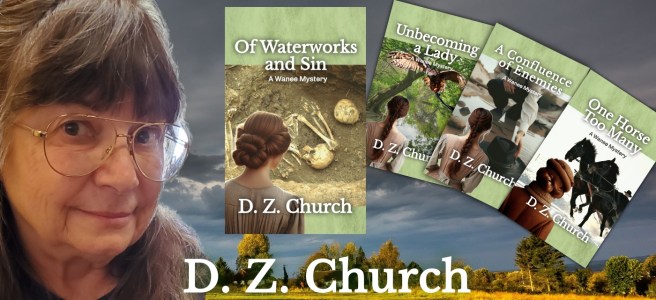
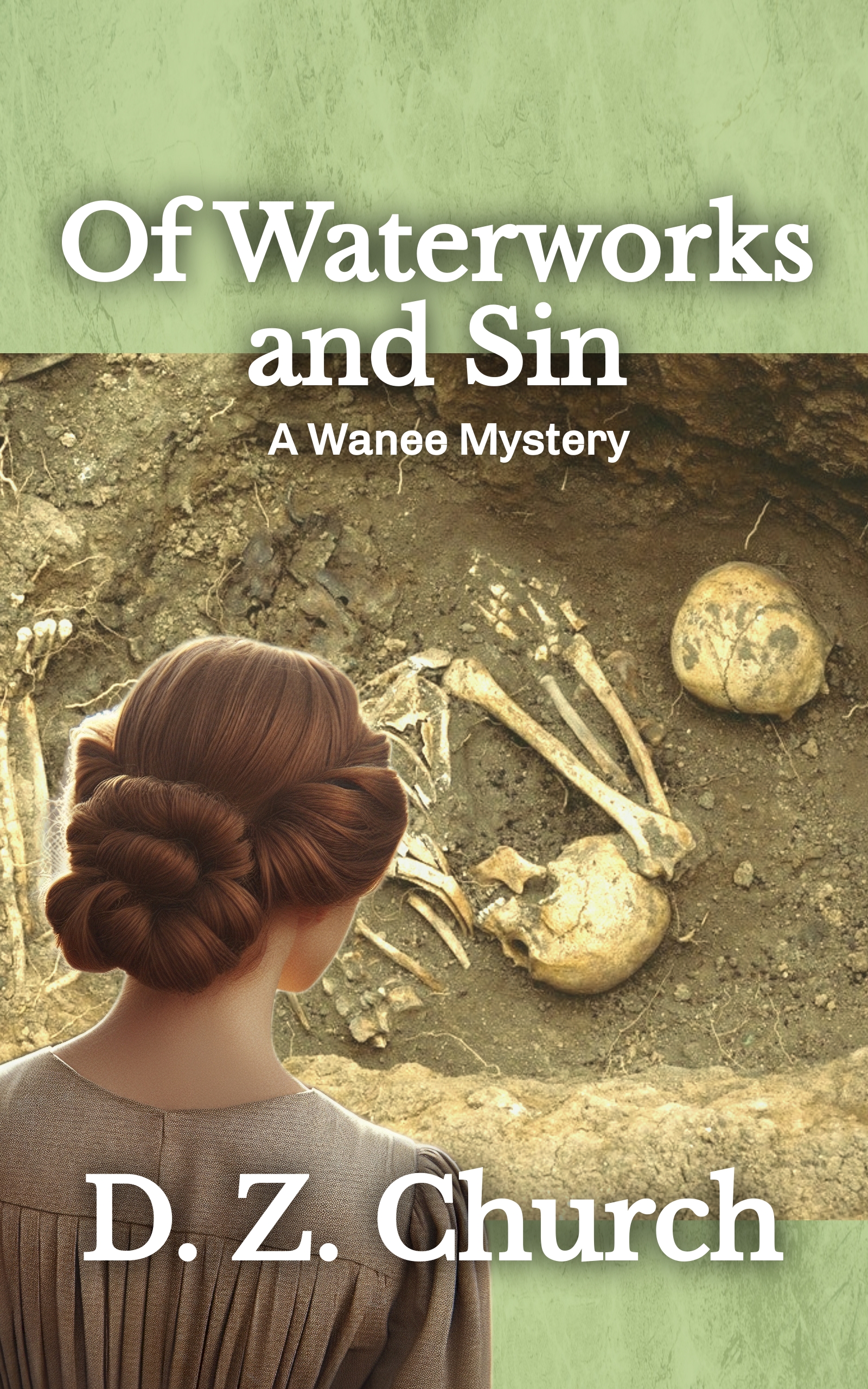
For more information about me or my books, check out https://dzchurch.com, or to buy my books, go to Amazon and search on D. Z. Church; they’ll all pop up.

Discovering the donair

Food seems to weave its way into my writing uninvited.

In my latest book, Conflagration!, food is the foundation for a friendship that springs up in 1734 between the main character Philippe Archambeau, a court clerk, and the jailer he befriends. Lunch becomes a means to extract information, then it becomes much more.

In my first book Hung Out to Die the main character, an American transplanted to Nova Scotia, discovers the delicious joy of the donair. Many people have never heard of this juicy, meat-filled, garlicky concoction, but it is the official food of Halifax. Popular history says the donair – spicy meat wrapped in a pita and embraced with lots of sweet sauce – was invented in Halifax in the 1970s where it rapidly became a must-have menu item for late-night partiers, snackers, and food aficionados.

As my main character, Riel Brava, discovers, the donair can be a little difficult to eat. There is an art to juggling a stuffed pita while licking sauce off your face and adjusting foil wrap to get more donair in your mouth.

The recipe below avoids that dilemma. It’s an appetizer compliments of the Dairy Farmers of Canada. I have adapted the recipe slightly.

Let me know how it tastes.

Donair Dip

Ingredients

  • 1lb (450g) lean ground beef
  • 1 tsp (5 ml) dried oregano
  • 1 block (250 g) cream cheese
  • 1 cup (250 ml) shredded old cheddar cheese (or cheese of your choice)
  • 2 tsp (10 ml) paprika
  • 2 tsp (10 ml) garlic powder
  • 2 tsp (10 ml) onion powder
  • 1/2 tsp (2,5 ml) salt
  • 1/2 tsp (2,5 ml) black pepper
  • 1 cup (250 ml) donair sauce (see below)
  • 1/2 diced tomato (optional)
  • 1/2 diced onion (optional)

Donair Sauce

  • 1 can (300 ml) sweetened condensed milk
  • 1/3 cup (80 ml) white vinegar
  • 1 tsp (5 ml) garlic powder

Preparation
1. Add all ingredients in a bowl and combine.
2. Preheat oven to 350 °F (180 °C).
3. Cook the ground beef and the spices together, mix well in a frying pan.
4. Drain off excess grease.
5. Mix the softened cream cheese, cheese and Donair sauce together.
6. Place ground beef mixture on the bottom of 9”x9” cooking dish (or equivalent).
7. Add the cheese and Donair sauce mixture on top of the ground beef mix.
8. Bake for 20 minutes.
9. Top with diced veggies after removing from oven (optional).
10. Serve hot or cold with tortilla chips or baked pita slices.
11. Enjoy!

Guest Blogger ~ M.E. Proctor

The Detective Comes Calling

When I start working on a short story I never know much about the characters. I might have a place in mind—a bar on a beach, a path in the forest, an iced-over parking lot—or a line of text I woke up with, like this one that I used recently, curious to see where it would take me: Innocence doesn’t do it for me. Spoiler alert: somebody dies.

Most of my pieces unspool that way. Characters walk on stage, I get to know them, and things happen. Or nothing happens and the story goes asleep on my laptop, for a while or forever. That loose process works well for me, for short fiction.

A book is a very different animal.

If you write yourself in a corner in a short story the damage is minimal. You can shelve the draft, revisit it later and either find a solution or scrap it entirely. It’s disappointing but at worst you’ve only lost a few weeks. On the other hand, if you’re fifty thousand words into a book and hit a wall or run out of juice, it really hurts. The investment in time and the emotional commitment are substantial. Of course you can try to rescue the project. As Chandler said: In doubt, send in a guy with a gun. Sometimes it works, other times … Raise your hand if like me you’ve read books that feel like they’re limping to the finish line.

The pitfalls of winging it were very much in the back of my mind when I decided to sink my teeth into a crime novel. The problem is that I’m not a plotter. Detailing every beat of a story before sitting down to write it feels too much like a straitjacket. It sucks all the fun out of the project. Why bother to write it if I know everything, no surprises, from the get go? Still, I wanted to be better organized than usual. Start with an idea and develop a rough outline that could go the distance.

It was an excellent resolution.

It didn’t happen.

Because Declan Shaw threw me for a spin.

I was on the back porch, engaged in the creative exercise known as woolgathering, when a name popped into my head. Out of nowhere. Insistent. I’d never written anything, book or short story, that used the name of a character as a prompt. I was intrigued. Who the hell was this guy pitching a tent in my subconscious?

Names aren’t neutral. In life, we’re passive recipients—a gift from our parents. In fiction, the writers are in control. They can play with the mental images a name creates (Dickens mastered it). What does the name suggest about the character’s past, family, or cultural background? Smith evokes 1984 or The Matrix, Cadogan-Smith comes with horses and country estates, Smith-Underfoot might be a familyliving in Hobbiton.

Declan Shaw. What does it bring to mind? Irish heritage. He probably drinks whiskey and can tell a tale. Yes, I know, it’s a cliché. But seriously, with a name like that, what does he do for a living? I love antiheroes but I didn’t feel like spending an entire book with a hitman, Ken Follett did it so well in The Day of the Jackal, and, more recently, Rob Hart in Assassins Anonymous. So what? Reporter. I could see the byline, front page, above the fold. Then an insidious voice in my head whispered: Can you build a series around a journalist, how many cases can he cover, without stretching credibility? A series? The inner voice had to be kidding, there was no book #1 yet. It was ludicrous. But, but … I could smell the possibilities.

And that‘s how, right there, on my porch, Declan Shaw became a private detective.

The first scene I wrote had nothing to do with investigating. I pictured him as an eleven-year-old boy, standing at the bottom of a flight of stairs, looking up at his intimidating grandmother. She was a black-clad villain straight out of a comic book. I imagined the events that brought the kid to her place and the disastrous consequences that ensued. Readers won’t find any of that in Love You Till Tuesday, the first book in the series. Declan’s back story is in my back pocket and won’t come out until the time is right.

I forgot my resolution to outline and gave myself permission to improvise. The plan was to learn who my character was by writing him. It took a lot longer than I expected, three years, three manuscripts, a thousand pages, multiple false starts. None of that work made it into the book, but the effort was worth it. I knew Declan inside out. We were both ready to tackle Love You Till Tuesday. In some sort of orderly fashion.

My plot document looked like the output from a chaotic brainstorming session, a jumble of character sketches, a rough timeline, cryptic notes, dead ends and side stories. It was an unstructured and messy pseudo synopsis, with plenty of freedom between the lines to change almost everything. As I typed away, things changed indeed, and changed again after input from editors and beta readers, cuts and tightening up, but the original bones of the story remained. Until finally Declan Shaw made his official debut with his cigarillos, his cowboy boots, his good and flawed impulses, and his ironic take on the world. He’s good company. I’m keeping him.

Love You Till Tuesday – A Declan Shaw Mystery

The murder of jazz singer April Easton makes no sense, and yet she appears to have been targeted. Who ordered the hit and why? Steve Robledo, the Houston cop in charge of the investigation, has nothing to work with. Local P.I. Declan Shaw who spent the night with April has little to contribute. He’d just met her and she was asleep when he left.

The case seems doomed to remain unsolved, forever open, and quickly erased from the headlines. And it would be if Declan’s accidental connection with the murder didn’t have unexpected consequences.

The men responsible for April’s death are worried. Declan is known to be stubborn and resourceful. He must be watched. He might have to be stopped. He’s a risk the killers cannot afford. The stakes are high: a major trial with the death penalty written all over it.

Buy Links:

Love You Till Tuesday is available in eBook and paperback.

Barnes & Noble, Bookshop.org, and Amazon at https://www.amazon.com/Love-You-Till-Tuesday-Proctor/dp/1956957707

From reviews:

If you think the crime fiction market has enough PIs, think again. Declan Shaw is the kind of PI this genre has been waiting for. Declan is a well-developed, complex and nuanced character, wrestling with his own internal conflicts as he investigates the murder of April Easton. Sharp, witty dialogue and a fast-pace make Love You Till Tuesday an engaging read—one of those books you can’t put down and keep reading late into the night. It is a fun, intense read from beginning to end and M.E. Proctor displays her incredible talent at creating a well-written and beautifully crafted book.

M.E. Proctor was born in Brussels and lives in Texas. The first book in her Declan Shaw PI series, Love You Till Tuesday, is out from Shotgun Honey with a follow up scheduled for 2025. She’s the author of a short story collection, Family and Other Ailments. Her fiction has appeared in various crime anthologies and magazines like VautrinBristol NoirMystery TribuneShotgun Honey, Reckon Review, and Black Cat Weekly.

Social Links

Author Website: www.shawmystery.com

On Substack: https://meproctor.substack.com

Facebook: https://www.facebook.com/martine.proctor

Twitter: https://twitter.com/MEProctor3 BlueSky: https://bsky.app/profile/meproctor.bsky.social

Sleeping Dragons

A few years ago, we had a huge snowstorm after Christmas. We’d taken our tree down and put it on the deck until my husband had time to haul it off, and then the snow fell. The next morning when I got up and looked outside, it looked like a dragon sleeping on my deck.

It took several years and a posting of a picture of my dragon on Facebook, for me to get a spark of an idea for a children’s book. Actually, it took my cousin saying, “I see the makings of a children’s book here.” Then my mind took off with visions of dragons coming awake and changing shape at certain times of the year when the moon is shining on the freshly fallen snow…

People often ask me where the ideas come from for my books. Many people have asked if they are based on true stories. They aren’t, but I feel there is some truth to every story. And there are sparks of ideas everywhere. Why does one thing catch our attention and another not?

My niece and I were talking about my work in progress on a car ride last fall. We hit on an idea for the book that gave us both chills. We looked at each other and grinned, knowing that spark of idea would make the book so much better. (Sorry, I can’t tell you what it was. You’ll have to read the book!)

People are always telling me, “I have a great idea for a book. You should write it.” Then they proceed to tell me what it is. Often, it doesn’t strike my imagination, but I am always ready to listen just in case. Here are a few ideas that have stuck over the years:

A friend told me that her aunt and uncle were murdered at their ranch in Texas. The murder was never solved. There wasn’t any reason for someone to kill them. They were good people. Nothing was missing as far as the family could tell. They didn’t have enemies, but someone went to their farm one day and killed them. Why?

A woman I went to school with disappeared. She was never heard from again. She just was gone. It was all over the news. They brought in experts, Psychics, and even put her disappearance on the television show, Unsolved Mysteries. Nothing. What happened to her?

A young woman’s body was found in the trunk of her boyfriend’s car. They thought he killed her, but they could never prove it. They had been at a party. Friends said they’d been fighting. But he was never arrested. Why”

It took many years, many times of looking at the picture of the dragon on my deck for the spark of creativity to catch in my brain. Now I can’t wait to see what becomes of it. Since I’m a mystery writer, I’m sure there will be some mystery involved. In my mind, I see the movie version coming to life. Now I just need to write the book and hope that it catches the imagination of readers. Or a movie producer!

Happy New Year!

Lana

First, Third, How do I choose?

I spent way too much time trying to decide if this new series should be written in first or third person. A lot of the cozy mysteries I’ve read are in first person. They stay in the main character’s point of view (POV) throughout the book.

In my other mystery books, I stay in third person for all the series. But the main character’s POV all the time in the Spotted Pony Casino books. Sometimes I add another POV character in my Gabriel Hawke books because the story needs that added POV. In my Shandra Higheagle Mysteries, I use Shandra and Ryan’s POV’s both.

This new series, I went back and forth between first person and third. So far the book has stayed in my main character’s POV. And I think I’ll keep it that way. It’s how most cozy mysteries are. But as I write, I find myself typing “I” and writing some sentences in first person. This makes me wonder if I need to go back to the beginning and start over, writing from the first-person POV.

Which do you feel is stronger?

Third Person

Andi Clark parked her van in front of the Auburn City Park where the first Christmas event of the year would kick off in an hour. People bustled around putting the finishing touches on craft and food booths. It was the Saturday after Thanksgiving and the whole county was excited to move from the doldrums of a rainy fall into preparations for Christmas.

She never arrived more than an hour before an event. Any earlier her crew of cuddles became bored and got into trouble. The committee had asked her to set up a small petting zoo where people would enter the event. She’d parked as close as she could get with the inflatable decorations and roped-off areas making the attendees follow a specific path through all the booths and over to where Santa would listen to children’s Christmas wishes.

“Come on, Cocoa, I can use your help carrying things.” Andi unbuckled her brown and white border collie from the seatbelt harness and listened to Lulu whine. Andi scratched the Chiweenie’s dapple head and black, long furry ears. “You’re too small to help me right now. You keep Athena company.” She patted the Golden Retriever/Pyrenees cross dog’s blonde head and followed Cocoa to the trailer behind the van.

 Lucky for her all her animals were small except for Athena. The large breed cross was larger than her mini donkey and pygmy goat. Andi pointed to the bucket full of the pins that held the panels together. Cocoa grabbed the handle in her mouth. Andi gathered the top two panels and carried them to the area with a sign, Cuddle Farm Animals.

First Person

Parking my van in front of the Auburn City Park, I watched people bustling around getting food and craft booths ready for the first Christmas event of the year to kick off in an hour. It was the Saturday after Thanksgiving and the whole county was excited to move from the doldrums of a rainy fall into preparations for Christmas and the possibility of snow.

I never arrive more than an hour before an event. Any earlier my crew of cuddles become bored and get into trouble. The committee asked me to set up a small petting zoo at the entrance to the event. I made my way by the inflatable decorations and roped-off areas funneling attendees down a specific path through all the booths and over to where Santa would listen to children’s Christmas wishes.

“Come on, Cocoa, I can use your help carrying things.” I unbuckled my brown and white border collie from the seatbelt harness and listened to Lulu whine. Scratching the dapple head and soft, black, long furry ears of my Chiweenie, I said, “You’re too small to help me right now. You keep Athena company.” I patted Athena, my Golden Retriever/Pyrenees’, blonde head and followed Cocoa to the trailer behind the van.

 Lucky for me, all my animals are small, except for Athena, and fairly easy to handle. Athena was larger than both my mini donkey and pygmy goat. At the trailer loaded with panels to set up a small pen, I pointed to the bucket full of pins that held the panels together. Cocoa grabbed the handle in her mouth and I gathered the top two panels and carried them to the area with a sign, Cuddle Farm Animals.

Which version makes you want to continue reading?

When I wrote my first mystery 30 years ago, it was in first person. then an agent I sent it to, told me that no one bought mystery books in first person. Which floored me because I had just read the first three Sue Grafton books that were in first person. Anyway, I moved from first person to third and on to a different genre. Now that I’m back writing mysteries, I wonder if I also need to switch to first person for this series. I encourage all thoughts and responses to this dilemma.

A fun new adventure for me, besides trying to decide which tense to use in this new series, is having my books available to readers and listeners from my website. Yes! You can now purchase my ebooks, audiobooks, and print books from my website.

The ebooks are the same price as at other vendors but if you are a subscriber to my newsletter you will be able to purchase my new releases in ebook format from my website for a $1 less and get it before it publishes to other vendors. So if you want to get my new releases at a reduced price and before they release anywhere else, you need to subscribe to my newsletter. https://bit.ly/2IhmWcm

Also available from my website are my audiobooks, which ARE priced lower than at other audiobook vendors. Because I don’t have to pay a middleman to get my audiobooks to you, you get the reward of a lower cost. Also watch my newsletter and website for audiobook deals. As part of the IAD- Independent Authors Direct- group, I will have specials on my audiobooks every two weeks.

My print books have been for sale on my website for a year now. If you purchase a print book directly from me, you get it autographed, some swag, and free shipping. You can’t beat that!

Happy New Year everyone!