Memories – Basic to What We Write

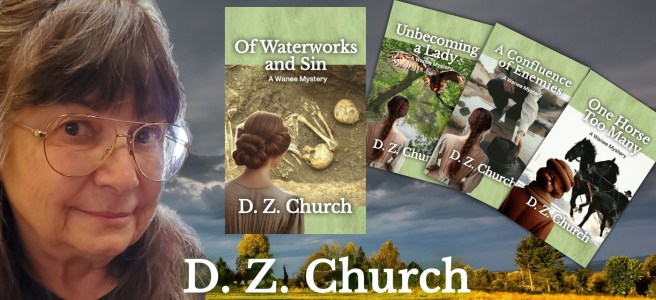
I was jolted by the comments of one of my beta readers for my newest Wanee Mystery, “Of Waterworks and Sin,” who was adamant that no one remembers anything before they connect images with speech, around 3-4 years old. There is even a name for it: infantile amnesia. Well, one reason I was taken aback was that the book is a historical mystery and I’m pretty sure no one knew of infantile amnesia in 1877. They might have wondered why some toddlers remembered incidences and others didn’t, but there was no advanced research or name for it.

As Doc in Wanee would say, “The memories are fragmented and horrible to conjure, and often, he seemed unsure of them. But the trauma may well have cemented them into his being.”

Babies, especially toddlers, do have implicit memories, they may remember being rocked, a sound repeated each day at nap time, or a certain food. But, as with all things, individual differences, cultural factors, and even the type of experiences a child has can influence how well and what they remember. In short, not all children have infantile amnesia, just the majority.

Here’s the challenge. As writers, we are enjoined to write about what we know. And what we know can be challenged by readers with other experiences that counter ours. One of our greatest instruments in showing and not telling are our memories: the smell of damp milk cows on a dewy spring morning, the sound of chickens clucking softly under the front porch as the milk truck rattles up the lane to pick up the milk cans for processing. Kittens mewling in a haystack. The smell of diesel fuel lying heavy over shimmering tarmac on a hot summer day. The roar of a jet, the rustle of leaves in a cottonwood. The smell of timothy grass after the rain. The sight of hands reaching down to you. The sound of footsteps approaching you from the rear as you walk between street lights. Sights and sounds and feelings all rolled into one big, massive evocative heap.

And so back to childhood memory. I remember being in a crib on a summer day in the apartment we moved from when I was 18 months old. I’m happily slurping on my bottle when my older sister holds her shiny silver cap gun at me, steals my bottle, takes a glug, and hands it back to me. Because my crib is against a wall that has two doors into the same hallway, she circles around and holds me up repeatedly until my bottle is empty. Witnesses assured me that the incident occurred before I was one year old. I remember that same sister running away from the same apartment on her tricycle with her pajamas stuffed in my mother’s vanity case. All of which, being my experience, informs the memory of the toddler in my story.

Yet my beta reader throws “modern science” into the mix, what the child remembers can’t be. But it can, and I know it. If I can remember these mundane incidents as clearly as I do, then why wouldn’t a traumatized 14-month-old have ingrained memories? Sights, sounds, pain, hunger, fear, and a kind voice.

“Ah,” Doc raised his eyebrows, which, from his expression, hurt. “He doesn’t remember so much as feel what he related. His mother put him down to sleep. Strange noises woke him. He couldn’t say what they were, only that he awakened. His stomach aching, he cried. A man spoke to him, and he believes gave him something to sustain him as the pain faded.”

I’m sure others have memories stretching back into infancy that disprove a blanket statement that all children have infantile amnesia. Especially when trauma is a factor. The question is, do you redo your story because of one beta reader especially in view of very positive results from the others? Or do you make a few adjustments assuming that one reader represents others but otherwise stand by what you know to be true?

You can find out.

“Of Waterworks and Sin” will be published on April 15, it is available for pre-order now (https://www.amazon.com/Waterworks-Sin-Wanee-Mystery-Mysteries-ebook/dp/B0F151Z25Q/). Cora Countryman makes a promise to the owner/editor of The Courier that she intends to keep. Ignoring her dress shop and boarding house, she concentrates on publishing the daily paper. But when two skeletons are found in a trench meant for the new water main, she can’t resist investigating.

Discover all my books at: https://dzchurch.com

CREATIVE CHAOS

I started off 2025 with a plan to manage my day in power blocks. I’ve done this in past years with success so why should this bright and shiny new year be any different?

Well, you know what they say, “Tell God you have a plan, and listen to him laugh.”

My world is spinning on an axis of chaos and no matter how hard I try; I can’t seem to reign in the crazy. No matter how hard I tried to create a plan and stick to it, nothing worked. I have a laundry list of reasons why the crazy seems one step ahead of me.

The holidays were daunting with lots of travel and Christmas packages being routed to Anchorage instead of Puyallup, Washington. And for the life of me I couldn’t seem to get my house back to its pre-holiday state. I mean my artificial Christmas tree was up until February 5th. March brought more travel and hernia surgery for my husband.

I did manage to squeeze in the Author Fair in Lebanon and have taken on hosting an Author Fair this coming April. Oh, and remember, my story about the Stoneybrook Assisted Living Center in last month’s blog? They called and they do want me to do an Author Talk. I also landed an Author Talk at a retirement center in Central Point.

And despite the craziness surrounding me, I managed to publish the latest novella in my Stoneybrook Mystery Series, “Rattlesnake Ravine,” which will be available April 1st. When I finish a book in one of my series, I like to add the first six chapters of the next book to the end to tease readers with what’s to come. It was a struggle, but I pounded out the beginning of my next Stoneybrook novel, “Fatal Falls.”

So, amid the chaos, new opportunities and accomplishments bring much needed joy.

The past few weeks as I slogged through my day job tasks, cleaned the house and made another trip to and from Central Point to see my sister, a nagging question kept popping up in my mind. Do my characters suffer enough crazy chaos?

Of course, my hero’s and heroine’s have suffered broken hearts and challenging relationships. There’s always a villain lying in wait to wreak havoc. And then there was the cougar in “Willow’s Woods.”

But do my main characters ever suffer from the chaos that comes from having your universe spin out of control. Or do I write them like those power blocks I mentioned earlier, compartmentalizing their stories?

Since I’m in the early chapters of “Fatal Falls,” I decided to see what might happen if Harley and Busy’s best friend relationship is tested. And how might Harley deal with Wyatt being overwhelmed with two crimes to solve that take all of his time. What if things beyond Harley’s control cause her to question the two most important relationships in her life?

Will she find herself awake from two am until four am, rehashing the curves and roadblocks life keeps placing in her path. Like me, will stress drive her to lose her appetite one day only to binge on chips, salsa and margaritas the next?

This last week I’ve been praying for “Peace, Patience, Understanding and Strength.” I know from past experience if I keep trying to stick to my plan, life will continue to test me.

I think the Big Guy above heard me, because for the first time in months, I had a successful power block day, which resulted in my being able to reach ten chapters and 10,930 words in “Fatal Falls.” I may have struggled the first three months of the year, and my plans may have gone awry. But one thing that keeps me sane amidst the crazy is writing. And if my personal plans continue to fall apart, I can always put pen to paper and plan some chaos for my characters.

Happy Writing, Ladies ~

How many are enough?

Over the years I’ve become aware of my weaknesses and bad habits as a writer. I overuse certain words (we all have our favorites), prefer certain kinds of clues (character flaws versus ink stains), and reveal the villain in the same way (a great uncloaking as opposed to the reader’s gradual realization). These are the result of lazy writing and can be fixed when I kick myself in the back side, slap my forehead, and exclaim, What was I thinking? Or, as my old boss used to say, What? Was I thinking? Surely not.

But the flaw I’ve been thinking about a lot more recently is a quirk that I’ve mostly mastered. When I’m going along with the story the various steps in the plot falling in place on the path, invariably something comes up. I need a character to swerve his car in front of the detective’s car just to slow her down for a few minutes. Or I need someone to claim to be a witness and come up with erroneous, misleading information. Or I need a hitherto unknown relative to show up and complicate the simple death as undeniably a murder for gain. For any one of these situations, I obviously need a new character. 

And then I need to introduce a seemingly irrelevant piece of information no one knew about. I need another character for this. And then my main character digs up even more information and needs to double check this, so, of course, another character pops up. And someone attacks her, so, yes, another villain. No matter where I am in the story, I seem to need another character to deliver a message, a detail, an obstacle, a hindrance—something more. I call up my infinite reserve of minor characters, who seem to trot along with me in every novel looking for an opportunity to take all the attention even if it’s only one scene in the entire book. You can see the problem.

After my second novel I knew I had to face this habit of leaning on additional minor characters to get me through the first draft. Once I decided to tackle the problem, I used the appearance of an otherwise unnecessary minor character as an opportunity to better present and position the other, more important and usually recurring characters. These instances of digressions facilitated by new characters told me where I needed to deepen the figures I’d begun with, stretch what I knew about them and complicate their established reputations. Sometimes I needed to collapse several instances and the minor characters created for them into one or two side figures. This is where I could apply the rule: if a character has no other purpose than to deliver a minor detail, give the job to someone else. And whatever you do, don’t give the minor a name. 

I hesitate to state a rule that a traditional mystery or a cozy should have no more than x number of characters, but I know when a novel has too many peripheral figures. Every great story can be told with a limited number of characters because the story is how they interact and reveal themselves, and too many characters will detract from that. I recently read Klara and the Sun by Kazuo Ishiguro, which impressed me with the small number of main characters and the equally small number of secondary characters, but each one played a significant role that could not have been reduced or eliminated. It was a brilliant lesson in concision, among other things. Another example is Clea Simon’s The Butterfly Trap, which focuses on two main characters buffeted by their ambitions, which are supported and encouraged by the friends in their lives.

It can be hard to eliminate a minor character brought into the story for one purpose. They arrive fresh on the scene, give the writer the opportunity to do something new and discover a new personality, but in the larger scheme of the novel, they may well be irrelevant. Anyone in the story so far can do the same job. As hard as it is, I have to let the superfluous figure retire and stay focused on the main characters and their story. How many are too many? If I find myself asking that question of the book I’m working on, thinking I may be veering into an overpopulated world, then the answer is, the number I have now is too many. Combine, eliminate, reduce. And give the richest minor characters a larger place in another book.

Giving your story a name that resonates


I’d like to start by telling you a bit about myself – and my experience with titles. I am a freelance journalist and have written hundreds, actually thousands, of articles for print and online publications across North America and beyond.

One of the things you soon learn as a freelance reporter is that editors write the titles of articles. This is not always the case, but it is usually the case.  There are a number of reasons for this, and we’ll discuss those. In a minute.

First, I’d like to share with you the options article writers have when it comes to titles. One, you can come up with a title that you think reflects the article, is clever or straightforward or funny – whatever attribute you think will appeal to readers. If the editor likes it, they may use it. If they don’t, they will write their own. More often than not, they will write their own.

Years ago I did an article on a trademark dispute involving use of the Bluenose, Nova Scotia’s famous schooner. My title went something like this: Ship disturbing trademark battle erupts in Nova Scotia. I thought that was very clever. My editor did not. Well, she may have, but the title she used ultimately went something like this: Nova Scotia businesses barred from using Bluenose name.

On the other hand, I wrote an article on champagne and called it “Liquid Bling.” My editor wrote to say she loved the title, and she used it.

My feeling was it never hurt to include a suggested title, and no one usually knows the story as well as the writer. But good titles take time to craft, and on many occasions the articles I submitted did not have a title. They had a descriptor: Profile of Donald Duck, Article on the pros and cons of ducks vaping, Conference report from Ducks Unlimited. I was leaving the work to the editor.

And here’s what editors are looking for in an article title. (1) Something that grabs the reader’s attention (2) Something that describes what the article is about (3) Something that is not longer that the first paragraph of the article itself (4) Something that makes them want to read the article or shows them why they should.

Are you likely to get all that in one title. Probably not. But that is what is behind the words that introduce an article. Often those words are more dramatic or more urgent or more intense or more gripping than the article itself. Indeed, most of the time someone objected to an article I wrote it was the title that set them off.

And I didn’t write it.


Guest Blogger ~ Millicent Eidson

Three years since my initial guest blog in 2022 (https://ladiesofmystery.com/?s=eidson), my microbial mystery world has expanded to multiple disease threats worldwide. It’s a good time to catch everyone up.

For decades, I was immersed in zoonotic diseases transmitted from animals. Scientists estimate that three-quarters of new or emerging infections are zoonoses.

As a veterinarian working in public health, I dropped smelly baits from a helicopter over the Adirondacks to vaccinate raccoons against rabies. I tracked down people with explosive diarrhea from a scenic New Mexico train ride. I coordinated reporting and collection of dead birds when West Nile virus showed up in the western hemisphere.

Serious illnesses and deaths are tragic but stamping out disease outbreaks is exciting. Each cluster of ill people is a mystery for a disease detective. Everyone knows about Rizzoli and Isles from the wonderful Tess Gerritsen thrillers. But veterinarians exposed to deadly hantavirus when collecting infected mice are less familiar medical heroes.

When I retired from fulltime work as a veterinary epidemiologist at the Centers for Disease Control and Prevention and two state health departments, I continued part-time teaching about zoonoses to graduate students. It’s rewarding to open up the eyes of new public health practitioners to the fascinating world of zoonoses. But I wondered if I could do the same for the general public.

Our daughter is adopted from China like thousands of orphans with the one-child policy. In my fiction, I wanted to explore how it might feel for someone whose Asian role models are replaced by Anglo, Hispanic, and Native American cultures embedded in a rich landscape.

And many of us struggle with mental and physical health challenges from birth, injury, or illness. Can someone wrestling with that history contribute fully to our demanding, fast-paced world?

So Maya Maguire was born, inspired by my daughter’s heritage and my own with mostly Irish ancestors. Like me, Maya Maguire starts her public health career after completing years of work toward veterinary and master’s degrees. Unlike me, she’s a bit of a genius and completes all her training young, adding further stress when expected to perform at the level of other more mature CDC trainees.

The initial three novels primarily immerse us in Maya’s world, other than diary excerpts from a mysterious young boy facing his own roadblocks near the Arizona/Utah border. In “Anthracis,” Maya is in her first year of training as a CDC Epidemic Intelligence Service officer stationed in New Mexico. Along with veterinary and physician colleagues, she battles perplexing new means of anthrax infection in the Southwest.

Her second year of EIS training still finds Maya in the Southwest, tackling tick-borne Borrelia infections across Arizona and New Mexico. Then she joins a colleague based in Norway on outbreaks in multiple European countries and north Africa. Personal relationships are impossible to balance with her work obligations.

In “Corona,” Maya experiences the COVID-19 outbreak along with all of us, first in Arizona, then in Denmark with infected mink, and finally in her home country of China to find its origin in bats. Like many, she won’t escape the pandemic fully unscathed.

Mosquitoes bring “Dengue” from Puerto Rico to New York City, then New Mexico and Hawai‘i. This novel expands the MayaVerse by alternating point-of-view chapters between Maya and her public health veterinarian mentor, Faye Simpson. Faye’s a kick-ass character in her late sixties, transplanted from a childhood on a Colorado ranch to a career with the New York City health department.

“Ebola,” available this summer, broadens even more with the perspectives of multiple male characters confronting the virus in West Africa, New York City, and New Mexico. Maya’s finishing a final training year with the CDC and Faye is retired from fulltime public health work but still enmeshed in Ebola crises.

These brief summaries only touch on the lively characters in the stories. Fred Grinwold and Nancy Bingham are Maya’s physician supervisors in New Mexico and Arizona. Their early romance and outbreak puzzles are available along with other Faye Simpson stories in “Microbial Mysteries,” my short story collection.

Sci fi thrillers are entertaining but sometimes based on pure imagination. For a peek into the exciting real world of zoonotic disease control through the perspective of colorful and compelling characters, join me in the MayaVerse!

Dengue: A Microbial Mystery

Is dengue the next pandemic? Two veterinary medical detectives, decades apart in age and experience, battle the tropical disease on the mainland, then in Hawai‘i. Even in paradise, people can’t escape blood-thirsty mosquitoes spurred on by a warming climate. Join these resilient women as they push through personal challenges to discover the scientific truth and stop the relentless death toll.

From reviews:

Maya Maguire is a deeply complex character, with a backstory that contains both heartache and joy. I have thoroughly enjoyed getting to know her … As for the medical terminology in the book … You’re in capable hands. Dr. Eidson uses real-life medical words and situations in the book, but they’re always put into a context that allows the reader to understand exactly what’s going on. (As an aside, the research that must have gone into this book is mind-blowing.)

Buy Links: https://books2read.com/millicenteidson/  or  Dengue: A Microbial Mystery (MayaVerse): Eidson, Millicent: 9781955481168: Amazon.com: Books

Millicent Eidson, a master of intrigue and suspense, weaves her literary magic through the pages of the Maya Maguire microbial mystery series. With a keen eye for detail and a passion for scientific puzzles, she invites readers into a world where microbes hold secrets more treacherous than any criminal. Millicent’s career as a public health veterinarian and epidemiologist began at the Centers for Disease Control and Prevention. After days filled with pathogens and outbreaks, the nights belonged to whispered tales of microbes dancing in her imagination. Upon retirement, her passion for storytelling blossomed into the MayaVerse, https://drmayamaguire.com/.

She can be found at Facebook, Millicent Eidson, | LinkedIn, Millicent Eidson (@EidsonMillicent) / Twitter, and Millie Eidson (@drmayamaguire) • Instagram photos and videos