A Sympathetic Protagonist

Amber in tree final                                              Mother_and_baby_ducks

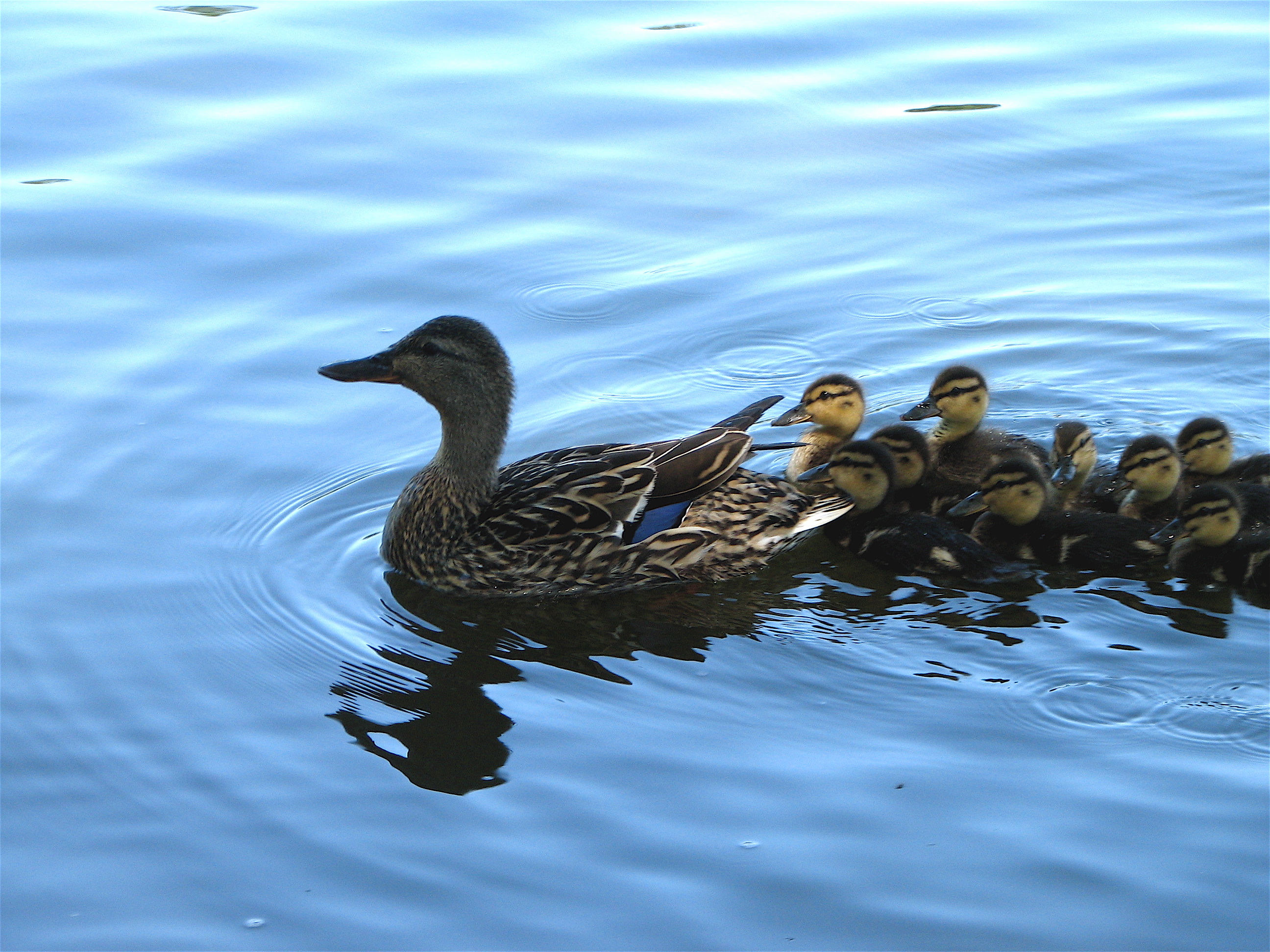
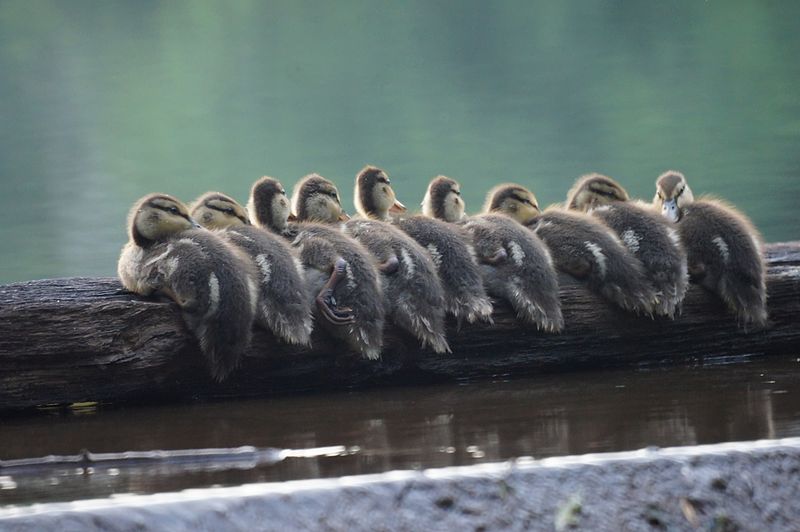
The park was deserted—all mine. Perfect. My plan: run laps of the trail for four miles, and come home with plot developments for my work in progress. I took in the beauty of the setting and slipped into creative mode as my legs fell into the rhythm of running, ready for free-wheeling improvisation. Then, up the stream bank came a mother duck followed by a swarm of fluffy brown-and-yellow ducklings. It was a tough climb for their little legs, and I wondered if they would all make it up the steep slope. On my next lap, I checked. None seemed to have been left behind. At first, I couldn’t count the babies, they were so numerous, active and close together. When I finally could see them clearly, I counted eleven.

She herded them to hide behind her as well as possible when I neared and quacked them into order when they strayed too far. I wondered if she felt overwhelmed by the responsibility. Could she count to eleven? Could she tell them apart? After I’d passed a few times, she began to warn me off, making a soft hissing sound. The next time, she hissed and waddled toward me. The next time, she lowered her head and charged, eyes narrowed, hissing for all she was worth. I honored her efforts with a burst of speed, letting her think she had scared me. I don’t know if there is such a thing as courage in ducks, but she struck me as brave, a small animal going after an adult human.

A couple with an off-leash dog arrived on the far side of the park. I jogged across and let them know about the ducks, in case their dog might be tempted to chase. They said he took no interest in things like that. I went back to the trail. No ducks in sight, not even in the stream. How she had swept all eleven into hiding so quickly, I don’t know. It was an impressive exit. Unlike the dog, I took an interest. Distracted from brainstorming my work in progress, I got wrapped up in the drama of the ducks, feeling as if I somehow knew what it was like to have too many ducklings and to strive to defend them.

Pardon me while I anthropomorphize. The mother duck has some excellent characteristics for a sympathetic protagonist. In spite of being better equipped for flight than fight, she chooses not to fly from danger, though that would be her own best defense. Instead, she tries to fight. Protectiveness in relation to weaker beings is a trait that makes readers care about a character. Flaws, in the right dose, also help readers identify with a protagonist and feel compassion for her. The brave mother duck is imperfect. Waddling at me while throwing a hissy fit, she’s a comical yet touching inconvenience. Her success in driving me off the path gives her moments of illusory triumph, but in reality she’s the underdog—underduck sounds funny—and she’s chasing a red herring, unable to realize I’m no threat to her fuzzy eleven. Against hawks and cats, the real enemies, she’s far less likely to succeed. The odds are stacked against her and her ducklings, hypervigilant though she is, but she because she’s a gifted escape artist, she stands a chance. Readers root for the character who might—but might not—make it.

On my next run in the same park, I found that nature had taken its toll. She’s down to nine ducklings now. The loss of two makes her story stronger. She charged me with even more ferocity, straight away without allowing me a few laps before she attacked. The struggles in pursuit of a meaningful goal, the setbacks, and the sense that the protagonist is reaching her limits and still not quitting: all of this keeps the reader emotionally involved and turning the pages. I have to close this “book” since I leave Virginia for New Mexico tomorrow, and I won’t see the next chapter, but I’m rooting for the nine remaining baby ducks to survive, and for their hard-working mother to eventually see them fly. And I’ll keep her in mind as write this summer, checking that I have all my ducks in a row for establishing an engaging protagonist.
babyducks


A Picture is Worth 1000 Words

thumb_IMG_1225_1024

I’ve created a person. A man. A cop. The hero of the Adam Kaminski mystery series is a good man who wants to help people. He is thoughtful, well read, considerate, a little emotional at times. He exists in my imagination and that of my readers. But what does Detective Adam Kaminski look like?

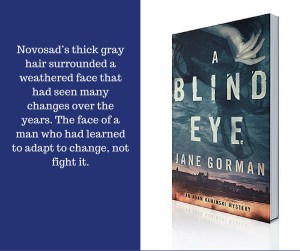
Novosad’s thick gray hair surrounded a weathered face that had seen many changes over the years. The face of a man who had learned to adapt to change, not fight it.

Describing my characters is always a challenge for me. Catching that element of their person, their personality and their physical appearance, that best lets the reader imagine them. Put a face to a name.

instagram_3c53509ace

Adam Kaminski has been one of my biggest challenges when it comes to descriptions. Part of the challenge is how he’s grown over the course of the series. From his first trip to Poland to his most recent visit to Galway, Adam has become a more serious, perhaps angrier, man.

instagram_d8700fa882

Part of the challenge is that Adam exists not just in my mind, but in my readers’ minds as well. I’m reluctant to put too fine a description on him. Haven’t we all had that experience of seeing a movie based on a book only to be confronted by a hero that looks nothing like we imagined based on the text?

facebook_082e989ade

With each book, I find new elements of Adam’s personality that I hadn’t quite captured before. Different ways of looking at him, of seeing him, of describing him. It’s frustrating at times, sure. But it’s also a pleasure, in a way. Seeing my character grow and change.

What do you think, do you prefer to have your literary characters described in physical detail so you can picture him or her the way the author intended, or do you prefer to get a little leeway to imagine a character just the way you want him to be?

If you’d like to meet Detective Adam Kaminski, now’s your chance: sign up now for the Goodreads giveaway of A Blind Eye. Giveaway ends on July 1.

Learn more about Jane Gorman and the Adam Kaminski mystery series at janegorman.com


Where to Begin by Paty Jager

paty shadow (1)I’ve started researching and writing the sixth book in the Shandra Higheagle Mystery series, Reservation Revenge. I visited the Colville Reservation where Shandra’s family lives and wrote about the visit and the woman who lives on the reservation and helps me with my research here.

Bookmark FrontDuring that trip I knew I would set a murder at the reservation and one of Shandra’s relatives would be involved. This is that book. While I’ve had a tour of the reservation and while on that tour acquired a wonderful topographical map of the reservation, I still have questions about the lake where the murder takes place and the area where Shandra’s cousin is hiding.  For these answers I’ve once again gone to my friend and fellow author who lives on the reservation.

The best part about having an author help with digging up the research is they understand the need for some of the tiniest mundane things. Like what are the plants in this area, how many police officers are on the reservation, who would be working the crime scene?

These are all questions I have to have answered before I can start writing the book. While I’m not a plotter, I need to know information about the place and who would be people my character would come across while trying to prove her cousin’s innocence.

And because this series is written from the amateur sleuth, Shandra, and the County Detective , Ryan’s, points of view, I have to have the murder scene figured out. Who was there, who wasn’t? Who was killed? What was the cause?  My main sleuths aren’t on the scene in this book. The murder happens four hours from Shandra, and she has to rely on talking to people and her grandmothers cryptic dreams.

So where did I begin this book? With a dream. A short to the point dream that unsettles Shandra and reveals there is trouble to come.

“Ella what do you want?” Shandra Higheagle pleaded as she stood looking up into the clouds that formed her deceased grandmother’s face. The droplets of rain falling on Shandra’s face were warm and salty. Tears.

What better way to start a book where the amateur sleuth uncovers the real murderer through dreams then with a dream.

patyjager logo

Paty Jager is an award-winning author of 25+ novels and over a dozen novellas and short stories of murder mystery, western historical romance, and action adventure. All her work has Western or Native American elements in them along with hints of humor and engaging characters.


The Perplexities of Pantsing and Plotting

by Janis Patterson

In one of my discussion groups not long ago the perennial discussion of pantser vs plotter came up. Again. It rears its head every couple of months, and each side has its devoted and vocal advocates. One member – a downy little newbie – asked what the names meant and how were they different, a simple request for information that ignited a lively discussion of the various virtues of each.

Basically it boiled down to the facts that plotters like to have everything planned and laid out in varying degrees of exactitude. Some even use detailed cheatsheets to create their characters, some covering everything from their eye and hair color to their favorite flavor of Jello. (Don’t laugh – I have seen this.) The story is laid out in either a paragraph or outline form, sometimes going three or four or even more layers deep if it is bullet-pointed. Plotters say it keeps them on target.

A pantser is one who writes ‘by the seat of their pants.’ They have a basic idea, or perhaps even just an opening line, then sit down and write from there, letting the story and the characters take them wherever they want to go.

Full disclosure : I am – and always have been – a definite pantser. Even in school I loathed outlining, thinking even then that it was the best way I could think of to kill creativity and spontaneity. Yes, I was a very precocious child!

There is danger in pantsing, though, especially for the newbie – unseasoned? marginally skilled? – writer. It gives one the opportunity to wander all over the place with no story structure. One of the hardest things to convince newbies is that pantsing does not mean writing without structure. It only means no preconceived, written out structure. The story has to be a cohesive whole, with proper foreshadowing and rational action and reaction as well as a beginning, story arc and an end (yes, even in fantasy/scyfy). Otherwise all you’ll have is a great number of words – not a book.

Another danger with pantsing is that of writing yourself into a corner – meaning you have not set things up properly. A story has to flow as a whole, not just be a string of really nice scenes. Everything has to interact and work together. When newbie (and let’s be honest, not-so-good) writers find themselves in this corner, all too often they fall back on the old ‘and the cavalry rides over the hill’ trick. In other words, something happens to save the day but it’s never been set up properly or integrated into the story or even foreshadowed. That’s not only a cheat, it’s a cheap cheat, and the readers know it.

I’m always trying to hone my skills, so a couple of years ago I took a plotting class about which everyone was raving. It was quite good – just not for me. You took ten boxes; then in each box you would put five plot points. Under each one of those you’d put two minor plot points. Seems like there was another layer with plot points under each of them, but it’s been too long and I don’t remember. Theoretically when you finished you would have a very detailed outline for a 100K book.

I did all this. Came up with a really nifty romantic adventure involving a female race driver, her murdered brother, a dirty bomb, a terrorist plot, two luscious men… a story that will never be written. Oh, everything is there, and it hangs together beautifully, and I am bored to death with it before writing the first word.

I do not take boredom well. Also, as someone intelligent whose name I cannot now remember said, no surprise for the writer, no surprise for the reader. One of my perennial strong sellers was pantsed, and two of the main characters were not in the original concept of the book. They just walked in and took over. Had I been slavishly following an outline they never would have been born, and the book would be so much the poorer for it.

Don’t get me wrong – writing is hard work, whether you outline or (especially) if you are a pantser. Perhaps more if you’re a pantser. Reining in a rampaging imagination while giving it enough freedom to create is not easy. If you’re a newbie writer, or a writer who’s hit a rough patch, I’d suggest trying both and see which works for you.

World sleuths on TV

By Sally Carpenter

Why are there so few TV shows about crime writers? Could it be all the action takes place inside the character’s head? Or that watching a person type is boring?

 The most recent TV show featuring a writer was “Castle,” which just ended its eighth and final season. The series began with a clever premise: a playful, best-selling author teams up with a hard-nosed NYPD detective to crack cases.

Detective Kate Beckett calls in Richard Castle when a killer stages crime scenes inspired by the author’s books. Castle, in need of a new series idea, continues to shadow Beckett on other murders for inspiration.

 The cases were often silly and far-fetched, with unrealistic forensics, but viewers loved the characters, the witty banter and the growing romance.

One of the best bits was the weekly poker games with Castle and real-life authors Michael Connelly, Stephen Cannell and James Patterson. When Castle complained about the difficulty of finishing one book a year, Patterson retorted, “Only one, Rick?”

 Then the show became darker and more serious, with story threads that stretched on far past the breaking point and frequent attempts to split up the Caskett romance.

 The show went off the skids when Castle stopped writing and became a PI. When the producers announced the character of Beckett would not return for season nine, fan backlash was so severe the studio wisely put the show out of its misery.

“Castle” is a textbook example of how not to write a series. While readers expect characters to grow, straying too far from what brought fans to the story in the first place can end a series faster than a publisher merger.

 A more successful TV mystery writer was Angela Lansbury as widow and amateur sleuth Jessica Fletcher in “Murder She Wrote,” running a remarkable 12 years. Although the show is off the air, the new cozy mystery books are still being ghostwritten under Fletcher’s name.

The show also gave rise to the expression “Cabot Cove Syndrome,” in that cozy writers must find a way to logically explain the high number of murders in their otherwise charming small towns.

I admit I never watched the show when it aired, but I plan to check out the DVDs soon from my local library and catch up.

The creative team behind “Murder She Wrote”—Richard Levinson and William Link—also produced “Ellery Queen.” Jim Hutton was the pipe-smoking writer who assisted the police. Three/quarters into the show Hutton looked at the audience and asked if they could solve the case with the given clues. The show played fair with the audience but it didn’t last long, probably because viewers don’t want to think when watching the tube.

Another one-season wonder was UPN’s “Legend.” Richard Dean Anderson played Ernest Pratt, a dime novelist in the Old West. He penned an adventure series starring the clean living hero Nicodemus Legend. However, townspeople thought Pratt was really Legend, and regularly called on him to solve mysteries and put away villians. The show also had frequent disagreements with Pratt and his publisher, EC Allen.

 The “Legend” pilot begins with Pratt writing a book. When Legend ends up in a deathtrap with no way out, Pratt whacks his head on the table and says, “I’ve killed my meal ticket!” How often do writers really feel that way when they’re “stuck”?

Do you know of other TV crime writers, and which one is your favorite?