Committed to a Character

A fellow writer in an online discussion group asked how other authors feel about their main characters. Why do we stick with them and want to write about them?

When I started writing my series, I needed a lead character who could solve the type of mysteries I wanted to write. The “villains” aren’t killers. Some commit other types of crimes such as theft or stalking; some are fraudulent shamans or healers; some are corrupt or dangerous in a personal and spiritual way without breaking the law. My protagonist, Mae Martin, is psychic, though that’s not the only skill she brings to solving mysteries. Like any amateur sleuth, she’s observant, analytical, persistent, curious, and she’s the kind of person people turn to for help.

Except for being psychic, Mae is based on a good friend (the friend knows I did this). If I feel I’m losing touch with her, I just have to ask myself what my friend would do or say. She’s generous and nurturing, but she’ll only put up with so much, and when she speaks her mind, she can be a handful. Her willingness to help others is both her greatest strength and her greatest weakness, because she can go overboard. Mae sometimes catches herself in the act of getting too wrapped up another person’s troubles, but she ends up doing it anyway.

My friend, who is a good bit younger than me, is on her third marriage. So far, Mae is dodging number three, but she has what she calls a “man habit,” and hasn’t managed to go as long without a relationship as she meant to at the end of marriage number two. One of the things I enjoy about her is that she was raised to be a nice Southern lady, but she’s feisty and she likes to win. When she seems too good, I remember her competitive streak, and her bad choices as well as her good ones. I like her for her faults as much as for her strengths.

I once read a blog post in which an author said to give your characters just three traits—don’t make them more complex or contradictory. Interesting idea, and it may work for certain subgenres of mystery, but it’s not my approach to building characters. Though I don’t have to reveal and explain every aspect of their psyches, complex people feel more real to me, and they apparently seem real to my readers.

Some readers are deeply attached to Mae’s boyfriend, and they tend to take his side when the couple has fights; others take her side. I was strangely flattered when a friend asked me to create a character based on her so she and Mae could go through a conflict and work out some problems. This friend feels that she and Mae don’t get along as well as they did in the first few books. “I want to start out as her nemesis and become her friend,” she said. I’m inclined to do it. There’s already a character in one of the two books in progress who resembles this woman in age, appearance, and occupation. She and the real person who inspired Mae strike me as incompatible, though they’re two of my closest friends. They live in different states and have never met, but I’ll have fun throwing them together in fiction and seeing how they both grow and change through the encounter.

On Ramona DeFelice Long’s blog, she once suggested a character “I’m not” exercise: having the character list their perceptions of what they are not, and then checking to see if these things helped or hindered the character, and if these perceptions were static or changing. I found it helpful to look at how Mae sees herself, not just how I see her. After all, we can have inaccurate perceptions of ourselves. She doesn’t necessarily know herself as well as  she could, and that’s where the potential for growth comes in—the shortcomings that get her into trouble and challenge her to learn.

What keeps you committed to your series protagonist?
 

It’s a Small World/Nothing to do with Disneyland


Visalia Book Fair 5

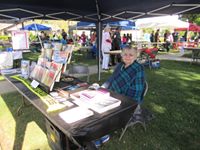
Recently I participated in a large outdoor book festival put on by the Visalia Library with lots of help from Leadership Visalia. It was their first annual and one of the best organized of these events I’ve attended. Besides many authors and other vendors, lots and lots of people came and it’s one of these people I want to talk about.

Near the end of the event, a young man came up to my table and looked over my books. “I see you write a lot about law enforcement.”

I launched into my usual spiel about my son-in-law being a police officer who came to our house after his shift to tell me about his adventures. I added that he took me on a ride-along, and when I moved to Springville, I also went on a ride-along with a female officer in the town of Porterville.

He asked, “Do you remember the name of the officer?”

I didn’t and he told me the name of his aunt who had been the first female office in Porterville. And it was the lady cop I did the ride-along with! I told him how great she was, she let me follow her around on every call she made, including all the bar checks. The only time she told me to stay in the car was for a domestic dispute. Her sergeant came to check on her and only listened at the door of the house.

He came back and told me that she was the best at calming volatile situations—which she did this time too.

The young man was pleased to hear all this about his aunt.

I also told him that from 3 a.m until 6, she didn’t get any other calls and as we patrolled the streets of the city, she told me all about being a single mom and the only female in the department. Through the years I’ve used so much of what she said in both my Deputy Tempe Crabtree series and my Rocky Bluff P.D. series. He promised to let her know how valuable her information had been to me.

I did sell a lot of books at the festival, but this was definitely the highlight of the day.

Marilyn Meredith


BEGINNINGS

DSC_0196What makes you, as a reader, want to read a particular book? Sometimes, for me, it’s because it’s been recommended by another reader. Or I’ve read a review of it. Or my book club is reading it. But suppose you are in a bookstore or library with no reading commitments on your mind. What would make you select one book over another? What would the first paragraph or the first few sentences tell you about the book and give you enough information to want to go on?
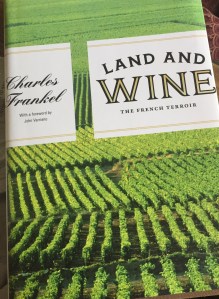
There has been a lot written about “the first two pages” of a book: how important they are, how that’s where you capture the reader’s interest and get her to select this book above others. If the reader finds herself in a bookstore, though, she’s not going to read the first two pages. She’s probably only going to read the first paragraph. How much information do you, the writer, give to the reader in that first paragraph or two?

It’s an important question for writers because with so many books to choose from, how can you get a reader to select your book as the one to read? I looked at the first paragraphs of three mystery novels, checking out what information the first few sentences gave me, and trying to determine whether I was interested in finding out more.

I started with a book by Tom Kakonis called TREASURE COAST.

“Like most men closing in on the benchmark forty, Jim Merriman made far more promises—to others mainly, a dwindling few yet to himself—than he knew, heart of hearts, he ever intended to keep. It was a habit by now so deeply entrenched, so much a part of him, that he wore it like a second skin: Generate an earnest pledge today; effortlessly shuck it off tomorrow. Mostly it was harmless, this habitual shortfall between oath and execution, deed and good intention.”

What did those first few sentences tell me about Jim? I learned his gender and age, that forty was important to him, and that his promises, to himself and to others, were mostly empty.  I surmise he’s not a hero and guess that some promise or another is going to get him in trouble.  I don’t know where the story is based, and I don’t know anything more about Jim except that he’s relatively honest about his failings.

How about Louise Penny’s Chief Inspector Gamache novel, THE CRUELEST MONTH?

“Kneeling in the fragrant moist grass of the village green Clara Morrow carefully hid the Easter egg and thought about raising the dead, which she planned to do right after supper. Wiping a strand of hair from her face, she smeared bits of grass, mud and some other brown stuff that might not be mud into her tangled hair. All around, villagers wandered with their baskets of brightly colored eggs, looking for the perfect hiding place.”

This is a charming portrait of a village preparing for an Easter egg hunt, centering on one woman, Clara Morrow, about whom we know only that she doesn’t pay a lot of attention to her appearance. But what’s this: “Clara Morrow [. . .] thought about raising the dead, which she planned to do right after supper”.  What’s that got to do with hiding eggs for the Easter egg hunt? Penny has thrown a scary mystery element into the midst of a bucolic village festival.  Do I want to continue? You bet I do. I want to find out about raising the dead.

In Julia Spencer-Fleming’s I SHALL NOT WANT, the author begins in the middle of events.

“When she saw the glint of the revolver barrel through the broken glass in the window, Hadley Knox thought, I’m going to die for sixteen bucks an hour. Sixteen bucks an hour, medical, and dental. She dove behind her squad car as the thing went off, a monstrous thunderclap that rolled on and on across green-gold fields of hay. The bullet smacked into the maple tree she had parked under with a meaty thud, showering her in wet, raw splinters.”

Spencer-Fleming has told us quite a lot about Hadley Knox. She’s a cop and doesn’t make much money, although she has benefits. Right now she’s terrified because someone is trying to kill her, and she’s not sure the money is worth the danger. The setting is a country farm in late spring or summer.  We’re in the middle of the story.  Events have already occurred that have brought Hadley Knox to this position. Am I interested in finding out what happened before and what will happen in the future? Probably.

My own first paragraph in my current WIP goes like this:

“The day Captain Bradley disappeared was ordinary—at least it seemed like that to Andi Battaglia when she arrived at the station just before eight that morning. Halloween had come and gone with all its craziness, crazy at least as far as police were concerned. Christmas decorations had arrived in the Burgess Beach stores in mid-October, even earlier than the year before, and with the temperature hovering in the low nineties, Andi was in no mood for holiday cheer.”

What does the reader learn from this? Andi Battaglia is a cop. Someone disappears, and we assume he is Andi’s boss. Andi is feeling a bit grouchy about holidays. It’s November, but because the weather is in the nineties, we know the setting is tropical.  Not nearly as attention getting as Penny’s or Spencer-Fleming’s beginnings. Something to work on, so that hypothetical reader will choose Carole Sojka’s book when browsing.

This was an interesting exercise for me. Have you tried it with your own WIP?

The Devil in the Details

thumb_IMG_1225_1024

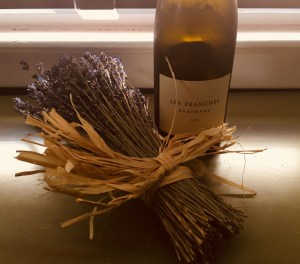
What are the differences in symptoms between cyanide poisoning by inhalation or by ingestion? What is the best way to store evidence? What work happens on a lavender farm in early October? How are French wine labels governed by the state?

lavender
I like research that requires learning about wine and visiting lavender farms

The topics a mystery writer may find herself researching are never boring! We rely on resources including — but by no means limited to—manuals, interviews with experts, visits to unusual places, even Google searches. 

When a murder is committed in our books, even if it takes place off the page, we need to know exactly how it was done and what clues might be left behind. When a victim is found in a particular location, we need to know why he or she was there to begin with. When a suspect produces an alibi that doesn’t hold water, we need to know the detailed explanation of why not — even when we don’t share all those details with the reader.

The question of how many details to share is a big one. For a book to pass muster as a realistic story, a certain level of explanation and accuracy is necessary. But include too many details, and suddenly your reader finds herself reading a how-to manual instead of an engrossing story. 

IMG_3781
My kind of how-to manual!

Of course, different readers look for different types of details. How we as writers present our stories is a big part of what makes up a writer’s “voice.” Some writers are known for their intricate explanations, whether of crimes or locations or corpses. Readers who loves those writers thrive on those details — to them, it brings the story to life. Other readers look for a book that skims over the detail. They’re less worried about how accurate the description of police activity is and more interested in the emotional arc of the characters involved. And some readers want it all!

Some of these differences are determined by the subgenres within the mystery genre — some books are thrillers, others suspense or cozies. Each type has its own expectations. No one who picks up a cozy is looking for a graphic description of the corpse, but leave out the details of the chocolate cake recipe and you’re asking for trouble!

The writer must know her readers’ expectations and not disappoint. My books are traditional mysteries, which means they follow the line of providing succinct and accurate descriptions of crimes and how they are committed, but keep the focus on the plot and characters. When I’m looking for a fun read at bedtime, however, I usually grab a cozy mystery, something I can cuddle up with along with a cup of hot chocolate and enjoy. Hey, who said we could only read one subgenre?

So how much detail should a writer include? Not too much, but just enough. 

How much detail do you look for in the books you read?

And if you’re wondering, the first two questions above I had to answer for my book A Pale Reflection, coming out later this year. The second two are for the book in the series after that (yes, while one book is with the editor, I get to work on the next one).

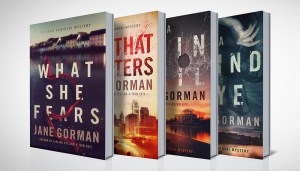
Learn more about Jane Gorman and the Adam Kaminski Mystery Series at janegorman.com or follow her on Facebook or Instagram.

Adam-Kaminski-Mystery-Series

A Mystery Writer’s Responsibility

by Janis Patterson

We write mysteries. It is our duty to provide our readers with a good story that has an interesting plot, accurate research, believable characters, and a satisfying ending.

It is also our responsibility to be sure that in our quest for interesting and different content we don’t turn our fictional books into training manuals. Yes, we want ways of death that rise above the common and usually sordid killings that regularly adorn our daily news, but we must walk a fine line between creating an interesting fictional killing and providing an instructional blueprint for a real one.

I think this duty of responsibility is why in so many early mysteries and in a few current ones the murder weapon is a common blunt instrument or some exotic, untraceable poison, though exotic, unknown and untraceable poisons are currently somewhat out of vogue. Current mysteries seem to be grounded much more in reality than the ones from the so-called Golden Age.

To illustrate my point, years ago I attended my first NRA convention. (By the way, if your mysteries involve firearms, I cannot recommend highly enough that you attend one – the knowledge and help there are phenomenal! It will be in Dallas next month and I definitely intend on going! I’ll probably be blogging about it.) I talked to a lot of people, getting all kinds of information and contacts for my reference file (you do have a reference file, don’t you?) when I talked to this one man who was simply entranced that I was a mystery writer. Normally I’ve found that people just love to help writers, but this guy was totally over the top. He had worked both as a firearms salesman and in a ballistics lab, and among a lot of other things gleefully told me the way to have a ballistically clean bullet. No striations. No rifling. No marks on the projectile to tell which or even what kind of gun it came from. No information except the caliber. Nothing that law enforcement could trace.

I listened intently, partially fascinated and partially revolted. It was a simple process and could be done by anyone with the IQ of a goldfish. Then he asked if I’d use it in one of my books – obviously hoping that I’d put him in there too. Horrified, I said most certainly not, begged him not to tell this process to anyone else and then explained why. He was suddenly as horrified as I – apparently he had never thought that what he regarded as an interesting curiosity could actually be used to commit a real-life untraceable killing.

And no, don’t ask me what the secret is. I destroyed that part of my notes and have deliberately forgotten how. There is some knowledge that should never be shared.

So while killing people made of pixels can be both fun and profitable, we as writers owe our readers and the world in general a sense of restraint and responsibility. I truly believe that none of us would actually use some of the stuff we know to do harm to others, but we must never forget that our stories are read by all kinds of people, some of whom might wish to do harm or even read us in search of ways to do harm. Never forget that we want to entertain, not instruct. I don’t think any of us want to be an accomplice.