Hiding the killer in my subconscious by Paty Jager

2017 headshot newEvery mystery book I’ve written, I start out with the firm belief I know who the killer is.

I start preparing for the book by deciding where the main character, Shandra Higheagle is, what she is doing, and how she will come to either discover a body, be in the vicinity of who does find the body, or know the accused murderer.

The next step is making up my suspect chart and writing down what I know and want others to know about each suspect.

With the suspect chart comes red herrings and other characters- friends, family of the suspects and the victim.

Once the chart is done, I evaluate and decide which one would be the least likely to have killed, yet have the best motive. And that’s the character who I start out hiding the information( red herrings and quick mentions of clues that are glossed over) and plan to have be the one who dunit in the end.

Cars on winding road trough the forest aerial viewEvery book so far, the killer has ended up being someone other than I started out to write about.  I’m not sure if its because I do so many twists and turns in who it could be that I confuse myself or that I realize the person I started out as the murderer is too logical, so I do yet another twist and there is my killer! When I go back through the book to put in clues, I always see that I’d added the necessary clues without thinking about it.

All along my subconscious knew who did it while my working brain was busy workingConcept of the human brain on my initial scenario. I love that this happens because it surprises not only me but the reader.  And it means that writing mystery is what I should be doing since my subconscious seems to know my murderous mind better than I do!

Do you like stories with lots of twists and turns or do you like to know who did it and work with the sleuths to prove it?

SH Mug Art

Here We Go Again!

by Janis Patterson

It never ends. Writers are the sitting ducks of the universe, and it seems that someone is always trying to figure out a way to profit off our work without fairly compensating us for it.

Back when I was a talent agent for film, TV and commercials everyone wanted to be an actor. No, the word should be ‘star.’ Everyone wanted to be a star. I had people come to me and ask me how much we would charge them to be in a film or television commercial. The concept that acting was a profession and that actors were professional people who deserved to be compensated like any other professional was totally alien to them.

And there were companies who catered to those warped dreams – at a price, however, and usually with either ghastly results or no results at all. I remember a movie, a western I believe, where the ‘producers’ charged everyone a horrible fee (size of role commensurate to their investment) to be in it and so financed the film that way. None of the ‘actors’ were professional, and the resulting product was so bad that it had to go direct to video, and even then many video stores wouldn’t carry it. But the ‘stars’ could always say that they had been in a movie. They were lucky; at least they got something however horrible for their pricey investment.

The point I’m trying to make is that in certain ‘glamorous’ occupations – acting, writing, modeling, et al – there is always someone wanting to do it so badly they will pay (in some form) to do it. If a professional stands up for himself and says, I am worth XX amount of dollars to do that, the sleazy producer/publisher/whatever says, Next! There’s always someone waiting to step in who will do it for less.

There is a reason for this diatribe. Some of my writers’ eloops are burgeoning with yet a new wrinkle in the get-the-writer dialogue. We have always had vanity publishing, where you give the publisher the manuscript and a great deal of money and in return you get a book, which may or may not have been edited. In the old print-only days you usually got a certain amount of copies delivered to your garage and you were now free to market them on your own. Pretty much the same thing today, except that your book will be added to the major etailers, with or without a print setup on POD. The publicity and actual selling of the book is totally up to you – same as it is becoming now with most traditional publishers, who take nearly all the money and each year seem to give less and less value for it.

Work-for-hire has always been with us too – the publisher gives the writer a book bible, an outline and a sum of money, usually fairly small. The writer does the book and that’s it. The writer does not hold the copyright, keeps none of the subsidiary rights, gets no royalties and usually isn’t even credited as the author. I personally don’t care for this business model, but as long as everything is honestly stated up front, there’s nothing wrong with it. It’s up to the writer to decide if this is a step they want to take, and a lot of writers do.

However, a new and most unsettling wrinkle is appearing in our business wherein the writer writes a book and submits it to the publisher, who accepts it with a usually very small advance. Sound good? Maybe not. You have to factor in that under this new model the writer sells the book, the characters, the world, all rights and the copyright – and agrees that there will be no royalties and their name will probably not appear on the book/movie/whatever the purchasers want to make of it. Other than the ‘advance’ fee the writer gets nothing else on a book he created from scratch.

This is not illegal – to my mind it’s just immoral. What these predatory (and I chose that word deliberately) publishers are doing is reducing a creator to the status of a ‘content provider’ – an interchangeable link in a chain, just as if we were manufacturing widgets. And from what I’ve heard the payment isn’t that good. If the book is made into a film, the original story creator gets no money and no credit – all that goes to the publisher/producer.

Now there are some who have done this happily and for whatever reasons are content with their decision. I say, joy go with them if they had all the information and made a fully informed decision and that’s what they want. What does disturb me is that this kind of sale is creeping into a lot of publishing contracts from a lot of publishing houses. Maybe some sad day it will be the norm. After all, if a writer is so ‘stupid and greedy’ (to quote one of these publishers) as to want real and proportionate compensation and (gasp) credit for their work, there are always lots of other wanna-bes out there who would be happy for the chance.

After all, who could think of a writer as a professional worthy of their hire? Especially when there are publishers and producers who want all that lovely money for themselves? (Sarcasm in full mode here) Why pay a commensurate wage when there’s always a bunch of writers waiting in line for the chance?

My personal opinion is that the time is long past due when writers and actors and other creative types are recognized for what they are – professional creators. I can see where the ‘writers as interchangeable widgets’ mentality will utterly destroy the quality of creation books and movies and most especially the readers deserve. We have already seen a foreshadowing of this in some of the ungrammatical, illogical and downright rubbishy books that have proliferated in the world of self-publishing. (I love self-publishing; I self-publish myself. There are many great and wonderful books that have been self-published – but there is also an incredible amount of utter garbage, too.)

These publishers with their draconian contracts don’t seem to realize that without us, the writers, they wouldn’t have an industry. Or maybe they do – that’s why they’re trying to exploit us. And perhaps saddest of all is that there will always be writers who, in their determination to be published, will go along.

To me it only seems fair that as long as a project is earning money the original creator should get a fair share of it, because without the original creator there wouldn’t be anything for others to build on.

Parodies and pastiches

By Sally Carpenter

The theater in my town recently screened “Galaxy Quest” as part of the Friday night retro-film series. It’s one of my favorite movies. Trekkies consider it the seventh best Star Trek film because it’s a spot-on parody of the fan universe spawned by the Trek franchise.

Parodies abound in literature and cinema. If a movie becomes popular, a parody is bound to follow. “Star Wars” led to “Space Balls.” James Bond begat “Our Man Flint,” “The Ambushers,” “Get Smart” and Austin Powers. TV soap operas inspired the movie “Soapdish.”

The dictionary defines parody as “a literary or musical work in which the style of an author or work is closely imitated for comic effect or in ridicule,” and also, “a feeble, ridiculous imitation.”

Parodies work best with attention to detail and a deep knowledge of the original subject matter. A successful parody is full of in-jokes that only the most committed fans get (such as in “Galaxy Quest” when Alexander says to Jason, “I see you managed to get your shirt off,” a reference to Capt. Kirk’s frequent and gratuitous tearing of his uniform).

I enjoy a good parody. It’s like being part of an in-group that understands the jokes and allusions that outsiders miss. A good parody will stand on its own, but is more worthwhile for those who know the original subject.

Parody differs from pastiche, which the dictionary says is “a literary, artistic, musical or architectural work that imitates the style of a previous work.” A pastiche does not poke fun, but rather, pays homage to the original.

Over the years the Sherlock Holmes stories have spawned countless imitations from fans. The pastiches attempt to add additional cases for the great detective to solve. These stories stay true to Doyle’s literary style and format. Often the pastiches use other characters besides Holmes as the protagonist, such as the Mary Russell series by Laurie R. King and the Amelia Watson stories of Michael Mallory.

I can read a Holmes pastiche if it bends the canon a little, but not if it beaks it. Some authors go so far off track that the book is Holmes in name only. He’s even traveled in time and outer space!

The arrogant and aloof resident of 221B is also ripe for parody. My favorite parody is “Schlock Homes: the Complete Bagel Street Saga” by Robert L. Fish in which the detective’s keen observations always lead to the wrong conclusions. The stories are also full of word play and puns, which I love.

Hard-boiled private eyes like Sam Spade and Mike Hammer were imitated to death in B-movies and pulp fiction magazines. The stories were not so much homage as a means to cash in on a hot topic without violating copyright laws.

Sometimes beginning writers will pen pastiches as a way to learn the craft while their own style/voice develops. Some write parodies for amusement (as Fish did with Schlock Homes) or to poke fun at pretensions.

I love a good parody, but eventually I always go back to the original. With pastiches, I feel that an author should eventually create her own characters. Hundred of other detectives exist beyond Holmes and Spade and they deserve to have their stories told too.

What are your favorite parodies and pastiches in film and books?

The First Sentence

Shughart,Karen-0016_ADJ_5x7 (1)I’ve spent my professional career writing, sometimes as a newspaper columnist and feature writer; other times where I contributed to or edited professional journals, brochures, quality of life books and newsletters. I also wrote two books of non-fiction.
I knew that every good piece of writing starts with a good lead, that the first sentence or two can entice readers to read more. But when I started to write my first work of fiction, Murder in the Museum: An Edmund DeCleryk Mystery, I forgot what I knew. The first several drafts weren’t bad, but something was amiss. Then one day it hit me. I had written a prologue, but the first sentences were boring. Truth be told, the prologue was boring. I reminded myself I knew what to do, took time to rethink it, and started from scratch, happy at last with the results.

I belong to a book group. At the beginning of the year we choose the books we’d like to read, and then each person commits to leading the discussion at least once during the year.  The book we discussed for June was the National Book award-winner Sing Unburied Sing by Jesmyn Ward, a book of such depth and lyricism that when we discussed it, many of us did so with tears in our eyes. Ann, our discussion leader, asked how the first sentence related to one of the book’s themes, death, and to the title. The book is narrated by a young boy who says, straight out, “I like to think I know what death is. I like to think that it’s something I could look at straight.” Succinct and enticing, wouldn’t you agree?

When I got home from that meeting I started thinking about first sentences and the impact they can have on the reader. Consider, for example, Charles Dickens’ first lines in A Tale of Two Cities: “It was the best of times, it was the worst of times, it was the age of wisdom, it was the age of foolishness….” How prophetic, those lines.

Then there is A Tree Grows in Brooklyn by Betty Smith. This classic coming of age novel is set during the first two decades of the twentieth century and begins, “Serene was a word you could put to Brooklyn, New York. Especially in the summer of 1912. Somber, as a word, was better.”  If you’ve read the book, you’ll understand the context.

Perhaps you’ve read books by James Lee Burke, of contemporary southern crime fiction fame. His novel, Jolie Blon’s Bounce, starts out, “Growing up during the 1940s in New Iberia, down on the Gulf Coast, I never doubted how the world worked.” Powerful words, these, if you know the story.

So, as I knew all along, first sentences matter. They set the scene for what’s to come. And I’ll remember that when I start book two in the Edmund DeCleryk series.

The Fig Tree, Yoga, and the Middle of the Book

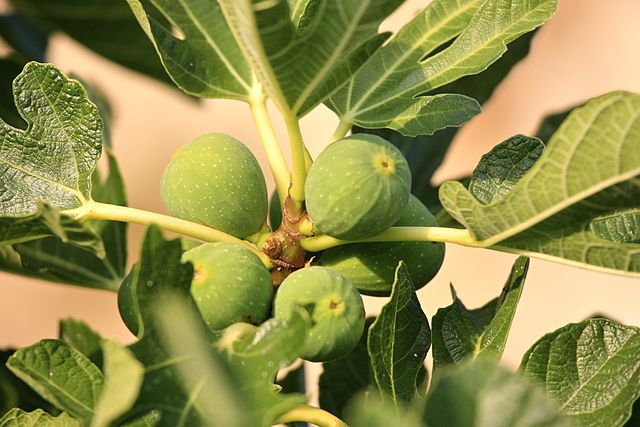
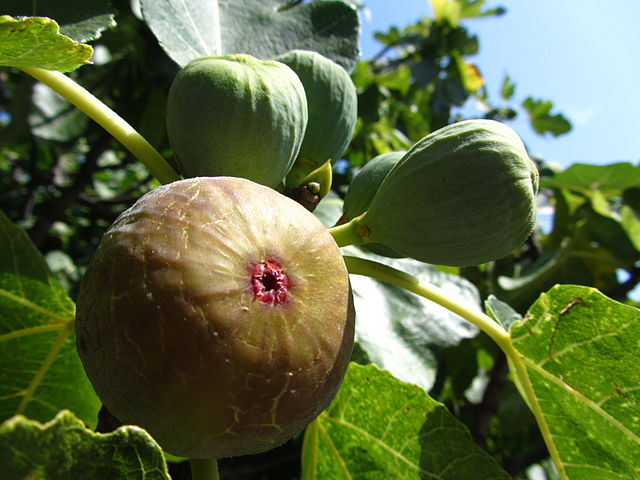
At first glance, the fig tree in the courtyard outside my apartment looks like a round mound of large green leaves and tiny green fruits. Today, I studied it longer, though, and began to see golden-brown fruit hidden in the green. The longer my mind was attuned to shape and color of a ripe fig, the more of them I discovered. Circling the tree slowly, I reached in and harvested the fruit, choosing only the figs that were perfectly ready. My four neighbors in our building had come out into the courtyard, and I enjoyed the sight of my cupped hands offering the bounty and my neighbors’ hands one by one taking their share. Chatting sociably, we ate sun-warmed, rain-watered figs.

Later, as I began my yoga practice, I chose the theme of doing it differently. Normally, I practice without music, so I selected a CD from the bottom of the stack, strange contemplative music with drones and drums that I hadn’t listened to since I moved over a year ago. I started with a pranayama technique I seldom practice, changed the sequencing of familiar poses, and replaced others with asanas I’d neglected for a while. The idea was to change the flow of my energy and open myself to new possibilities.

I did it as preparation for writing, getting ready to tackle the middle . According to my word count, I’ve completed fifty percent of book seven in my series. The chapter in progress will be a major pivot point, with revelations about the crime and about a ghost. It should set up future challenges for Mae Martin, adding to the necessity of a trip to a place she’d rather not go—her old home town. The problem is, it feels like the beginning of Act Two, and it should be the middle of it.

I’m not cutting until I finish the first draft, though. As a pantser, I don’t yet know which of the subplots in the first half will turn out to be integral to the story and which can be removed. Several of them surprised me, but then, my ongoing characters have lives of their own. I’ve never suffered for lack of material. This is where my notes on possible directions and loose ends come in. I get floods of ideas and record them in case I forget, but as the book progresses, some of those ideas may not fit. Some of the loose ends will turn out to be dead ends I can cut. At this point, I look at that list and see a lot of major events yet to come, a lot of little green figs, but that may not mean the book is going to be too long. The pace should be picking up. I might really be half-way through. When this draft is done and I can step back and study it after a break, I’ll be able to see the subplots that contribute to the whole, like ripe figs hidden in the leaves.

I may have to rearrange events, the way I did my yoga practice. Perhaps that pivot point in the middle would make a good beginning or a good chapter three. Maybe it’ll be the beginning of Act Three. Revisions like that would be hard but satisfying. In fact, if it’s difficult, it may be more fun than if it was easy.

And I have an end goal. Not just a story, but readers. I won’t see them the way I saw my neighbor’s hands taking figs from mine, but creating a new book leads to the same joy: sharing.