We Are The Other?

Janis Patterson

In these tiresome days of Political Correctness and ‘woke-dom’ there is a small battle raging about using italics for non-English words in book manuscripts. “It is divisive,” shriek the PC crowd. “It fosters other-ness and is not inclusive.”

Well, duh!

When speaking of a book written in English for the use of an English-speaking audience, of course the writer should use italics for foreign words and phrases. The words are foreign words, not English words – they are ‘other.’ Italics show that. It’s not divisiveness, it’s clarity, showing the reader that this is a different language. Some words in other languages are spelled the same but have wildly different meanings. (For example : douche (French) and douche (English) while having the same familial root are totally different things.) Without italics to differentiate what is English and what is another language, the reader can be confused and pulled out of the story to puzzle it through, and no writer wants that. Of course, that homophonic mayhem happens in all-English books, too – if I read one more story that mixes up ‘grizzly’ and ‘grisly’ that book, like a number of others, will end up smashing against the wall. Words are the tools of the writer, and one should learn to use one’s tools properly. To do less is to disrespect both the art of writing and the intelligence of the reader.

To make things even more confusing, the PC crowd applauds the use of a bunch of weird self-chosen pronouns that a small portion of the population uses to describe themselves which, while doubtless emotionally satisfying to them, are linguistically and societally bizarre. How can there be anything else but a deliberate ‘other-ness’ when an individual refers to him/her/itself as ‘they’? Talk about mixed signals!

Of course an individual has the right to call themselves anything they like; that is freedom of speech in its purest form and is guaranteed under the First Amendment. Those who want to use the ‘new’ pronouns are most definitely free to do so, but no one has the right to demand that everyone else use them, most especially in a written format. The result is a linguistic minefield.

The essence of language is communication. Language is nothing but a collection of sounds and syllables to convey ideas, but it only works if everyone understands what those sounds and syllables mean. This is especially true for writers, for they must communicate by written symbols only, without the supporting means of vocal intonation and facial expressions.

Can you imagine the delicious confusion (or might it be deliberate obfuscation?) in a mystery when a single individual obviously speaking in the first person refers to himself as ‘they’ or ‘we’? How does the poor confounded detective/sleuth react, especially if he is not up to speed on this linguistic trend? That could almost be a subplot in itself.

Conversely, the essence of communication – especially for writers and the written word – is language. We need the same reference points, the same starting points for efficient interaction. Standard linguistics offer this universal base. If a non-English word in an English language book is italicized, everyone knows it is not English, even if it is identical in spelling to an English word with a totally different meaning. If a writer uses the ‘new’ pronoun structure, he’d better have a really good reason that forwards the story or risk confusing and perhaps even alienating his readers.

Years ago someone coined the phrase K I S S – Keep It Simple, Stupid (or Silly, depending on to whom you’re talking). It’s still good advice. Good communication is simple, and the foremost tool in the writer’s toolkit.


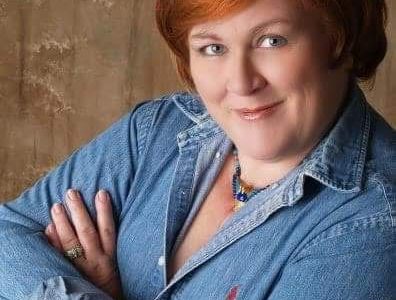
Personal Note – if you have been a reader of this blog for a while doubtless you have been accustomed to seeing my picture with blonde hair. It’s red now, both in the picture and on my head. I finally decided that it would be a charitable act to give the general populace a warning label.
The Writer during a Pandemic by Susan Oleksiw

Recently a number of writers chattered on line about writing a story during the coronavirus pandemic. I haven’t considered it yet, but I have noticed the details that signal the changes to my community, and these would probably appear in anything I wrote.

At first I thought the directions to pull back, self-isolate, etc., would lead to obvious changes, that the world would look startlingly different. But that hasn’t been the case. The world closed in gradually. Stay six-feet away from people; close the schools and study on line; work from home if you can. That all made sense. But the changes were more subtle.

Far fewer cars pass our house, and when I walk in the morning I’m struck by how many cars sit in driveways. They were usually gone by eight, and almost always by nine. Now they’re packed in. The streets are nearly empty, and on the rare day when cars are parked on a side street, I know that someone is ignoring the rules to stay inside and has gone visiting.

Most people I encounter seem to be following the rules; a few are nonchalant, letting masks fall, rubbing their eyes; others are defiant or oblivious. In a doctor’s office, twelve patients sat next to each other because there weren’t enough chairs to sit six feet apart. No one smiled, no one read a magazine, and no one escaped into their cell. People sat rigidly in their seats, keeping an eye on each other. No one sneezed, coughed, sniffled.

One morning a young mother parked on a side street, hustled three children out of her car, and followed them down the street to a house around the corner (no parking on that street). A play date? Home schooling?

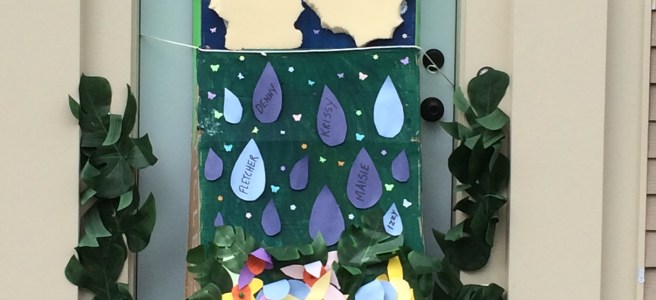
To counteract boredom, neighbors organized an art project, setting children to decorate their front doors. The goal is to give them something to do, and demonstrate that the community is working together even though they can’t play with their friends at this time. The dark side of this is the closing of playgrounds, where caution tape around swings makes the point in a different way.

Before the virus, late at night the bright lights of an alarm-silent police car or fire engine might wake me up. But not now. Far fewer police cars and fire engines fly past the house day or night. Throughout the city sirens are mostly silent. This may not mean less crime; perhaps the police have been hit by the virus and fewer men and women are available to answer the call. A 911 call that once took ten minutes three months ago might now take forty. And no cars have been on the road around five or six in the morning. Most workers have no early shifts to get to.

Our main street is shuttered, restaurants closed, few of them doing take-out. The train doesn’t rumble by in the distance at expected times; the schedule has been changed to a weekend schedule except for an increase in early morning trains to get workers into the city for the early shift change at medical centers.

The newspaper arrives, the trash is picked up, grocery stores are reasonably well stocked. But in all, the salad bar, fruit bar, and soup bar are closed, and in some stores all vegetables are now wrapped. No one gets to choose how many green beans she wants, or how many shallots. The bakery no longer puts out a tray of pieces of a new cake or cookie for customers to try.

These are the obvious changes. The less obvious are the more dangerous, and those arising from people who flout the governor’s directives are even worse. A husband who has threatened his wife before is confined with her in a small home in the woods. Young children in a family with an older brother who bullies them have no way to escape. A landlord who cares little for his tenants’ problems quotes the president announcing the situation is under control; time to go back to work and pay rent. A small business owner dependent on crafts made and supplied by women working at home takes in inventory–and resells it without keeping records. A woman who turns sixty-five in a month can’t reach any of her utilities to fight a shut-off notice.

These are real situations whose danger is amplified by our unusual circumstances in winter 2020. These are the stories we’ll write some day.

The Best Opening Line Ever? Not Really. By Amber Foxx

I cut what I had thought was the best opening line ever written, making a major change in my work in progress, the eighth Mae Martin psychic mystery. A critique partner loved the line, too. It was fun, attention-grabbing, intense, and colorful. But the event had nothing to do with the mystery or with either of my lead characters’ goals. It was an external imposition that required a reaction, and I couldn’t make it work as a thread in the story. The advice to authors to “kill your darlings” is so wise. Cutting that line (and all the forced plot turns it required) was like pruning an overhanging branch that was blocking light on the real nature of the story.

Now I’m reconsidering an important question: where does the book really begin? Is the whole first chapter necessary? Maybe chapter three in the current draft should be chapter one. It was, before I got so attached to that opening line.

After a certain number of revisions, I reach a point where I question every scene in the book and every angle of the plot. I’ve saved three earlier versions in case they’re actually better than I thought. But as I reviewed my notes on the first version, I realized why I cut and changed so much of it. The odds are, what I decide to remove or alter now, I probably should. With several of my books, only the characters, the setting, and the basic nature of the mystery—a missing person, a family secret, art fraud, fakery in spiritual healing, and so on—stayed the same from first draft to final. The work in progress is set in a New Mexico ghost town. The mystery is about paranormal investigation and a woman who claims she’s being haunted. Everything else about the book may be different by the time I finish.

Free and Discounted Books

I’m sure a lot of us are reading on a tight budget and will be for a while. The first Mae Martin Psychic Mystery, The Calling, is still free. Prices have been lowered to $2.99 on the other books in the series. You can also read them through Scribd, an unlimited reading subscription for e-pub e-books, which is offering a free one-month introduction. If you’re not going out much, you can do quite a bit of reading in a month. Stay well.


Self-Isolation…or Not?

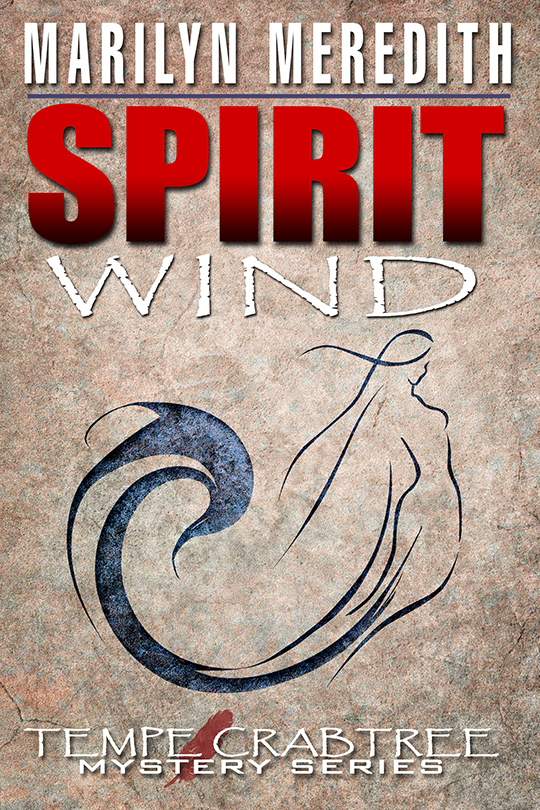
Spirit Wind cover

The Governor of California has mandated that all the old folks–60 and above–isolate themselves, meaning stay home. Well, I will stay home most of the time, but I’m never isolated because my house is full of people: my husband, granddaughter, husband, their 3 little girls,  and daughter-in-law who lives next-door and is here everyday off and on. And when my son is off work–he works M-T away–he’s here off and on.

I really need to go shopping, but guess I’m not supposed to. Will see about ordering on line.

Our church has not closed its doors, and I went yesterday and will go again next Sunday. It’s a small church, we had about 25 to 30 in attendance.

My writers group is still meeting once a week and I’m going to attend.

Along with other writing conferences two I planned to attend have been cancelled.

So what will I be doing? Much of the same things I always do, and I will be writing. This virus can’t stop that activity.  Most of the promotion I’ve done lately has been on line, so I’ll still be doing that too.

We can all catch up on our reading too. Isn’t it wonderful that we can transport ourselves all over to new environments without leaving home? The book I’m reading now is set in France.

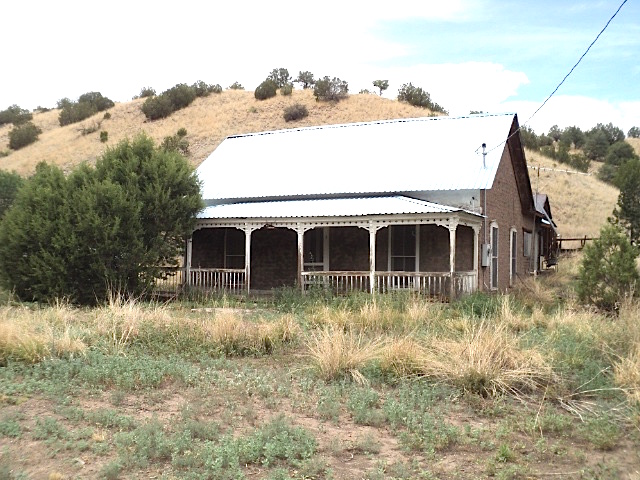
As for my writing, I’m about 3/4 of the way through my next Deputy Tempe Crabtree mystery.  This one is set near where I live, though it is fictionalized, and has some interesting and quirky characters.

So what are you doing during this most unusual time?

Marilyn


Guest Blogger – June Trop

Miriam bat Isaac, Alchemist and Sleuth Extraordinaire by June Trop

I write historical mysteries set in Roman-occupied Alexandria during the first century CE. My protagonist, Miriam bat Isaac, is an alchemist and amateur sleuth whom I got to meet quite unexpectedly.

You see, I spent my early professional life as a science teacher. I met Miriam when I was taking a course on the historical development of concepts in chemistry. Chemistry is generally taught as if the knowledge accepted as Truth now has always been known. So, when the professor assigned a paper on some chemistry concept from the past, I had no idea what to write about. In desperation, I roamed the stacks of the library while looking toward the heavens for some inspiration. If I’d been looking where I was going, I might never have met Miriam.

As I bumped into one of the bookcases, a tome from a top shelf fell on my toe. It opened to a short article about a woman known as Maria Hebrea. I wondered how a woman from Ancient Alexandria came to be the legendary founder of Western alchemy and hold her place for 1500 years as the most celebrated woman of the Western World.

In the alchemical literature, Maria Hebrea is alternately referred to as Mary the Jewess or Miriam the Prophetess, sister of Moses. Like her, all alchemists wrote under the name of a deity, prophet, or philosopher from an earlier time to enhance the authenticity of their claims and shield themselves from persecution. Although the tradition among all the crafts and mystical cults was to guard the secrecy of their work, persecution was a real risk for alchemists, who could be accused of and summarily executed for synthesizing gold to debase the emperor’s currency.

With so little known about her, not even her real name, I was free to invent a life for her. With her plucky spirit and analytic mind, why not make her my detective in a mystery series? She’d be up to the challenge; she’d play fair; and she’d make the pieces of the puzzle fit together. She’d even give readers a chance to the solve the puzzle along with her, although they’d likely be unable to do so. And the solution would satisfy her sense of justice. So, while my Miriam bat Isaac is fictive, her personage is based on the once-famous Maria Hebrea, alchemist extraordinaire.

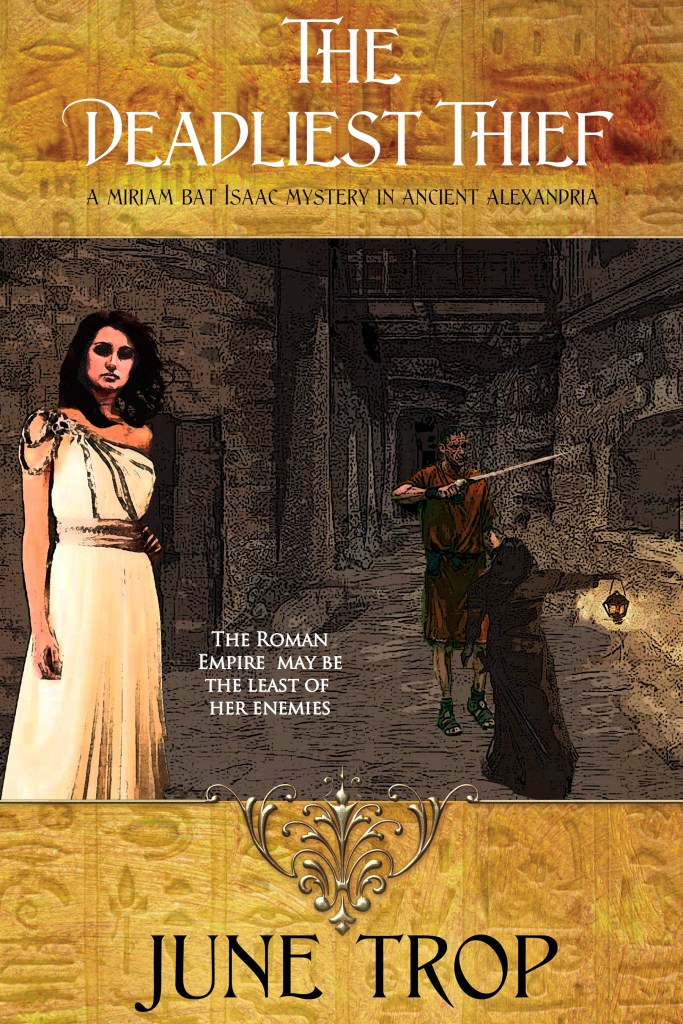
In the latest of her five adventures, The Deadliest Thief,Miriam’s best friend, Phoebe is kidnapped. At the same time,a brute of a man is stalking Miriam’s assistant, Nathaniel ben Ruben, an itinerant potbellied dwarf. Could this brute be the same man who kidnapped Phoebe? And can Miriam find her before it’s too late?

According to Kirkus Reviews, The Deadliest Thief has “an entertaining plot ending with a most unexpected twist.” [but] “The real strength of Trop’s atmospherically rich book lies in her ability to transport her audience to a distant time and place.” So, let The Deadliest Thief, e-book or paperback, take you into the Alexandria’s underbelly to help Miriam solve her most baffling case yet. 

The Deadliest Thief

Miriam bat Isaac, a budding alchemist and amateur sleuth in first-century CE Alexandria, becomes frantic when her best friend, Phoebe, is kidnapped. At the same time, a brute of a man is stalking Nathaniel ben Ruben, an itinerant potbellied dwarf. Could this brute, the last surviving jewel thief from the Temple of Artemis, be the same man who has kidnapped Phoebe?

Buy Links:

https://www.barnesandnoble.com/s/the+deadliest+thief?_requestid=261164

or wherever e-books or paperbacks are sold.

As an award-winning middle school science teacher, June used storytelling to capture her students’ imagination and interest in scientific concepts. Years later as a professor of teacher education, she focused her research on the practical knowledge teachers construct and communicate through storytelling.

Her books have been cited for excellence at the New York Book Festival, by Wiki Ezvid, the Historical Novel Society, and as a 5-star Readers’ Favorite.

An active member of the Mystery Writers of America, June lives with her husband Paul Zuckerman in New Paltz, NY where she is breathlessly recording her plucky heroine’s next life-or-death exploit.

Connect with June on her website www.JuneTrop.com or her Facebook page: June Trop Author.