Guest Blogger – Avery Daniels

Resort to Murder series goes to New Mexico by Avery Daniels

One piece of writing advice I received early on was to write in whatever genre I read, and I read a lot of cozy and amateur sleuth books.  I like how justice is served; the villain is caught, and for a few hours I am on the trail of a killer.  The vicarious thrills in the safety of my locked home appeal to me, so of course I started writing a cozy mystery series.

I often hear the advice to write what you know.  I grew up in a town with a historic five-star resort.  On a sunny Sunday afternoon, I would go to the resort and walk around their man-made lake and feed the ducks.  I celebrated special occasions at their exquisite restaurant, my employers held holiday parties there, and I won tickets to and attended a LPGA golf tournament at the resort.  So it was easy to make the setting for my cozy series this resort with the idea to have every other book at a resort my sleuth is visiting.  I have also volunteered over the years and helped plan and facilitate events, from retirement luncheons to signature fund-raising events with silent auctions. I have worked with hotel staff from soup to nuts on events, so I knew a good bit of what goes into Julienne’s task in that vein of her job.

 After I settled on the resort as a backdrop, Julienne solidified as the lead character. Julienne is a young professional who skipped college for a manager-in-training program at the local five-star resort. Her dream is to manage resorts around the world to satisfy her wanderlust and desire to experience other cultures.

 In the first book Julienne finds her sleuthing legs when she is the prime suspect in the murder and we are in her historic “home” resort inspired by the Broadmoor.  For book two, Nailed, the resort was a luxury Bavarian themed ski resort in Vail, Colorado inspired by Sonnenalp.  The third book, Spiked, was back at Julienne’s home resort.  This fourth book, Arrowed, is the first to venture out of Colorado.

In Arrowed, a cutthroat venture capitalist grabs Julienne by the ankle and with his dying breath says “the curse got me.”  The Enchantment Canyon Resort, where this occurs, is entirely fictional.  It is a combination of resorts and ideas I merged for the story.  I wanted the feel of a Mexican villa merged with a world class health and wellness resort.  I love Santa Fe and its unique mixing of Mexican and Native American cultures and foods and thus I wanted a resort that reflected the rich cultural heritage. 

I had terrible timing on Arrowed, though.  Here I am writing a cozy mystery set in Santa Fe, only a five-hour drive for me (and one of my favorite places to visit), and Covid made it impossible to do any personal research.  Fortunately, I have been several times and have many fond memories to rely on and supplement with internet research.  Just a tip: any trip to Santa Fe means you should plan on eating and drinking some of the best food in your life.  The food is one highlight of any trip there for me, along with the Margarita Trail!

If you have been to Santa Fe, or New Mexico, what are your favorite memories?
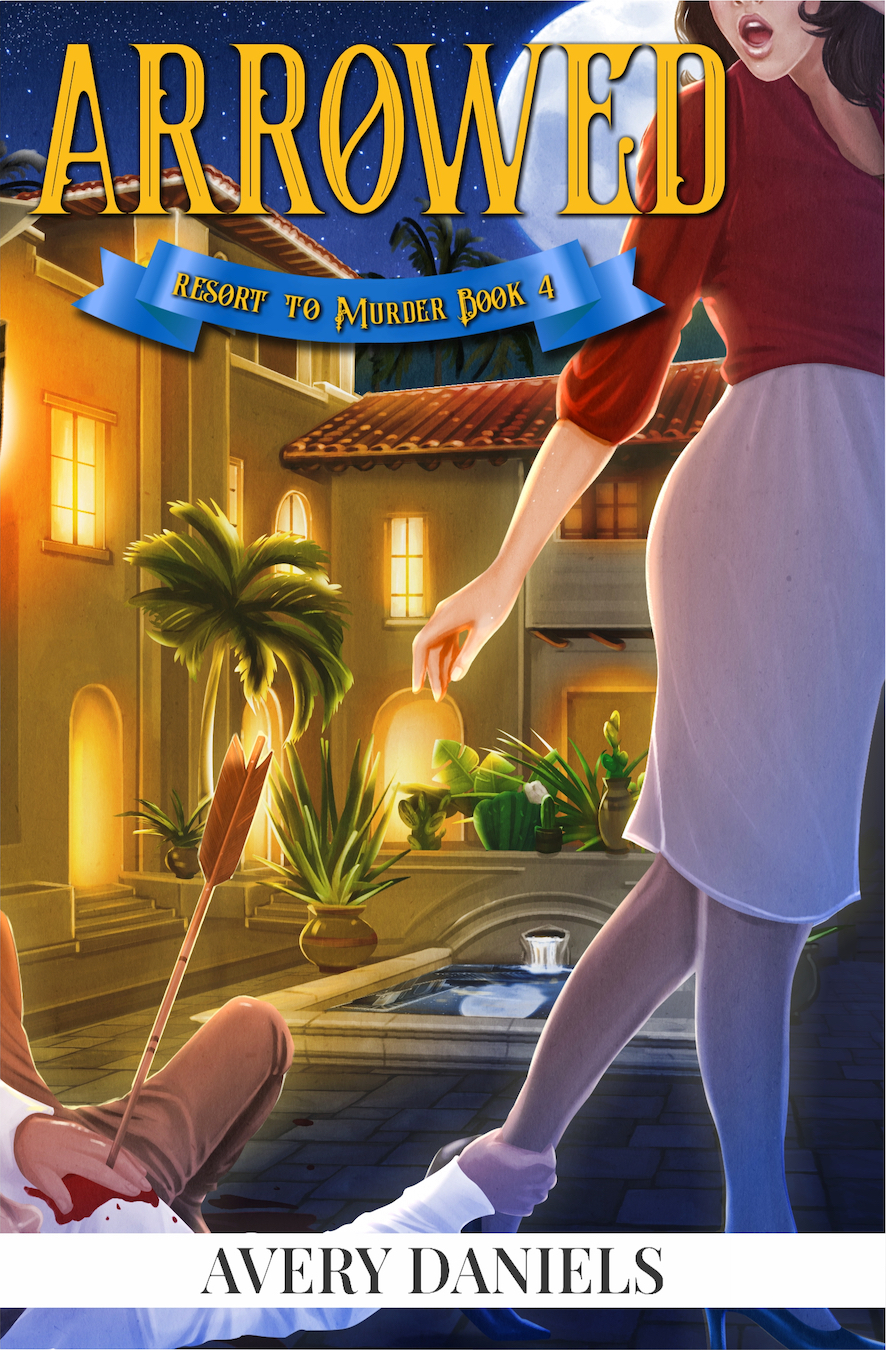
It all began when a dying man with an arrow in his chest grabs her ankle.
     During a heat wave at a Santa Fe resort, Julienne has the resort owner pressuring her to solve the murder. The victim is a high profile business man who made enemies rather than friends, leaving Julienne with a roster of suspects. She was supposed to be training the staff and spending quality time with Mason rather than investigating a murder. The heat turns up when an old girlfriend of Mason’s checks in and is determined to get back together.
     Arrowed is the fourth book in Avery Daniel’s Resort to Murder series and is an exciting contemporary cozy mystery. If you like Cleo Coyle, Maddy Hunter, Duffy Brown, Lynn Cahoon, and Annette Dashofy, then you’ll love this series with a strong intelligent sleuth, lavish settings, and tantalizing mysteries.
     Buy this spunky clean cozy mystery and start enjoying Julienne’s adventures today!

Youtube book trailer:  https://www.youtube.com/watch?v=-svubHiLbDE

Purchase Links

Amazon: https://tinyurl.com/yoo3xfqw

B&N Nook: https://tinyurl.com/4rew7h83

B&N Print: https://tinyurl.com/2jbun5rt

Kobo: https://tinyurl.com/v4tpqebd

Apple: https://tinyurl.com/2a2vxa2b

Bookshop: https://tinyurl.com/14ecxyic

Avery Daniels was born and raised in Colorado, graduated from college with a degree in business administration and has worked in fortune 500 companies and Department of Defense her entire life. Her most eventful job was apartment management for 352 units. She still resides in Colorado with two brother black cats as her spirited companions. She volunteers for a cat shelter, enjoys scrapbooking and card making, photography, and painting in watercolor and acrylic. She inherited a love for reading from her mother and grandmother and grew up talking about books at the dinner table.

Website:  http://avery-daniels.com/

Newsletter:  https://tinyurl.com/2p952mcv

Goodreads:  https://www.goodreads.com/avery-daniels

Amazon Author Page:  https://www.amazon.com/Avery-Daniels/e/B0719JXY83/

Facebook:  https://www.facebook.com/AveryDanielsAuthor

Confessions of a Confused, Disorganized Writer

Does the drifter know anything?
     That’s what it says at the top of a page of writing notes (okay, scribbles) that I found a while ago in my desk drawer.
     I’d give anything to find out if the drifter knows anything. As a matter of fact, I’d give anything to know who the drifter is.
     The most troubling aspect of this question is that the note is definitely in my handwriting. Perhaps the query refers to my grandpa-may-have-been-a-serial-killer screenplay, since there are other cryptic notes on the same page such as Maybe Jessalyn was her mother, not her aunt, and I do have a deceased character named Jessalyn in that story. There’s also kind of a down-and-out handyman, but he’s always been part of the community; he’s not really a drifter.
     Then again, since there’s another scribble on the same page about designer sunglasses that I recognize as a reference to Undercurrents, my marine-biologist-dies-in-the-Galapagos mystery, maybe the question pertains to that novel. But while there’s a drifting corpse in the ocean, there’s not really a character that I would really call a drifter in that one, either.
     I search my memory banks. How about Call of the Jaguar, my find-the-other-lover-in-war torn-Guatemala novella? Endangered, my missing-kid-in-national-park mystery? Shaken, my earthquake/arson/is-our-heroine-committing-insurance-fraud romance? Nope. No drifters.
     Perhaps I was going to add a drifter somewhere? Or perhaps it belongs in a future story? I have another note about a mystery solved due to an error overlooked in digitally altered photographs, and that doesn’t match up with any story I’m currently working on.
     I haven’t always been this way. Who’s to blame for my current mental and physical confusion? I blame editors and agents.
     When I first decided to turn my writing talents from “how-to” manuals and books to fiction, I sat down and wrote Endangered, my first mystery novel, in about six months. Total focus. I sent out query letters.
Not taking new clients at this time.
Not distinctive enough to stand out in a crowded market.
     Not for us.
     Not right for us, but this is subjective; others may feel differently. Good luck.
    
The few agents who asked for samples hinted that the story seemed awfully close to Nevada Barr’s writing. I’d never heard of her at the time, but when I read some of her books, dang if they weren’t right, my protagonist (park ranger), setting (national monument), and story (was the missing child eaten by a cougar?) could have been written by her. The tone was even similar. I suspect Nevada is my long-lost twin.
     So, I changed the protagonist and the story slant substantially, and sent it out again.
My client list is full.
     Not distinctive enough to stand out in a crowded market.
     Well written, but I advise you to lose the technical stuff and focus on the outdoor adventure.
     Excellent writing, but add more technical stuff and lose some of the outdoor adventure and nature aspects.
     Not for us.

     Oh, I did get a contract in the mail from an agent who wanted money up front, which seemed a little suspicious. I called to get more information. When I asked about this person’s experience and publishing contacts, I discovered she was no more of a literary agent than I am.
     My novel did finally intrigue one agent from a reputable house sufficiently that she jotted down several very good suggestions for changes (bless her!) and agreed to see the novel after I made changes, along with samples of all my other work. Thank God, I thought, and applied myself to making the changes. Five months later (hey, I was working full-time in a software firm), I eagerly mailed my much smoother novel to her. I promptly received in reply a note from the head of the agency:
This agent has quit agenting. We shredded your manuscript.
    
If my four cats hadn’t kept reminding me of an imminent tuna crisis, I might never have scraped myself off the floor.
     I wrote a children’s book about a Kikuyu girl who wanted to save the hippos around her village in Kenya. It was a prizewinner in a local contest. A publisher was interested until she found out that I wasn’t African-American.
     I went to screenwriting school in an attempt to revive my sagging creative spirit. I wrote my first romantic adventure screenplay, sent it around.
Not taking new clients at this time.
     Client list’s full.

Not for us.
     I heard a romance editor talking up an outdoor adventure novel as ‘exactly what we’re looking for.’ After reading that book, I was a) confused, because in no way was it a romance (the protagonist’s lover is dead from the get-go) and b) enthused, because the book had a tone and theme similar to Endangered. I fired off a query to that editor, referencing the conference and the book she’d mentioned. No response.
     Meanwhile, having read that it’s much easier to publish mysteries if you’ve got a series, I worked on sequels to Endangered. (That series has five books now.)
     I finished a romance. I started to send out queries on it, while still trying to find a place for Endangered and its sequels Bear Bait and Undercurrents.
Not taking new clients.
     Got any non-fiction proposals?
     Not right for us, pardon the form letter.
     Agent deceased.
    
I did finally get a contract for three mysteries with Berkley Prime Crime. After the first one was published, my editor/champion moved to a nonfiction position, and no editor left in the original group was even mildly interested in marketing my mysteries. So, after two years of stagnation, I got the rights back and published them myself.
     Now I’ve got eight mystery novels, three romantic suspense novels, two drafts for children’s books, dozens of outlines, crowds of characters, hundreds of clever clues, and a score of half-baked plots romping through my head. “You must like banging your head against the wall,” my mother once remarked. (I’ve always had such a supportive family.)
     I’m a fast writer, and a good one, according to my fans. If I had only had honest feedback on what editors and agents wanted, or encouragement to run down any particular path, I would have galloped to the kill like a cheetah after a bushbuck. Instead, I still seem destined to become like the giant sunstars I see on my scuba expeditions; a creature with so many appendages that it’s a miracle it can move at all.
Does the drifter know anything?
    
I really hope so. And I hope he shows up soon to share it with me.

Mud Season by Karen Shughart

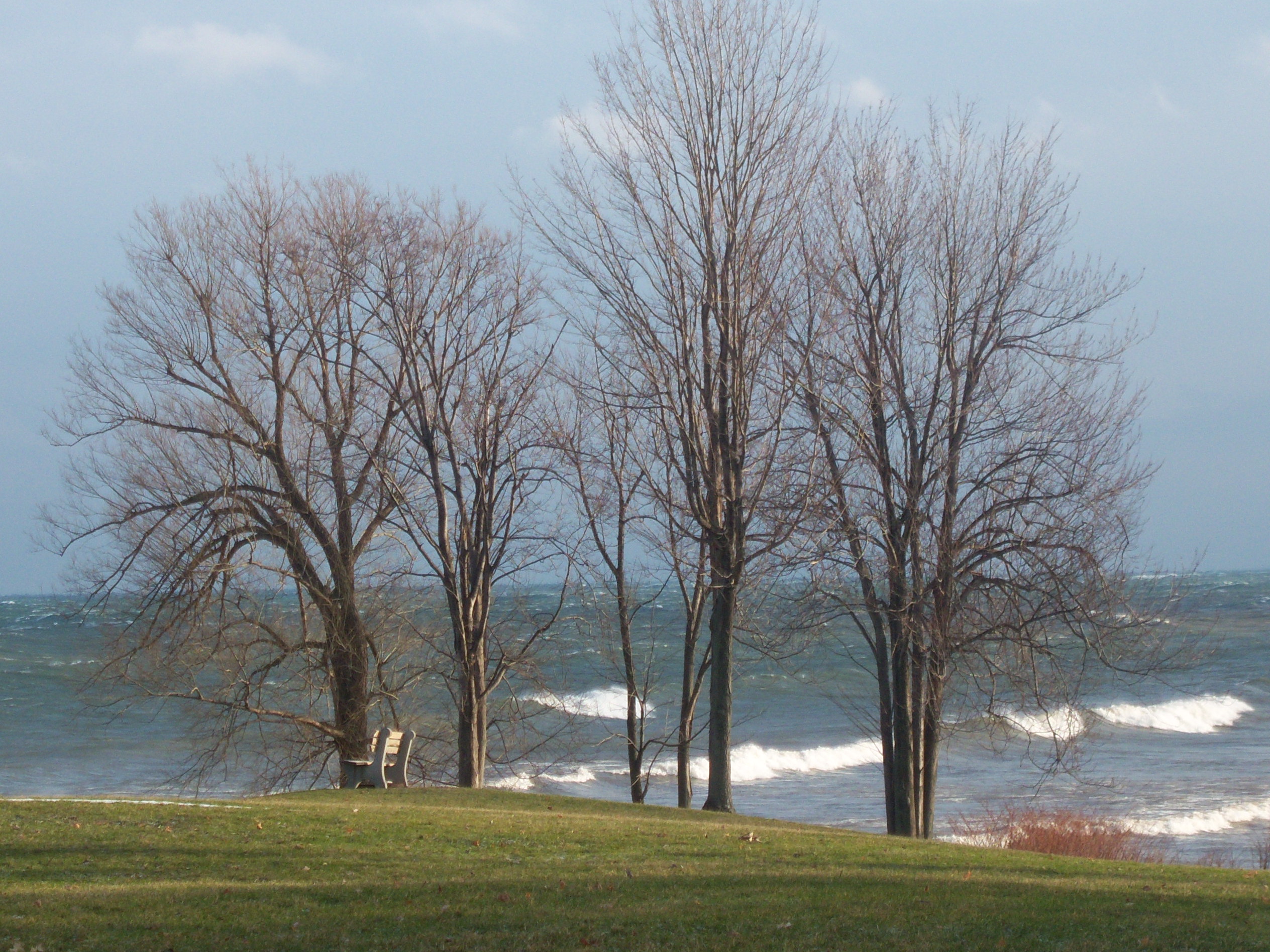
If you’ve ever read any of my Cozies, you may have noticed that the month of March doesn’t figure prominently in the narrative. Don’t get me wrong. We live on the south shore of Lake Ontario in New York state, and it’s spectacularly beautiful here almost year ‘round. That is to say: it’s spectacularly beautiful eleven months during the year. Not so much March.

March is the month of transition. One day the temperature plummets into the teens, the next day it rises into the 60s. We can have winds of 50 miles an hour. Then, waves up to 15 feet crash turbulently against the beach, roaring so loudly that they obliviate other village sounds. When the winds die down, there’s an eerie silence, and the lake looks like glass. .

We have snow squalls and rain, sometimes in the same hour. Snow that’s accumulated throughout the winter now starts to melt; quickly, in torrents and rivulets that make our backyard a swamp. I wear my old Wellies to stomp around to view the changing landscape. We don’t have many sidewalks here, and a stroll through the village can be challenging, to say the least. Many of us refer to the month as Mud Season.

Mid-March along the lake by Karen Shughart

Gray days seem to dominate, but it’s not all doom and gloom. You can smell the ripening as the tree buds start to swell and begin turning red or pale green. Snowdrops bloom, and our daffodils stretch up through the melting snow. The sun rises earlier, casting rose gold streaks over the bay; on rare days it is piercingly bright, with a clear azure sky. Those are the days when our middle-aged dog, Nova, sleeps in sunbeams that move from room to room.

We hear lots of birdsong. Robins live here year ‘round, but mostly in winter they hunker down out of site. Now, they make their presence known. A couple weeks ago, I peered out our living room window and spied two sparrows, a male and a female, chattering away on the winter wreath of twigs, pinecones and berries that hangs on our front door. I believe they were having a conversation about whether to build their nest there. It’s a perfect place, protected from the elements and predators.

They returned to that same spot for several days in a row. Don’t get me wrong, I love the birds. I just don’t want them nesting against our front door. Regretfully, I removed the wreath, to replace it later in the spring with one that’s more seasonal. I expect they were surprised when they returned to find their building site was no longer available.

I’ve purposely not written much about March in my Cozies, but now, after writing about this month of so many moods and faces, I begin to wonder why I’ve been avoiding it. Winter is ending, spring is on its way, and change happens rapidly. Hmm, could this be a metaphor, perhaps, for my next Cozy?

To Gore or Not To Gore… And How Much?

by Janis Patterson

When one writes mysteries, one has to come face to the face with the problem of violence – when, to whom and how much. Almost every mystery – those for grown-ups, that is – includes an assault and/or a death. It is very rare to see a mystery without one or the other and usually both. Dead bodies are pretty much the raison d’etre of a mystery!

The question is, how did the body get dead, where is it found, what condition is it in, and how much – if any – of the actual crime do we show?

What they’re now calling cozy mysteries – the kind with a ditzy amateur sleuth with a terrible love life, a cute job, probably a shoe obsession and perhaps intelligent animals which may or may not solve the actual mystery themselves – usually back away from violence and its aftermath as much as possible. (And yes, I know there are exceptions, but it is the exception that proves the rule!) The dead body that propels the story is so sanitized and occasionally de-humanized that in some stories it resembles little more than a stage prop. Which is distressing but not surprising, as more and more publishers are demanding that the body appear in the first few pages if not on the first page itself. This makes it hard for the reader to regard said dead body as little more than a plot device instead of something that was once a living, breathing complete human being. (In case you didn’t know, this ‘where does the body appear’ thing is one of my hot buttons!)

What we used to call cozies are now in the labeling limbo of ‘traditional mysteries’ which to me means more realistic characters, more realistic actions by those characters, but with only minimal violence. There is blood, but only a tangential mention. My favorite description (taken from one of my own books, of course) talks about the body hastily covered with a now-stained bedspread (at the time of my sleuth’s arrival) with just a lip of wet red peeking out from under the edge. Enough description to evoke a feeling of horror at such a heinous and violent act, but most definitely not enough to revolt or sicken the reader. It’s sometimes a difficult balancing act.

In a hard-boiled or noir mystery, the violence is not only part of but sometimes seems to be the reason for the story. Descriptions of violence, whether or not they result in death, are often and lovingly detailed. Remember how often Mickey Spillane’s Mike Hammer either was beaten up (each blow described) or beat up the bad guy (each blow described.) He wasn’t the only one, either. There are scores of such novels celebrating violence written every day.

My personal bête noir example of gratuitous violence is Robert Ludlum. Yes, his novels are generally classified with thrillers, but in each one there is a mystery, and I’m trying to make a point here. I have publicly called his books ‘the pornography of death.’ Think about it – in sexual pornography nothing is hidden; every moan, every stroke, every touch, every single action is described, usually in loving and minute detail. Ludlum’s (and others’) do the same thing with violence. Every split of skin from a blow. The explosion of skin and the fountain of blood caused by the entry of a bullet… or a spear, or some other penetrating object. The crisping and blackening of skin as it begins to burn. Personally, I find it sickening, but considering how these books sell I’m obviously in the minority!

My feelings toward violence in my books are sort of like mine about sex in my books. They both happen, and we as readers know they happen, as we see the results, but they do not happen ‘on screen’ and there are no overly graphic descriptions.

Once a couple of decades ago I was doing make-up on the set of a horror film. A grizzled old hand and I were watching as an actor was being glued (yes, glued!) into his costume. The gaffer snorted derisively, saying that clump of foam and make-up wasn’t really scary.

Well, it was pretty scary-looking to me! When I told him, he said the purpose of a horror film was to scare people, and not all people were scared by all things. To really scare people, he said, you give a suggestion – a shadow, a hand or a tentacle, and let people create in their own head the thing that scared them the most. “Don’t show the monster,” he said. “Let people create their own monster.”

It’s the same thing with violence. A suggestion – ‘a lip of wet red peeking out’ – can evoke more feelings, more visceral reaction, than an entire thesaurus of detailed description. And that’s why I don’t write overt gore.

I Like Jury Duty by Paty Jager

There are many people who try as hard as they can to get out of jury duty. I, on the other hand, enjoy jury duty.

Where else can a writer see so many different people in a boring and, in the case of a trial, intense situation? There are emotions to study, tics, physical appearance, and even voices. For me it is an overload of images and sounds that I try to capture to use in books.

I don’t write courtroom stories, but I do use a lot of what I see in my mysteries. The way a policeman stares around the room, or the intense discussion between a client and lawyer, even the way two old men gossip in the corner of the room, their voices so loud everyone hears what they are saying. There is so much fodder for this imaginative brain! Even how the potential jurors act while waiting to be picked. It all has a way of speaking to me. I carry a small notebook with me when I go. I use it to jot down things I see that I think will make an interesting character or add nuance to a character.

And then there are the cases. I don’t use exact cases in stories, I use them as a bouncing off point, coming up with my own scenario and interjecting completely different characters than the real people. But it is all inspiration for books or characters or situations to come.

My biggest hurdle is getting onto a jury. Our son-in-law is a lieutenant in the Oregon State Police. When asked about that, there are times I get excused immediately. Just because I see crime from the side of the police, I think. There are also the drunk driving cases, I can’t be open minded on those. My father-in-law was an alcoholic who should have been off the road much sooner than he was. And then he only had his license taken away because my husband asked the courts to take it away, not because the courts were going to do it. Even though he’d been hauled in for DUII a half a dozen times. Yes, I believe the courts need to be stricter with that and anyone who drinks alcohol or does illegal drugs should not be allowed to drive. Take their license away. Sorry, got off on my high-horse there.

I find how the judges present themselves to also be noteworthy. Their demeanor can work for an employer or even a villain depending on how open or dominating he or she may be. Don’t forget the prosecuting attorney and the defendant’s lawyer. Again, how they act and present themselves is all scrutinized by me to find something that might work for a character.

The defendant.. are they nervous, smug, pretending they don’t care but their leg is bouncing or the keep clasping and unclasping their hands? Yes, I study all of this for characterization.

I also listen to what everyone has to say and hope I use an open mind when making a decision. All the while, I’ve scratched my notes and observations in my character notebook.

Do you like to be called for jury duty? Why or why not?

photo source: Depositphotos