Coming Into Its Own by Heather Haven

Back in 2007, I had been challenged by other writers to create a protagonist who wasn’t Barbie doll perfect. So I came up with The Persephone Cole Vintage Mystery Series. It takes place in 1942 Manhattan during the beginning of the country’s entrance into WWII. The stories revolve around one of the country’s first female detectives, a full-figured gal named Persephone (Percy) Cole. She is 5’11”, strong, able, and very secure living in a man’s world. At 35 years old, which was considered middle-aged for the times, she has a mouth on her, wears Marlene Dietrich pants suits, altered for her size, and her father’s fedora hat. She is also a single mother who moves back into her parents 4th floor walk-up on the lower east side, as much for her 8-year old son’s sake as that of her parents.

From the git-go I loved Percy. I had accidentally created my ideal protagonist, a woman who could go anywhere a man could go, do anything a man could do, and was smarter and sassier about it. I was surprised when the books didn’t leap off the shelves after publication. Or at least climb off. I thought for sure women would love to read about a woman who found her place in the sun, even with everything stacked against her, and did it with humor and guile. Didn’t happen. Meanwhile, the Alvarez Family Murder Mysteries continued in their popularity, this sparkly, contemporary series about a Silicon Valley detective agency led by protagonist Lee Alvarez, who is, frankly gorgeous on every level. Make no mistake, I am forever grateful for that. But still.

I had a pang in my heart for my beloved Percy, her son, Oliver, Mother, Pop, and their 1940’s world. However, after the 3rd book of the series didn’t sell any more copies than the first two, I decided to stop writing them and move on. But still the pang lingered. The Alvarez Family grew in popularity, Percy Cole continued to languish.

But I see the world has changed. And a woman’s place in it. Women like being physically strong now. They like knowing they can defend themselves and not depend on a big strong man to do it for them. They appreciate – we appreciate – self-sufficiency. So I have decided to pull Percy out, dust her off, and see if this pistachio nut eating heroine will go. I am currently writing the 4th book of the series.

Wish me luck.

Music, Music, Music

“Put another nickel in, in the nickelodeon, all I want is having you, and music, music, music.”

If you are of a certain age, like me, you’ve heard that song. You might even know what a nickelodeon is.

The song is called “Music, Music, Music.” It was recorded in 1950 by Teresa Brewer and the Dixieland All Stars. It was the B side of the recording. But the bouncy, effervescent tune, with 1950s written all over it, became a major hit.

What has this got to do with writing mysteries? Well, if you’re writing a historical novel, or even a contemporary one, music is a great way to define time period and setting. The Jill McLeod novels take place in the early Fifties, 1952 and 1953. One method of giving the readers the flavor of the times is to mention what music Jill and her friends and family are listening to.

In The Ghost in Roomette Four, Jill is having a conversation with her younger brother Drew. He’s a guitarist in a blues band and has an upcoming gig at a club in West Oakland. He disparages a popular song of the time, “How Much is that Doggie in the Window.” If there was ever a song that says early 1950s, it’s Patti Page singing about that dog.

And nothing says Bakersfield like country music. In Witness to Evil, my private eye Jeri Howard is heading south down the valley, listening to Patsy Cline. When she goes to New Orleans in The Devil Close Behind, well, New Orleans! In the first chapter, Jeri goes to Preservation Hall with her father. Hey, second-line parades and musicians on the corner, playing traditional jazz, with Jeri dancing on the sidewalk.

I’m writing another Jeri Howard case, this one called The Things We Keep. I keep running into the Sixties, with plot, characters, and setting. One character, Gloria, lived in San Francisco’s Haight district during the 1960s. She was the lead singer for her boyfriend’s band and proudly claims she knew Janis Joplin. And by the way, she was at the Monterey Pop Festival in 1967. Talk about the flavor of the times. Picture Janis on some stage in the Haight, singing “Piece of My Heart.” Or Jefferson Airplane, with Grace Slick vocalizing “White Rabbit.”

Bring on the bell bottoms.

Yes, music is an effective, even essential addition to the writer’s toolbox.

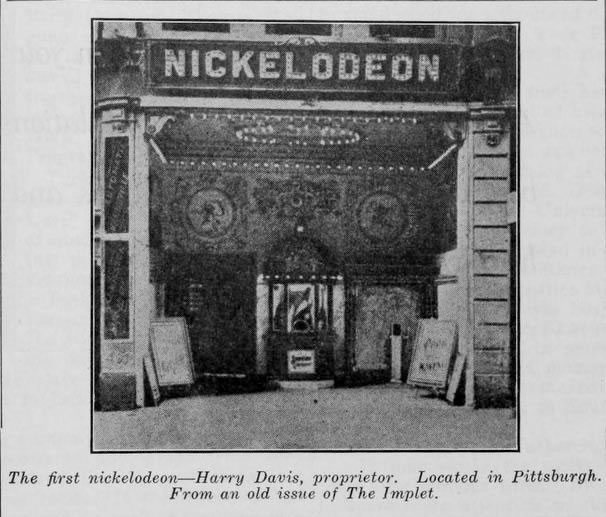
And just what is a nickelodeon?

It’s a coin-operated machine that plays music. Could be a jukebox or a player piano. The original meaning, however, was a movie theater or cinema that cost five cents.

MISSED WRITING OPPORTUNITIES AND WHY by Marilyn Meredith

Not too many years ago, when our chapter of Sister in Crime and many who wanted to be mystery writers and a program chair who brought in great speakers, not only did I get some great ideas for plot from them, but also was asked to write a book for them.

One would have really been fun. Our chapter went to the nearby airport and heard and viewed all about the police and sheriff’s helicopters. We heard exciting tales about what they did and arrests they’d made. One of the police pilots seemed to focus on me while he was talking. Afterwards, he came and asked if he could speak with me.

He wanted me to write a book about him and all of his exploits. He offered to take me on “fly-alongs” so I’d know what it was like to fly all over the big city and spot criminals, and sometimes actually land to arrest them. Believe me, I wanted to do it. I took his card and told him I’d get back to him.

At the time, I owned and operated a licensed home for six women with developmental disabilities. My husband and I ran it together. The big city where the police officer and his helicopter were stationed was about an hour and a half drive from my home. Though truly torn, I knew it wouldn’t be fair to my husband or the women I cared for to be away as much as giving a book like this justice—so I turned it down.

The second opportunity was when our SinC chapter had a police detective from the coast who told us all the details about a horrible murder of a teenaged girl, by three teen boys. Afterwards, he asked me if I’d co-write a true-crime book with him about this horrendous crime. Again, to do the job right, I’d have had to be away from home far too much. However, that wasn’t the real reason I turned it down. The thought of interviewing the parents of the dead girl and those of the boys was not something I wanted to do. I know all of their hearts must be broken.

And I’ll close with the one opportunity I accepted and wished I hadn’t. I accepted the job through a ghost-writing company that I’d worked with before, to write the story of a big time but supposedly reformed drug dealer. I didn’t have to meet with him in person; we did everything through email. His story was fascinating. He managed to avoid being caught while selling to some of the most influential people in a wealthy beach community in southern California, and then his change of life style when he moved to Hawaii.

We seemed to get along fine. He was happy with what I’d written until it was time for him to make his final payment. He became verbally abusive, told the company I worked for I hadn’t written anything the way he wanted. The worst of his emails came when I was at the Public Safety Writers Association’s annual conference. I sent him an email telling him where I was and who I was with: all sorts people from different law enforcement agencies from police, FBI, NSA, etc. and I planned to seek their help. That stopped him. I never heard from him again. I have no idea if he published his book—and frankly I don’t care.

I’m not quite sure why those memories popped up, but I thought you might find them interesting.

Have any of you ever turned down a writing opportunity?

Marilyn

The First Line

In every creative writing class the instructor is sure to note at some point the importance of the first line. These few words should grab the reader, and lead her into the rest of the story. We all know the classic first lines by Tolstoy and Chekhov and Chandler and Christie, but those don’t really help us with writing our own. I didn’t always recognize the brilliance of some first lines, which made coming up with my own even harder.

At first the issue seemed to be to write something intriguing. For the first book in the Mellingham series, I wrote and rewrote the first line along with the first chapter, writing, in the end, three first chapters and stacking them one in front of the other. In the end I was persuaded to cut most of them, and I ended up with what I thought was a pretty good first line for Murder in Mellingham. “It had been some time since Lee Handel had ventured out willingly on a social occasion, but his wife, Hannah, had reassured him that this party would be safe.” This line sets the stage for the evening to come but not much else. That line introduced the first of seven titles in the Mellingham series.

The first line of Under the Eye of Kali, the first in the Anita Ray series, was even less connected with the story to follow, but it set the scene nicely. “Guests from various foreign countries began filling up the Hotel Delite dining room, taking every seat at the main table—this was a small hotel, only eight rooms, with the owner’s, Meena Nayar’s, suite on the top floor, and that of her niece, Anita Ray, above a separate garage.” This was the first of four books, with a fifth one waiting on my desk.

You would think by the time I came to write my thirteenth book that I would have mastered the art of the first line, but you’d be wrong. Below the Tree Line opens with what I regard as a terrific line, but it isn’t necessarily the best first line for a mystery novel. But I didn’t come to this conclusion until recently. Below the Tree Line opens with this: “On the third night Felicity lifted the shotgun from its place in the cabinet, and this time she loaded it.” There isn’t much wrong with this line as it stands, but it doesn’t tell you as much as you might think about what’s coming next.

After publishing dozens of shorts stories and thirteen novels, I tried a new approach in creating the perfect first line. I don’t know if the result is perfect, but I established a definition of that first sentence that works for me. I now consider the first line as the apex of a pyramid, and the story is within that pyramid. Whatever happens must be traceable back directly to the first line. This by itself means extraneous scenes, extra characters, digressions into backstory, or a humorous or romantic subplot that is more filler than mystery, are all to be excluded.

In my current novel, now with my agent, I rewrote and reworked the first line more than a dozen times until I had something that, like a math or drawing compass whose points never deviate as they draw the circle, could embrace the entire story, holding each part in tight, streamlining and smoothing the narrative. This, then, is the first line of So Comes the Reckoning: “The first time Renee watched a man die, she was eleven years old, kneeling beside him as he lay on the ground.”

As I wrote the 82,000 word story I kept that first line in front of me and asked myself repeatedly, Is what I’m writing now linked to that statement? If not, why not? It was hard to find myself jettisoning entire chapters because I seemed to think they were needed but could find no connection to the first line and its implications. Why was she there? Why was this a first time? Why did she not, as an eleven-year-old child, run away or at least stand apart? The implications of those words kept me on track.

Since then I have come to appreciate the difference between a good snappy sentence and a good first line to a particular novel. They are not necessarily the same. The challenge is to combine them in such a way that the story unfolds from those opening words. It’s an ongoing challenge.

Why Does This Character Torment Me So?

He refuses every name I give him. Argh!

Everyone else in my newest historical series is comfortable with their names. The nineteen-year-old heroine Cora Countryman’s name is a combination of names from my hometown in Illinois, the model for the booming prairie town in the books. But my hero . . . he refuses to cooperate! His name has changed so many times that my computer screen has erasure holes.

Kewanee, Illinois Historical Society

Names are everything, right? Normally, once the character sketch is complete, they pop into my head and stick. Finn Sturdevant, Grieg Washburn, Brendan Whitelaw, MacLaury and Byron Cooper. But this guy is a puzzlement. He was comfortable being Israel Francis (Rafe) Kaufman from Chicago in the first book, then when I started plotting the second book, wham, he announces he is from Tennessee and demands a new name.

Overlooking the obvious and assuming I have some control over my stories, perhaps I should have given more time upfront to his backstory. I thought I had it all figured out; it’s just . . .

In book one we learn that he was a drummer boy at the Battle of Chickamauga, went to an Eastern college, and is now a newspaperman. Then while plotting book two, he insisted he was a Southern drummer boy, not Northern, and all bets were off.

Bless his heart, the change added depth to the plot, the series, and his character.

So, Israel Kaufman from Chicago permutated to Bedford Kaufman because what name conjures Civil War Era Tennessee more than General Nathan Bedford Forrest. The former Israel Kaufman was semi-okay being Bedford Kaufman, but the Tennessee census indicated that there were literally no Kaufmans in the state in the 1870s.

So, we settled on the surname Kanady. Bedford (Ford) Kanady appealed to him, enough for a complete name change. But he is a tad prickly about his image and worries that the name is a bit card-sharky. There was talk of Harry Kanady, but he claims it is a gunslinger’s name. ‘Just not me‘ has become his mantra. In addition to the census, we have tried to find his using name generators, birth records, online family trees, yoga, and standing on our heads in a corner.

He insists the name must convey savvy and internal toughness. Oh, and a hint of danger, a hazy past, a sharp tongue, and a few visible and invisible scars. He believes he is the kind of guy you see buying stamps at the Post Office who conjures an intriguing fantasy involving magic markers and dark rooms.

Come on . . . you know the type!

Wait a minute! Would Jason Bedford work? Jason . . . Jase, perhaps, to his friends. He isn’t thrilled with Jason. It feels a bit modern, possibly too Western movie for him. There is definite hesitation on his part.

I’ll let him ponder Jason for the night, maybe introduce himself to a few of the other characters. You know, try it on for a while before another search and replace. Wait! Now he speculates that he likes the initial J. and is leaning toward J. Bedford Kanady. Why an initial makes a difference, I don’t know. But he likes the unknown of the J., the rhythm of the full name, and the hint of je ne sais quoi in the diminutive of Ford.  It could work. Maybe? Sounds stuffy to me. But if he likes it . . . whatever!

THIS GUY IS DRIVING ME NUTS!

As promised, here are the solutions to LAST MONTH’S FIRST LINE QUIZ. I am sure you all aced it.

First Line of BookTitle of Book
Last night I dreamed I went to Manderlay again.Rebecca
All the Venables sat at Sunday dinner.Cimarron
The whole affair began very quietly.Madam, Will You Talk?
They were interviewing Clint Maroon.Saratoga Trunk
Nothing ever happens to me.My Brother Michael
It was a cold gray day in late November.Jamaica Inn
They used to hang men at Four Turnings in the old days.My Cousin Rachel