Guest Blogger ~ Jennifer Worrell

Atmosphere is the most delicious aspect of any book. I connect strongly with stories that envelop me into its world and make me feel like I’m living it along with the character.  I like to unsettle readers and immerse them in the same way, so they feel there’s no escape until they reach the last page. 

I wanted to write a modern noir inspired by the black and white movies and dark fiction of the 40s and 50s, The danger lurking in the quiet corners, the unspoken emotions, the dialogue delivered in short patter, hits all the right buttons for me.  So I was pleased as punch that someone called it “Midwest noir” in a review. 

My protagonist, Val, came from my enjoyment of reading characters that are a little off-center.  People who are not so nice, with twisted thoughts and less-than-savory motivations, yet not quite villains.  Characters who are less than successful, especially when they don’t realize how much.  They feel more like real people than we’d maybe care to admit. 

His love interest, Sandra, as well as his agent, Graham, are both antagonists as well as the story’s brighter characters.  Though I consider Sundown pretty dark, they counteract the shadows with a little lightheartedness.  Sandra’s dry wit was fun to write, and Graham is the type of friend anyone would be grateful to have in their corner.

The idea for the plot came from asking “what if” to things I was seeing on the news at the time.  Val (a much more successful author than I am) decides to write a dystopian conspiracy thriller about the crime rate in his city, with a nameless society covertly ending the lives of its residents when they no longer serve a purpose.  Being an older gent himself—Val’s personal “last chapter” looming closer than he’d like to admit—this concept feels urgent and chilling.  Unfortunately for him—and quite a few other people—the idea isn’t new.  It isn’t fiction.  And the members of this society are prepared to do whatever it takes to keep Val’s book from hitting shelves and revealing their secrets.

One of my favorite subgenres to read is the fugitive story.  Although Edge of Sundown doesn’t qualify in the traditional sense, a few of the final chapters have that feel, and they contain some of my favorite scenes.

I’m pleased to announce there’s a promotion going on until November 15.  Click here for a chance to win a $260 Amazon gift card.  Later this month, Edge of Sundown will be discounted to celebrate my publisher’s tenth anniversary.  Subscribe to my newsletter for an update.
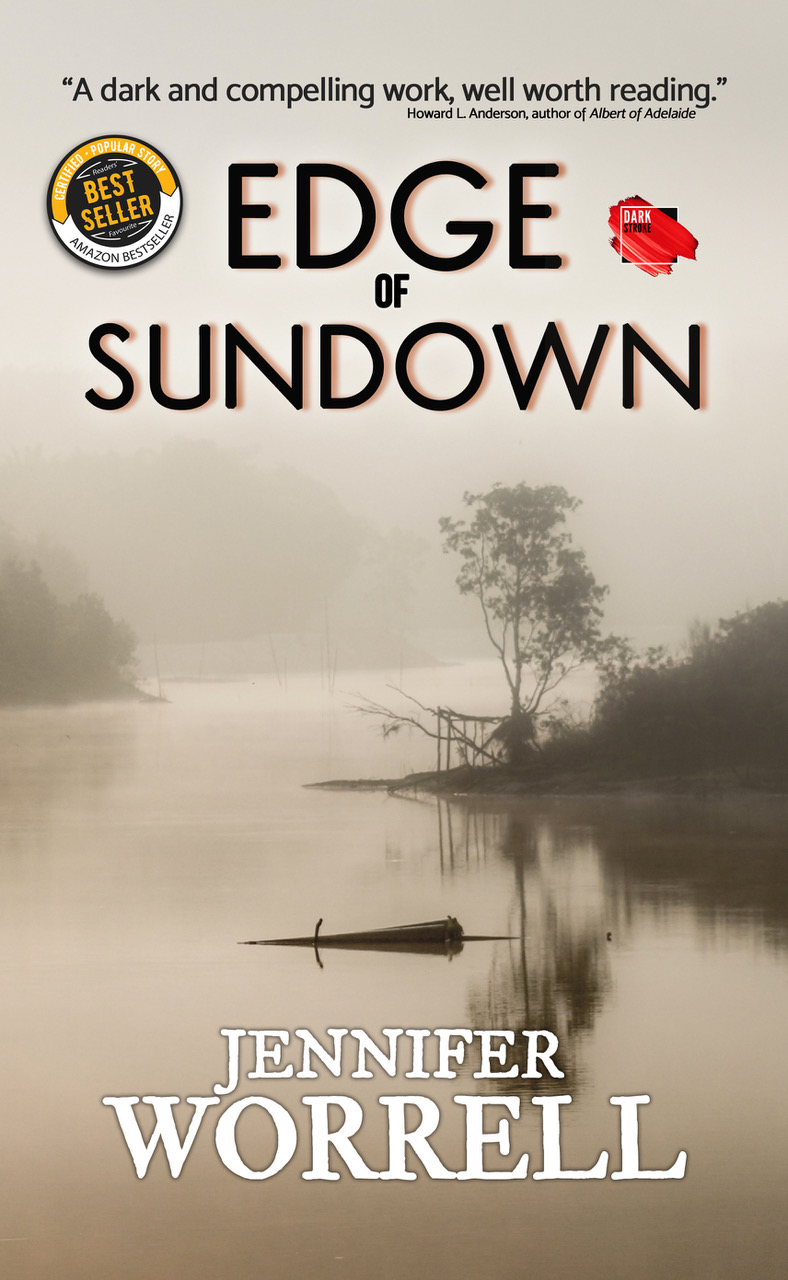
Val Haverford’s sci-fi and western novels made him a household name. But that was then. A decade of creative stagnation and fading health has left him in the literary wilderness. Attempting to end his dry spell and secure his legacy, Val pens a dystopian conspiracy theory set in a tangential universe where alien invaders eliminate ‘undesirables’ perceived as drains on society. But as he digs deeper into violence plaguing his adopted home of Chicago, he discovers unsettling similarities between his work in progress and a life he thought he left behind. Soon he finds his fictional extremists are not only real—they’re intent on making sure his book never sees the light of day. As he pieces together haunting truths about his city and his motives, Val realizes his last chance to revive his career and reconcile the past could get him—and the people he loves—killed. Will he make the right choice? Or will it be too late? Edge of Sundown is a provocative story that shows how the desperation of lost opportunity can lead to drastic and unexpected consequences.
If Jennifer were to make a deal with the Devil, she’d ask to live—in good health—just until she’s finished reading all the books. She figures that’s pretty square. In case other bibliophiles attempt the same scheme, she’s working hard to get all her ideas on paper. She writes multi-genre fiction and is currently working on a sci-fi novel and a handful of picture books that may or may not be suitable for children. Edge of Sundown is her first novel. Her short fiction and essays appear in Write City MagazineWriting DisorderRaconteurLittle Old Lady Comedy and Beneath Strange Stars.

Socials: Facebook, Instagram, Twitter, Website

Buy link: mybook.to/edgeofsundown

ON CREATING THE ALEX CARTER THRILLER SERIES – A Guest Post by Alice Henderson

The year I started to take action for wildlife was the same year I started writing. I was six, and two things happened that year that changed the course of my life. The first was that my father gave me his old Underwood manual typewriter, and I started to write stories about detectives, ghosts, monsters, and sci-fi adventures.

And that same year, I also learned that extinction wasn’t just something that happened to the dinosaurs millions of years ago. It was happening now, to the wildlife we shared the planet with, and humans were the cause. I was devastated.

I’d been fascinated with wildlife for as long as I could remember. My father had a penchant for finding garter snakes and box turtles in our backyard. He’d point to a rock and say, “There should be a salamander under there,” and sure enough, there would be. My mother, an artist, encouraged me to keep a nature journal, which I dove into with gusto.

After I learned about extinction, I did everything my six-year-old self could think of to help wildlife. I mucked out cages at the local wildlife rescue and rehabilitation center. I made little art and craft pieces and sold them, donating the money to wildlife non-profits.

As I went on to college and grad school, I continued to pursue both writing and science. I studied creative writing, biogeography, field zoology, and screenwriting. I got trained in geographic information systems and bioacoustics, and brought those skills to my fight for wildlife.

But it wasn’t until one afternoon in Montana that the idea for my thriller series came into being. I was setting out bioacoustic recorders on a large tract of protected land in Montana. These devices are capable of recording both audible sounds, like birds, wolves, and amphibians, but also the ultrasonic echolocation calls of bats. I then examine these recordings to determine what species are using a particular piece of land. As I was setting up the microphones in this isolated, gorgeous mountain setting, I thought, “I’m a writer. And I’m passionate about wildlife causes. Why haven’t I combined the two?” It hit me then that I wanted to create a character who was a wildlife biologist, who would travel to different areas to study various endangered species. The isolated settings would provide wonderfully suspenseful locations, and each book could focus on a different species in peril.

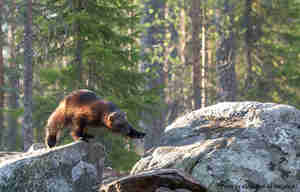
And so Alex Carter came into being. I went back to camp that night and started hashing out the first book. I chose wolverines for the focus because so few people know about them, and there are only three hundred left in the lower 48. They have no federal protection and a number of factors including climate change and habitat fragmentation have led to their decline. They once roamed as far south as New Mexico and as far east as the Great Lakes, but now only inhabit isolated pockets in a handful of northwestern states.

I wanted the title of each book to feature the animal and its group name, like a “teapot of towhees” or a “murder of crows.” But when I looked into wolverines, I discovered that they are so solitary, they have no group name. So I created one myself: a solitude of wolverines.

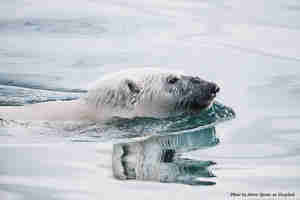
I chose polar bears for the second book in the series because their situation, like that of the wolverine, is dire, again due mostly to climate change. It’s interesting that the second book in the series, A Blizzard of Polar Bears, should came out right now, while world leaders gather in Glasgow for the 26th UN Climate Change Conference of the Parties (COP26) and decide the world’s fate and what steps we’re willing to take to avert this disastrous path we’re on.

After all, every year for the last thirty-three years, the Intergovernmental Panel on Climate Change (IPCC) has released its annual report, warning us that we need to take steps to avert climate disasters. And yet nothing or very little happens as a result, and each year the IPCC’s warnings become more and more grave. And now we’ve waited too long. Sea level rise, drought, disastrous fires ,and hurricanes have taken their toll on our country and the world. I think of Jimmy Carter placing solar panels on the roof of the White House in 1979, and how those panels were removed by the Reagan administration. If we’d started climate change legislation in 1979, the polar bears, wolverines, pikas, and most definitely we would be faring a lot better.

But we can’t afford now to be moved to inaction by hopelessness or apathy. In the desire to drive things forward, in the back of each Alex Carter book, I include a section where readers can learn more about the species, and even undertake volunteer opportunities to help them.

What I hope readers take away from A Solitude of Wolverines and A Blizzard of Polar Bears is not only what I hope will be a suspenseful, entertaining read, but that they will fall in love with these species as I have and be inspired to act.

And to act does not have to be a huge life changing, insurmountable deed. If we all do our part, we can turn this around. Write to your representatives. Eat less meat. Engage in citizen science. If you’re feeling blue or hopeless, help count monarch butterflies. Plant milkweed. Log onto scistarter.org or zooniverse.org and pick out a project to help with, be it a simple beach cleanup or monitoring rhinoceros in Africa from your home computer.

Let’s all take action and demand the change we need to save not only these unique, dynamic species, but ourselves.

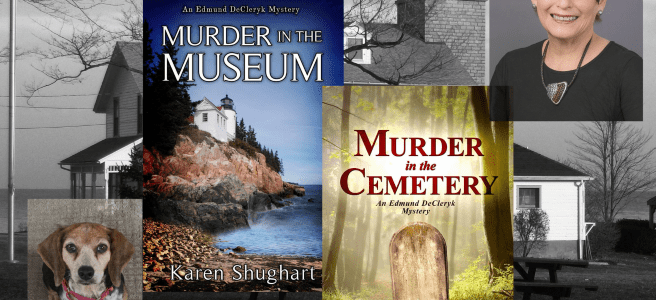
Counting Our Blessings by Karen Shughart

Sometimes life sends us lemons, lots of them, maybe more than a bumper crop. We can make lemonade, lemon meringue pie, lemon sorbet… but still, sometimes there are too many bitter lemons to use them all up.

Without going into a ton of detail, this past year has been a tough one for me and my family. We’ve had several non-Covid-related deaths; some serious, life-threatening illnesses; surgeries; and other family challenges that at times seem unending. It’s been exhausting, emotionally draining and downright frightening. Then there’s been the pandemic, the terrifying weather events, and the general unrest on so many levels in our society and the world. I expect we are not alone.

How does one survive? Lately, when the stressful occurrences seem to be relentless, it’s been hard to think that any of it will get better. At times over the past many months, I’ll admit I’ve been depressed and angry and more than a little sad.

But then I take a couple big breaths, close my eyes, and remember to count my blessings. It’s a platitude, I know, but I tell myself we’ll get through it; we have the strength.

Photo by Jill Wellington on Pexels.com

I am married to a loving, caring man. We have wonderful children. We enjoy an incredible support system of family members and family of the heart, dear friends who’ve also been there to cheer us up as we’ve needed it. We live in a stunningly beautiful maritime village where we have a roof over our heads, our home is warm in winter and cool in summer. It’s a safe place to live, too, where we’re not scared to walk freely for fear of violence.  It could be so much worse.

 We have plenty of food, transportation to get us where we want to go and medical care. We may not be rich, but we have an abundance of what we need.  So many people don’t. Sometimes it’s easy to lose sight of that.

We adopted a Beagle during the earlier days of the pandemic. She had multiple health issues. With excellent medical care and lots of love, she’s fine now; a happy and healthy little dog who makes us laugh and gives us an immeasurable amount of joy. That’s too, is a blessing.

So, during the month when we are supposed to give thanks, I will. Sometimes it’s easy to lose perspective and dwell on all that’s going wrong, all that’s contriving to decenter us. I’m making a concerted effort to remember what I have and how much worse my life could be. We actually do have enough lemons to make tasty drinks and desserts and even enough to share with others during the darkest days.

Call Out the T-Rex!

by Janis Patterson

Whether a plotter or a pantser or anything in between, I’m sure every writer has reached a point in their current work where they despair. The characters aren’t behaving. An enormous and seemingly insoluble plothole has developed. The timeline makes no sense and crumbles under the slightest scrutiny. The whole project has turned into a dogs’ dinner of a mess and simply doesn’t make any kind of sense.

This kind of despair usually hits in the last few chapters, where the writer is desperately trying to wrap up all the plot threads and create a satisfying ending. Usually at this point the only thing that keeps you from tearing everything up is the sad knowledge that nothing new could be any better. This is why some writers drink. Others, like me, tend to wear out their hot tubs and wonder why they didn’t become a plumber.

Fortunately, though, professionals have learned how best to deal with the situation. I’m not going to say how, because the answer is different for every writer and sometimes for every book. What counts is the result, not the process.

When a writer is brainstorming trying to get past these obstructions, we sometimes have strange fancies. Not too long ago I was trying to finish up a novella that had given me trouble from the beginning. My stories are very character driven, meaning that after the initial set-up what transpires is the result of the characters and how they react/behave. (The opposite is called plot oriented, where the plot is fixed and, however illogically, the characters are required to behave in a way that forwards the pre-determined plot. Both versions have their reasons and their adherents.)

Well, I did have a skeletal story framework (it was an historical romance), but my characters rebelled. Instead of being a benevolent ringmaster guiding the characters through their logical paces, I had to become something between a dictator and a prison warden, forcing my recalcitrant and obstreperous characters to do what they were supposed to do to preserve the integrity of the story. It wasn’t a fault of the plot/story, because that worked out perfectly – in theory. The characters were just acting out and refusing to behave. Yes, for most writers the story develops to a point where the characters take over – and that’s a good thing, most of the time, because it means you have created real people, even if they do exist only in your head. (There is a reason writing has been called controlled schizophrenia for fun and profit…)

Anyway, I had been fighting this kind of rebellion for several days and the deadline was approaching with alarming speed. Had there been more time I just might have started over and locked this story away for a year or two, but that luxury wasn’t available. Finally I just sat back and decided that the best way to solve this was an unexpected ending – I would just have a T-Rex arise from the ornamental lake and gleefully eat all the characters. A nice, clean (except for the resultant and inevitable mess on the lawn) ending that resolved all problems.

Don’t worry – it remained a fantasy, but a most satisfying fantasy. I of course kept at it and finally figured out a way to resolve the problems, bring my recalcitrant characters back into line and end the story as planned. And I guess rather successfully, as the resulting book is one of my better sellers.

This ‘solution’ has been very beneficial, so much so that it has almost become standard in our house. As I near the end of a book The Husband has become canny enough to read my moods – and at certain times generally stay out of my way for his own safety! In these times he asks, “Is it time to call for the T-Rex?” If I say yes, he usually knows that it would be wise for him either to cook dinner or take me out. (I am so blessed to have him…)

As the word of this development spread through the family my nephew (who shares my somewhat skewed sense of humor) gave me a plastic T-Rex about six inches tall. This little gem resides in a small box decorated to look like a lake… until it is time to call him out; then he sits in proud glory on my desk, just waiting to devour any misbehaving characters.

Hey – it works for me, and no one ever said that writers have to be sane all the time!

Not Just a Pretty Face

I’ve been taking online workshops through the International Thrillerfest Online school. While a couple of topics are ones I’ve attended workshops on before, each presenter has their own unique spin they bring to it. Which means, I have picked up a few new tricks and things to try.

The first one was a workshop by Adam Hamdy on Pacing. While I had learned about most of what he talked about before, it was his discussion on how he went from a pantser (someone who just starts writing with no idea where they are headed) to someone who does plot out the book in a basic way. Not an outline or thorough scene by scene . He writes the tag line then expands that a bit, then expands that a bit more, until he has 5-7 lines for each chapter with the action or external plot of the story and maybe some of the internal plot that will play out.

I decided to try this for the latest book I’m working on. I’ve always known my beginning, a couple of plot points in the middle, and my end, but when he said by taking the time to do this step speeded up his writing process, I thought it was worth a try. And the last book I had so many interruptions, I’d repeated myself in several places- which was discovered by a beta reader.

It took me two days to discover what my book was about, write up my suspect list, and write the 5-7 sentences per chapter. This is just the investigation, or external plot, that will be brought up in each chapter. After starting the book, I added in a new secondary character who will help add more dimensions to my main character and also add more internal conflict in House Edge, book 2 in the Spotted Pony Casino Mysteries.

And you were wondering where the title of this post came from… A bonus workshop we received dealt with what mystery/suspense/thriller readers look for in a book cover. I found the information insightful. So much so, I sent an email to my cover designer to redesign the first three covers in the Spotted Pony Casino Mystery series. I have Poker Face published and available to the public but it is the first book. I decided it was best to get it and the next two I’d had made to get a consistency in the series from the beginning.

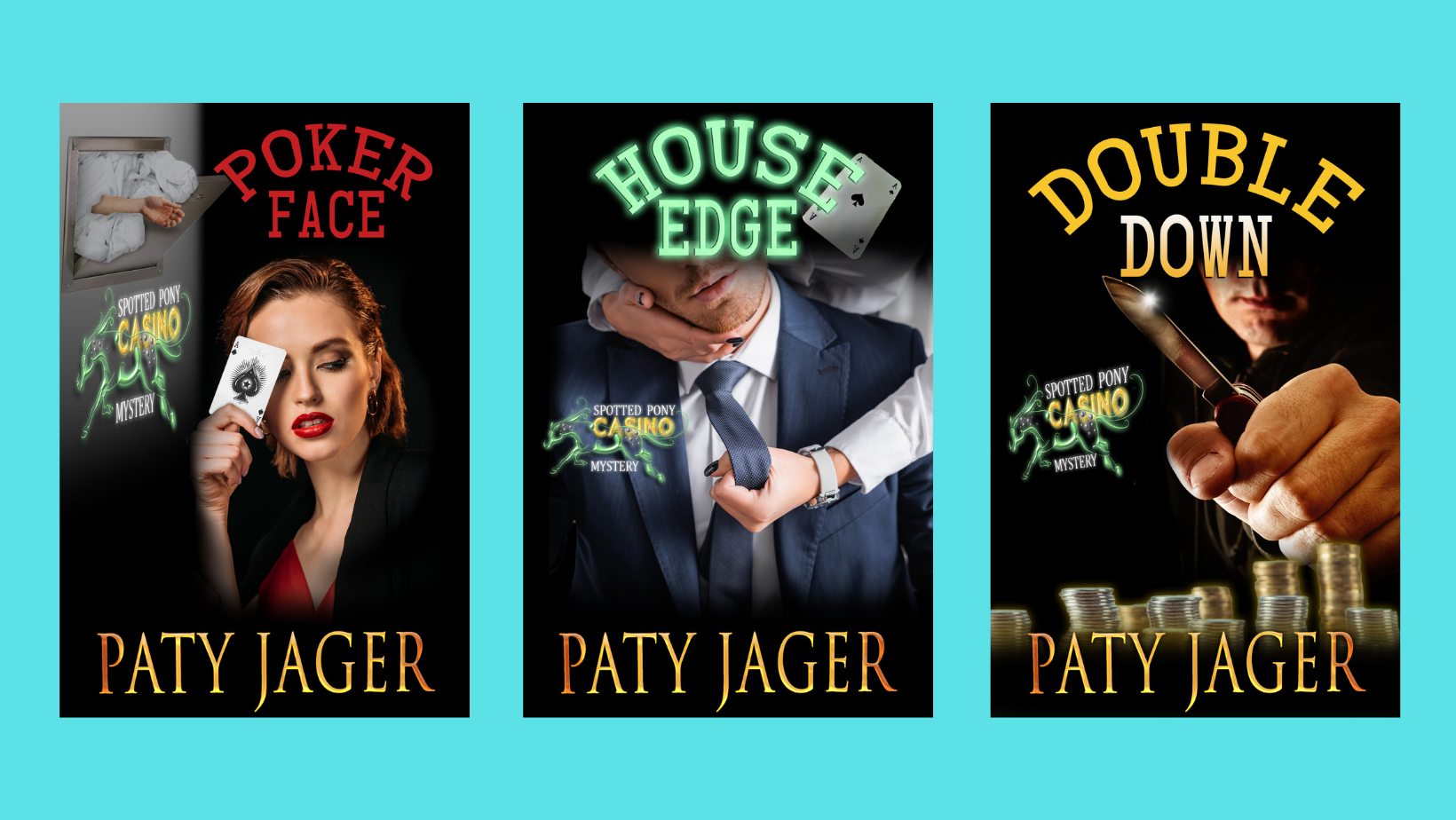
Here are the books I had made before the workshop:

These aren’t bad and convey a bit of the story. However, the survey taken by a marketing firm who works with all the big publishers and some of the larger writing organizations said that mystery/suspense/thriller readers don’t care if the image on the cover is anything like what’s in the book. They read the title first. They want a title that catches their imagination and is a play on words. Check- my titles do that. They don’t like people/faces on the books. They don’t mind shadowy figures and prefer covers that look like a puzzle. They want to see creepy, mysterious, or action depicted on the covers. And they prefer a description of the type of book: Mystery, Thriller, True Crime, Action Adventure, Suspense not A Novel.

And these are the new covers:

Simpler images, in-the-face title, and the word Mystery is easier to see than in the logo that sweetened the look of the books. These covers also leave more to the imagination.

I’m glad I had this workshop now and not a year from now when the fourth book would be coming out.

And I’m thankful I went with simple covers on the Gabriel Hawke books and I have a play on words for the titles.

It might be just a book cover, but it is the face of the book I want to draw readers into. So while pretty is nice, I want a cover that exudes mystery, intrigue, and a reader can’t pass without at least taking a peek inside.

What do you think of the change of cover?