Resolutions, goals and writing

By Sally Carpenter

Happy New Year! Did you make any resolutions on January 1? How many are you still keeping?

A few years ago I quit making New Year’s resolutions because my good intentions always faded in a few weeks.

Recently I replaced “resolutions” with “goals.” That seemed more manageable. “Resolutions” are too vague: “I will eat better.” “I will exercise.” “I will write more.” I have the personality type that craves closure, so such ongoing aims just wandered around aimlessly.

But goals are result oriented with measurable outcomes. “I will eat two more servings of vegetables each day.” “I will take a 30-minute walk three times a week.” “I will finish writing a novel by Dec. 31.” Now I have targets clearly in view and I can gauge now close or far I am from hitting the bull’s-eye.

I started 2015 with the goal of writing two cozies. As the year started, I became involved in other activities and fell into a writing slump. I’d just released my third book but sales were weak and I couldn’t get motivated to start the new cozy. After 50 pages the story wasn’t working. I wanted to dump the book and quit writing altogether.

My gallant publisher encouraged me to finish the book and told me to take my time (she doesn’t set deadlines for new releases). With no author events scheduled for the year, I had no compelling reason to shoot out another book right away. I could work like a dog and drive myself crazy or relax and enjoy writing. I could relish the Christmas season without the stress of doing promotion for a new book.

So I revised my goal. I’m looking at an early 2016 release for this book. I’m also setting a goal of one book a year and no short stories or other pieces unless someone makes me an offer I can’t refuse. Since I work a full-time day job, this seems a reasonable goal that won’t leave me exhausted and cranky.

I did complete one goal I set in 2015: read the entire Sherlock Holmes canon by Doyle. I did it, but don’t ask me to remember every story. A reading goal for 2016 is to keep chugging through the 15 Nancy Drew and 23 Hardy Boys books I bought some time ago at a library bookstore.

Another goal for 2016 is to start work on a presentation I hope to give in 2017 (more on this as it develops).

Also for this year, my local library asked me to participate in two events-the city’s annual arts festival and the library’s author panel. I said yes, of course. I’ll consider other author events if I feel the exposure and sales will justify the travel and effort.

On top of this, I have three ongoing monthly writing projects: my faith column in a newspaper and two group blogs including Ladies of Mystery. And there’s the cats to feed. This is plenty enough for my plate.

So 2016 looks like a busy year ahead. Let’s get going!

What are your goals/resolutions for the new year?

What Does it Take to Write Nearly 40 Books?

That was the topic I was given by a new Sisters of Crime group when I was invited to come and speak. Here are some of the things I told them:

I didn’t get published until I was a grandmother, but I’d been writing since I was a kid. And I read everything I could get my hands on.

My first book to be published was an historical family saga based in my mother’s genealogy. That wasn’t so easy–it was rejected nearly 30 times, and rewritten over and over–before it was finally accepted. So that meant I had it made, right? Not so, the editor that took the first book moved on. When I sent in the book written about my father’s genealogy, the new editor wasn’t interested. Took a long time before I found another publisher–and many more rejections.

The point is I wasn’t easily discouraged–and  despite many set-backs (crooked publishers, publishers who died, agents who did nothing) I kept plugging away.

When I finished the two family sagas, I wondered what I should write next? What did I like to read? Mysteries–so writing one seemed what I should do next.

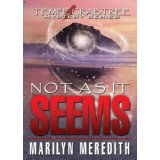
I started with a book I called The Astral Gift. It found a publisher right away–one of the crooks. It has been republished twice, once by the first publisher of my Deputy Tempe Crabtree series, and again by the publisher of my Rocky Bluff P.D. series.

The first book in the Rocky Bluff P.D. series, Final Respects, was published as an e-book long before anyone had a clue what that meant, and there was no such thing as an e-reader. Another publisher picked up the first two books in the series, but wasn’t a good relationship. A new publisher published the next two books in the series, and then decided not to continue as a publisher. The fifth, No Sanctuary, was picked up by Oak Tree Press who also reprinted the earlier books, and is still the publisher of that series.

The publisher of the first four books in the Deputy Tempe Crabtree series passed away. The series is now being published by Mundania Press.

In between all of this, I wrote other books, psychological horror, Christian horror, and my romance with a touch of the supernatural, and a few others that never got published for one reason or another.

I’ve left out many of the set-backs and problems I faced, but I’m sure you’ve gotten the idea and the reasons I’ve had nearly forty books published. It’s really quite simple:

  1. I learned from rejections and was willing to rewrite.
  2. Nothing that happened discouraged me.
  3. Most importantly, I kept on writing.

Marilyn Meredith, who also writes under the name F. M. Meredith


Hope, or, Why we love a good #mystery #series

thumb_IMG_1225_1024

At this time of year, it seems perfectly reasonable to write about hope. We gather with family and friends, cuddle up in front of a cozy fire, laugh, talk — and read, of course! As the song says, “we’ll conspire, as we dream by the fire, to face unafraid, the plans that we made …”

books

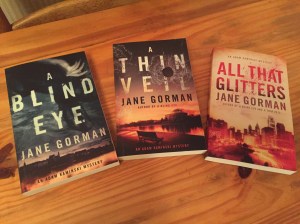
I’ve been thinking about plans and hope. Not my plans (or my hopes) but those of Adam Kaminski, the hero in the Adam Kaminski mystery series.

Adam has dreams. Or at least he did. Until his view of the world was shattered through one cruel, heartless act. That devastation changed his dreams and changed his life course. He left teaching to join the Philadelphia Police Department, intent on chasing down the bad guys who posed a threat to the safety of the people he loved and cared for.

My job as author is to force Adam to face his lost dreams, to help him strive for his lost hope. It’s not easy! Sometimes it’s so much easier to let him sit back, take life as it comes, watch from the sidelines even. But that wouldn’t make for very interesting reading.

In any mystery, the detective, whether amateur or professional, must throw himself into the path of danger. She must face her fears, thwart the villain. And in each book, that’s exactly what happens. But the attraction of a series is that other story, the longer story arc that the character follows over multiple books.

IMG_2298

For Adam Kaminski, that longer story sends him on a quest to find the truth about his family legacy and to find the hope that he lost, the hope that led him to be a teacher in the first place.

Whenever I’m tempted to make life easy for Adam, to let him zip through a case, solve the murder in front of him without delving too deeply into other mysteries, I remind myself of his dream. I owe him. He needs me to let him dig deeper, to send him to unknown places, so that he can find the answers he needs, the faith in humanity that will give him back his hope.

IMG_2039 (1)

Links to all available retailers for the Adam Kaminski mystery series can be found at my website.


WHERE DO YOU START YOUR STORY?

copy

I’ve been cleaning out some old files lately and came across some early writing I’d done. What I found particularly interesting was at least fifty pages of introduction I had written for my first novel, SO MANY REASONS TO DIE. Apparently when I began the book, I felt it necessary to bring my readers up to date on everything that had happened before the murder, so that they would know all the characters and their roles in the story.

So I introduced all the characters, got them all together in a Cover__8x5preliminary meeting, and then, many pages later, the murder happened. By that time, I now realize, I would have lost any readers who had begun the book. Readers want to get to the conflict in a reasonable length of time. They don’t want to know all the characters intimately before anything happens. That can be filled in later, in back story.

That is definitely the way modern novels—genre and literary—are written. Charles Dickens, who of course was paid by the word and wrote his books to be published in serial form, was expected to write a leisurely start, a lot of character and descriptive detail and to have the action led up to gradually. But, he wasn’t competing with television, movies, iphones, e-books, and all kinds of other distractions. He was the distraction. So, writing has changed, and writers have had to change with it.

I remember feeling that there was no way I could delete that first fifty or sixty pages, but I did, and no one missed it—not even me. The murder had already happened when the book opens, the murder scene is retold from various characters’ points of view, and the book is a lot shorter—and read by more people.

Sometimes, though, it’s difficult to know where to start a story. In PSYCHIC DAMAGE, due out this spring, I began with a murder: a driveby shooting. That was the beginning for quite some time and lasted through much editing, but finally I changed the story to the setting which had inspired its creation. In the building where I worked, there was a floor between the fourth and fifth floors, called the four-and-a-half. I’d had occasion to go up there from time to time and had thought several times of it being the perfect spot to Jans Photooverhear something mysterious—some foul deed about to be done or just having been done. It became the setting for the first scene of PSYCHIC DAMAGE when the protagonist, Eva Stuart, overhears talk about a murder which has been committed: the driveby shooting that had originally been the first scene. I think it reads better that way. I hope you’ll agree.

A book has to grab me within a few pages, either by action or character or setting. If not, I don’t continue reading. Sometimes I’m more patient, but I want to know what I’m reading about. What makes you keep reading? How long does it take you to get into what you’re reading or to put it down and say, “Boring!” I’d love to hear from you.

Ax-murderess or Victim by Paty Jager

paty shadow (1)I recently ran across a story in the local paper written by an Oregon State University Professor. He brought to light the first female murderer in Oregon’s territorial prison. Her story is interesting to my mystery writer mind. Back when she took an ax to her husband, they didn’t take spousal abuse into consideration for a woman’s actions. But this story lends itself well to several directions a mystery writer could take it.

Charity Lamb and her husband traveled to Oregon Territory in 1852 via the Oregon Trail. They had five children ages, nineteen to a newborn baby. The Oregon Territory at that time had few woman and the family was busy trying to build a house and starting crops.

The husband on several occasions had punched, kicked, and thrown a hammer at Charity leaving a large gash on her forehead.

The nineteen-year-old daughter fancied she was in love with a drifter. The man was also smitten with the daughter and showed Charity kindness. Mr. Lamb refused to allow the two to marry and forbid the daughter to converse with the man when he left the area. Charity helped her daughter write and mail letters to the man. Mr. Lamb caught Charity with one of the letters and told her he would kill her before he’d let her leave.

A day later as he was leaving to go hunting, Mr. Lamb turned at the gate, drew up his rifle, and aimed it at Charity. One of the children noticed and he turned the barrel, shooting into a tree. That day Charity and the daughter planned a way to murder Mr. Lamb. That night as they all sat down to dinner, Charity excused herself and walked back in with an ax and hit Mr. Lamb twice with it, making a two inch cut in his skull. Mr. Lamb wasn’t dead. Charity and her daughter fled to the neighbors and a doctor took care of Mr. Lamb until he died a week later. But not before telling everyone he didn’t mistreat his wife.

Charity and her daughter were looked upon as ruthless women, until the children were put on the stand and told of the abuse Mr. Lamb had given their mother. The daughter’s trial was first. She was acquitted. But at that time the courts couldn’t figure out how to try Charity. It was self-defense but not really as the man was sitting at the table not attacking her when she axed him. Which made it seem like insanity, but they found her sane.

And so, Charity Lamb received second-degree murder with life in prison. She was the only woman at the territorial prison. Years later she was sent to the insane asylum where she lived out the rest of her sentence, dying in 1879.

From this story I see spousal abuse as a means for someone to murder and in the case of the daughter she wanted to be with her love. Two good reasons to kill, well for a character in a murder mystery not in real life. But it does happen in real life, so using these premises in a book, would work in the reader’s mind.

What do you think? Would a story like Charity’s be plausible or unbelievable in a book today?

Website

Writing into the Sunset