Guest Blogger ~ June Trop

Meet Miriam bat Isaac

            I’ve modeled my heroine, Miriam bat Isaac, on the woman known as Maria Hebrea, who probably lived in Roman-occupied Alexandria (Egypt) during the first century CE. I encountered her work when taking a course on the Historical Development of Concepts in Chemistry.

Ordinarily chemistry is taught from the perspective of what we know now without delving into how the concepts evolved over the millennia. So, when the professor assigned a paper on a historically significant concept, I had no idea of a topic. That is, until in desperation, I went to the university library to roam the stacks.

I don’t remember exactly how it happened—did I bump into a bookcase while looking to the heavens for inspiration?—but a moment later, a weighty tome fell on my toe and opened to a page about Maria Hebrea. And so, I began to wonder how a Jewish woman from Ancient Alexandria became the legendary founder of Western alchemy and held her place for 1500 years as the most celebrated woman of the Western World.

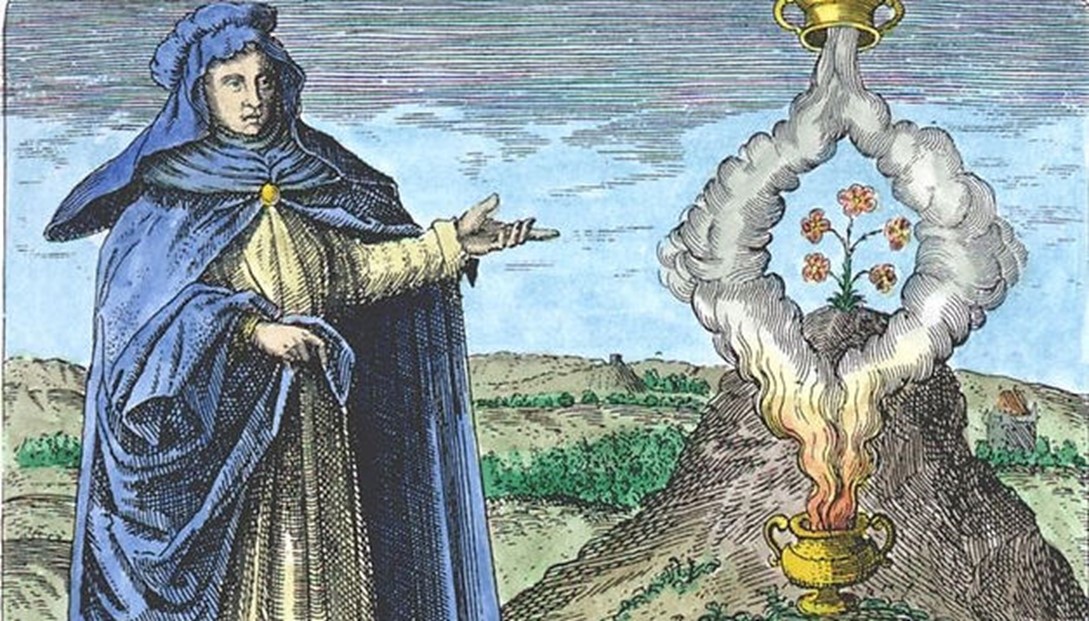
Sixteenth Century Depiction of Maria Hebrea

 In the alchemical literature, Maria Hebrea is also referred to as Mary the Jewess or Miriam the Prophetess, sister of Moses. Like her, all alchemists wrote under the name of a deity, prophet, or philosopher from an earlier time to enhance the authenticity of their claims or shield themselves from persecution. Although the tradition among all the crafts and mystical cults was to guard the secrecy of their work, persecution was a real risk for alchemists, who could be accused of and summarily executed for conspiring to debase the emperor’s currency.

Accordingly, Maria Hebrea worked anonymously. Hundreds of years later, however, another alchemist, Zozimos of Panopolis, celebrated her contributions. And so, with just a little tweaking, I had enough information to resurrect the once famous Maria Hebrea and create Miriam bat Isaac, my sleuth extraordinaire.

Miriam bat Isaac’s Adventures

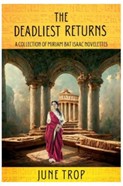
Published in paperback and e-book by Level Best Books in February 2024

Miriam bat Isaac has recorded her nail-biting adventures in novels, novelettes, and short stories. Her most recent volume, The Deadliest Returns, is a book of three novelettes about returning, whether it means going back or giving back. In the first, “The Bodyguard”, Miriam’s brother, a renowned gladiator, returns from the dead to serve as a bodyguard back home when his employer retires Alexandria.

In the second, “The Beggar”, an old man disguised as a matronly beggar, returns to Alexandria to learn the fate of the lovechild he was forced to leave behind to escape the wrath of Roman law. And in the third, “The Black Pearl,” Miriam, having come into possession of the cache of jewels heisted from the Temple of Artemis, sails to Ephesus to return the treasure. The prized gem, however, a uniquely lustrous black pearl, disappears. With the power to heal the brokenhearted and restore the health of the one possessing it, could the pearl’s mystical properties be the motive for murder?

If, like Miriam, you thrive on uncovering the guilty longings, secrets, lies, and evil deeds of others, then as Miriam’s deputy, you will have ample opportunity to indulge your fancies. So, escape the monotony of everyday life and plunge into that rousing world of adventure in three of her most daring exploits.

To purchase The Deadliest Returns from Amazon

For the e-book, click here: https://www.amazon.com/dp/B0CV4TTX3T

For the paperback, click here: https://www.amazon.com/Deadliest-Returns-Collection-Miriam-Novelettes/dp/1685125859

As an award-winning middle school science teacher, June used storytelling to capture her students’ imagination and interest in scientific concepts. Years later as a professor of teacher education, she focused her research on the practical knowledge teachers construct and communicate through storytelling. Her first book, From Lesson Plans to Power Struggles (Corwin Press, 2009), is based on new teachers’ stories about their first classroom experiences. 

Now associate professor emerita at the State University of New York, June devotes her time to writing The Miriam bat Isaac Mystery Series. Consisting of short stories, novelettes, and several books, some have won modest recognition, such as being named a finalist for the Killer Nashville Silver Falchion Award. ​

June, an active member of the Mystery Writers of America, lives with her husband Paul Zuckerman, where she is breathlessly recording her plucky heroine’s next life-or-death exploit. She’d love a visit at www.JuneTrop.com or on her Facebook page, June Trop Author, https://www.facebook.com/profile.php?id=100044318365389, where she publishes a blog every Tuesday afternoon about writing, the history of science, or life in Roman Alexandria.

Guest Blogger ~ Helen Hynson Vettori

  Helen Hynson Vettori wrote the sci-fi political thriller, Black Swan Impact, because of her utter dismay regarding the U.S. Federal Government’s response to SARS COVID-19. When COVID-19 emerged, she had already retired from the Department of Homeland Security workforce. During her years of service, she helped plan and prepare for biological threats, to include pandemics. She rose to a position as an emergency management fellow and even won an award for outstanding emergency management achievements related to her efforts for planning and preparing for biothreats. As the COVID outbreak gripped the world, she became increasingly appalled by official actions or lack thereof compounded by confusing messaging.
     During lockdown family phone calls or Zoom meetings, Vettori would ask questions like, “How can this be?” or “Why aren’t they using the pandemic plan with the strategies and messaging that have been in place for years?” In response, her sister turned those questions toward an idea. She challenged Vettori by saying it sounded like she had a story bottled up inside. That observant sister was right. Vettori wrote the first draft of Black Swan Impact, first titled Black Swan Catastrophe, in two weeks. Then both her brother and her sister helped the author to focus on certain aspects of the plot and characters, expanding and enhancing them until Vettori ultimately brought the sci-fi political novel to fruition.
     One can argue that Black Swan Impact is fiction and improbable. Yet there are truths woven throughout the novel, including the fact that some people will or won’t follow orders and strategies, particularly when they are politically motivated and garbled in messaging. The truths embedded in Vettori’s novel stem from her vocational subject matter expertise and life experiences. Helen Vettori NEMAA, NSFP-EM appeared in her signature block when she was a member of the US Department of Homeland Security (DHS) workforce. The professional acronyms signified her subject matter expertise in emergency management. She earned noted knowledge and skills over the course of years through education, valuable mentoring from those immersed in the field, applied applications, and leadership initiatives. She even received affirmation of her contributions by being awarded employee of the year award in 2013. However, her career in DHS as an emergency manager did not solely influence her as she wrote Black Swan Impact. Indeed, there were other elements that enabled her to create a plausible world facing an unimaginable threat from a novel, virulent pathogen. Her eclectic background afforded her unique, first-hand knowledge that she wove into the plot. Those other career paths were serving the National Capital Region as an EMT paramedic by joining the Bethesda-Chevy Chase Rescue Squad, acting as a senior medical intelligence analyst at the Protective Medicine Branch, earning a master’s degree in strategic intelligence, and becoming a staff member of Counter Narcotics and Terrorism Operational Medical Support.
     When it was time for her to retire from the federal government, she devoted her full attention to endeavors like travel until the 2020 pandemic lockdown barred that. Like everyone, she fell captive to the situation. Her frustrations regarding the muddled response led her to write, which became cathartic. Vettori credits that process for her to be able to move away from anguish and disbelief by channeling those emotions into the sci-fi political thriller, Black Swan Impact. They allowed her to craft a plot laced with credibility and striking scenes garnered from some of her amazing life journeys. Further, she hopes the story will enable readers to learn from the dystopian tale. “If readers think COVID ruined 2020,” she said, “then they can leap to 2113, to see how PYV more than challenges humanity in my sci-fi political thriller Black Swan Impact. Then readers can take away the implied warnings and combine them with our memories of COVID pandemic issues to help us to avoid repeating mistakes during future crises.”

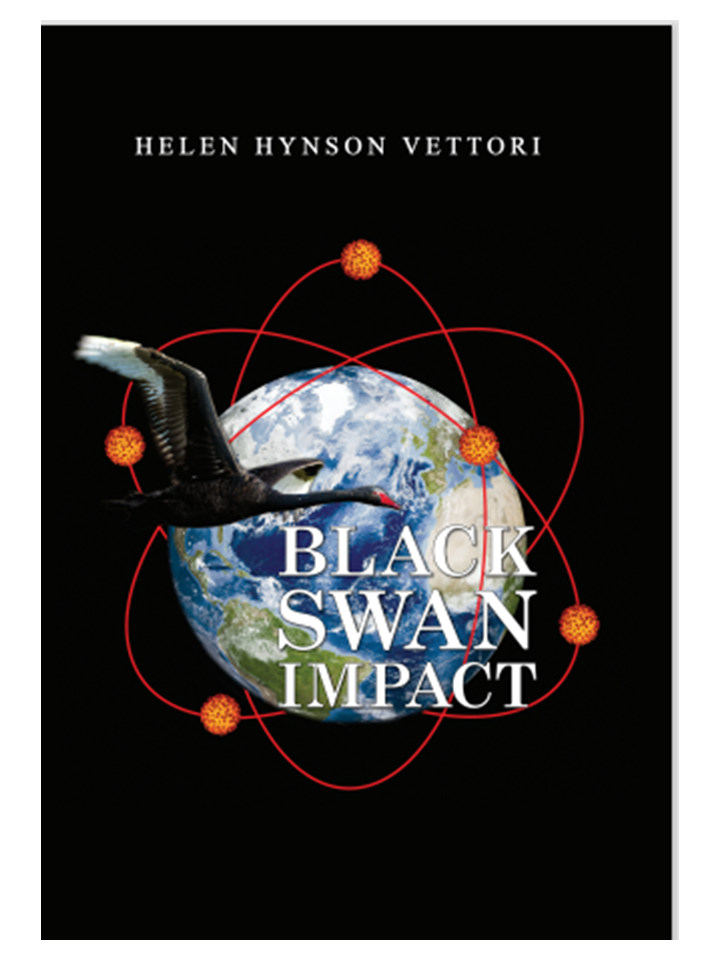
BLACK SWAN IMPACT

In 2113, people inhabiting the Earth believe that peace and prosperity will forevermore be their way of life on the third planet in the Sol System and elsewhere as they move further into space. That optimism bursts, when Dr. Syia Case, Director of Epidemiology from the National Institutes of Health and wife to the White House Chief of Staff, raises the alarm that Earth is facing an emerging pandemic crisis the likes of which had not been seen before. Initially, President Daniel Piper looks to Dr. Case as his favored subject matter expert to assist him and the White House Crisis Action Team plan and prepare for and respond to the novel pathogen. However, when Piper steers the United States toward questionable courses, Dr. Case and the strident voices on the task force find there is more than a virulent virus to fight.

 Austin Macauley Publishers – https://www.austinmacauley.com/us/book/black-swan-impact 

Amazon – https://www.amazon.com/Black-Impact-Helen-Hynson-Vettori/dp/B0CVLHG3TY

Barnes And Noble – https://www.barnesandnoble.com/w/black-swan-impact-helen-hynson-vettori/1144944171?ean=9798889100911 

A seventh generation Washingtonian Helen Hynson Vettori served the National Capital Region first by joining the Bethesda-Chevy Chase Rescue Squad as an EMT/Paramedic. Then she taught at a private school in Rockville, Maryland until 2001. Post 9/11, she joined the Department of Homeland Security workforce as the Senior Medical Intelligence Analyst at the Protective Medicine Branch. When that branch was defunded, she transferred to a new position at the National Incident Response Unit. There she performed all aspects of emergency management duties but specialized in planning and preparing for biological incidents to include pandemics. After retiring from the federal government, she followed passions like reading, traveling, and painting. Currently, she lives in Leesburg, VA with her husband. Vettori and her husband have two grown children both of whom are married and one grandchild. 

https://helenhvettori.substack.com

Instagram (@HelenHVettori), and Facebook (@ Black Swan Impact)

Painting by the author and photographed by Megan Genova

Guest Blogger ~ Kitty Felde

I’ve fallen down the rabbit hole of research. Dangerous, I know, because researching is a great excuse for not writing. But often you find unexpected treasures that can sometimes become an essential part of your mystery.

I write two mystery series.

The Fina Mendoza Mysteries follow the adventures of the 10-year-old daughter of a congressman from California who looks for the Demon Cat of Capitol Hill and the bird that pooped on the president during the State of the Union address. They’re actually a civics lesson in disguise, with teacher’s guides and a “Facts Behind the Fiction” blog.

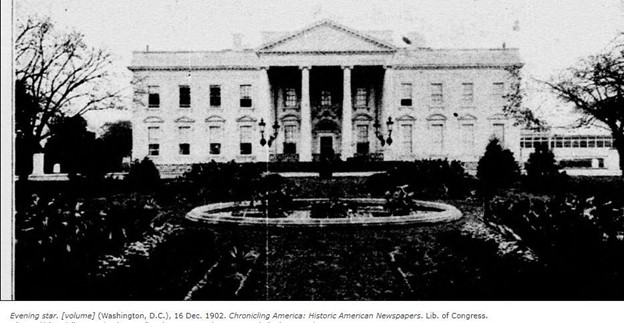
I also write a historical mystery series set in Theodore Roosevelt’s White House, featuring his outrageous daughter Alice as our amateur sleuth.

Both require research. A lot of it. In many ways, Fina is easier because I covered Congress for a decade and if I have questions, there are human beings on the Hill who I can tap for the answers.

For Alice, I’ve been using the vast newspaper records available online at the Library of Congress. Chronicling America, a partnership between the Library of Congress and the National Endowment for the Humanities, is a free, searchable database of American newspapers from 1777 to 1963. If you’re writing about an era before or after that, the LOC has a secondary collection of newspapers from 1690 to today.

There’s a map where you can discover ethnic newspapers across the country. Who knew there was a German newspaper in San Diego and a Finnish one in Washington state? There were dozens of African-American newspapers from Butte, Montana to Miami, Florida.

I fumbled around at first, but found absolute gold in the digital pages of Chronicling America.

Because Murder on the Potomac: a Princess Alice Mystery was set in 1902, I had so many questions.

How did police get around town. Did they ride horses? Drive motor cars? Bicycles? Who were they? A profile of “Well Known Men of the Metropolitan Police Force” in the Washington Times helped me create my policemen characters – including one who was active in the temperance movement.

What happened at an inquest of the era? The Evening Star  had a full report of one particular proceeding. Though I admit I was distracted by the ad for furniture on the same page that featured a $22 “Polished Mahogany-Finished Toilet Table.” A what?

I needed a place for a body to be discovered. The Washington Times reported on a years-long battle to either fill in or fence the James Creek Canal. Little more than a sewer, neighbors labeled it a “death trap” where five bodies a month were pulled from the mud.

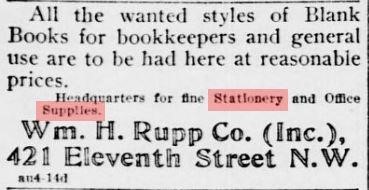
For one scene, I needed the name of a stationary store where my amateur detective could find a blank book to record her clues. I searched “stationary supplies” and found an advertisement at the top of the page in the Evening Star.

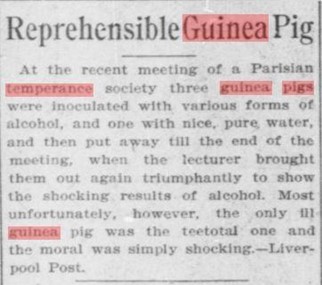
My favorite gem didn’t happen in Washington at all. TheWashington Times, like papers and TV news today, reprint sensational or odd stories from around the world. This one involved a pair of guinea pigs at a temperance meeting in Paris. The experiment was designed to demonstrate the destructive power of alcohol. One animal was given water, the other alcohol. Guess which one got sick.

There were challenges. I was overwhelmed. I wanted to read everything. (Anything to avoid staring at a blank screen and actually have to write. But my lousy eyesight made it difficult to see an entire page on a 13” laptop. I wasn’t sure how to find what I needed. And when I found a juicy tidbit, what was the best way to keep track of it? Was saving links the best way to capture the information?

I am no research genius, but let me save you the learning curve and share my tips:

  • SEARCHING:
    • Narrow down your search parameters. If your work is set in 1939, look for newspapers from that year. If it’s set in Pittsburgh, narrow your search to just papers from Pennsylvania.
    • Try various search terms. If you get too many hits with “police,” try “detective.”
    • You’ll soon discover which newspapers go with the sensational, which have the most advertisements. Ads are great to help you describe clothing of the era or which stores or restaurants were frequented by your characters.)
  • READING
    • If you’re using Microsoft Word, use the snipping tool. You can isolate the articles you want to keep, and save images for future reference or inspiration. And for those of us who are visually challenged, you can save it IN A LARGER SIZE. 
    • Images are also helpful while you’re writing. I often drop an image into the manuscript if there’s a quote I want to use or a detail that’s perfect for the scene. (And then I delete the image.)
  • ORGANIZATION
    • DO keep track of your links. It will save going back and searching all over again. Note the source and date of the article, just in case you do have to go back and search.
    • I’m sure your graduate school training will have given you a better way to organize your research. Me? I keep a simple Word or Google doc where I list topics I’ve researched. Sometimes I drop in a line or two, sometimes an image, but always a link. (At first, I kept a numbered “footnote” file at the bottom of the document, but since I’m not including my research in my notes, I gave up on that.)
  • PERMISSIONS
    • If you’re considering including images in your book, take note of the copyright and who owns it. You might want to start asking for permission now to use the material later, long before you’re done with the book. If the answer is “no,” that gives you time to find an alternate image.

Good luck! And happy reading.

Kitty

 WELCOME TO WASHINGTON FINA MENDOZA:

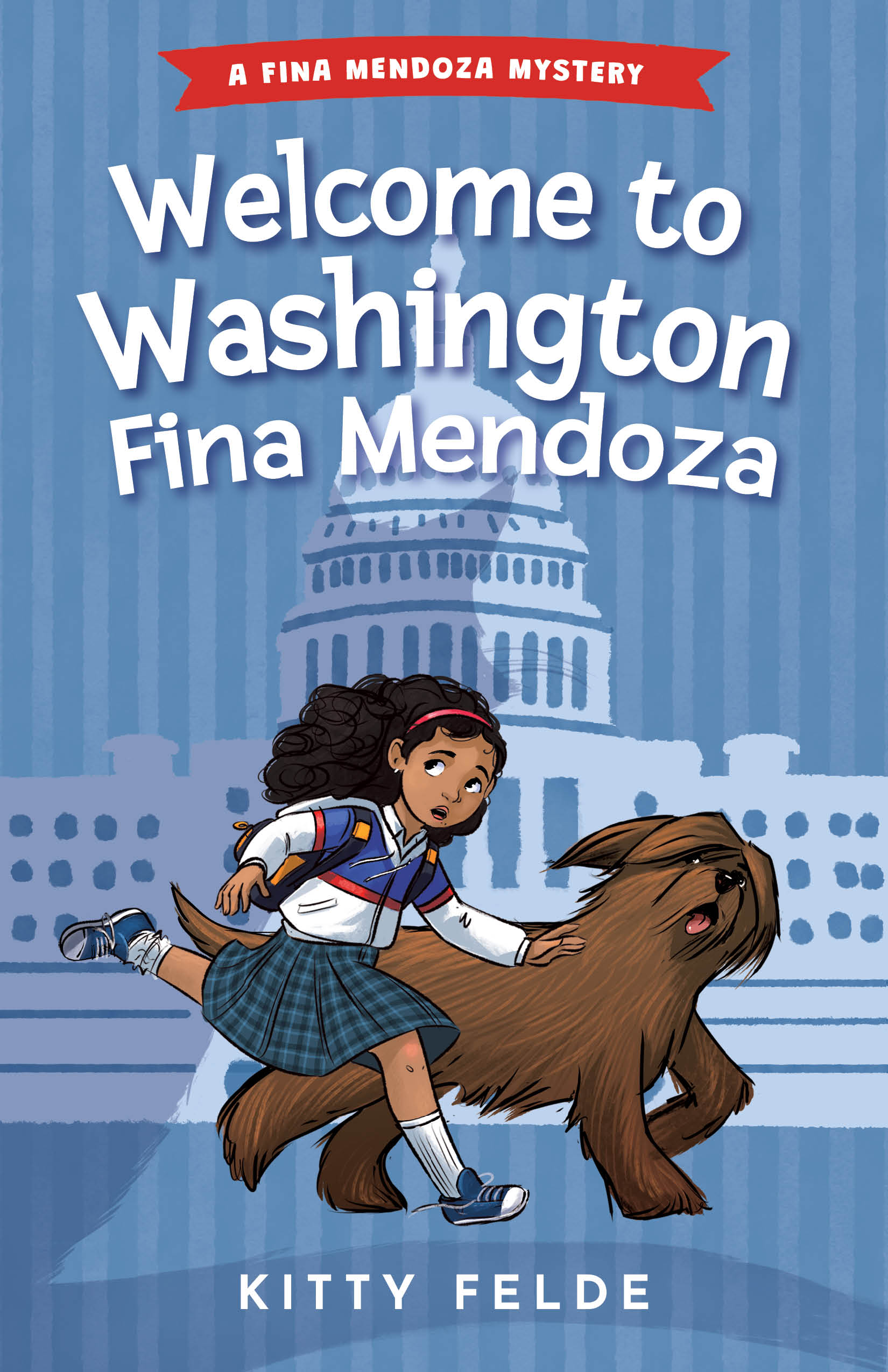
The West Wing meets Nancy Drew. Legends say if you see the Demon Cat of Capitol Hill, you’re cursed with bad luck. Ten-year-old Fina Mendoza just saw it. And the last thing her family needs right now is more bad luck. The only way for Fina to save her family from future “cat”astrophe is to solve the mystery of the Demon Cat of Capitol Hill.

 STATE OF THE UNION:

The 10-year-old daughter of a congressman solves mysteries in the U.S. Capitol with the help of a big orange dog named Senator Something. Her latest case: find the mysterious bird that pooped on the president’s head during the State of the Union address. Is it Chickcharney, the legendary bird from the Caribbean? Did it fly to Washington D.C. with a secret message for the president? Or Congress? Or is the message for Fina from her mom who passed away not so many months ago?

 LOSING IS DEMOCRATIC: HOW TO TALK TO KIDS ABOUT JANUARY 6TH:

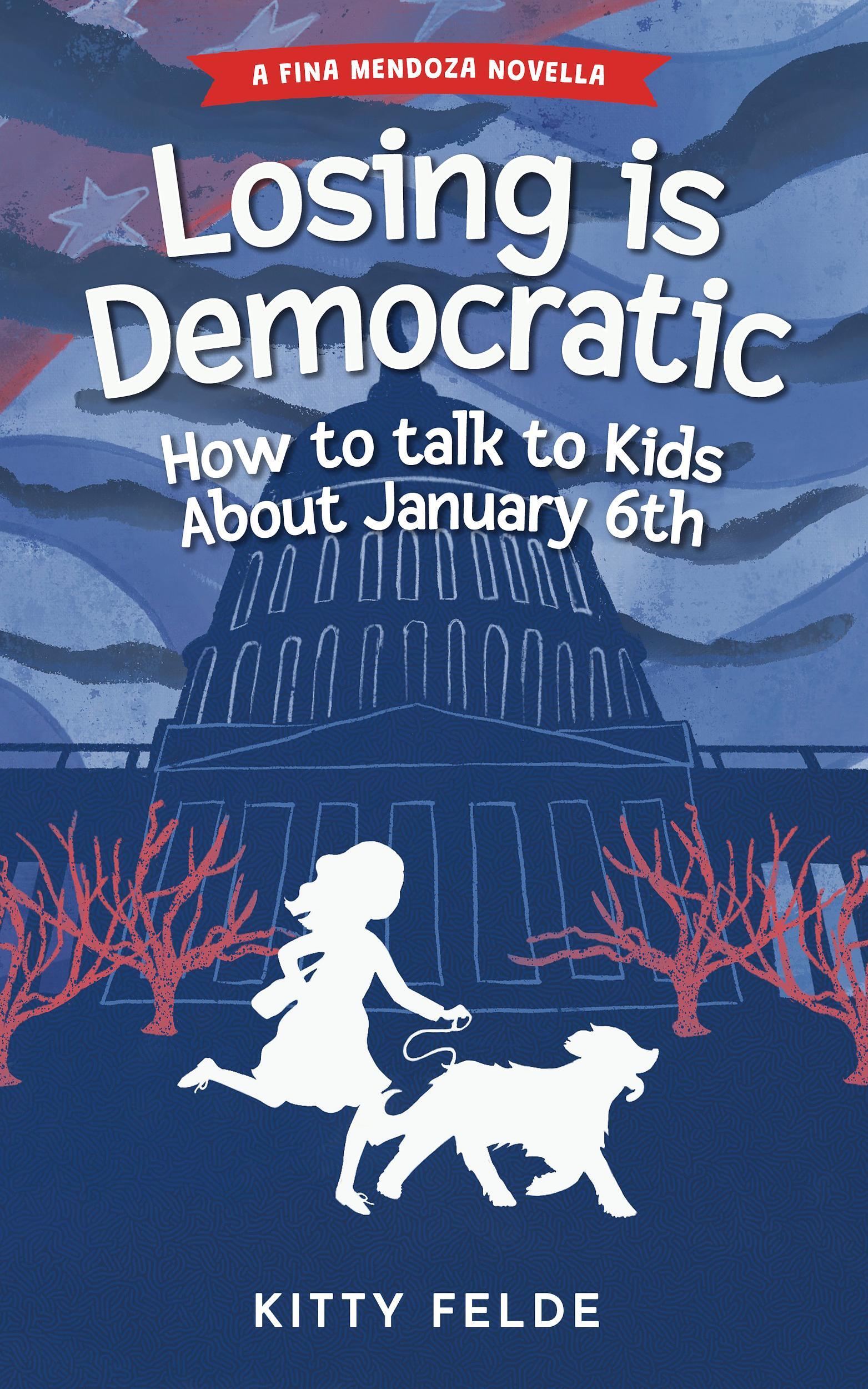
A Latina protagonist of spunk and smarts worries about her congressman father on January 6, 2021. Fina Mendoza, our amateur detective, is in the middle of an investigation to find out who stole the 5th grade pizza. But all thoughts of detection go out the window as she watches on television as a mob breaks into the Capitol. Is Papa okay? Most of Fina’s classmates have parents who work inside that building as well. Their teacher calms their fears turns the event into a teaching opportunity and students discuss the importance of both winning and losing, whether it’s in a baseball game, a reading competition, or an election.

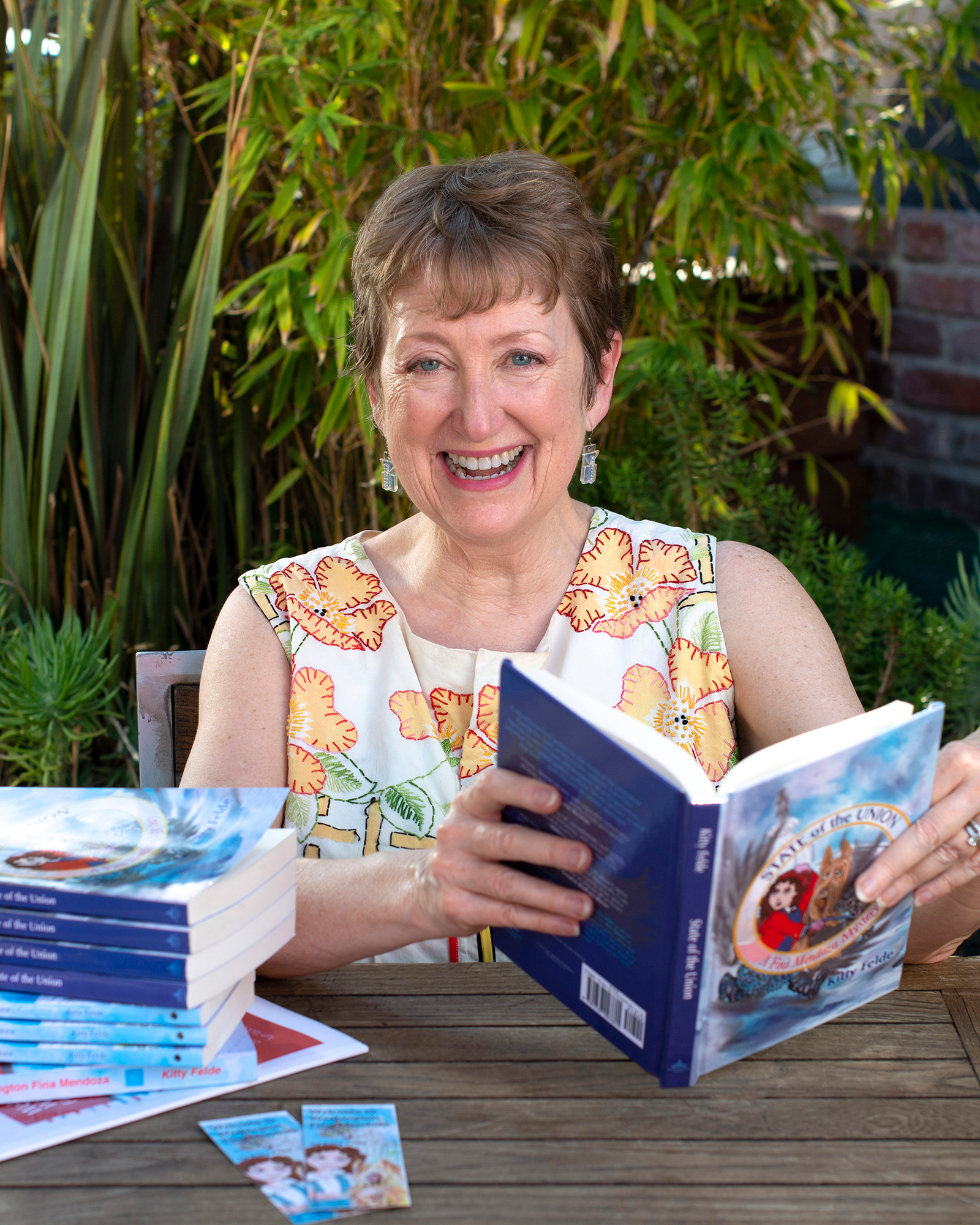
In addition to her Alice Roosevelt mysteries, Kitty Felde is the author of Welcome to Washington Fina MendozaState of the Union, and Losing is Democratic: how to talk to kids about January 6th – mysteries for children designed to introduce civics education. They are also available as an episodic podcast The Fina Mendoza Mysteries. Kitty is an award-winning public radio journalist. She is also Executive Producer of the Book Club for Kids podcast.

X – https://x.com/kittyfelde

Facebook: https://www.facebook.com/CreatorofFinaMendoza

LinkedIn: https://www.linkedin.com/search/results/people/?firstName=kitty&lastName=felde&origin=SEO_PSERP&sid=4zI

Instagram: https://www.instagram.com/kittyfelde/reels/

I See Characters

Every writer puts a bit of the people around them into their characters. We can’t help it. A friend has a quirk that we like and we give it to a character. A relative has a situation that would make for a great subplot, we use it. Even though we are writing fiction, bringing in the bits of real life that we see brings those fictional characters to life.

Last month while working at a NIWA (Northwest Independent Writers Association) booth selling my book and those of other authors in the organization, some unusual characters came by and talked to us. One of my strengths is being a good listener. Only there does come a point with some people when even I started getting antsy and wish the person would move on. Either physically or with their topic.

One person who has stopped by our booth the last two years that I’ve been there is a man who likes to discuss how the government is listening into everything that is going on and how he believes the aliens will soon return to save the planet. He gets very adamant about why he lives off-grid and how we are all being tracked. I’m thinking someone with his perspective on life will show up in one of my books.

Another young man, well, young to me, I believe he might have been late twenties or early thirties. He had a British accent, wore his hair in a shoulder-length bob, and had on a typical t-shirt a male his age would wear and then he had on a skirt that was tight enough across his hips that you could tell he was male if his voice hadn’t given him away. He had a dog on a leash. As he talked to us, he constantly pushed the hair away from his face, adjusted his glasses, and kept his dog from wrapping the leash around his legs. He was quiet, talked a little about the books and how he’d thought about writing, but he didn’t have a clear vision of what he wanted to write.

The third person who captured my attention and sent a chill up my back was a woman. She walked up to the booth dressed in a long flowy skirt, matching sweater, and a silk scarf around her neck. She looked like the wife of a businessman or a professional herself. Her smile was wide, her eyes lit up with the smile and she said, “Hello. I’m here to spread love. Elon Musk and I are building a world filled with love. Come join us and together we can make the world a better place.” I smiled and said, “That’s nice. The world could use more love.” She asked about a couple of the books, then reiterated that she and Elon needed help to spread the love. I nodded and smiled and then- the creepy part. Her eyelids started fluttering, her eyes kind of rolled up, and her smile disappeared. When she stared at me anger simmered in her eyes and she said, “I know where the bodies are buried. I do. I know where the bodies are buried.” I had no words for that response from her. Then as quickly as she’d changed, the smile was back and she said, “I have more love to spread, ” and walked away.

I was speechless for a few minutes. The other member of NIWA who was in the booth with me had been on the phone while I was talking to the woman. I sat down, grabbed a pen and a piece of paper, and wrote down everything she said and how she looked.

And that woman is a secondary character in my September release, Down and Dirty, book 6 in the Spotted Pony Casino mystery series.

It is encounters like this that give writers the fodder for their stories.

The Slogging Beginning

I am doing something I haven’t done in some time. I am trying to write a 70k+ book in a month. I want this book off to my critique partners and beta readers by the first of August so I can have it polished and uploaded for release before I leave on a month long vacation the middle of September. Have I put a lot of pressure on myself? Yes! But it will be worth it to be between books while I’m enjoying my vacation.

Most writers know about the saggy middle. It’s where in the middle of the book, sometimes it feels like the pacing has slowed or the story doesn’t feel as fresh and vigorous as it started out. Many have had this happen in a book more than once. But with editing and rewriting it can be given a nice crisp revision.

I’m finding the beginning of this book, not the story, the story is moving along fine. It’s the having to stop and research something that takes time and then takes me off on, ‘What if I did this?’ that turns the story in a different direction. I have had that happen on this particular book four times since beginning the book. I’m a third of the way into the book and I’m finally getting into the rhythm of the story and not having to stop so much and look things up.

So my slogging beginning is the fact, 1) I was at an event and met a person that was so ingrained on my brain after our interaction that I had to put her into this book. Which then changed the direction I had started out on. 2) I decided to make a business I know nothing about as a primary setting to the story. 3) Due to the character I added, I needed to look up mental illnesses. 4) Trying to add information from a short story I put in an anthology required me to reread the short story and figure out how to make it all play into the main plot.

Slogging in this instance is not the writing or the story line, it is the fact I have to keep stopping to research information I hadn’t known would come up with I started the story. Slogging is the hours I’ve spent reading and researching when I wanted to be writing.

However, no matter what you write there is always a need for some research. When I wrote historical western romance I had to research history and how they dressed and lived. In mysteries it’s all about type of wounds, types of crimes, occupations, and yes mental illnesses. Not to mention locations and oh so many things that you would think I wouldn’t need to look up since these are contemporary mysteries. But because of the internet and everyone having access to information, you have to make sure you do even more research so no one can say you don’t know what you’re talking about.

I rarely have a saggy middle and this is the first time I’ve had a slogging beginning. But I can tell you, from here on out this book won’t be sloggy or saggy! I love when I hit the middle of the book and it is like wild downhill ride as I pull all the clues and red herrings together and carry the main character to the revelation of the killer.

Endings are always like a runaway truck!

If you are looking for a good deal on an audiobook bundle, the first three books of my Shandra Higheagle mystery series is available for $0.99 at many audiobook vendors until the 10th as part of the Indie Audiobook Deals. https://indieaudiobookdeals.com/