Discovering the Story

This post is both an apology and a discovery. I went off this morning thinking I had attended to everything that needed attending to, and then came home to realize I was wrong. So, late but here is my post along with my apologies.

When I began working on the Anita Ray mystery series I knew there would be a wedding in the story arc, and I assumed I knew who the bride would be. After two entries in the series I zeroed in on the prospective bridegroom. But after another two novels I found I was wrong. The character who was the obvious candidate wasn’t all that obvious anymore for reasons not known at first. I don’t want to give away what happened to him, but he lived to appear in a later story.

I continued with the fifth book in the series, In Sita’s Shadow. Each mystery is named for an Indian deity whose temperament matches one aspect of the story. Sita is the wife of Lord Rama, and is considered the quintessential wife, the spouse deified, her perfection unmatched in this world or any other. 

The choice of this figure for the title was meant to underscore the character of one of the main figures in the plot, but then the story got out of hand, and all of a sudden I had a love story in my lap.

Many Indian weddings, if not most, are still traditional, which means they can take hours. Every step in the ritual must be exact—the roles of the relatives are strictly prescribed, the recitations must be exact (no stumbling over the lines), and the families must meet all the requirements.

I thought it would be fun to write about a traditional Malayali wedding adapted to modern requirements, and it was. The first ritual is the presentation of the dowry. Among the Nayars in Kerala, the groom is required to provide the dowry; his “gifts” must be exactly what was agreed to. The gifts are inspected by the father of the bride and his agent before the ritual can begin. There’s something about watching two men with their agents calculating the pile of gold sovereigns, jewelry, saris with gold borders, and keys to cars or motorcycles, and more.

The guests watch it all. Women sit on one side of the room, men on the other, and we check out what the groom provided. I once made the mistake of saying, “So is that what the groom offered to give?” And the father of the bridge pounced and said, “Must give!” He was adamant, even fierce. Marriage is serious business in India.

The wedding in In Sita’s Shadow is adapted to the needs of a Westerner and an Indian woman, and figuring out how this would work required creativity as well as consulting with an anthropologist, but we figured it out, and it’s now one of my favorite scenes of all I’ve written about India. Auntie Meena, originally a skeptic of this relationship and the marriage rites between them, is won over. I hope the readers will be too.

Coming in August, In Sita’s Shadow: An Anita Ray Mystery.

Be There – Using ALL the Senses in Writing

Writers often hear “write what you know.” I have found that to be bad advice for many experts, as you’d be amazed how many knowledgeable people simply cannot explain their expertise to us common folk, so they need a translator, in the form of a ghost writer or a developmental editor. I’ve worked as both. But I digress.

Most of us fiction authors cannot experience everything that we write about. God forbid that we actually embezzle funds, dump toxic waste, set fires, or kidnap, torture, or murder people. We must rely on our imaginations or on accounts documented by others for all those crimes. But I do think it’s important to include sensory details from real experiences whenever possible.

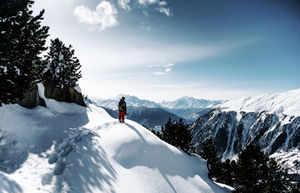
So, when I’m out hiking, I’m always trying to truly experience everything as much as possible so I’ll remember the details when I write my Sam Westin mysteries. I would never wear earphones because I want to plug into my memory bank a wide variety of natural sounds: the low whoop-whoop-whoop mating call of a blue grouse, the groan of tree branches rubbing against each other, the roar of a waterfall, the crunching of my snowshoes on icy snow, the rumble of a distant rockfall. Scents are important, too: I inhale into my memory the grape-juice odor of blooming lupines in hot sun, the tang of broken pine needles, the whiff of smoke from a forest fire on the other side of a mountain range.

Touch is usually the most noticeable sense for me when I’m on a trail: I notice the razor-sharp edge of broken granite as I slice my leg on a rock, the stickiness of tree sap or the dampness of moss on my pants from the last place I sat down, the feel of a breeze drying the sweat on my back in summer, the sting of wind-driven sleet against my bare face in winter, the annoying bite of a blackfly in spring. In the Pacific Northwest, we often even have tastes along the trails: the tartness of salmonberries, the sweetness of huckleberries, the numbing taste of licorice ferns, the crunch of fiddlehead ferns.

And of course, sights are absolutely crucial: the myriad greens of a dense forest, the contrast of gray granite against snow, the awesome grandeur of a volcano, the terrifying crevasses in a glacier, the miracle of simply viewing the ocean or the sea of mountains that is the North Cascades. I try to be equally present, a sort of sensory sponge, when I’m kayaking or scuba diving, soaking up all the sensations the experience has to offer, because details can help readers experience the world a writer creates with words.

I’ve attended the Writers Police Academy twice. It’s an incredible experience, where mystery writers undergo some of the same training that police officers or forensics specialists or firefighters receive. I’ve learned about the difficulties of getting and matching fingerprints (fascinating), studied cases to distinguish suicides and accidental deaths from homicides (often harder than you might think), studied blood spatter (gruesome), learned how to clear a building in which an armed suspect was hiding (incredibly stressful), and shot an assault rifle (absolutely terrifying), just to name a few memorable sessions.

Seeing the wall on the US-Mexican border was an experience I’ll never forget, either, and learning from all sides about its impact on the environment and cultures was invaluable. I’ve been there twice. I absorbed so much that I got a whole book, Borderland, from the brief time I was there.

When I sit down to write a new book, I try to incorporate as many sensory details from my experiences as possible.

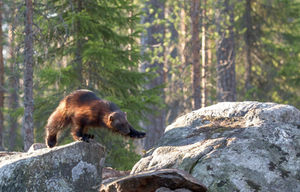
My next Sam Westin mystery, Cascade, includes a wolverine, an avalanche, and a collapsed building. I’ve never seen a wolverine except in a zoo, so I had to collect that information from books and articles. The book will be out in late August or early September. I’d still like to think a wolverine will appear somewhere in my future, in real life.

I’ve never been in an avalanche (thank heavens), but I’ve seen a few, and I’ve been through avalanche training. I do know what it feels like to fall through a snow bridge (only a couple of feet in my case, again thank heavens) and I’ve been caught in a whiteout in the mountains when the snow is so thick that you can’t distinguish up from down until you fall. And at the Writers Police Academy, I crawled through a simulated collapsed building in the dark. It’s more difficult and more painful than I imagined, but (yes, I’m still thankful) I didn’t have the danger of tons of debris looming above me, as many victims or first responders might in real-life situations.

I encourage everyone to do as much of what interests them as is possible. Even a frightening experience is enriching. I’m grateful that I’ve had a wide variety of memorable experiences to help with my writing, and I hope to have many more.

To Prologue or Not to Prologue (#2) by Karen Shughart

I promise this isn’t a duplication of Paty Jager’s blog from last Monday. Paty and I frequently seem to be on the same page when choosing topics for our monthly blogs, and when I read her title, I was terrified that my extremely rough draft had somehow made it’s way into scheduling instead of her very well-written and polished one. Fortunately, my fears were allayed when I saw her name as the author. Whew! And while our titles are the same, we’ve written from our own points of view.

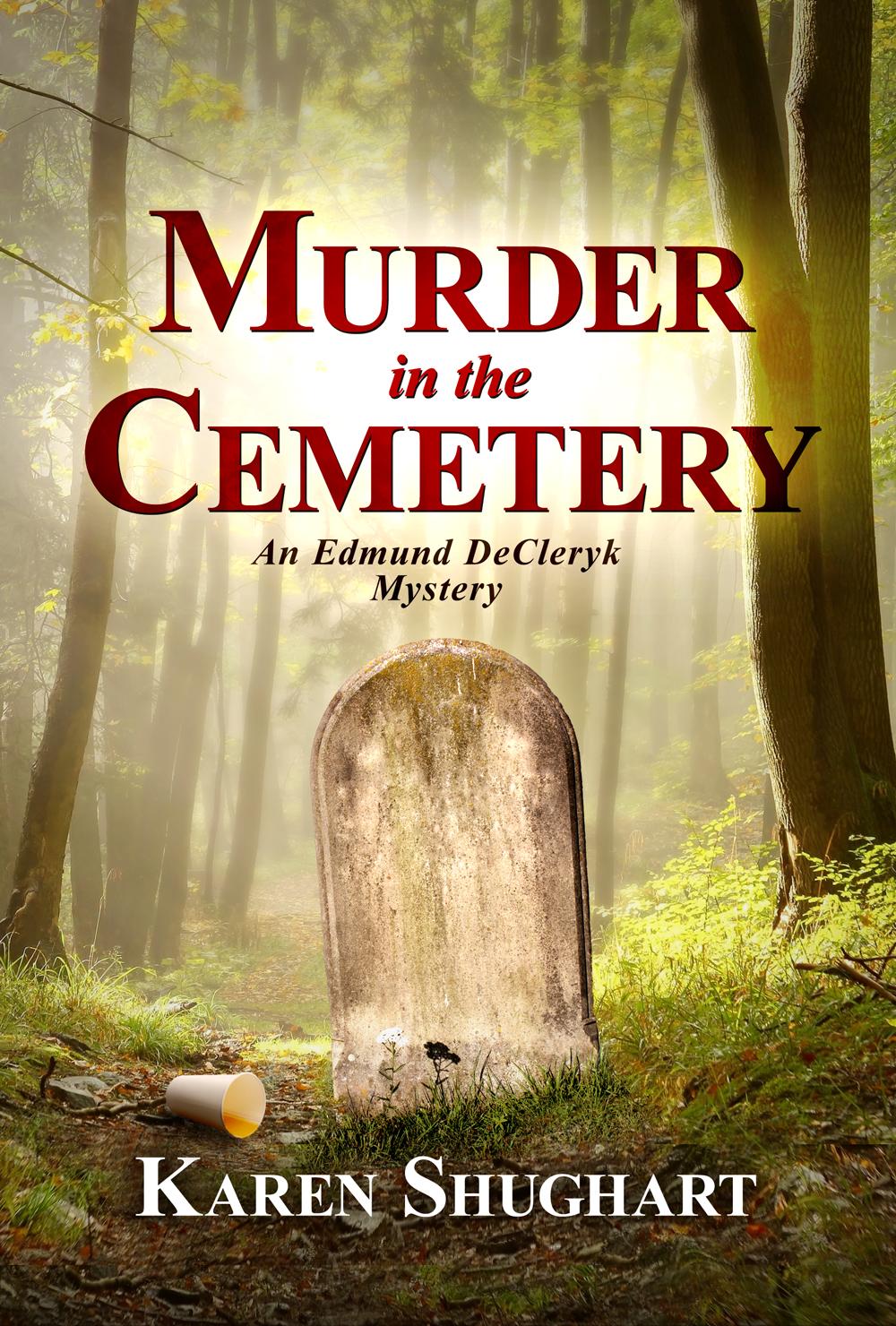
Each of the books in my Edmund DeCleryk Cozy mysteries has an historical backstory that’s related to the crime and provides clues to why the murder was committed. In book one, Murder in the Museum, the prologue introduced a character whose journal, written in 1845, was discovered at an archeological dig in Toronto, Canada. The prologue in book two, Murder in the Cemetery, ties the crime to a battle that occurred in Lighthouse Cove, NY during the War of 1812.

My creative juices really started flowing in book two, and I played around with writing two prologues: the first as described above; the other to introduce the setting, the month of May. You’ll have to read the book to learn why that’s important. My dilemma was which to keep and which to discard. I realized I was emotionally attached to both, so decided to get my publisher’s advice-few books are written with two prologues. Her quick response: “go for it,” and I did.

I’m heading down the home stretch with book three, Murder at Freedom Hill. Yet again, I’ve written two prologues: the first, the historical backstory – it takes place in 1859 in Lighthouse Cove during the abolition movement, when fleeing slaves boarded a schooner to transport them across Lake Ontario to Canada. The second is set in November, the month when the harvest is over, and the chill and frost of winter lurk just around the corner.  

What I love about writing this series is that I don’t have to follow all the rules. It doesn’t mean I am undisciplined; I certainly know how to craft a story from beginning to end, but I enjoy taking liberties with commonly accepted writing practices when it makes sense.

It’s up to us mystery writers to decide how our stories will be written. Some begin with the murder; others lead up to it, it can go either way. It’s the same for prologues. Sometimes a book needs no prologue, but at other times a prologue can set the scene and enhance the plot. And at times, two prologues are even better.

Balancing Balls and Weather Machines – A Look at Setting


by Janis Patterson


The temperature has been in triple digits for the last week or so, but in the wee hours of the morning it does fall to the low 90s…


And here I am, wrapped in furs in the middle of a snowstorm. Sadly, it’s only in my mind, as I am working madly to meet the deadline for my Christmas anthology novella. It’s hard to keep one’s mind on snow and cold and greenery and holly berries and sleigh rides when in spite of air conditioning and skimpy sundresses there is sweat dripping from the tip of your nose.
However – I have been complimented about how real and evocative of time and place my previous Christmas novella anthologies have been, and they were written under similar unseasonable (for the work) circumstances, so I guess I’ve been doing something right.


But isn’t that the job of a writer? To create a world into which the reader can immerse themselves, feeling, seeing, knowing what the characters feel? To transport the reader into that world?
Writers are creators of worlds, whether that world is a snowbound country estate, a shack beside the cool orange seas of a distant planet, a year distant in either the past or the future, or even the here and now of our own home street. And it is our job to take the reader there.


So how does one do it? That varies; if it is a here-and-now story set in a pleasant American suburb, that is something to which most readers can relate without too much exposition or world building, even if they do not now nor have ever lived in one. On the other hand, if the story is set on a distant star, where gravity is minimal and the three orbiting suns insure that darkness is an unknown concept, the writer has to do more spadework in creating this world. Same if the story takes place in a great stone castle in the Dark Ages; most people have at least seen pictures of castles, but have little to no knowledge of the socio-political-religious attitudes/beliefs which not are only reflective of the time but which formed the society and belief systems of the time.


Another thing that writers must be aware of is that once they have created this world – be it tidy American suburb, distant star or long-past history – they must be true to it both in construction and action. For example, there is no way I could believably have the characters in my Christmas novella go out and sunbathe in between snow flurries. If my story were set in the distant future where the weather was controlled and there were strict time systems for each variety of weather, it could be perfectly believable that my characters could turn off the snow, set the sun to ‘melt’ and then go out for a nice long sunbath… as long as I had set this part of my world up correctly.
And the final thing to remember is once your world is built and works and you are sure you will have no trouble in maintaining this soap bubble of belief, you must craft a story – a good story – that will fit into the strictures of these parameters and profit from an interaction with them.


Taken like that, the prospect of writing a novel becomes both overwhelming and terrifying, all too often leaving the poor writer feeling like a trick seal who must balance eight or ten balls on its nose. It’s a wonder anyone ever writes.

To Prologue or Not to Prologue

I’m currently working on the next (#10) Gabriel Hawke Novel. It will be set up in the style of book #2. I have a person who saw a murder in the wilderness and my character Hawke will find them. Just like book #2, I’ll be starting it with a prologue where the character witnesses the killing and then runs in fear for their life.

To me it makes sense to start the book, with a prologue, showing the person watching the act happen and then fleeing, so that will need to be in their point of view. Then as the story progresses, there will be things Hawke (my main character) won’t know or see, but the reader needs to know through the fleeing person’s point of view so I will have the two points of view in the book.

Most of my Gabriel Hawke books are in my main character’s point of view unless there are scenes that the reader needs to see what my character can’t see. That’s when I use a second point of view.

This book, I’m still working on the title, has been brewing and stewing in my head for nearly 6 months. It came to me as I was writing book #9 that released the end of June. That’s how my brain works. While I am working on a current book in a series, my mind is already moving to the next book. It may be the villain creeping around in my brain, or a setting, or a premise. But as I typed the words to the work in progress, the other story is working in the background.

Back to prologues. There has been a book or two I’ve read where the prologue was flat or didn’t feel like it had anything to do with the story that followed. But there have also been books where the prologue drew me into the story, and I couldn’t wait to read more.

As with all writing, it is the execution of the timing, the words, the characters that makes a reader continue or stop. That and a good, as in a mystery book, whodunit. Something to keep the reader turning the pages and reading well past the time they should turn out the lights and sleep.

Unless you can pull them in at the beginning, with a good prologue, first sentence, first paragraph, first page, first chapter, you could possibly lose the reader. And that’s why I ponder the question: To prologue or not to prologue.

What do those of you reading this post think?

Here is info about my newest release: Owl’s Silent Strike

Book 9 in the Gabriel Hawke Novels

Unexpected snowstorm…

Unfortunate accident…

And a body…

What started out as a favor and a leisurely trip into the mountains, soon turns State Trooper Gabriel Hawke’s life upside down. The snowstorm they were trying to beat comes early, a horse accident breaks Dani Singer’s leg, and Hawke finds a body in the barn at Charlie’s Lodge.

Hawke sets Dani’s leg, then follows the bloody trail of a suspect trying to flee the snow-drifted mountains. Hawke is torn between getting the woman he loves medical care and knowing he can’t leave a possible killer on the mountain.

Before the killer is brought to justice, Dani and Hawke will put their relationship to the test and his job on the line.

https://books2read.com/u/bw19DG