On Husbands, Fellow Writers, and Cats

As we drove across the San Joaquin Valley watching for high water, my husband asked me about a plot I was developing. He is a great listener, asks the kinds of questions that lead to better plots, and as someone who rammed through most of his nine lives, has a fine background in adventure. So, he was all on board with my plot involving three boys disappearing from school in hopes of floating down a tributary or two to the Mississippi River. Mind you he used up one of his lives on a homemade raft in a river at flood stage when a mite older than the boys in question.
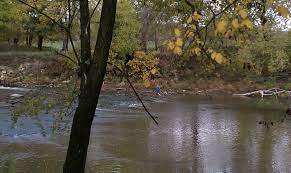
Spoon River

He asked why the boys hadn’t chosen the closest tributary to their hometown. I explained it was across open ground and farmland. A far more romantic river was nearer, treelined, and wound around for miles before merging with the Illinois River, then the Mississippi. Besides, who wouldn’t want to float down Spoon River?

Then he asked what happened to the boys. When I told him. He gave me that look. You know the one, somewhere between are you mad and don’t do that, just don’t.

Holy smokes. I immediately began to retool the plot. I’d like to say this was the first time I’ve received the look, but it isn’t.

As for the rafting part, he is an expert on being swept off a self-made raft, driven under trees, and pounded on the bottom of a river dashing to the ocean.  And if I ever need to know what it is like to leap off a cliff onto a beach, I know where to go.

Writers/readers who read a few drafts…

… and gently steer. Having read my latest book, two readers made the same comment. I responded to each that the paragraph in question foreshadowed the book’s conclusion.

Then, I read it again.

Here it is: “I believe I did. But, Cora, if you know who struck down that poor girl, you must tell me true. You must bear witness to it!”

When what was meant was: “I believe I did. But, Cora, I, too, have heard the Railtown men grousing that Eliza had another suitor. If you suspect a second suitor and know his name, if he exists, you must tell me.”

Notice any difference?

And later, another character says: “Constable McKie is but one who believes you know the killer’s name. And there is one man who will do anything to stop you from revealing it. Now, do you understand?”

Versus: “Constable McKie is but one who believes you think Michael Thomas innocent but are less sure of Eliza’s other suitor. Even if innocent, that man might wish to stop you from discovering his name hoping for a future in this town. And if he is Eliza’s killer? Now, do you understand?”

Thank heavens for readers, right?

Cats

I have a Russian Blue named Blue because it is a lot better than Do-do which was his given name. He is not the sort of cat who sleeps on computers or printers, but he is compulsive about his schedule like the Germans operating the Louisa in The African Queen.
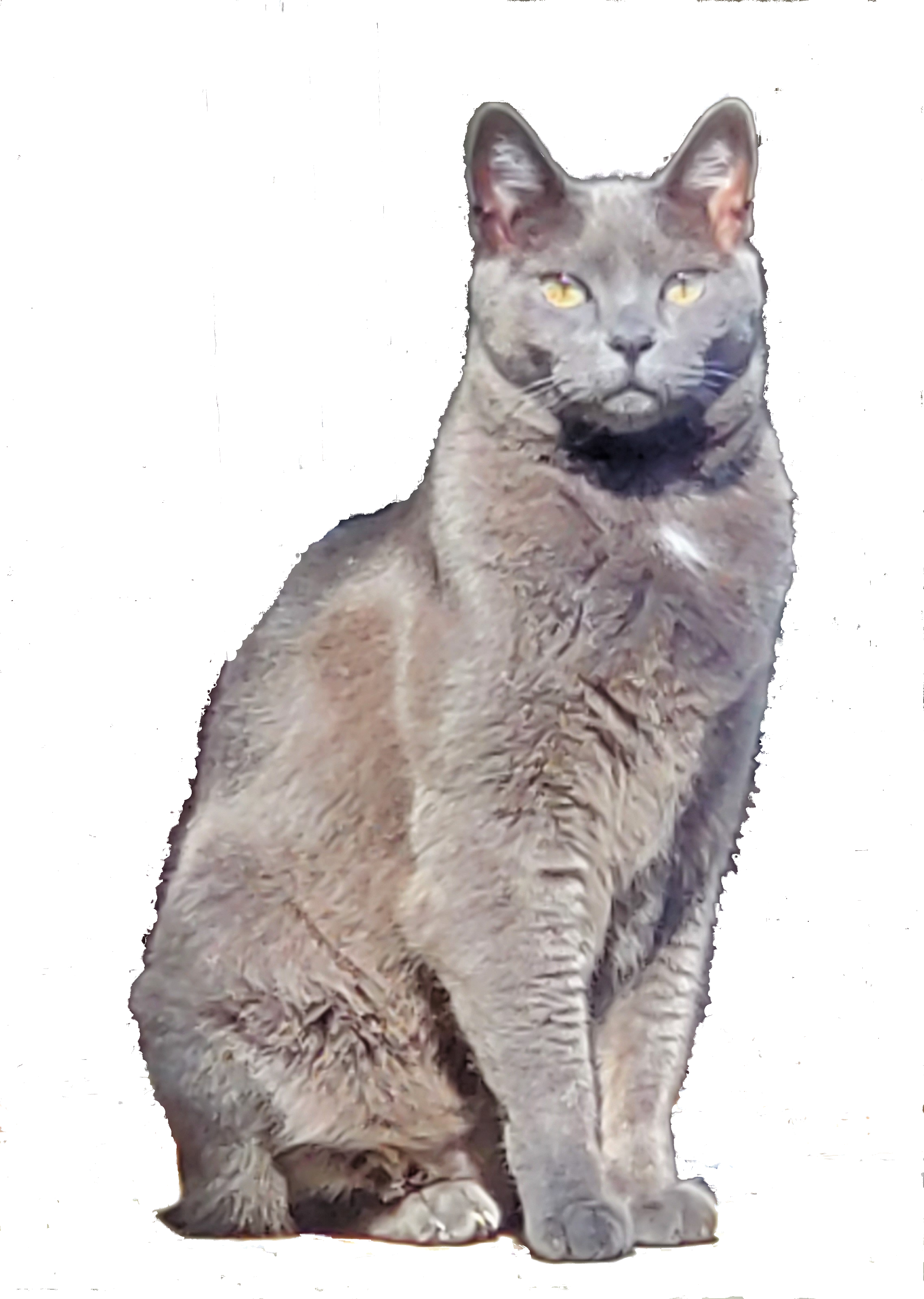
At 9:15 he picks out his canned food. This entails walking up the hall, tail up, to the cupboard, waiting for me to open it, then sticking his head in for a look.

At 2:15 he demands I pick him up, hug and lug him to the sliding door so that he has a better angle from which to watch the birds on the deck. Mostly, he wants hugs.

At 4:15 he demands, in a loud Russian Blue voice, that his soup be stirred. I go to the kitchen and stir his wet food so that it is refreshed, or if he is having one of those gravy sorts of things, add water to make more gravy.

When he seeks my attention, he sits next to me, staring up until I respond. And in so doing provides me a bit of time to refresh my thinking, ponder my next sentence, and edit my next word.

I simply cannot imagine writing without all three. And, so you know, the book above, Unbecoming a Lady, will land in ebook and paperback formats around the Ides of March.

Guest Blogger ~ A.M. Reade

THE BEST OF BOTH WORLDS

I recently took an online quiz designed to determine whether I am a right-brained or left-brained person. There were probably a thousand other things that might have been a better use of my time, but I was intrigued (Clickbait, you’ve come to the right place). In a nutshell, right-brained people tend to be the more creative types, whereas left-brained people tend to be more analytical.

You may have seen this quiz, or recall one very much like it from 2015. People are shown a photo of a sneaker and asked what they see: is it gray and teal, or is it pink and white? Back in 2015, it was the dress. Did you see a blue and black dress or a white and gold one? If you don’t know what I’m talking about, Google it. You’ll see what I mean.

In a brilliant illustration of what it’s like to be me, the sneaker and dress quizzes indicate that I fall into both right-brained and left-brained camps—or neither, depending on how you look at it.

In all seriousness, though, everyone has both right- and left-brain capabilities, though one side or the other happens to be dominant in most people. I honestly don’t know which is my dominant side.

I used to consider myself a left-brained person: verbal, analytical, and (somewhat) organized. That makes sense—I practiced law before turning to writing fiction, and the law is very logic-based. I know, I can hear you laughing from here, but it really is true, at least in a courtroom setting. Writing a novel requires a certain amount of logic, too. A writer’s job is to come up with a plot and a story arc that make sense to the reader.

The longer I’m away from the law, though, the more I find myself doing things like handicrafts and gardening and artwork and experimental cooking (I like to tweak or make up recipes just to see what will happen) in my spare time. These are typically considered right-brained activities.

This got me thinking: where does that leave the zealous lover of mystery fiction?

And here’s what I’ve decided: writers and readers of mysteries get to experience the best of both worlds (both sides of the brain) simultaneously.

The act of writing satisfies and exercises both analytical and creative muscles, as does the act of reading. Is there anything better than finding yourself immersed in a story, following along as if you’re part of the action? Whether you’re writing that story or reading it, you’re using both sides of your brain. You’re walking the logical path of the plot from beginning to end, puzzling out the clues, and you’re using your imagination to experience the sights, sounds, scents, and tactile sensations of the setting.

If you’re a writer, you’ve done your job if a reader comes away with a feeling of satisfaction. If you’re a writer of historical mysteries, as I am, you’ve done your job if the reader also learns a little something in addition to enjoying the mystery.

If you’re a reader, you’ve done your job if you’ve simply paid attention to the story. You’ve very likely used your imagination without even realizing it. This is left- and right-brain exercise at its best.

It turned out to be a good thing for me to take that sneaker quiz because it led me down the rabbit hole of research into how people use different parts of their brains. It got me thinking of the ways in which I use my own brain.

If you’re reading this post, you probably love mysteries. You use your whole brain when you read. So where do you see yourself on the left-brain/right-brain spectrum? What do you do in addition to reading? Are you a stock analyst? Are you a painter? Does (or did) your day job exercise a different part of the brain than the part you use when you read? I’d love to hear your thoughts. Thanks to the Ladies of Mystery for hosting me here today. It’s been a fun post to write and I hope it got you thinking.

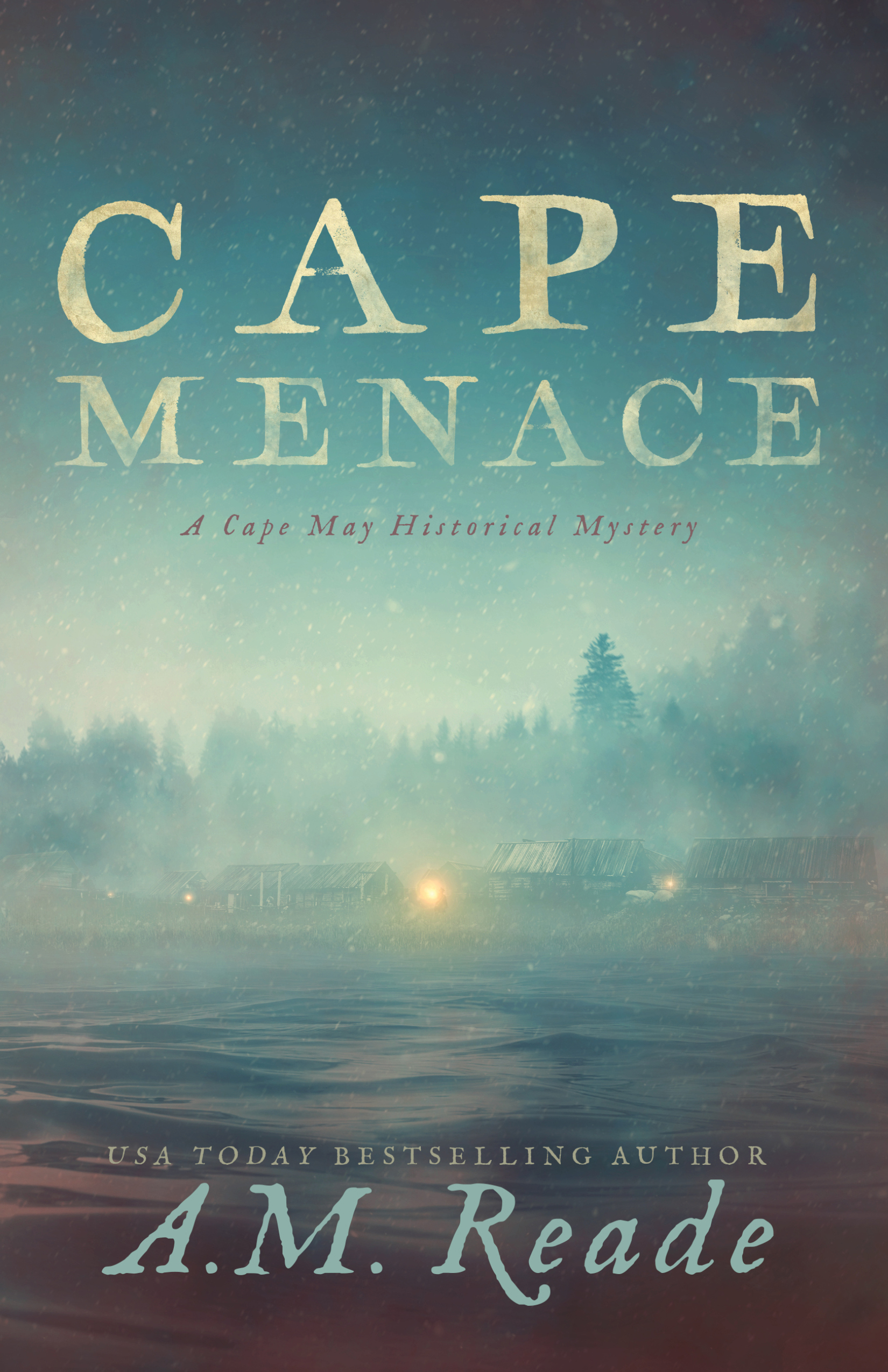
CAPE MENACE

The year is 1714. Two years have passed since Ruth Hanover vanished into the wilderness of the New Jersey colony without a trace, leaving behind her husband, William, and their daughter, Sarah.

Though William and Sarah have never stopped hoping Ruth will return, as time goes by it becomes less and less likely they will ever see her again.

Now William is acting strangely. He won’t tell Sarah why he’s conducting business with a mysterious stranger in the middle of the night, he won’t explain the sudden increase in his income, and he won’t share with her what people in town are saying about her mother’s disappearance.

When the time comes for Sarah to face her father’s secrets and figure out why her mother never came home that December day in 1712, what she learns will shock her tiny community on the New Jersey cape and leave her fighting for her life.

KINDLE: https://www.amazon.com/Cape-Menace-Historical-Mystery-Collection-ebook/dp/B087PJWX7Y

APPLE IBOOK: https://books.apple.com/us/book/cape-menace-a-cape-may-historical-mystery/id1511409624

KOBO: https://www.kobo.com/us/en/ebook/cape-menace-a-cape-may-historical-mystery

BARNES & NOBLE NOOK: https://www.barnesandnoble.com/w/cape-menace-amy-m-reade/1136964165

GOOGLE PLAY: https://play.google.com/store/books/details/Amy_M_Reade_Cape_Menace?id=P3zkDwAAQBAJ

PAPERBACK: https://www.amazon.com/Cape-Menace-Historical-Mystery-Collection/dp/1732690782

Amy M. Reade is the USA Today and Wall Street Journal bestselling author of cozy, historical, and Gothic mysteries.

A former practicing attorney, Amy discovered a passion for fiction writing and has never looked back. She has so far penned three standalone Gothic mysteries, the Malice series of Gothic novels, the Juniper Junction Holiday Cozy Mystery series, the Libraries of the World Mystery Series, and the Cape May Historical Mystery Collection. In addition to writing, she loves to read, cook and travel. Amy lives in New Jersey and is a member of Mystery Writers of America and Sisters in Crime.

You can find out more on her website at www.amymreade.com.

BLOG: https://amreade.wordpress.com/

FACEBOOK: https://www.facebook.com/amreadeauthor

AMAZON: https://www.amazon.com/stores/Amy-M.-Reade/author/B00LX6ASF2

GOODREADS: https://www.goodreads.com/author/show/8189243.Amy_M_Reade

BOOKBUB: https://www.bookbub.com/profile/amy-m-reade

TWITTER: https://twitter.com/readeandwrite

INSTAGRAM: https://www.instagram.com/amymreade PINTEREST: https://www.pinterest.com/amreade/

Disturbing Coincidences

Ever had that oh-no-no-no feeling that you’ve written the same book as another author? Or borrowed a character’s name, or inadvertently duplicated a clever conversation from another book?

This sort of thing has happened to me multiple times. After I wrote my first Summer “Sam” Westin mystery, Endangered, I sent it out to multiple editors at publishing houses. They all told me that it was very good, but way too similar to Nevada Barr’s Track of the Cat.

What? At the time, I’d never heard of Nevada Barr. But I bought the book, and dang, if the editors weren’t right! We both had female park ranger protagonists and cougars in our plots. We even wrote in similar styles! Nevada and I are clearly twins separated at birth.

So, I rewrote Endangered, making my protagonist an internet blogger type working for conservation nonprofits and outdoor adventure organizations. I changed my writing style a bit. And finally sold that book, along with two sequels, Bear Bait and Undercurrents.

Since then, I’ve published three other books in the Sam Westin series, as well as my three Neema the Gorilla Mysteries, and my Run for Your Life trilogy. For years now, Nevada Barr has been one of my favorite authors. Jodi Picoult is another.

A few years ago, when I read Picoult’s latest novel, Leaving Time, I immediately panicked. Like my Run for Your Life trilogy, the protagonist of Leaving Time is an orphaned teenage girl. And elephants romp through both our plots. Yikes! I emailed Jodi Picoult about the similarities. She was kind enough to reply, and said she wasn’t concerned.

As a lesser-known novelist than these two famous authors, I worry that readers may think I’m borrowing from them. But hey, my trilogy came out before Jodi Picoult’s novel, and really, the plots and tone of hers and mine are nothing alike. Then, just as I was working on my book Cascade, which includes a wolverine, Alice Henderson’s first novel, A Solitude of Wolverines, was published. Wildlife researcher, wolverines, winter setting… Not such a similar plot to Cascade (thank goodness), but still a lot of similarities. Her latest book, A Ghost of Caribou, is set in Washington State. Where I live and hike and write. (But not about caribou.)

Am I on the same brainwave frequency as these other gals? It’s downright scary! When I wrote my Neema mysteries, I came up with the name Neema by perusing lists of words in Swahili. I didn’t want to use any name close to Koko, the real signing gorilla that I used for inspiration. Now, just a couple of days ago, I read an article about a gorilla named Neema in the Munich zoo, who (sadly) rejected her baby.

I just can’t get away from all these coincidences. But hey, I just Googled “Neema the gorilla” and guess what? My Neema mysteries top the results list. Either the Munich zookeepers and I are on the same wavelength, or maybe that gorilla is named after my Neema.

So, I guess I’ll stop worrying about all this. At least until the next time it happens.

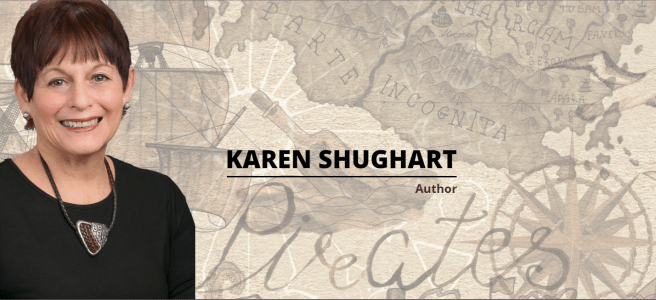
Reflections on Winter by Karen Shughart

When I was growing up, we lived within walking distance to a large, public park. Our local recreation department held a Twelfth Night bonfire where families brought their Christmas trees and, as we watched the dazzling flames light up the night, we sang seasonal songs and drank hot chocolate.

After a snowfall, my friends and I would drag our sleds to a large estate at the end of our block that had been willed to the city and was now part of that park. The mansion had been transformed into an art gallery, but the grounds were perfect for sledding. We’d form a chain and with our feet moving forward in tandem, push our sleds off the top of a bluff down a steep hill to the bottom. We shrieked with laughter, sometimes tumbling in a heap before we landed, and when we were chilled to the bone, we trudged home for steaming hot chocolate and cookies.

Around that same time, I discovered a series of books that were set on Lake Superior, and while the author and the titles completely escape me, I remember vividly that most of the books were set in winter, the main characters a family whose lives centered around outdoor activities near the ice-encrusted lake. I was completely enchanted.

When my own children were young, their friends would convene at our house after a snowfall and make snow angels and build snow forts in our backyard, laughing and chattering until they, too, were chilled to the bone. Then they’d all waddle into our mudroom to remove their boots and wet jackets, snow pants, scarves, and mittens, and like my mother before me, I’d serve hot chocolate and cookies.

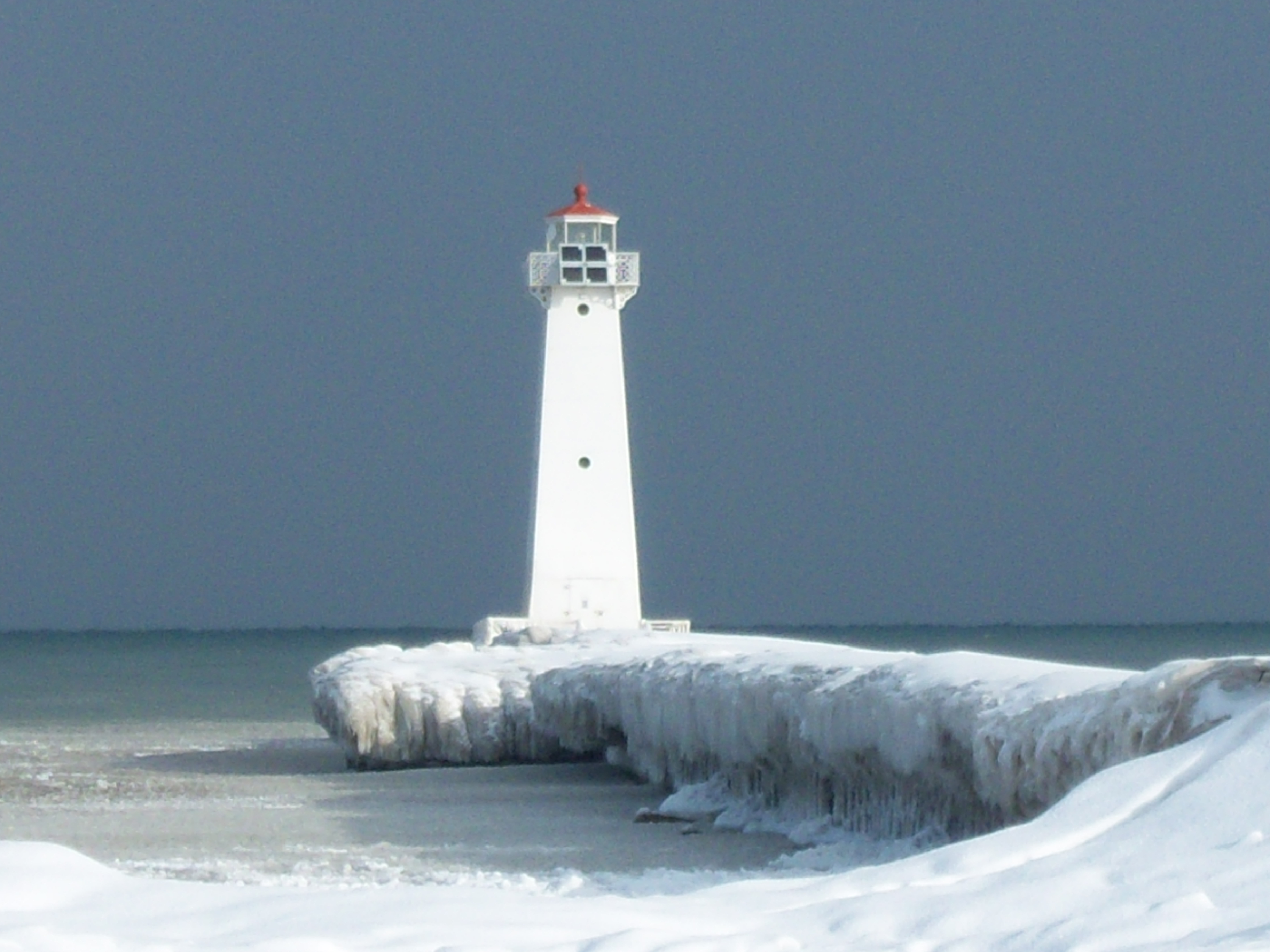
A few years ago, at the end of the summer, my husband and I took a cruise to the Canadian Maritime Provinces and Greenland. You’d probably not be surprised to learn that my favorite part of the trip was Greenland, where the temperature was in the 30s and 40s, and we were walking around wearing down jackets and mittens in early September. I loved the starkness of the landscape and the view from the shore of small icebergs brightening the dark sea with brilliant light.

I have thought often what it is about winter that I find so compelling, enough so that in retirement we moved north rather than south. We now live in a village on Lake Ontario, where the winters can be cold and and snow-covered for at least several weeks or months during the season.

There are complex reasons, I am certain: as an introvert I like settling in with a crackling fire in the fireplace, to read books, a warming cup of tea in hand. I enjoy cooking comfort meals, walking or snowshoeing in the snow, and meeting friends at cozy pubs that in summer months are filled with happy, noisy tourists. And I’m thrilled when I catch a glimpse of ice boats gliding across our bay.

Winter is a time for reflection, too, and a time when I give myself permission to just be without having to purposely shut out the extraneous noise and activity that’s so much a part of my life during other seasons.. It’s also when I am most productive with my writing, and quietude and solitude recharge my weary body and soul.

Karen Shughart is the author of the Edmund DeCleryk Cozy mystery series. Her third book, Murder at Freedom Hill, was released in November.

Guest Blogger ~ Robin Henry

Great mystery/thriller books writers should read… by Robin Henry

It is time for year end lists!  Here’s my list of favorite mysteries and thrillers I read in 2022.  NOTE—I read these in 2022, some of them were published earlier…

Each of these are a great mini-masterclass for mystery writers, too. Each does a wonderful job of keeping the reader curious, building suspense, but without frustrating the reader.  Several of them are also playing with form, like epistolary or traditional historical.  If you want to write a great mystery or just get lost in one for a while, these are all excellent choices.

The Appeal by Janice Hallett

An excellent use of the epistolary form, and just a fun mystery with a load of crazy characters who will keep you guessing.  Definitely recommended for Cozy fans…

Apples Never Fall by Liane Moriarty

Domestic Thriller by the current Queen of the Genre in my opinion.  So many family secrets…but somehow all loose ends are explained and tied up at the end.

The Paris Apartment by Lucy Foley

Need a book that will make you stay up until 2 AM?  Look no further.  This apartment building is creepy and so are the people who live there…

The Bullet That Missed by Richard Osman

You’ll laugh, you’ll tear up, you’ll love every moment you spend with the gang. One of the most fun things about Osman is the observations he makes about the world through the eyes of his characters.  Surrender to it and you won’t be sorry.

Apothecary Melchior and the Mystery of St. Olaf’s Church by Indrek Hargla

English translation by Adam Cullen, English version published by Peter Owen

A finely plotted traditional medieval whodunit.  If you’ve been wishing for a new Father Cædful, try Apothecary Melchior…

Fatherland by Robert Harris

Gritty, alternative history mystery set in the Berlin of a partially victorious Third Reich.  The Cold War looks a little different and the Americans under President Joe Kennedy (mobster father of John, Ted, and Robert) is cozying up to the fascists. The book is simply fantastic and also a little frightening because of the way Harris understands human nature.

See more book reviews along with free writing tools at http://readerly.net

Robin Henry is a librarian and independent scholar turned book coach who loves history and mysteries along with her hot beverage.  You can find out more at http://readerly.net or contact her at readerlybooks@gmail.com