Escaping the Summertime Blues

It is no secret; I have the summertime blues. I can’t seem to keep my mind on anything but the heat. And it is hot. Over a hundred here today. And likely where you are as well. There is a little cooling coming. And moisture. Tomorrow will be like a sauna. I tell myself, at least I’m not being evacuated from Rhodes.

Yet, the images from Greece make me consider books I read as a girl that filled me with images of places I couldn’t even imagine. And, yes, I blame books for leading me by the nose and eyeglasses into the world of writing.
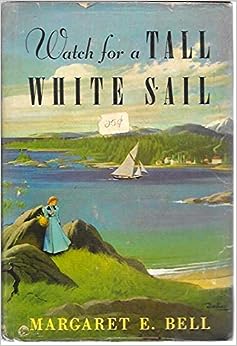
Margaret E. Bell’s Watch for a Tall White Sail took me to the Ketchikan Peninsula in Alaska at the end of the 19th Century. I read it as a pre-teen and have never forgotten it or the ending. I can close my eyes and see the peninsula as it was then, the hardship of the heroine’s life, and her ultimate joy. I checked it out of the school library then and now wish I hadn’t. The book is only available in hardback and is priced over $100 dollars. I do drool on its Amazon page from time to time, then remember the joy of the second of three books, The Totem Cast a Shadow, and wonder if it is available. Not on Amazon, but anywhere. Which is the long way round to say, I’ve been on my way to the Ketchikan ever since.
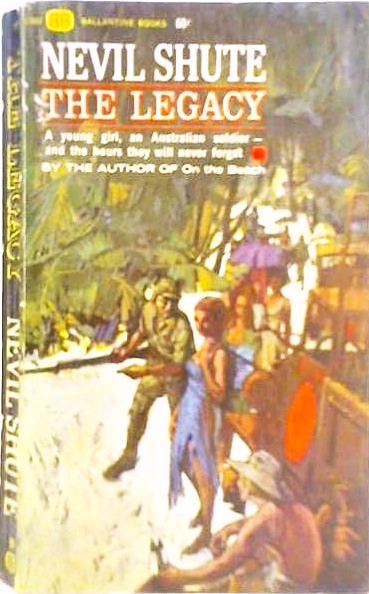
I fell hard for Australia. What I was doing reading Nevil Shute as a teen is an interesting question. My older sister wouldn’t let me near her copy of Exodus as in her judgment I was clearly too young for the contents of the pages. I snuck my mother’s copy and read it anyway which is why I am certain Paul Newman was the wrong guy to play Ari Ben Canaan in the movie. A bit off topic, so back to Nevil Shute. I read The Legacy before it became A Town Like Alice and have been on my way to Australia ever since, just like the sheriff James Garner played In Support Your Local Sheriff (a truly engaging, funny movie).
Which brings me to James Michener. Until They Sail fed my Australia problem and the movie by the same name did nothing to deter it. (Paul Newman was in that, too.) I’m not as old as it may seem, my parents used to take my older sister and me to the drive-in in our old turquoise and white Nash with the Nash seat. They picked double features expecting us to sleep during the second more adult movie. Fat chance. I still start crying at the mention of Sayonara and have yet to recover from William Holden’s bared chest in Picnic (not a Michener story but a great chest nevertheless). Inspired, I read Sayonara. I cried so hard at the ending that the pages in my copy are still crinkled where my tears dried. The Bridges at Toko-Ri, which I read when far too young, did not inspire a visit to North Korea, but Tales of The South Pacific and later Hawaii gave me the desire to see the islands. And I have. Even Lāna’i.
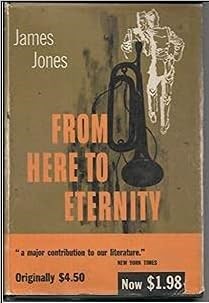
I pounded my way through From Here to Eternity. Don’t ask how I got my hands on a copy of it when fifteen. But I did. I am still in recovery from that book. And, yes, I have been to the beach. And, no, I did not reenact any scenes that once involved Burt Lancaster and Deborah Kerr.

All this rambling is to say, that as we write and world-build, we inspire others to travel, we help them see the world more fully, and sometimes we make them cry. And — books are a wonderful, magical way to escape the heat. You don’t have to be trampled on your way to the Acropolis or ferried from fires in Rhodes, rather you can luxuriate on Corfu or Crete or Delphi with the help of Mary Stewart. Or even on Barbados in my book Perfidia .

Check my books out at D.Z. Church – Author, Standalones & Vietnam Era Military Thrillers (dzchurch.com)

TRUST. YOUR. GUT.

I love being a writer. Everything about the process brings me joy, something I’ve struggled to find since my son, Derrick, died six years ago. Since then, writing has become my refuge from sorrow, anger, depression.

My first personal essay, fifteen years ago, was about my ex-husband walking away after Derrick was diagnosed with Autism. It’s interesting how life’s challenges, tragedies, joys, provide an outline for our imaginations.

After Derrick died, I found myself with time on my hands and decided to refocus on my writing. What a blessing creating, plotting, editing, re-writing, and reading a WIP countless times has been. And the reward of having readers tell you how much they like your story or novel is priceless.

I now have two completed novels and am working on the third book in my Mexico Mayhem series, VANISHED IN VALLARTA, which is in the super fun editing phase.

One of the hurdles I face is cost so I’ve always had a quid-pro-quo arrangement with another writer. Full disclosure, she doesn’t write or read my genre, nor I hers, but we’ve always managed to offer constructive critiques of each other’s works … until now.

My imagination tends to be a little dark and twisty, which of course bleeds into my writing. My books are full of murder and mayhem with dark villains. And I might have a touch of sex between the pages. And, yes, I know this type of story isn’t for everyone.

At first, I thought her concerns were about the story or plot or character development, so we met face to face to discuss her issues. All good? Not quite. This time my quid-pro-quo editor, who read my second book, balked when she encountered my colorful villain. She didn’t say she hated him or suggest I might expand on his emotional journey; explain she couldn’t see him as a fully developed character. No … she critiqued me as a writer.

What followed were emails telling me I’m a novice writer and that I needed to rewrite the first draft or stick it in a drawer. Next, she informed my writing is amateurish. I have thick skin and have taken my lumps along the way, but these comments were more than I could bear.

After a few sleepless nights and hair pulling days, I sat down with my WIP and re-read the piece. That’s when it hit me. This editor has not read all my work, like my first novel which has received several rave reviews. Or my first personal essays edited and published by Adams Media. And more recently, short stories accepted by NIWA and Windtree Press for publication in their anthologies.

Then this quote popped up on Facebook:

“Believe in your story. Have confidence in your story and your abilities as a writer. Don’t be discouraged by rejection or criticism.” Barbara Cartland

I know I’m not an accomplished writer like some of my favs; Barbara Cartland, John Grisham, Sue Grafton, James Patterson, but from now on I’m going to focus on trusting my gut and believing in my story!

Happy summer writing, ladies!!!

Amazon.com: Peril in Paradise (Mexico Mayhem): 9781794052451 

Amazon.com: MALICE IN MAZATLAN (Mexico Mayhem): 9781957638256

ChatGPT and This Writer

For the last several weeks much of my reading has been about AI and ChatGPT, learning as much as I can about this new technology. Thanks to a good friend from graduate school (back in the Dark Ages of landlines and library card files), I’ve learned a lot about AI and what it could mean in areas beyond writing, such as automotive, medicine, and hard science. But the only area I’m concerned with here is the AI directed toward producing word texts—articles, essays, stories, memos, ad copy, and the like. 

When ChatGPT appeared on the scene for the general audience, in 2022, most people were caught off guard and stunned at what it could do. Writers, understandably, and myself among them, were horrified that a machine would soon be producing texts. What would that mean for our futures? (The writers in California are striking over the same issue.) This anxiety has not declined; some even speculate that this new technology could soon make human efforts obsolete and even lead to our end. Like the dinosaurs. 

During a webinar held by the Authors Guild on Thursday, July 20, 2023, one of the participants made some important points about language, so that if nothing else, we understood what we were talking about. ChatGPT is one application of AI. It is called a large language model, borrowing some terminology from linguistics and the work of Noam Chomsky. But this is where it becomes misleading. ChatGPT requires large amounts of data—copies of the written word—in order to produce texts on demand. The designers of the application have scoured the Internet for documents to feed into their computer. Books are found on pirate sites that are often fending off take-down notices from writers (I’ve sent some of those notices). With these texts, the machine is trained to recognize acceptable sequences of words and when their use is most relevant to the question presented. Think “keywords” lined up.

The user of ChatGPT can type in a request, and the software will type out an answer. If you want an outline for a novel, type that request with some details to guide the machine such as setting, characters, and time period, and the machine will send back an outline in conformity with your guidance. The designers of ChatGPT describe the answer as being generated, as a generative text. But this isn’t accurate, as one of the webinar participants pointed out. The machine cannot generate. The machine cobbles together bits and pieces according to patterns, and spews out the result. The text is derivative; it is derived, taken from documents fed into the machine. As the participant went on to say, the result is plagiarism of someone’s work, and in fact of many works by many someones. 

Why does this matter?

We are writers. Accuracy matters. As George Orwell demonstrated only too clearly in 1984, words lead us and determine how we think (or don’t think), and so we as writers should always be accurate in how we present our ideas. 

The work that AI designers insist on describing as training is in fact copying, copying of a copyrighted text without permission, which is an infringement of that law and also known as plagiarism. The text derived and reproduced by the machine does not carry any acknowledgment of this fact.

The purpose of the Authors Guild webinar was to bring members up to date on their efforts to protect and maintain the rights of writers. They are lobbying for several goals: First, payments and damages for training/copying already done. Second, AI content clearly labeled as such (The White House meeting on AI this week includes a request for a watermark or something like it, to indicate an AI produced text). Third, disclosure by AI companies of what work has been used already. (A list of ISBNs used has been made available, but when I tried it there was no way to search it, though a tool is sometimes available.) Fourth, expanding the right of publicity law from name, image, etc., to include style (a writer’s or artist’s style). 

The Authors Guild is also talking with publishers about contract clauses that allow the writer to deny AI companies the right to copy the text or other contents of a publication for training or any other purpose without permission.

Some writers are already adding a clause to the standard copyright statement. “All rights reserved. No part of this book . . . ” To this, authors are adding “This work may not be used in AI training without written permission by the author,” or similar statements.

AI ChatGPT has many supporters as well as detractors, and I continue to learn about it. And no, I haven’t tried to use it for my work but a friend asked it for a summary of my first novel, Murder in Mellingham. The summary was atrocious, and included a character name I’ve never used. 

My firend also used ChatGPT to produce a letter requesting that OpenAI stop using my material in its training. I’ve sent the letter and am now waiting for a reply. I’ll post about it when I get one.

On Becoming a Virtual World – Beneficial or Tragic?

Lately I’ve been hearing and reading a lot about virtual environments and experiences. One friend pointed out that flying to Africa and going on a safari there had a tremendous negative impact on the environment, and wonderful safari videos were available online, so why not just watch those instead? I constantly see ads on streaming video showing all the “virtual worlds” people can create for themselves on the internet, and showcasing all the benefits of doctors being able to “see” inside a virtual replica of a human body to learn and diagnose. And then, of course, there are all those AI applications, which can be viewed as virtual writers, editor, artists, programmers, and so forth. (Don’t get me started on “customer support” AI helpers.)

We seem to be evolving into a world that is created by software or recorded from the past rather than a world that is immediate and natural. Is this incredible or horrific? Most of the time, I just can’t make up my mind.

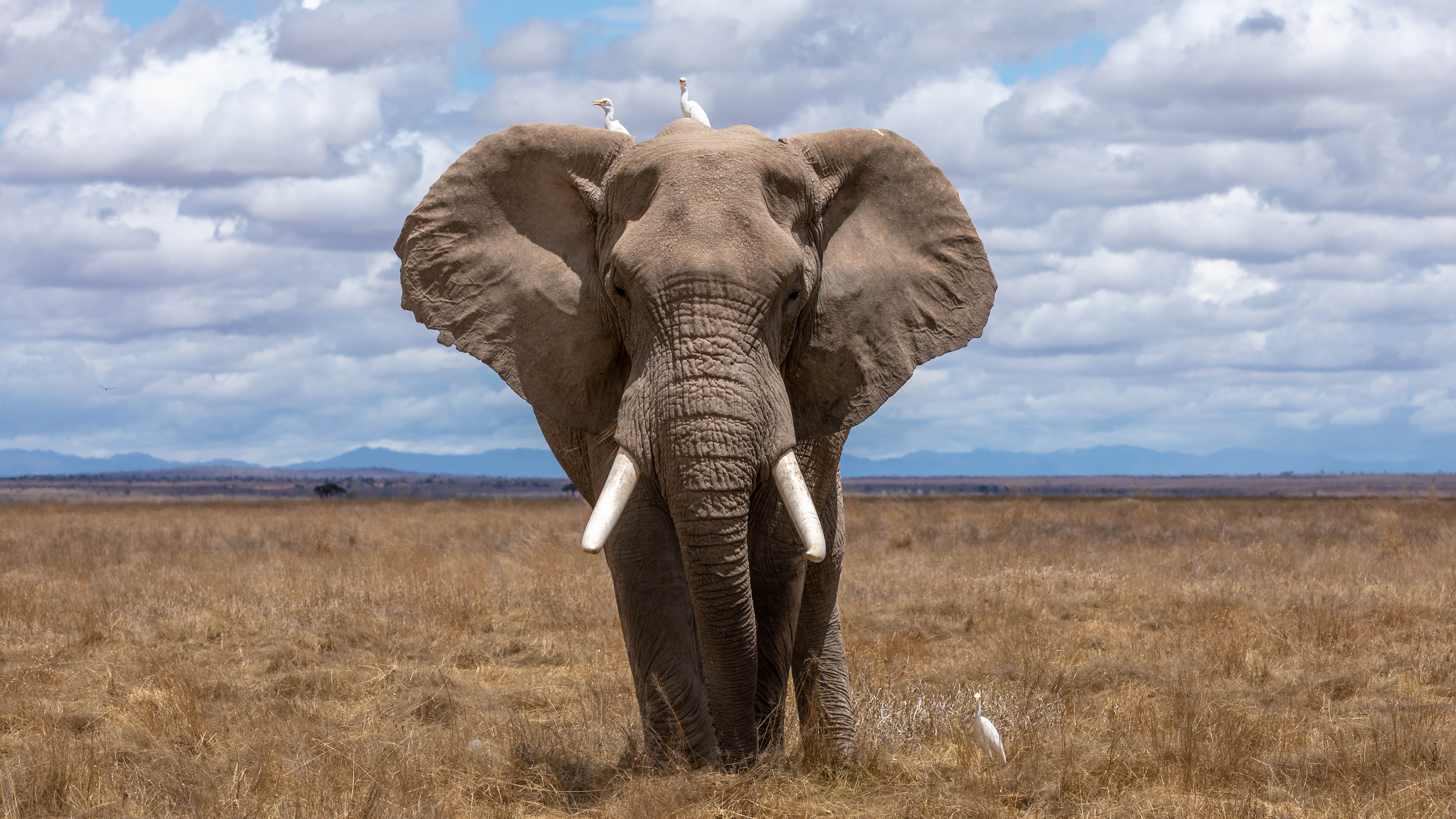
You see, I’m a Nature lover and very much a fan of celebrating the present and being there to actually see, touch, hear, and feel all things real. I don’t even listen to music or ebooks while out walking because I want to hear the birds and the rustle of leaves in the trees. My Sam Westin Wilderness Series and my Neema the Signing Gorilla series are very much reality based. I find the idea that virtual reality or recordings from the past could replace real-time experiences very disconcerting. If nobody ever encounters an elephant or a ptarmigan or a dolphin in real life, will anyone care about saving them? For me, watching a video never inspires the wonder and delight that experiencing nature does.

On the other hand, we all know that our planet is likely to become a very different place in the future. Today, there are already too many humans crowding the wildlife out of their environments, and more humans are born every minute. People will likely need to make severe compromises to keep our planet habitable. This probably means that in the future, fewer people will have the amazing experiences I’ve had scuba diving, hiking, snowshoeing, kayaking, traveling, etc., and they will probably rarely encounter any sort of wildlife except for insects. But at least they will be able to have virtual encounters of all sorts.

In my younger years, I and many of my peers wished we had the holodeck pictured in the Star Trek series. In the holodeck, a person could create any sort of environment she or he wanted, have any sort of experience that was desired. But in the television show, the holodeck provided a great escape because the starship crew could not step explore space and time without the aid of software. Is this our future? Should we celebrate it? The changes seem inevitable. Will the next generations feel deprived or enriched? I do love movies and nature documentaries, and I suppose that reading might be considered a “virtual experience,” and I definitely support all of those.

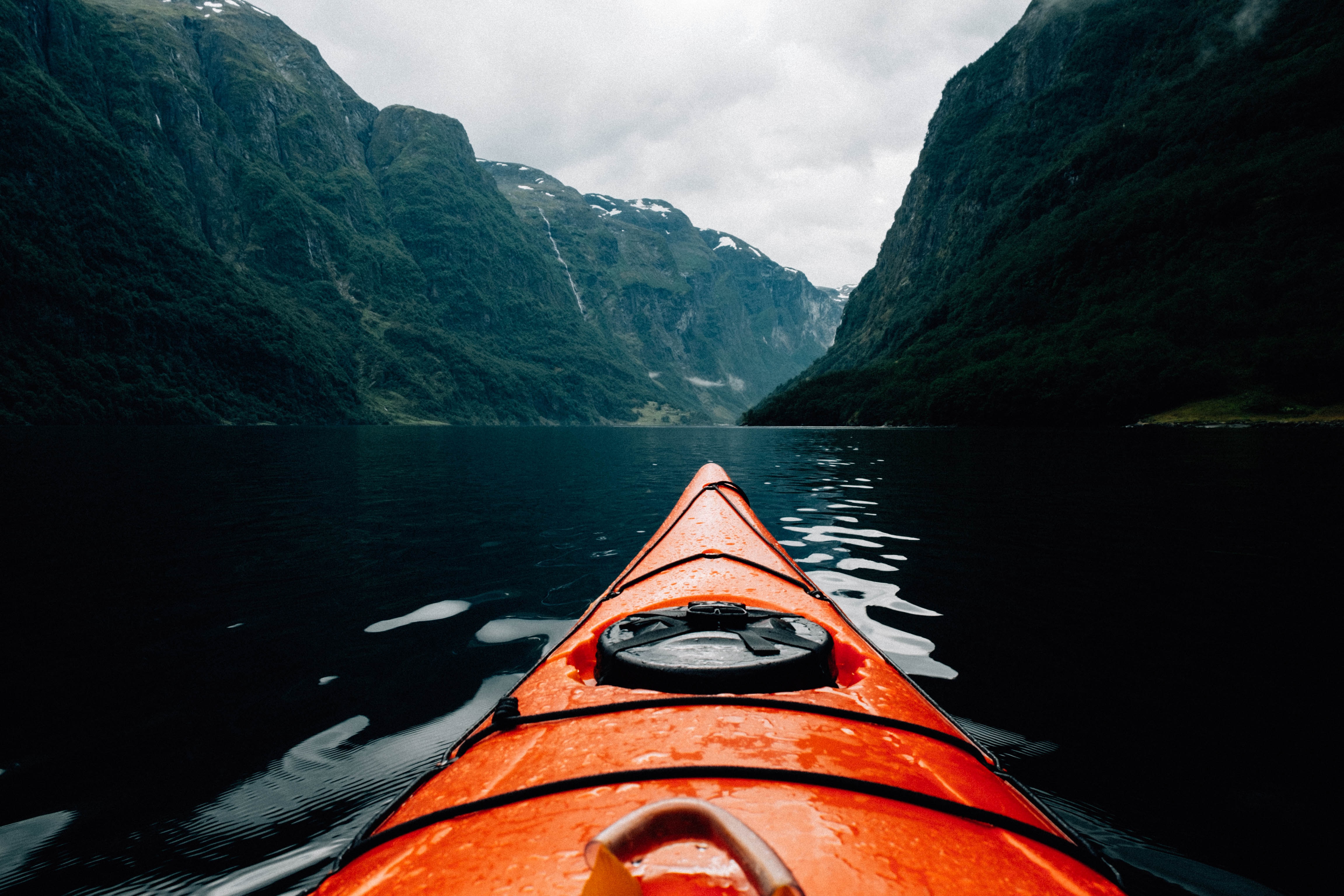
Personally, I’m glad I won’t live forever. Tomorrow, I’m going hiking in the mountains, and I hope to see mountain goats and ptarmigans as well as beautiful scenery. I will kayak on the weekend and watch for harbor porpoises and many types of water birds. And in December, I will fly to Tanzania to encounter a wide variety of exotic animal species in person, and feel only slightly guilty for increasing my carbon footprint. I chose not to have children, and I do many things to help save the planet now, but I can never give up real experiences in my lifetime.

What’s Your Method? By Karen Shughart

I recently read an article about renowned American author, John Steinbeck, who gave six tips on writing that were included in a letter he wrote in 1962 to a friend. These caused me to reflect on how I write my cozy mysteries, and I was astonished to realize how much of his advice applied to me. Below are the tips with my italicized notes beside them:

  1. Abandon the idea that you are ever going to finish. Lose track of the 400 pages and write just one page for each day, it helps. Then when it gets finished, you are always surprised. I don’t write every day, but when I do I try to write at least a chapter or two. I don’t have pages in mind; instead, I aim for 60,000-75,000 words, the length for cozies.
  2. Write freely and as rapidly as possible and throw the whole thing on paper. Never correct until the whole thing is down. Rewrite in process is usually found to be an excuse for not going on. It also interferes with flow and rhythm which can only come from a kind of unconscious association with the material. This one hit home. I write the entire story and revise and expand afterword, my first draft is typically too short.
  3. Forget your generalized audience. In the first place, the nameless, faceless audience will scare you to death and in the second place, unlike the theatre, it doesn’t exist. In writing, your audience is one single reader. I have found that sometimes it helps to pick out one person—a real person you know, or an imagined person and write to that one. Instead of picking a person, I write towards a targeted audience, mainly women (and some men) who are middle-aged or older. Cozies are called “clean” novels because they do not contain graphic language or violence or explicit sex scenes, something that appeals to my readers.
  4. If a scene or a section gets the better of you and you still think you want it—bypass it and go on. When you have finished the whole, you can come back to it and then you may find that the reason it gave trouble is because it didn’t belong there. I do this a lot. See below.
  5. Beware of a scene that becomes too dear to you, dearer than the rest. It will usually be found that it is out of drawing. I have a slash and burn mentality when it comes to writing. I may fall in love with a scene, but I’m brutal about cutting it if it doesn’t fit.
  6. If you are using dialogue—say it aloud as you write it. Only then will it have the sound of speech. I do this with every character. Sometimes when I’m writing dialogue for a male, I check with my husband to see if it sounds authentic.

So, there you have it. I hope you authors reading this blog take time to reflect on your own writing methods. For those of you who are our readers, perhaps you’ve gained a little insight into the writing process, at least for John Steinbeck and to a lesser extent, me..