I’m not one for blowing my own horn. Weird for someone who was a Creative Director at an advertising agency and sold state departments of education customized educational assessments. But waving my hands over my head, making pitches in elevators — and well — drawing attention to myself feels uncomfortable.
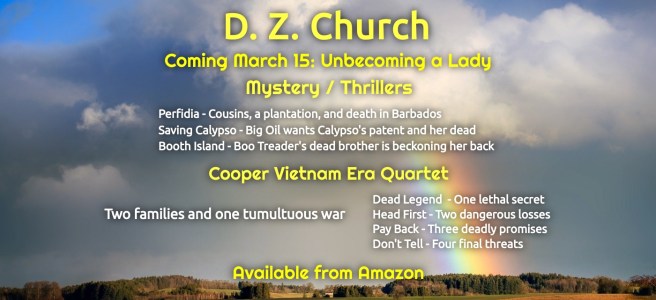
Yet here I am with a book, Unbecoming a Lady, available on March 15th. And, these days, if I don’t pitch it, who will? From the cover:
A torn sleeve, a bruised arm, and a lie.
A friend knocks on Cora Countryman’s front door seeking help with the torn sleeve of her work dress, claiming she ripped it on a bush. As the town’s seamstress, Cora has mended many a dress. So, when she sees a ragged tear in her friend’s forearm and a bruise left by a thumb, Cora questions her friend’s story. When Cora asks about the wounds, her friend is evasive. Worried by the lack of answers, Cora starts her own investigation.
When murder is done, Cora won’t give in, back down, or submit to the behavior expected of a young lady in 1876 in a burgeoning Illinois prairie town. Why should she, she never expected to stay. That is until her mother abandoned her, leaving her heavily in debt, her reputation on the line, and the drudgery of a boarding house to run for one boarder.
Her intended life of mystery and adventure never seemed so far away.
Fellow blogger, Heather Haven, author of the Alvarez Family Mysteries and the Persephone Cole Historical Mysteries, read a review copy of Unbecoming a Lady. Here is what she had to say:
“Thanks to the superb writing and storytelling skills of D. Z. Church, one of the most authentic and unique protagonists, Cora Countryman, comes alive for you page after page. A grand, grand read.”
I’m blushing right now. Thanks, Heather. Reading Heather’s review, it occurs to me that maybe Cora sells herself.
A bit of Cora
In response to a question from Cora, the Methodist preacher’s wife lists the passersby seen on the street and in the park:
“Just the liveryman, a delivery wagon of coal, Mrs. Layman and Mrs. Sullivan chatting.” (The preacher’s wife) pointed toward a stand of marsh grass along the edges of the pond. “And that new Constable, John or Jack McKie, I believe.”
“Quite the parade!”
“I was on my porch sorting roses for the vestry. By the way, Mr. Kanady is not the only eligible bachelor; Mr. McKie is unmarried, as well. He is a strong, handsome sort. Dashing in his uniform. And I hear seeking a wife that might ensure his position in the community. And, of course, there is that darling new doctor. He is a gentle sort and I think a bit shy that he cannot see distances, but he does have the prettiest brown eyes.”
“I think you are a bit smitten with the new doctor, Dr. Shaw, correct? Well, none of these fine unmarried men need look my way. I am determined to stay single, joining the growing number of women who choose the unmarried life, preferring a life of learning, travel, and enrichment instead.”
Cora is feisty, fun, rash, fearless, and above all loyal.
When I was in elementary school, one of my best friends and I would walk home after school each day and create stories about an imaginary friend named Ponytail. It was the 1950s, and many girls of that decade sported ponytails at one time or another. There were rock and roll songs that mentioned girls in ponytails, and TV shows and movies where the ingenues, in their swirling, petticoated dresses and bobby socks, flitted about, ponytails bouncing. Ponytails were part of the culture and fashion of the day. It was a fitting name.
I don’t remember Ponytail’s adventures, but I do remember being excited when we began our journey home to resume our ongoing saga and looking forward to continuing it the next day. Then, as my friend and I got older, the stories we created about our imaginary friend stopped, and we moved on to other discussions. Preteenagers don’t admit to having rich fantasy lives, at least they didn’t when I was growing up.
Last month I was interviewed by author LeAnna Shields on her podcast, The Cozy Sleuth. It was a lot of fun, and at the end I offered to turn the tables and interview her. Two weeks later, that’s what happened. During that interview, LeAnna mentioned that while many people have one imaginary friend, she had a multitude of them when she was growing up, which is partly what motivated her to become an author. After I thought about it a while, it made sense. If you’re an author of fiction, that’s exactly what you do-create characters that are birthed strictly from your imagination.
As I look back, I realize that Ponytail was the continuation for me of a love of creating poems and stories that began when I was about five. It started when my brother and I were on a trip with our parents, and we had a flat tire. It was a rhyming poem about the frustrations of young girl whose trip was delayed because of that tire, and I blurted it out to my mother while my dad was fixing the tire. She loved it, wrote it down, and taped it to the refrigerator when we got home.
From the time I started to read, I immersed myself in almost anything I could get my hands on, sometimes appropriate for my age and sometimes not- my parents never censured my choices- and trips to the library were frequent,. Later, in the literature classes I took in school, I was transported from my daily life into the adventures and travails of characters created by a diverse group of authors. I became an English major in college and after that, each job I had was one where I wrote, although back then it wasn’t fiction. But I always yearned to write stories with characters that were mine.
The idea of becoming a fiction author remained an unattainable dream for many years. For me, like so many of us, life got in the way. Five years ago, finally retired and with children grown, I decided to do something about it. I created and was fortunate to get published the first of the Edmund DeCleryk Cozy mystery series ( Cozy Cat Press), replete with my own imaginary characters. The mysteries take place during the present, but with historical backstories starting in the 1700s and moving ahead in time with each successive book, providing clues that help the sleuth solve the crime. I hadn’t really thought about it until now, but if I keep on going, perhaps someday one of those backstories will take place in the 1950s, and one of my characters can have an imaginary friend named Ponytail.
We’re all drawn to what we don’t understand. It must be a primeval survival instinct. We have our daily world, which mostly consists of routine habits and familiar surroundings. But when something quirky intrudes, we find ourselves on high-alert mode. Like at night, when our usual surroundings fade into shadow, and we hear a strange noise, we stop to listen. The appeal of experiencing what’s unknown in the safety of our own cozy world creates our great demand and interest for the mystery novel.
Many authors preach “write what you know” to wanna-be writers. To me this doesn’t make sense. What motivates us to solve problems and engage in dreams comes from our not knowing. Writers are readers, and reader’s read to experience something new and maybe learn. As authors, we need to write what we don’t know.
If you don’t know something how can you write about it?
Maybe you’ve dreamed of being a double agent. Possibly you’ve longed to experience what it would be like to be in a Witness Protection Program. Perhaps you’ve wondered how it would feel to have the hot breath of a serial killer on your neck just before your heavy wrench smashes his face into the dirt. Only human beings can enjoy danger safely, living vicariously, through the words spoken or written by others. No other animal on our planet has this luxury.
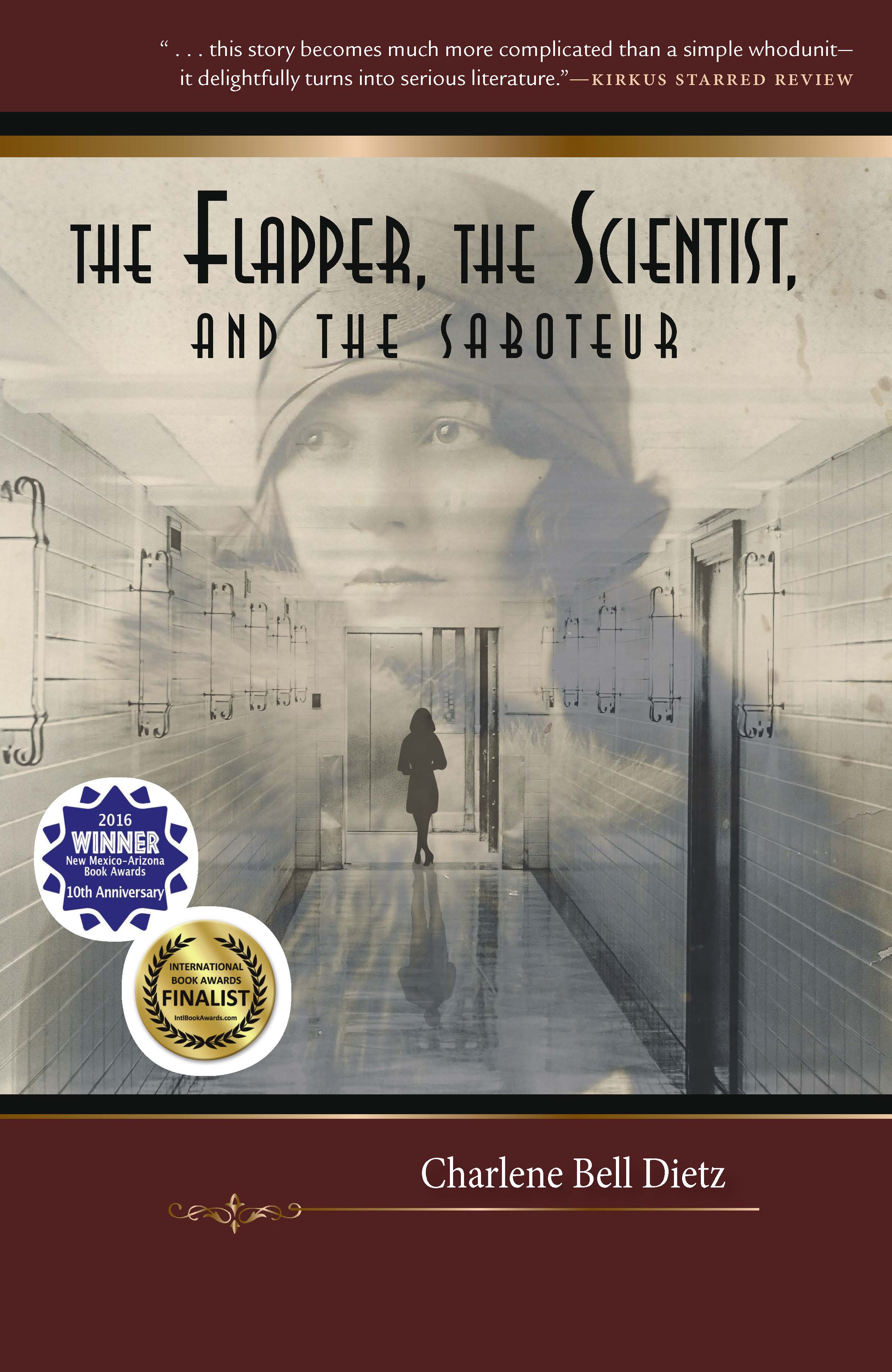
My first novel, The Flapper, the Scientist, and the Saboteur, Kirkus Reviews (starred review) started with scant knowledge about an estranged aunt who was an ex-flapper. Inspiration for this novel came to me because her story felt too important to ignore. My ancient aunt had slammed into my busy life, vying for attention with my demanding career. This redoubtable, chain-smoking, rum-drinking woman made a game of criticizing me, turning the air blue with smoke and cuss words, and enchanting my husband.
I’d come home exhausted from my job of problem solving as an administrator in a heavy-handed bureaucracy of educators and also from my layman position, working with a veterinarian to evaluate research protocols at the Lovelace Respiratory Medical Research Laboratory. Every evening, I’d find this tipsy woman telling outrageous tales of her Roaring-Twenties life as a flapper in dangerous 1923 Chicago. She never revealed much about her own antics, except on occasion she’d toss out tidbits of her wild life like delicious appetizers.
Too good not to be told:
What if I combined this ancient flapper’s ramblings and fabrications with today’s devastating corporate espionage problems, using what I did know about biomedical research labs? Then this would be much more than just another Roaring-Twenties flapper story. Even though I’d fashioned an unusual combination, I thought it might be quite an intriguing mix. However, I knew nothing about the 1920s and even less about corporate spying.
Playing around with my knowledge of bits and pieces, tiny kernels of ideas developed into miniature tales. I shuffled them together using fictional characters, places, events, and conflicts. For my strange story to be engaging, each character would have to be connected with the others characters through powerful motivations. This meant even my secondary characters must be three dimensional. I had huge holes in my knowledge. I needed to know more.
Use what you know to figure out what you don’t know:
After untold hours of researching, I made likely guesses to fill in as many empty spaces as possible. I buried myself under a search and find mode. I had started out knowing only the Hollywood version of a flapper’s life along with scraps of information my aunt had given. This wouldn’t do, and I knew nothing about corporate espionage, but spies have always intrigued me. The more I learned the more fun I found in bringing my Flapper, Scientist, and Saboteur to life.
Writing the unknown:
I believe your story deserves to be startling and robust. I always research more than I can possibly use. Then I select only what’s rich and on target. For fun, I throw in some quirky stuff. Here’s the best part: I put all of the above together, mix with my wildest imagination, edit, delete, select the most powerful verbs, revise, revise, revise, then polish my story—with joy.
My award winning stories happen because I dare to write what I don’t know. How does your imagination help you write what you don’t know?
The Flapper, the Scientist, and the Saboteur intertwines a corporate espionage mystery with a generational battle-of-wills story between a dedicated professional intent on fighting chaos to restore order and a free-spirited aunt who needs her niece to live in the moment.
Beth Armstrong, a Denver biomedical scientist, wrestles with the impossible choice of saving her sabotaged, groundbreaking cure for multiple sclerosis or honoring an obligation to care for her cantankerous old aunt. Playing nursemaid ranks just a notch above catching the plague on Beth’s scale, yet her ex-flapper aunt would prefer catching anything deadly to losing her independence under the hands of her obsessive-compulsive niece.
While a murderous culprit runs loose in the science institute, Beth finds her whole life out of balance. Unpredictable nefarious activities at the institute–which is rife with suspects–cause Beth to wonder if she can trust anyone, while at home her chain-smoking aunt entertains Beth’s neglected husband with nightly cocktails and raucous stories from the Roaring Twenties. The Flapper, the Scientist, and the Saboteur creates a compelling mystery intertwined with a generational battle-of-wills story between a dedicated professional intent on fighting chaos and restoring order, and a free-spirited aunt who insists her niece listen to her heart and learn to live in the moment.
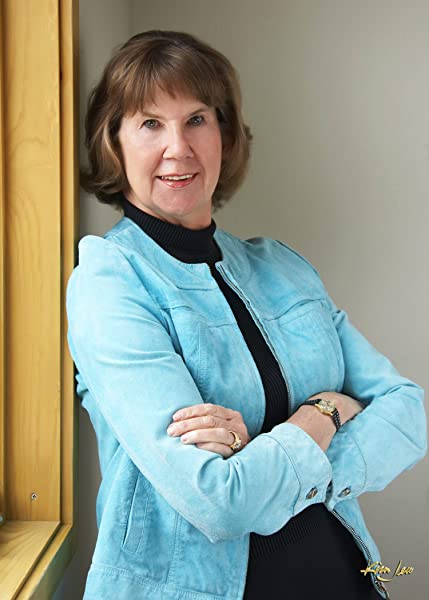
Charlene Bell Dietz, raised in the Rocky Mountains of Colorado, now lives in the central mountains of New Mexico. She taught kindergarten through high school, served as a school administrator, and an adjunct instructor for the College of Santa Fe. After retirement she traveled the United States providing instruction for school staff and administrators. Her writing includes published articles, children’s stories, short stories and mystery and historical novels, winning awards from NM/AZ Book Awards, Writers Digest, Public Safety Writers, and International Book Awards, along with earning two of the coveted Kirkus Reviews (starred review) and having two books named to Kirkus Reviews Best Books of 2018.
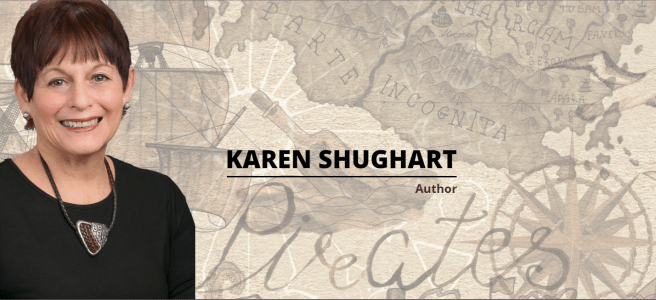
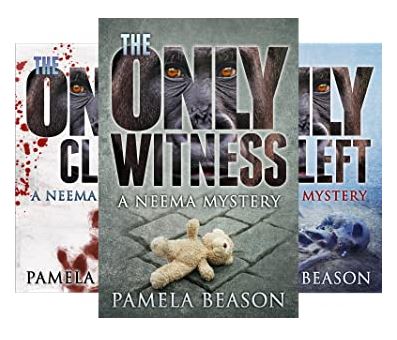
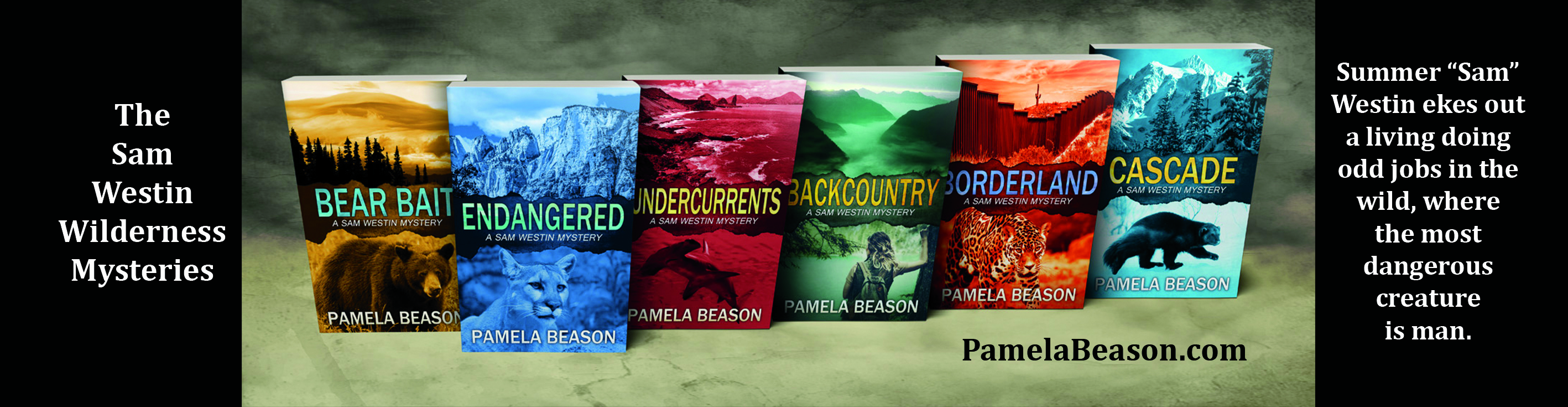
I’m not a bestselling author, but I still have loyal fans who write to me, especially readers for my Sam Westin Wilderness Mysteries, which currently includes six books, and my Neema the Gorilla Mysteries, which has three. The number one reason fans send me email is to ask when the next book in the series will be out. This question makes me simultaneously cheer and groan. While readers excitedly report that it took them only two or three days to finish the book, I remember that it took me ten or twelve months to write and publish it.
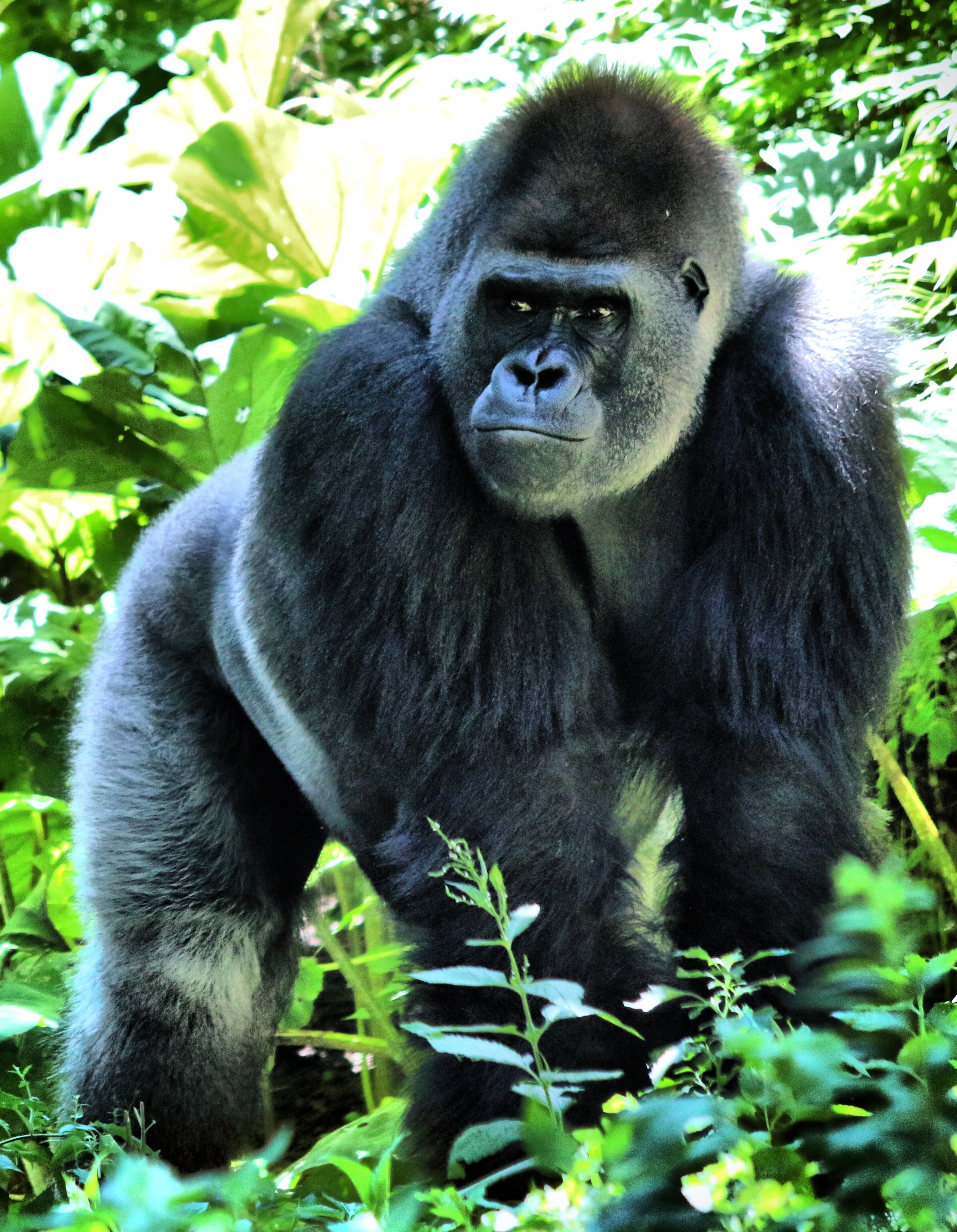
So, I recently had the bright idea to solve this dilemma by writing a crossover novel, in which the characters (or at least the main ones) will appear in the same novel. Bright idea? The problem is that these two series are very different. The Sam Westin mysteries always involve wild animals in wild places, so there’s a lot of hiking and descriptions of rugged areas. The Neema series involves captive gorillas that are learning American sign language, and a beleaguered small-town police detective who gets drawn into vague mysteries when the gorillas observe something frightening and give him cryptic clues, such as snake arm and tree candy. (Poor man, trying to interpret gorilla signs that could be vital clues about a crime or hints about what Neema wants for lunch.)
How the heck am I going to get these two series to mingle? What the heck could these characters ever have in common? In the Sam Westin series, I’ve already focused on cougars, bears, sharks, and wolverines, so I decided to include wolves in her next adventure. How could captive gorillas and wild wolves ever mix? And the answer is: of course they don’t! And they won’t in this next novel, either.
Although my books include a lot of animals (obviously), the crimes are always committed by humans. So I need a human thread—something mysterious, of course—to bring the gorilla world and the wildlife world together. I mulled this challenge over for a while on my break for the last five months. (Some would say this was actually my prolonged period of procrastination, which I have perfected over the most recent years.) While I was in Vietnam last November, I met a fascinating woman who works for the Red Cross locating refugees and their relatives in the United States and elsewhere. I asked her a million questions about immigrants (both legal and illegal) and refugees, which are a legally designated and protected category of migrants here.
Migrants who come to the U.S. are often seeking to join relatives who are already here, and sometimes groups of migrants get broken up, either by the need to travel separately or by one person successfully entering the country while another can’t.
So I plan to have one undocumented immigrant mysteriously killed in the vicinity of the gorillas, leaving behind a toddler who cannot speak English. (Sorry, but this is a mystery and we all know some tragedy is called for.) Poor Detective Finn gets to figure out what happened to mom and who the heck this abandoned child is and how she connected with the gorillas.
Meanwhile, Sam Westin is going to backpack into North Cascades National Park in hopes of finding wolves that have been reported there, only to discover an injured foreigner and an injured horse lost in the wilderness. And then someone will try to kill them all before they can reach civilization.
Okay, there are so many questions left. Who the heck is the foreigner lost in the wilderness, and why is a horse wandering in the woods? And most urgent of all, who is shooting when Sam is trying to rescue the unfortunate man and beast? And what is the possible connection between the abandoned toddler and the illegal migrant Sam has encountered?
I’m not going to tell you all that (okay, so far I only have vague ideas about those challenges), and I can’t even tell you the title for my new novel, because the Neema series books always have “The Only” in the title, and the Sam Westin books are usually one word (Endangered, Bear Bait, Undercurrents, Backcountry, Borderland, Cascade). So what title can I use that will make sense? And how will I advertise this crossover novel?
Only time will tell whether writing a crossover novel will please the readers of one series and introduce them to the other (thereby saving me a year of writing another book), or whether I’ll be the next victim running through the woods, trying to escape angry fans.
There are many mysteries in this world, and many – as we all know – are in the writing game, not the least of which is the Best Seller. Now a dedicated media campaign, the work of many people, a LOT of money and the backing of a prestigious publisher can create a national best seller out of an unimaginably dull and occasionally pedestrian book. On a smaller, more human scale, in the self-publishing world the same pattern will hold, though with generally less rarified results. A lot of (usually) friends, some dedicated and probably expensive PR, and determined social media presence can elevate a piece of pure dreck to more than respectable sales. Everyone knows that.
What everyone doesn’t know – and what can’t be guaranteed – is the Magic Factor.
That is the unquantifiable something which no one can guarantee, cause or even predict which strikes at random and elevates an ordinary – or even less-than ordinary – book to stellar heights.
I just experienced this phenomenon and no matter how I have tried I simply cannot analyze why it has happened.
The book in question is a romance, a perfectly ordinary romance which was written (in some haste, I might add) for inclusion into an anthology many years ago and republished under my own imprint at least half-a-dozen years ago. Since then it just sort of lay there; I didn’t publicize it other than putting an excerpt on my website (which I do for all my books). It hasn’t sold a single copy in any format in at least two or perhaps three years.
Until about a month ago.
I was surprised but happy when a copy sold – in paperback, no less. When that number jumped to six, still in paperback, I was delighted. When in the course of about three weeks about thirty paperbacks (including a smattering of ebook versions and KU reads) were sold I was astonished. When it was selling more copies than any other of my books I was totally gobsmacked.
Why? And why this book, which while reasonably well-written and originally well-received but is still not one of my best or even favorite stories?
I don’t know. I like the book, but have no idea of why this sales surge is happening. (And it is still happening, believe it or not.) Perhaps a book club discovered it and wanted a shortish, pleasant, clean read? Perhaps some college writing class wanting a good example of how to write a genre novel? Or – horrors! – perhaps how NOT to write a genre novel? I really don’t care – it’s all subjective anyway, and I get my royalties no matter what.
Perhaps the best of all, the surge of interest has sparked an interest in my other (similar) stories, though none of them have taken off like this one has.
That’s what I mean by the Magic Factor. I had nothing to do with it, and the reasons are totally unknown, at least to me. Magic!





 Ladies of Mystery
You must be logged in to post a comment.