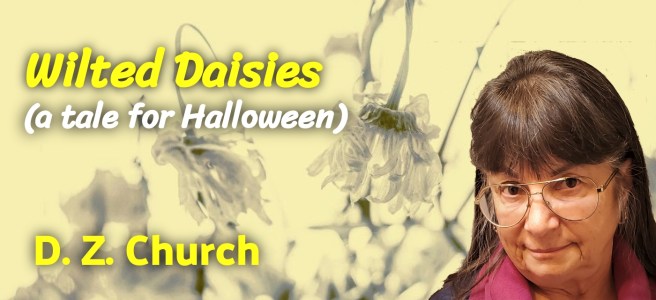
Wilted Daisies

Maybe it’s the darkness of the day, the brown leaves dripping with rain, or Halloween around the corner. Whatever, it conjures stories of visitors from beyond the veil. So, I offer a short-short-short-really short story for your October enjoyment.

No one had used the back parlor of Countryman House since the official government letter arrived twelve years earlier notifying Edith Countryman of her husband’s death at Chickamauga. The letter remained on the small table before the settee, held in place by a crystal vase of long wilted daisies.

As Cora Countryman entered the room, sunlight glissaded through two six-over-six windows, their red brocade drapes tied back to save the cloth, the open sashes allowing the soft clucks of chickens to invade the still of the room. Shelves of books lined the interior wall, some behind glass. When a girl, Cora sat at the carved mahogany reading table by the windows. Her feet dangling off the chair, her tongue between her lips, she drew pictures of sailboats, strange pyramids, and darkly clothed men from stories. Of course, that was when her father lived, before his loss forced her mother to take in boarders.

Twelve years seemed ample time to mourn, especially with her mother as gone as her father, though not as dead, well, not dead at all if the rumors that Edith was gambling on the Mississippi riverboats were true. Cora leaned over, touching the letter’s brittle paper. As she did, the room shook under the thunder of hooves so real she pivoted to face them, horses leaped over a stonewall onto pikes, men shouted as others fell, screamed, lay motionless. She removed her hand from the paper, the room ceased shaking, all before her vanishing.

Cora sat on the settee, staring into the marble fireplace with its walnut mantle, her right hand spread across her chest, her breathing rapid. She lowered her hand to her side, afraid to touch the vase of dead daisies, lecturing herself on her ridiculousness.

Once convinced, she wrapped her fingers around the vase, a withered white petal fell from a long dead stem, floating to the ancient letter. Laughter erupted and swirled around the room. A young woman, a daisy chain wreathing her brow, threw her arms out, twirling until she bobbled into the arms of a dark-haired youth of near her age. They lay together in the tall grass; he brushed a single daisy petal across her lips, until the marching of heavy footfalls brought them to their elbows.

Cora admonished herself, she was a modern woman, this was fantasy, or wishfulness. She lifted the yellowed paper between two fingers, it tore along a long-rotted crease.

“He is not dead, he is not,” a man in a blood-spattered coat insisted, his hands at the wrist of the body set before him. “Take him elsewhere, he belongs with the living.”

A soldier, his blue uniform filthy, positioned the dead man’s arms on his chest and with another lifted the stretcher. The two ducked out the tent flaps into cannon smoke, bullets smacking into trees and through tenting. They dropped the stretcher and ran for cover before men in gray on wild-eyed horses breaching the position.

Cora’s father lay before her, blood coursing from his wounds. A smile eked across his handsome face, a sly one. He opened one eye.

The government letter of notification in Edith Countryman’s right hand, she sank to the settee, placing the letter on the table. When a breeze ruffled the paper’s edges, she situated a vase of daisies on it. “He is not dead, I have seen him, I have seen his smile.”

The vase and letter remained there, twelve years, her mother forbidding all to use the handsome room. Determined to end the nonsense, Cora took the cut crystal vase of dead flowers in one hand and the yellowed notification in the other to the paned-glass section of the bookcase. The moment she set the items on a shelf, it began to vibrate and the glass panes to shimmy. She slammed the rattling doors closed, and holding them tight with her left palm, she locked the haunted souls inside. The key tight in her fist, she leaned, her back against the shelves. A wind howled down the fireplace flue and across the floor, swirling ashes over and about the table.

Her eyes on the fluttering ashes, Cora took a deep, freeing breath. There were eggs to collect.

Cora’s adventures begin in Unbecoming a Lady, available at https://www.amazon.com/Unbecoming-Lady-D-Z-Church-ebook/dp/B0BTKBSP1B. A Confluence of Enemies, the second book in the Wanee Mystery series, is available January 15, 2024.


October by Karen Shughart

October is without a doubt my favorite month, filled with a bounty of richness and color that I embrace before the landscape turns into subtle shades of brown and beige. Here in the northern part of New York state, on the shores of Lake Ontario, there are breathtakingly beautiful days this time of year: cloudless cerulean skies; a Caribbean green lake with meandering white caps, perfumed like the ocean without the brine; a piercing lemon-colored sun that warms the coolness in the air, and crisp nights with a carpet of stars winking and blinking in an ink-stained sky.

By now many leaves have turned bright with shades of yellow, gold, deep rust and red, but until our first frost, the lawns will remain green.  The sea grasses in our backyard, almost as tall as our house, have feathery, burgundy tassels and, when the wind blows in from the northwest, sound like the gentle ebb and flow of waves on the water. Stately pine trees, red-berried evergreens and hollies provide contrast, reminding us that life continues, even in winter.

Burnap’s Farm Market – Sodus, NY

The farmstands, with domes of potted mums for sale in a riot of colors, will remain open for the rest of this month and into the holiday season. Berries, peaches and plums, lettuces, cucumbers, and zucchini, have been replaced with other fruits and vegetables that can be stored for longer periods of time and will warm our bellies on cold nights: local apples of every variety; hearty winter squashes; purple-green kale; cabbages; potatoes, and multi-hued varieties cauliflower.

In October I replace the summer cushions and pillows on the wicker furniture on our front porch with ones more representative of the season. Halloween is big here, so some of the pillows are patterned with pale green, orange, and white pumpkins with deep green and purple leaves and vines. Instead of sitting on our deck for our late afternoon happy hour, my husband and I move to the porch, drinking wine and welcoming friends who stroll by and then stop for a drink and to chat.

November is just around the corner, and there will be plenty to celebrate then, too, but for now I’ll rejoice in this beautiful month of October.

Karen Shughart is the author of the Edmund DeCleryk cozy mystery series, published by Cozy Cat Press. Her third book, Murder at Freedom Hill, recently was awarded first place in the mystery category and third place in fiction in the International Firebird Book Award competition. She is currently working on book four, Murder at Chimney Bluffs.

The 8 Parts of Speech and Me by Heather Haven

I am married to a retired English teacher. Which is a good thing on a lot of levels. Not only is he a sweetheart but he takes out the trash and loads the dishwasher. Okay, not the way I would load it, but I need to let that go. Moving on, hubby is my go-to guy for all the parts of speech, which sometimes I don’t know. It’s not for want of trying. I do try. It’s just that it gets away from me. Maybe I’m so busy writing the words I don’t always know why I compile them the way I do. When I write a sentence it either feels right or it doesn’t. If it doesn’t, I move everything around until it does.

Now, I do know a noun when I fall over it. A person, place, or thing. Tom is a noun. Good old Tom. I also know a verb. Whatever Tom is doing is a verb. Tom runs. Because I’m doing so well, we will move on to an adverb. Tom runs swiftly. Noun, verb, adverb. It helps that most adverbs end in “ly.” I like that. Also, I have just described Tom’s running ability. Adjective to follow. Tubby Tom runs swiftly. We have just described Tom. Although, how he can run swiftly being tubby is questionable. I’m tubby and can’t. Of course, I sit on my derriere all day writing parts of speech. It’s a wonder I can move at all.

But back to the parts of speech. While I am fairly clear on the four above, the remaining sometimes throw me. For instance, a preposition. Those are the teeny, little words, often no more than one to three letters long like “in,” “at,” “on,” “of,” and “to.” Remember good old Tom? Well, he’s stopped running and now he’s arrived at his destination, the friendly neighborhood bar. But is Tom in the bar or at the bar? Got me. I don’t always know and usually fudge it. Then when I reread it, I either keep it the way it is or change it to what feels better. And good grief, here’s another side of prepositions, the time frame stuff, such as “since,” “for,” “by,” “during,” “from…to,” “from…until,” “with,” and “within.” Well, Tom is going to stay at the bar until his wife comes to pick him up because he’s had it with running.

Conjunctions. These are  “and,” “since,” “for,” “by,” “during,” “from…to,” “from…until,” “with,” and “within.” Conjunctions allow me to make my run-on sentences. You know, the ones that never end. But I am a piker. The longest sentence award goes to: Jonathan Coe’s The Rotter’s Club, 13,955-word sentence. You can bet Mr. Coe used a lot of the above to accomplish that. I am not including Tom in any of this because he is tired from his run, imbibing, and listening to his wife tell him off about his imbibing, and wants to take a well-deserved nap. Conjunctions. You gotta love ’em.

Pronouns. I used to get these until the current move to make every “she” and “he” “her” and “him” into “they” and “them.” I understand and appreciate it all in theory, but I still don’t know how to speak it. When you’re talking about one person doing something or going somewhere but have to use the plural form is hard for me to do. Where is Tom going? They are going to the bar. Okay, I’m working on it.

Interjections. Wow! I do that a lot. Golly, gee, do I. For instance: Fer cryin’ out loud! Tom, put down that bottle. You’ve had enough.

Then we have past participles, predicates, and stuff like that. That’s when I need retired English professor hubby standing over my shoulder. Preferably with a martini in his hand. Tom and I have a few things in common.

Mom’s Creative Children

Mom once told me she had been blessed with two creative children. At the time, I took it to mean that she thought my brother and I were underemployed.

He’s a musician. I’m a writer. He was also a teacher for many years. I knew from an early age that I wanted to write. So I spent my working life in a variety of jobs, the last being an administrative position at the University of California. It was all in aid of paying the bills in order to support my avocation. I wanted the kind of job I didn’t have to take home with me.

My brother had the same desire to make music. He got his first guitar when he was a teenager. With two friends, he played rock ’n roll. They practiced in the basement after school. Was it my imagination, or did the house shake? Maybe that was the windows vibrating?

They were certainly loud. I once asked Mom if the noise bothered her. She said, “At least I know where your brother is.” True enough.

Me, I was the kid who always had her nose in a book. So, it seemed natural to write one. I wrote what I called a book in the sixth grade. It was more like a short story, a very short story. And I illustrated it, too. It was a mystery, natch.

My brother kept playing music over the years, in local bands in the town where he lived, doing gigs on weekends and teaching full-time. He has multiple guitars and takes several wherever he goes. I understand this is a condition common to guitarists.

I graduated to short stories in junior high and high school, some of them longer. I called them novels, but they weren’t. Novellas, maybe. We will draw a veil over the plot about the circus.

At some point I began writing a mystery. Through various drafts it got better, and I was sending it out to agents. Then I got the idea for the book that became my first published novel, Kindred Crimes, and everything got pushed to one side while I wrote that.

Publishing lightening struck and I won the St. Martin’s Press Private Eye Writers of America contest for best first PI novel. I was to pick up the award at Bouchercon, which was in Philadelphia that year. My parents were so proud and excited they got on a plane and flew to Philly to see me get that award.

From then on, they were my biggest promoters. Dad was a salesman. He’d carry copies of Kindred Crimes in the trunk of his car, telling everyone about his daughter the writer. And if his audience had a glimmer of interest, he’d pop open the trunk and sell them a book. Mom did her part, too, selling books to family and friends alike. She would buy them when a new book came out and give them as gifts, too.

Dad is long gone. Mom died in August, just over a month ago. Mom being Mom, she left detailed instructions about her memorial service, right down to the Bible verses and the songs. She specified that she wanted my brother to sing a song he’d written. Of course, he had a guitar with him. He didn’t think that any of his rock or blues songs would be appropriate, so he wrote a new one for Mom.

The other instruction was that I was to read something from one of my books. As I stood in front of the people at the church, I prefaced that by saying, “Well, Mom, I write crime novels.”

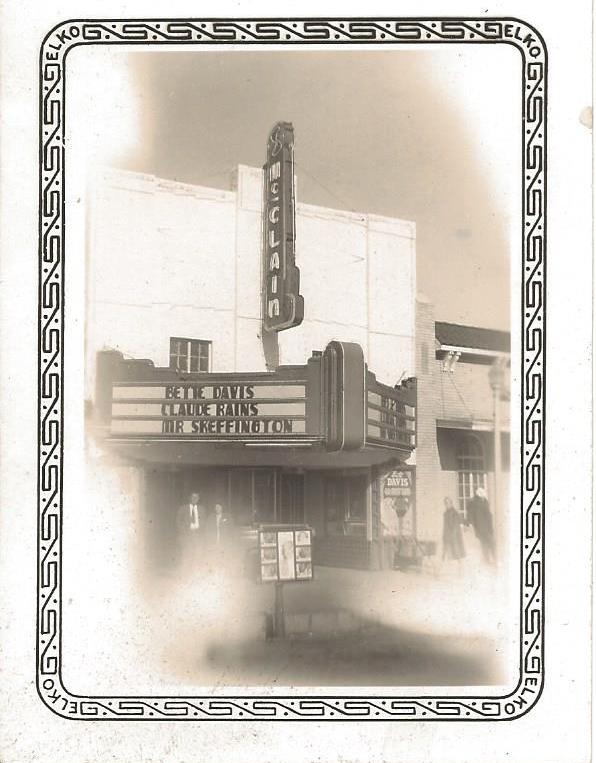
Then I read a few paragraphs from Bit Player. That’s the book where my private eye Jeri Howard gets involved in a decades-old Hollywood murder because she learns that her grandmother, an aspiring actress in the 1940s, was once questioned by the police. It seemed the appropriate choice, since Mom grew up selling tickets and watching every available picture at the movies theaters her family owned. In fact, that’s where she met Dad, at the ticket booth of the family movie palace during World War II.

Here’s to Mom, a love letter from one of your creative children.

Guest Blogger ~ Mollie Hunt

Ten years, ten Crazy Cat Lady mysteries.

Ten years ago, my high school best friend said to me, “Let’s publish your book.” She was an editor. I was a writer, unpublished even though I’d recently completed my ninth fiction manuscript. I’d been trying the query route, but I never had the patience to carry it through. When I finished a book, I’d send out a frenzy of query letters to everyone in the marketplace manual but then get tired of waiting for that one good response and start another book. Writing books fascinated me; trying to pitch them did not.

I’d completed three mysteries, a thriller, and three and a half sci-fantasies when on a trip to Mazatlán Mexico, I began something new. With the warm breeze off the Pacific Ocean and the sound of marimbas playing in my ears, I penned the first chapters of a cat-themed cozy featuring a cat shelter volunteer. This one felt different; even then I knew it could be a series.

That story, Cats’ Eyes, was the one my friend the editor said we should publish, and we did.

After Cats’ Eyes came Copy Cats and then Cat’s Paw. The Crazy Cat Lady Cozy Mysteries found its voice and established its living characters. I kept coming up with new things for my shelter volunteer Lynley Cannon to do and new crimes that only she could solve. Her varying clowder of cats helped in their catly way, along with her octogenarian mom, her teenage granddaughter, her shelter buddy, and a hunky humane investigator. When I sat down at the computer, the stories would write themselves.

And now, ten years later.

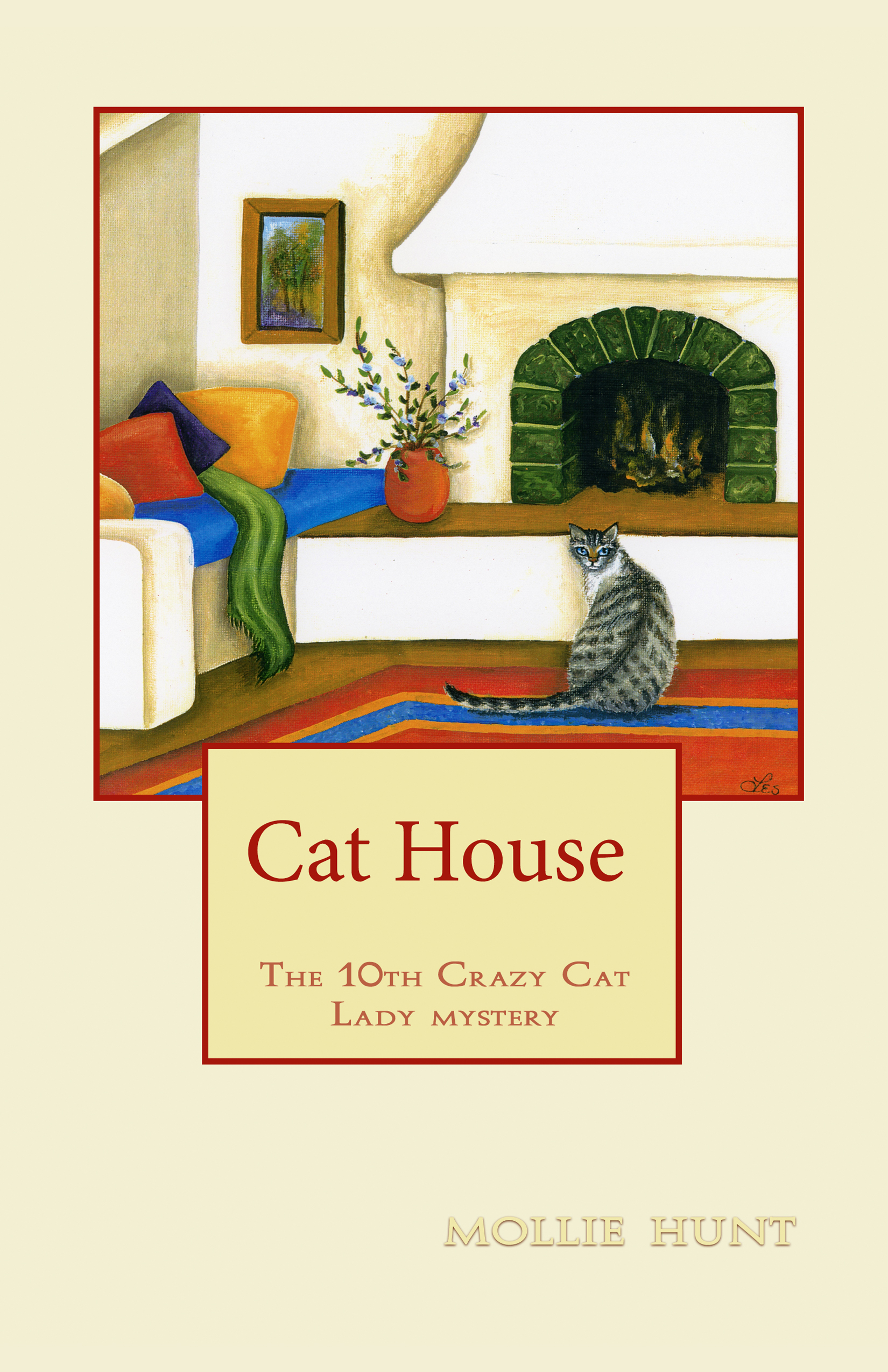
I’m about to publish a new Crazy Cat Lady mystery, Cat House, and this one is special for a few reasons. It’s the tenth in the series, ten being a milestone. It takes place in my own neighborhood, and though the exact locations are fictional, anyone familiar with the Hawthorne district of Southeast Portland, Oregon will be able to visualize some of the features. And if you’ve read any of my series, you know I incorporate cat information into each story and include cat facts and snippets at the beginning of each chapter. Like my character Lynley Cannon, I am an devoted cat person, a volunteer, and an advocate for all cats. If my stories can not only entertain but teach something about cats, I’ve achieved my objective.

In Cat House, I’ve incorporated a secondary storyline involving a cat being treated for Feline Infectious Peritonitis. Up until recently FIP has nearly always been fatal to the unfortunate cats and kittens who contract it, but now there is a cure. Sadly, however, the drug to treat FIP isn’t approved in the United States, so sufferers have to look elsewhere. To get this storyline right, I needed to do quite a bit of research, and not just the internet kind. I reached out to a friend who had successfully treated an FIP kitten with “black market” drugs she obtained through an online group. I also learned of FIP crusader Peter Cohen and his cat advocate work. I was able to interview Peter and find out a whole lot more about why we can’t get this lifesaving drug in the US.

I included Peter’s interview as an afterword in Cat House. My new book may be cozy fiction and light reading for those who like cats, mysteries, and happy endings, but the reader might just learn something along the way.

Right now you can pre-order Cat House for its release on October 29th. Link to Pre-order: https://www.amazon.com/dp/B0CGSXLYTP

Cat House

Book 10 in the Crazy Cat Lady Cozy Mystery Series

This Halloween, the cats are hiding, and the monsters don’t wear costumes.

Young men from the Portland-Seattle area are going missing. It’s just another sad headline to Lynley Cannon—until she starts her new cat sitting job for an enigmatic neighbor.

An off-limits room, a suspicious phone message involving drugs, and the sudden appearance of a missing man’s cat arouse Lynley’s suspicion, but how far can she go before the consequences of her cat-like curiosity turn deadly?

https://www.amazon.com/House-Crazy-Lady-Mystery-Book-ebook/dp/B0CGSXLYTP

Cat Writer Mollie Hunt is the award-winning author of two cozy series, the Crazy Cat Lady Mysteries and the Tenth Life Mysteries. Her Cat Seasons Sci-Fantasy Tetralogy features extraordinary cats saving the world. Mollie also released a cat-themed COVID memoir. In her spare time, she pens a bit of cat poetry as well.

Mollie is a member of the Oregon Writers’ Colony, Sisters in Crime, the Cat Writers’ Association, Willamette Writers, and Northwest Independent Writers Association (NIWA). She lives in Portland, Oregon with her husband and a varying number of cats.

You can find Mollie Hunt, Cat Writer on her blogsite: https://molliehuntcatwriter.com/

Follow Mollie’s Amazon Page: http://www.amazon.com/author/molliehunt

Facebook Author Page: http://www.facebook.com/MollieHuntCatWriter/