The Humorous Side of Writing a Mystery by Heather Haven

I don’t always write funny. In fact, some of my books aren’t funny at all. Oh, there might be something humorous said by a character now and then. But for the most part, it’s a straight mystery. However, my most popular series, The Alvarez Family Murder Mysteries, is definitely on the humorous side. My readers tell me they like the uniqueness of the family, a nice way of saying kookiness.

What they seem to also like is that Lee Alvarez, the protagonist, gets in over her head and is often involved in some funny situations. Of course, it doesn’t always have to be her. Sometimes it’s the characters surrounding her who have their lighter moments. However, the mystery itself, the whodunit part of the read, has to be there, regardless. In my humble opinion, the story cannot and should not be sacrificed for a laugh.

When I wrote comedy acts for performers that’s exactly what I did, though, write for laughs, laughs, laughs. But a mystery is a different animal and any humor added should be character-driven or situational. But I often walk a tightrope. How much humor is enough? How much is too much?
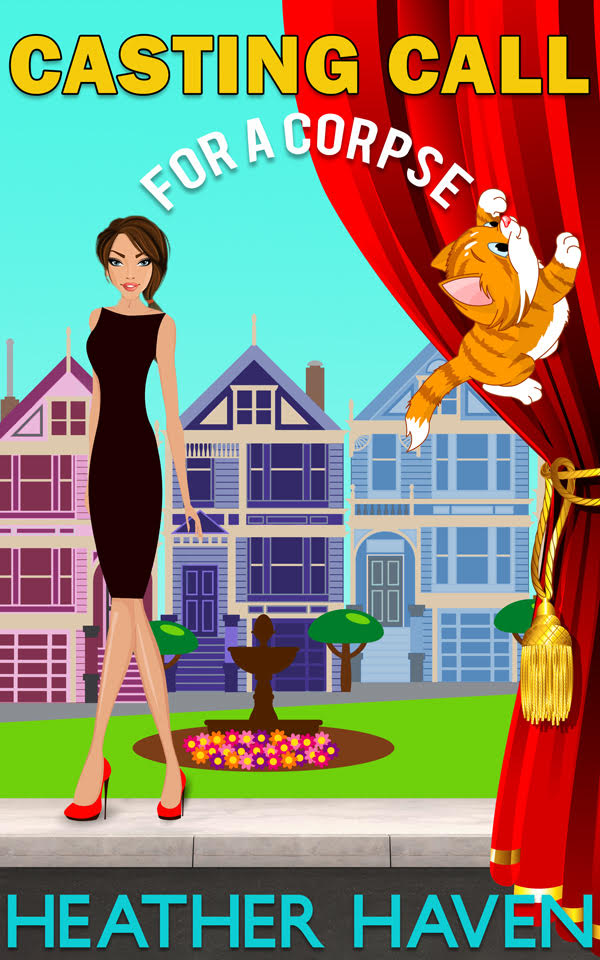
When I write a humorous scene, I try to give new insight into a character or add something to the story. When that happens I am off and away. One of my favorite examples comes from Casting Call for a Corpse, Book 7 of the series. It’s a scene involving a theatrical mishap, a not-too-well-trained horse, and Lee’s new husband, Gurn. Ordinarily, Gurn is a man in control, but at this juncture, he is undercover as a bit player in a new musical and is out of his comfort zone, which is often the key to humor.

Gurn entered from downstage right dressed in a French foot soldier’s uniform. A seemingly unconscious man, also wearing a French uniform, was slung over Gurn’s left shoulder. According to rehearsal, Gurn was supposed to cross to Gaby at center stage, say his lines, and then exit stage left. However, he halted awkwardly midway between stage right and center. When he tried to walk toward Gaby again, he simply couldn’t. Finally, he stood in one spot, looking more or less stupefied.

It didn’t take the audience long to figure out why he couldn’t move any farther. The wrist of the unconscious soldier had become entangled in one of the many pieces of gelatinous barbed wire jutting out from the fence. Whenever Gurn tried to move forward, the other man’s arm would be pulled as far as possible. It was clear the arm was insnared in the fake barbed wire. Any movement was impossible. I don’t think it was Newton’s law of physics, but something close. It became clear that unless Gurn dropped the man to the stage floor, he had to stay where he was.

Gaby, the star of the show and an old trooper, realized something was wrong. Changing her blocking, she walked over to Gurn who looked as if he would pass out at any moment. She fed him his line couched in a question.

“Tell me, soldier, were you going to ask me to please save your friend?”

Gurn opened his mouth, but no sound came forth. He may have seen many tours in Afghanistan as a soldier, but being onstage in front of eight hundred people was a new form of terror for him.

Gaby braved on. “I know if you could but speak,” she ad-libbed, “You would ask me to save your friend. So why don’t you bring him to the field hospital?”

She gestured to offstage. Gurn’s jaw worked back and forth several times. He looked out into the audience with rapidly blinking eyes. Still, he could utter nothing.

“It’s right over there. Go,” Gaby finally ordered, pointing to a spot offstage.

Gurn tried to walk in the direction indicated but, once again, had to stop when the other man’s arm was pulled to full extension. Also, the wire seemed to become more tightly wrapped around the “unconscious” actor’s wrist with each tug. The actor began to struggle, trying to get off Gurn’s shoulder. Panicked, Gurn reached behind himself and the man. He gave the offending, taut wire a mighty yank as only a former Navy SEAL can do, who is in really good shape. Which was really bad.

What happened next reminded me of the nursery rhyme, This Was the House That Jack Built:

This was the man

who yanked the wire

That jerked the fence

That pulled the scrim

That toppled the backdrop

That crashed to the floor

That spooked the horse

That hauled the wagon

That galloped onstage

Then raced to the exit

But not before pooping

Downwind of upstage

A bemused audience watched the entire set crash down upon itself behind onstage actors who stood frozen in place. Once the dust settled, Gurn realized he was free of the wire holding him and his companion captive onstage. Lines forgotten, Gurn made a sprint for the wings but not before running into one of Bob the Horse’s deposits. I am not well versed on the subject of horse manure, but from what I witnessed, it can be on the slippery side. Consequently, Gurn glided like an ice skater for a pace or two. Then both feet went out from under him.

Up in the air both men went. But what goes up must come down. So down they came landing squarely in another one of Bob’s farewell gifts. Dumbfounded, the two men sat, unmoving. There was the universal moment of sympathetic silence all human beings feel for any poor sap sitting in the middle of a horse patty. The feeling soon passed.

One or two audience members began to titter. Several broke out into loud guffaws. More laughter followed. Soon no one was holding back, including Gaby. She collapsed to the stage floor, wrapped her arms around herself, and rocked back and forth shaking with laughter.

The curtain rang down. The house lights came up.

There’s more, of course. We have characters reacting to what happened and so forth. I try to have one or two of these scenes in each story. But they can’t be there unless they do one of three things: show another facet of a character, move the story forward, or add relief and/or color.

Comedy writing can be very rewarding and a lot of fun. Seriously.
Simple Gifts

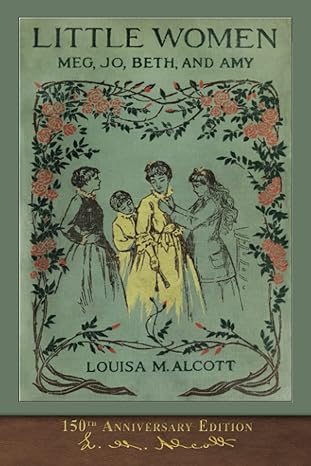
“Christmas won’t be Christmas without any presents,” grumbled Jo, lying on the rug.

That’s the first line from the 1868 classic Little Women by Louisa May Alcott. It makes me think about this time of year. We’re heading from Thanksgiving to the holiday season—Christmas, Hannukah, Kwanzaa, and a host of other holidays. Plus birthdays. Always birthdays. It’s definitely gift-giving season.

To a certain extent, I’m with Jo. Christmas means presents, among other things. But I’m at that age where I don’t need any more stuff. I’m valiantly trying to get rid of stuff.

Please, no more socks. How many pairs of socks can one person use? Over the past year or so I went through the sock drawer—and the scarf drawer and the jewelry. The local thrift store, which benefits the local animal shelter, got plenty of donations.

And clothes. It’s difficult to buy clothes for another person, though I’m a sucker for a T-shirt with a catchy saying. Did I mention the T-shirt drawer? See thrift store, above.

I’m also retired. I confess that I wear the same clothes over and over. After all, it’s just me and these cats, hanging out at home, writing. I do spiff up when I go out, though. I put on shoes. That counts. That reminds me of a sweatshirt I once gave my father for Christmas. It said: “I’m retired. This is as dressed up as I get.”

Getting back to gifts. Books are much appreciated and I have been known to give the title and author of the desired book when asked for suggestions. My mother was of the opinion that I already had way too many books so she never would give them to me as gifts.

I’ve come to the conclusion that at this stage of life, giving people things they can eat is a really good idea. There are several people on my gift list who like chocolate, so that always works. I have a friend who loves fruitcake, a substance she can take and I will gladly leave. My brother is fond of oysters in any form, so tins of smoked oysters find their way into his Christmas stocking. I make wonderful pumpkin bread and people on my gift list are always pleased to get a loaf.

If you’re as old as I am, perhaps you remember Geritol commercials. Geritol was and is a vitamin supplement (it’s still on the market!). In early TV commercials it was promoted as a cure for “iron poor, tired blood.” The commercial I’m thinking of, from the 1970s, features a woman saying, “We’ve got so much to be thankful for. We’ve got our health and when you’ve got your health, you’ve got just about everything.”

It was hokey back then. These days, I see the truth in the statement. That’s one of the Christmas presents I already have. I am in good health, despite occasional twinges and familiarity with ibuprofen and Tylenol. I have a roof over my head, a warm bed, kitties to cuddle and books to read. I have time to write and lots of ideas to write about. And memories of all sorts, the good outweighing the bad.

Christmas won’t be Christmas without any presents. They’re already there, under the tree and all around me.

Guest Blogger ~ Roxanne Varzi

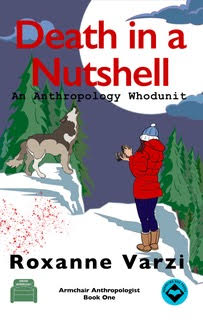
“Very few of us are what we seem,” the thematic essence in Agatha Christie’s stories, is not only the kernel of a good murder mystery but also the raison d’etre of an anthropologist. We anthropologists go to our field site (where we will study culture, people, rituals, or phenomena). We participate in daily life there, while observing and asking questions. Then, we return home, puzzle over, and try to piece together all the information we have collected that will solve the mystery to a cultural question. In my protagonist’s case in Death in a Nutshell: “Why do people immigrate to Bozeman, Montana?” And then, we write up our findings as an ethnography.

Anthropologists and detectives (and mystery writers) work hard at decoding (creating) symbols and looking for (planting) clues to explain why people do what they do, how they do what they do, and why they persist in doing what they do. Hypothetically, detectives are Anthropologists, Anthropologists are detectives, and mystery writers are a little of both. This fluidity is why writing Death in a Nutshell: An Anthropology Whodunit, a murder mystery that embeds anthropology, was not a huge leap for this anthropologist.

As a child, I was also told that just as “You are what you eat,” “You write what you read.” So, it should have come as no surprise to me, given that my youth was spent in the world of cozies with amateur sleuths (Nancy Drew, Ms. Marple, Harriet Vane, etc.) that while on a winter vacation in Montana five years ago, an idea for a murder mystery surprised me. It came to me, initially in the form of a single character in a singular setting: a nature photographer in Yellowstone Park.

I returned home with a burning desire to write, but a raging fever kept me in bed the last week of winter break. I was unable to write more than a few pages of notes. My teaching quarter began, and the mystery faded into a file folder where it would mostly remain for the next two years.

In early 2020, the pandemic hit, and a few months into the lockdown, I carefully re-opened the file, not because I had more time (teaching on Zoom coupled with a unique homeschooling experience was more challenging), but precisely because entering into a cozy world of my own making was the only salve and form of control, I had in a world that was out of control and facing new and inexplicable dangers.

While delving back into the world of fiction, I noticed that I was not the only one having difficulty handling reality. My university students were slipping away, and just like my young learner with dyslexia at home who had escaped to a world of fantasy novels, they also needed a more inventive, sensorial, and creative way to engage the material I was attempting to teach them.

At home, my goal was to make education more accessible, often involving using stories to deliver information. I was already doing this with complex theoretical knowledge at the college level in the form of a novel and plays, so why not a murder mystery? And why not for everyone who enjoys a good mystery and is fascinated by the study of human behavior, the kernel of any good mystery?

Anthropology is often described as a discipline that aims to make the strange familiar, and the familiar strange. There was no better time than during the early months of the pandemic to witness the familiar turning strange and the strange slowly becoming daily life. The world needed, and still needs, a little anthropology to help navigate difficult cultural transitions. But that does not mean it should be devoid of its mysteries or that we should seek to control all that we cannot easily explain.

One of the joys of writing fiction is how a book unfolds despite its author. As my book slowly came along, my characters, as characters in fiction often do, began to take on a life of their own. My protagonist acquired dyslexia, which was no surprise given that I had spent the better part of the last decade researching dyslexia, advocating for students with dyslexia, and learning about my own dyslexia. What was serendipitous and quite surprising was when, on one pre-pandemic afternoon, my son returned from an after-school program at Chapman University and demanded: “Where are my fossils?”

Why would he suddenly need his fossils?

“I need to take them to Chapman next week.”

What did fossils have to do with an after-school program that paired younger students with dyslexia and other learning differences with college students and faculty mentors?

“Our professor mentor is a paleontologist!” My aspiring paleontologist son answered in frenzied excitement.

The paleontologist was none other than Jack Horner, a pivotal figure in my novel, whose exhibition I had encountered during that fateful Montana vacation. People, indeed, are not what they seem. I had no idea Jack Horner was a person with dyslexia when I slipped him into Death in a Nutshell. Or that we would meet one day through my son and our shared dyslexia. Nor had I known that Agatha Christie–the author who would become such an influential figure in my writing–was also a person with dyslexia.

It’s moments like these, when the unseen mysteries that connect us come to light, that I most enjoy as a writer and anthropologist—and writing mysteries in particular are the best way to keep me digging for a good story.

Alex is on the verge of dismissal from her anthropology doctoral program when her luck turns, and she lands a fellowship with a dioramist at the Museum of the Rockies. The only problem is, Alex hasn’t a clue about dioramas or dinosaurs, and, as she will soon find out, she’s not the only one faking it in this frozen landscape.

From New York City to Yellowstone National Park, we follow Alex, a whip-smart dyslexic-ADHD Margaret Mead cum Ms. Marple, as she explores friendship, identity, globalization and a murder against the stunning backdrop of the Rockies in winter. 

            A murder mystery embedded with forays into visual anthropology … we find that in an era of fake news and science denial, a little anthropology goes a long way.

Universal Book link: https://books2read.com/varzi

Roxanne Varzi  is an award-winning author, filmmaker, playwright, Fulbright scholar, dyslexia disruptor. She has a PhD from Columbia University and is a full professor of Anthropology and Visual Studies at the University of California Irvine. Her writing is published in The London Review of Books, The Detroit Free Press, The LA Times, The Guardian, and Le Monde Diplomatique and three anthologies of Iranian-American stories. She is the author of Warring Souls, and Independent Publishers Award Gold Medalist Last Scene Underground: an Ethnographic Novel of Iran. 

https://faculty.sites.uci.edu/professorvarzi/

https://www.linkedin.com/in/roxanne-varzi-b178417a/

https://www.facebook.com/roxannevarziauthor/

RABBIT HOLE

The holiday season is upon us! My tree is up, and we had a wonderful time visiting with my grandkids and their parents. Next will be decorating the house with all my favorite things and wrapping presents I’ve bought throughout the year. And with three newly published books, I can’t wait to gift them to all the people who supported my writing efforts this year.

As much as I love the festivities of the holiday season, I have to admit, I love writing more.

When I found myself faced with a few obstacles this past summer while trying to finish my novel “Vanished in Vallarta”, my normal writing routine became a frantic, almost 24/7 push to complete the editing phase of the novel.

Part of the frenzy was due to also trying to wrap up “Redneck Ranch” and polish a rewrite of “Five Golden Rings.” I wanted to have all three of these books available for the Portland Holiday Market which occurs the third week of November. All of a sudden, I found myself scrambling at the end of October to publish and order the books for an arrival date in time for the market.

Thankfully, I was blessed with some heroic efforts from friends who believe in me, and all three books were ready in time for the Portland Holiday Market. These ladies are definitely on Santa’s “Nice List”!

Prior to the book publishing craziness, I had developed a balanced schedule of work (Unfortunately, I still have a day job), write, house work, write, yard work, write, meal prep, write. You get the idea. But the pressure of wanting these books completed by a self-imposed deadline, caused me to fall down a Writing Rabbit Hole! And I liked being there!

When I would venture out of my abyss, I’d find unfinished house work, empty cupboards and a husband losing his ability to support my passion. But after a half-hearted effort to catch up on these things and spend time with Randy, back down the writing rabbit hole I would go.

Now, though, I’m anxious to find my balance again. Maybe, despite my sleepless nights and endless fretting, I liked the stress of meeting a deadline. Enjoyed being immersed in México with my fabulous characters. Adored walking the streets of Stoneybrook with Wyatt, Harley, and the rest of the townsfolk.

But equity in all areas of my life needed to be addressed. With this goal in mind, I dredged up a tried and true work technique I learned many, many years ago. Power Blocks! When I was first building my investment business, I was taught to designate two hours of each day to certain work related projects. This method helped me accomplish more during an eight hour work day, so surely it would come in handy now.

I’m close to retiring, so some days my job only takes about two hours. First block assigned. Next I knew I should do a household task or project and made a list to work from. Two down, two to go. Since I’m up early, two hours writing in the morning seemed prudent. If I was successful with the other daily power blocks, I could eek out two more hours in the afternoon before Randy arrived home from work to focus on expanding my marketing efforts. Paty Jager will be proud this task made the power block task list.

December will be a good trial month to implement my power block approach. Of course, I may have to substitute chores and projects with decorating and baking, but it is the holidays after all!

One thing I know for sure, I’m passionate about my writing! I know too that I can survive deadline related stress, self-imposed or otherwise. I also believe applying an idea generated by the 1930’s quote of Allen F Morgenstern, “Work smarter, not harder!”, will help me stay focused.

I’m excited about the three books I have planned for this year: “Chaos in Cabo”, “Whispering Willows, a Novella” and “Willow’s Woods”. Plus, I’m planning to write two short stories for anthologies in 2024.

So, if you’ll excuse me … I’m heading back down the Writing Rabbit Hole!!!

Now for my shameless promotion. “Vanished in Vallarta” is now available on Amazon:

Motivation

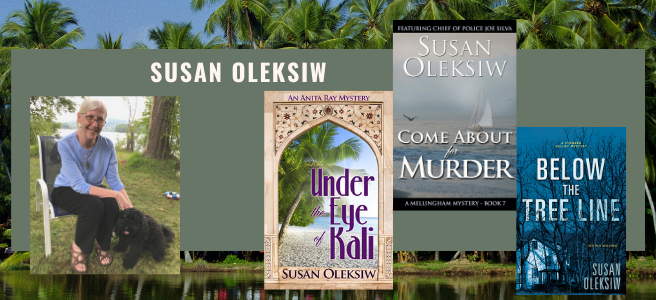
I’ve been working on the sixth Anita Ray mystery since July, and now have 44,000 words. That by itself should tell you that I haven’t been well focused on this one, but I’ve had two epiphanies this month. First, I know what the big crisis will be, and it’s coming up in the next 10,000 words. Second, and much more important, I don’t have to know a character’s motive until I get near the end.

This, the second discovery, surprised me. I’ve struggled with finding motivations for my characters’ behaviors beyond their conduct simply being the result of who they are, their past experiences and hopes for the future. That’s always been true of any character, but when it comes to murder or some other form of violence, I need to see something more in this person I’ve created, something that the reader hasn’t already divined by reading about him or her. 

We stitch together our fictional creations from snippets of real life. Riding on the subway or bus or train brings us into contact briefly with the oddities of our world, the woman who wears orange sandals under a plaid lumber jacket on a sunny day, her jacket covering up fabric of such color we’re dying to get a look at it but she’s buckled up tight. Perhaps the only thing about her buckled up. We overhear snatches of conversation. I still wonder about the meaning behind the casual words of two men in a cafe. She’s always been like this; it was no secret. But he married her anyway? He did. And it isn’t medical? Nope. I really want to know what “it” is. And then there was the package that arrived at a neighbor’s, which she sniffed and shook, and apparently rejected because she left it on the front step. I don’t know what happened to it after that, only that it disappeared.

I’m curious about these people’s lives but if I put them in a story as a killer, I need to know what would make them kill. Being odd or different or cryptic isn’t enough, as every writer knows. We look to the great ones in our genre—Agatha Christie in the traditional mystery, Ray Bradbury in science fiction, or James M. Cain for noir—and think about how they developed their characters’ moves and failures. The motives for crime can be limitless, but perhaps the shortest list comes from Christie: greed, lust, envy. Those cover just about every failing in life.

I’ve been thinking about these for weeks now because even though I have a murder, another crime coming up, a diverse cast of miscreants, and a great deal of stupidity, I still don’t have a motive for the inciting incident. At least, I didn’t. That was part of the second epiphany this month. The characters can have all sorts of immediate short-term motives, but the one that’s driving everything has to be larger, tied deeply and inexorably to the character’s identity. I found it this month, and it has delighted me. It was almost obvious, but not quite. 

The surprising thing to me is that I’ve written half the book without knowing why this is all happening and happening in the way it is. We watch people in life, just as in books, wondering what they’re up to. We’re waiting to cross the street when he see a man on the opposite sidewalk stop and stare in a store window; he peers, he moves closer, he looks around to see who else is nearby, and he stares even harder in the window. When he walks on, looking back once or twice, we cross the street and try to guess what he was looking at. It’s an old-fashioned tailor’s shop with the expected clutter in the undusted window—scraps of fabric, a bolt of cloth, a tape measure, a small cardboard box of pins and other notions. In the unlit interior beyond, we see nothing to catch our interest. So what was he looking at? He wasn’t wearing a fine suit, just a short jacket and slacks; and he wasn’t old enough to have known about regular tailors in this little city. But there is something in that window . . .

I stopped worrying about my characters’ motivations in this particular novel while I wrote, figuring each one would either come to me or it wouldn’t. And I have faith in my unconscious to supply the needful. But I’m also flexible, and if a better one pops into my head, I’ll go with that. This is all part of the path I decided to try with this book. I would write it without guideposts, outlines, clear (or vague) ideas of where I was going. If a character or incident popped into my head, I’d add it. I’d just keep going. It’s very liberating but also a little scary. I’m not sure what I have, if anything, but I do have a sense of things coming together. I’ll let you know in another 20,000 words or so where I am.