Of Holidays, Memories, and WAY Too Much “Stuff”

I mentioned in a previous post how much I detest the Christmas holiday, but I know that’s not true for many people. Christmas is a special time for those who are religious and for many who have children, too, and it can be a time to give a gift to someone who can’t afford the item or who would not otherwise have a gift at all. But generally speaking, among the middle-class folks I know, none of us need more “stuff.” Excess “stuff” is filling our garbage dumps and destroying our planet.

So, I really don’t like to give an unwanted item just for the sake of giving a gift, and I really don’t appreciate receiving those, either. What am I supposed to do with the perfume I’m allergic to, or the scarf I will never wear? Yes, there’s always re-gifting to someone else, but we have to be careful about passing it on or we might hurt the feelings of the person who originally gave the gift.

When I think about gatherings of family or friends, I have no great memories of gifts I received. Do you? My best memories are all of activities and laughter we shared. I hope that folks who gather for the holidays will do something fun together. My first choice would always be to get outside and go for a walk or snowshoe or build a snow woman a snow dinosaur or something physically active, out in nature.


However, I realize that not everyone is capable of rigorous outdoor activity, and often the December weather is not welcoming, either. So maybe, play a simple game that everyone can participate in, like charades. Or have a gift exchange where each person wraps one useful and inexpensive item, like a screwdriver or a soup mix or a set of cooking spoons, then draw from a central pool of wrapped gifts, and let each person keep their gift or trade for another gift that has already been opened (a white elephant gift exchange). That activity can be interactive, often hilarious, and everyone goes home with something that is at least useful.

If you must give a gift to everyone, consider giving a homemade item like cookies or jam or a soup mix, or give an experience, or even more precious, a gift of your time. You might offer to babysit for relatives or friends who would really appreciate an adult night out, or offer to help paint a room if you know someone who is remodeling, or promise to drive an elderly relative to visit friends, or teach someone who has always admired your sweaters how to knit. How about gardening help or a one-day use of your pickup to haul something? You can write out your promise and put it in a nice card with a bow on it.

If you’re not crafty or a great cook and you don’t have extra time to offer or possessions to lend, you might give a gift certificate for a local restaurant or movie theatre or bowling alley or theme park. Or if you are wealthy, give a whole weekend getaway to someone who really needs it. You can give the gift of a future event or holiday; the gifts don’t need to be immediate. We all need things to look forward to.

Gifts of your time, your creative skills, or an enjoyable experience are typically a lot more meaningful and useful than another piece of “stuff.” Focus on making memories instead of more credit card bills.

Most of us have way too much “stuff.” But nobody ever has too many happy memories. Happy Holidays!


Let There Be Light by Karen Shughart

My husband and I live in a charming maritime village on the south shore of Lake Ontario in New York, the prototype for Lighthouse Cove, the village where my Edmund DeCleryk cozies are set. This time of year in our village activities surrounding the holidays abound, and there truly is something to do for people of all ages: festivals; tree lightings; parades; caroling; shopping and dining opportunities, and a judged competition for the best outside holiday decorations.

 I especially like writing about the seasons in my books. In my third, Murder at Freedom Hill, the crime occurs just before Thanksgiving with the investigation continuing through the entire holiday season. I enjoy describing how the folks living in Lighthouse Cove celebrate, with light-filled activities that juxtapose the dark, horrific murder that has occurred.

Ed, a retired Navy SEAL and former police chief, now works as a criminal consultant who is hired by the current police chief to solve the crime. His wife, Annie, head of the local historical society and museum, curates exhibits, organizes special events, and because of the historical backstories that frame each crime, often becomes involved in the investigation.

One of these special events occurs early in December, when the days are short and darkness prevails. A Festival of Lights, held on the grounds of the museum, provides diverse groups with an opportunity to showcase the ways in which light plays an important role in their cultures during this time of year:

Photo courtesy of Lyle Shughart

“The Holiday Festival of Lights was held in the park next to the museum the following Saturday evening and started at dusk. Tall stadium field lights provided illumination, and the museum staff and volunteers had strung multi-colored holiday lights on bushes and around tree trunks. Several portable fire pits had been placed at strategic spots near park benches to provide warmth.

The Neighborhood Association maintained a booth that offered free hot chocolate and cookies. Other booths, with representatives from local Christian, Jewish, Muslim, and Hindu congregations, offered information about their holiday customs including the significance of light, and samples of traditional holiday food.

Santa ambled through the crowd passing out wrapped red and white candy. A group from near Tug Hill brought live reindeer, tame enough to pet. Children hopped on the back of a fire truck, a huge wreath on its hood, for a ride around the block, speakers blaring seasonal winter songs.

A large evergreen tree located in the middle of the park was festooned with multi-colored lights; a Chanukah menorah, Kwanzaa kinara, and clay diyas—oil lamps representing the Hindu holiday of Diwali—flanked the tree on large tables on either side.

Towards the end of the evening, the high school student chorus handed out sheets for a sing-along and led the community in a diverse selection of melodies representing all the groups at the festival.”

A definition of the symbolism of light from the National Gallery of the UK states: “Across cultures, light is an ancient symbol of understanding and intellectual thought: it is the opposite of ignorance, or darkness. Almost universally, the dark is …frightening and sinister, associated with things we cannot understand. Light is said to conquer darkness and to bring order out of chaos.”

We all need a little light in our lives this time of year, so, let there be light!

The Holiday Season in Three Acts

Having you ever noticed that going through the holiday season is a lot like writing a novel?

Most writers of fiction are familiar with the three-act structure. While there are other models that can be used to construct a book, the three-act structure offers a handy method for building a plot. It works especially well for mysteries. It works like this:

Act 1–The Setup. In this act you introduce your Main Character, and then promptly make something happen that knocks your MC out of their comfort zone. Maybe they receive a mysterious letter, or a dead body shows up on their doorstep, or their kid is accused of a crime. This is called the inciting incident, and it creates a problem to solve, a challenge to meet, or an opportunity to take advantage of. The MC now has a goal.

Act 2–The Development. So the MC sets out to reach the goal, but it’s not easy. A lot of roadblocks, conflicts, and barriers are encountered along the way. The villain is elusive, red herrings steer the MC in the wrong direction, and a lot of questions evade answers. The plot twists and turns, tension tightens, and the suspense becomes unbearable. Will the MC succeed or fail? For a time, all seems to be lost.

Act 3–The Resolution. The big moment arrives. Everything has been building to this point. Now the MC’s ultimate success or failure will be determined. The villain will (hopefully) be vanquished, and all the questions will be answered. Reaching The End, the reader closes the book with a sigh of satisfaction and begins looking forward to the author’s next wonderful novel.

Right now you’re probably saying, “Sounds like a great story. I’d read that. But what does it have to with the holidays?”

Well, it occurred to me recently that the holiday season also unfolds in three acts.

Act 1–The Anticipation. We become aware that the holiday season is approaching. Or maybe it sneaks up on us; most years, that’s what happens to me.

This act can be fun, filled with hope and eagerness. This year, the holidays will go great. We make plans. We make lists. We ask questions: Will we celebrate at home or travel to visit loved ones? Who’s going to host the big dinner? What gift will please the picky nephew? What photo will we choose for the Christmas card? What do I want Santa to bring me? When will we find the time to accomplish everything on our to-do list?

Act 2–The Frenzy. Did I mention time? In this act, time becomes the villain. Too much to do, too little time. Now we’re in a frantic race to get it all done—shopping, decorating, wrapping, addressing, baking, searching for the missing gift tags, dashing from errands to parties to more errands. And all the while we have to keep up everything that makes up our daily lives during the other eleven months of the year. Our goal is to get it all accomplished in time to let us enjoy the rapidly approaching holiday. Will our juggling act succeed or fail?

Act 3–The Celebration. The big day arrives, or maybe it’s a stretch of big days. The frenzy of Act 2 is behind us. We can kick back, pour a cup or glass of our favorite festive beverage, and enjoy the twinkling lights and the smiling faces around us. It’s a joyous occasion, and just as we do when we finish a good book, we give a sigh of satisfaction.

Three acts to a book, three acts to a holiday season.

Whatever holiday you celebrate at this time of the year, may it be filled with joy, peace, and happiness for you and yours.

The Humorous Side of Writing a Mystery by Heather Haven

I don’t always write funny. In fact, some of my books aren’t funny at all. Oh, there might be something humorous said by a character now and then. But for the most part, it’s a straight mystery. However, my most popular series, The Alvarez Family Murder Mysteries, is definitely on the humorous side. My readers tell me they like the uniqueness of the family, a nice way of saying kookiness.

What they seem to also like is that Lee Alvarez, the protagonist, gets in over her head and is often involved in some funny situations. Of course, it doesn’t always have to be her. Sometimes it’s the characters surrounding her who have their lighter moments. However, the mystery itself, the whodunit part of the read, has to be there, regardless. In my humble opinion, the story cannot and should not be sacrificed for a laugh.

When I wrote comedy acts for performers that’s exactly what I did, though, write for laughs, laughs, laughs. But a mystery is a different animal and any humor added should be character-driven or situational. But I often walk a tightrope. How much humor is enough? How much is too much?

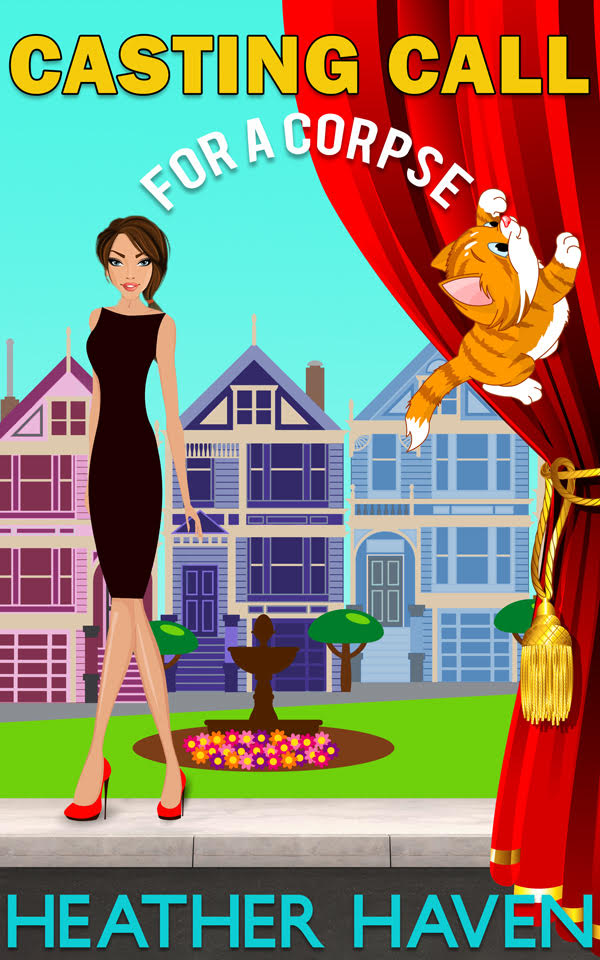
When I write a humorous scene, I try to give new insight into a character or add something to the story. When that happens I am off and away. One of my favorite examples comes from Casting Call for a Corpse, Book 7 of the series. It’s a scene involving a theatrical mishap, a not-too-well-trained horse, and Lee’s new husband, Gurn. Ordinarily, Gurn is a man in control, but at this juncture, he is undercover as a bit player in a new musical and is out of his comfort zone, which is often the key to humor.

Gurn entered from downstage right dressed in a French foot soldier’s uniform. A seemingly unconscious man, also wearing a French uniform, was slung over Gurn’s left shoulder. According to rehearsal, Gurn was supposed to cross to Gaby at center stage, say his lines, and then exit stage left. However, he halted awkwardly midway between stage right and center. When he tried to walk toward Gaby again, he simply couldn’t. Finally, he stood in one spot, looking more or less stupefied.

It didn’t take the audience long to figure out why he couldn’t move any farther. The wrist of the unconscious soldier had become entangled in one of the many pieces of gelatinous barbed wire jutting out from the fence. Whenever Gurn tried to move forward, the other man’s arm would be pulled as far as possible. It was clear the arm was insnared in the fake barbed wire. Any movement was impossible. I don’t think it was Newton’s law of physics, but something close. It became clear that unless Gurn dropped the man to the stage floor, he had to stay where he was.

Gaby, the star of the show and an old trooper, realized something was wrong. Changing her blocking, she walked over to Gurn who looked as if he would pass out at any moment. She fed him his line couched in a question.

“Tell me, soldier, were you going to ask me to please save your friend?”

Gurn opened his mouth, but no sound came forth. He may have seen many tours in Afghanistan as a soldier, but being onstage in front of eight hundred people was a new form of terror for him.

Gaby braved on. “I know if you could but speak,” she ad-libbed, “You would ask me to save your friend. So why don’t you bring him to the field hospital?

She gestured to offstage. Gurn’s jaw worked back and forth several times. He looked out into the audience with rapidly blinking eyes. Still, he could utter nothing.

“It’s right over there. Go,” Gaby finally ordered, pointing to a spot offstage.

Gurn tried to walk in the direction indicated but, once again, had to stop when the other man’s arm was pulled to full extension. Also, the wire seemed to become more tightly wrapped around the “unconscious” actor’s wrist with each tug. The actor began to struggle, trying to get off Gurn’s shoulder. Panicked, Gurn reached behind himself and the man. He gave the offending, taut wire a mighty yank as only a former Navy SEAL can do, who is in really good shape. Which was really bad.

What happened next reminded me of the nursery rhyme, This Was the House That Jack Built:

This was the man

who yanked the wire

That jerked the fence

That pulled the scrim

That toppled the backdrop

That crashed to the floor

That spooked the horse

That hauled the wagon

That galloped onstage

Then raced to the exit

But not before pooping

Downwind of upstage

A bemused audience watched the entire set crash down upon itself behind onstage actors who stood frozen in place. Once the dust settled, Gurn realized he was free of the wire holding him and his companion captive onstage. Lines forgotten, Gurn made a sprint for the wings but not before running into one of Bob the Horse’s deposits. I am not well versed on the subject of horse manure, but from what I witnessed, it can be on the slippery side. Consequently, Gurn glided like an ice skater for a pace or two. Then both feet went out from under him.

Up in the air both men went. But what goes up must come down. So down they came landing squarely in another one of Bob’s farewell gifts. Dumbfounded, the two men sat, unmoving. There was the universal moment of sympathetic silence all human beings feel for any poor sap sitting in the middle of a horse patty. The feeling soon passed.

One or two audience members began to titter. Several broke out into loud guffaws. More laughter followed. Soon no one was holding back, including Gaby. She collapsed to the stage floor, wrapped her arms around herself, and rocked back and forth shaking with laughter.

The curtain rang down. The house lights came up.

There’s more, of course. We have characters reacting to what happened and so forth. I try to have one or two of these scenes in each story. But they can’t be there unless they do one of three things: show another facet of a character, move the story forward, or add relief and/or color.

Comedy writing can be very rewarding and a lot of fun. Seriously.

Simple Gifts

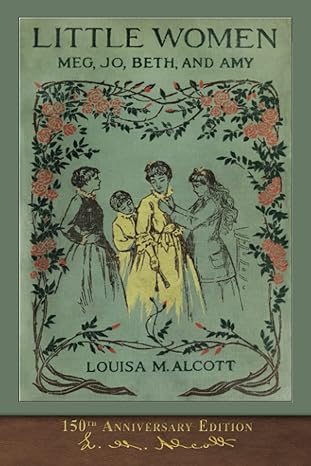
“Christmas won’t be Christmas without any presents,” grumbled Jo, lying on the rug.

That’s the first line from the 1868 classic Little Women by Louisa May Alcott. It makes me think about this time of year. We’re heading from Thanksgiving to the holiday season—Christmas, Hannukah, Kwanzaa, and a host of other holidays. Plus birthdays. Always birthdays. It’s definitely gift-giving season.

To a certain extent, I’m with Jo. Christmas means presents, among other things. But I’m at that age where I don’t need any more stuff. I’m valiantly trying to get rid of stuff.

Please, no more socks. How many pairs of socks can one person use? Over the past year or so I went through the sock drawer—and the scarf drawer and the jewelry. The local thrift store, which benefits the local animal shelter, got plenty of donations.

And clothes. It’s difficult to buy clothes for another person, though I’m a sucker for a T-shirt with a catchy saying. Did I mention the T-shirt drawer? See thrift store, above.

I’m also retired. I confess that I wear the same clothes over and over. After all, it’s just me and these cats, hanging out at home, writing. I do spiff up when I go out, though. I put on shoes. That counts. That reminds me of a sweatshirt I once gave my father for Christmas. It said: “I’m retired. This is as dressed up as I get.”

Getting back to gifts. Books are much appreciated and I have been known to give the title and author of the desired book when asked for suggestions. My mother was of the opinion that I already had way too many books so she never would give them to me as gifts.

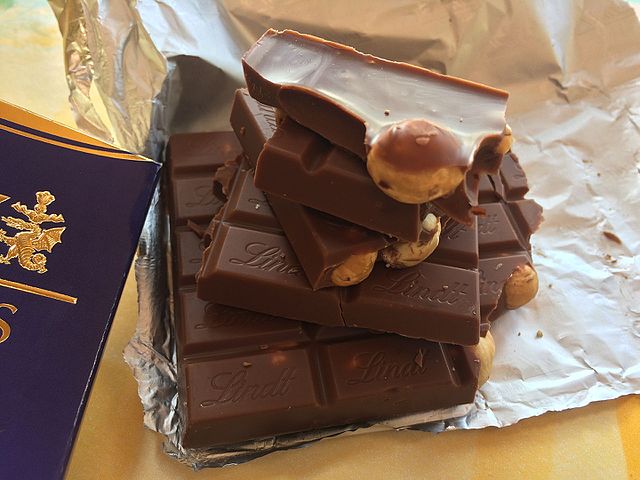
I’ve come to the conclusion that at this stage of life, giving people things they can eat is a really good idea. There are several people on my gift list who like chocolate, so that always works. I have a friend who loves fruitcake, a substance she can take and I will gladly leave. My brother is fond of oysters in any form, so tins of smoked oysters find their way into his Christmas stocking. I make wonderful pumpkin bread and people on my gift list are always pleased to get a loaf.

If you’re as old as I am, perhaps you remember Geritol commercials. Geritol was and is a vitamin supplement (it’s still on the market!). In early TV commercials it was promoted as a cure for “iron poor, tired blood.” The commercial I’m thinking of, from the 1970s, features a woman saying, “We’ve got so much to be thankful for. We’ve got our health and when you’ve got your health, you’ve got just about everything.”

It was hokey back then. These days, I see the truth in the statement. That’s one of the Christmas presents I already have. I am in good health, despite occasional twinges and familiarity with ibuprofen and Tylenol. I have a roof over my head, a warm bed, kitties to cuddle and books to read. I have time to write and lots of ideas to write about. And memories of all sorts, the good outweighing the bad.

Christmas won’t be Christmas without any presents. They’re already there, under the tree and all around me.