Agatha Christie and Me by Heather Haven

Even though I never knew Agatha Christie personally, she has been an important person in my life. I was a lonely kid and can only say the phrase, “Books are my friends” was on the mark for me. I started reading Nancy Drew mysteries when I was nine. I moved on to Agatha Christie when I was about sixteen. In the following years, I read anything that came my way, from Ernest Hemingway to P.G. Wodehouse, Ruth Rendell to Erma Bombeck. Thrown into this mix was required reading, such as “Ode to a Grecian Urn.”
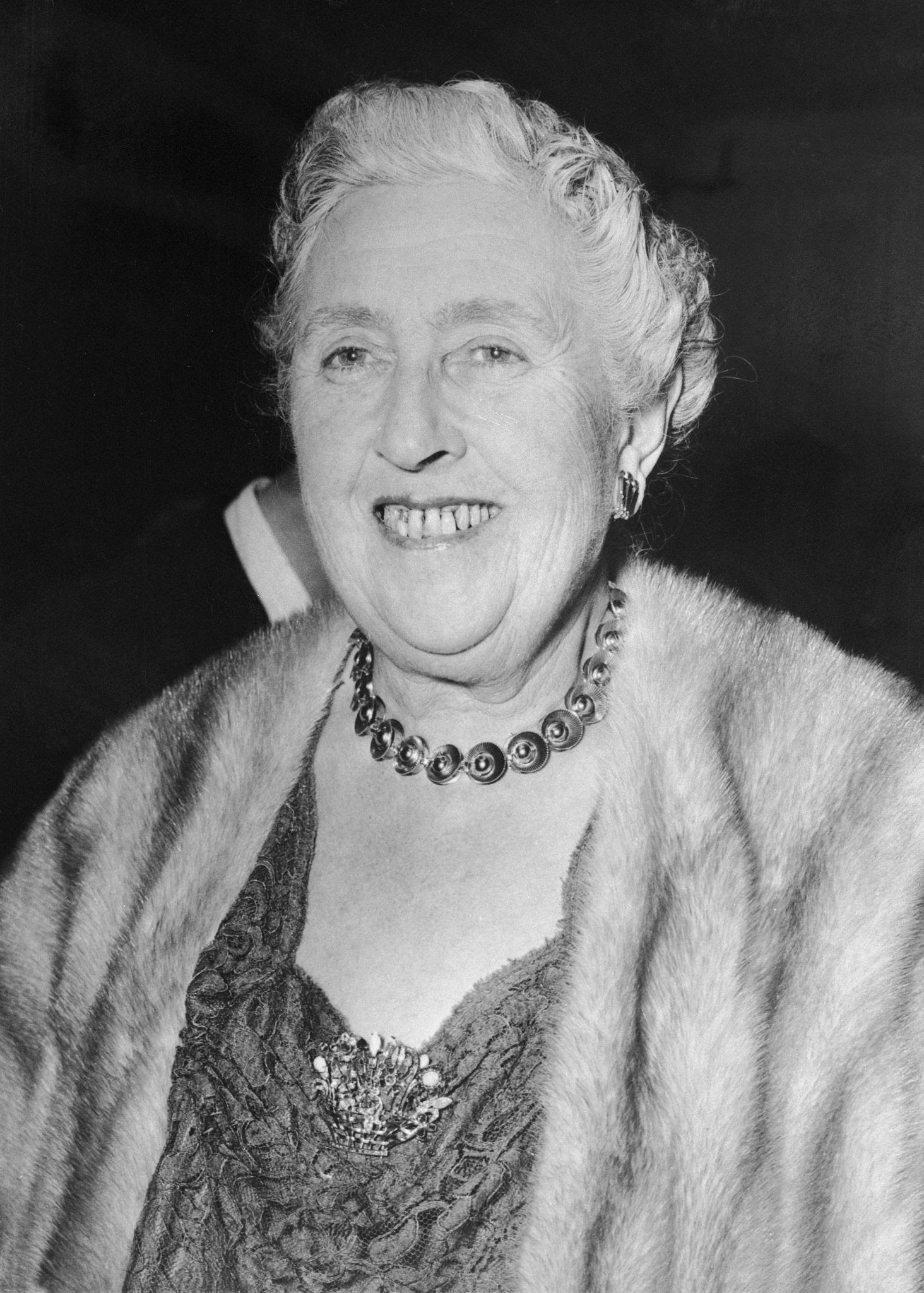
But I always came back to Christie. Her books were like a trip home. I knew I would care about the characters and be certain of where they were going i.e., a solved crime, but at the same time, be perplexed by the mystery. Above all, it would be a good read. Something to savor and enjoy, to be sorry when it ended.

Arguably, but let’s not argue about this, Christie invented the genre we know today as the cozy mystery. Although, most of them were not as cozy as people like to think. If you scratch beneath the surface, you will find deceit, betrayal, greed, selfishness, and amorality. Even in her romantic mystery series with Tommy and Tuppence, these two were up against some pretty evil doings amid the charm and fluff.

It is said that the best way to learn how to write a mystery is not just to study writing but to read others who have gone before. Read the best and you cannot help but become a better writer. So, I read her a lot. From Christie, I learned the value of having a protagonist people enjoy reading about and are committed to. I learned pacing, plot building, and the element of surprise. But mostly I learned the importance of sustained good writing.

Do I write like or as well Agatha Christie? No. But this isn’t a competition. I’m me and Christie is Christie. My goal is to write as well as I can, in my way, and in my voice. But hearing her angels singing in the background helps. Seeing in my mind’s eye the day-to-day existence of her people, even in the smallest of ways. Poirot measuring his eggs. Marple knitting her latest pair of baby booties. They help me with my own protagonists’ quirks and foibles, keeping my characters interesting and believable. There may be chit-chat about the Great God Google, but to me, Agatha Christie is my goddess.
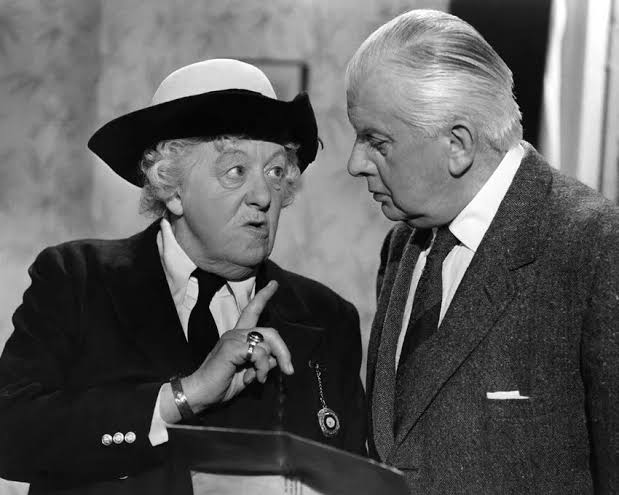
With this kind of god-like appreciation, comes a certain amount of ownership. I am quite possessive about what is done with her work in other media. I can remember seeing Margaret Rutherford on TV in four black and white movies with her playing Miss Marple and thinking, uh-oh.

Don’t get me wrong, I adore Margaret Rutherford. She was a wonderful character actress of the 50s and 60s who was in many fine movies, such as Blythe Spirit, The V.I.P.s, and The Importance of Being Earnest. She even won an Academy Award for The V.I.P.s. However, her approach to Miss Marple was more along the dotty and confused sleuthing line, with less observation and mental acuity. Rutherford also decided to add her own husband to the stories as her sidekick, Mr. Stringer. Of her performances, it was said Christie respected Rutherford, but later wrote that ”Margaret Rutherford was a very fine actress, but was never in the least like Miss Marple.” I’m with her.
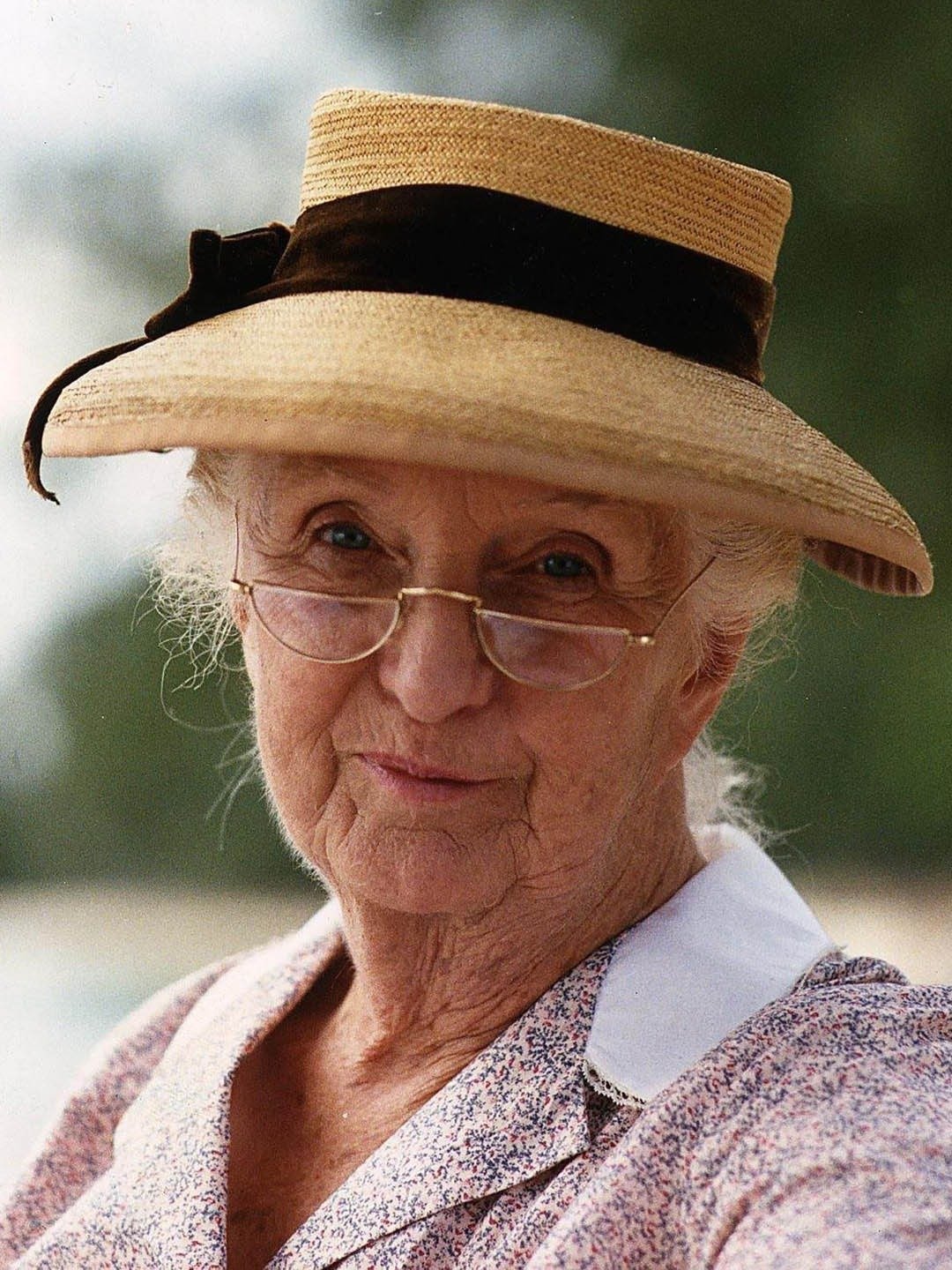
Glossing over 5’8″ Angela Lansbury’s Miss Marple played when she was 55 years old and looking as if she could fell a horse, we move on. Christie’s quintessential Miss Marple was Joan Hickson. Agatha Christie even wrote her a letter saying, “I hope one day you will play my dear Miss Marple.” Christie eventually got her wish when the opportunity arose for Hickson to star in the role at the age of 78. Others come and go, but Joan Hickson was and is my perfect Jane Marple.

Another gloss-over moment is Tony Randall playing Hercule Poirot in The Alphabet Murders. Despite adding Robert Morley to the cast, the movie didn’t work on any level. The script was compromised, the heart of the story was neglected, and Tony Randall was simply miscast. He found his feet in The Odd Couple but certainly tripped all over himself as Poirot.
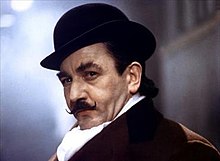
Albert Finney did Poirot one time in the movie Murder on the Orient Express. With an all-star cast, the script followed much of Christie’s novel. Thank you. Finney’s portrayal of Poirot was exacting, respectful and believable. My own respect for Albert Finney went up several notches after seeing that movie. This handsome dude who starred in the movie Tom Jones not ten years before became the excentric, middle-aged, not-so-good-looking Hercule Poirot.
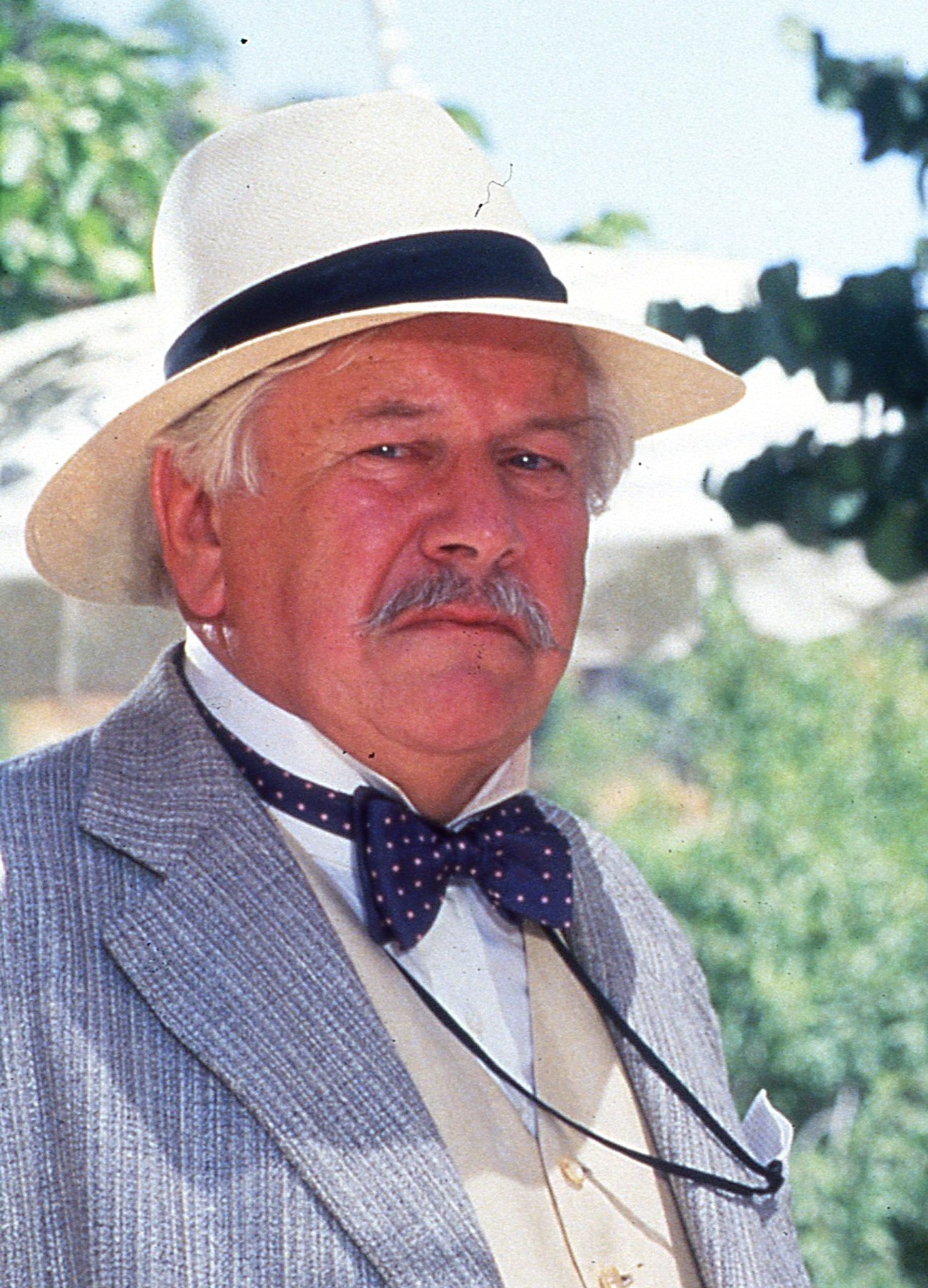
Peter Ustinov played a very credible Poirot in six movies. While he didn’t look physically very much like the description of Poirot in the books, he had a great sense of fun, the intellect was there, and he honored the character and the role. And he was a wonderful actor. The films were made on location and tended to follow the plotlines, always a plus. His Death on the Nile is one of my favorite go-to movies.

But now we come to Kenneth Branagh. He’s a good Shakespearean actor, but his Hercule Poirot is more one of his fancies than what Christie wrote. His Poirot is a man with a touch of Ian Fleming’s double 0 seven in him, blondish, younger, and far more strapping than any Poirot previously done. And his mustache seems to change in every film. He’s done three films so far, all uneven, and probably plans to do more. Okay. Everybody’s gotta make a living.
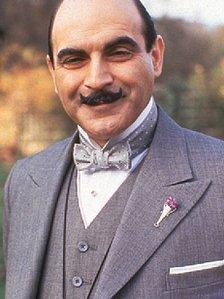
If you want to know what Hercule Poirot looks like according to Agatha Christie, either read the books or watch one of David Suchet’s performances. Because we have just gone back to quintessential. David Suchet played Hercule Poirot for nearly 25 years on television. It was a faithful version of the character. According to movieweb.com, “Throughout his 25-year tenure as the detective, Suchet managed to consistently bring to life all of Poirot eccentricities, right down to the physicalities and movement of the character — as, notably, Suchet managed to perfect Poirot’s distinct walk.”

Keeping in mind that actors need to work, and they’re going to take a job whether I like their version of the role or not, when I really want to visit Miss Marple, Tommy and Tuppence, or Poirot, I pick up one of Agatha Christie’s books. Timeless and wonderful.
History “swings like a pendulum do” *

* to misquote Roger Miller’s “England Swings.”

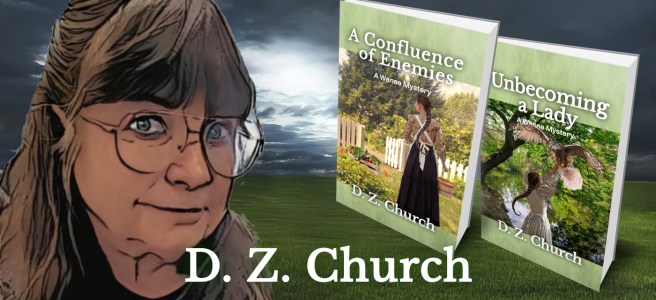
When selecting a year in which to begin my Wanee Mystery Series, I landed on 1876 not by accident but by design. It was the U.S. Centennial year. The Centennial Exhibition in Philadelphia, partially powered by a massive steam engine, showcased Alexander Graham Bell’s telephone, the first typewriter with a QWERTY keyboard (Remington 1), Edison’s automatic telegraph, new products such as popcorn, ketchup and root beer, and mass-produced wares including an improved sewing machine. Attending librarians founded the American Library Association. The women’s pavilion demonstrated women’s influence in philanthropy as well as philosophy, science, medicine, education, and literature, foreshadowing the woman’s movement. All while, Reconstruction was still a thing, Native Americans were battling for their land, the James brothers (and others) were robbing banks, and the country was fraught with the second worst depression in U.S. history, setting men adrift to join those already on the road due to the Civil War.

The War may have been over, but it wasn’t. The tides of belief were changing in the North to be less tolerant of the blacks they had just freed. The Southern Democrats fought a different sort of war using intimidation to ensure victory at the Southern polls. Lynchings were common, murders as well, all over the country, not just in the South. The country felt out of control to most. Yet the depression was easing, opportunities were appearing, and technology was booming. Does any of this sound familiar?

What I didn’t expect was how the next year, 1877, the setting for books four through six, would mirror the present. Newspapers predicted the fall of democracy. Public sentiment turned against “tramps” (homeless to us), immigrants, and Hispanics north and south of the border. Southern Democrats (some of whom, as seditionists, the 14th Amendment denied the right to vote or hold political office) took over statehouses by force and threw out duly elected Republican governors, reclaiming control of the south. The oligarchs of industry ruled the White House and most state houses. Graft was everywhere during President Grant’s just ended presidency, and the election of Rutherford B. Hayes considered fraudulent.

Fear crept through the cracks in doors and across the floor, coloring daily life. Small towns were no exception. Though generally not central to the angst, their newspapers, fed by the larger dailies, amplified the news and worries of the world, breeding distrust of the government and outsiders.

The West was still wild, the East tame (if you call murder, gangs and lynchings tame), and the Midwest a mess of mixed sentiments especially in the border states. Small towns like my fictitious Wanee, Illinois were at the nexus of all this change, rife with the disenfranchised, pressured by growth of outside industry, the railroad, and farmers. Glory be, it is my job to weave the discomfit, prejudice, worry, and change into the warp of each story. What a wonderful and frightening opportunity.

The words of one of my professors accompany me; you cannot truly know the tale Shakespeare tells without first understanding the context of the time in which he wrote. He wasn’t a Shakespearean scholar though he discovered the first draft of one of Shakespeare’s plays. Even so, he taught us far more than Shakespeare. He held our hands through the Elizabethan period, the church, the mores, and Shakespeare’s competitors. He made Shakespeare new to me with one question: what if Hamlet’s father wasn’t dead? I hope I do him honor in providing the context for my tales, these roiling years are the stage upon which Cora and her cohorts play. I ask myself with each page written and each plot devised how this disquiet affects the day-to-day dreams and strivings of Cora Countryman, Dr. Philip Shaw, and Sebastian Kanady, who owns and edits Wanee’s newspaper.

This tumultuous period will provide me with plots for a long time to come as Cora and her supporting cast wend their way through to the new century solving the crimes I present them. Yet, as I work on the fourth book, it feels as though 150 years on, we are fighting the Civil War all over again, while dealing with the same threats to our future, oligarchs, seditionists, and technology included. I for one do not wish another 1877 on this country, nor should you.

But I do love writing about the era and how the changes it forced still define us – for the good or the bad.

Unbecoming a Lady and A Confluence of Enemies are available from Amazon; https://www.amazon.com/Confluence-Enemies-Wanee-Mystery-Mysteries-ebook/dp/B0CQJ5DW4W. Check my website: https://dzchurch.com for more information on the Wanee Mystery Series and my other books or to sign up for my newsletter.

FINISH LINE

“Hi, my name is Kimila and I’m a word-aholic.”

I absolutely love words! I grew up in a family of storytellers and some of my crazy clan may have made up their own words occasionally. For instance, warshcloth for washcloth, tempature for temperature and yellow for hello. You get the idea, right?

Now part of the reason for these created words could be because my relatives moved to Oregon from Oklahoma before I was born. And all y’all no what a strong southern accent can do to the English language.

When I entered the working world one of my first jobs was a secretarial position at a bank. I’d always thought of myself as a great speller, but my mean supervisor soon taught me that was not the case. Imagine you’re typing a letter on a manual typewriter, and you’ve read the piece believing the missive is error free. Then … your supervisor hands it back with red ink markings showing your misspelled words and errors.

I became a better writer, editor, and speller thanks to Mean Mary. And the invention of computers and software has helped immensely. I love that Word tells me what’s wrong with a hint of blue or cute red squiggly lines.

My very first WIP in 2004, “Murder in Margaritaville” (no Jimmy Buffet would not let me use the name) was a labor of love created on a desktop using a keyboard. I pounded out all 125,000 words over the course of three months. Worked hard on editing, printed the pages, and clipped them into a three-ring binder. Then I had my mom, of course, and a few friends read my masterpiece.

Oh, the life of a novice writer. I attended my first Willamette Writer’s conference that year and fell for the line, “I’d love to represent you and your novel, but first we’ll need to have it professionally edited by our team of awesome editors. For a small fee (fortune).”

Of course, I forked over the money for the editing service and learned some valuable tools I still use today. Such as, the correct way to use the word “like”, which I had used incorrectly 30,000 times in my 125,000 word bemouth. One of the editors and I became friends after she sent me a sticker with the word “Like” in the middle of circle, then crossed out.

The most important lesson I learned, though, was do not pay someone who’s dangling the dream of helping you land a book deal. After paying for the editing, the agent, who’d lured me into her web of deceit, told me my masterpiece wasn’t a good fit for her firm.

She gave me a few reasons, but the one that stuck and haunts me still was, “As a novice writer, you should stick to 70-75,000 words in your books.”

I decided not to perseverate about this unpleasant experience and moved forward with my fledgling career. To hone my skills, I wrote short essays published by the “Cup of Comfort” anthology series. You learn how to be an efficient wordsmith when the count is 2,000 words. How to tell an interesting, compelling story without the excess baggage of unneeded words. That being a ruthless editor of your own work serves to make your story stronger.

Now that I’ve let go of the “book deal” dream, I’ve embraced creating interesting characters and writing the fabulous stories swirling in my mind. With three novels, a novella, and a handful of short stories in my collection of work, I feel good about my writing skills. A few glowing reviews for these books has also encouraged me to continue weaving my beloved words into dark and twisty tales.

Still, every now and then, I hear those long ago words echoing in my mind. As a novice writer, you should stick to 70-75,000 words in your books. And worry I’m being too wordy, adding unnecessary blather that will bog down my story and cause a reader to set the book aside.

Each novel I have written over the past six years has grown in wordcount. I find myself watching the count with a bit of trepidation as the number draws close to 70,000. But then I ask myself, is the story good? Can it be better? Have the character’s completed their journey within the tale? Are the loose ends wrapped up for the reader? Have I created a sense of anticipation for the next book?

At this point, I smile and keep writing until the story has reached the finish line. I don’t think of myself as a novice writer anymore, but instead as a writer who loves words and plans to let them determine when the tale is told no matter the word count!

Happy New Year, Ladies of Mystery! And happy writing!

Guest Blogger ~ M. E. Proctor

The Long and Short of It

If writing a novel is a long-lasting love affair—and it better be passionate because there’ll be a lot of time spent in close quarters—what are short stories? A brief encounter burning bright, a summer romance, a little walk on the wild side … It sure feels like that for me at times. Short fiction is a gulp of fresh air after completing a book draft, a welcome reprieve from obsession, and a new way to look at writing when the work-in-progress leaves me so cross-eyed I don’t see anything anymore.

Short stories are like stretching exercises. Tension is released, relaxation ensues.

A character pops into my head, a place triggers an image, a memory surfaces, a sentence rings true, and an idea is born. Could it turn into a book? Maybe, and some have grown wings and gone the distance, but not all stories deserve a 300-page treatment. Often their strength is in the instant. Their intensity cannot be sustained without dilution in a full-length narrative.

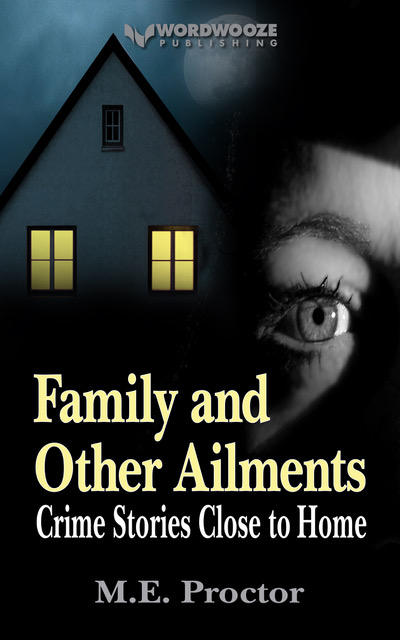
“Rabbits”, one of my favorite stories in the Family and Other Ailments collection, is a good example. It is told from the perspective of a twelve-year-old boy who blanked out a dramatic event. We meet him when he starts remembering. There’s fear and confusion, and a growing sense of panic that is more acute and more immediate for being at the core of the story instead of distributed over book chapters.

I love the spontaneity of short stories, and the best ones are written in a feverish rush with very little rework. They scream to get on the page. I often go back for inspiration to Ray Bradbury, who knew quite a bit about short fiction. One of his quotes is printed in my brain: In quickness is truth. The faster you blurt, the more swiftly you write, the more honest you are.

I can ponder a scene in a book for days, finetune and rewrite it endlessly. That kind of needlepoint doesn’t work for my short stories. The struggle doesn’t improve them, it tends to suck all the life out of them. My files are full of false starts and abandoned fragments. No regrets, they just didn’t make the cut.

Then there’s the guilty pleasure of genre-hopping. I write mostly crime, both in short and long form. The rules of the genre are infinitely flexible and accommodate pretty much everything. Yet, sometimes I feel myself slipping into horror or science fiction. I have a soft spot for cool vampires and conflicted androids. They would not fit in my contemporary detective series. Or I may decide to take a stroll in the 1950s because I’m a sucker for fedoras and hardboiled dialogue. Short fiction is like a pastry shop. All these colorful macarons. And there’s no sin in wanting to sample them all.

There are twenty-six tasty treats in my short story collection, Family and Other Ailments. Have a bite and tell me which one makes you want to come back for seconds. The main character of the book’s title story has already earned a return engagement. In a book.

Family and Other Ailments – Crime Stories Close to Home

Blood ties. The family we’ve been given, the friends we make, the loves we keep, and those we lost. The twenty-six stories in Family and Other Ailments (Wordwooze Publishing) teeter on the brink, hover at the periphery or even the possibility of crime.
The collection opens with “Spy Head,” a tale of friendship after a crushing trauma. In “Texas Two-Step,” brotherhood leads to a wicked double-cross. “Razorbills” shows a young woman seeking freedom from the prison-like caring of her sibling. “Black and Tan” slips into domestic horror, as does “Mutti,” with a hint of the fantastic. “Hour of the Bat” and “Bag Limit” are deep woods Texas noir, while “A Head for Numbers” and “No Recoil” go west, to the stark unforgiving beauty of the desert.

Buy Links:

Family and Other Ailments is available in eBook, paperback, and audiobook.

All links are accessible here: https://books2read.com/u/3Lx0v5

From reviews:

“Channelling distinct voices, subtle humor, and endings that plant a fist in your gut, Proctor’s Family and Other Ailments is a terrific collection of crime, suspense, and fear. The tales are carefully calculated, with each scene, each piece of dialogue building to that oh so important final strike: a crescendo point that leaves the reader jarred.”

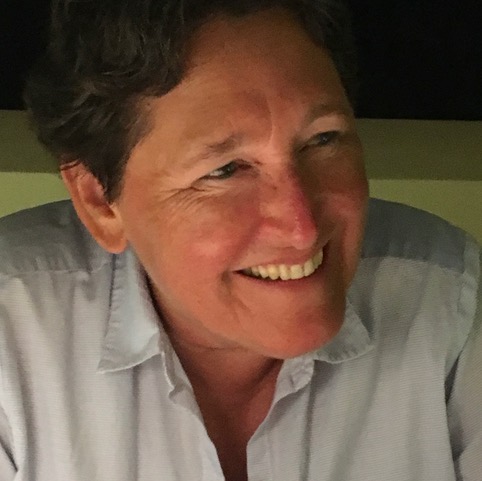
M.E. Proctor was born in Brussels and lives in Texas. Her short story collection Family and Other Ailments is available in all the usual places. She’s currently working on a contemporary detective series. The first book comes out in August 2024 from Shotgun Honey. Her short fiction has appeared in VautrinBristol Noir, Pulp ModernMystery TribuneReckon ReviewBlack Cat Weekly, and Thriller Magazine among others. She’s a Derringer nominee.

Author Website: www.shawmystery.com

On Substack: https://meproctor.substack.com

Facebook: https://www.facebook.com/martine.proctor

Twitter: https://twitter.com/MEProctor3

Getting Back into Character

Fiction is my salvation, both in reading and in my writing, because often everyday life is so tragic or so infuriating that I need an escape. So it is with renewed enthusiasm and determination that I am finally turning back to my work in progress: my crossover novel between my Sam Westin wilderness mysteries and my Neema the gorilla mysteries.

Somehow, during the long COVID isolation, my creative brain withered. I have only been able to write in fits and starts for several years now. And after the restrictions were lifted, I’ve been traveling quite a lot—Vietnam, Central America, Tanzania, and multiple shorter trips within the U.S. But life is supposed to be back to normal now, right?

However, having been derailed by family struggles and tragedies and having personally detoured (and procrastinated) for so long, I now must remember how to write. You’d think, as this will be my 15th full-length novel, that the process would be natural. But no. I have never been capable of writing an outline in advance for a novel. My brain just doesn’t work that way.

When I finally sit down at my computer and stare at that blank page on the screen, I feel like I’ve never done this before.

I need to remember how all my characters think, and since this book will contain two casts of characters, this is a bit of a challenge. But I will draw on my life experience. And on the internet, of course. First, I tackle Sam Westin, since Sam and Pam are a lot alike in their love of nature and their outdoor activities. Last October, I hiked part of the trail along Ross Lake in the North Cascades National Park complex that I am planning to use in this book. I have kayaked to other portions, so I can envision myself as Sam setting off on that trail and camping at the campgrounds. Like Sam, I would love to see wolves in the wild, so I can identify with Sam’s goal and imagine reasonably well what that would be like.

Finding not one, but two dead men in the wilderness? That’s a little harder, but hey, I’m a mystery writer. I can imagine it. I often imagine finding bodies in the wilderness when I’m out kayaking or snowshoeing or hiking. (Doesn’t everyone?)

Getting stuck with an injured foreigner who desperately needs help? I used to be the designated first aid responder at a geological research facility, so I’ve dealt with blood and injuries before. I’ve studied wilderness first aid and done stress and rescue training as a scuba diver. In college, I worked as a dormitory counselor in an English language school, where I had to interact with students from around the world. So, I think I can handle those scenes.

Being shot by an unseen stranger for no reason I can think of and needing to run for my life? Nope, I’ve never been there, thank God. But I can imagine the pain and confusion and fear. And I’ve walked through wild areas at night as Sam will need to do, so I’ve got that, too. But there’s a horse, and the injured guy. I’ve dealt with horses before. Yes, I can handle the Sam Westin part of the story.

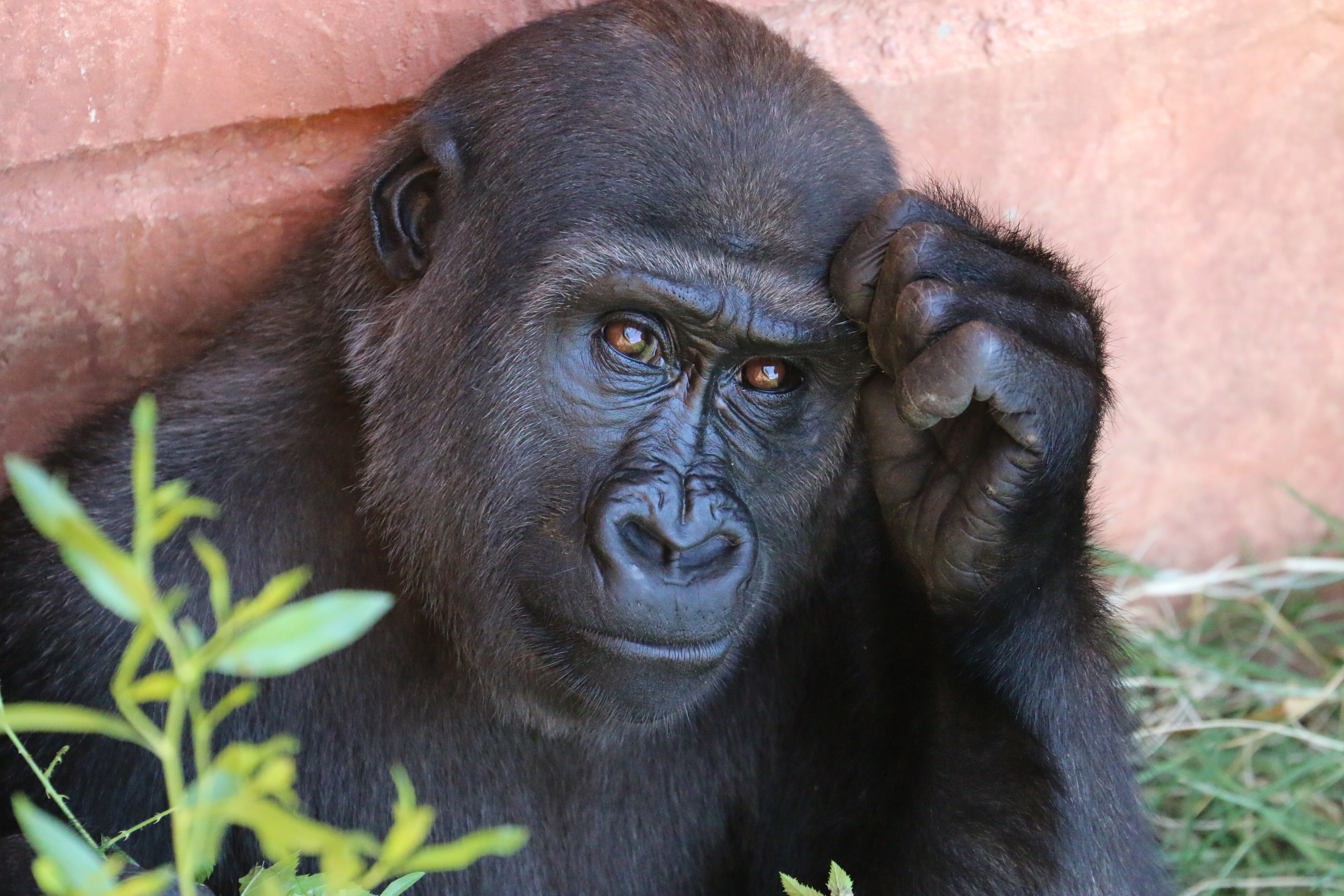
But then, I turn to the Neema portion. Neema is a gorilla that knows sign language, she has a mate, Gumu, and a baby, Kanoni. So, I write the beginning scene for the Neema portion of this book, in which both baby Kanoni and a foreign woman are shot (Kanoni, on purpose; the woman, accidentally). Yes, it’s horrible, but mystery writers have to do terrible things now and then, or readers won’t believe that they could happen in a book by that author. (Don’t worry too much, I can’t stand to kill animals, so the little gorilla will survive.)

Only the gorillas witnessed the terrifying crime and the perpetrator. So, after the dramatic original scene, I try to put myself in Neema’s place. She’s a mother, she’s confused and grieving after the vet takes Kanoni away. But she’s a gorilla; she doesn’t understand what happened or what to expect. I am neither a mother, nor a gorilla.

Blake, Sam Westin’s housemate, is way out of his depth in this story. He’s in charge of taking care of the gorillas while their owner is on vacation in Hawaii. Blake is a gay man who was betrayed by a lying lover. I’m not a gay man who has been betrayed by a lying lover.

My imagination is not getting very far with this. Why did I think I could do this?

Like many frustrated writers, at this point, I run away. I go for a walk. I vacuum the endless cat fur from my rug. I read several books. I re-caulk my bathroom. And then, after a couple of days of doing everything except writing, a revelation slaps into my brain: while Neema the gorilla is the character readers most often remember from that series, the stories are actually told from the point of view of Detective Matthew Finn.

Well, duh! Like I said, sometimes I feel like I’ve never written a book before, and it’s been quite a few years since I wrote my last Neema mystery, and my imagination has been on vacation for way too long.

I’ve done detective work. I was a private investigator for ten years. So, what is Detective Finn going to do when the case lands on his desk? Oh, yeah, I see it now. I see the path forward! Well, at least for several more chapters.

How will I blend these two stories? I have some thoughts, but none that are fully fleshed out right now. There is a common theme, trust me. There is a connection. I’ll get there.

But now I need to go for a walk. And vacuum up more cat hair.