Reading Old Work

For the last few weeks I’ve been thinking about the old mss left unfinished. Some are in my computer. Some of them are on paper, stacked in a closet, shoved into the back where I can’t see them. That’s probably a good thing because if they were visible I’d pull them out and litter my desk with them.

There’s nothing wrong with any one of them, and several came very close to a sale. But there is something not quite right. Every writer knows what I’m talking about—the story we loved and worked on and with a gasp of hope sent off to an editor or an agent. And then it sat there, on someone’s computer or desk, gathering dust of being pushed lower and lower on the list of titles in the TBR file. The question becomes, what do we do with them? Do we reread and rework them? That’s a definite possibility. The more I learn, the more I rethink what I’ve done and recognize where I could have improved the story by changing the setting, developing the villain more, heightening the tension, or removing the extra secondary characters. But I don’t do these things in a novel. I might do some in a short story, but not in a longer work. And I think I know why.

Some years ago I was an avid fan of Margery Allingham’s Albert Campion mysteries. The first one appeared in 1929, The Crime at Black Dudley, and others followed fairly regularly into the 1960s. I don’t know if many people read her work anymore, but she was considered one of the great British mystery writers of her time. After reading through her entire list including a couple of novellas, I came across her first mystery, The White Cottage Mystery, published in 1928. This is only a year before her first Albert Campion story. And I was startled at the difference between the two., and the extent of her growth and development as a writer between her first and her second book. It’s an experience I have always remembered. 

We grow and change as writers. If our work sounds the same year after year, we’re not growing and it’s time to stop and ask why. I don’t want to write the same book year after year. There has to be something different, some sign of a new perspective, a new challenge. I can see this same ambition in some of the writers I read, but not in others. 

When I pulled out some of my old mss and had the passing thought of rewriting and updating them, I was frozen, and here I think I was so for a good reason. Whoever I was back then I am not her now. To bring one of those old mss up to the level I would want to write today would be to dismantle and basically erase it. Each line, each feeling and action would have to be different because I’m different. The story was good for its time and in some instances that’s twenty or more years ago. I was different and the world was different.

I’m in a long phase of decluttering the house I’ve lived in for over forty years, but I doubt I’ll toss out those mss, not just yet. Each one tells me something about writing, finding a voice, developing a voice through time, challenging ideas and creating new ones. I liked some of those stories more than others, and the failure of some weighed on me more than others, but like any other experience that comes to an end, I let those novels go and moved on.

The one important thing I remember is that even though they didn’t sell, they made me the writer I am today, with their lessons and discoveries, their pitfalls and graces. For that alone I will probably keep them for a while longer.
Me, a Tree, and a Cat Named Blue

Have you ever had one of those days when writing anything much less a mystery is beyond your ken?

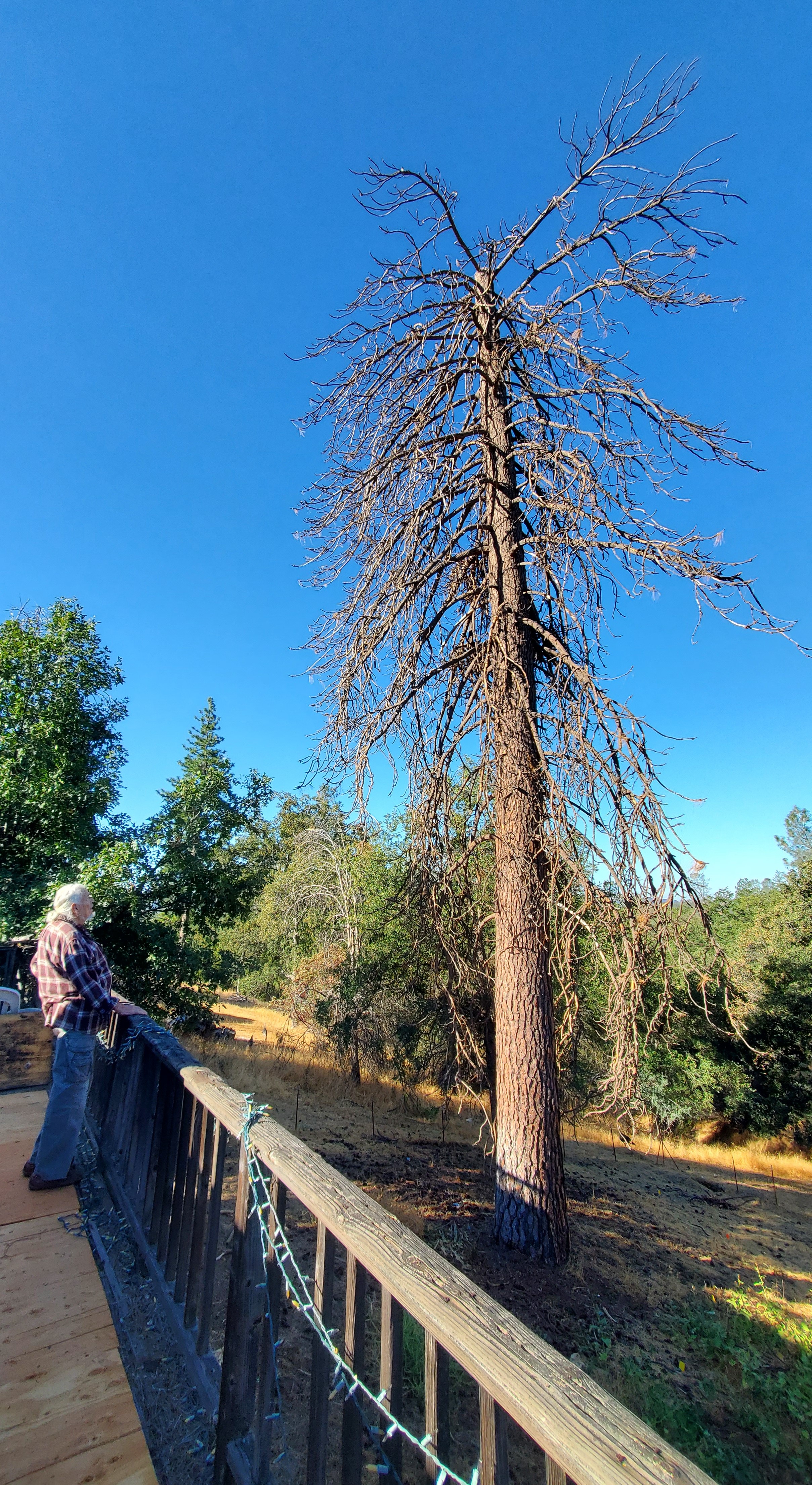
That’s me. My inner workings are consumed by the loss of a massive, centuries old pine tree and my cat Blue’s determination to regain cat-dom.

A month ago, Blue had a stroke and went all bobble headed. He could not stand up, much less walk. I had to feed him at intervals throughout the day and night, holding his bowl so that he could eat. But he ate. Not enough, still … that was then, and this is now. I bought him a bowl that required him to stand up to eat hoping to get him on his feet. He stood. He eats like a pig, snuffling as he snarfs. I took him out each day, steading his body between my legs then, with my hands, showed him where his front feet went, hoping his back legs would follow. They did. I urged him to keep his head up as he walked. He does. Now.

He’s sixteen years old. A glorious, big Russian Blue and he has the heart of twelve others. Today was a big day, I moved the donut where he resides away from his food bowl and litter. The plan being he would have to walk and exercise his balance. His first outing to his food dish went well, though he had a hard time finding his way back to his newly moved donut. Still, he did.

After the stroke, I thought we would have to let him go. I thought wrong. He is a gamer. Sometimes, I wonder about his memory. He doesn’t seem to recognize his name. Hard to tell with a cat though. My husband and I kid about renaming him Roomba because he always returns to his donut. Still, he’s with us and progressing. I don’t think he will ever be the cat named Do-Do, left at the SPCA at a year-old, unadopted for two years until he saw my husband and wouldn’t let him go. Boys!

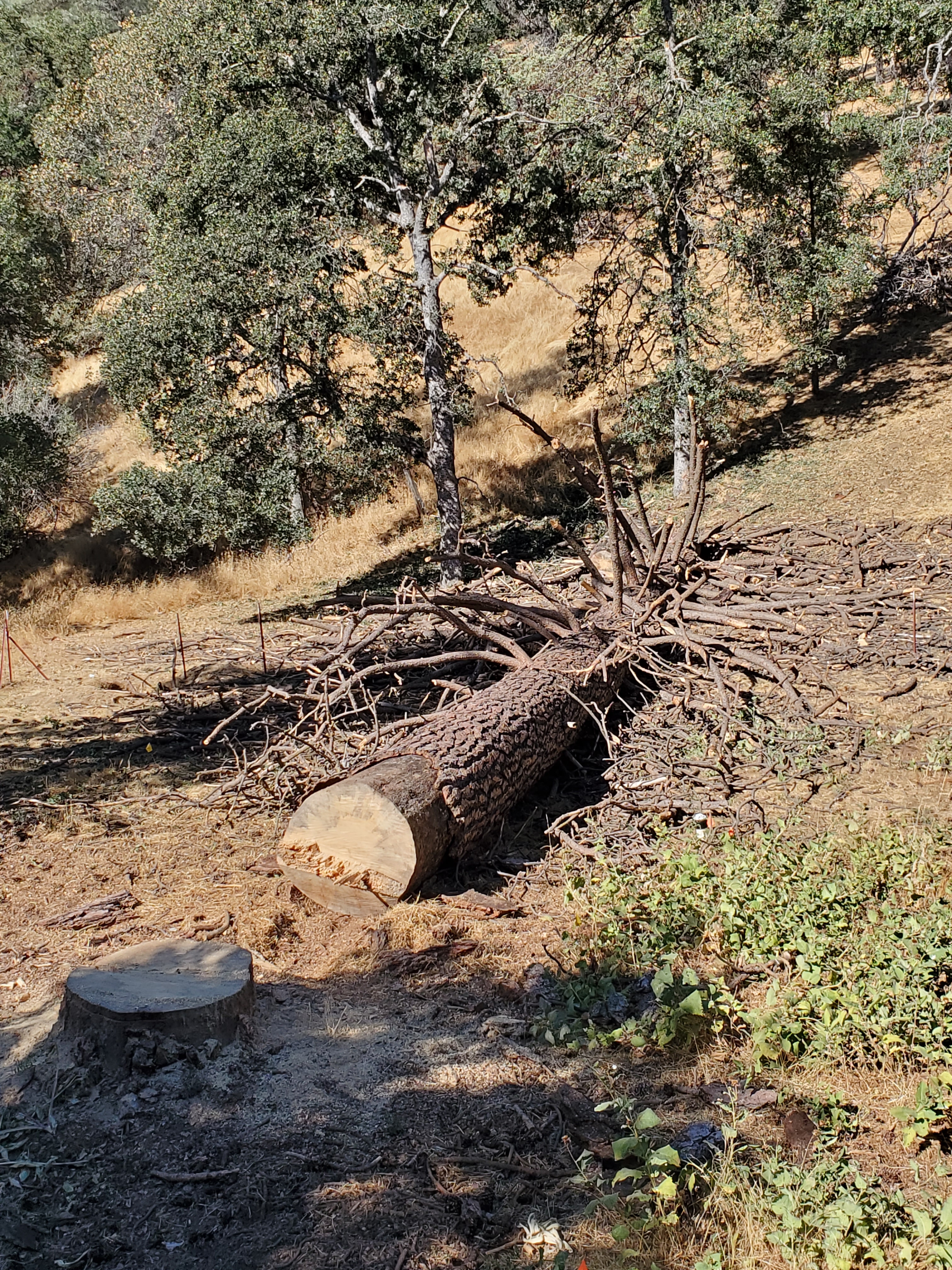
Speaking of whom, husband that is. He spent a full year trying to save the 112-foot Jack pine that dominated the view out our back slider. The wind blew in the pine bore beetles. The tree took the first onslaught and shook it off. Then a second wave hit it. The top died, though the lower branches clung to life. An arborist recommended fertilizer, my husband fertilized, watered, babied, talked to, prayed for, and fought for that tree. When Pacific Gas and Electric wanted to cut it down, claiming it could fall on wires over sixty feet away and uphill, he stood his ground. In the end, we negotiated with them to top it. They took 32-feet off it, and it still clung to its needles, sheltering crows, squirrels, woodpeckers, and even vultures.

Today it is gone, a skeleton lying down our hillside so far that the woodcutters had to take twelve feet off the top to pull its brittle bones onto our property. They can’t cut it up right now because the rest of their team and the truck they need are working a fire burning in the High Sierra. Meaning, until the National Fire Service releases the team from duty, we have the shattered remains of a once mighty tree to mourn.

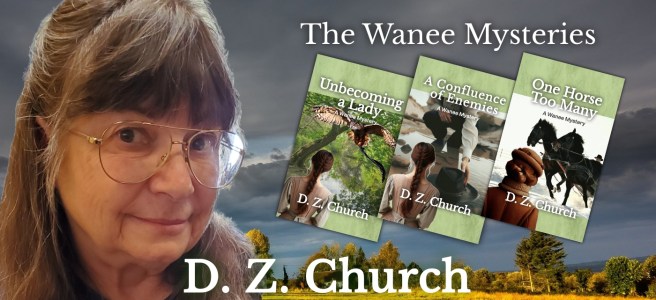
About now you’re asking yourself, what does any of this have to do with reading or writing mysteries. This, I am struggling with the fifth book in my Wanee series. And all I can think of is them, a cat named Blue, and tree named Frank. Yes, Frank. And my husband.

Two fought to the end to overcome the ravages of climate change, the other perseveres, step by step, falls, then gets back up and takes another step. So, get with it, girl, word by word, sentence by sentence, paragraph by paragraph, you will have a book. It is so hard, it’s easy.

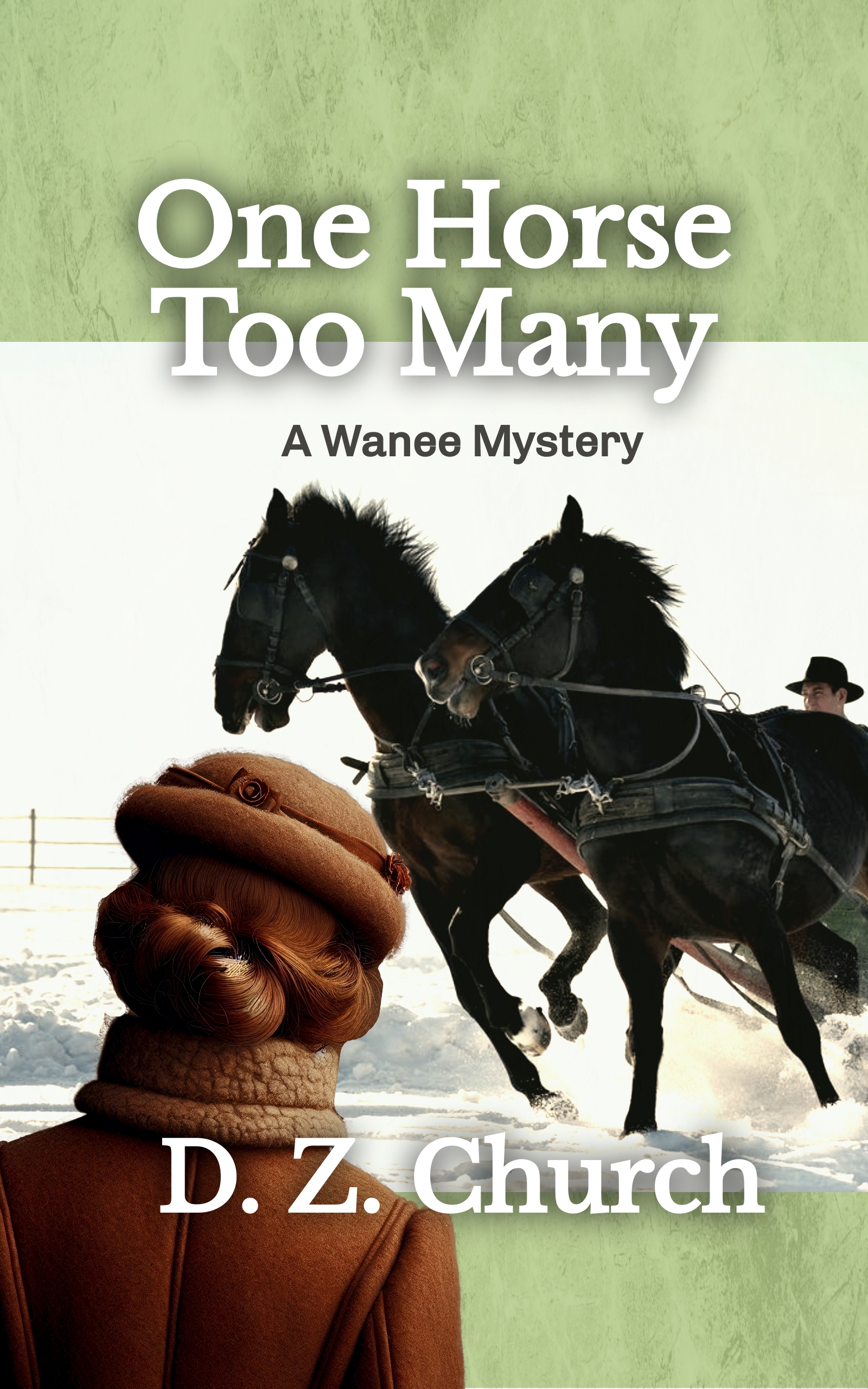
One Horse Too Many, the third book in the Wanee Mysteries is now available. According to a couple of other Ladies of Mystery it is a “really strong entry into the series” and “another winner in a great series.”

For more information, to sign up for my newsletter, or buy a book, go to https://dzchurch.com.

NATURE OR NURTURE

Many years ago, as an aspiring writer, I ventured into the punishing realm of seeking a book deal for my first novel, “Peril in Paradise.”

Oh, what a glorious dream until the inevitable “No Thanks” letters began to arrive. Yes, I’m “rejection letters” old.

But I found encouragement among the “Sorry, “Peril in Paradise” doesn’t fit well with our current publishing format,” or “We don’t feel your novel is right for us” letters. Several no-thank-you letters commented similarly: “You do, however, write a very good villain.”

Besides giving me much-needed hope as a struggling novelist, their kind words told me two things: Since I wrote my villain in the third person, I write better in that voice than I do in the first person. And… I’m a tad dark and twisted!

When I wrote my villain, Damian Garza, in “Peril in Paradise,” I gave little thought to his backstory. Instead, Damian revealed himself to me as I wrote the book, creating a need to understand him better. Of course, this caused me to ask myself the “What, Why, When” questions, which led me to the age-old curiosity … Are villains born, or are they formed by their environments?

Now that I’ve written five novels and three novellas, I’ve learned to ask the three W’s sooner and outline what caused my villain’s evilness. Why does he or she desire to hurt people? When did their darkness begin to shadow their personalities?

Or were they simply born evil?

In my quiver of Google-related searches, I have a file labeled: Antisocial Personality Disorder (ASPD). This term encompasses both sociopath and psychopath disorders. Mental health professionals define ASPD individuals as having a consistent disregard for rules, social norms, and repeated violations of other people’s rights.

When I started my journey with Damian, I knew I wanted him to appear to be “Prince Charming,” which fits the persona of someone with ASPD. I also knew Damian would have little regard for other people’s feelings. Before I did my deep-dive research, I had created a villain who broke the law, was manipulative, and deceitful. Damian didn’t think twice about aggressively mistreating women and felt no remorse for his nasty behavior.

As much as I needed Damian to be a sociopath, I also felt a need to explain his wickedness, which brought me full circle. Did Damian mistreat people because he was born evil, or were his actions a byproduct of believing his stepmother had his mother killed? Had he been a beguiling child or wicked youngster biding his time until he could unleash his anger on those around him?

Recently, a reader shared how much she likes that my villains feel like real people, not cartoon stereotypical characters.

With each novel, I introduce myself to a new villain or villainess and ask myself the same questions: What? Why? When? Nature or Nurture?

Personally, I’m not sure if people are born evil. Although, with all the crime in the world, it seems as if this scenario could be true. It’s just hard to imagine a tiny baby destined to be a serial killer or a terrorist from birth.

I tend to believe people are genuinely good at heart … until they are not. My villains could have all been heroes at some point in their lives. Sarita Garcia could have married, had children, and learned to love running her father’s leasing company. Raptor might have lived a wonderfully boring life with Belen if the two had made it safely to Arizona. Carl Yates probably would’ve made a decent husband if he hadn’t suffered abuse at the hands of his aunt. But Sam Arnold seemed destined to abuse women, allowing his dark side to determine their fate.

When I met Joe Carson in “Whispering Willows,” I was conflicted. Joe wanted to be good, but his mother’s darkness smothered him, driving him to evilness. Joe created an opportunity for me to see if a villain could be changed and nurtured back to goodness.

As a Christian, I’ve always believed in forgiveness, so I asked this question for Joe: If he truly believed in Jesus and asked to be forgiven for his sins, would his newfound faith deliver him from his wicked ways? Would he embrace the comfort of God’s word and the peacefulness of knowing his soul is saved? Would Joe Carson rejoice with joy in his new-found destiny in heaven?

Happy Fall, Ladies of Mystery!

Up close and personal

Life is good. It is filled with family, friends, and furry critters. There is yoga four times a week; I wish it could be more. That is, I know, a wish I could fulfill.

There are wonderful times in the hot tub with the snow falling and bubble baths in the other times when the weather says it’s wisest to stay inside and soak.

Professionally, I’m transitioning from corporate writing and editing to doing more developmental, copy editing, and proofreading for writers. That is a joy.


That’s an interesting question. As a freelance journalist, I wrote on everything from intellectual property to the armoured truck industry to eel grass. Accuracy was paramount as was engagement. However, the most difficult piece I ever wrote was for “Lives Lived” in The Globe and Mail. It was a tribute to my mother following her death in 2020. It was so difficult to write because it was so personal. I had no perspective, and I feared I would not “get it right.” The only thing I know for sure: Mama, would have told me not to worry. And there would have been a hug.


I relish reading. I was a judge in the Crime Writers of Canada’s most recent Awards of Excellence, and I got to dive into more than 40 fabulous – and very diverse – books that kept me on my toes and my eyes glued to the page. When I was younger and I was discovering the wonder and wow of the mystery genre, I devoured authors like Tony Hillerman, Martha Grimes, and Ruth Rendell. More recently I have discovered writers like Richard Osman. And Delia Owens’s Where the Crawdads Sing was nothing short of joyous.


When I was about eight or nine, a next-door neighbor tossed me a Nancy Drew book. She thought I might like it. I sat on the curb between our two houses and read the entire book cover to cover. I loved the puzzle, figuring out who dunnit, and being propelled into a world outside my own.

That same year someone gifted me Charlotte’s Web, and my life was forever changed. Not only could words transport you to new worlds, they could become a part of your heart, change you in ways you could not have imagined. I wanted to do that.


My mother taught me to love language – and to respect it. She cared about words and getting the words right. She was my greatest influence.

Write. This sounds simple. Many days it isn’t. Some call this dedication, others devotion. I’m not sure it matters what it’s called as long as it happens. You will never be a better writer, you will never write another book if you don’t sit down in front of your computer screen and begin to put words in front of you.


Murder Mystery Bundt Cake

by Margaret Lucke

Recipes. Craft instructions. Math puzzles. Party planning tips. Some mysteries these days offer more than an entertaining read. They provide a gateway to a new, more creative lifestyle. Which is wonderful — so long as that recipe it’s inviting you to try doesn’t include arsenic as a main ingredient.

While my characters relish eating good food (as do I), none of my novels contain recipes, though occasionally I stir one into my author newsletter. You won’t find hobby hints or craft tips in my books either. I like to cook and enjoy dabbling at art, but first and foremost I’m a writer. That’s the main way that I express my creativity.

So what I really want is a recipe that I can put to practical use. Something that’s helpful as well as tasty. Like this:

MURDER MYSTERY BUNDT CAKE

Ingredients:

*  1 villain (or more) with the means, motive and opportunity for murder

*  1 victim (or more) who has the misfortune to be in the villain’s way or to have something the villain wants

*  1 clever and likable detective with a good reason to want to solve the crime

*  A handful of the usual suspects, and maybe one or two unusual ones if you like that flavor

*  Several tablespoons of clues and red herrings

*  2 or 3 cups of conflicts and obstacles

*  A large measure of suspense

Instructions

1.  Place the villain and victim in a large bowl and mix until the victim meets an untimely demise.

2.  Add the detective to the mixture and blend until you have a thick, plot-like batter.

3.  Whisk in clues and red herrings and beat until they are well hidden.

4.  Stir in conflicts and obstacles. Note:  There will be lumps.

5.  Pour the suspense over the batter until it is completely saturated.

6.  Transfer the mixture in a bundt pan and bake in the oven of your imagination until done. Baking time may vary from three or four months to several years.

7.  Let cool but not too much.

8.  Sprinkle with powdered sugar or drizzle on a chocolate glaze.

9.  Cut, serve, and enjoy.

Try baking one of your own. I promise you it’ll be delicious.