Don’t get me wrong – I love blogging. It’s wonderful to be able to chat with readers and fans and people who get lost on the internet. What I don’t like is schedules. Each time I check my calendar – and every blog and everything else I do is ruthlessly noted on my calendar – I swear this time I will get my next blog done well in time, pre-schedule it and the announcement to be sent in a timely manner and have no worries or last minute rushes.
Then Life happens. You know what I mean. All the writing gurus say that if you are a writer (or want to be a writer) writing should always come before anything other than dangerous illness or death. Well, that makes a good talking point for writing teachers to use to encourage you, but in practical life it’s not much good. Things come up that you didn’t expect. Things that are not life-threatening, but which really do need to be handled. Then there’s laundry, and cooking, and cleaning, and marketing, and…
And your time for writing gets shorter and shorter.
Now there are those who say writing is not done just at the keyboard, that no matter what your hands are doing your brain can still be plotting, so that time spent at the keyboard is really just transcribing. While that is true to a point, it can also be dangerous. Once I was driving from Dallas to Ft. Smith, Arkansas. While I drove I tried to work out a really knotty plotting problem on my work in progress. When I finally had it worked out I had no idea of where I was. Turns out it was Missouri, and I had a lot of backtracking to do. So one does need to be careful when using this technique. Back to blogs. Blogs are short. Blogs are fairly localized in focus – in my case, a subject that can be wrangled by hook or by crook to the world of writing. The only trouble is, you have to have a reasonably cogent premise, or something informative, or at least interesting to say. Otherwise all you’re doing is stringing words in a line and hoping they say something at least minimally interesting.
Like this post. Well, negative examples can be a teaching tool too!
Before I go I must share that my new anthology (shared with the fabulous Sandy Steen, Penny Richards and James Gaskin) releases on June 14th and is currently available for pre-order on Amazon. It’s called The July Fourth Murders and features four different wars and four murders on the Fourth of July, written by four authors. My part is World War One. It’s a nifty book! Go take a look.
Identity is a big deal in my novels. Maybe it has something to do with all the Superman comic books I read in the barbershop while my dad was having his hair cut. Lots of identity stuff in those stories, secret and otherwise. Midwestern farm boy or big-city newspaper reporter? Mild-mannered, bespectacled guy or visitor from another planet able to leap tall buildings in a single bound?
Names—specifically, who we are versus the person we allow the world to see—are a common thread in my first four published novels, three darkly romantic vampire tales and a thriller. Vampires reinvent themselves from century to century; the rest of us sometimes do, though over shorter lifetimes. And, of course, in literature and in life, often all we know of a person at first is the name presented to us.
In my fifth novel, A Poetic Puzzle, one name sets my protagonist, M. Irene “Mimi” Jones—an under-recognized, under-employed poet/English literature professor—on a mission. It’s the name she shares with internationally acclaimed poet Mary Irene Jones, who has vanished, but not before sending Mimi a cache of her heretofore unpublished manuscripts. Is the timing of these two events a coincidence? Are the manuscripts clues of some sort? And if so, why entrust them to Mimi, of all people? The same-name thing must be significant, right?
I should mention here that the house Mimi lives in is one she inherited from yet another Mary Irene Jones, the paternal grandmother for whom she was named.
About that: The name Mary Irene Jones is what prompted me to write A Poetic Puzzle.
You see, my own father’s mother was a Mary Irene Jones, too, before she married my grandfather. She didn’t disappear, per se, but I never got to know her. My dad scarcely did—he was only nine years old when she died in 1931 of what was apparently characterized as “women’s trouble.” My mother suspected that meant some sort of reproductive or breast cancer. I’m not sure anyone now living would know. My father was the family’s youngest child; he, his older brother, and his two older sisters are gone now.
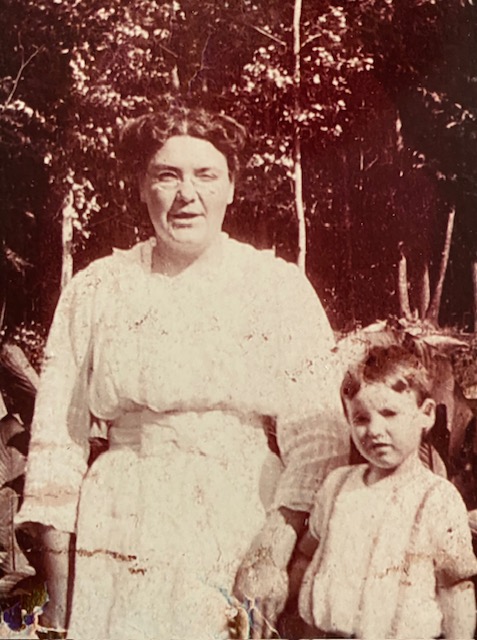
I look like my father, as does my son. Both of them more closely resemble George McLaughlin, Mary Irene’s husband, my paternal grandfather. But in the lone photograph I have of her, I can see myself.
That photo, actually a picture of a photograph, may be the only one that still exists. I don’t know whether she had siblings whose children or grandchildren might have family photo albums. I have never had close ties to my McLaughlin relatives, let alone any Jones descendants who might be her family. Judging from her husband’s birth year, I think this Mary Irene was born in the United States in the late 19th century, but I don’t know when or where. I know she married a man from northeastern Pennsylvania and ended up living in Philadelphia, but I don’t know the circumstances. Except for the year, I don’t know the date of her death or where she was buried.
That sepia-tone image of my grandmother sits next to my laptop as I write this. I’ve studied it endlessly, searching for clues beyond the obvious. In it, she has dark hair, brown, I suppose, since my father and I and at least one of his sisters had dark brown hair. She has a long face not unlike mine—my late Aunt Vera, whom I resemble a bit, had the same long face.
Pince-nez eyeglasses sit on my grandmother’s nose—maybe she was near-sighted the way I am. Her light-colored, lacy long-sleeved dress is cinched at the waist with a bow. And she is standing outdoors, with trees in the background. Holding her left hand is a small boy, maybe sandy-haired, maybe five years old. He is dressed for warm weather. My mother told me that she had been told that the boy was not my dad, but who offered that information, I don’t know.
Were my grandmother and this boy, presumably her other son, standing in their backyard? Were they having a picnic in a park? Were her daughters—one older than the boy, one younger—playing away from the camera’s lens? Was my father an infant napping nearby?
How my mother came to give me this photo, I don’t recall. Did my uncle’s wife, a distant cousin of Dad’s who married his brother, give it to my parents? My mother always suggested that particular aunt-by-marriage was the source of whatever McLaughlin family history we were aware of. Ancestry.com shows any number of second and third and more distant cousins with whom I share a bit of DNA, but because I have no details about my grandmother’s forebears, I can’t readily know which of these many cousins, if any, sprang from the same branch of the family tree she and I came from. Answers might lie at the bottom of a deep and daunting rabbit hole, to add another garden metaphor, or it might be a fruitless search.
Truly, Mary Irene Jones McLaughlin is a mystery to me.
Which got me thinking back in spring 2022: What if I immortalized her (sort of) in a mystery? What if, given that I knew little more than her name, that’s where my story began?
I dropped her married name from the plot line, lest someone think this book was nonfiction. Also because, as names go, Mary and Jones are definitely common ones.
As A Poetic Puzzle opens, the reader learns that the two Mary Irene Joneses not only have the same name, but also the same occupation, and are affiliated with the same small college in suburban Philadelphia. It soon becomes apparent, however, that what’s in a name is a confounding, confusing bit of business.
Mimi Jones discovers much as she scrutinizes the pieces of A Poetic Puzzle, not the least of which is this:
How well do we really know anyone?
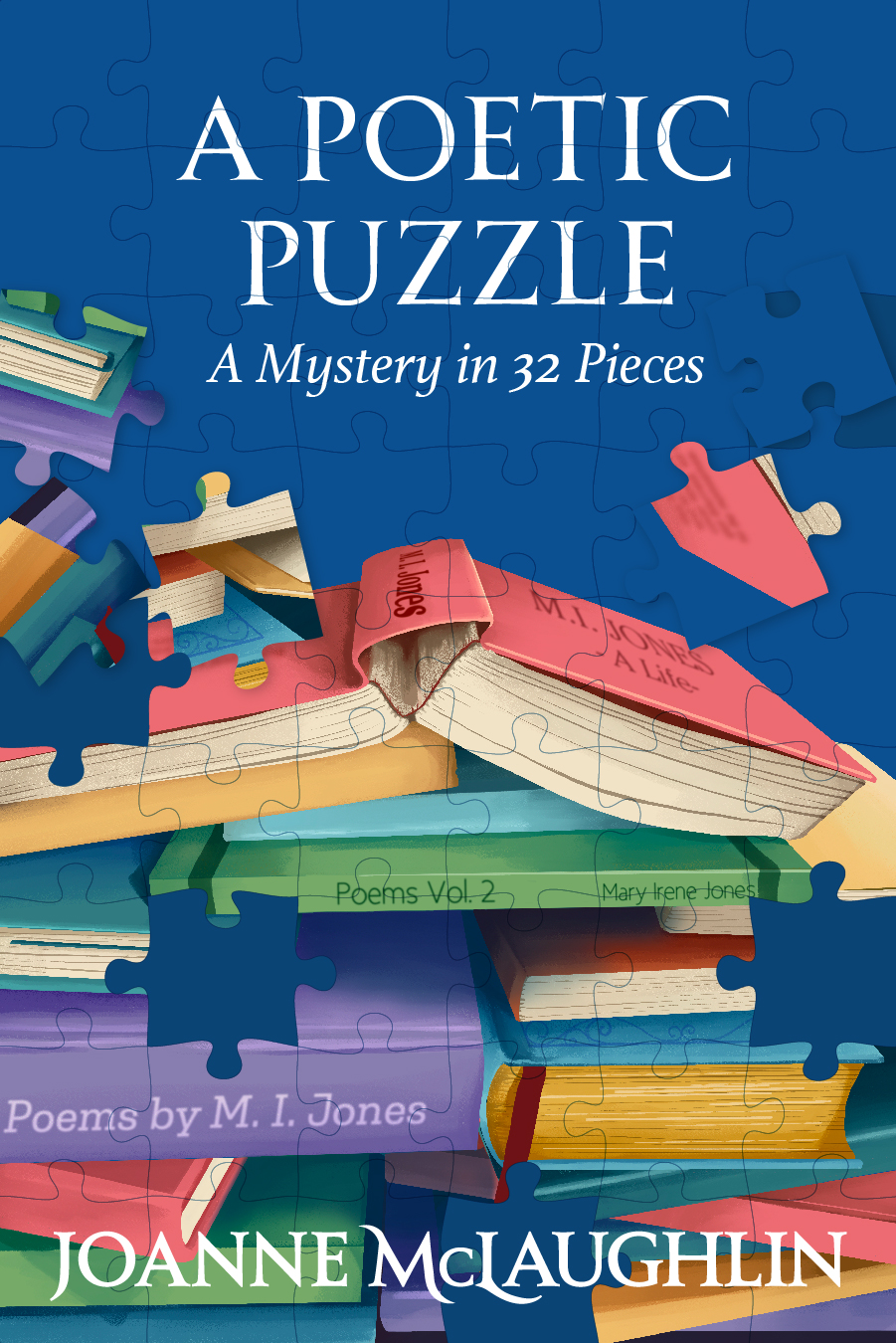
A Poetic Puzzle
Internationally acclaimed poet Mary Irene Jones has vanished—calls and texts unacknowledged, bank accounts emptied, car abandoned. But before she disappeared, she mailed never-published manuscripts to a lesser-known namesake poet, M. Irene “Mimi” Jones. Are the manuscripts clues only Mimi can decipher? And what about the handsome Philadelphia cop assigned to the case? He seems as intrigued by Mimi as by the missing celebrity poet. Talk about a person of interest…
Joanne McLaughlin began telling stories in second grade, creating superhero fan fiction in the Philadelphia rowhouse where she grew up. She has worked for public media and newspapers in Philadelphia, upstate New York, and northeastern Ohio, involved in award-winning coverage of topics from politics and public health to fashion and financial markets, as well as Pulitzer Prize-finalist architecture criticism and a Peabody Award-nominated podcast. For several years, she also served as vice president of a firm that managed and booked blues musicians. Her novels include the romantic mystery A Poetic Puzzle; Chasing Ashes, a crime thriller; and Never Before Noon, Never Until Now, and Never More Human, a vampire trilogy. Her latest short fiction appears in Ruth and Ann’s Guide to Time Travel, Volume 1; the short stories Peppina’s Sweetheart and Grass and Granite are available on Amazon. Joanne is inspired by strong women like the ones who raised her, determined to meet challenges head on. Joannemclaughlin.net
June. Summer. Warm weather. Pleasant days, starting early, daylight stretching into the evening.
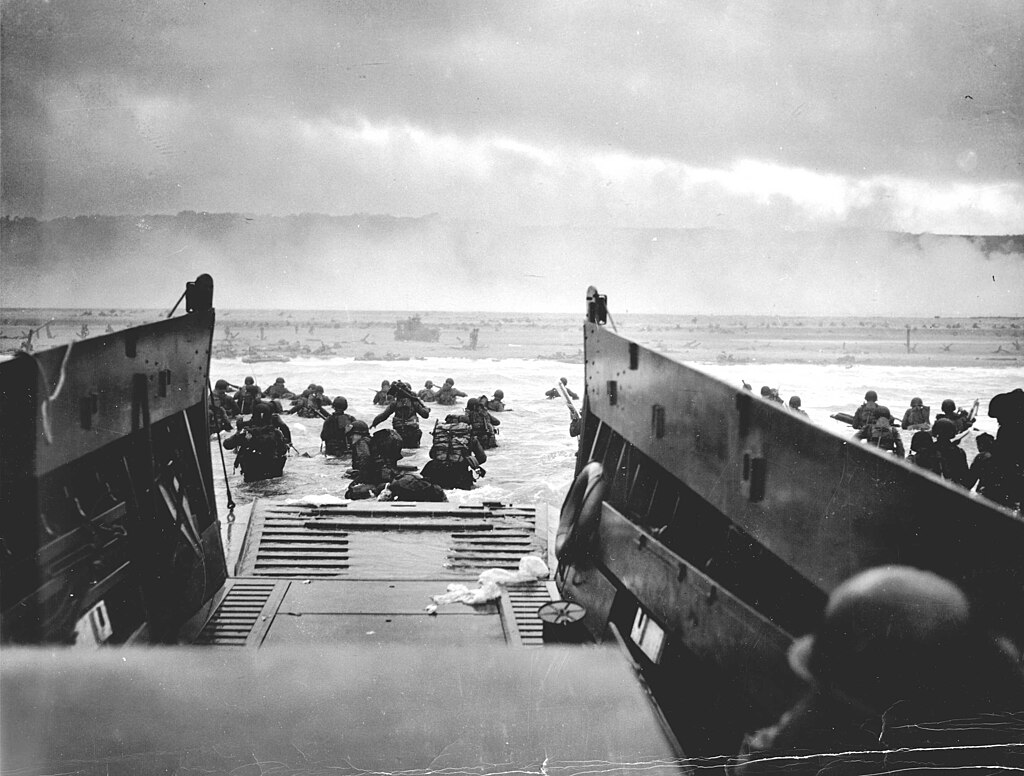
Interestingly enough, June brings thoughts of D-Day—June 6, 1944—when the Allies sent a huge armada of soldiers and materiel across the English Channel to invade Nazi-occupied France. The Longest Day, Cornelius Ryan’s riveting account of that day, is on my shelves, and I’ve read it multiple times. I also have the DVD of the epic (three and a half hours!) film, which I’ve watched over and over, usually on Memorial Day.
The movie is full of memorable dialog. Among my favorite scenes is one with actor Roddy McDowall, playing one of the many soldiers holed up on those ships, waiting for the orders to steam across the channel. It’s June 5, terrible weather, back-to-back storms giving the brass fits. The invasion has already been rescheduled several times.
Roddy’s not thinking about the weather, the wait or the battle to come. He looks into the distance. In a dreamy voice, he says:
June. Every June my old man used to take me camping up in the Blue Mountains. We’d hunt and fish all day long. And at night, we’d sleep out under the stars. Didn’t even need a blanket . . . June.
I love that. The dialog tells me a bit about the character, conveys something of his life before he got to this place and time, and contrasts starkly with his current circumstances. And it makes me think about some of the camping trips I’ve experienced. I’ll bet I’m not the only one.
Granted, movies are different from novels. I recall other examples of memorable dialog from books that wound up in the movie as well. In Gone With the Wind, Rhett Butler tells Scarlett O’Hara: “Frankly, my dear, I don’t give a damn.” And there’s True Grit by Charles Portis. When irascible Sheriff Rooster Cogburn tells outlaw Lucky Ned Pepper that he’s planning to arrest him, the outlaw responds: “That’s bold talk for a one-eyed fat man.”
Dialog is one of many tools that we writers have in our skill set. Writing this blog got me thinking of dialog from my own books. Three of them come to mind, all with a line of dialog starting the book.
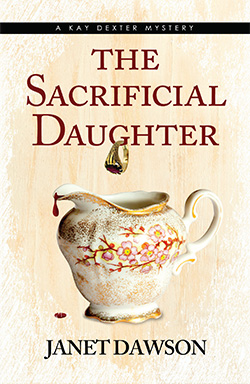
The first chapter of The Sacrificial Daughter begins in care manager Kay Dexter’s office, with a prospective client who says, “I’m at my wit’s end.” Beyond what she’s saying, her facial expressions, her demeanor and small physical actions show the character’s stress from dealing with her elderly mother.
In Bit Player, detective Jeri Howard is in a movie memorabilia shop, looking at an old poster. She says, “Grandma said John Barrymore made a pass at her.” I certainly hope that makes the reader want to turn the page and find out what comes next. For Jeri’s grandmother was an actress who played small parts in Hollywood in the late 1930s and early 1940s. Jeri is about to find out that Grandma was interviewed by police concerning an unsolved Tinseltown murder.
My most recent Jeri Howard novel is The Things We Keep. This book starts with Jeri standing on a street corner, looking at a down-at-heals Victorian house. She says, “It looks haunted.” She’s right. What happens next shows that the ghosts of past crimes are indeed in evidence. For example, those bones hidden away in an old footlocker. Haunted, indeed.
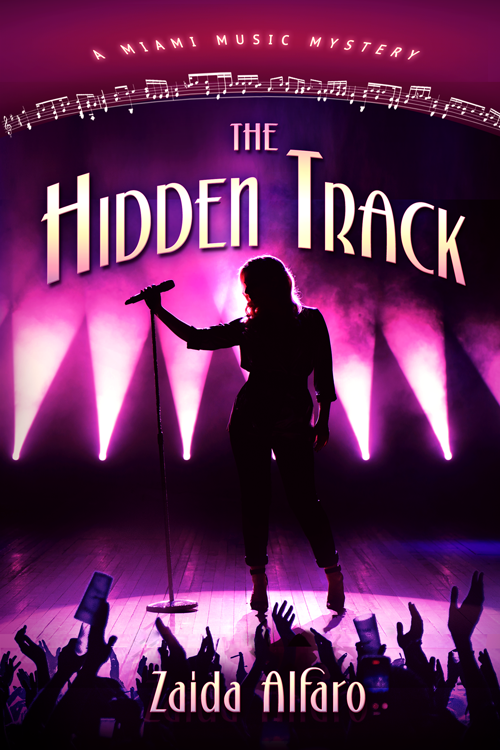
The Hidden Track: A Miami Music Mystery, is the third and final book of the Miami Music Mystery series, and it serves as a culmination of everything the series has been building towards. In this final installment, readers are taken on one last thrilling ride through the vibrant music scene of Miami, with a mystery that not only ties up the story arcs of our beloved characters but also brings resolution to the long-standing questions and tensions that have been simmering throughout the series.
The book follows the same characters we’ve grown attached to, but with deeper layers of growth and development. They’ve come a long way from the first book, with their personal lives and relationships more complex and interwoven into the unfolding mystery. In The Hidden Track, the stakes are higher than ever. The main character, Vy, faces a challenge that requires not only solving a crime but confronting personal demons, facing difficult decisions, and navigating the delicate balance between their musical passion and the dangers that come with it.
What sets this book apart is the sense of closure it provides, while also giving readers the chance to reflect on the themes that have been consistent throughout the series—loyalty, trust, and the power of music to heal and connect. The music itself is integral to the story, not only as a backdrop but as a vehicle for the plot, with song lyrics and performances playing key roles in solving the mystery. Music is a language of its own, and in this book, the hidden track symbolizes the final piece of the puzzle, something that’s been waiting to be discovered all along.
Wrapping up the Miami Music Mystery series has been an emotional and reflective journey. After working on these characters and storylines for over five years, it feels surreal to finally bring everything to a close. There’s a mix of happiness and sadness—happiness in knowing I completed the vision I set out for the series, but also sadness in letting go of the world and characters I’ve spent so much time with.
The process of tying up loose ends in the final book was both challenging and rewarding. Every subplot needed resolution, and I wanted to make sure the characters’ growth and the mysteries were satisfying to readers. There were moments of doubt, especially with the last few chapters, but pushing through and seeing it all come together was worth every bit of effort.
What’s also been important for me is knowing the story has reached its natural conclusion. While it’s bittersweet to say goodbye to Miami, its music scene, and the characters who’ve made it so special, I’m proud of what I’ve created and the way everything has come full circle.
I feel a sense of accomplishment, but I also look forward to exploring new projects. There’s a mixture of pride in the series’ completion and excitement about what comes next. It’s been a chapter of my life that I will always cherish, and I’m grateful for the readers who have been part of the journey.
THE HIDDEN TRACK
Vy has finally hit her high note. After years of clawing her way through the ruthless music industry, dodging dangerous rivals, and surviving murderous encounters, her dreams of stardom are within reach. With a record deal secured and her debut single climbing the charts, Vy is ready to shoot her first music video—a moment she’s been rehearsing in her mind for as long as she can remember.
But as always in Vy’s life, nothing stays in tune. As tensions crescendo and chaos threatens to drown her out, Vy must find a way to keep her creative vision intact. All the while, shadows from her past echo through her mind—could there be someone still out there, determined to see her career hit its final note?
As Vy’s close-knit band of friends and collaborators face their own personal trials, the stakes have never been higher. Has Vy’s murderous melody finally ended, or is there still danger lurking in the final verse? In the end, will Vy get the happily ever after she’s fought so hard for, or is there a hidden track playing a haunting melody, waiting to pull her back into the shadows?
The vibrant city of Miami, Florida, serves as the heartbeat of the Miami Music Mystery series—a city I deeply cherish, having been born and raised there. Like the series’ protagonist, Vy, I am a singer-songwriter and Grammy-considered independent artist, with a profound passion for music and literature.
Years ago, I discovered cozy mysteries and was immediately captivated by their engaging, intriguing, and often humorous storylines. Inspired by these works, I decided to merge my love of music with my newfound passion for storytelling. This led to the creation of my debut novel, The Last Note: A Miami Music Mystery.
Following its success, I continued Vy’s story In the Key of Dead: A Miami Music Mystery. Drawing from my own life experiences, I wove elements like phobias, dream sequences, and quirky personalities into the narrative—all grounded in truth. Through these novels, I aimed to share my love for Miami, its rich Cuban culture, my family, and the world of music.
Now, with the release of The Hidden Track, the final book in the Miami Music Mystery series, I’ve brought Vy’s journey to a thrilling conclusion. This latest installment delves deeper into the city’s vibrant backdrop and Vy’s evolving story, tying together the mysteries, challenges, and triumphs that have defined her journey.
I hope readers feel the same passion for Miami, music, and storytelling that I’ve poured into these novels. It’s been a joy to bring this series to life and share a piece of my world with you.
Hello, Ladies ~ Sorry this post is late. I’ve been at our cabin for the long weekend, which doesn’t have internet. I tried to upload my blog a couple of times while in Lincoln City, but the internet at most places is spotty at best.
When my husband, Randy, and I bought our house in Donald, I was thrilled we had a willow tree in our backyard. The lovely eight-year-old tree helped to block the city’s big blue water tower.
Since our lot sat at an angle and backed up to a farmer’s field, we couldn’t see our neighbors on either side of us. I loved the illusion that we lived in the country surrounded by beautiful crops.
Of course, as time ticked by, my beloved willow tree grew taller and broader as we grew grayer and rounder, the unstoppable march of time making all of us older.
Every fall, Randy and I would struggle to keep up with the never-ending shower of colorful leaves blanketing our patio, creating a slick carpet of decaying debris. Spring would bring the dropping of the budding leaves’ cuticles, which looked like a sea of bumble bees inhabiting the patio.
Our now-massive willow tree also had branches that extended over flower beds, causing plants to die or grow in weird directions to capture some sunlight. Randy’s biggest fear was that the now forty-foot tall and thirty-five-foot-wide tree would fail, and the branch looming over our roof would do some serious damage.
We finally had to make the gut-wrenching decision to cut down our majestic Weeping Willow. I cried as the arborist and his crew dismantled the tree in sections. But the hardest part for me was when he shot poison into the lonely stump. He’d just killed something I’d enjoyed for years.
During this time, I was working on the first draft of my novel, “Chaos in Cabo.” I’m close to typing The End and working on tying up all my story threads. I’ve been struggling with how to end my villain’s story. As the arborist and his crew cut down my willow, it occurred to me that I grew attached to things … including my characters.
Even though I know she needs to be punished for her crimes, the idea of sending her to prison pains me. My alternative idea, having the man she loves kill her, seems so harsh.
Why is it so hard for me to let go? I mean, my villain is a fictional character. It’s not like I meet her for Happy Hour every month. And I usually fashion my villains after people I’ve met who wronged me somehow. This female villain was named after a woman who stole the guy I was dating after pretending to be my friend. So essentially, I’d be virtually settling a score with her. Right?
In my past novels, I’ve redeemed a few villains, punished a few, and, of course, a few have died. In “Malice in Mazatlan,” I faced the same dilemma as I’m experiencing with “Chaos in Cabo.” I loved my villain, Sarita Garcia, so much that I decided I couldn’t end her story, and she appeared in “Vanished in Vallarta.”
As Randy and I approach retirement, I’ve been faced with “letting go” of things. Downsizing is painful, but I find joy in donating items or handing off family treasures to the younger generation.
I recently gave pieces of décor to a niece. She was so thrilled she sent me a thank you note with pictures of the repurposed decorations in her small house. It made me think about what my readers might expect as they read one of my novels. Maybe they’ve decided in their minds as they read “Chaos in Cabo” that this villain seriously deserves her just desserts and isn’t worthy of being “repurposed” or “redeemed.”
One of my readers said they loved that I infuse my villains with qualities that make them human to balance their evilness. She said, “I find myself rooting for your villains despite their crimes.”
But can I justify allowing the villain in “Chaos in Cabo” to live since she threatens the lives of people from her lover’s past? He would be devastated if she killed his loved ones and would never be able to forgive her, which would create a prison of a different kind.
While I’m sad at the loss of my beautiful tree, the plants in the flower garden that once were shrouded in shade are thriving. I like the idea that letting go of something opens up possibilities for brighter occurrences… and, hopefully, rewarding stories for your readers.
Happy Memorial Day, Ladies! I hope you had a fabulous day with family, friends and … your characters!




You must be logged in to post a comment.