Endings

Beginnings and endings are the hardest part of writing for me. (That’s today. On other days it’s the muddled middle.) Some writers have arresting, captivating openings that grab the reader and carry her along into a ninety-thousand-word novel. I’m not one of those, but I can eventually get a few words on the page to get the story moving. For me the greater challenge is endings.

Some years ago I listened to Andre Dubus III talk about his new book, House of Sand and Fog, which led him to talk about how he’d grown as a writer. He didn’t like his first book, Bluesman, because he considered it sentimental. His disdain for this failure in craft was obvious, and when I met him at a writers’ event years later, the subject came up again. As I listened to him touch on the challenges in his work, I understood that for him an ending that is sentimental is also in some ways dishonest, an inability to reach deeper for something that was true. I had just purchased TheGarden of Last Days, and read it with that in mind. There is nothing sentimental in that book, least of all in the ending.

Several critics have explored the link between the traditional and cozy mystery and comedy; noir crime fiction has been linked to tragedy. At the end of the cozy mystery, the world is set right again; the villain has been identified and brought to justice of some sort; the lesser crimes of other characters are brought to light and justice is visited on them in various ways, perhaps public censure or shame or remorse; and the minor romance barely acknowledged sometimes comes to light and there is a new beginning for a young couple. All is right with the world. From Restoration Comedy to Agatha Christie and writers today, it is hard for a reader of cozies or traditional mysteries to be satisfied with less. An unrequited love or an unchallenged con artist will annoy some readers as much as a dangling participle will menace the peace of mind of a copy editor. And I understand this. There is something deeply satisfying about the comedic ending, a moment that reassures us that the world aslant can be righted, that our inchoate ideals can be realized.

So how does a writer of traditional crime fiction compose an ending that is both true to the story being told and unsentimental? Sometimes I think this question is just one more obstacle to writing a satisfactory ending, and all I’m doing is complicating matters, making life harder for myself. I’m not unsatisfied with the ending of Family Album, the third in the Mellingham series, but I acknowledge that it is a tad sentimental (maybe more than a tad). But readers loved it because it fulfilled one of the hints at the beginning of the story, and a promise fulfilled, particularly about a possible romance, always brings a frisson of delight. But it was sentimental. At least it wasn’t mawkish.

I don’t remember most of the endings in my books and stories but some stand out, for me at least. The ending of When Krishna Calls in the Anita Ray series required research, rethinking, and stepping back. A woman sentenced to prison looks out on her new world, listening to another prisoner, and is satisfied with the choices she has made. She won’t forget why she is where she is, and she won’t regret it. The ending of Friends and Enemies in the Mellingham series required several versions before I finally landed on the one that worked and fit with the rest of the story. An editor who read the ms and considered acquiring it mentioned how much she liked it (but not enough to take the book). Another ending that satisfied me is that in “Coda for a Love Affair,” in Devil’s Snare: Best New England Crime Stories 2024. The ending is simple, clear as cut glass and sharp.

Endings are hard because the easy ones come fast, are easy to write, and sit well on the page. And that’s the problem. They tempt us to take them, give a sigh of relief, and pat ourselves on the back for coming up with (rather than running carelessly into what looks like) the perfect line or paragraph to close out three hundred pages. Depending on how tired we are of the story and working on it, that ending will appear reasonable, acceptable, or a gift from the writing gods. So this is where I step back and wonder what Andre might think. I don’t have to get far into that mental exercise to admit that the first or even the thirtieth ending is not what I want. 

If nothing else, writing keeps us humble. In our heads we hear perfect dialogue, snatches of prose so brilliant we’ll never need the sun again, but on the page, our pen does not cooperate (or the computer keyboard), and we end up with the mundane, the ordinary, the usual. I keep working on endings but I know I fall short most of the time. As do we all. It’s encouraging to know that greater writers have the same struggles, the same challenges, the same doubts. With one eye on writers whom I admire, I keep at my own work, striving to meet my standards even if that means sometimes disappointing some readers. If I want better endings, I just have to keep at it until I get there.

Gut Check Endings

It’s that time of year when we all do a gut check on our writing and output. Well, my guts all like wombaldy-peg (something my mother used to say among many other sayings she had that made no sense – ever – but were highly descriptive).

I had a goal for book sales. I don’t think I’ll make it, but it will be disgustingly close. Just off—a wee. My gut doesn’t like that. I’m not the: well, maybe next year sort of lady. Now – please.

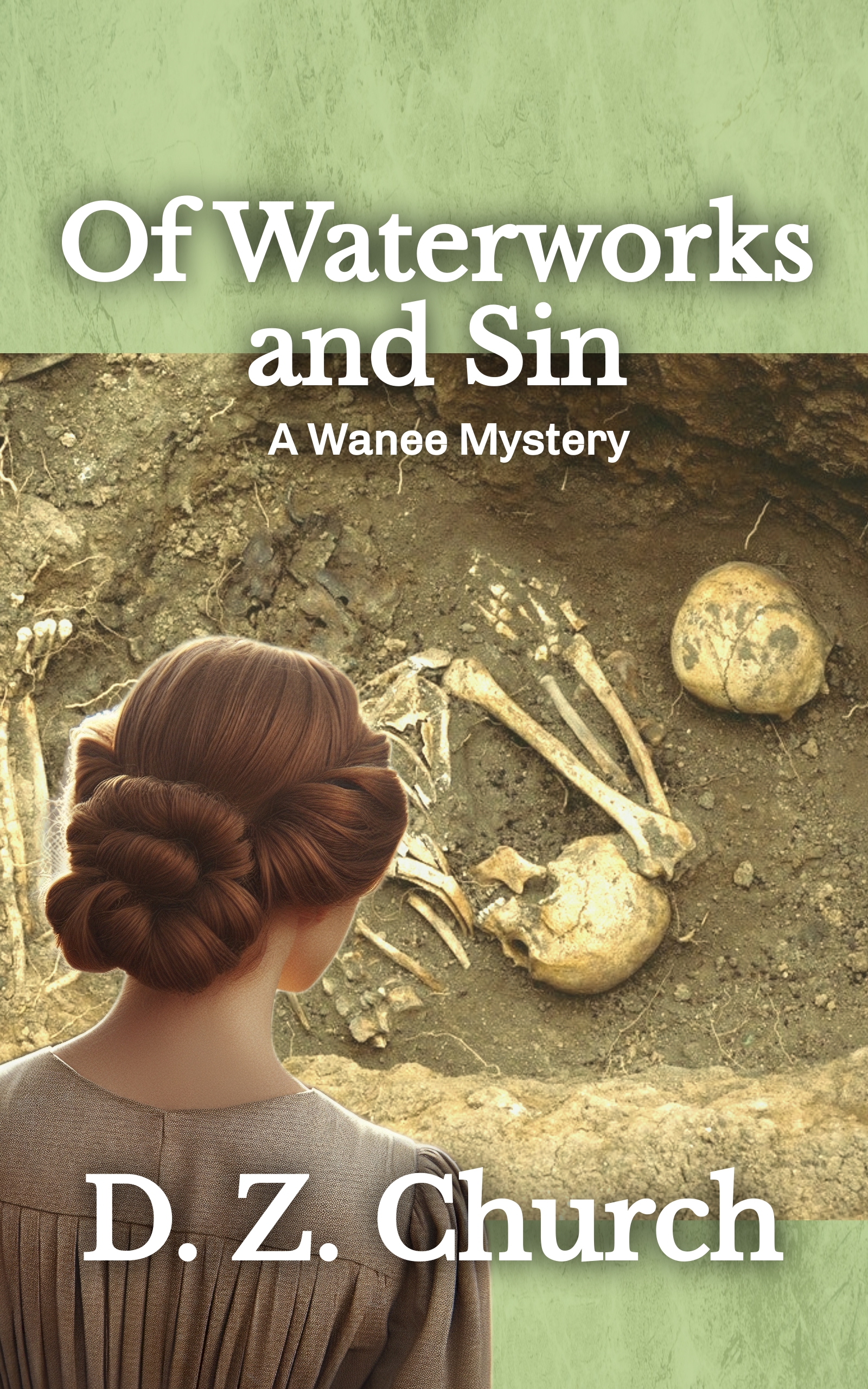
Faced with a gut rumble, I rewrote the ending of the latest Cora Countryman book, Of Waterworks and Sin, and sent it out to my beta folks weeks after the text.  Second guessing is my problem, well, no, endings are my problem. I think I’ve rewritten every one of the endings to all four Cora books at near the last minute (as Cora would say). My gut tells me that’s not professional, my brain isn’t listening. It says it is more important to get it right than to worry about the timing of getting it done. Okay, I can live with that. Maybe. Just.

The thing is this. If the last sentence of a book in a series isn’t gut-checked and perfect, where do you start the next book? Well, I’m sure the writers with their wallboards, index cards or Scrivener have it all charted out. Me, not so much. I need to leave myself clues like Hansel and Gretel did breadcrumbs.

I’ve been staring at the beginning of Cora’s next book, the fifth in the series, for what seems like weeks. Partially because I have a cabin in the mountains and my fire insurance was pulled. I thought I had it until the insurance company’s threats arrived, and I found myself wrangling contractors to get upgrades made so I could overpay for fire insurance when my place is a mile from a park service fire training station. It occupies your mind, not to mention the thumping and bumping on the walls as your deck is destroyed and your siding comes down.

Still, I had a good start on No-Name Book 5 until I realized I needed to explain how Cora came to be on a riverboat on the Mississippi. When I put the backstory in, it was like blah, blah, blah — blah. Why was the blah-blah needed? I stewed about it, especially at 4:00 am just after I got through tallying my finances for all the fixes required by the insurance company. The gut came to the same conclusion every time. The ending to Of Waterworks and Sin wasn’t doing its job. Cute, fun, and dangly, but totally responsible for the fix I was in with the No-Name Book 5.

Thus, the new ending Of Waterworks and Sin sent to the beta folks. Now, No-Name Book 5 is off and running; the plot unfolding before me, not exactly the one I have diligently outlined. It never is. That gut again. But a great plot, action, romance, mystery and redemption all while floating the characters down the Mississippi and through history.

My head tells me I need to do more period research. My gut says hit it at a gallop and fix it later. If that sounds like Nora Roberts, so be it. Sometimes you just need to quit with the research and go. That’s what resource books and the internet were bred for – checking and double-checking facts as you write.

I have a fledgling plot for book 6 (I can’t wait to write it). I hope with insurance coverage and a restored cabin.  If my gut tells me the ending of No-Name Book 5 is off, I’ll listen. This time before it goes out for review. That way, I can avoid a visit from the Pooeyanna Bedhunters (another mother-ism – don’t ask) and have a happy gut. Who knows, maybe next year I’ll make my goal.

Don’t forget to check out The Ladies of Mystery Cavalcade of Books at https://bodiebluebooks.com/ladiesofmystery. The prices listed are good through December 31st. The mysteries offered inside are great anytime.

Find more about me or sign up for my newsletter and https://dzchurch.com. And watch for Of Waterworks and Sin sometime in Spring 2025, the date depends on my reviewers, don’t you know?

Cavalcade of Books

Since my Saturday guest didn’t get their post to me I decided to promote the Ladies of Mystery Cavalcade of books. This is an online site where you can find books by the ladies who post once a month on this blog. There are 29 books of various subgenres of mystery. Head on over and browse the selection.

https://bodiebluebooks.com/ladies

Some books are on sale through this month and some books are just there so you can pick and choose which authors’ books you might like to read.

That Pesky Creative Gene

Every year about November, my creative gene kicks in. Why it doesn’t start sooner, I have no idea, but it waits until a month before Christmas and decides it really wants me to create something besides stories. It wants me to draw, paint, sew or knit Christmas gifts.

Sometimes, I give into it and try to create something amazing for my family or friends for the holidays. Often, I never finish these projects, instead I scrap them for the next year. Then that pesky creative gene doesn’t come around again until the next November!

I will admit that I’m not artistic even though I’d love to be, nor can I do much on the knitting side besides knit and purl. A few years ago, I decided to make slippers for all of the girls in the family. I bought a book with great patterns in it. That’s as far as I got. It’s a start, right? I can make quilts, but I’m slow at it, so there is no way I can get one done between November and December 25th.

But the story ideas abound. They are always rattling around in my brain. Some stick, some don’t, but they keep coming. The busier I am—and we all know how busy it is around the holidays—the faster the ideas pop into my head. I want to write them all.

So, how do I pick one idea and run with it? Especially when I’m already working on a novel that needs to be finished by the first of the year.

I keep an idea journal. I jot down everything I can think of about the latest story idea that has turned on its lightbulb in my brain. Once I write them down, they usually quit bugging me. But sometimes they won’t stop, and I know that one needs to be brought to life in a book or short story. I guess if they stand the test of time, they will eventually be made into a story.

At a recent book signing, a man came up to me and said, “I just had to share this with you. There have been so many things happening in my family that I should write about. There have been murders, which were never solved, people disappearing that have never been found, all kinds of things.”

I told him that he should write about it, and he smiled and said, “I really should.” Then he waved a hand in the air and hurried off.

Later, after I had a moment to think about it, I wondered why he’d been so eager to tell me about all of the bad things that had happened in his family. Was he the nice guy he seemed to be? Or…my mystery writer’s mind could come up with a lot of ways to fill in the blanks and a seed of an idea for another book popped into my head.

I’m so in awe of writers who can write multiple books a year. I can barely write one. How do they do it? Am I not organized enough? Am I not persistent enough? Does my brain only work a couple hours a day and then go on hiatus?

Every year I tell myself I’m going to crank out at least two books this year. This is the year that the stars will align, and the words will flow. But it doesn’t happen. I’m still slow. Still pulled away by the other parts of my life that take me away from writing.

I read recently where a famous Indy author just published her forty-sixth book. She started in 2017. I did the math; that’s almost seven books a year.

I know what you’re all thinking. Everyone is different. All writers go at their own pace, and we shouldn’t compare ourselves to other writers. You’re right, but it would be nice if that pesky creative gene would kick in in January instead of November and let me get more writing done.

I know that to write more books a year, I need to forget about knitting, sewing, crafting, painting, or drawing, which we’ve already established I’m not that great at, and just write.

I think this year I’ll change my calendar to November on January 1st. I’ll put autumn decorations up around the house and trick myself into thinking it’s fall and maybe my creative gene will buy it and kick in. One can always hope. In the meantime, if you have any helpful ideas for a busy procrastinator, please send them my way!

Merry Christmas!

Lana

 I found my bliss – in the bathtub

This article of mine appeared in The Globe and Mail. I wanted to share it with you at this time of year when life is bustling and busy. May you find joy.


I understand the appeal of showers. There is a functionality and practicality to stepping in, under and out. How efficient. How equally unimaginative and boring. In the shower, there is nothing to savour except getting the hell out from beneath 50 pounds per square inch of pulsating water. The fact that showers are measured in psi (as opposed to bubbles) speaks volumes.

But I am a splish-splash person. I relish the warm web of water that embraces you in the bathtub. I enjoy being able to put my head back, relax and wash away the day. I like taking my time, meandering in my mind and humidifying at my own pace.

 Baths were a way of life in our house. Growing up, showers were simply something other people took, mostly people we did not know. I kept this tradition up even after I moved out of my parents’ house, into a marriage and through the divorce that followed. But it wasn’t until years later that I discovered my understanding of the bath and its possibilities had been severely limited.

 It started with a gift of life-altering implications. Inside the present I discovered bubble bath, a bath bomb, exfoliating lotion and glove, and moisturizer. Two of these I’d heard of. The scent was lavender, which I associated with wrinkled aunts and my grandmother’s underwear drawer.

Turns out, I couldn’t have been more wrong.

I filled the tub with steaming water, poured in the bubble bath and the most wonderful scent filled the room. I smiled, bent down and breathed deeply. Not my smartest move. Inhaling bubbles is not recommended. But it didn’t matter. I was happy. And about to get happier.

I stepped into the tub and unwrapped the bath bomb. This is never as easy as it sounds. They often come in a plastic sheath that has no identifiable opening and the tensile strength of tungsten. I persisted. The result was a round, heavenly little orb that exploded when it hit the water. Gently, of course, and with a colour infusion that filled the tub with a lovely glow. The exfoliating lotion and glove were next. I felt the resistance of the glove on my skin. Perhaps even a snag or two. Then, softness.

This time I spend with bubbles, bombs and bath salts is as much about ritual and reverence as it is about self-care and luxuriating. I realized this one blissful Saturday night as I was about to lower myself into a meringue of eucalyptus suds and my husband strolled into the bathroom, lifted the toilet lid, and got ready to whizz.

He won’t do that again.

There is a rhythm to my bathing ritual. There is a pattern and a process. Nothing is rushed, there is room to inhale and time to exhale. The rhythm has become more sophisticated over time. I once received a candle but admitted to my husband that I was unlikely to use it. He suggested I light it in my bathing shrine (and all was forgiven).

Today, my bathing shrine includes 10 burning candles: five small, three medium, two large. There is also a tealight candle that burns inside a Himalayan salt holder, another gift from a good friend. (I am blessed with friends who indulge my bathroom bliss.) In addition, I discovered aromatherapy. And there is music, most recently with the chirps and tweets of birds in the background.

I doubled down on my commitment to ritual and reverence when my husband and I decided to do some redecorating. My bathroom tub is now no ordinary tub. Who knew paradise came in porcelain? This tub has jets that shoot heated streams of water at select body parts, LED lights infuse a delicate glow in the water and there is a heated backrest. An aromatherapy unit sends little fragrant clouds aloft every 20 seconds. Poof!

The bathroom, and the tub in particular, is an expense I no longer attempt to justify. But I have spent some time trying to understand it. Logically I know that self-care is important. Taking time for oneself is time well spent. I’ve read the books (okay, an article or two) about the benefits of finding space from the pressures of daily life. But that sounds clinical and what happens in my shrine is anything but. It’s about connection – and distance. It’s about finding oneself – and forgetting about the self for a few hours. It’s about feeling pampered – and humbled.

One night, I turned on the tap, poured the juniper bubble bath and Epsom salts into the tub and waited to be enveloped in a fragrant mist.

And waited.

I did not have hot water.

Ultramar’s message centre assured me help was on the way. I felt a nudge of joy.

That did not last. The repair guy wasn’t ruining his Saturday night because some woman’s bath water wasn’t hot. He eventually showed up but he needed a new part. Bottom line: I had to wait several days.

I did not hide my disappointment. The repairman did not hide his indifference. I was not happy about the emergency call service fee that still left me without hot water. I think he flipped me the bird on his way out.

But Monday came, the water heater was fixed and the bath was full of hot, inviting H²0. But this time I breathed in more than the latest release from Bath and Body Works. I realized at that moment that my shrine, wrapped in relaxation and reverence, is really about gratitude. It’s about being thankful to be here and thankful to be. Gratitude isn’t just about being personally thankful and appreciative, though, it is about extending that thanks to the world around you. It’s about grace.

I have taken that insight to heart. I remind myself now to smell the rose water before I speak out; to soak up the moment before rushing to the next task.

And I have apologized to the man from Ultramar.