Guest – Laurinda Wallace

What Makes This Writer Tic … er … Tick

I’m a reader. A voracious reader. More than a one-book-at-a-time reader. It all started with Dick and Jane stories in the first grade. Once I had those under my belt, I couldn’t stop. Adventures in the pages of books seemed much more exciting than my real life, which led me to ruminate about writing my own stories. There were a lot of beginnings, but not much in the way of middles or ends of stories. I went back to reading.

Then I was old enough for a library card. Now that is power. I could make selections from any genre and take more than one book out at a time. A few more attempts at writing a novel came and went. Back to reading and writing compositions for English class. Then writing became part of my work: John Doe, being duly sworn, deposes and says. 1. He resides at 123 ABC Street, etc. etc. In those years as a paralegal, I learned to be succinct and mind the details. There was a beginning, middle, and end to every contract or affidavit.

Then when you manage to age a bit more, and your perseverance improves ever so slightly, youthful dreams can circle back. You’ve experienced some actual strange adventures like sitting on the Thousand Island Bridge in a Chevy Nova at 10pm. Your husband is under the car trying jiggling a wonky transmission, so it’ll shift properly and you can finish a road trip. Plenty of the ordinary like washing off your children in a cold stream in Nova Scotia after one gets carsick all over the backseat, including her unsuspecting sister trapped in a car seat. Then mountain-high joys over goals achieved, daughters’ weddings, grandsons born, and soggy Kleenex sorrows and disappointments—well you know about them. The circumstances that try faith and put callouses on your knees, because you certainly don’t have answers. It’s the stuff of stories and for me it was time to take all of those experiences to see if there was an entire book, including a middle and an end.

Writing mysteries seemed the natural thing to do. Good triumphs over evil. A bit of justice served up. Mysteries also engage the brain—solve the puzzle—look for clues—sort through the suspects. I can’t get enough of them as a reader and wanted to try my hand at weaving tales of small towns and a little murder. Beautiful rural Western New York where I lived most of my life was a place I wanted to share with readers. Where dairy cows outnumber people and neighbors are … well … real neighbors. A dog certainly had to play a role since Labradors have always been part of our family. So, Gracie Andersen, a widow and kennel owner was created, along with her trusty Labrador, Haley. Gracie’s insatiable curiosity and Haley’s predilection for trouble often draw them into danger with a few laughs along the way. I can’t wait to see what happens next.

Family Matters 

Think your family’s dysfunctional? Meet Gracie Andersen’s and the peaceful farming community of Deer Creek. Gracie has her hands full–a new business and trying to get her life on track after the loss of her husband and unborn child. When an odd gift from her troubled uncle thrusts her into an investigation of a cousin’s tragic death 20 years ago, Gracie meets with opposition from family and friends. What really happened that rainy, October night when her cousin was killed by a hit-and-run driver? As pieces of the truth are wrenched from the past, her new business, Milky Way Kennels teeters on the edge of disaster. And then death strikes again. Someone is determined Gracie won’t find the truth. With Haley, her black Labrador by her side, Gracie doggedly pursues the trail of clues to unravel the mystery of her cousin Charlotte’s untimely death.

Buy Links for Kindle (All are available in paperback too.)

Family Matters (Gracie Andersen Mystery #1)

Kindle:  http://www.amazon.com/Family-Matters-Gracie-Andersen-Mystery-ebook/dp/B00CAF79YS/ref=pd_sim_kstore_1?ie=UTF8&refRID=0JV0HW0X411PHWDMXNCT

By the Book (Gracie Andersen Mystery #2)

Kindle:  https://www.amazon.com/Book-Gracie-Andersen-Mystery-ebook/dp/B00IMSIWZ2/ref=tmm_kin_swatch_0?_encoding=UTF8&qid=1482948235&sr=8-1

Fly by Night (Gracie Andersen Mystery #3)

Kindle:  http://www.amazon.com/Fly-Night-Gracie-Andersen-Mystery-ebook/dp/B00PEBGX9C/ref=tmm_kin_swatch_0?_encoding=UTF8&sr=8-1&qid=1435960275

Washed Up (Gracie Andersen Mystery #4)

Kindle:  http://www.amazon.com/Washed-Gracie-Andersen-Mystery-Book-=ebook/dp/B01C54NSP2/ref=tmm_kin_swatch_0?_encoding=UTF8&qid=1456625874&sr=8-1

Pins & Needles (Gracie Andersen Mystery #5)

Kindle:  https://www.amazon.com/Pins-Needles-Gracie-Andersen-Mystery-ebook/dp/B01LZ8KGD2/ref=tmm_kin_swatch_0?_encoding=UTF8&qid=1482876572&sr=8-1

laurinda-1A lifelong bookworm, Laurinda Wallace was often in hot water for reading way past her bedtime as a child. Now, armed with a Kindle, she is never without a book and still ignores the time. She readily admits that writing the Gracie Andersen mystery series is more fun than is probably legal, but someone had to do it. Recent retirement from a long career in administration allows more writing time, and she has added two new Gracie mysteries to the series this year. She is also writing a true crime book and a 1930s suspense series is in development.  In addition to writing mysteries and inspirational books, she has contributed to numerous print and online magazines. She is a member of Sisters in Crime (national), the Tucson chapter of Sisters in Crime, and is a grateful recipient of multiple Poets and Writers grants.

Social Media Links

Website:  http://www.laurindawallace.com

Amazon Author:  https://www.amazon.com/Laurinda-Wallace/e/B0087PIG5G/ref=dp_byline_cont_book_1

Linked In:  https://www.linkedin.com/in/laurinda-wallace-4543b02b

Twitter:         https://twitter.com/LaurindaWa

Pinterest:  http://www.pinterest.com/laurindawallace/

Face Book:  https://www.facebook.com/pages/Laurinda-Wallace/185918848199872

Book Bub Author: https://www.bookbub.com/authors/laurinda-wallace

 

Killing Time by Paty Jager

paty shadow (1)Eons ago when I wrote my  first mystery book it all started with guests on a talk show. Well, let me take a step back from there. I wrote that first murder mystery because there was someone in my life I wanted to see dead. Since I’m a law-abiding citizen, I used the power of words to kill my intended victim. 😉


It was having the demise of this person in mind as I watched the talk show that the premise of the story formed. The talk show had a woman and a man who were private detectives and they’d written a book, Be Your Own Detective. I listened to them talk about how they’d written a book that could help anyone be their own detective.

I haunted bookstores until I found the book. (This was way before you could order easily online). With the book in hand, I came up with a freelance photographer and divorced mother of two who gets a call from her ex that he is in jail for a murder he didn’t commit. The woman debated on whether to ignore her husband or make sure her children didn’t have the baggage of a criminal father. She watched a talk show and discovered the same book I did. 😉

With the book in hand she begins digging into the whereabouts of her husband when he supposedly killed a woman. (The person I wanted dead)  I used the information in the book on tailing, surveillance, paper trails and verbal seduction to come up with scenes and move the story along. The book had lots of great information in it. Some of it would still work to day and some that is dated.

I actually wrote two books with the same amateur sleuth. Some day, with lots of updating, they might become published. But as long as I can keep coming up with plausible deaths and mysteries for Shandra Higheagle to solve, I’ll be working on her stories.

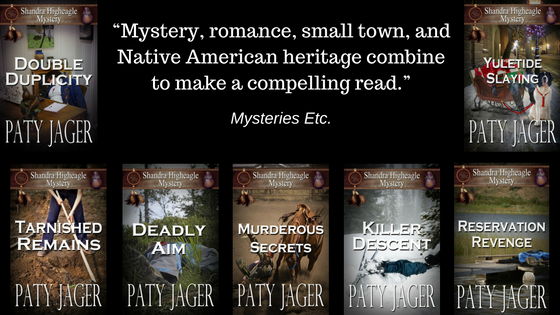
higheagle-book-banner

Paty Jager is an award-winning author of 25+ novels and over a dozen novellas and short stories of murder mystery, western romance, and action adventure.  This is what Mysteries Etc says about her Shandra Higheagle mystery series: “Mystery, romance, small town, and Native American heritage combine to make a compelling read.”
All her work has Western or Native American elements in them along with hints of humor and engaging characters. Paty and her husband raise alfalfa hay in rural eastern Oregon. Riding horses and battling rattlesnakes, she not only writes the western lifestyle, she lives it.

blog / website /  Facebook / Paty’s Posse / Goodreads / Twitter / Pinterest

Save

Intensify that interrogation scene

By Sally Carpenter

One of the hardest scenes to write in a mystery is the interrogation: The police officer, P.I., bounty hunter or amateur sleuth grills a suspect. Too often such scenes morph into a rhythm of Q-and-A, Q-and-A that lulls the reader to sleep and generates no conflict or character development. Interrogation scenes should be more than info dumps.

 I’m reading the book “Acting for Animators” by Ed Hooks (I bought the book years ago when I thought I’d be writing in TV animation). Hooks begins with basic acting theory that is useful for writers as well as visual artists. After all, acting is developing a character, and a mystery nothing more than how certain characters react to a crime. Without characters, our stories would be nothing more than boring police reports.

 Hooks says every scene in a play/book consists of a negotiation, of two or more characters striving to obtain a specific objective. Writing an interrogation scene with this in mind will perk up the story immensely.

 What is your character’s objective in an interrogation scene? The immediate goal for the protagonist, obviously, is to uncover clues or evidence to solve the case. But the character should have a larger overriding objective.

 The cop, of course, is doing her job. But maybe she had a long string of cold cases, and needs to break this one to prevent being transferred to traffic control. Or solving this case will result in a promotion. Or the mayor is breathing down her neck to wrap up this one quickly and quietly. Or she’s trying to do a good job to prove to Internal Affairs she’s not a dirty cop. All of these factors will affect every action the protagonist makes.

 The private eye needs this case to pay the overdue rent or her son’s college tuition or her mother’s operation. She must solve this crime because the local police department is too corrupt to deal with it.

The amateur sleuth is involved because the victim was a friend orerelative or the sleuth’s BFF was arrested for the murder.

 Or this particular case is too similar to the protagonist’s childhood trauma or inner demon that must dealt with. That will certainly affect the way the protagonist speaks to the suspects.

What of the suspect? That character’s objective in the scene is not to sit quietly and spit out exposition, but to get out of the hot seat as soon as possible.

A red herring will maintain her innocence or be terrified at the thought of an arrest or angry for even being considered a guilty party. This will affect how the answers are given.

 The killer may mislead, lie, deflect suspicion on another person, or act nonchalant, bored or even brag if the police have no solid evidence of his guilt.

 When people talk, they don’t sit motionless. They stand, pace, fidget, lean, cross arms or legs, nod, scratch, drink coffee, take notes, twist, etc. Characters in a story are also in motion, although they should move with a purpose and not flail about. Liars often avoid eye contact or cover their mouths. Writing in such action will break up long chunks of dialogue and add interest.

 Keep interrogation scenes short. A story is realistic, but it’s heightened realism. A real interrogation at police headquarters may take hours, but a reader won’t sit through pages of small talk.

 Make each word interesting. The suspect needs to say more than “I didn’t do it.”

 Each episode of “Columbo” is nothing more than a 90-minute interrogation scene! But the show works because each scene builds by revealing a new clue or pushing the killer emotionally further into exasperation.

 Columbo’s homey anecdotes about the wife or family are more than a humorous asides but are used as a means to disarm and distract the murderer, who thinks he can outwit this peculiar little man.

 The next time you watch “Columbo,” listen carefully to the thrust-and-parry game going on between the cop and the killer. How is the dialogue like a negotiation? Who has the upper hand in each scene? What “tricks” does Columbo use to wear down his opponent? And how can you use these techniques in writing an interrogation scene?


The Holiday Season is Winding Down…Now What?

Some of you have probably already taken down you Christmas decorations, others will wait until after the New Year, and then there are those who leave everything up for a long, long time.

We kept our decorations simple this year, and once our New Year’s Day celebration is done–we have relatives over who like seafood for gumbo and play our wild family game of Estimation–we’ll put everything away.

What will I be doing next? Hopefully getting my next Rocky Bluff P.D. edited, though I’m not sure if it’ll be published right away. My publisher is recovering from a serious illness–but I’m going to finish. Next will be planning a Deputy Tempe Crabtree mystery. I have some vague ideas wandering around in my brain, but nothing down on paper as yet.

I’ve a couple of events planned and signed up for one writing conference–my favorite–Public Safety Writers Association’s annual conference. It’s not until July, but I like it because it’s small and I get to spend time with some of my favorite mystery writers and a whole lot of people in various types of law enforcement, and other public safety fields.

If you’re interested, check out Public Safety Writers Association, and there is an early bird registration fee.

As the new year progresses, I’m hoping to be asked to appear/speak in other venues, find other book and craft fairs to attend, and perhaps set up a book signing or two.

Of course, as the saying goes about the best laid plans–one never knows what the future holds.

What are you plans for the coming year?

And while I’m here–I’ll wish all of you fellow ladies of mystery a most Happy New Year, and the same for all of our readers. May you all have plenty of mystery in your lives.

Marilyn

happy-new-year


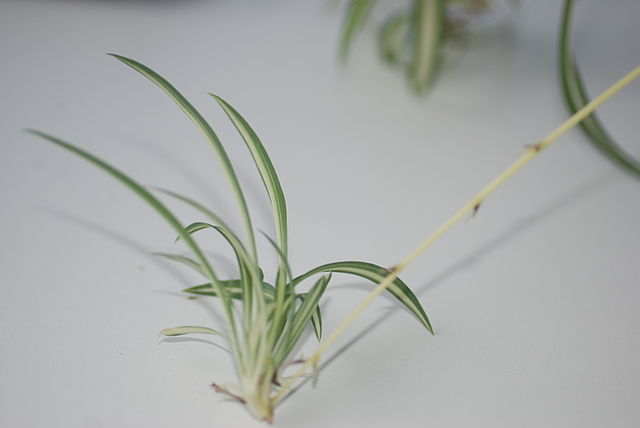
How a series is like a spider plant

spider-plant

My writing process reminds me of a spider plant—sprouting new plants which have potential to live and thrive if I cut them off the parent plant and pot them. But I have to choose how many little spiders I want to do that with, and how many I’d rather leave attached or simply trim off.

My last book, Ghost Sickness, took root from two stories I discarded. A scene that ended up being close to the end of it was originally the beginning of one of the rejected plots, while several key characters and settings came from the other. Maybe I should have entitled this post “Reduce, Reuse, Recycle,” because when I’m cutting, I store a lot of the cuts in a Scenes to Recycle file. It often ends up being the gentle way to kill my darlings, but it can also lead to creative recycling. Shaman’s Blues, my second book, hatched from a subplot in Soul Loss, which was originally going to be the second book and ended up being the fourth.

I’m well along in the first draft of the sixth book in my series, tentatively titled Medicine Buddha, and I can see that it’s going need trimming. I like the subplots better than the main plot. The antagonist doesn’t feel strong enough. My protagonist doesn’t have enough at stake. But I like the theme I’m working with and I love the settings. I’m also happy with reintroducing some characters from prior books, giving them important roles in this one.

This work in progress hatched like a baby spider plant from a second draft of Ghost Sickness. I cut scenes and subplots from it which are now the opening scenes of the main plot of book six. My protagonist, Mae Martin, attends a workshop on energy healing and medical intuition. There she encounters a fellow student, Sierra, who makes claims about reincarnation and self-healing and causing one’s own illness because of karma. She also claims that Mae’s boyfriend is part of a special soul group with her and that Mae isn’t in it. When I dropped Sierra into the workshop scene, I had no idea she was going to be my main antagonist and I’m still not sure she is.

I don’t like to repeat myself. Since the crimes in my books aren’t murders, I have to think of new types of wrong-doing for each book. Sometimes the malfeasance is on a spiritual and ethical level; sometimes it’s a criminal act. I’m trying not to make Sierra an echo of Jill Betts, the neo-shamanism expert in Soul Loss, and I’m also aware that I can’t repeat the manipulations done by Charlie, the shady professor in The Calling, who misuses his knowledge of spirituality and alternative healing.

Maybe this antagonist will evolve, or be replaced as the real “bad guy” in the book by a person who’s in her shadow right now. Maybe she’ll end up being a victim of sorts. That was my original plan but my characters acted differently than I thought they would. Still, I think it would be interesting if Mae had to protect and help a strange, difficult person she dislikes. I don’t know yet. Maybe I’ll recycle that idea in the next book. It could work better there. First, I need to wrap up the current WIP. Then I’ll see which little spiders need to be trimmed and set aside for possible other books, and which will get to remain part of the big plant.spider_plant2

*****

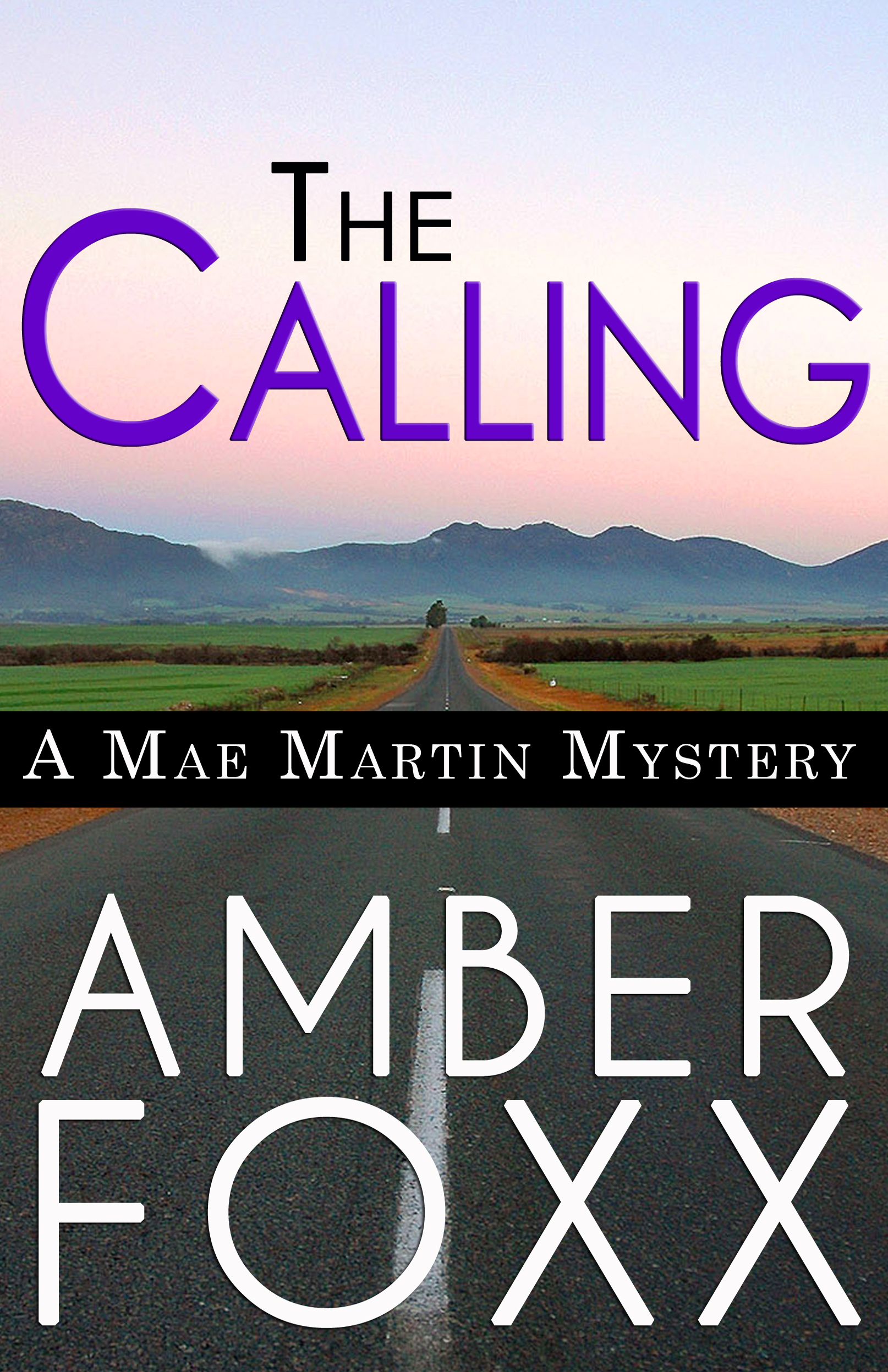
The first book in the Mae Martin Psychic Mystery Series, The Calling, is on sale for 99 cents through the end of December.callingebooknew