Parodies and pastiches

By Sally Carpenter

The theater in my town recently screened “Galaxy Quest” as part of the Friday night retro-film series. It’s one of my favorite movies. Trekkies consider it the seventh best Star Trek film because it’s a spot-on parody of the fan universe spawned by the Trek franchise.

Parodies abound in literature and cinema. If a movie becomes popular, a parody is bound to follow. “Star Wars” led to “Space Balls.” James Bond begat “Our Man Flint,” “The Ambushers,” “Get Smart” and Austin Powers. TV soap operas inspired the movie “Soapdish.”

The dictionary defines parody as “a literary or musical work in which the style of an author or work is closely imitated for comic effect or in ridicule,” and also, “a feeble, ridiculous imitation.”

Parodies work best with attention to detail and a deep knowledge of the original subject matter. A successful parody is full of in-jokes that only the most committed fans get (such as in “Galaxy Quest” when Alexander says to Jason, “I see you managed to get your shirt off,” a reference to Capt. Kirk’s frequent and gratuitous tearing of his uniform).

I enjoy a good parody. It’s like being part of an in-group that understands the jokes and allusions that outsiders miss. A good parody will stand on its own, but is more worthwhile for those who know the original subject.

Parody differs from pastiche, which the dictionary says is “a literary, artistic, musical or architectural work that imitates the style of a previous work.” A pastiche does not poke fun, but rather, pays homage to the original.

Over the years the Sherlock Holmes stories have spawned countless imitations from fans. The pastiches attempt to add additional cases for the great detective to solve. These stories stay true to Doyle’s literary style and format. Often the pastiches use other characters besides Holmes as the protagonist, such as the Mary Russell series by Laurie R. King and the Amelia Watson stories of Michael Mallory.

I can read a Holmes pastiche if it bends the canon a little, but not if it beaks it. Some authors go so far off track that the book is Holmes in name only. He’s even traveled in time and outer space!

The arrogant and aloof resident of 221B is also ripe for parody. My favorite parody is “Schlock Homes: the Complete Bagel Street Saga” by Robert L. Fish in which the detective’s keen observations always lead to the wrong conclusions. The stories are also full of word play and puns, which I love.

Hard-boiled private eyes like Sam Spade and Mike Hammer were imitated to death in B-movies and pulp fiction magazines. The stories were not so much homage as a means to cash in on a hot topic without violating copyright laws.

Sometimes beginning writers will pen pastiches as a way to learn the craft while their own style/voice develops. Some write parodies for amusement (as Fish did with Schlock Homes) or to poke fun at pretensions.

I love a good parody, but eventually I always go back to the original. With pastiches, I feel that an author should eventually create her own characters. Hundred of other detectives exist beyond Holmes and Spade and they deserve to have their stories told too.

What are your favorite parodies and pastiches in film and books?

The First Sentence

Shughart,Karen-0016_ADJ_5x7 (1)I’ve spent my professional career writing, sometimes as a newspaper columnist and feature writer; other times where I contributed to or edited professional journals, brochures, quality of life books and newsletters. I also wrote two books of non-fiction.
I knew that every good piece of writing starts with a good lead, that the first sentence or two can entice readers to read more. But when I started to write my first work of fiction, Murder in the Museum: An Edmund DeCleryk Mystery, I forgot what I knew. The first several drafts weren’t bad, but something was amiss. Then one day it hit me. I had written a prologue, but the first sentences were boring. Truth be told, the prologue was boring. I reminded myself I knew what to do, took time to rethink it, and started from scratch, happy at last with the results.

I belong to a book group. At the beginning of the year we choose the books we’d like to read, and then each person commits to leading the discussion at least once during the year.  The book we discussed for June was the National Book award-winner Sing Unburied Sing by Jesmyn Ward, a book of such depth and lyricism that when we discussed it, many of us did so with tears in our eyes. Ann, our discussion leader, asked how the first sentence related to one of the book’s themes, death, and to the title. The book is narrated by a young boy who says, straight out, “I like to think I know what death is. I like to think that it’s something I could look at straight.” Succinct and enticing, wouldn’t you agree?

When I got home from that meeting I started thinking about first sentences and the impact they can have on the reader. Consider, for example, Charles Dickens’ first lines in A Tale of Two Cities: “It was the best of times, it was the worst of times, it was the age of wisdom, it was the age of foolishness….” How prophetic, those lines.

Then there is A Tree Grows in Brooklyn by Betty Smith. This classic coming of age novel is set during the first two decades of the twentieth century and begins, “Serene was a word you could put to Brooklyn, New York. Especially in the summer of 1912. Somber, as a word, was better.”  If you’ve read the book, you’ll understand the context.

Perhaps you’ve read books by James Lee Burke, of contemporary southern crime fiction fame. His novel, Jolie Blon’s Bounce, starts out, “Growing up during the 1940s in New Iberia, down on the Gulf Coast, I never doubted how the world worked.” Powerful words, these, if you know the story.

So, as I knew all along, first sentences matter. They set the scene for what’s to come. And I’ll remember that when I start book two in the Edmund DeCleryk series.

Wowee, Zowee! July Has Been Busy

So busy, I’m late once again.

The life of this author has been jam-packed. So jam-packed I have not been able to finish the book I’ve been working on. Not all bad, because I had other writing jobs to do that actually pay money.

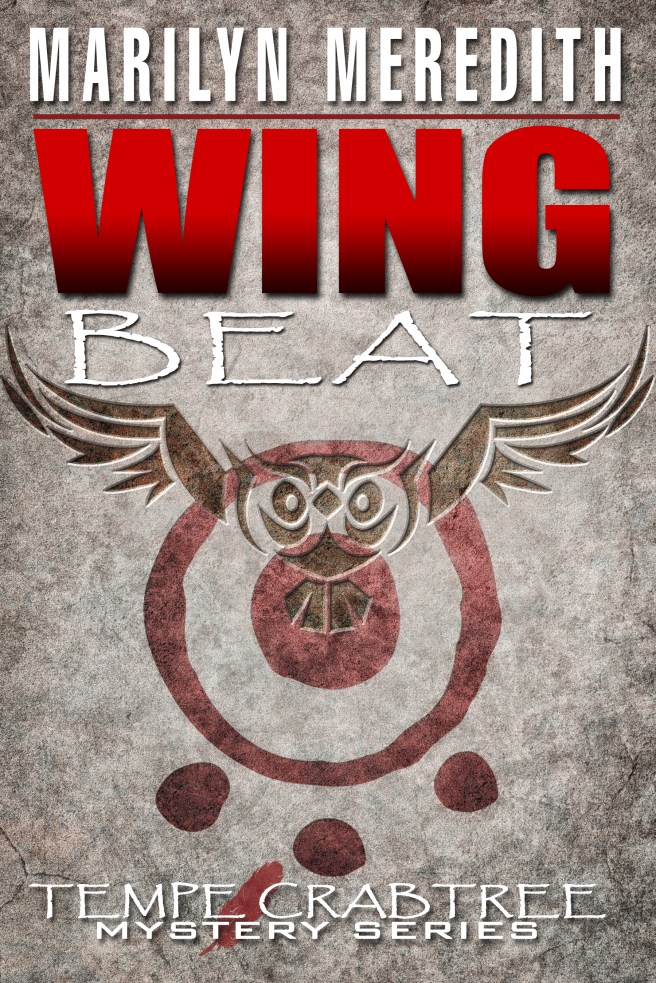
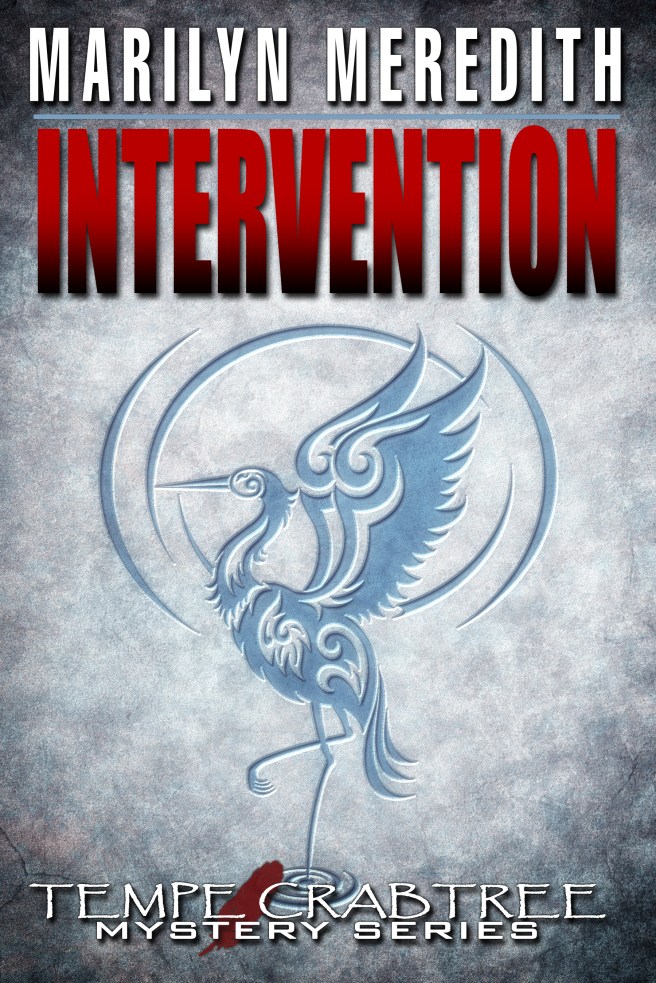
New covers for my earlier books in my Deputy Tempe Crabtree series have come in for my approval and I’m delighted. They are wonderful.

Wingbeat. New.jpg

And my favorite:

Intervention New.jpg

Though I’ve missed two of my regular writers meetings this month, I did get to go to the fabulous Public Safety Writers Association conference in Las Vegas, and it was the best ever.

We had lots of fantastic presentations from the best self-editing guide I’ve ever heard, first hand accounts of gun fights, lots of information on poisons of all kinds, plus other writing topics.

The most moving of all, though, was a first-hand account from a firefighter/EMT who’d gone to the outdoor concert next to Mandalay Bay with a group of friends. His brother was wounded, and after getting him out of harm’s way and on his way to the hospital, he remained in the parking area doing triage, giving medical help, and sending those who could be saved off to a hospital. The details were heart-wrenching.

Someone asked him how he knew what to do. He said, “All my training kicked in.” That’s something to remember as we write about first-responders.

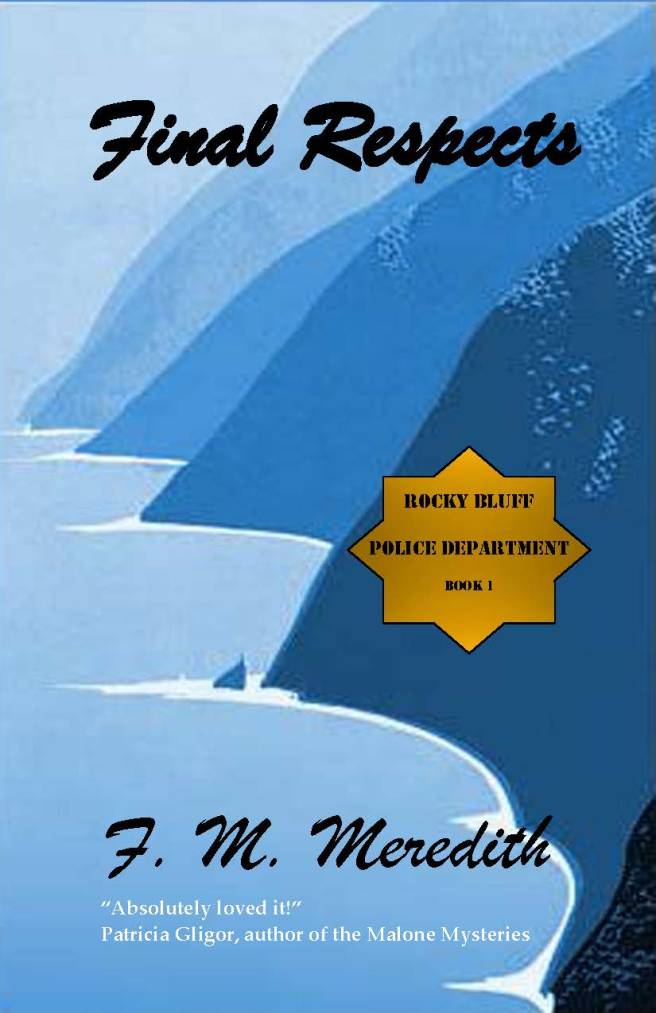
I’ve copies of my newly edited and with new covers of the first four books in my Rocky Bluff P.D. series too. I am ready for my next in-person event which comes up in August.

Final Respects NEW

My personal life has been busy too—doc visits for hubby, regular household chores, a birthday party for a great-grand, some nice dinners out, and just living.

What about you? What’s happening in your life?

Marilyn


WHO’S TELLING THE STORY?

DSC_0196

One of the first things you must decide when you set out to write a novel or short story is: who is the narrator? There are lots of decisions to be made. Is it first person or close third person or even second person? Nineteenth century novels were most likely to be told by an omniscient narrator who isn’t a character in the story but an observer.  THE MAN OF PROPERTY, the first novel in THE FORSYTE SAGA by John Galsworthy, begins, “Those privileged to be present at a family festival of the Forsytes have seen that charming and instructive sight—an upper middle-class family in full plumage. But whosoever of these favoured persons has possessed the gift of psychological analysis (a talent without monetary value . . . ” No one would write like that today.

Now the narrator is often a character in the novel.  Once you’ve decided on the narrator, you must decide who he or she is, where they fit into the story, if they do, and what person to use. THE SYMPATHIZER by Viet Thanh Nguyen begins with the sentence, “I am a spy, a sleeper, a spook, a man of two faces,” and it is clear that this story is going to be told in the first person by someone who is very much a part of it.

On the other hand, DEAD EYE by Mark Greaney begins, “Leland Babbitt shot through the doors of the Hay-Adams Hotel and ran down the steps to the street like he had someplace to be.” The reader’s first thought is that this is written in third person and that it’s going to tell the activities of Leland Babbitt. But when the next paragraph begins, “The chauffeur hadn’t been expecting his passenger . . . ,” you immediately realize that the reader is going to have an overview of the activities of several people and that the story is going to be told from a third person omniscient point of view.

Once you’ve decided who is going to narrate, you have to decide where the narrator fits into the story. If the narrator is a character, does the story action happen to him or her, as in THE SYMPATHIZER?  Or is the narrator an observer, one who watches the novel’s characters and tells the story as an outsider, as in DEAD EYE.

I remember once going to a luncheon where a young woman talked about a novel she had written that had interested an agent. She had written the novel in close third person, but the agent thought she should change it to first person. She was at the moment deep into that process and not really happy about it. She was having difficulty telling the story in first person when it had originally been conceived in third person. Changing the voice of the narrator was really stressing the writer out, because many things, not just the voice, had to change as she did the rewrite.

The important thing about narrative voice is of course how that person fits into the story. I often think of W. Somerset Maugham who wrote several novels in the first person narrative voice of someone not involved in the action. The narrator learns the story and tells it to the reader. Certainly that distances the reader from having an emotional stake in the action. We cannot experience the joy or the terror of the characters because we are being told the story at a remove. I often wondered why he did this, but THE MOON AND SIXPENCE and THE RAZOR’S EDGE were very popular in their day.

There are many different kinds of narrators in novels and short stories. Alice Sebold’s narrator in THE LOVELY BONES is already dead when the novel begins, although she watches the action and manages to save her little sister. In “A Good Man is Hard to Find,” Flannery O’Connor kills off her first person narrator just before the end of the story. I remember thinking as I was reading, “Well, the woman must survive,” but she doesn’t, and O’Connor carries it off.

The book I am currently reading, A GENTLEMAN IN MOSCOW,” by Amor Towles begins “At half past six on the twenty-first of June 1922, when Count Alexander Ilyich Rostov was escorted through the gates of the Kremlin onto Red Square, it was glorious and cool.” I learned a lot about time and setting from that, but I didn’t know anything about the Count except that he was an aristocrat at a time when that was not popular. The book begins almost like THE MAN OF PROPERTY, but the revelation of the Count’s character throughout the book is one of its delights. It becomes an entirely different book from a nineteenth century novel.

I find it difficult to provide a description of the narrator of my stories. Sue Grafton neatly solved that problem by having Kinsey Milhone tell the reader the background of the story she is about to tell including who she is, why she’s involved, and what her life circumstances are. These include a physical description of her.  As a result, we have a picture of Kinsey in our minds almost from the first page of the story.

The old trick of having the narrator look in the mirror is definitely just that—an old trick. I’ve finally settled on doing the description in bits and pieces: I have a picture in my mind of what Andi Battaglia looks like, but I’m afraid I’ve never conveyed this completely to my readers.

How about other writers? Who do you use as your narrative voice? How do you describe him or her? Do you like to write in third person or first? Do you have a preference when you read?

What’s in a Title? by Paty Jager

Do you pick a book by the title? Do you want the title to tell you the genre of the story or what the story will be about? How about a mystery? Do you want the title to be a clue to the mystery?

These are all questions I’ve asked myself as I picked the title for the first book of my new mystery series coming out in 2019. I thought I had the perfect title… I loved it! Thought it was the essence of the story, more or less. Until I finished the book and read through it again. I felt like the title was lacking.

I loved the title. I used it as part of my trajectory in the story, or so I thought.

I sent the book to a beta reader. When he finished reading and sent me back his thoughts on the story, I told him the new title that popped into my head after I’d sent the manuscript off to him. What did he think? He said the new title fit the story better without me even explaining why I picked it.

BooYah! I now have a new title- Murder of Ravens: A Gabriel Hawke Novel.

20180514_102901

Because my character is a game warden I want to have animals in all the titles. I have four more story ideas penciled out and went through my list of animal names I compiled from Native American Myths and Legends books and hope my titles will fit the books I write. If they don’t, I’ll be changing them as I did with the first book.

Another clever, I think, item to this new series, is whatever animal is in the title will be somewhere on the book cover. In some cases the size of the animal may make it a good contest to have readers find the animal. 😉

So as I asked in the beginning- Do you pick a book by the title? Do you want the title to tell you the genre of the story or what the story will be about? How about a mystery? Do you want the title to be a clue to the mystery?