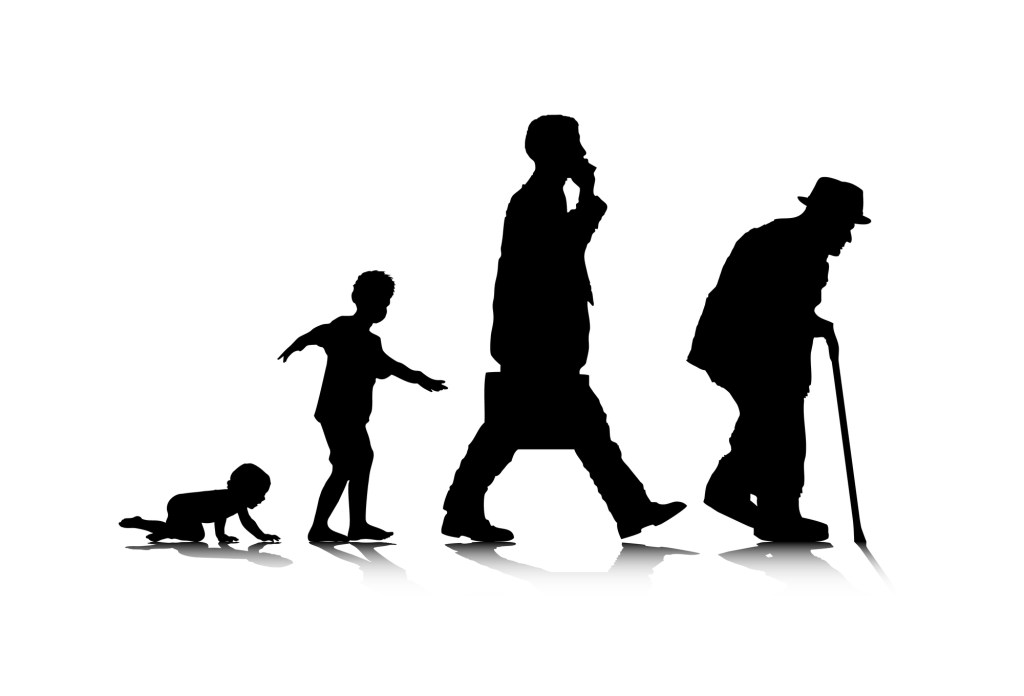
The Aging Protagonist by Paty Jager

I get an online ezine called the Crimereads. It has great articles about mystery books, authors, and the genre. The latest one had a topic on what makes a good protagonist and in the article the writer talked about how some protagonists age through the lifetime of their series and others don’t.

Because I am a writer who likes to keep my stories as real as possible, I tend to age my characters and keep track of the time/years for each book. If I write three books in one year, they are set in that year. So the next year, my characters are a year older and things, like secondary characters getting pregnant are part of my secondary plots. I remember reading books with characters that didn’t seem to age. Like Kinsey Milhone (the character who was the impetus for me to try my hand at writing mysteries), Miss Marple, Stephanie Plum, Mrs. Pollifax, and even James Qwilleran, and his two Siamese cats, Koko and Yum Yum

It will be interesting to see how long I can keep my character Gabriel Hawke traipsing about the Eagle Cap Wilderness solving murders when I started him out at 53 years old. But I have a feeling he will be going strong for a good long time. People around him will age, as will he, but we’ll see if his aging makes him think harder about family, his own presumably.

As for Shandra Higheagle, she has married since becoming a mystery character and while her friends are all becoming pregnant, I haven’t decided if she’s going to become pregnant, if she and Ryan will be a childless family, or if they will bring an older child into their family. It’s all up in the air at this time. It all winds around in my head as I ponder the future for these two.

One thing I know for certain. My characters will age, their lives will have ups and downs, and I hope they continue to be characters readers want to read about.

What are some of your favorite characters and have they aged over the course of their series or stayed the same?

blog / website /  Facebook / Paty’s Posse / Goodreads / Twitter / Pinterest   / Bookbub

17 Hours by Missye K. Clarke

Late Saturday night, 4 February, 1991.

Sam had himself a time at a sweet jam in Upper Harlem. Talk at the party flowed: plans to rock out Disney World in the spring, because he, Charlie, Marie, and several other family members hadn’t yet been. Sam Junior was doing well in school. He had job security. He’d be a grandpop later that year. The drinks were maybe a touch better than the present company, but on the whole, Sam felt, life was good.

Too bad it all would soon end.

Sam left the Lenox Avenue apartment roughly 1:30am back to Queens and to bed. Mornings come faster when you’ve been partying, and he wasn’t the exception.

The station was quiet when he fed his $2.25 token fare in the Queens-bound turnstile. Distant laughter echoed in the labyrinthine station, and he cut the token booth a glance. The clerk behind the bullet-proofed glass gave a small nod in acknowledgement before returning to his Daily News.

More laughter carried through the chilly station, part of a monstrously complex network New York City Transit is. Although the best method getting around the Big Apple, a cab in that same distance to his Flushing, Queens residence was twenty times the transit fare, and he prided himself on being an unapologetic cheapskate.

He took a seat on the Queens-bound A train platform, sighs. Minutes skidded past. Nice party. Work’s been brutal. I need to do that more oft–

“You got money?” a voice asked over the hard thunder of an approaching train.

Sam looked up. Several teens in dark clothes semi-circle him. “No.”

“That watch says different, man,” a second teen said.

“So?”

The train still barreled in, but slowed as regulations dictated.

The teens rushed the man. No time to think, Sam pulled out a .9. Several against one wasn’t a fair fight, but in a fight, is anyone ever worried about fair?

Shouts, confusion, havoc. Cursing, punches thrown, shots fired. So much chaos for a small number in a tussle on a cold, lonely platform in the young Sunday morning. From a motorman’s viewpoint, powerless he couldn’t stop his run in time seeing a panicked human’s eyes while trying to climb back to the platform, and to safety, he’d find work not so conscience-bruising. No more would he play another part in a senseless end.

A teen involved with the scuffle–to his mother, he was still her firstborn bear cub, doing her proud he was college-bound–felt remorse he found himself in a fight he wanted nothing to do with.

Maybe his fellow thugs, eager to get high on a generous stash of rolls, blunts, and bowls, saw the event as a way to power up an otherwise witch’s tit-cold early Sunday morning. Their weed dude was late, they had to pass time some kind of way. And hey, a pulse of adrenaline kept them warmer a hell of a lot better than sitting in a boring Con Ed heated apartment devoid of weed would do.

Whichever the case, or the thoughts, those affected might see sunrise hours later. One man on a literal collision course with fate wouldn’t. Nor would he see the mid-year arrival of his first grandchild.

NYPD caught two perps, those outcomes unknown. But being underage, those boys’ criminal records are sealed, if not expunged altogether. The rest of that crew, if any to account so, or would cop to, fled into the ubiquitous shadows of the Manhattan night, maybe hit or missed by bullets, bur definitely gone like cold smoke. Bear Cub, the college-bound, might’ve been among the runners. Conceivably, he kept his mama’s promise and made good in school and then some: he shielded his bear cub child from the life he’d lived, knowing Bear Cub Sr. altered another family’s lives he’d never meet. Perchance this was the bear cub’s way to atone–God sees all but waits. He’d let Bear Cub tell that family his regrets in the next life.

* * *

Early Sunday evening, 5 February, 1991.

“Missye, I gotta talk–” my husband Pete told me as I had my key in the lock of our front door.

“One side, one side, let a rabbit through,” I demanded, feeling like an overfilled water balloon after finding no bathrooms between traveling home from a friend’s memorial for her husband.

Pete side-stepped my mad dash. I let my backpack purse hit the worn carpet outside the loo, not caring if something broke, got wet, or crumbled within the bag. When you’re the start of second trimester pregnant and your remaining wisdom teeth are floating, all bets are off.

I dropped on the seat, let ‘er rip. The release felt needed-laugh good, needed-cry good, or a solid right hook to a boss’s egotistical nose needing a get-back-in-line alignment, good. “Okay, babe . . . now talk to me,” I said.

Expression more solemn than when he’d told me his dog died four years before, Pete said sotto voce, “Honey . . . it’s about Reggie.”

“What about him?” I asked while tidying up.

“I really don’t know how to say this . . . but he’s dead.”

“Not funny, Pete.” I cut my husband a steeled look. “I saw him three days ago, and I just came from a service. Stop bullshitting me.”

Peter shook his head no. “I’m serious. He’s been killed. Charles just told me.”

Like 9/11 a decade and seven months later, shock hit me first. Still semi-dressed, I demanded our cordless phone, dialed my favorite uncle. From his flat tone on the fourth ring, my old normal imploded. So had his. (To this day that old normal’s still imploded with my favorite uncle gone, too. I fucking hate cancer.)

Sam–Reginald Samuel Briggs, and my birth father–was the man under six of eleven train cars headed to Queens those seventeen hours before. As of this post, NYPD has no leads or clues, the case among thousands of homicides in that agency’s cold files. The account of his death, based on scant details offered at the time, permitted me creative license fragmenting together his last moments alive.

Do I know the festering, nagging why behind this crime? No. Do I want to know that why? Again, no. Am I macabre enough to conjecture that night’s events to see how close I’ve come to being right? I have–it’s in the soul’s design to crave answers to things unknown. To a degree, it’s been fun giving this case closer scrutiny NYPD didn’t do–and beats crying to the final verses of Mike + the Mechanics’ “The Living Years” yet again :). But with the key players of this story unable to be found, recently or long dead, and an agency bent on leaving its shortcomings under lock and key, forensic speculation’s all I have.

Although crafting fiction sates my inner Nosy Nancy–I love bamboozling anyone who reads my stuff, if ever they do!–this event, bookending the still-murky motives of the AZ move a decade prior, my wild imagination and inner sense of stark right and wrong, have an outlet. What I can’t do alone in the clearly broken justice system I can do fictionally. I don’t know how purposeful it’ll gift mankind to convince them to do better in solving cold cases, but if it’s a pinpoint of hopeful, philosophical light at the end of a scary-dark tunnel for somebody else worse off than I, justice is served. But I’m forever changed by this. For the better, I’d like to think so, but that’s open for debate and perception.

Or maybe I’m in deep need for good trick-or-treat candy unloaded on me while I ensure good mostly triumphs in my mysteries. Make the haul anything citrus, cherry, watermelon, and sour apple in Jolly Ranchers®, Tootsie Rolls®, and Starburst®, please, and thanks. Kindly hold the bag of rocks–those are Charlie’s. Brown’s, that is.

👻🎃 Happy Halloween! 🎃👻

 

Topsy and the Apple Pie by Heather Haven

Judy Garland used to sing the song, “I Was Born In A Trunk At The Princess Theatre.” I often sing “I Was Born ON A Trunk At Ringling Brothers Circus.” My parents met and married at Ringling Brothers during the early forties. She started out as a First of May, he an elephant handler. Her professional name was Jerull Deane. His was Whitey Haven.

Within a couple of years, Mom worked her way up to a specialty act with the elephants. My father worked his way up to being an elephant trainer. They both loved working with these large but sweet-natured animals.

My mother used to say one of the reasons she fell in love with my father was because he didn’t use the eye hook, or let any of his men use them, either. He was kind and loving to his charges, and she adored the man all the more for it. Topsy was one of the elephants Mom worked with and she liked to tell stories about her beloved pachyderm.

As a married couple, they had a little more privacy than other people, and lived in a small trailer on the backlot next to the animals. One of her favorite stories was about the time she took up baking. She would bake a fruit pie – apple, peach, berry, depending on what you could get right after the war – and put them on the windowsill in front of a partially opened window to cool. But pies kept disappearing, not all the time but most of the time. She couldn’t figure out who was stealing them. Also, Mom was running out of pie tins. They cost a lot of money and there were only so many of them, as rationing was still ongoing.

So she set up a watch. She baked an apple pie, put it in the window to cool and waited out of sight. About half an hour later, a grey trunk slowly appeared in the window sniffing the air. Once it located the pie, it pushed the small window open entirely, reached in, and pulled out huge chunks of pie, disappearing out the window with them. After most of the pie was gone, the trunk sucked on the metal of the pie tin, and pulled it out of the window, too.

Mom appeared at the window and looked down at the thief. She recognized Topsy right away. Pie tin on the ground, Topsy was slurping on the remnants like she was a vacuum cleaner. When the elephant had finished the last crumb, she picked up the empty tin and turned to a nearby trashcan.  Mom had had enough.

“Topsy,” she yelled from inside the small window. “Don’t you dare throw that tin in the trash!”

The elephant froze in place then slowly turned around to face her performing partner in the ring, pie tin dangling from her trunk.

“You bring that here right now,” Mom demanded.

The elephant slowly crept toward the sound of her partner’s voice.

“Did you steal that pie?”

Topsy lowered her head.

“You did, didn’t you?”

Topsy nodded once, pie tin scraping on the ground.

“You give me that pie tin. You hear me? Right now.”

Mom reached her hand out the small window. Topsy raised the tin up for Mom to take.

“You’re a bad, girl,” Mom said eye level with Topsy’s face. Topsy reached her trunk into the window and stroked Mom’s cheek with the finger at the tip end of her trunk.

Mom laughed, took the grey trunk in her hand, and kissed it lightly on the tip, a tip that smelled of cinnamon and baked apples.

“No, you’re not,” she crooned. “You’re a very good girl and you’re my baby doll.”

Even though her ‘baby doll’ weighed in at 5.5 tons, every now and then Mom would bake an extra fruit pie for Topsy. Especially apple. Topsy loved apple. But Mom stopped cooling any of them on the windowsill after that.

I’ve always been taken with the stories of my mother’s life in the circus, especially during its golden age. As a mystery writer, her stories prompted me to write a noir mystery, Murder under the Big Top, using my perception of her during that time as my muse. I even used a photo of her on top of Topsy as the book cover. I lost Mom in 2014. I’m proud to say Murder under the Big Top won the IPPY Silver for Best Mystery/thriller that same year and right around Mother’s Day.

I like to think Mom was looking down on me then, smiling. Maybe Topsy was, too!


Writing without Pen in Hand

Numerous myths have grown around writers, and all are almost unshakable. One of these is that real writers write every day.

I was thinking about this last week because I finished a manuscript, wrote a blurb and a short synopsis, and sent everything off to my agent. And then I tackled a short story that had been germinating in the back of my mind for weeks. When that was done, I looked around and wondered, “So, what’s next?”

Last year at Crime Bake, Walter Mosley said, “When I finish a book one day, I begin another the following day.” He just keeps writing, day after day, and never gives a thought to taking a break. Many writers I know take their laptops or notepads with them on vacation, and make sure to get in a few hours or less on their current project. I’ve done the same. These thoughts rambled through my brain as I spent more time on FB, reading articles on crime fiction, and wondering if now was the time to wash the windows. It was.

Before I headed off to remove the grime of years in the living room panes, I made two pages of notes on a talk I plan to give later in the year. But because it wasn’t a story or a novel, I didn’t consider it real writing. Standing on a stepladder outside trying to reach the top storm window (we have windows built and installed in the 1880s), I got a different look into the house. The dog stood in the doorway looking back at me, confused and hurt that I was outside and he was still inside. I could see into the hallway, where my husband had left his shoes. I took note of more details, the new perspective, thinking, I could use this in a story. It was a sunny day, perfect for a stroll and dog walking. I enjoy watching people pass by from the porch. But outside, hidden behind shrubbery, I heard more and longer snatches of conversation, and, again I thought, I could use this in a story.

By late afternoon I finished washing the fourth window just as it started to rain. I collected my ladder and Windex and towels, and headed inside. This was a good day of rest away from writing, or was it?

Whenever I think I’m going to take time to regenerate after finishing a story or novel, I come back to the same observation: I can’t stop seeing the world in terms of writing and story, as a moving frame of scenes to be captured and considered, with certain ones pulled out to use in other narratives. While on vacation in India a few years ago, I came across an article about rising debt in the villages, which reminded me of the debts our maidservant had contracted when she worked for us years ago. In a moment, waiting for my tea in a cafe as I watched waders in the shallow waves, an entire novel came to me. I hadn’t been looking for a new story idea, but there it was, When Krishna Calls, the fourth Anita Ray mystery.

Writers write every day with or without pen or laptop because we never stop seeing the world in terms of narrative, story-telling, a drama playing out in front of us, inviting us to reinvent, shape, and share what we see and imagine with the rest of the world.

Boo! Just in Time for Halloween

Bones in the Attic

Though I’ve written several scary novels, some more horror than anything, Bones in the Attic, my latest Rocky Bluff P.D. mystery is the first that focuses on Halloween.

When I first started writing it, I wasn’t thinking about it being a Halloween book, but it definitely is, but not in the way you might think.

For those of you who have read any of the RBPD mysteries know that a lot of every book is about family issues, and this one is no different. It begins with Detective Milligan’s daughter Beth and her high school art club decorating an abandoned house for Halloween. They intend to make money for their club by selling tickets to their Haunted House.

When one of the members decides to explore the old house and finds a skeleton in a trunk in the attic, their plans are doomed. Or are they?

Of course the majority of the book focuses on the RBPD trying to find out who the bones belong to, and why were they in a trunk?

As always, there is more about what is happening with the various families of the police department:  There is an issue with Sergeant Abel Navarro’s widowed father, more about Sergeant Strickland’s daughter with Down syndrome, the romance between Police Chief Tucker and Mayor Devon Duvall, and a crisis with the mayor’s daughter.

And, to make it even more intriguing, there is a bit threat to all of the beach community of Rocky Bluff.

I hope some of you will try it out! Though it is a series, each book is complete when it comes to the mystery.

Buy link: https://tinyurl.com/yxpd8mxy

Marilyn who writes this series as F. M. Meredith