Overused Words by Karen Shughart

There is something I want to tell you. As absolutely awesome and nice it is to see you, often when we’re together it’s because I really find you interesting and amazing which isn’t bad; in fact, it’s good and fine and makes me a bit happy. Really.  But therefore, I hope you are well and will continue to be thereafter. So long.

If you’re completely puzzled after reading the above paragraph, I admit I’m guilty. It’s terrible, and I wrote it, but there was a method to my madness. Read further, and I’ll explain.

I’ve been working on the second book in the Edmund DeCleryk series, Murder in the Cemetery. After several drafts, the process of editing and polishing has begun, and for me, this is the hard part. After writing everything I could think of that will create and enhance the plot, I start

words text scrabble blocks
Photo by Skitterphoto on Pexels.com

winnowing it down. First, I look for inconsistencies. For example, in book one, Murder in the Museum, one of the characters and his wife had recently welcomed their second grandchild. A year-and-half later, in this second book, the grandchild is in kindergarten. Whoops!

As I read through the book, I also look for extraneous narrative. Annie, wife of Ed, the investigator and a sleuth in her own right, provides an intern who is working on a project for her with contact information for her friend, Charles, who lives in Canada. Charles, who had a large role in book one, has expertise in the field the intern is researching. As much as I wanted him to reappear in book two, I realized that the intern didn’t need Charles’ help and never would, the task was simple. Goodbye, Charles.

I’m pretty good at spelling, grammar and punctuation. I was an English teacher, for gosh sake. That said, I always find errors. Sometimes my brain works faster than my fingers as they pound away at the keyboard; I make mistakes. This is the phase in the book where I read carefully and slowly; I don’t want my publisher to think I’m illiterate or careless, heaven forbid.

Now we come to the reason for the sentence at the beginning of this blog. I know from experience that it’s easy to overuse certain words, as I did above. Sometimes we get attached to phrases, we use them to pad the word count, or our overuse of words is completely unintentional. If we want our writing to flow, if we want it to look professional, these must be deleted. At least most of them.

Using computer software, I can search my document for a certain word, and it’s highlighted every time it appears. It’s frustrating because the computer can’t distinguish the as in was from the word as. Still, it’s a good tool. It takes time, but once I’ve identified these overused words, I can rewrite sentences that are original, creative. And, hopefully for you, the reader, much more compelling.

Guest Blogger- Baird Nuckolls

Researching My Historical Novel

By Baird Nuckolls, author of “Shattered Angel, Morelli’s Private Inquiries, Book 1”

My new novel, Shattered Angel, is set in New York City in 1923. While millions of people have been to New York, even more have seen it in movies, television or photographs. You may feel like you know New York, but I want you to know New York back in the days when my story is set. The Roaring Twenties were a time of great change in society and technology. Society was recovering from the first world war; women had more freedoms, Prohibition had an impact on society’s activities, new jazz music was the rage and new inventions were changing daily life forever.

Doing research is as important as plotting the mystery. You can spend hours or days finding out things that may never make it into the book. For example, we think of the radio as being pretty ubiquitous. Yes, the radio was invented in the late 1800’s, the first radio broadcasts happened in 1906 and the first radio station opened in Philadelphia in 1920. But in 1923, there were few radio stations, fewer programs, and the radios themselves were expensive. So, my detective, Morelli, does NOT have a radio that he can listen to it at night, as he might be doing if the year was 1926 or 1927. Those few years make all the difference.

Another little thing that needed a lot of research was cigarettes. If you watch old movies, everyone smoked like chimneys and pre-rolled cigarettes had become popular during WWI, when they were shipped to the troops overseas. They’d even become popular with women in the 1920’s and the long cigarette holders became a major fashion accessory, in part to keep ash off their clothes and prevent their hats from catching fire, but also to look sophisticated. However, there was still a cost factor. Morelli continues to smoke hand rolled cigarettes because it’s cheaper and he would rather spend his money on whiskey. Telephones were available, including pay phones, but deciding who would have one and who wouldn’t, was part of my initial research as well.

The original genesis of the story came from two articles in the NYTimes. One was about a rum-running tugboat seized by government agents and some missing drugs. The other was about a payroll robbery on the subway. As the story continued to develop, I read more and more of the newspapers of the day and decided to add things to the plot. Stories about the politics, including the mayor and the commissions came straight from the pages of the news. The Jack Dempsey heavyweight title fight was a huge event in 1923. I even found film footage of the fight on YouTube, so that I was able to accurately describe the experience of being there.

Ultimately, these details are what make the story feel like it’s set in a real place. The characters are mostly fictional and the story is my own creation, but New York City is alive and truly a character in its own right.

SHATTERED  ANGEL

Set amid the growing roar of the 1920’s, a beautiful young flapper named Angel has hired Adriano Morelli, an ex-cop turned private detective, to follow her cheating husband. When Morelli steps into the rarified hush of a Fifth Avenue apartment looking for his client, what he discovers changes the stakes of the game.  

He now has a murder to solve while staying one step ahead of the cops. And with a history of failure, especially when it comes to beautiful women, Morelli is hoping to redeem himself for past sins. From the Cotton Club and the city’s speakeasies to the Polo Grounds where heavyweight Jack Dempsey faces his greatest opponent, the life of New York City comes right off the pages of the newspapers of the day in this riveting historical mystery. 

Buy  Links: Amazon EbookPaperback

Baird Nuckolls has had a multifaceted career, from banking to baking. In addition to writing, she has been a partner and editor for The Wives of Bath Press, as well as an assistant editor for Narrative Magazine. She has previously published short stories, as well as a middle grade novel, “The Dragons of Graham.” She lives in Seattle and Orcas Island, Washington with her husband. 

Website: bairdnuckolls.com

Facebook: https://www.facebook.com/baird.nuckolls 

Author Central

My Favorite Halloween Costumes

The best part of Halloween for me is, by far, the costumes. Okay, little chocolate bars are up there. But deciding what to wear and how to make it, that is possibly the most fun of all.

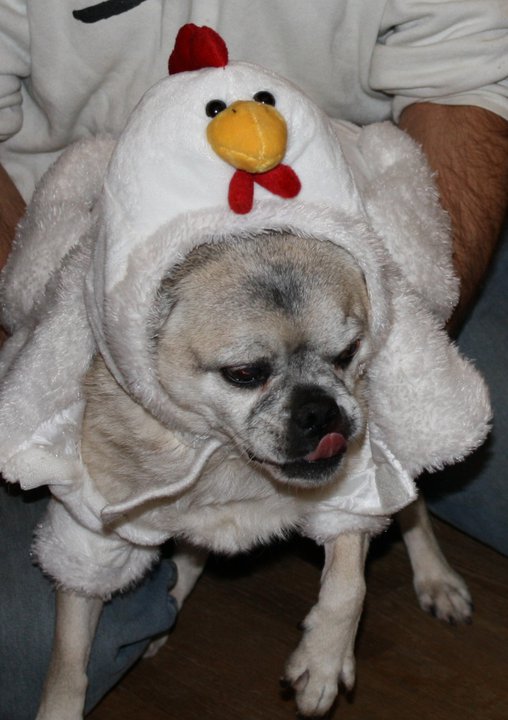
Fred did not like the chicken suit

I wish I had pictures of my Jawa costume from 1977 – they’re around here someplace. I built it myself and it even had real, glowing orange lights for eyes. Then there was the last minute costume I threw together when I was 14 so that I could go trick or treating at the last minute. I wrapped up a bunch of sheet strips around my ankle, got an old ski pole and a jacket and went as a skier.

Which kind of underscores my costume philosophy. Make it really complicated or make it funny. Or better yet, both. This got to be a problem as my kid grew up because between me, with my creative inclinations, and her engineer father, who loved that kind of problem-solving, my daughter could ask to be just about anything and did.

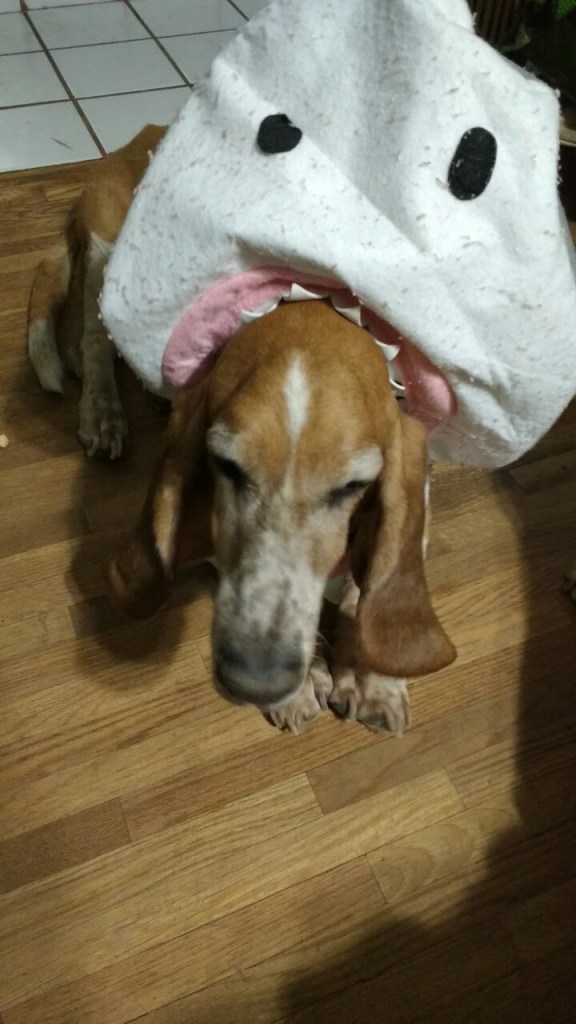
We tried the shark suit with Clyde. He didn’t like it.
TobyWan didn’t like the chicken suit, either.

When she was 3, she wanted to be Cinderella. I did a creditable dress for her. And when she was 5, she wanted to be My Little Pony. That one was not one of my better efforts, but in all fairness, the sewing machine died the night of October 30 and all I had was my serger to work with.

Then, when she was 6, she wanted to be a birthday cake. We pulled that one off. She wanted to be a box of Nerds candy one year and was a treasure chest another year – both of those were her father’s work since they were all cardboard.

My husband now does not like to dress up and we haven’t been to a Halloween party in years, anyway. Life has gotten busy and I’ve had a couple health issues that force me to spend my energy on longer-lasting projects, like books. That, and we’ve already got the costume pic with TobyWan, the current dog.

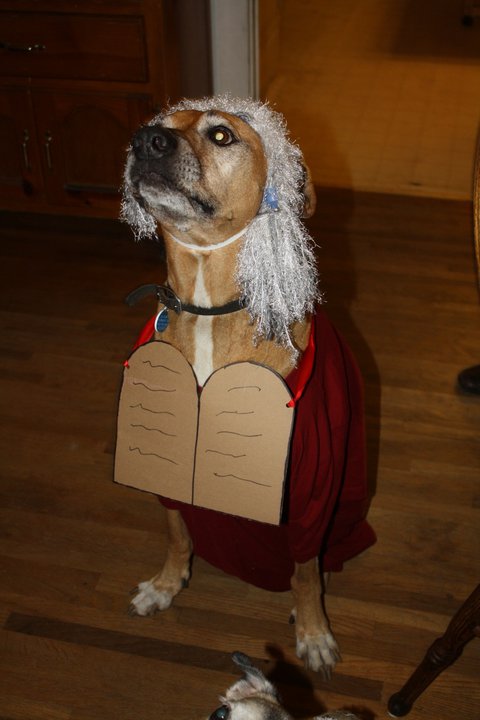
Moses as Charlton Heston

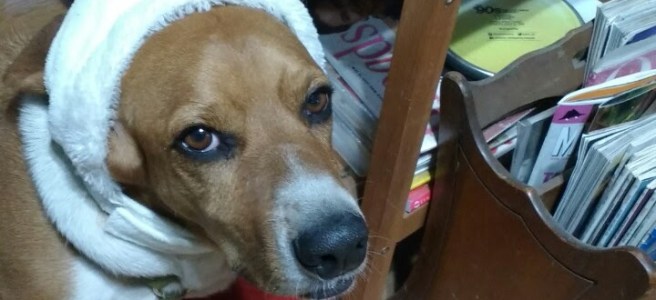
The earlier dogs weren’t thrilled with the costume thing, but I at least got the costume on long enough to get pictures. That being said, it took almost 12 years to get around to dressing our dog Moses up as Charlton Heston, back in 2013. It may have been just as well. Mosie was pretty hyper as a younger dog and probably would not have sat still for the photo.

So, there’s not going to be any dressing up this year. Unless we get a last-minute invite to a party. That sheep costume should be around here someplace.

The Aging Protagonist by Paty Jager

I get an online ezine called the Crimereads. It has great articles about mystery books, authors, and the genre. The latest one had a topic on what makes a good protagonist and in the article the writer talked about how some protagonists age through the lifetime of their series and others don’t.

Because I am a writer who likes to keep my stories as real as possible, I tend to age my characters and keep track of the time/years for each book. If I write three books in one year, they are set in that year. So the next year, my characters are a year older and things, like secondary characters getting pregnant are part of my secondary plots. I remember reading books with characters that didn’t seem to age. Like Kinsey Milhone (the character who was the impetus for me to try my hand at writing mysteries), Miss Marple, Stephanie Plum, Mrs. Pollifax, and even James Qwilleran, and his two Siamese cats, Koko and Yum Yum

It will be interesting to see how long I can keep my character Gabriel Hawke traipsing about the Eagle Cap Wilderness solving murders when I started him out at 53 years old. But I have a feeling he will be going strong for a good long time. People around him will age, as will he, but we’ll see if his aging makes him think harder about family, his own presumably.

As for Shandra Higheagle, she has married since becoming a mystery character and while her friends are all becoming pregnant, I haven’t decided if she’s going to become pregnant, if she and Ryan will be a childless family, or if they will bring an older child into their family. It’s all up in the air at this time. It all winds around in my head as I ponder the future for these two.

One thing I know for certain. My characters will age, their lives will have ups and downs, and I hope they continue to be characters readers want to read about.

What are some of your favorite characters and have they aged over the course of their series or stayed the same?

blog / websiteFacebook / Paty’s Posse / Goodreads / Twitter / Pinterest   / Bookbub

17 Hours by Missye K. Clarke

Late Saturday night, 4 February, 1991.

Sam had himself a time at a sweet jam in Upper Harlem. Talk at the party flowed: plans to rock out Disney World in the spring, because he, Charlie, Marie, and several other family members hadn’t yet been. Sam Junior was doing well in school. He had job security. He’d be a grandpop later that year. The drinks were maybe a touch better than the present company, but on the whole, Sam felt, life was good.

Too bad it all would soon end.

Sam left the Lenox Avenue apartment roughly 1:30am back to Queens and to bed. Mornings come faster when you’ve been partying, and he wasn’t the exception.

The station was quiet when he fed his $2.25 token fare in the Queens-bound turnstile. Distant laughter echoed in the labyrinthine station, and he cut the token booth a glance. The clerk behind the bullet-proofed glass gave a small nod in acknowledgement before returning to his Daily News.

More laughter carried through the chilly station, part of a monstrously complex network New York City Transit is. Although the best method getting around the Big Apple, a cab in that same distance to his Flushing, Queens residence was twenty times the transit fare, and he prided himself on being an unapologetic cheapskate.

He took a seat on the Queens-bound A train platform, sighs. Minutes skidded past. Nice party. Work’s been brutal. I need to do that more oft–

“You got money?” a voice asked over the hard thunder of an approaching train.

Sam looked up. Several teens in dark clothes semi-circle him. “No.”

“That watch says different, man,” a second teen said.

“So?”

The train still barreled in, but slowed as regulations dictated.

The teens rushed the man. No time to think, Sam pulled out a .9. Several against one wasn’t a fair fight, but in a fight, is anyone ever worried about fair?

Shouts, confusion, havoc. Cursing, punches thrown, shots fired. So much chaos for a small number in a tussle on a cold, lonely platform in the young Sunday morning. From a motorman’s viewpoint, powerless he couldn’t stop his run in time seeing a panicked human’s eyes while trying to climb back to the platform, and to safety, he’d find work not so conscience-bruising. No more would he play another part in a senseless end.

A teen involved with the scuffle–to his mother, he was still her firstborn bear cub, doing her proud he was college-bound–felt remorse he found himself in a fight he wanted nothing to do with.

Maybe his fellow thugs, eager to get high on a generous stash of rolls, blunts, and bowls, saw the event as a way to power up an otherwise witch’s tit-cold early Sunday morning. Their weed dude was late, they had to pass time some kind of way. And hey, a pulse of adrenaline kept them warmer a hell of a lot better than sitting in a boring Con Ed heated apartment devoid of weed would do.

Whichever the case, or the thoughts, those affected might see sunrise hours later. One man on a literal collision course with fate wouldn’t. Nor would he see the mid-year arrival of his first grandchild.

NYPD caught two perps, those outcomes unknown. But being underage, those boys’ criminal records are sealed, if not expunged altogether. The rest of that crew, if any to account so, or would cop to, fled into the ubiquitous shadows of the Manhattan night, maybe hit or missed by bullets, bur definitely gone like cold smoke. Bear Cub, the college-bound, might’ve been among the runners. Conceivably, he kept his mama’s promise and made good in school and then some: he shielded his bear cub child from the life he’d lived, knowing Bear Cub Sr. altered another family’s lives he’d never meet. Perchance this was the bear cub’s way to atone–God sees all but waits. He’d let Bear Cub tell that family his regrets in the next life.

* * *

Early Sunday evening, 5 February, 1991.

“Missye, I gotta talk–” my husband Pete told me as I had my key in the lock of our front door.

“One side, one side, let a rabbit through,” I demanded, feeling like an overfilled water balloon after finding no bathrooms between traveling home from a friend’s memorial for her husband.

Pete side-stepped my mad dash. I let my backpack purse hit the worn carpet outside the loo, not caring if something broke, got wet, or crumbled within the bag. When you’re the start of second trimester pregnant and your remaining wisdom teeth are floating, all bets are off.

I dropped on the seat, let ‘er rip. The release felt needed-laugh good, needed-cry good, or a solid right hook to a boss’s egotistical nose needing a get-back-in-line alignment, good. “Okay, babe . . . now talk to me,” I said.

Expression more solemn than when he’d told me his dog died four years before, Pete said sotto voce, “Honey . . . it’s about Reggie.”

“What about him?” I asked while tidying up.

“I really don’t know how to say this . . . but he’s dead.”

“Not funny, Pete.” I cut my husband a steeled look. “I saw him three days ago, and I just came from a service. Stop bullshitting me.”

Peter shook his head no. “I’m serious. He’s been killed. Charles just told me.”

Like 9/11 a decade and seven months later, shock hit me first. Still semi-dressed, I demanded our cordless phone, dialed my favorite uncle. From his flat tone on the fourth ring, my old normal imploded. So had his. (To this day that old normal’s still imploded with my favorite uncle gone, too. I fucking hate cancer.)

Sam–Reginald Samuel Briggs, and my birth father–was the man under six of eleven train cars headed to Queens those seventeen hours before. As of this post, NYPD has no leads or clues, the case among thousands of homicides in that agency’s cold files. The account of his death, based on scant details offered at the time, permitted me creative license fragmenting together his last moments alive.

Do I know the festering, nagging why behind this crime? No. Do I want to know that why? Again, no. Am I macabre enough to conjecture that night’s events to see how close I’ve come to being right? I have–it’s in the soul’s design to crave answers to things unknown. To a degree, it’s been fun giving this case closer scrutiny NYPD didn’t do–and beats crying to the final verses of Mike + the Mechanics’ “The Living Years” yet again :). But with the key players of this story unable to be found, recently or long dead, and an agency bent on leaving its shortcomings under lock and key, forensic speculation’s all I have.

Although crafting fiction sates my inner Nosy Nancy–I love bamboozling anyone who reads my stuff, if ever they do!–this event, bookending the still-murky motives of the AZ move a decade prior, my wild imagination and inner sense of stark right and wrong, have an outlet. What I can’t do alone in the clearly broken justice system I can do fictionally. I don’t know how purposeful it’ll gift mankind to convince them to do better in solving cold cases, but if it’s a pinpoint of hopeful, philosophical light at the end of a scary-dark tunnel for somebody else worse off than I, justice is served. But I’m forever changed by this. For the better, I’d like to think so, but that’s open for debate and perception.

Or maybe I’m in deep need for good trick-or-treat candy unloaded on me while I ensure good mostly triumphs in my mysteries. Make the haul anything citrus, cherry, watermelon, and sour apple in Jolly Ranchers®, Tootsie Rolls®, and Starburst®, please, and thanks. Kindly hold the bag of rocks–those are Charlie’s. Brown’s, that is.

👻🎃 Happy Halloween! 🎃👻