What I Do When I Hit the Brick Wall

Once, when I was whining about how difficult it was to be discovered as an author, my mother remarked, “Well, you must like hitting your head against a brick wall.” (Such support, right?) Of course, she meant that I could do much easier things instead of trying to publish novels.

It’s always hard to be an author, and at least for me, with all the Covid restrictions these days, it seems even harder now. Although I long to escape to another world and another life, most days my brain seems incapable of creating that fictional place and story.

When I speak to high school students about the writing life, I ask them to name the most important trait needed to become a successful author. They guess aspects like “good grammar” and “imagination,” which are important, but not the most important. The correct answer is “self-discipline.” Nobody makes a novelist work forty hours a week. There’s usually no guarantee of payoff for all the hours we put into assembling words into stories. We have to make ourselves sit down and write and edit and finish a book. And then most of us have to make ourselves market that book, too. So, as we toil away at our computers and rearrange endless Post-It notes or Scrivener outlines, it’s all too easy to hit the wall and simply not want to continue.

I smash into that dang wall on a pretty regular basis. I get stuck on plots. I decide my writing is total crap. I’m almost always certain I don’t have a clue how to market a book.  Sometimes I don’t even how to finish the freaking story.

But I know I want to try. So, I back up from that wall, bandage my injuries, then take a long solo walk or paddle my kayak around the bay. Some evenings, I’ve been known to have several glasses of wine and feel sorry for myself. But I allow myself only a day to wallow in self-pity. The next day, I suck down several cups of good coffee and get to work on employing these techniques for getting over or around that invisible barricade.

To help with writing:

  • I read a mystery that I love that is similar to what I’m trying to write, and make notes about what happens in each chapter. This must be a book that I’ve read at least once before, because I don’t want to get so involved in the story that I can’t see the structure. I’m not going to copy the plot or characters, but taking notes about the structure allows me to see how the author built the story. Then I can often see where I am going wrong, usually by telling too much too soon, or straying off on some tangent that kills the suspense.
  • I watch a movie in the same genre and take notes of the scenes to accomplish the same goal I described above. Again, this should be a movie I’ve seen before, so I don’t get too wrapped up in what’s going to happen next.
  • I read an instructional book on writing mysteries. Yes, I know all this stuff, but I need to be reminded over and over again.
  • I brainstorm with another writer, asking for criticism of my story and for any and all ideas for improvement, no matter how wacky. It’s easy to lose all objectivity about your own writing, and it’s also easy to fall into a rut, so you need to seek out the ideas and opinions of others. I generally don’t end up using most ideas presented to me, but brainstorming sessions open my brain to new possibilities.
  • I practice writing the short description for the story that will go on Amazon or on the back of the book. This is always an agonizing exercise for me, but it often causes me to focus on what the heck the story is really about.

To help with marketing:

  • I Google other authors who are similar to me and look at what they do on social media and their author websites and such.  Since I am an indie author now, I mostly look at other indie authors, because traditional publishers have larger advertising budgets and more marketing opportunities than most indies do.
  • I ask other mystery authors at my level (or slightly above) and in my genre which marketing techniques and advertising sites have worked for them. I write mysteries, so it won’t help much to ask a nonfiction author or a romance or fantasy author; I’m seeking ideas on what works for marketing mysteries.

The process of writing, editing, and marketing a book takes a long time for most of us. I meet many writers who finished writing a story but did not bother to proofread or polish it, uploaded the rough version to the internet, and then got frustrated and bitter when that effort did not result in massive sales. I call this group “hobby writers.” They aren’t yet professional authors. Professional authors know that writing and marketing books is work, and they are willing to put in the days to push on when they hit the wall. The process doesn’t necessarily get easier with each book, but we know that when that barricade inevitably looms in front of us, we will find a way to get around it.

One & Done: Writing Stars Sometimes Do Align

When you first put eyes on the man you knew who’d be your husband. The opening notes of a song that strums your soul, still gives you chills when you’re reunited years later. How a perfect canvas sky at sunrise or sunset leaves you spellbound. The awe you hold in a composer, a painter, or any other artist getting a project right on the first go, the first shot, the first time out.

I’ll let you on a little secret. Don’t tell anybody.

It. Does. Happen.

Let me explain.

Sometimes when you draft a scene, a character sketch, a chapter or chapters, whichever your writing project is under your fingertips, you can–and do!–get it right on the first try. I’m here to exclaim, take back, and boldly proclaim: IT HAPPENS!!! The magic pixie dust found you that day, took a liking to you, and left you some of its glittery jet wash in its fumes.

Here’s a few instances–

“We Are The World,” co-written by Lionel Ritchie and Michael Jackson, both completed the song’s lyrics and melody in 2.5 hours, and recorded the song in a single session.

Sir Paul McCartney, in writing the 007 Live and Let Die theme, had movie execs wait five days for the work–when he’d written the music in a scant 45 minutes. According to the anecdote relayed in Casey Kasem’s American Top 40 countdown, “I didn’t want the movie brasses to think this was easy, but it was.”

Alanis Morrisette wrote her 1990s hit “Ironic” in an hour.

The blind guy who hit a hole-in-one on his only try.

Chapter 18 of JERSEY DOGS called “A Little Rusk Nikk’ed Us.”

Woodstock, 1969.

Any MLB team’s first try for, or breaking a century-long drought, at a World Series win.

And countless times when people played the lottery on a sole instance, and hit the number big.

So don’t tell me when you bang out a first draft of anything it’s impossible to get it right ON the first go, in the first go. Granted, this is a diff’rent post from calling that first one-and-done draft novel perfect; it ain’t. The book’s likely purple prose-y, your story’s taking forever to get to the point, it’s adverb- or passive voice-heavy, etc. You know who youse are :).

BUT . . . some chapters, or sentence phrasing(s), scenes, or certain word choices ARE perfect in the middle of that first draft crapstorm you can pluck free that which resonated most, and build around this in the coming revisions.

An article in the September 2019 issue of The Writer, “Stop Trash-Talking Your First Draft” puts it brilliantly: “You wouldn’t call your firstborn a sh*tty first draft, would you? Of course not! Even if the baby may have correctable health problems or non, that child is imperfectly perfect, period. Anyone saying to you that child is a crappy first draft, you’d say they’re abominable human beings. The first breaths of life in that early writing draft isn’t any different.” (paraphrasing mine.)

Whether you’re a veteran author or a brand-new writer ten minutes ago, the first draft is part of the writing process. But if the end result isn’t called the horrific names the first draft gets, why should the first draft be treated like a bastard at a family reunion? This reference is a great piece I can’t encourage to be read enough. Feel empowered when you come away from it–I’ll betcha you do, as you should. I did–and if anyone knows how much a hardass I am, I was a wet and snotty cottonball after the piece. (Forget you read that “wet and snotty cottonball” part–I’m a hardass, rememeber?)

So write the first draft with abandon! Come to its defense, warts and all; who else will if not you? The article also questioned when did it become sacred to trash the first shoots of life in a brand-new piece to begin with. It ruminates Anne Lamott’s Bird by Bird had much to do with the first draft getting the hot pile of bat guano label, but maybe, the article’s author muses, it might be time to put this line of thought in the trash. I could not agree more. Also paraphrasing mine: Just because Bird rode high on the writers’ reference bookshelves and bestsellers lists, doesn’t mean its apologia is airtight–or shouldn’t be questioned, revised, or even abandoned altogether if its information isn’t applicable or merited anymore.

First-run tries do periodically knock it out the park. Is this a fluke? An oddity? Chance? Absolutely. But trashing the first drafts have gotten the sacred cow status in the writing world–and perhaps your writing lives–long enough. The initial piece may be in rough shape, but you got the damn thing OUT in the first place. The potential the work holds is enough to NOT tag it as crappy, even if it isn’t in a no-need-to-edit perfect place on the first doggoned try.

I’ll let you in on another inside baseball secret: Every word above this paragraph virtually poured out of me for this month’s post on the first go, easy to align my thoughts on the article’s topic, only an edit or two for clarity, continuity, and relevance. But, as that damn bitch called The Muse mule does, when Bessie’s out of steam, she’s not moving for anyone until she’s good and ready. Then it hit me. Rather, Bessie, my mule of a Muse, kicked me (is this her helping me plow another 40 acres of a blog post? You decide. **smirk**) to bookend this aspect of my writing life in a way I didn’t think plausible. The second reason this post couldn’t be more timely: this article vindicates me to my now disbanded online critique group my first Casebook got ripped to hell for. I told that group at the time I knew I was instinctively right to defend the book’s parts that fit when the self-righteous–and traditionally published in the group–mob tried to justify their words in tearing it down. But that’s another blog post for another time.

Create? Yes. Re-Create? Sh*t, No!

Let’s revisit and unpack our “We Are the World” by USA For Africa example–can that magic be re-created? No, unfortunately. Or when you first read Harry Potter, saw the movies, had your first child, or found your car unicorn. Can you re-create that exact perfect first draft moment with all its magical elements falling into place where they should, as they should? Nope. This is why you don’t see Lionel Ritchie, Quincy Jones, J.K. Rowling, et al trying to re-do what sheer dumb luck, fantastic timing, and a lot of Tinkerbell’s dust helped that magic come together, and hold together, in the first place. Imagine trying to re-create Ferris Bueller’s Day Off. The Back to the Future, Toy Story, or the Indiana Jones flicks. If anything, somebody should’ve told Michael Wang this 1 Corinthians 10:23 lesson before taking the thought of creating Woodstock 50 in mind: Just because you can do something, dun mean you should do it.

“When it’s perfect, be it from the onset or after many rounds of revisions, then let it go. If you keep tweaking, you’ll tweak the perfect out of it.” —Julia Cameron, The Artist’s Way, 25th Anniversary Edition (paraphrasing mine)

If Cameron’s second-to-none resource is helping you to be okay with finally silencing your mother’s words, the inner editor and outer critics, naysayers, and downright haters of first drafts for being in that pole position, then be okay with it. Don’t even let Anne Lamott tell you diff’rent. Think about it: How much pressure is on her to defend her position?

The defense rests.

I attended a NYC 2011 workshop where Reed Farrell Coleman spoke on a similar topic. He knew a would-be author a few years prior revising his book’s opening chapter–both hands on the wheel, please, or swallow your hot beverage before reading on–27 times.

You read correctly. Twenty. Seven. Times.

But this was made more bittersweet because, Coleman said, this author had been one of the first detectives on scene hours after the Twin Towers were still hot ash, hot rubble, and chaos. He’d been diagnosed with Stage IV lung cancer as he drafted the novel, so Coleman point-blank told him, “Dude, you don’t have time to revise this much. Take the best of the suggestions and move on; the opening’s gonna be what it’s gonna be!”

The author took Coleman’s advice and moved on. But he died before ever completing his book. How much time he’d lost on something that didn’t need that much fussing about to begin with, and sadly, the world will never know what would have been.

This is what Cameron means about tweaking the perfect out of the imperfect, and this includes first time tries being right . . . the first time out. You, Dear Author, need not diss the WIPs in the zygotic stage of life. Let it go. Be proud you get to watch it fly–or cradle it to the next world with dignity and grace in one hell of a send off.

As always, you got this.

~ Missye

* * *

You’re still here?

Um . . .why?

The piece is over. I mean, I know you want more of me–or wished the Toy Story franchise ended at TS3 like I do, or more Pottermore following Harry and the wizarding gang all growed up–but sorry, ain’t got that for ya. I’ll be back next month, Lord willing, with another scintillating, firestarting post. Go feed your cat or clean his box, since he’s giving you that stink-eye felines perfected waiting on their humans to tend them.

No?

Sigh.

I didn’t want to do this, but . . . this goes dark in 3 . . . 2 . . . 1 . . .

The Quest to Write

This is my first post for the Ladies of Mystery blog. I’m in the first-Monday-of-the-month slot. Since I’m a first-timer (for the blog, that is!), I’ll tell you about myself. I always wanted to be a writer, even way back in elementary school when I wrote stories and illustrated them myself. I kept at it through high school and college.

The quest to write led me to a journalism degree from the University of Colorado, then to a stint as a reporter on a newspaper in a small Colorado farming community, covering everything from city council and school board meetings to the 4-H banquet. I joined the U.S. Navy, where I worked in public affairs offices in Guam, Florida, and the Bay Area, writing stories and taking pictures. After leaving the Navy, I earned a master’s degree in history from Cal State East Bay. I worked as a legal secretary and admin assistant for many years, finally retiring from the University of California at Berkeley.

Way back when I was covering city council meetings and writing features on Navy life, I also wrote fiction. Mostly short stories. I started a novel that got tucked away in a file box. So did the second novel, this one a mystery.

It was the third novel that did it. As I wrote it, I knew it would be the one that got published. Kindred Crimes won the St. Martin’s Press/Private Eye Writers of America Best First Novel contest and launched the Jeri Howard series.

Jeri is a private eye working in Oakland, in the Bay Area. She sometimes goes farther afield—to Monterey and San Luis Obispo in Don’t Turn Your Back on the Ocean, West Texas and southeast New Mexico in Where the Bodies Are Buried, and New Orleans in the most recent book, The Devil Close Behind. Jeri made her debut 30 years ago. I’m aging faster than she is.

September marks the publication of my latest book, Death Above the Line, the fourth book in my California Zephyr historical series, which features Zephyrette Jill McLeod sleuthing in the early 1950s.

What, you never heard of a Zephyrette? Jill is the riding-the-rails equivalent of a stewardess. Other train routes had similar hostesses, called by different names. On the California Zephyr, they were Zephyrettes.

Jill is the only female member of the crew. She walks through the train, answers questions, runs errands—attuned to the passengers’ needs, ever alert to any problems. Who would be better placed to solve a crime than a resourceful woman who is supposed to keep an eye on things?

I introduced Jill in Death Rides the Zephyr, which takes place in December 1952. After that, Jill moves into 1953, with Death Deals a Hand, The Ghost in Roomette Four, and now Death Above the Line.

As for the California Zephyr, I mean the original, not the Amtrak Version. The old California Zephyr was sometimes called the Silver Lady, because of its sleek stainless-steel cars.

The first stop on the eastbound route was a small town called Niles, about 25 miles southeast of Oakland. Thought the train didn’t stop unless passengers were waiting to board.

In Death Above the Line, Jill gets roped into playing a Zephyrette in a movie. I chose Niles, now part of the city of Fremont, as the setting because it was a movie town from 1912-1916, when the Essanay Film Manufacturing Company made silent pictures there. Including one called The Tramp, staring a guy named Charlie Chaplin.

You can read more about Niles and its history on my website. Here’s the link.

What brought on the plot that ties trains with a movie? One night I dined with two retired Zephyrettes. One, Rodna Walls Taylor, was a Zephyrette in the early 1950s. She did indeed play a Zephyrette in a movie—Sudden Fear, starring Joan Crawford, Jack Palance, and Gloria Grahame. That scene where the Zephyrette tells Crawford that it’s time for her dinner reservation. That’s Rodna.

I’m looking forward to checking in once a month. If you’d like to check out Jeri Howard’s first nine cases, The Jeri Howard Anthology: Books 1-9, is free today, September 7, on Amazon.

Zooming with Heather Haven

Heather cartoon-smallest copy

If anyone had said to me six-months ago a large part of being an author in today’s world would be virtual, I would have laughed in his or her face. So much for reading the future. Before the pandemic, I did my share of in-the-flesh panel discussions, book signings, writers’ meetings, board meetings i.e., the basic tools of the trade. They were enough of a trial. Back in the day, the Bay Area traffic was so bad it would take hours to travel anywhere that wasn’t your local filling station. But here I am, forced into the unlikely reality of Zoom.Zoom

First off, I had no idea how to Zoom. What do you mean, I need a camera? And a mic? Am I going to have to push a bunch of buttons? But soon I realized it was time to come kicking and screaming into 2020. This old Poodle needed to learn a few new tricks. Bow-wow.

So I took a free Zoom online class offered to those like me to learn the rudiments. For the next forty minutes, we rushed through everything that makes Zoom a gift to the virtual world. I watched the clicking of the teacher’s mouse going from here to there and back again while trying to remember what went where. After my class, I asked my heart sister to let me practice on her with a Zoom meeting. She was the ideal person because whatever I did or didn’t do, she would be all-forgiving. I managed to set up the Zoom meeting and it went great. Was this one-on-one Zoom stuff really this easy to do?

Not quite.

To attain a more professional look, I needed an interesting backdrop behind me instead of the basket of laundry sitting on the dining room table waiting to be folded. Or hubby walking by in nothing but his boxers, grateful as I was for him at least wearing those. Then I remembered my class. The look of a real background could be solved by using a virtual one. Virtuality saves the day?

Not quite.

IMG_3460Unfortunately, one has to have a fairly new computer to support this enhancement. I don’t. But wait! I could buy a green screen plus its stand to place behind me. Then a multitude of backgrounds could be superimposed on the green screen.  Once I got that, they said, I could virtually be wherever I wanted to be: the Roman Coliseum, Waikiki beach, or even outer space (which seemed pretty good at the time). Problem solved?
Not quite.

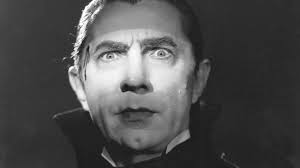
Bela LugosiThe lighting has to be just so, they warned, or you will look like Bela Lugosi. Or in my case, his mom. And the virtual background on its little green backdrop won’t work so well, either. It shouldn’t have too much or too little light, but something just right. Goldilocks aside, now I’m a lighting director?
Not on your tintype.

This all seemed a little too sophisticated for me, so I axed the virtual background thing. But after a bit more research, I did buy a ring light on a mini-tripod that sits behind the laptop. I have to admit, the lighting does smooth out some of the wrinkles in my face…ah…dress.

I’m still looking for that perfect writerly background. I’ve been prowling around the house, laptop and ring light in tow. The only acceptable background I’ve found so far is the bookcase in the bedroom directly across from the bed.  So I set the laptop and ring light on a box on top of the bed because I’ve learned the camera needs to be elevated. This is so my double chins don’t show as much. One hopes. Then I brought in a chair and sat down between the bed and the bookcase trying to look writerly. Not so comfortable and the cat was totally confused. Just who did I think I was dumping all this junk on her bed and interrupting her mid-afternoon nap?

Okay, so I’m still trying to work out the bugs of this new media stuff. I am beginning to appreciate the idea of the green screen. But I am really beginning to appreciate the idea of radio.


Guest Blogger – Lorrie Holmgren

When I start to plan an Emily Swift Travel Mystery, I go where my amateur sleuth will go and jot down descriptions, observations, and plot ideas in my journal.  Because Emily is a travel writer, I want to capture her enthusiasm for new places and describe them as well as I can. Useful as my journal is, however, I often turn to the Internet to develop my ideas in more detail when I’m actually writing. I find the combination of real-life observation and research works for me.

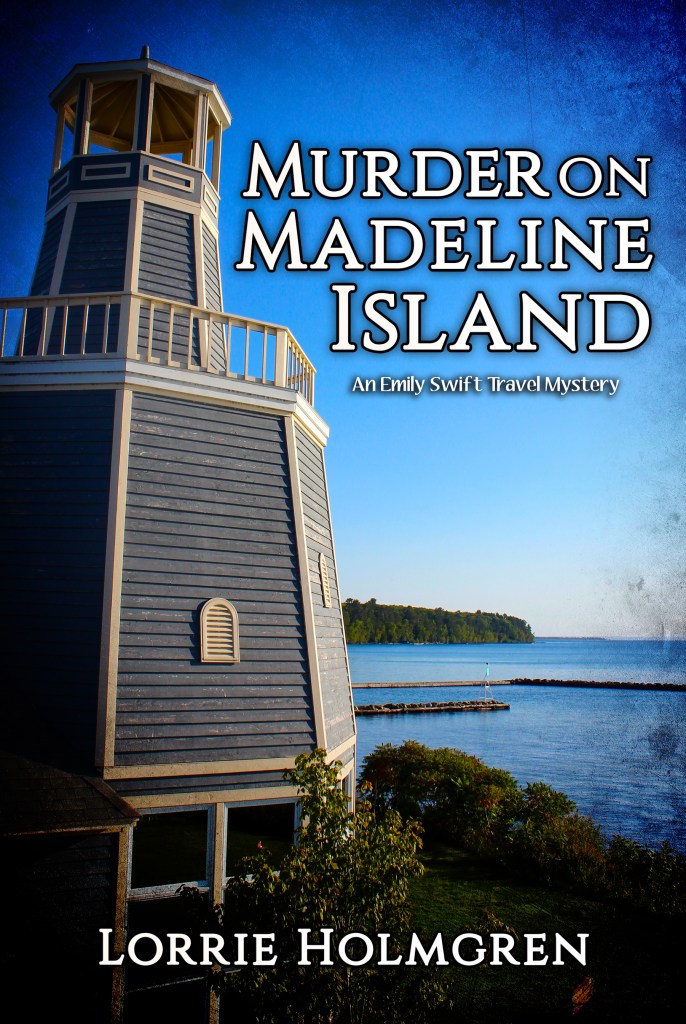
Sometimes I have an idea for a scene that means I must head off to a place I’ve never been.   In Murder on Madeline Island, the first book in the Emily Swift Travel Mystery series, Emily is helping an elderly woman search for her long-lost Ojibwa brother.   I thought her search might lead her to a Powwow.  So, I drove to Bayfield, Wisconsin to see a powwow firsthand. As I always do, I jotted down detailed descriptions in my journal.  But when I started to write the scene, I realized I needed more.  I went on UTube to watch the Shawl Dance and Grass Dance and found out their significance.  Then it was easy to imagine the scene.  In the final version a snippy young girl who has been resisting Emily’s entreaties to meet with the old woman, dances beautifully, transforming herself from a girl into a crow.  The character’s love of tradition gave her greater depth and made her more likeable.  That was my intention anyway. If you read it, let me know if you agree.

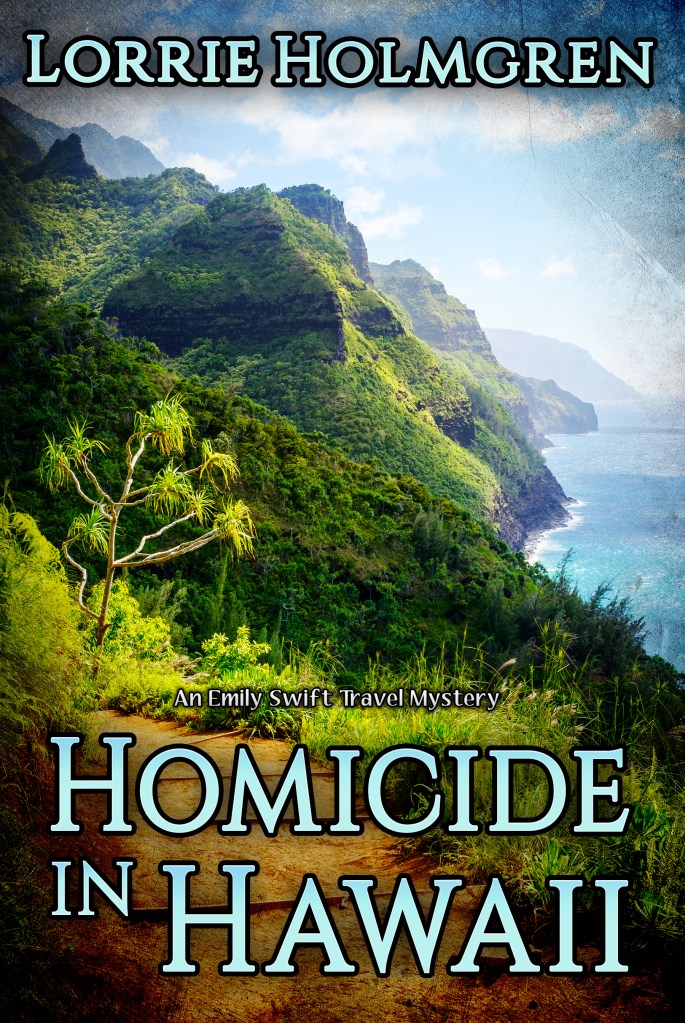
Sometimes I see something on a trip that gives me a plot idea and then I go online to find out more.  While I was in Hawaii, my husband and I visited a mountain top that had been the site of an ancient temple. Fresh fruits and flowers were placed there as if at a shrine or gravesite.  It seemed to me this would be the perfect place for a body to be discovered.  So, in Homicide in Hawaii, that’s where the victim’s body is found.  I went online to do research and discovered there had been a resurgence of interest in the old Hawaiian religion and worship of the god Lono.  Here was another lead to help me develop the story.  One character – a young girl who has been adopted and is now seeking information about her Polynesian heritage becomes fascinated by the old religion.

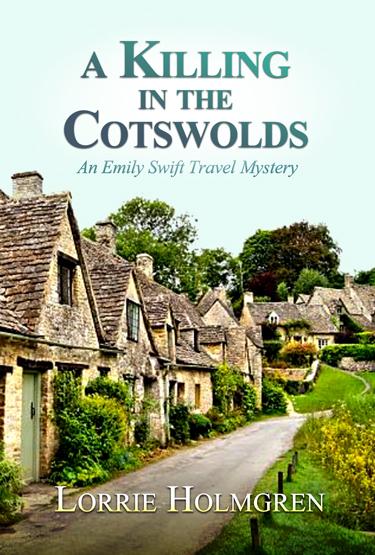
Now, when we are all kept inside by the Pandemic, it was a particular joy to relive my last trip to England where I did the research for A Killing in the Cotswolds, the third book in the series, which has just been published by Cozy Cat Press.  In the novel, Emily is writing articles about daytrips not far from London when she is drawn into a murder investigation.  Like Emily, I travelled from London to charming Cotswold villages to Stratford upon Avon and Avebury and enjoyed delicious teas and visits to historic sites.  But it was Internet research that gave me the idea for the long-buried secret that led to murder. I didn’t use the actual event, but it spurred my imagination.

For now, I highly recommend armchair travel.  Emily Swift Travel mysteries are available in print and Kindle on Amazon.

A Killing in the Cotswolds, An Emily Swift Travel Mystery

It’s springtime in England and travel writer Emily Swift is writing about charming Cotswold villages. But when a politician is found dead in a country inn, she and her boyfriend Jack are drawn into a murder investigation. Who killed him? An actor with a talent for deception?  A schoolmaster fired after a mysterious death? A tour guide at Warwick Castle bent on revenge?  Over tea and crumpets, Emily’s childhood friend begs her to find out and save an innocent woman from being charged with murder. Emily can’t say no. Clues lead through the British countryside and danger lurks where Emily least expects it.

The books are available in print and Kindle on Amazon

Lorrie Holmgren is the author of three Emily Swift Travel Mysteries: Murder on Madeline Island, Homicide in Hawaii and A Killing in the Cotswolds. She lives in Minneapolis, Minnesota, with her husband, busily penning mysteries and hoping it will soon be safe to travel.  She enjoys Zumba, Salsa, Bachata, aqua aerobics, gardening, knitting, and book group discussions.

Website www.lorrieholmgren.com

Facebook

Pinterest

Twitter