Where Do Your Characters Come From?

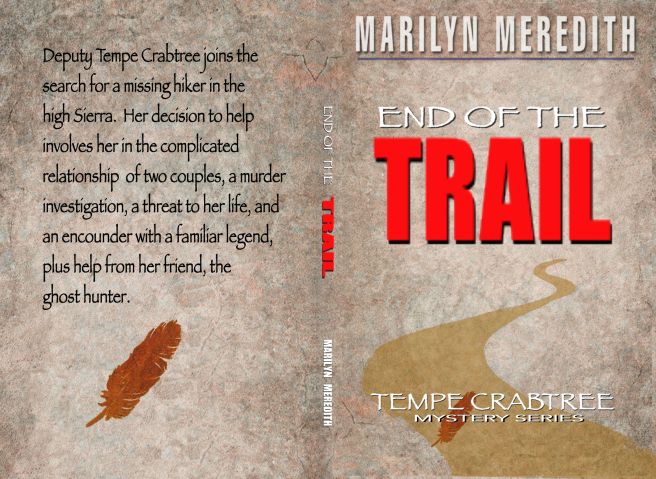
End of Trail full cover

This question is frequently asked of authors. My answer is “They come from many places.”

My heroine in the Deputy Tempe Crabtree series was inspired by three women: A female resident deputy I interviewed for a newspaper article, a female police officer and single mom who took me on a ride-along and shared a lot about her life, and a native Yokut who grew up on the reservation.

Tempe’s husband is a composite of the many pastors in my life—some are relatives.

Nick Two John’s appearance came another native Yokut. (He read Deadly Omen and called to tell me I got the Pow Wow right but didn’t mention recognizing himself.)

Over the years, I’ve held contests for people to have a character named after themselves. When I do this, the character in the book is always much different than the real person. My friends and now editor, Lorna Collins, won one of the contests, and her namesake has now appeared in three Deputy Crabtree mysteries as a ghost hunter.

Another friend and fan of the series pleaded with me to put her in a book I did, in Raging Water. Because the character has my friend’s looks and personality (as she wanted), I changed her name to Miqui Sherwood. When her friends read the book, they said I described her perfectly. She has since appeared in two more books, including the latest, End of the Trail.

https://www.amazon.com/dp/B087SFTC6K/ref=tmm_pap_swatch_0?_encoding=UTF8&qid=1588514254&sr=1-1

Over the years I’ve met many interesting people, sometimes I borrow their personality traits to create a character or unusual appearance or way of dressing.

And often the character appears out of my imagination, especially the villains and the victims—though bits and pieces of real people might make up a part of one.

Over the years, I’ve heard of many ways that authors have created their characters, if you are an author, where do your characters come from?

Marilyn


The Question of the Victim

One of the first ideas that come to me when I begin a novel or short story is the identity of the villain. As soon as the basic scene takes shape, the victim is the first of the characters to gain a sharp outline in my imagination. The villain, among several possibilities, is the last to be identified.

The selection of both victim and villain allow me to explore various questions, but in the beginning I was mostly interested in mastering the form and telling a particular kind of story.

image

In the cozy mystery, the victim tends to be “the person we love to hate,” the obnoxious neighbor or underhanded business partner, especially the philandering husband or the domineering departmental supervisor. No one misses them, or is sad to see them go. In my first mystery, Murder in Mellingham, Beth O’Donnell made everyone cringe with her sarcastic and cutting remarks, a bully though diminutive in every other way. With the victim neatly dispatched emotionally for the audience, the reader concentrates on those around her. But as the series progressed I wanted the victim to play a more complicated role.

Kali_Front

Setting a murder mystery in an exotic location (to us, the outsiders) offers new possibilities, and I took the opportunity to present a victim who was admired and mourned. Jean is an American nurse traveling through India on her way to Burma, or Myanmar, with a plan to be smuggled in to work in a clandestine clinic in the jungle. This will be her second trip, and she has come prepared with medicine and equipment. Who would want to kill her and thwart her humanitarian work? In Under the Eye of Kali, Jean disappears and is later found dead. Her openness about her plans seems to suggest smugglers or ordinary thieves could be the culprits. We care more about who the villain is because we care more about Jean.

Below the Tree Line

In the first Pioneer Valley entry, Below the Tree Line, Felicity O’Brien finds a young woman she’s only met once dead in her woods. This is the first of two deaths, neither of which fall into the category of expected victims. The reader has no reason to hate either woman, and the convenient category of the cozy victim has no role here. There can be no ambiguity about the death of either woman, and thus no pleasure in the reader at the elimination of an odious character.

The choice of victim tells the reader several things, but mostly what our own values are as we come to know the character and gradually discern the shape of his or her life. We conveniently agree that the obnoxious victim in the cozy got what he or she deserved; we admire the sleuth who tracks down the killer of a virtuous person risking her life for others; and we agree there can be no justification for killing an innocent person.

Crime fiction or mystery fiction opens for discussion and exploration our basic principles and beliefs. In Modus Operandi, Robin Winks, the late reviewer of and writer about this genre, was eloquent on this point. “Ultimately one reads detective fiction because it involves judgments—judgments made, passed upon, tested. In raising questions about purpose, it raises questions about cause and effect. In the end, like history, such fiction appears to, and occasionally does, decode the environment; appears to and occasionally does tell one what to do; appears to and occasionally does set the record straight. Setting the record straight ought to matter.”

Why Cozies by Karen Shughart


Shughart,Karen-0016_ADJ_5x7 (1)Whew! Haven’t these past several months been surreal? Did you ever think a year ago that your life would change in ways that you probably never could have imagined? Before COVID-19, we expected that there would be ups and downs, but in most cases our daily routines were pretty much the same. And then BOOM! In a period of weeks, we’re wearing masks and gloves, ordering online more frequently, having our groceries delivered or picking them up curbside and enjoying happy hours with our friends, neighbors and family members on Zoom or by standing across the street from each other for a shout-out while we walk our dogs. That is, for those of us who have stayed healthy.

So, what does this have to do with the title of this blog? Plenty. I did a search on Google to see if I could find the definition of a Cozy mystery and this is what I found:

“(A) Cozy mystery is the gentlest subset of the broad genre of crime writing. As its name suggests, it’s a comfort read that leaves you satisfied and at one with the world, rather than scared to sleep alone with the lights out.” Source: Debbie Young, Cozy author and blogger http://www.authordebbieyoung.com/

“Cozies are a subgenre of crime ficiton in which sex and violence are downplayed or treated humorously, and the crime and detection take place in a small, socially intimate community.” Source: Wikipedia

“The small size of the setting makes it believable that all suspects know each other. The sleuth is usually a very likeable person who encourage(s) community members to talk freely about each other. There is usually at least one knowledgeable, nosy (and of course, … reliable!) character in the book who is able to fill in all the blanks, thus enabling the sleuth to solve the case.” Source:  Cozy Mystery List.

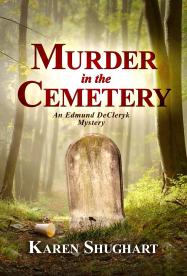
I’m not sure about you, but for me the global pandemic and its consequences have been a bit unnerving, to say the least. Don’t get me wrong, I count my blessings and have a lot to be thankful for. But could any of us have imagined that when we turned on the TV, the news would almost completely be about a virus that was infecting and killing masses of people? That schools, non-essential businesses, cultural and sports venues would be closed? The world changed in an instant and we had to adapt to it without any time to prepare.MurderintheCemeteryfrontlarge - Copy

So, getting back to the title of the blog: Why Cozies? While this hiatus may have encouraged some of  us to take an online class or catch up on the classics, stimulating non-fiction or that documentary we’ve always planned to watch; truth be told, many of us want to be transported to a time, place and setting where we can escape for a while and read a great story with lots of twists, turns and sometimes surprise endings. In short, something fun. Cozy mysteries can provide just that. And what’s wrong with sitting by the fire or on your front porch, cup of tea in hand, whiling away the hours being transported to a place where you know the horrors of our world won’t encroach?


Revisiting a Vacation by Paty Jager

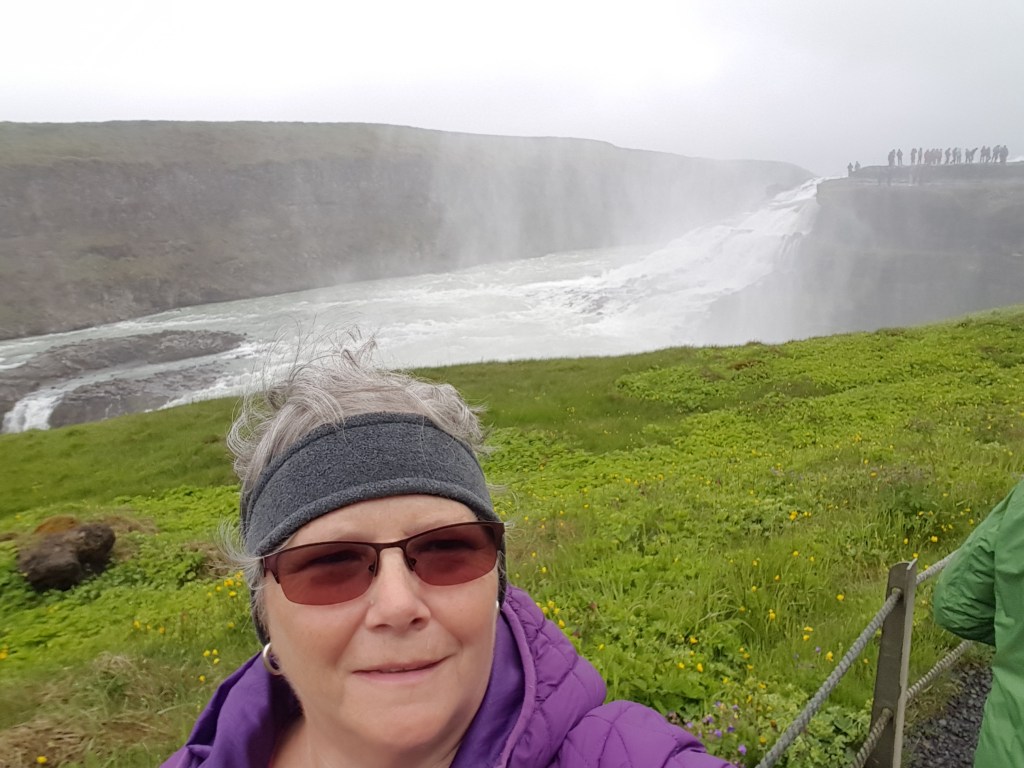
I went on a trip of a lifetime, for me, last summer. When I received an email about a literary trip set in Iceland and saw the itinerary and how well we’d be taken care of, I told my hubby it was my birthday gift and I signed up.

Now, almost a year later, I am getting ready to publish a book I set in Iceland. I loved the country- the people, the scenery, the history. I felt at home there. Hmmm… I wonder if I have more Norse in me than I thought? I’m ready to go back whenever my hubby would agree to it and the pandemic lifts.

The trip was put together by The Author’s Guild. It was a mix of half usual tourist sights and half literary sights. We had a meeting with Yrsa Sigurdardottir, a crime fiction author in Iceland whose books I had read and enjoyed. We went to a museum which had ancient Icelandic manuscripts. They were made of sheep skin and wood covers. And we visited the home of the 1955 Nobel Prize winning author, Halldor Laxness.

But I would have to say the highlight of my trip was getting the other writers, who mostly wrote non-fiction books excited about helping me find a good place to have a murder. Each place we stopped someone would say, what about this or that? And then as a group they would come up with how and why someone would be murdered in that spot. It was a lot of fun.

landscape at Kleifarvatn Lake

On the last day, which happened to be my birthday, all ten of us loaded up in the small bus we’d been travelling in all week, and headed to Lake Kleifarvatn. The landscape at this lake has been likened to a moonscape. It is sparse, barren, rocky surroundings. I took quite a few photos, thinking this would make tracking someone near impossible and would make a great place for a tracking specialist to be needed.

Boiling mud pools at Krysuvik

However, we continued on and as soon as I saw the steam and the bubbling mud I knew I’d found my means of murder! At Krysuvik, a tourist attraction of sulfurous steam escaping boiling mud pools, I could see a body half in and half out of one of the mud pools. The more I walked around the area taking photos, I solidified this was where the the murder would take place.

I asked our guide, Ragnar, lots of questions and scribbled in my little book. I asked him about Search and Rescue. He said they had a large SAR program. When I came home, I looked it up. I was so excited! They had a world reknown SAR conference every two years. I could send Hawke to Iceland to teach at the conference. And the best part, the conference was this year, well, we’ll see if it is still held with all the closures of conferences this year, but it would be held in the Harpa. The Harpa is a fairly new concert hall and conference center that is beautiful! It was a building across the street from our hotel and I had been in it for dinner one night and a play another. It was a building I knew.

This is Harpa. It has beveled colored glass panels all over it and is gorgeous when the light hits it just right.

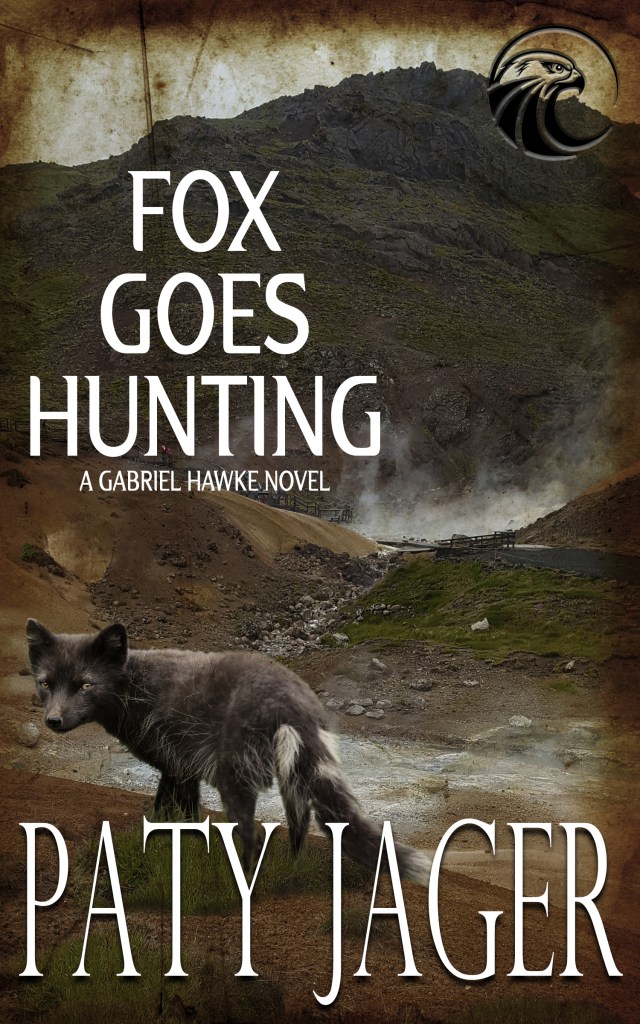
Everything just seemed to fit together for my book! And I’m pleased to say, Fox Goes Hunting, book 5 in my Gabriel Hawke Novels is available in pre-orde and will release on June 1st. What a fun way to celebrate the anniversary of my trip- with a book set in Iceland.

Writing the book I was able to revisit several of the places I’d been, reconnected with our guide for some help with things I hadn’t seen or didn’t know about the country, and enjoyed putting my taciturn Native American Game Warden in an environment different than he knew.

Blurb for Fox Goes Hunting

While teaching a tracking class at a Search and Rescue conference in Iceland, Oregon State Trooper Gabriel Hawke discovers a body in a boiling mud pool. The body is the young man Hawke’s class is tracking.

Unable to walk away from the young man’s death without helping to find the killer, Hawke follows the clues and discovers the young man had few enemies, and all of them have alibis. The killer is cunning like the fox, but Hawke is determined to solve the homicide before the conference attendees head home in five days. 

Pre-order at all ebook vendors:

https://books2read.com/u/3yEjKv

Why A Writing Rebel is #SorryNotSorry

What do Elmore Leonard, Tim LeHaye; Rod Serling; Nat Hentoff; Mark Twain, Paula Danziger; Robert Cormier; Sidney Sheldon; Edgar Allen Poe; Jackie Collins; Mickey Spillane; Michael Crichton; Madelaine L’Engle; Maurice Sendak, and Theodore Geisel, aka Dr. Seuss, have in common?

If you said they’re all dead, good for you. As of this post, they still very much are (and with this COVID headache still with us, they died of that, I drop sarcastically 😏). But if you also said they were writers who were in my reading and TV library as an impressionable, rebellious, and misunderstood girl-rascal, you know me well. Brace yourselves–doing so is precarious. **smirk**

Need another hint? I’ll give you a minute to find the clue in the above paragraph. **insert “Syncopated Clocks” theme here.**

Time’s up.

Before #sorrynotsorry was a thing, they wrote rebelliously. For their time(s), they crossed lines and pushed comfort zones tame by today’s scary-dark and nakedly demonic standards. The thought was to push philosophical, societal, and imaginative boundaries and platforms within reason, and not to go against physical nature or humanity. This I was okay with. In fact, it kicked me to be a better author without having to plumb the scarier, darker side of what imaginatively could be.

In a critique of my 2nd book’s opening chapter, the now-fired editor said she loved it . . . but, despite my saying I’m a woman writing from a guy’s POV, she constructively found the female descriptions objectifying (but missed my other bigoted names briefly mentioned. Huh. 🤔). In today’s times beyond the hypocritical #MeToo movement, Harvey Weinstein, and the persistent tug-of-war between the sexes, it’s a tightrope balance between staying true to my unbridled imagination or being mindful of those finding “broad,” “cutie,” “honey,” “sweetie-pie,” “tomato,” “dame,” or the “C” word objectionable. None of these bother me if ever said IRT (in real time for those of you in Rio Linda), save for the “C” one. To be fair, I’ve use that for women being jerks when “basic bitch,” “thot,” or “nasty-ass ho” isn’t strong enough to call her (thank you, urbandictionary.com!) 😄😏. Justified, of course. Or muttered under my breath when it wasn’t.

Writing on the edge should happen by default no matter the genre; language is as perilous and nasty as it is sweet, lovely, and gossamer. Twain used nigger several times in The Adventures of Tom Sawyer and in The Adventures of Huckleberry Finn, and Stevie Wonder’s speaking parts in the “Livin’ For The City” track on his Inner Visions album mention this, too. I don’t shy from the questionable, objectionable, or downright frightening. To face it head-on to fine tune a moral and ethical compass, and to know where to draw a line I won’t ever cross. Children’s author Maurice Sendak told Maury Safer in a 60 Minutes interview he wrote about the monsters in Where The Wild Things Are because “. . . .the nightmares kids have–and monsters in those nightmares–are as real as their mommies and daddies are.” To put them down tangibly, he figured, not only gave kids something credible to show kids a grown up thought as they did, but that if kids faced their fears, they weren’t too scary big to fight them back, the kids weren’t too young to fight them at all, and to win. In his In The Night Kitchen story was where a naked child was shown for the first time, reasoning during the Safer interview, Sendak said he showed a naked child in the illustrations because he didn’t think kids were worried about clothes in their nightmares. I don’t fully remember the story, but if memory serves, the boy, dreaming he was in a dough suit, obviously couldn’t be clothed under the pastry; how much sense would this make? Sendak’s Night Kitchen was boldly, #sorrynotsorry controversial as Marilyn Monroe’s 1951 naked appearance in the first issue of Playboy. 🤔😏

L’Engle’s Wrinkle In Time held a God-heavy theme in the Murray kids and friend Calvin saving Professor Murray from an evil force (and notwithstanding, a genius five-year-old unapologetically using a vast vocabulary in his character, but still manages to stay an adorable Charles Wallace. This sparked an argument how can five-year-olds talk on a near Einsteinian level? Um, some can. And some do.). Danziger’s The Cat Ate My Gymsuit today could be deemed as fat-shaming in Marcy’s character, her mother a pushover in the shadow of her husband’s and Marcy’s father’s blustering bullying. But the story showcases a young teacher’s outside-the-box instruction in a conservative community determined to see their kids taught English by the book of English–Dead Poet’s Society, anyone? This wasn’t far off the mark of Danziger herself, since she’d been a full time English teacher before her writing career took off. In this story, Marcy’s high school teacher impacted her past the classroom.

Be they gentle stories showing a shy little black cat’s courage, or a Catholic family’s sons adventures in 1898 Mormon Utah, to grittier reads bearing themes in the plots that challenged my opinions and forcing my stances a closer look, these authors didn’t shy from their stories. They all pushed me past the story in their word choices, in the norms at their time, and letting their imaginations weave tales maybe the harsher themes and beliefs were better swaddled in than given so starkly. Whichever came first, it doesn’t matter and didn’t matter. They left a patina on me in their unapologetic storytelling to this day has gotten under my own storytelling skin. They were #sorrynotsorry doing that to me, so I pay it forward to anyone reading me, also unapologetically Sorry/Not Sorry. As one Logan McGuinness of the Casebooks and Threesome of Magic Mysteries would tell me: be bold AF, Missye. He’s right. I can’t let the kid readers and kids at heart ones, down. Or him, either.

Speaking of Mr. McG, I’ve a scene in my 2nd TOMM mystery I’ve finally smoothed the wrinkles from. Best I get to it. And best too, you, Dear Reader, find books and stories that push you past your easy, your simple, your familiar, your typical. For you Dear Authors reading this, your homework is to keep your imaginations deadly, unsettled, and untamed in good ways. That’s where the fun lies. In this wild ride we’re all on dealing with COVID, no one’s gonna much worry about writing dangerously anymore. We lived it.

And guess what? Even my lyrical writing, which was what the now-fired editor told me Casebook #2 is, is also writing lethally. But it’s lethal to the healing we’ll need on the other side of this COVID madness. Writing dangerously doesn’t always mean pushing, provoking, or even angering. Writing soft without the superfluous is a true skill to unapologetically be Sorry/Not Sorry for. I’m happy to be that rebel to do it.