What Goes Around… by Karen Shughart

I grew up in the 1950s, a time shortly after the end of World War II when all most people wanted was a simple life that included a modest home, food on the table and a little bit of money for extras. We had one TV, a black and white at first, and sometimes we ate TV dinners, prepackaged with meat loaf and macaroni and cheese or chicken pot pie, as we sat on chairs in the living room and watched the evening news.

Shughart,Karen-0016_ADJ_5x7 (1)

Our recreational activities were, for the most part, ones that cost little money. Our family had picnics with neighbors, relatives, or friends at a local park. One of my friend’s dad had a pick-up truck and on a summer evening he’d pile 6-8 of us into the back of it and take us for ice cream, which we ate standing around the truck or sitting at a picnic table. We played hide-and-seek outside when the sun set late, board games with our parents on cold or rainy days, or put together jig saw puzzles. Sometimes we went to movies; in the summer to drive-ins in our pjs; or to a restaurant on a Sunday afternoon. At least once a year we had a family outing to an amusement park with a wooden Ferris wheel and penny arcade.

One vivid detail that stands out is how bright the sky was then and how clear the air. When we couldn’t go to the community pool my mom turned the sprinkler on, and I remember loving the rainbows and diamond-like sparkles that were created by the sun hitting the water as we jumped and danced through the ephemeral spray. I remember, too, looking up at night and marveling at the carpet of twinkling stars that covered the sky.

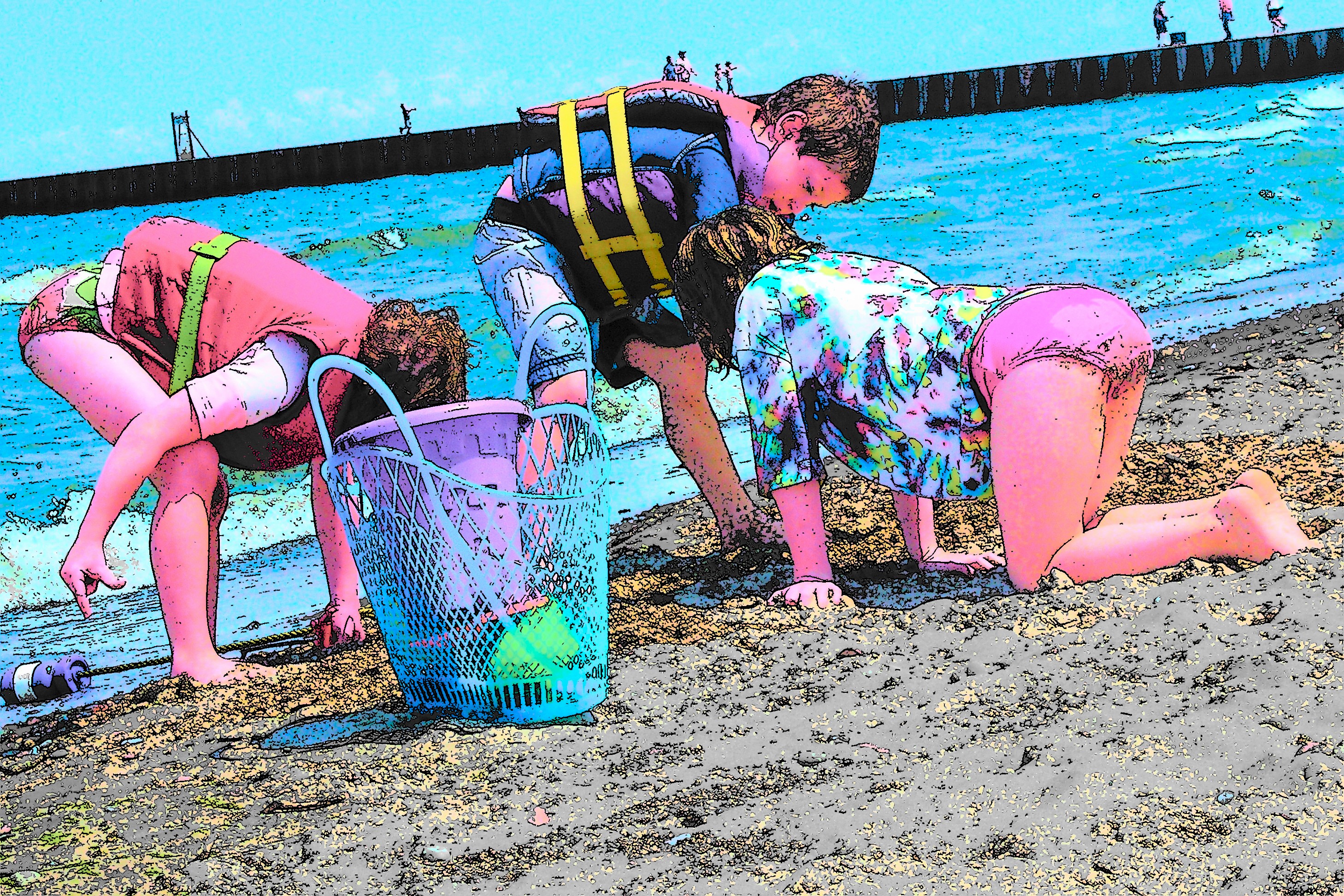
Each July or August we went to the Jersey Shore, an eight-hour driving trip from Pittsburgh, where we lived.  All six of us (four kids and two parents) piled into our car, leaving at 2 a.m. so we could get to the beach by mid-morning, thus extending our week-long vacation by a day. My mother packed breakfast, small foil-lined boxes of Kellogg’s assorted cereals and a cooler filled with milk and fruit, and we stopped on the shoulder of the highway to eat it. Once there we played on the beach, body surfed in the ocean, ate bologna sandwiches on Wonder Bread, and at night walked the boardwalk.
100_0471.jpg
Photo by Karen Shughart

We were fortunate. For many, life wasn’t so blissful. There were scares and concerns. The Korean Conflict. The Cold War.There was no pandemic, but the epidemic of polio shattered a multitude of families, closed swimming pools, movie theatres and religious services; instead of ventilators there were iron lungs. The Salk vaccine, and then the Sabin, helped alleviate some of the concerns, but even so fears lingered, there were no vaccines for measles and mumps or other disabling childhood diseases.  Despite so-called prosperity many still struggled; there was rampant discrimination, and gross inequality. During this time a pot simmered slowly, but it wasn’t until the 60s that the pot boiled over, paving the way for the beginnings of change. Perhaps, though, not enough and it appears the pot’s boiled over again, as it should.

As we’ve woven our way through and around COVID 19, it’s been feeling a bit like the 50s to me, and, because of the recent protests that have occurred here and around the world, reminiscent of the 60s, too. Isn’t it odd how things that go around come around?
God Winks: It’s The Little Things

Being a bombastic big mouth from old school NYC, it’s hard to get me to willingly shut up. When I do, you best believe it’s intentional, purposeful, and to hold my attention. 9/11. A sun dog. A newborn with her fantastic Heaven-scent aroma on her onesie and in my nose. A great sleep.

And . . . God winks.

Although I’d drafted this on the 27th anniversary of turning 27–that’s called “Awesome 54some!” for those of you in #RioLinda **smirk/sarc**–it’s been dreadful to find fresh words for my Casebooks, my Threesome of Magic mysteries, even this platform. We were in the biggest game of cooties I’ve seen in life via COVID. A shutdown wrecking economic havoc. The pokiness of re-opening states so people can resume their lives–or move on in them to settle loved ones’ affairs. These stupid city burnings after an unfortunate series of events in Minnesota. And still having to wear a mask, it becoming a symbol of murdering logic, common sense, and reason in favor of groupthink, fear, and forced compliance.

But I digress.

I prayed, mainly because I couldn’t take the overwhelm anymore. It was the one thing I had some control over, some input for, some say in. When I wasn’t praying, I was sleeping. A lot. No, I’ve no plans to harm myself or others–don’t tempt me on the “others” part, please! :)–but I found it a solace He was listening.

That’s when the little reminders popped up like mushrooms do overnight. Specifics only I’d know. Hoo-boy, did I know them.

Ever heard of Squire Rushnell? Oh, yes you have. If you’re familiar with Schoolhouse Rock and other Saturday morning children’s programming on ABC back in the day, that’s the name behind this part of pop culture. He put that network on the map for inspiring 3 to 7 minute animated segments in history, science, math, government (“I’m Just a Bill”), and grammar in between cartoons, much like CBS did In The News with Christopher Glenn in between theirs (and I switched channels often to not miss either one!). Anyhoo . . . Rushnell kept adding up little coincidences in his life leading to the big ones like Schoolhouse, and how that lead him to be ABC’s Children’s Programming Prez. And hey–if he helped kids do better in school with these subjects of the songs and visuals they provided, #360Win.

Mushroom #1: My husband Pete picks up flowers in bright purple and vivid yellow. I gasped, cried, then asked if he remembered if I told him of my villain’s signature colors in my TOM mysteries. He said no–he just felt he had to get them when he saw them as a sweet birthday gesture.

Mushroom #2: Somebody shares a meme on social of an entryway from the movie adaptation of Tolkien’s Lord of the Rings. Almost immediately, a scene drops in mind for my TOM mysteries I can plenty use to move the plot(s) forward. Yes . . . I gasped in sweet surprise again.

Mushroom #3: A Times fan since my mother, God rest her, gave me a back-to-school Snoopy watch for third grade when I was seven (I skipped second, being so bright), fostering my love for analog timepieces since. Along with the flowers, my husband gifts me a watch called Vincero (pronounced vinchairro), and the brand translates in English from Italian, “I will win.” Vincero’s pretty damn close to missing-his-ear van Gogh. Vincent Price. And my Casebooks Jay Vincent. Oh, sure–Casper’s and Logan’s names’d pop up plenty of times outside of their Casebook lives in my life, but Pedregon’s seldom did . . . before that watch company came in over my transom.

Mushroom #4: A numerology newsletter I’m subscribed to, the author suggested in part of her communique for this month that, for those who draw, to keep drawing. Those who create and craft, keep creating and crafting.

And for those who write?
You guessed it: keep writing.

Squire Rushnell created God Winks when he thought coincidence did a disservice to those unexplainable-timing-in-a-good-way little things that make you take notice. It’s not a religious aspect you must believe to see the treatise behind the belief, although Rushnell is a Christian. It’s more like Chicken Soup for the Soul’s cousin or bolder little sister. I haven’t read the book, but I plan to. It’s an occasional nod you’re headed in the right direction when you’re not sure you are, to keep staying on track–or need a boost when you don’t want to stay the course, as was my circumstance, but poignantly special after a monstrously trying week in a disgustingly taxing first half of 2020.

But in the middle of our national storm, another birthday’s come and gone. That, all things considered, is the best God wink there is.

Apologies for the heavy use of adverbs in this update. “Lolly’s Adverb Store” takes full blame for that!

Expanding my Horizons by Paty Jager

“You can’t make everyone happy.” One of my least favorite sayings but so true.

I took two trips last year that were experiences I’d never had before. I finally saw a tropical island for myself and I traveled to another country by myself – Iceland. I loved the trips and wanted to use what I experienced to write books with my characters enjoying the same places.

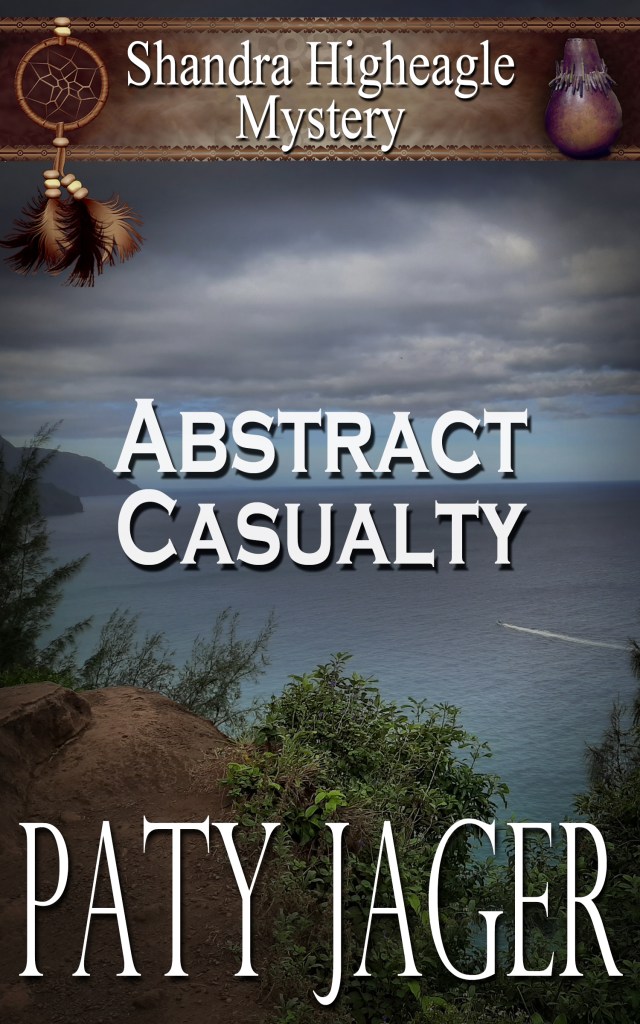
I set Abstract Casualty in the Shandra Higheagle series in Kaua’i Hawaii. I had a great time reliving my time there while writing the book. And the fun I had finding a way to get my character to the island in a realistic manner. Some readers loved it and the new experience, others wrote to me and wanted Shandra back in her fictional county in Idaho. They missed the secondary characters they’d come to know.

For those readers who love going back to the same place, Capricious Demise is set back in Weippe County, my fictional county in Idaho. I finished the first draft and will be releasing it in July.

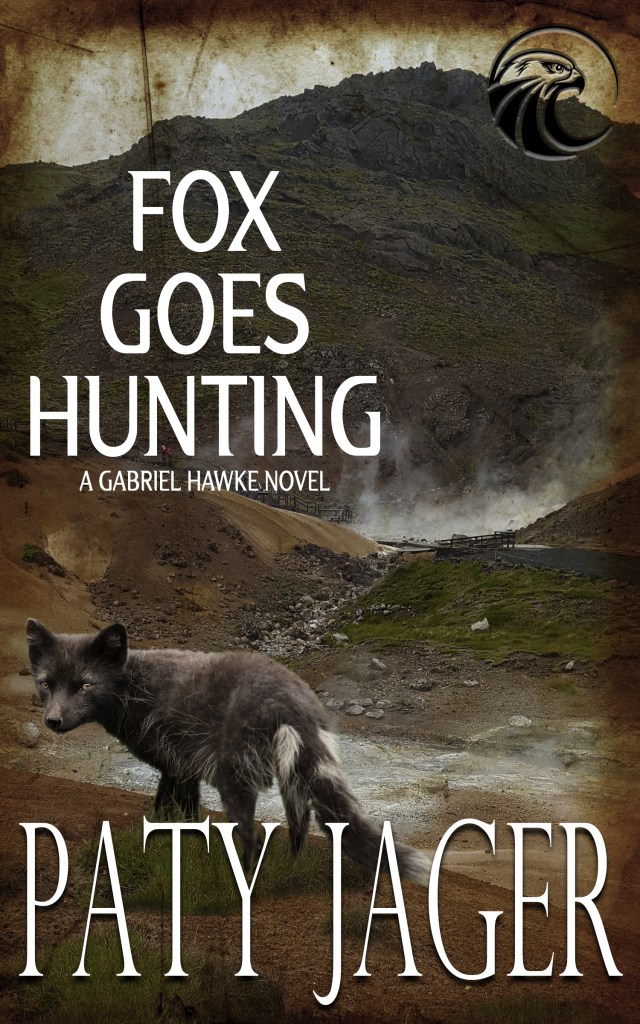
This month, June 1st, the 5th Gabriel Hawke Novel, Fox Goes Hunting, released. My critique partners, beta-readers, and proof reader, loved it! I already received one 2 star review. The reader didn’t like that Hawke wasn’t tracking as much and they couldn’t pronounce the names of the characters. This book is set in Iceland.

I loved bringing things into the book that I saw and learned while in Iceland. I hope to capture a broader range of reader by going “International”. Yes, there are typical Icelandic names for characters from there. It is also set during an international Search and Rescue conference so I had secondary characters from around the world.

Yes, both books set in real places took twice as long to write. I had to make sure distances, towns, places were correct. I wanted to make sure I gave a clear picture of where they went and what they saw.

When I write the Shandra books set in a fictional place, I can make things up as I go, though I did make a map of the county when I started writing the series, so I do keep things in the same place every book. But if I want to add a business, I find a block that I didn’t put a business in already and add it.

The Hawke books are set in a real place, but I made up fake towns in place of the real ones to keep anyone I might have grown up with in that county to think I am talking about them. 😉

While I know there are some readers who don’t like the unexpected, I believe writing outside of my comfort zone and incorporating other places and cultures into my writing helps me grow as an individual and hopefully gives my readers a glimpse at a culture they might not get a chance to experience first hand.

Guest Blogger – Jeannette de Beauvoir

Diamonds Are a Girl’s Best Friend

We’re all attracted to things that sparkle. From the moment we’re born, our eyes follow shiny objects. And because everyone likes them, precious stones and gems have acquired a substantial monetary value.

And therein, naturally, lies crime.

In the nursery rhyme, the “little star” twinkles “like a diamond in the sky,” but diamonds are no little stars: they’re big and bright and can be very, very dangerous. Blood diamonds cost countless people their lives and limbs. Diamonds are stolen and imitated, fought over and killed for, and still every February we buy them, give them, and receive them as delicate, beautiful expressions of love.

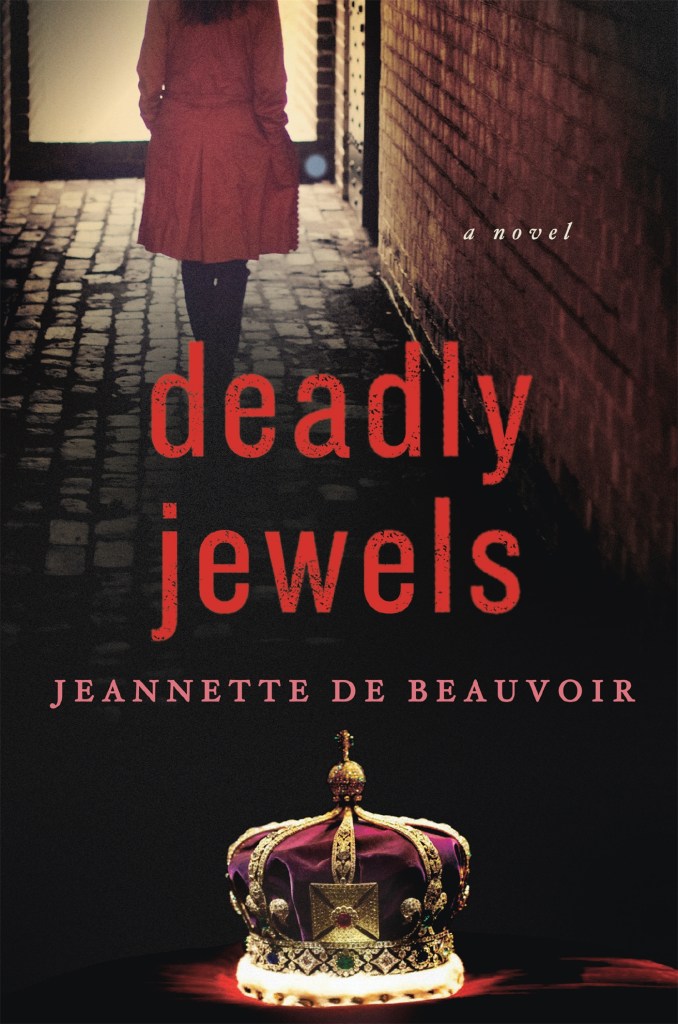
One of my novels, Deadly Jewels, deals with a diamond theft during World War II that has repercussions in the present day, its unfinished business echoing up through the years. And you might think that it was easier to steal diamonds back then, but you’d be wrong: unlike other crimes, which seem to be more and more blocked by technological advances in loss prevention and law enforcement, it seems that jewel thieves are alive and well and very much at it.

One of the things that we say about murder is that we only know about the failures—a successful murderer being, of course, one who is never caught because murder is never suspected. The same cannot be said for heists: we know only too well when and where they occur, and sometimes even by whom.

And I have to say that the history of heists isn’t without some humor.

Take the so-called Pink Panther gang, some very serious thieves from Eastern Europe who earned their nickname following the theft of a £500,000 diamond in central London—they hid the stone in a jar of face cream, a move learned from watching The Return of the Pink Panther. That’s right: Inspector Clouseau taught them. They’ve been enormously successful and are responsible for what are considered some of the most glamorous heists ever.

A science museum isn’t the first place you’d think of as a backdrop to a diamond heist, but that happened in the Netherlands during an exhibition called The Diamond: From Rough Stone to Gem. Thieves got away with $12 million in diamonds and jewelry after smashing a window to get in (they weren’t picked up on video and none of the guards saw or heard anything) and accessing six of 28 alarmed cabinets in the main jewelry room before escaping. That one still has a lot of people scratching their heads.

In 2013, thieves netted $136 million in diamonds belonging to an Israeli guest at the Carlton Intercontinental Hotel in Cannes—the same hotel that was the setting for Alfred Hitchcock’s 1955 jewelry heist film To Catch a Thief.

I could go on and on—really, I could—but you get the point. There’s something about diamonds that brings out the James Bond or Marilyn Monroe in all of us. And the mystery not only of their attraction but of the lengths to which people will go to steal them is one of endless fascination—for this mystery writer, anyway!

DEADLY JEWELS

When Martine LeDuc, publicity director for the city of Montréal, is summoned into the mayor’s office, she’s pleasantly surprised to find the city is due for a PR coup: a doctoral researcher at McGill University claims to have found proof that the British crown jewels were stored in Montréal during WWII.

Martine is thrilled to be part of the excavation project, until it turns out that the dig’s discoveries include the skeleton of a man with diamonds in his ribcage and a hole in his skull. Is this decades-old murder leading her too far into the dangerous world of Canada’s neo-Nazi networks, or is there something going on that makes the jewels themselves deadly? Is history ever really completely buried?

With pressing personal issues crowding into her professional life, Martine needs to solve not only the puzzle of the jewels, but some more recent crimes—including another murder, a kidnapping, and the operation of an ancient cult in Montréal—and do it before the past reaches out to silence her for good.

https://www.amazon.com/Deadly-Jewels-Novel-Jeannette-Beauvoir-ebook/dp/B0140MQVX8

Jeannette de Beauvoir is the author, most recently, of The Matinée Murders. A member of the Mystery Writers of America, Sisters in Crime, the Author’s Guild, and the National Writers Union, you can find out more (and read her blog or sign up for her newsletter) at her website. You can also find her on Amazon, Facebook, Instagram, Patreon, and Goodreads.

She doesn’t own any diamonds.

Writing A Cozy Is Not As Warm And Fuzzy As It Sounds by Heather Haven

Several nights ago I finished Casting Call for a Corpse, Book 7 of the Alvarez Family Heather cartoon-smallest copyMurder Mysteries, labeled a fun detective cozy. Fun or not, I actually didn’t finish it. My little pea-brain just likes to think I did.  What really is finished is the initial creative stage. I immediately emailed this ha-ha magnificent work of literature off to the content editor. She will return it several weeks from now noting a bazillion errors, mistakes, misquotes, and/or things that made no sense or didn’t work for her. I will sob for a while, and then will make the corrections or clarifications. I will then send it off to the line editor, who will also find a bazillion things wrong, such as grammar, language, syntax, names, dates, you know, that sort of stuff.  Sobbing, I will do the corrections and pretend that I knew ‘whom’ went there instead of ‘who’ but I was so busy being creative, doncha know, it got by me. And Paris? So in France. Did I write Spain? Whoops. After that, the manuscript will go to the Beta readers. Repeat any and all of the above.

Meanwhile,  I will need to come up with an elevator pitch condensing an 86 thousand-word story into under 25 words. Then I will write several back cover blurbs in varying lengths. But whether the blub is 2 sentences, 2 paragraphs, or 10, it has to be so exciting and pithy, it just makes anyone who picks up that book want to buy it. What is saving my sanity is I no longer have to do the publicity for this little gem. I am paying someone else to do that. Which is good. Because I will be too busy sobbing and being fed up. I will have had it with the stupid story, the stupid book, the stupid series, not to mention the stupid writing process. But soon, as follows the night the day, it will be up and running. And so will I.

I will be running on to my next novel, Spring Thaw, Book 2 of the Snow Lake Romantic Suspense Novels. And I can’t wait to get started!