Zooming with Heather Haven

Heather cartoon-smallest copy

If anyone had said to me six-months ago a large part of being an author in today’s world would be virtual, I would have laughed in his or her face. So much for reading the future. Before the pandemic, I did my share of in-the-flesh panel discussions, book signings, writers’ meetings, board meetings i.e., the basic tools of the trade. They were enough of a trial. Back in the day, the Bay Area traffic was so bad it would take hours to travel anywhere that wasn’t your local filling station. But here I am, forced into the unlikely reality of Zoom.Zoom

First off, I had no idea how to Zoom. What do you mean, I need a camera? And a mic? Am I going to have to push a bunch of buttons? But soon I realized it was time to come kicking and screaming into 2020. This old Poodle needed to learn a few new tricks. Bow-wow.

So I took a free Zoom online class offered to those like me to learn the rudiments. For the next forty minutes, we rushed through everything that makes Zoom a gift to the virtual world. I watched the clicking of the teacher’s mouse going from here to there and back again while trying to remember what went where. After my class, I asked my heart sister to let me practice on her with a Zoom meeting. She was the ideal person because whatever I did or didn’t do, she would be all-forgiving. I managed to set up the Zoom meeting and it went great. Was this one-on-one Zoom stuff really this easy to do?

Not quite.

To attain a more professional look, I needed an interesting backdrop behind me instead of the basket of laundry sitting on the dining room table waiting to be folded. Or hubby walking by in nothing but his boxers, grateful as I was for him at least wearing those. Then I remembered my class. The look of a real background could be solved by using a virtual one. Virtuality saves the day?

Not quite.

IMG_3460Unfortunately, one has to have a fairly new computer to support this enhancement. I don’t. But wait! I could buy a green screen plus its stand to place behind me. Then a multitude of backgrounds could be superimposed on the green screen.  Once I got that, they said, I could virtually be wherever I wanted to be: the Roman Coliseum, Waikiki beach, or even outer space (which seemed pretty good at the time). Problem solved?

Not quite.

Bela LugosiThe lighting has to be just so, they warned, or you will look like Bela Lugosi. Or in my case, his mom. And the virtual background on its little green backdrop won’t work so well, either. It shouldn’t have too much or too little light, but something just right. Goldilocks aside, now I’m a lighting director?

Not on your tintype.

This all seemed a little too sophisticated for me, so I axed the virtual background thing. But after a bit more research, I did buy a ring light on a mini-tripod that sits behind the laptop. I have to admit, the lighting does smooth out some of the wrinkles in my face…ah…dress.

I’m still looking for that perfect writerly background. I’ve been prowling around the house, laptop and ring light in tow. The only acceptable background I’ve found so far is the bookcase in the bedroom directly across from the bed.  So I set the laptop and ring light on a box on top of the bed because I’ve learned the camera needs to be elevated. This is so my double chins don’t show as much. One hopes. Then I brought in a chair and sat down between the bed and the bookcase trying to look writerly. Not so comfortable and the cat was totally confused. Just who did I think I was dumping all this junk on her bed and interrupting her mid-afternoon nap?

Okay, so I’m still trying to work out the bugs of this new media stuff. I am beginning to appreciate the idea of the green screen. But I am really beginning to appreciate the idea of radio.

 

Guest Blogger – Lorrie Holmgren

When I start to plan an Emily Swift Travel Mystery, I go where my amateur sleuth will go and jot down descriptions, observations, and plot ideas in my journal.  Because Emily is a travel writer, I want to capture her enthusiasm for new places and describe them as well as I can. Useful as my journal is, however, I often turn to the Internet to develop my ideas in more detail when I’m actually writing. I find the combination of real-life observation and research works for me.

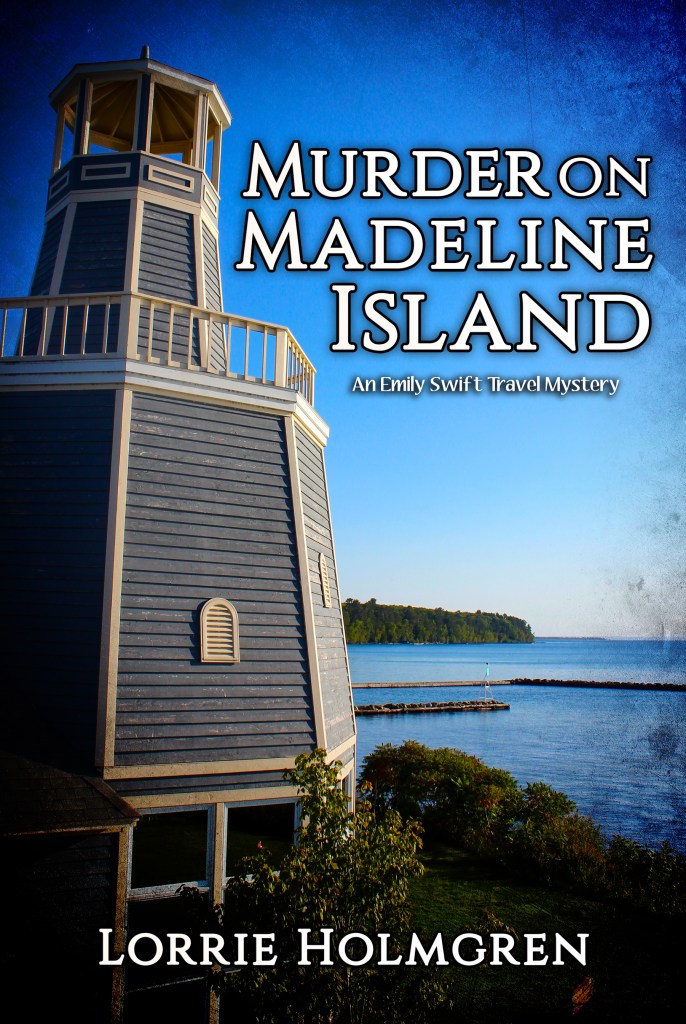
Sometimes I have an idea for a scene that means I must head off to a place I’ve never been.   In Murder on Madeline Island, the first book in the Emily Swift Travel Mystery series, Emily is helping an elderly woman search for her long-lost Ojibwa brother.   I thought her search might lead her to a Powwow.  So, I drove to Bayfield, Wisconsin to see a powwow firsthand. As I always do, I jotted down detailed descriptions in my journal.  But when I started to write the scene, I realized I needed more.  I went on UTube to watch the Shawl Dance and Grass Dance and found out their significance.  Then it was easy to imagine the scene.  In the final version a snippy young girl who has been resisting Emily’s entreaties to meet with the old woman, dances beautifully, transforming herself from a girl into a crow.  The character’s love of tradition gave her greater depth and made her more likeable.  That was my intention anyway. If you read it, let me know if you agree.

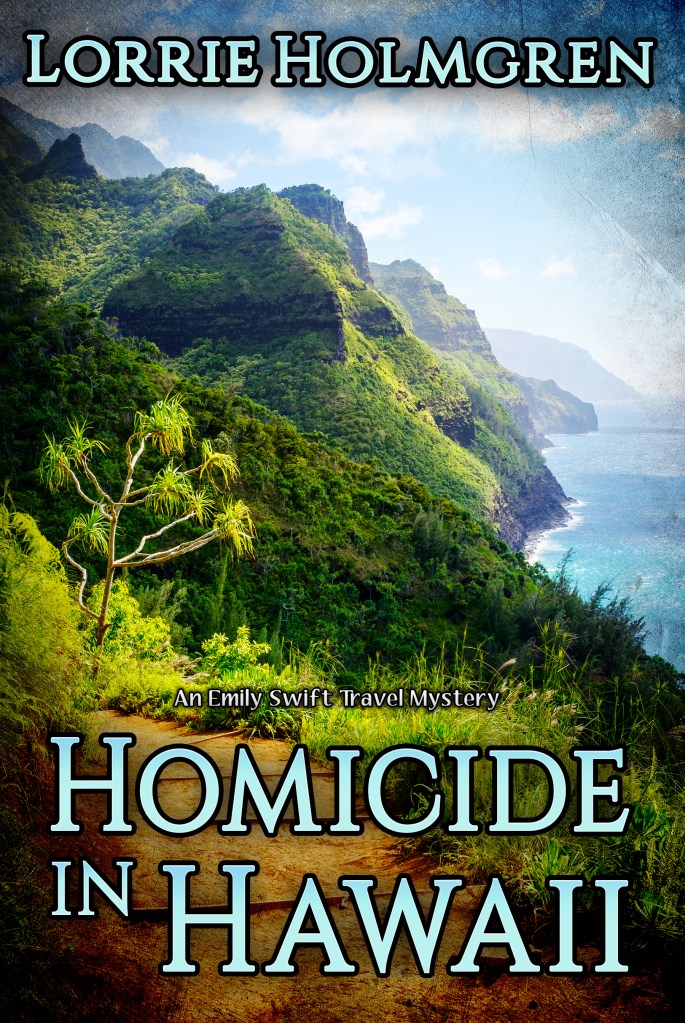
Sometimes I see something on a trip that gives me a plot idea and then I go online to find out more.  While I was in Hawaii, my husband and I visited a mountain top that had been the site of an ancient temple. Fresh fruits and flowers were placed there as if at a shrine or gravesite.  It seemed to me this would be the perfect place for a body to be discovered.  So, in Homicide in Hawaii, that’s where the victim’s body is found.  I went online to do research and discovered there had been a resurgence of interest in the old Hawaiian religion and worship of the god Lono.  Here was another lead to help me develop the story.  One character – a young girl who has been adopted and is now seeking information about her Polynesian heritage becomes fascinated by the old religion.

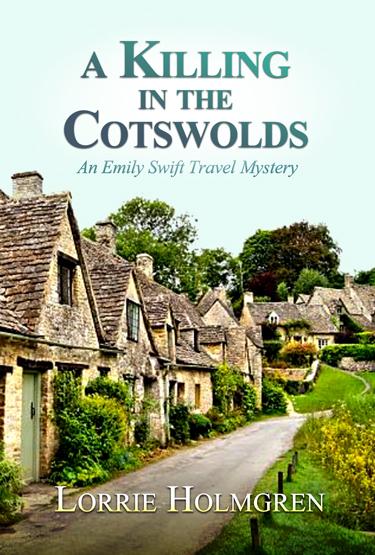
Now, when we are all kept inside by the Pandemic, it was a particular joy to relive my last trip to England where I did the research for A Killing in the Cotswolds, the third book in the series, which has just been published by Cozy Cat Press.  In the novel, Emily is writing articles about daytrips not far from London when she is drawn into a murder investigation.  Like Emily, I travelled from London to charming Cotswold villages to Stratford upon Avon and Avebury and enjoyed delicious teas and visits to historic sites.  But it was Internet research that gave me the idea for the long-buried secret that led to murder. I didn’t use the actual event, but it spurred my imagination.

For now, I highly recommend armchair travel.  Emily Swift Travel mysteries are available in print and Kindle on Amazon.

A Killing in the Cotswolds, An Emily Swift Travel Mystery

It’s springtime in England and travel writer Emily Swift is writing about charming Cotswold villages. But when a politician is found dead in a country inn, she and her boyfriend Jack are drawn into a murder investigation. Who killed him? An actor with a talent for deception?  A schoolmaster fired after a mysterious death? A tour guide at Warwick Castle bent on revenge?  Over tea and crumpets, Emily’s childhood friend begs her to find out and save an innocent woman from being charged with murder. Emily can’t say no. Clues lead through the British countryside and danger lurks where Emily least expects it.

The books are available in print and Kindle on Amazon

Lorrie Holmgren is the author of three Emily Swift Travel Mysteries: Murder on Madeline Island, Homicide in Hawaii and A Killing in the Cotswolds. She lives in Minneapolis, Minnesota, with her husband, busily penning mysteries and hoping it will soon be safe to travel.  She enjoys Zumba, Salsa, Bachata, aqua aerobics, gardening, knitting, and book group discussions.

Website www.lorrieholmgren.com

Facebook

Pinterest

Twitter

And I wrote . . .

This is my first outing for Ladies of Mystery, and it is an honor. I should introduce myself. First and foremost, I consider myself a Mid-Westerner, though I’ve lived in most parts of the country and in Barbados. I come from a long line of Illinois farmers who produced my wanderlust father. When my family moved from the Mid-West to Colorado, my classmates were worried that I wouldn’t be able to keep in contact. I assured them that phones and mailboxes existed out there, too. But what a change! I went from a large multi-racial high school to a wee one with one Hispanic and one Asian in my class. Holy smokes!

I became an officer in the U.S. Navy right out of college, a B.S. in Journalism from the University of Colorado clutched in my fist. When I mustered out, I used my GI Bill to help fund an M.S. from Northwestern University. I clearly have an affinity for working in male-dominated environments. First, the Navy, then years in advertising, think Mad Men.

Along the way, I met this guy. After the yes, I worked in educational assessment for a Fortune 500 company, trained readers to score student writing, worked as a consultant to State Departments of Education, and as Director of the Proposal Development Center responsible for obtaining multi-million dollar contracts.

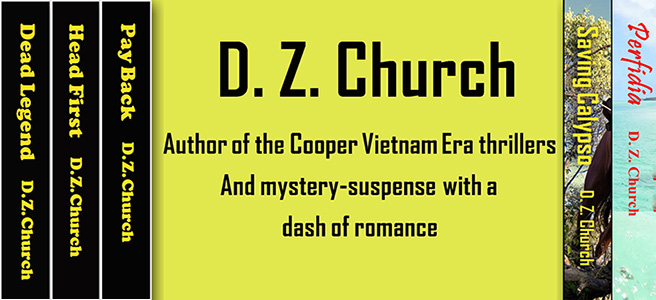
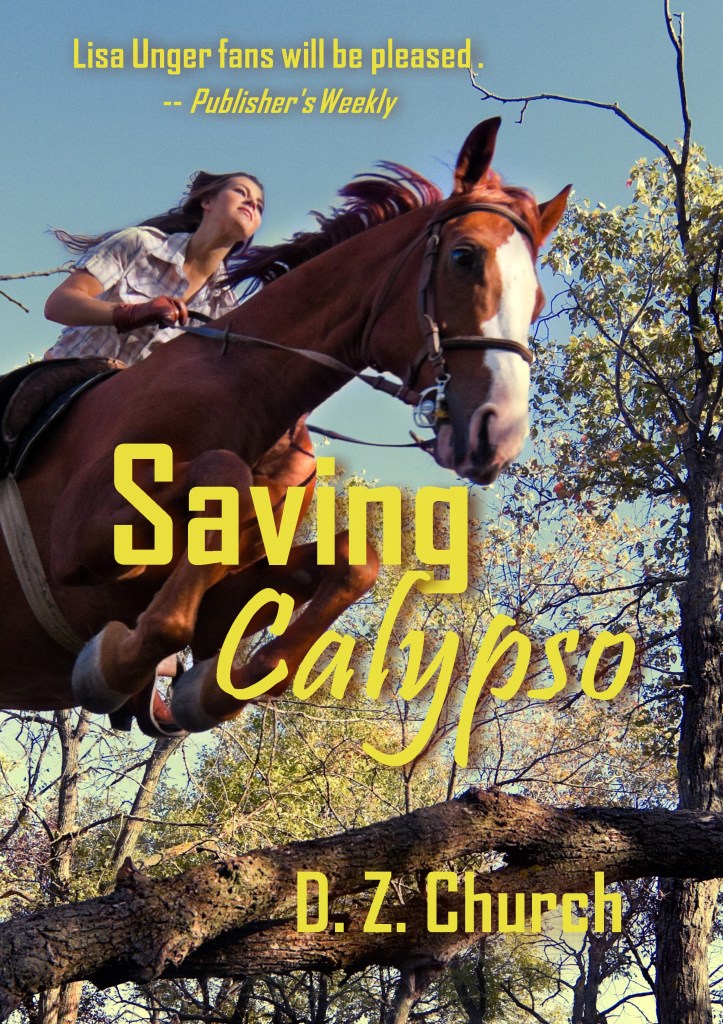
And I wrote. You’ll find my two standalone thrillers, Perfidia and Saving Calypso, and the first two books of my series, the Cooper Vietnam Era Quartet, on Amazon.

The Cooper Quartet is dear to my heart. I served in the Navy at the bitter, and I mean bitter, end of the Vietnam War. I worked alongside Navy pilots at my command. I had many carrier pilot and rescue pilot friends at Naval Air Station Lemoore. And befriended one special SEAL. And they talked about the War.

For years, I carried around their stories and hurt, enhanced by my travails as a young woman in the Navy. Frankly, the stories gnawed until I started writing Dead Legend, the first book in the Cooper Quartet. I thought Dead Legend would be a standalone, then Head First challenged me to spit it out. Are the stories true? I assure you that in all matters Navy, Ensign Robin Haas speaks for me.

The third book in the series, Pay Back, is available on September 1. It propels the Cooper saga through the Fall of Saigon (April 1975) and the changing world back home. According to BookLife: “This wartime thrill ride turns the waning days of the U.S.’s involvement in Vietnam into a pulse-pounding, smart tale of suspense.”  Pay Back is available at : https://www.amazon.com/Pay-Back-Cooper-Vietnam-Quartet-ebook/dp/B08CJDHP92

Over the four books, the Cooper Quartet covers the arc of the War’s impact on Americans, the Vietnamese, the French colonialists, as well as the women who served. It would be wonderful if the Quartet enhanced readers’ understanding of how the Vietnam Era changed our society, and, ultimately, our country. To celebrate the publication of Pay Back, Dead Legend is free on Amazon September 1 – 5 for anyone wanting to begin where the saga began.

For more about my books or me, check out https://dzchurch.com. Leave me a note if you’d like me to blog about a specific topic. I can hardly wait for the next fourth Thursday of the month.  See you then!

Today is My Birthday!

I never thought I’d live this long–but it’s been great. I’ve had many blessings and achieved a lot.

The celebration will be limited to birthday cake and ice cream with my family, which is perfect.

Even with the pandemic, my life has been much the same as usual except for the cancellation of all the mystery and writers’ conferences and conventions and book fairs. (And yes, I really do miss them.)

This month began with a trip to see our youngest daughter and her family: husband, two sons and their wives and children. It had been a long while since my husband and I had seen any of them. We had a great time! We ate wonderful meals prepared by our daughter and a special treat prepared by one of the grandsons.

We had wonderful conversations, played UNO and Mexican train. We spent time with four great grandkids. I learned a lot about Rumbas from a 6 year-old great-grandson who has 9 of them, and takes them apart and puts them back together. Got to chat a lot with a 5 year-old great granddaughter, and had fun with a 2 plus-year-old great granddaughter with the most amazing copper-colored curls, and met the newest great granddaughter who has just turned one.

I learned a lot about Covid 19 from a granddaughter-in-law who is a nurse at a busy hospital and sanctioned our visit. Her husband, my grandson, is a police officer and he  told me what is going on in his town. The other granddaughter-in-law is busy working from home as is her husband, my other grandson.

We couldn’t have done any of it if it hadn’t been for my middle daughter and husband who drove and accompanied us. (Neither my husband or I drive out of town any longer.)

The rest of the month has been filled with the usual: grocery shopping, a couple of doc visits (one over the phone), some work from home stuff for me and of course my writing and some online promotion.

My eldest daughter (and Facebook) has kept me up on the news about a great-granddaughter who has moved to Pennsylvania and is busy doing make-up and hair for brides and others, as well as another great-granddaughter who has started college at St. Mary’s (Notre Dame).

Because a grandaughter, her husband and three girls live with us, a lot of other interesting things happen, such as one of the great grands had a drive through birthday party which, though different, was lots of fun.

I am more fortunate than most because I do have an enormous family, and many of them live so close.

And that’s what’s going on with me this month.

Marilyn who also writes as F. M. Meredith


From First to Third

Since publishing my first mystery in 1993, my preferred point of view has always been third person. In the Mellingham/Chief Joe Silva series I used multiple points of view, and in the Anita Ray series and later the Felicity O’Brien series I used only one. All were third person. But a few years ago I wanted to try first person, and started a stand-alone. After numerous rewrites I had something my agent liked, and out it went to editors, where it has died a pandemic death of neglect.

While I’ve been waiting for responses I’ve had time to think about all the parts of the story I couldn’t tell because I’d committed myself to first person and one main character. I had no interest in adding other points of view in either first or third, but the initially quiet moments of dissatisfaction at what I’d left out grew and I wondered what it would have been like to write the story in third person. Immediately I was reminded of why I liked that particular voice—for the intimacy and also the flexibility it allowed me as the narrator. And that did it. I decided to rewrite the mystery in third person.

Over the years I’ve heard plenty of writers groan about an editor’s or agent’s suggestion that they rewrite the entire book from first to third (or third to first), always with the reminder drumming in their brain that this means more than changing “I” to “she” (or “she” to “I”), along with all the other pronouns as well as correcting the verbs. But the thought of what I could also do prodded me forward and I began. The first discovery was the opening. I needed a different opening, and once I began that I could feel the difference in how the story would unfold.

One of the reasons I’ve avoided first person for so many years comes down to the voice. Too many of the voices in crime fiction seem flip, sarcastic, chip-on-the-shoulder tough, the teenage swagger, a voice that doesn’t sound authentic to me and one I didn’t want to imitate. The strongest people I know are also the gentlest, and that was something I couldn’t seem to capture in first person, at least to my satisfaction. Now that I’ve moved back to third person I feel the other characters opening up, and exploring them more has given the story new dimensions that I’m eager to learn and write about.

In some parts of the novel I’m rewriting an entire chapter—the same plot steps but rewritten line by line. I’ve added new scenes and chapters, but in other instances all I’m doing is changing pronouns and verbs or crossing out entire paragraphs or scenes.

When I began the rewrite I thought about how much work it would be, but still I was curious. I wondered if I’d get bored or frustrated reworking a story whose characters and details I already knew too well. But once I got into a new perspective on the main character, much of the story began to feel new to me (and much of it is new to me). I’m energized every morning as I sit down to work. The characters and plot are the same, but this mystery unfolds like an entirely new experience. For once I’m not cursing the pandemic; it has given me the time to rethink and rewrite a story I care deeply about and want to see succeed. And when this is rewrite is done, I want the pandemic to be over so my new novel can go out into the world and be read by others.