This Business of Writing by Heather Haven

There are a lot of things that go into being a successful author, that is, being read by readers. Unless you’re writing for yourself and hiding your work in a closet, then just ignore me. But I would say, don’t do that. The written word is meant to be read. But for some writers, if they’re the only ones reading their work, it’s fine with them. That’s what a diary is all about. BUT if you’re not writing a diary, for heaven’s sake, get that work out there.

Easier said than done, I know. You can be the best writer in the world and the most talented. But if nobody knows your work exists you’re screwed, pardon my French. And thus, we enter the world of the writing business.

I have always been a writer for as long as I can remember. As a kid, I wrote lyrics to songs and short stories. Really short stories. Pluto lost his collar. Pluto found his collar. Pluto was happy. Pluto went home. I was 8. My first paying job was at 17 years old for the Miami Beach Sun. I wrote a weekly column on the comings and goings of the tenants in a large condo complex. I got $25 a week and was beside myself. I was a paid writer!

After college, I moved to Manhattan. During the day my writing consisted of plays, ad copy, and acts for performers. At night I would work Broadway behind the scenes in the Wardrobe Department. It was a settled world for me as a writer, and one I loved. But it wasn’t quite enough. Something was missing and I didn’t know what. Then I met Norman who was a jingle singer/performer. We got married and went on with our New York City lives. But what was exciting when you’re 20 can become tedious when you’re 40.

We were tired of wondering where our next job was coming from, which goes with the territory of being in the theater. We moved to California for some stability. Norman became an English teacher, and I ran the Faculty Recruiting Department at Stanford’s GSB. We have never regretted the move, but his singing and my writing never completely left the scene. Wherever you go, there you are.

Once in the Bay Area and without the backing of the New York Theater district, I was temporarily lost. But eventually, the entire world opened up to me. I decided to try writing a novel, something I would never have considered before. I finished my first novel by getting up early and writing from 4 in the morning until I went to work and then when I came home in the evenings. Ah, youth! But that was twenty years ago.

Ready to publish, I realized publishing was going through a transitional period. To put it mildly. Ah, the ramifications of the internet! Publishing houses began eliminating genres in order to stay alive. Or going out of business entirely. Agents were forsaking their clients and opening their own online publishing houses. Everything became different. But all the time I was learning. I was learning the good, the bad, the preposition, and the proposition.

I went with two online publishers, great people, but they didn’t give my books the care I thought they deserved. I waited until publishing rights were given back to me, then I struck out on my own. This was when there was a stigma attached to self-publishing. If you self-published, it meant you weren’t a good enough writer to have a traditional publisher. I avoided the looks of sympathy and derision from my peers. Because somewhere inside me, I knew that if I pushed at it long enough, I could have the career in writing I wanted. And on my own terms.

When you self-publish, the various aspects of getting a book out there falls to you. From the first draft, to the cover, to the editing, to the final product, it lands at your feet. Not to mention advertising and publicity. I took it all on. I wanted my books to be read. So, I persevered with learning the steps needed. All the time, I said to myself: Heather, you’re competing with Big Boy Publishers. You need to do exactly what the Big Boys do. So I did.

I hired the best editor I could afford. Eventually, two of them. One for content, one for grammar and punctuation. I had beta readers. Not my friends who would soft-pedal things, but experts in the field who would give me the feedback I needed. I hired a publicist. In short, I was as professional as I could be.

My fellow mystery writers helped me. Mystery writers are the kindest, most giving people I know. If any of you are members of Sisters in Crime, you know what I’m talking about. When I was doubtful or got into trouble, they would give me all the support they could. And often great words of wisdom.

So here I am twenty years later, one of the old guard. I still learn. I hope I still grow. Newbie writers look up to me. Well, at least one or two of them. And if they ask for help I am there, as all the wonderful writers in the past were there for me.

It’s a heritage we pass down to one another, this business of writing.

Catching Up with Science

Sometimes it feels like the publishing process is changing daily, with information on new strategies and technologies flooding our email boxes, not to mention the bounty of scam offers to showcase our books in book clubs and on podcasts. Yet some things change slowly or not at all, especially the themes, tropes, and story lines in traditional or cozy mysteries. 

I’ve been thinking about this over the last year or so because of a mystery I wrote some years ago that was published by Midnight Ink and did reasonably well before the publisher dropped its mystery line. Felicity O’Brien is a farmer who is also a healer, and she treats this ability matter of factly—she has a skill, or a gift, if you prefer, to alleviate pain and heal where she isn’t in conflict with a greater power (the Deity). She grew out of my years of working with holistic practitioners treating men and women with HIV/AIDS before there were any treatments for the disease. The massage therapists, reiki practitioners, and others had a remarkable impact on many of the patients. And although we never tried to analyze it, those of us on the periphery recognized that some practitioners brought the patient to a greater level of health than would be expected. Felicity has the same capacity to induce health.

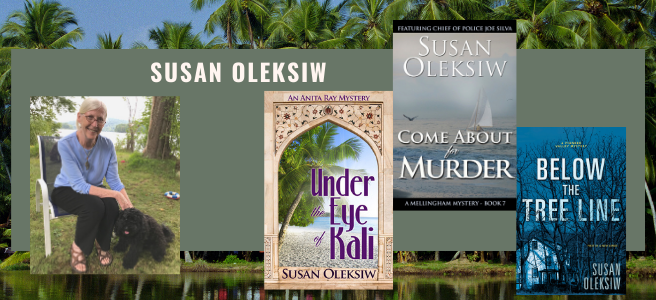
When I tried to interest a mass market paperback publisher in the series, the publisher who had happily published several of the Mellingham series and later the Anita Ray series said no, they didn’t do paranormal. They did send it out to one of their readers but I never heard about it again, and now accept that it has drowned in the slush pile.

The problem with this is that the mind-body connections seem too other-worldly, too unscientific, too far out there. And I too understand that. I grew up with the same perceptions that some things fell into a category that might be fun but couldn’t be taken seriously—ghosts, various forms of the paranormal and the like. Science was serious, the paranormal was not. But that’s no longer true. 

I like to read widely, and one of my interests is neuroscience. Only as an adult, long out of school, with the current emphasis on books on aspects of science for the general readership could I have come across some of the more interesting titles I’ve found, and one in particular astonished me. In Cerebral Entanglements by Allan J. Hamilton, the author, a neurosurgeon, talks about the current state of neuroscience including research into the mind-body connection.

In one chapter in particular he talks about experiments with individuals who (this one is called the viewer) could study an assigned image and send it mentally to another individual thousands of miles away (the receiver), to someone they didn’t know and who had no idea what the image was. The image was chosen at random at the last minute. As it turned out, “receivers could exhibit an uncanny ability to generate an accurate impression from the sender.” The author goes on to say that “the results have been replicated in dozens of laboratories by different researchers.” (p. 239)

Researchers have also produced the same results in tests of precognition—the receiver could draw the image even a day before it was to be sent and before the sender had received the image to be sent. 

Not every person has these skills or capacities, which is probably a good thing. But the abilities do exist in many of us and may be used for nothing more important than thinking hard on hurrying the person ahead of us in line at the coffee counter.

Mental telepathy, ESP, whatever it is called can hardly be called a fantasy trope in fiction if laboratories around the world are confirming its existence in replicable experiments. Skeptics can still reject the process out of hand, and for most people that would be correct. Not everyone can transmit mental images or receive them. But some people can.

So where does that leave Felicity O’Brien? I treated her healing powers and the insight that comes with them as fairly ordinary, a capacity passed down through the female line along with the advice to treat it carefully and respectfully. Otherwise, it was an ordinary trait not different from an ability to sing or pick up a new language easily.  Her capacity does not extend to saving the world, instigating spontaneous combustion to block a criminal’s flight, or anything else fantastic or magical. Her capacity is ordinary, just a part of her ordinary life on the farm.

It will take a while for literature to catch up with science—it’s usually the other way around. In the meanwhile I have to consider the next act for Felicity. Will she embroil herself in another suspicious death, or will she just try to keep her farm going and her father healthy in the nursing home? Do I have to wait for common knowledge to absorb new science on the paranormal before Felicity and her inherited talent can be taken seriously by publishers? That would probably require far greater change than what is typical for publishing. I wait but also ponder other options.

Embarking on The Orleans Lady with Cora

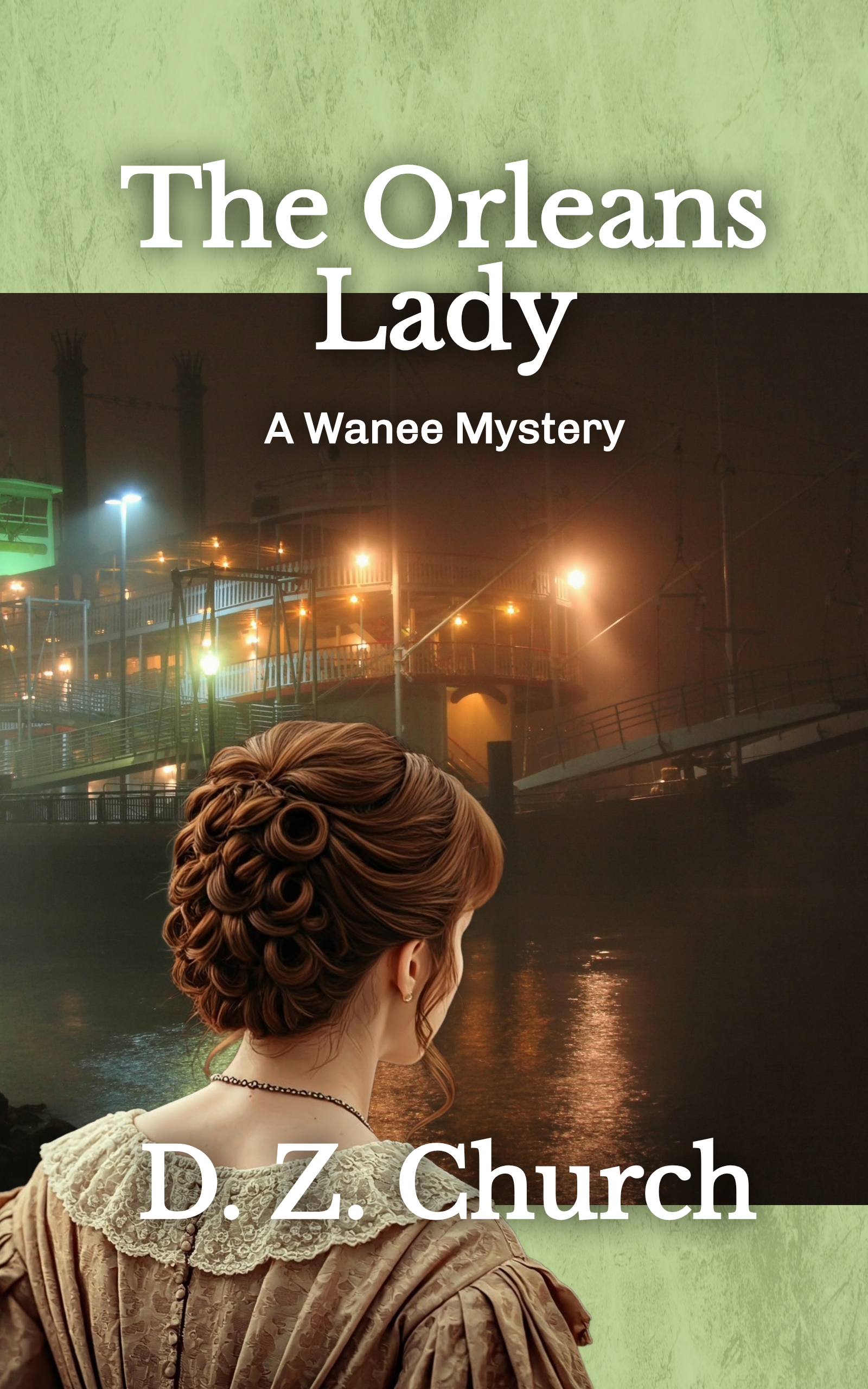
If you’ve been keeping up with Cora Countryman’s doings, the newest Wanee Mystery is a bit of a departure for her and her buddies, and I’m stoked. It takes place on a luxury Mississippi riverboat, The Orleans Lady, over just a few days. How does Cora end up on board?

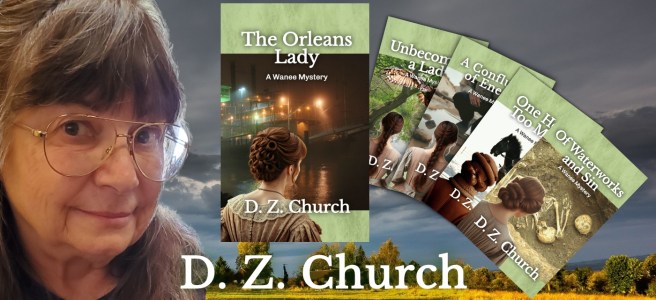
At the end of “Of Waterworks and Sin”, Sebastian Kanady presents Cora with three riverboat tickets to go in search of her thieving mother, rumored to operate the luxury riverboat, The Orleans Lady. One ticket is for Cora, one for Kanady (her protector?), and one for a chaperone, hand-picked by Kanady. For my readers, let me assure you, Dr. Shaw is not pleased.

I loved writing this book. My hometown in Illinois is just 35 miles east of the mighty river. I’ve crossed the bridge in Burlington, Iowa, when the Mississippi River in flood stage nipped at the edge of town, the port knee-deep in water, as on the Illinois bank, a quarter mile of floodwater drowned the fields. And, of course, I know the lyrics to the Maverick (TV show) theme: “Natchez to New Orleans, living on Jack and Queens”.

Like all the Wanee books, my hometown serves as a model for Wanee. It grew like mad post-Civil War; industry moved in, immigrants moved in, working men moved in, as new stores and bars opened. Like Cora’s “little town”, it grew like mad, a microcosm of many small towns in the prairie Midwest in the 1870s, that bloomed with promise, then didn’t.

For this book, I researched the period, the river, river towns, riverboats, the rich and the famous, and early Chicago gangsters. I built The Orleans Lady board by board in my mind. She’s a sternwheeler with electric arc lights and luxury staterooms that still transports goods downriver on a Main Deck cluttered with travelers who can’t afford a room. While she isn’t a massive showboat pushed by a tug from town to town, The Orleans Lady has a four-piece orchestra, dancing, a chanteuse, and gambling. Oh, my, yes, gambling.

Due to research and life, “The Orleans Lady” took me over a year to write. Long even for me with my “do the research, write the story beginning to end, do more research, fix the first draft, second, third, smooth, check the grammar” method. Then I send it out to my beta readers, attend to their comments, check my research against any changes, fix what my brain threw in that doesn’t work, and finalize the manuscript. None of this AI stuff for me.

Done, I load the manuscript into some story analysis software that tells me, pretty much nothing other than that I’ve written, according to it, another man-in-a-hole book. I really, really, apparently like to introduce my characters, their motivation, then throw stuff at them until they feel like there is no way out, dangling things here and there before giving them the means to grapple out hand over hand. Hmmm.

My beta readers assure me The Orleans Lady is a great, fun, and fulfilling read. So I urge you to embark with Cora, who seeks a life of mystery and adventure anywhere but Wanee, and finds all three on the Mississippi. Before The Orleans Lady docks again, Cora will outwit gamblers, expose a conspiracy, and survive a night that will change her and her “little town” forever.

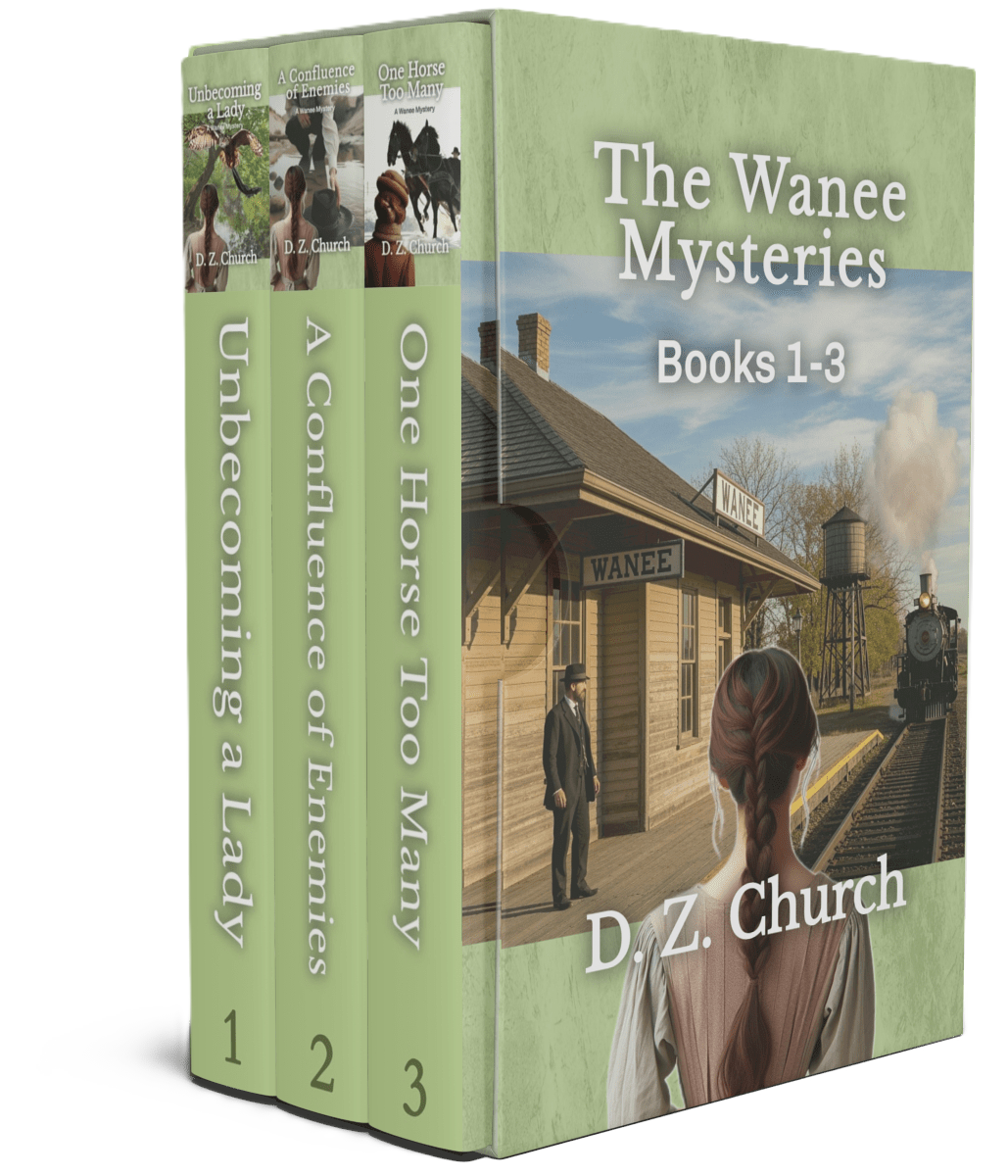
I hope you enjoy it as much as I loved writing it. “The Orleans Lady” is available for pre-order April 1 with a publication date of April 15. The first three books are now available as a set: https://www.amazon.com/Wanee-Mysteries-D-Z-Church-ebook/dp/B0GJ7DCPF4.

For more about me and my books, go to https://dzchurch.com, where you can link to each book’s sales page and sign up for my newsletter.

CRUSIN’ STORYTELLER

Happy Monday, Ladies ~

I’m in countdown mode with four days and a wake-up until we leave for our first-ever cruise. On Friday, we fly to San Diego, where we will spend the night, along with the large group of friends we’re traveling with, in a trendy hotel.

We board our Holland America cruise ship on Saturday afternoon, then set sail for Cabo San Lucas. You may remember that I finished “Chaos in Cabo” in Cabo while on vacation last year, then published the book in December. At the time, I had no idea that we’d be vacationing on a Mexican Cruise this year, but I’m thrilled to be returning to Cabo with “Chaos in Cabo” in hand.

One of the friends I’m traveling with is lovingly called the “Queen Bee” because she’s always coming up with interesting ways for us to have fun. During this trip, she came up with the idea of our group wearing matching T-shirts with funny sayings. She picked this saying for me: “Most likely to be writing a book.” I mean, how appropriate is that?

Since Randy and I vacationed in Cabo last year, we decided to join the group for a day cruise on a luxury sailboat with the possibility of seeing whales. I love being on the water and am excited to have a picture taken of me with “Chaos in Cabo” in front of the Arch of Cabo San Lucas, which is featured on the cover of my book. I’ll be able to see from the sailboat the old, abandoned building on top of Mt Solmar, where my villainess makes a life-changing decision. We will sail by the section of beach where Antonio has a boat waiting, and he makes his escape. And the sea route will take us by “Lover’s Beach,” where Amado first proposed to Socorro. I love that I’ll be able to relive these important places in my book, experiencing them now after I know the roles they played in “Chaos in Cabo.”

After our day in Cabo, we set sail on the Sea of Cortés at night, and then we will wake up in La Paz for our second port of call. We’ve never been to La Paz, but I’ve always wanted to visit the charming Mexican town. And as luck would have it … the sixth book in my Mexico Mayhem series is “Lucky in La Paz.” I’m sure I’ve mentioned this in previous blogs, but I always start with a title after I’ve decided on the location of the next book. Next comes my first-draft storyline, defined by three taglines: A perfect paradise. A rocky reunion. A cavalier crook.

And of course, every good storyline needs fabulous characters, which in my case means a Hero, a Heroine, and a Villain. For this book, I’m bringing back three previous characters: FBI Agent Christopher Temple, DEA Agent Jade Mendoza, and Jade’s mother, the elusive Sarita Garcia. Oh, what fun awaits them!

Since I’ve never been to La Paz, I’m taking myself on a tour of the town to do research for my book. Randy says he’s on board so long as we can do some of the research from a cantina to two.

Once we sail away from La Paz, we travel farther north into the Sea of Cortés and stop in our final port of call, Loreto. We’ve also never been to Loreto, but the town has been on my radar for about five years, and we were planning to fly there for a future vacation. And, you guessed it, book five in my Mexico Mayhem series is “Lost in Loreto.” I’ve already started writing this book and am over the moon knowing I’ll be able to visit the places I’ve Googled and used as locations in the book. Once again, Randy and I will walk the streets of Loreto, soaking in all the culture and sights. “Lost in Loreto’s storyline has these taglines: A missing wife. An intriguing romance. A clever abductor.

As with all my Mexico Mayhem books, I advance at least one character from the previous book and am bringing Detective Javier Pérez to Loreto after leaving Cabo with a broken heart. As the Hero, he will be forced to work with his brother-in-law as they look for Javier’s estranged wife, Gabriella. He also finds himself helping attorney Skarlet Quinn, who, as the Heroine, tries to clear her ex-fiancé of abduction and murder. And, eventually, Javier will have to outwit Arlo Najar, a cunning and determined Villain.

Obviously, I am excited and feel blessed to have the opportunity to visit actual cities featured in my books. And bonus, I’ll be able to write off part of my vacation as marketing and research.

Four days and a wake-up… geez … I’d better go pack my suitcase!!!

Happy Writing, Ladies ~

Guest Blogger ~ Seren Star Goode

Why I Write Cozy Mysteries — A Beach Walk Answer

On foggy mornings along the California coast, the world feels suspended.

The horizon disappears. The ocean and sky blur into one soft gray. Even the familiar curve of the shoreline looks different, as if something has shifted overnight.

Those are my favorite mornings to walk the beach.

After a strong swell, the tide leaves behind driftwood, kelp, and the occasional glint of something unexpected. I look for sea glass. At first, it’s easy to miss — a cloudy fragment half-buried in sand. But once you learn to spot that soft glow, you can’t unsee it.

Mystery writing feels like that.

I write cozy mysteries because I’m drawn to what hides beneath ordinary life. A marina on a bright afternoon. A small-town festival. Neighbors chatting on a front porch. On the surface, everything looks steady. But if you stand still long enough — you’ll notice tension, history, secrets.

Mystery readers understand that instinct. We read to uncover. To test our suspicions. To follow currents that weave through waves.

For me, the cozy branch of the genre offers something I love: community. In a small coastal town like my fictional Ocean Wood, relationships overlap. Loyalties complicate things. A crime doesn’t just affect one person; it ripples outward. That emotional web gives a mystery weight without turning it bleak.

My protagonist, Amanda Warren, arrives in town trying to rebuild her life. She carries loss. She’s not looking for trouble, but it keeps finding her. Each case she investigates is about justice, yes — but it’s also about steadiness. About putting the pieces back together.

And then there’s Grok.

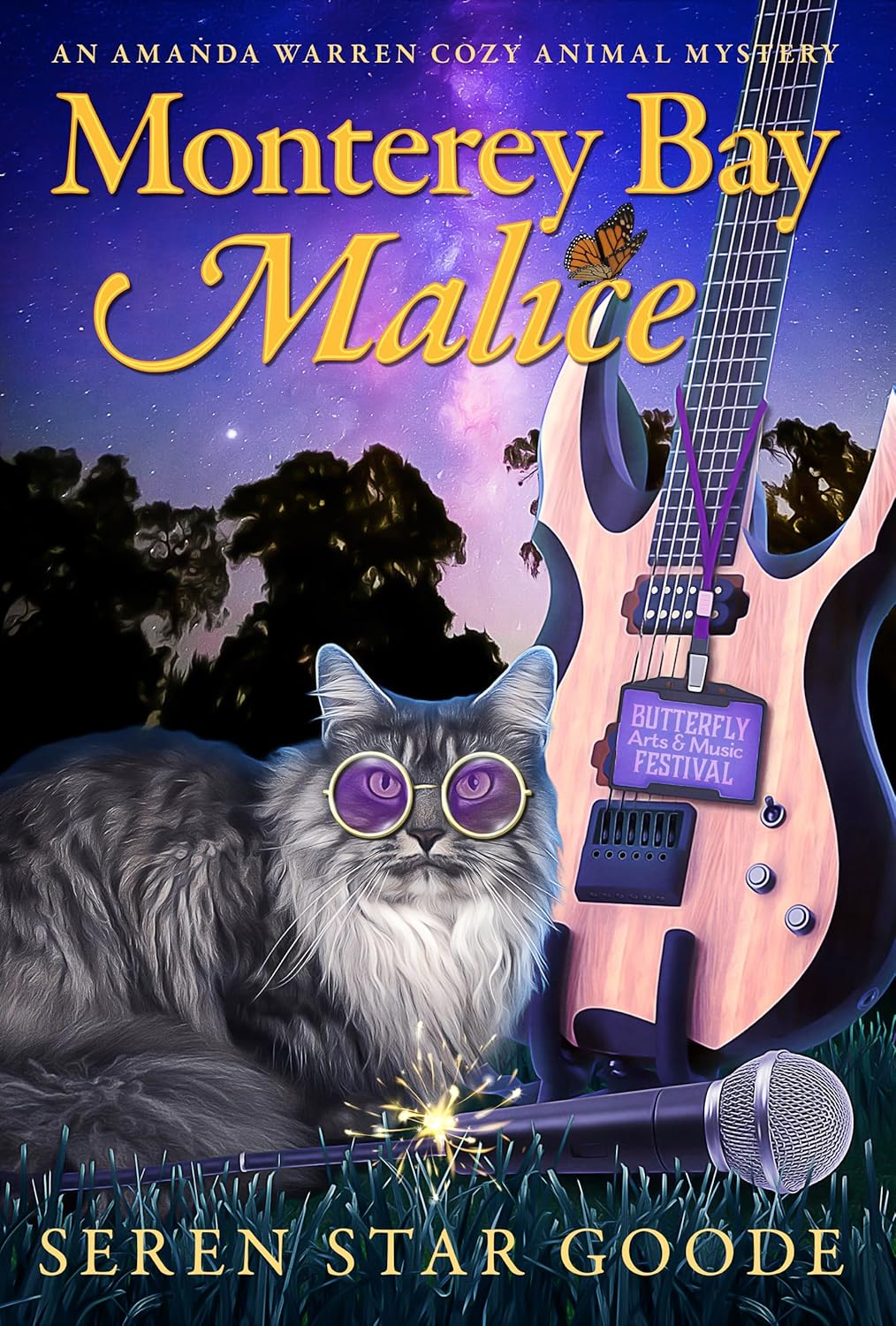
Grok is a very large, very opinionated Maine Coon cat who may — or may not — have abilities that defy easy explanation. Some readers meet him expecting whimsy and stay for the sharp observations. Cats notice everything. They watch quietly. They sense shifts before humans do. Grok often catches emotional truths before Amanda does.

Writing him is a way of honoring intuition — that small internal nudge that says, something isn’t right here.

Whether you prefer hardboiled detectives or classic puzzles, that feeling is universal in mystery fiction. The tightening awareness. The moment when a clue lands differently. The fog beginning to thin.

On the beach, when I find a piece of sea glass, I always pause. It began as something whole — a bottle, perhaps — broken and tossed aside. The ocean didn’t erase its past. It reshaped it. Edges softened. Surfaces turned luminous.

That’s what draws me to this genre. Mystery is about disruption, but it’s also about restoration. Order doesn’t return untouched; it returns altered, wiser. In my most recent release, Monterey Bay Malice, chaos erupts at a seaside festival, and the crime cuts through friendships and reputations. Yet by the end, what matters most is not just who did it, but how the community stands afterward.

I don’t write cozies because I want to avoid darkness. I write them because I’m interested in what survives it.

Readers don’t turn to mysteries because they love crime. They turn to them because they love discovery. They love that moment when the scattered details align. They love the sense that someone — whether a detective, an amateur sleuth, or a watchful cat — was paying attention.

Fog eventually lifts. The tide recedes. That’s how finishing a mystery feels to me. Something once scattered has taken shape. The surface is clear again.

That’s why I write the genre I do.

Because beneath even the calmest shoreline, there are stories waiting to be uncovered.

And sometimes, if you’re lucky, they shine.

Monterey Bay Malice, the latest installment in the Amanda Warren Cozy Animal Mystery Series, strikes a deadly note when a music festival organizer is electrocuted onstage. As sabotage ripples through the seaside town of Ocean Wood, Amanda and Grok—her 35-pound psychic Maine Coon cat—must uncover the truth before celebration turns to catastrophe

Buy Link: https://www.amazon.com/gp/product/B0FVWFN352

Free story in the series: Kerfuffle at the Border https://dl.bookfunnel.com/bjbbxrovgs

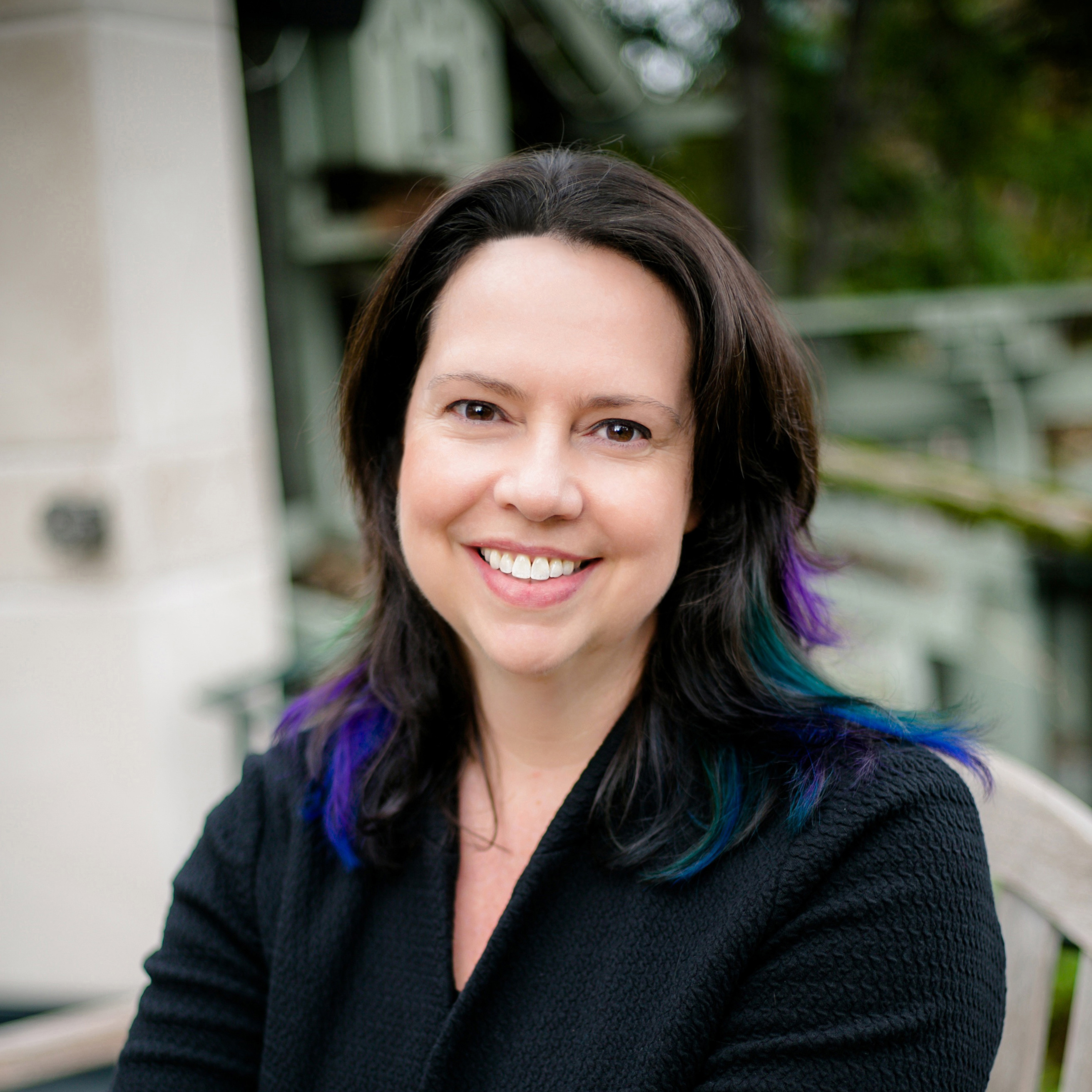
Seren Star Goode writes coastal cozy mysteries set along California’s Monterey Bay. Her Amanda Warren series follows a reluctant sleuth, a close-knit community, and a very large Maine Coon cat named Grok who may be the smartest one in town. When she’s not plotting fictional murders, Seren can often be found walking the beach in search of sea glass, where many of her story ideas begin.