One of My Favorite Things About Writing

My favorite part about writing is learning. When I wrote historical western romance, I enjoyed visiting museums and libraries in the areas where the books were set to learn local history and to find maps of the towns. I read newspapers on microfiche to get a feel for the setting and the people. The small-town newspapers back in the 1800’s were as much gossip columns as they were filled with political news.

Writing historicals, I had to learn a lot, and I loved every minute of it. I was a nerd in school. I’d take my history, geography, and social science textbooks home even if my work was finished so I could read ahead and learn more.

Writing contemporary books, I always come across occupations or places I don’t know anything about and spend hours learning. Even if all that learning may only end up as one paragraph in the whole book.

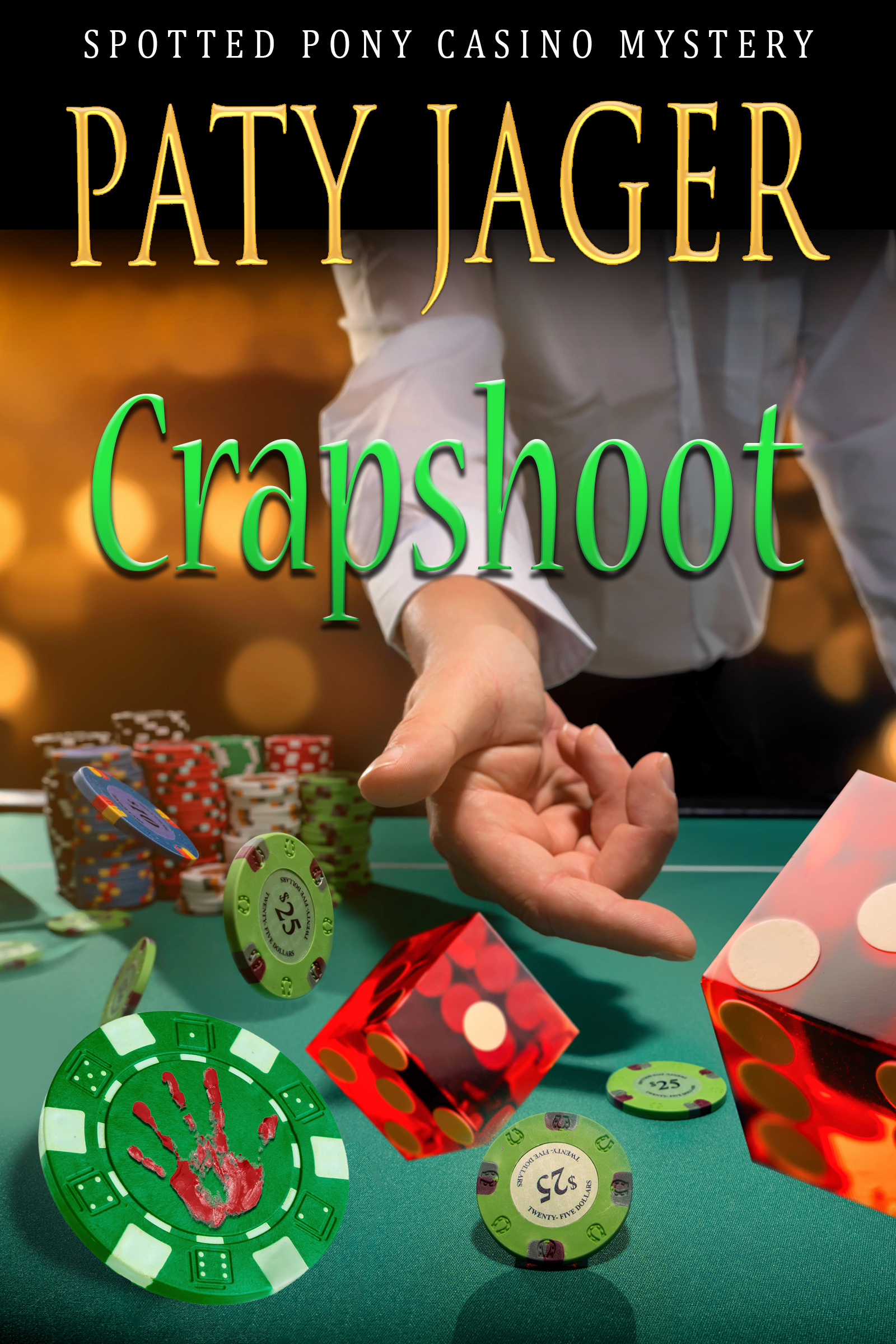
When I write mysteries, I have to research causes of death, how law enforcement works, occupations, and settings. My horizons are always expanded when I start a new book. I’m currently researching for the next Spotted Pony Casino book, Crap Shoot. I know it will deal with MMIW (Missing and Murdered Indigenous Women) I have three articles that I’ve set aside until now to help me determine how I want to handle the subject and whether the character will be just missing or murdered. Whether it will be domestic or a stranger. So many possibilities and the research I’m doing will help me to see the direction of the story.

I’m also attending an event called- Winter Fishtrap: What is the West? Fishtrap is a gathering of writers from the West. The organization puts on several events throughout the year in the county where I grew up and where my Hawke books are set. This Winter Fishtrap has some great topics and many of the speakers are Indigenous. I’m hoping to get a better sense of that it means for them to be in Wallowa County and telling their stories from this event. To hopefully help me better articulate my character Gabriel Hawke and my character Heath Seaver from the Spotted Pony Casino Mysteries.

I first attended a Fishtrap event back in the 1980’s and quickly discovered it was more about literary writing than genre writing. that was the only multi-day event I attended. I have been in the county visiting family when they had readings and attended those with a family member, This will be the first multiday event since the 80s. I’m hoping it will be as good as it sounds.

Speaking of my Gabriel Hawke series… Wolverine Instincts is now available.

In the heart of the wilderness, the hunter becomes the hunted.

Gunshots shatter the quiet of Oregon’s Eagle Cap Wilderness, drawing Oregon State Trooper Gabriel Hawke into action. Following the sound, he stumbles upon a shredded cage, the sharp musk of a wolverine, and a dead hiker.

Tracking footprints through the rugged terrain, Hawke uncovers a second victim. It’s clear—he’s hunting a killer who’s hunting humans.

With Dog by his side, Hawke’s search leads to two brothers, one gravely injured. Enlisting the help of pilot Dani Singer, he gets the injured man to safety before returning to the wilderness.

Teaming up with a reclusive, disabled veteran who knows the Eagle Cap as well as he does, Hawke pieces together the killer’s twisted game. They suspect a poacher—one as ruthless and elusive as the wolverine he’s still chasing.

In a deadly wilderness where survival is the only rule, Hawke must outsmart a predator who knows no bounds.

Universal buy link: https://books2read.com/u/m2yARG

OR Purchase direct from the author in ebook and print from these links:

ebook link – https://www.patyjager.net/product/wolverine-instincts-ebook/  

print link- https://www.patyjager.net/product/wolverine-instincts/

Guest Blogger ~ M.E. Proctor

The Detective Comes Calling

When I start working on a short story I never know much about the characters. I might have a place in mind—a bar on a beach, a path in the forest, an iced-over parking lot—or a line of text I woke up with, like this one that I used recently, curious to see where it would take me: Innocence doesn’t do it for me. Spoiler alert: somebody dies.

Most of my pieces unspool that way. Characters walk on stage, I get to know them, and things happen. Or nothing happens and the story goes asleep on my laptop, for a while or forever. That loose process works well for me, for short fiction.

A book is a very different animal.

If you write yourself in a corner in a short story the damage is minimal. You can shelve the draft, revisit it later and either find a solution or scrap it entirely. It’s disappointing but at worst you’ve only lost a few weeks. On the other hand, if you’re fifty thousand words into a book and hit a wall or run out of juice, it really hurts. The investment in time and the emotional commitment are substantial. Of course you can try to rescue the project. As Chandler said: In doubt, send in a guy with a gun. Sometimes it works, other times … Raise your hand if like me you’ve read books that feel like they’re limping to the finish line.

The pitfalls of winging it were very much in the back of my mind when I decided to sink my teeth into a crime novel. The problem is that I’m not a plotter. Detailing every beat of a story before sitting down to write it feels too much like a straitjacket. It sucks all the fun out of the project. Why bother to write it if I know everything, no surprises, from the get go? Still, I wanted to be better organized than usual. Start with an idea and develop a rough outline that could go the distance.

It was an excellent resolution.

It didn’t happen.

Because Declan Shaw threw me for a spin.

I was on the back porch, engaged in the creative exercise known as woolgathering, when a name popped into my head. Out of nowhere. Insistent. I’d never written anything, book or short story, that used the name of a character as a prompt. I was intrigued. Who the hell was this guy pitching a tent in my subconscious?

Names aren’t neutral. In life, we’re passive recipients—a gift from our parents. In fiction, the writers are in control. They can play with the mental images a name creates (Dickens mastered it). What does the name suggest about the character’s past, family, or cultural background? Smith evokes 1984 or The Matrix, Cadogan-Smith comes with horses and country estates, Smith-Underfoot might be a familyliving in Hobbiton.

Declan Shaw. What does it bring to mind? Irish heritage. He probably drinks whiskey and can tell a tale. Yes, I know, it’s a cliché. But seriously, with a name like that, what does he do for a living? I love antiheroes but I didn’t feel like spending an entire book with a hitman, Ken Follett did it so well in The Day of the Jackal, and, more recently, Rob Hart in Assassins Anonymous. So what? Reporter. I could see the byline, front page, above the fold. Then an insidious voice in my head whispered: Can you build a series around a journalist, how many cases can he cover, without stretching credibility? A series? The inner voice had to be kidding, there was no book #1 yet. It was ludicrous. But, but … I could smell the possibilities.

And that‘s how, right there, on my porch, Declan Shaw became a private detective.

The first scene I wrote had nothing to do with investigating. I pictured him as an eleven-year-old boy, standing at the bottom of a flight of stairs, looking up at his intimidating grandmother. She was a black-clad villain straight out of a comic book. I imagined the events that brought the kid to her place and the disastrous consequences that ensued. Readers won’t find any of that in Love You Till Tuesday, the first book in the series. Declan’s back story is in my back pocket and won’t come out until the time is right.

I forgot my resolution to outline and gave myself permission to improvise. The plan was to learn who my character was by writing him. It took a lot longer than I expected, three years, three manuscripts, a thousand pages, multiple false starts. None of that work made it into the book, but the effort was worth it. I knew Declan inside out. We were both ready to tackle Love You Till Tuesday. In some sort of orderly fashion.

My plot document looked like the output from a chaotic brainstorming session, a jumble of character sketches, a rough timeline, cryptic notes, dead ends and side stories. It was an unstructured and messy pseudo synopsis, with plenty of freedom between the lines to change almost everything. As I typed away, things changed indeed, and changed again after input from editors and beta readers, cuts and tightening up, but the original bones of the story remained. Until finally Declan Shaw made his official debut with his cigarillos, his cowboy boots, his good and flawed impulses, and his ironic take on the world. He’s good company. I’m keeping him.

Love You Till Tuesday – A Declan Shaw Mystery

The murder of jazz singer April Easton makes no sense, and yet she appears to have been targeted. Who ordered the hit and why? Steve Robledo, the Houston cop in charge of the investigation, has nothing to work with. Local P.I. Declan Shaw who spent the night with April has little to contribute. He’d just met her and she was asleep when he left.

The case seems doomed to remain unsolved, forever open, and quickly erased from the headlines. And it would be if Declan’s accidental connection with the murder didn’t have unexpected consequences.

The men responsible for April’s death are worried. Declan is known to be stubborn and resourceful. He must be watched. He might have to be stopped. He’s a risk the killers cannot afford. The stakes are high: a major trial with the death penalty written all over it.

Buy Links:

Love You Till Tuesday is available in eBook and paperback.

Barnes & Noble, Bookshop.org, and Amazon at https://www.amazon.com/Love-You-Till-Tuesday-Proctor/dp/1956957707

From reviews:

If you think the crime fiction market has enough PIs, think again. Declan Shaw is the kind of PI this genre has been waiting for. Declan is a well-developed, complex and nuanced character, wrestling with his own internal conflicts as he investigates the murder of April Easton. Sharp, witty dialogue and a fast-pace make Love You Till Tuesday an engaging read—one of those books you can’t put down and keep reading late into the night. It is a fun, intense read from beginning to end and M.E. Proctor displays her incredible talent at creating a well-written and beautifully crafted book.

M.E. Proctor was born in Brussels and lives in Texas. The first book in her Declan Shaw PI series, Love You Till Tuesday, is out from Shotgun Honey with a follow up scheduled for 2025. She’s the author of a short story collection, Family and Other Ailments. Her fiction has appeared in various crime anthologies and magazines like VautrinBristol NoirMystery TribuneShotgun Honey, Reckon Review, and Black Cat Weekly.

Social Links

Author Website: www.shawmystery.com

On Substack: https://meproctor.substack.com

Facebook: https://www.facebook.com/martine.proctor

Twitter: https://twitter.com/MEProctor3 BlueSky: https://bsky.app/profile/meproctor.bsky.social

Guest Blogger ~ Midge Raymond & John Yunker

The Devil’s in the Details: Eco-fiction in the mystery genre

When my husband, John Yunker, and I embarked on a four-day hiking trip in one of the most remote areas of the world, we had no idea we’d bring home the idea for a novel we would write together. (We also had no idea we would survive writing a murder mystery together.)

But though Devils Island is our first co-authored book, it’s not our first collaboration. In 2011, noticing a dearth of opportunities for authors writing environmental fiction, we co-founded Ashland Creek Press, a boutique publisher focused on books about the environment and animal protection. From the day we opened for submissions, we’ve received far more environmental novels than we could ever publish — and now, thirteen years later, “cli-fi” has become a genre of its own.

Both John and I have written our own novels about endangered species — John in The Tourist Trail, and me in My Last Continent and Floreana — and once we learned about the plight of Tasmanian devils in Australia, we knew we’d found our next project.

But we had to ask ourselves: Can a serious environmental topic like endangered species be addressed in a genre often considered “beach reading”? The answer we came up with is: Absolutely. And perhaps it’s even more effective than tackling such subjects in a more “literary” genre.

Here’s why: We’ve seen, over the years, as both writers and publishers, that readers can be wary of environmental books. When it comes to climate change and animal protection, the news out there can be difficult: the planet is heating up; species are disappearing. Readers like to read, in part, to escape to somewhere else — mentally and emotionally, even if not physically. So we aimed, with Devils Island, to write a story that offers a fun escape (a glamping trip in one of the most beautiful places in the world), while also sharing what makes the real-life island of the novel so important (it is part of the conservation effort to save Tasmanian devils).

Maria Island

What we learned during our journey to Maria Island, a tiny island off the coast of Tasmania, is that Tassie devils are being reintroduced there because it is so remote; it’s the one place offering them hope for survival from a contagious facial tumor disease. To give ourselves literary freedom, we call our fictional island Marbury, and we created Kerry, a naturalist-turned-guide who herself is escaping the tough world of rescue to lead tourists on a trip where she’ll get to feel the optimism of sharing a place of hope with travelers. (Little did she know one of her guests would go missing, and a storm would cut off all communication with the outside world.) The secrets and lies of the hikers — and the disappearance of one of them and the death of another — is the focus of the story, but along the way, we’ve snuck in myriad details that will teach readers about the amazing Tasmanian devils (among other creatures) and the efforts to protect them.

And this is where eco-fiction meets mystery — in the details. Locked-room and closed-room mysteries are nothing new to the genre, but by setting a suspense novel on an island where conservationists are rehabilitating an endangered species is a detail that goes a long way toward readers’ understanding of the issues. And while the human characters are center stage in Devils Island, an individual devil character plays a small but important role — and myriad other animals make appearances as well.

Mystery novels include plenty of red herrings — but these don’t have to be limited by human plot twists. We decided that one subplot of Devils Island would be all the more resonant if it was about another issue facing Australia, that of poaching and wildlife smuggling.

Maria Island Lagoon

And mystery writers never neglect setting — and this, too, can be effective in an eco-mystery. Nearly every part of the world is suffering the effects of climate change, from stronger hurricanes to increasing wildfires. In Devils Island, it wasn’t a stretch to conjure a storm that would cut off all contact between the hikers and the outside world. Alternatively, climate change can provide an atmospheric backdrop, as in Jane Harper’s bestseller The Dry, in which the tinder-dry farming community that has suffered from years of drought reveals the stress of the climate crisis on this community and ratchets up the tension in the story as well.

Characters, of course, propel stories forward — and they can also provide details of context and backstory for animals and the environment. In Devils Island, Kerry brings both naivete (this being her first time around as a lead guide) as well as expertise (she knows everything about devils and most of the wildlife from her former job). Another thing characters provide is conflict, and author Cher Fischer provided plenty of this in her eco-mystery Falling Into Green (published by Ashland Creek Press) in which ecopsychologist Esmeralda Green, a vegan with an electric car, falls in love with a carnivorous, Hummer-driving television reporter.

Mystery novels are all about figuring out who did what, and an eco-mystery is no exception. But adding details that reveal environmental issues, the plight of animals, and our changing world can create stories that are not only fun to read but make us think about our planet as well. 

Devil’s Island

On a remote island off the coast of Tasmania, an Australian wilderness guide embarks on a four-day hike with six guests—and arrives at their destination with only two.

Devils Island is home to abundant wildlife and is the ideal place to re-introduce endangered Tasmanian devils. It’s also a region where travelers can see firsthand the unspoiled drama of Australia’s wild places. For naturalist guide Kerry, the trip offers a respite from the grueling work of trying to save an endangered species. American college classmates Brooke and Jane have a chance to reconnect after years of estrangement. Two Australian couples hope to escape their big-city lives and enjoy the company of longtime friends.

When Jane disappears on the first night, the group assumes she has wandered too far in the stormy weather. Yet it turns out she has a secret connection to one of the other guests—and when another hiker is found dead in camp, the group finds itself isolated by the worsening storm and wondering who among them might be responsible.

Amazon: https://www.amazon.com/Devils-Island-John-Yunker/dp/1608096149

Bookshop.org: https://bookshop.org/p/books/devils-island-midge-raymond/21171253?ean=9781608096145

Barnes & Noble: https://www.barnesandnoble.com/w/devils-island-john-yunker/1144401474?ean=9781608096145

Oceanview Publishing: https://www.oceanviewpub.com/books/devils-island

Buy a signed copy: https://midgeandjohn.com/purchase.html

Devils Island is the debut collaboration by Midge Raymond and John Yunker. Midge is the author of the novels Floreana and My Last Continent and the award-winning short-story collection Forgetting English. Her writing has appeared in TriQuarterly, American Literary Review, Bellevue Literary Review, the Los Angeles Times, the Chicago Tribune, Poets & Writers, and other publications. She earned a certificate in private investigation from the University of Washington. John is the author of the novel The Tourist Trail; editor of the Among Animals fiction series and a nonfiction anthology, Writing for Animals; and his plays have been produced or staged at such venues as the Oregon Contemporary Theatre, the Source Festival, the Centre Stage New Play Festival, and Association for Theatre in Higher Education conference.

Website: https://midgeandjohn.com/

Instagram: https://www.instagram.com/midge_and_john/

Facebook: https://www.facebook.com/MidgeandJohn/

Please, no, not another book idea!

I get asked all the time, “Where do you get your ideas or how do you come up with so many ideas for stories?”

Nia

I like to call it my superpower, but then something like this happens: My friend and I who sell books twice a year at an outdoor flea market enjoy watching all the dogs go by and try to figure out their breeds or crossbreeds. It’s just a fun game. Then, this past summer, I had my little dog Nia with me at one of the events. A woman came in to look at our books and, of course, asked to pet Nia. My little Chiweenie is a people dog. She loves kids, she loves anyone that isn’t wearing a hat and built large. The woman pet her and talked to her for several minutes then looked up at me and said, “You should use her as a therapy dog. She has the right temperament and look at that loving caring face.” The woman went on to tell me all the places I could take Nia to comfort people.

After she left, my friend and I were talking about it and instead of doing the humanitarian thing with this information, I flipped it and said that would make a great way to have an amateur sleuth get involved in all kinds of murders. (Yes, an idea for another series popped into my head and hasn’t left.)

Then someone was playing old time records on a record player as a means to bring in customers and sell the record player. The song Merry, Merry, Merry Christmas came on and as the song progressed, my mind went to what a great title for a book. Merry, Merry, Merry Murder. And make it set at Christmas. Now this stuck and has been brewing in my mind as the holidays are fast approaching. Too late for this year, but I will have a book with that title coming out next year.

But wait, how can I get this title to work with the two series I have right now? All the Gabriel Hawke series titles have animals in the titles. It would be out of sync with the rest of the series. Same goes with the Spotted Pony Casino Mystery series. Those titles all have to do with gambling terms. How can I use this title to write a Christmas murder mystery if I can’t make it fit the two series I already have going?

Pop back to the new shiny idea of the woman with therapy animals who travels to schools, hospitals, nursing homes, outreach centers, and so on. She could start her series with Merry, Merry, Merry Murder. Or I can make it a standalone Christmas Mystery.

But wait. This has all been spinning in my head for several months now and two days ago when I was finishing up sewing Christmas presents, I had Christmas music playing. Christmas Classics to be exact. The Jackson 5 were singing, I Saw Mommy Kissing Santa Claus. There is a spot in the song where Michael stops singing and says he’s going to tell Daddy. He says it like he’s mad at his mom. And BAM! The whole idea for the murder and who is blamed and who really did it came flashing into my head. I had to leave the sewing machine to find a piece of paper and a pen to write down all the things that had come together to make the story work.

And now, I just have to decide if it will be a standalone book or the beginning of a new series… I really don’t want to juggle three series, but I also like the idea of the shorter cozy style mystery. Maybe one of those a year…. So I can keep putting out two books a year in the other two series. We’ll see!

If you’re looking for some great gifts for the readers on your Christmas list, check out the Ladies of Mystery Cavalcade of Books. An online place to find some of our books on sale and just some of our books. https://bodiebluebooks.com/ladiesofmystery/

Life has made changes in my writing style.

When I started writing to get published over 30 years ago, I would sit down and knock out words for an hour or two a day. That was when the kids were in school and I’d finished all my outside and household chores. Back then I hadn’t attended more than a college class on fiction writing and a community Ed class on writing for hire.

I had one children’s story published in a parenting magazine and I was working as a freelance reporter for first the Redmond Spokesman and the the Bend Bulletin. These didn’t pay much but they showed me I could write.

The first novel I wrote was a murder mystery. I’d read the first three Kinsey Millhone Mysteries by Sue Grafton and felt I could write a mystery novel. I loved the main character and enjoyed writing about a divorced mother of two who made her living with freelance photography helping her ex-husband prove he didn’t kill someone. I used a book I’d heard about on a television talk show that would help you be your own detective. Great premise! I did my homework looking through the tombs of agents in the books you couldn’t take out of the library and thought I’d found the right one.

Back then I didn’t know you didn’t pay them to read your books. I was already working on the second book in the series when I received the rejection letter that said mystery books in first person didn’t sell. I stood open-mouthed as I read it. But the very books that had set my muse on fire were in first person and they were selling well. I changed the book into third person and resent it, without any money, and never heard back from the agent.

In the meantime, I’d heard on a television talk show ( this was back in the day when I watched television as I cleaned, folded clothes, and did all the household chores) that homemakers were writing romance books and making money. I started writing a historical romance. I attended what I realized, after the fact, was a literary writer’s event. The two workshops I wanted to take were reasonable and I could stay with my parents. I went to the first class and enjoyed learning more about writing. The second workshop was with an editor from New York. We were to read a section of our work to her. The first person started reading and I thought, wow, where is the plot in this? Then the second one read and I was completely lost. Then the third had the moon as the protagonist. I was clearly feeling like I didn’t belong in this group. Then it was my turn and I started reading from my historical romance. Everyone leaned back and stared at me. The agent stopped me and asked if I’d heard of RWA. I hadn’t and then she told me to come see her after the workshop.

From the RWA organization I learned the craft of writing. I learned to make my characters flawed and likeable. I learned how to use villains and tragedy to draw the reader in. I learned about suspense and crafting a good hook. During that time, I wrote every week day. I became published in historical Western romance. After I became published I wrote seven days a week, for three to four hours. I decided to make this a career.

Ten years ago I decided to get back to writing mystery books. That’s when I started writing the Shandra Higheagle Mystery series.

I have written at least 2-4 hours every day since I became a published author.

Until this year.

This year I decided to indulge in life more. Which had me not writing for days, weeks, even a month when I went on my Europe trip.

I take that back, I did write every day because I kept a journal of my trip. But I didn’t work or even think about the next book, which is unusual for me. I usually have two books in my head, the one I’m working on and the next one. I had neither for a whole month.

When I returned, I set a goal for myself. To finish Gabriel Hawke, book number 13, titled Wolverine Instincts, this month. The plan on my whiteboard is for it to publish in January. Right now I’m thinking late January and possibly early February. However, I am writing my 3k a day on this book since November 1st and my goal is to have it ready to go to critique partners and beta readers by the first of December.

This is the second book this year that I’ve given myself a month to get written. I was able to get that book written in the month, but there weren’t two book-selling events and a holiday during that month.

My character Dela Alvaro in the Spotted Pony Casino mysteries is a disabled veteran. The audiobook for Down and Dirty will soon be available. But today, on Veterans Day, you can download a free copy of Poker Face, book 1 in the series using this link from Bookfunnel. https://dl.bookfunnel.com/xlsrf57q4l

Thank you to all Veterans!

And don’t forget that starting November 15th through December the Ladies of Mystery have our Cavalcade of Books available for you to get deals or gift books to people on your Christmas list. Each of us is offering three books, some at special prices just for you! Ckick HERE to see what’s what, once again starting November 15th!