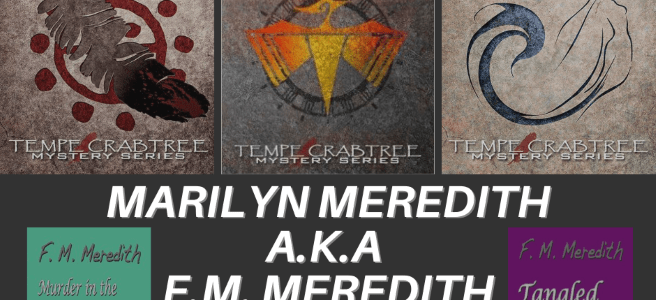
The book I’m working on in the Deputy Tempe Crabtree series, will be #20 and the last one. Tempe and her tribe have been a part of my life for many years. Tempe was retired from being a deputy in the last one, The Trash Harem.
The one I’m working on now is so far unnamed. Unusual for me, I often have the title before I even begin.
However this book has major changes for Tempe and her husband, as well as other ongoing characters in the series.
I’m finding it hard to say goodbye to Bear Creek and all those who live there, but my life is changing too. My husband needs a lot more of my help and I don’t have the energy I once had—but I’m almost 90 and I’m thankful I can still do what I’m able.
I also ended the Rocky Bluff mystery series with Reversal of Fortune.
Writing and getting published has given me so much pleasure in many ways. When I was writing I lived the adventures of my characters who became very real to me. In fact, in some ways I knew them far better than my friends and relatives—because I knew how the people who inhabited the books I wrote think.
Does this mean I won’t be writing anything anymore? Nope, I can’t imagine not sitting at the computer and writing. I’m considering writing a young adult mystery set during World War II since I grew up during that time. I have my own blog, where lately I’ve leaned toward reminiscing.
When the new book comes out I hope to have some local celebrations. Since one of my friends, lightly disguised with a different name is playing a major part I suspect she’ll want to join me. She’s starred in three other books in this series.
And I’m promoting The Trash Haven by offering the Kindle version for .99 cents from March 20 through the 27th.
It’s been fun hanging out with my Indian friend Tempe, her preacher husband Hutch, and her friend Nick Two John. I’m going to miss them.
I’m heading on a road trip Wednesday to check out some locations I’ve written into the 4th book, The Squeeze, in the Spotted Pony Casino Mystery series. While I grew up close to the area and had quite a few trips to there, it has changed since I was a teenager.
I’m also going to the library in Pendleton to use their archives of the local paper to go through the motions my character will be doing in my book. And I need to see a restaurant and store that I use in the book. Then I’ll be headed to the Umatilla Reservation to drink in more of the atmosphere there. I plan to sit for an hour or more in the small store with a sandwich shop to watch interactions and if I’m lucky I’ll find someone to talk to about living there. After that, I’ll go to the museum and check out the books at the store in the museum to see if there are any books that I can use to learn more. And finally, I’ll sit in the casino an hour or two to soak up that atmosphere and add it to my story. I may even venture out to where I have my character’s house just to get view of it in a different season.
I’d hoped to visit with a tribal member that has been helping me with the culture of the reservation. He can’t get away to talk to me the days I could get to the Reservation.
It will be a five-hour drive from where I live to Pendleton. I’ll either spend the night at the casino if I don’t have enough time to do all I want, or if I do get my research finished and don’t have to go back, I’ll spend the night at my oldest daughter’s an hour from Pendleton and head home on Thursday.
This isn’t the first nor the last time I’ll be taking research trips for books. The 5th book in the series is set at an Indian casino on the Oregon Coast. I’m headed there in March with a friend to do research for that book.
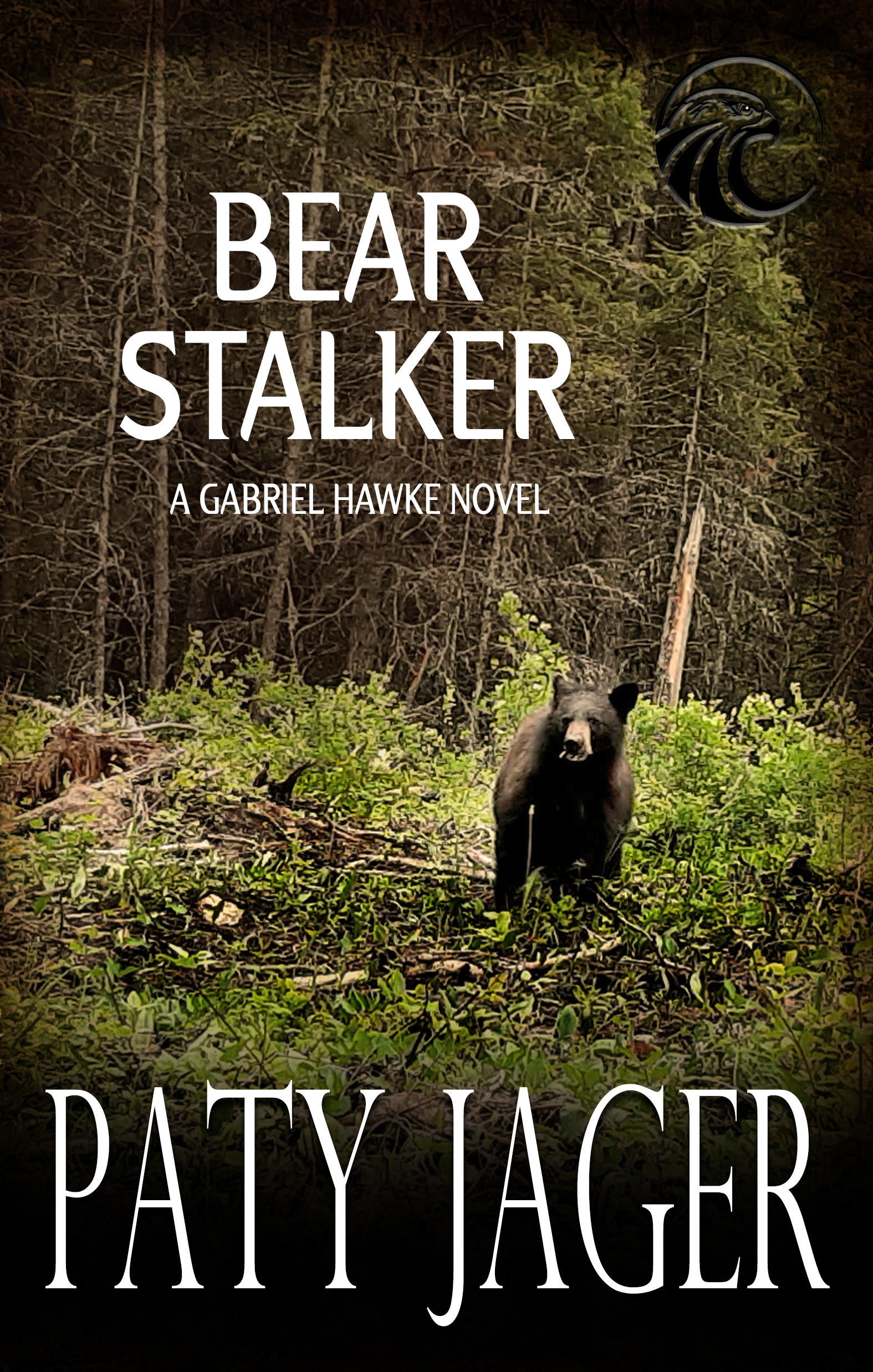
And over the summer I took a trip with my sister-in-law for book 10 in my Gabriel Hawke series. Bear Stalkeris now available in ebook and print and we are working on the audiobook.
Here is the blurb, cover, and buy link:
Book 10 in the Gabriel Hawke Series
Greed, Misdirection, and Murder
Oregon State Trooper Gabriel Hawke’s sister, Marion, is on a corporate retreat in Montana when she becomes a murder suspect. Running for her life from the real killer, she contacts Hawke for help.
Hawke heads to Montana to find his sister and prove she isn’t a murderer. He hasn’t seen Marion in over twenty years but he knows she wouldn’t kill the man she was about to marry.
As they dig into possible embezzlement, two more murders, and find themselves trying to outsmart a wilderness-wise kidnapper, Hawke realizes his sister needs to return home and immerse herself in their heritage. Grief is a journey that must be traveled and knowing her fiancé had wanted Marion to dance again, Hawke believes their culture would help her heal.
I hate to admit this, but the protagonist in my Detective Parrott Mystery Series began as an afterthought. Shameful, I know, but truthful, nonetheless. The first book in the series, MURDER IN THE ONE PERCENT, begins with an elegant party—a weekend retreat at a country mansion in Brandywine Valley, Pennsylvania, where some of America’s wealthiest and most powerful live.
I was so focused on the party—the guests, the invitation, the menu—I lost sight of the fact that the plot was barreling towards a mysterious death in the bedroom on the fourth floor. Once I had the body, and I’d carefully lined up the various suspects, I realized I needed a detective. Of course, I did. So, I fleshed out the details of the detective’s appearance, his background, his personality. Parrott was an outsider, having little in common with the people in Brandywine. He was young and African American, smart and well-organized, undaunted by the glamor or power, and able to see through the subterfuge and dissembling that was thrown at him.
I’d had students like Parrott. I knew him inside and out. I decided to name him Parrott after Agatha Christie’s detective, Hercule Poirot. (His name is pronounced like “parrot,” the bird.) Once I got further into writing the book, I realized that Parrott was the main character. With that in mind, I rewrote the first chapters of the book to shine the spotlight on him from the start.
The more scenes I wrote with Parrott in them, the more I admired and appreciated his qualities and the way he worked. I loved the way he treated others, too. I still didn’t fathom how much readers would root for him. It wasn’t until MURDER IN THE ONE PERCENT was published, and a clamoring for more Parrott books started that I even considered writing a series.
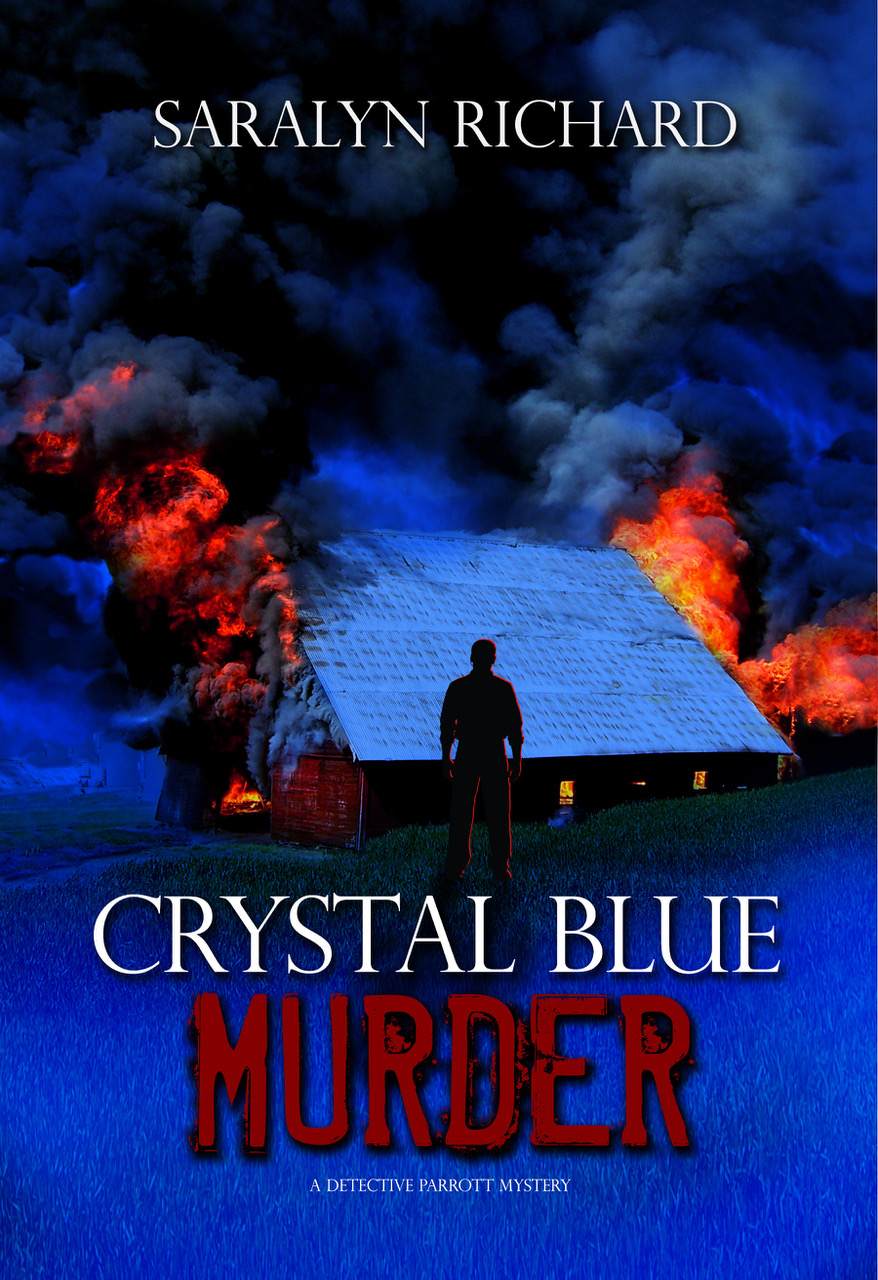
Here we are, four years and three books later. A PALETTE FOR LOVE AND MURDER was published in 2019, and CRYSTAL BLUE MURDER was just released in September. The Detective Parrott Mystery Series continues to thrive, and so does Detective Parrott, the protagonist who was actually an afterthought.
CRYSTAL BLUE MURDER
METH, MURDER, AND EXPLOSIONS OF THE HEART
In the heart of tranquil, lavish Brandywine Valley, Detective Parrott confronts a meth explosion, a dismembered corpse, and an intricate trail of deceitful secrets that shake up many lives — including his own. When celebrity hostess Claire Whitman’s renovated barn explodes into flames, Parrott delves into the privileged lives of all who are affected. Tension from Parrott’s personal life crosses over into the case, and secrets, deceptions, and crimes create an even bigger explosion. Third in the Detective Parrott Mystery Series, Crystal Blue Murder explores the complexities of life in an entitled world where many of America’s wealthiest and most powerful elite have their own definitions of right and wrong.
Saralyn Richard is the author of award-winning mysteries that pull back the curtain on people in settings as diverse as elite country manor houses and disadvantaged urban high schools. An active member of International Thriller Writers and Mystery Writers of America, Saralyn teaches creative writing and literature. Her favorite thing about being an author is connecting with readers like you. Follow Saralyn and subscribe to her monthly newsletter at http://saralynrichard.com.
I love art, mystery and romance and wanted to explore all three. The notion of “genre” was secondary. For efficiency my present genre’s been labeled “mystery,” but more accurately, it’s “hybrid.”
What sparked Stolen Light, the first book in what was to become my art mystery series, was an offhand remark by my brother, an art historian, about the possibility of unearthing a presentation drawing or cartoon fragment of Michelangelo’s Battle of Cascina. The idea instantly conjoined with a conversation I’d had many years prior with a Vassar College mate, who spoke of her father’s sugar plantation having been confiscated during the Cuban Revolution. (To me, the daughter of an English professor, whose worldly possessions had never crossed the borders of Brooklyn, New York, this was a collision of societal classes never before experienced first-hand. The memory would remain intact.) Without losing a beat, I reconfigured events, made the plantation owner an art enthusiast whose art collection is looted during the turmoil of 1958, in an incident shrouded in mystery that would resurface six decades later. My protagonists, Erika Shawn, a young art magazine editor, and Harrison Wheatley, a more seasoned art history professor, would come into being a few hours later, when I was sitting in front of my computer, staring at a blinking cursor on an otherwise blank screen. Erika and Harrison, I decided, would would find themselves thrown together in both an academic sleuthing adventure that turns deadly, as well as a burgeoning romance with hazards of its own.
What pressed me into writing False Light, the second book in the series, and whose plot pivots around the notorious forger, Eric Hebborn (Born to Trouble, a memoir, 1991), is two-fold. I was now hooked on tackling exploits in the art world, where man’s most sublime aspirations conflict with his basest (a great amalgam for fiction!), and also Erika and Harrison were insisting I allow them to get on with their lives.
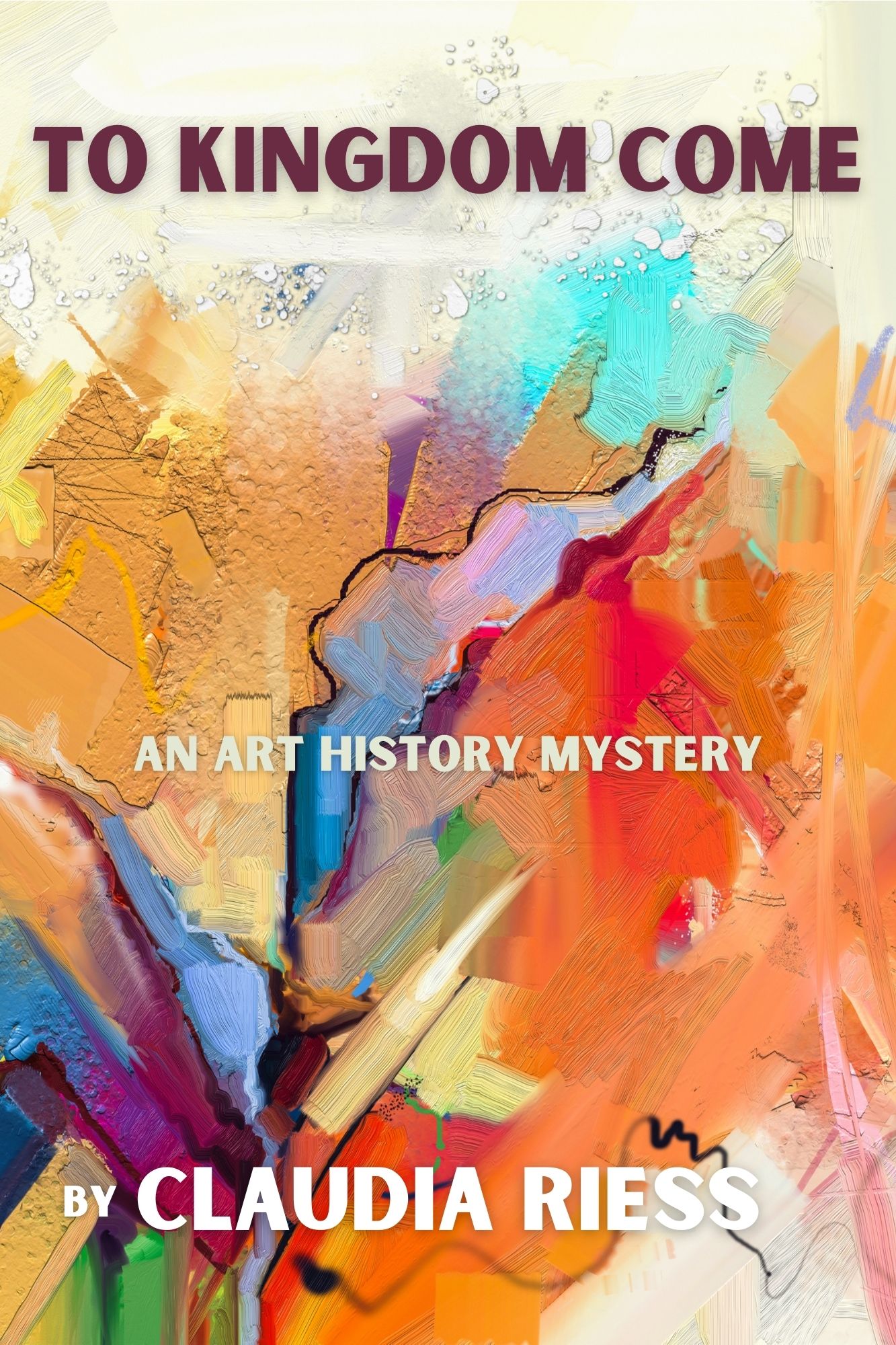
The third book in the series, Knight Light, would focus on the recovery of art seized during Germany’s occupation of Paris, and the fourth and most recent, To Kingdom Come, on the repatriation of art looted from Africa during the late nineteenth century.
Working in a hybrid medium, where the protagonists are amateur sleuths helping solve crimes, often gruesome, in the art world, and also engaged in a dynamic romantic relationship, can be challenging. One way I deal with the balancing act is seeing that the principal driving force is the mystery and sticking to it. To prevent the plot from stalling, I make sure that Erika and Harrison’s personal conflicts have a bearing on their crime-solving. In one instance, say, Erika goes off on a risky mission on the sly, despite Harrison’s adamant opposition. Her decision and his reaction play an integral part in how the mystery evolves.
Something I have to be on guard about is digressing too long on intimate encounters or personal-issue-centered dialogue. Both can break the forward motion of the central plot. I have a tendency to get swept into the emotional drama at hand, and it’s only later, when I’m reading through the section where the interlude occurs, that I realize the main thread’s been lost. Luckily, most of the time all it takes to resolve the problem is a bit of pruning. On occasion, though, it requires the interlude’s excision. This can be painful, but sometimes cutting a manuscript—and a writer’s ego—down to size can be a constructive experience.
Amateur sleuths, Erika Shawn-Wheatley, art magazine editor, and Harrison Wheatley, art history professor, attend a Zoom meeting of individuals from around the globe whose common goal is to expedite the return of African art looted during the colonial era. Olivia Chatham, a math instructor at London University, has just begun speaking about her recent find, a journal penned by her great-granduncle, Andrew Barrett, active member of the Royal Army Medical Service during England’s 1897 “punitive expedition” launched against the Kingdom of Benin.
Olivia is about to disclose what she hopes the sleuthing duo will bring to light, when the proceedings are disrupted by an unusual movement in one of the squares on the grid. Frozen disbelief erupts into a frenzy of calls for help as the group, including the victim, watch in horror the enactment of a murder videotaped in real time.
It will not be the only murder or act of brutality Erika and Harrison encounter in their two-pronged effort to hunt down the source of violence and unearth a cache of African treasures alluded to in Barrett’s journal.
Much of the action takes place in London, scene of the crimes and quest for redemption.
Claudia Riess, award-winning author of seven novels, is a Vassar graduate who has worked in the editorial departments of The New Yorker and Holt, Rinehart and Winston, and has edited several art monographs.
Great mystery/thriller books writers should read… by Robin Henry
It is time for year end lists! Here’s my list of favorite mysteries and thrillers I read in 2022. NOTE—I read these in 2022, some of them were published earlier…
Each of these are a great mini-masterclass for mystery writers, too. Each does a wonderful job of keeping the reader curious, building suspense, but without frustrating the reader. Several of them are also playing with form, like epistolary or traditional historical. If you want to write a great mystery or just get lost in one for a while, these are all excellent choices.
The Appeal by Janice Hallett
An excellent use of the epistolary form, and just a fun mystery with a load of crazy characters who will keep you guessing. Definitely recommended for Cozy fans…
Apples Never Fall by Liane Moriarty
Domestic Thriller by the current Queen of the Genre in my opinion. So many family secrets…but somehow all loose ends are explained and tied up at the end.
The Paris Apartment by Lucy Foley
Need a book that will make you stay up until 2 AM? Look no further. This apartment building is creepy and so are the people who live there…
The Bullet That Missed by Richard Osman
You’ll laugh, you’ll tear up, you’ll love every moment you spend with the gang. One of the most fun things about Osman is the observations he makes about the world through the eyes of his characters. Surrender to it and you won’t be sorry.
Apothecary Melchior and the Mystery of St. Olaf’s Church by Indrek Hargla
English translation by Adam Cullen, English version published by Peter Owen
A finely plotted traditional medieval whodunit. If you’ve been wishing for a new Father Cædful, try Apothecary Melchior…
Fatherland by Robert Harris
Gritty, alternative history mystery set in the Berlin of a partially victorious Third Reich. The Cold War looks a little different and the Americans under President Joe Kennedy (mobster father of John, Ted, and Robert) is cozying up to the fascists. The book is simply fantastic and also a little frightening because of the way Harris understands human nature.
Robin Henry is a librarian and independent scholar turned book coach who loves history and mysteries along with her hot beverage. You can find out more at http://readerly.net or contact her at readerlybooks@gmail.com








 Ladies of Mystery
You must be logged in to post a comment.